THE DESIGN OF THE MACROSTRUCTURE Martina Dal Molin


- Slides: 26
THE DESIGN OF THE MACROSTRUCTURE Martina Dal Molin mdalmolin@liuc. it AY 2018/2019
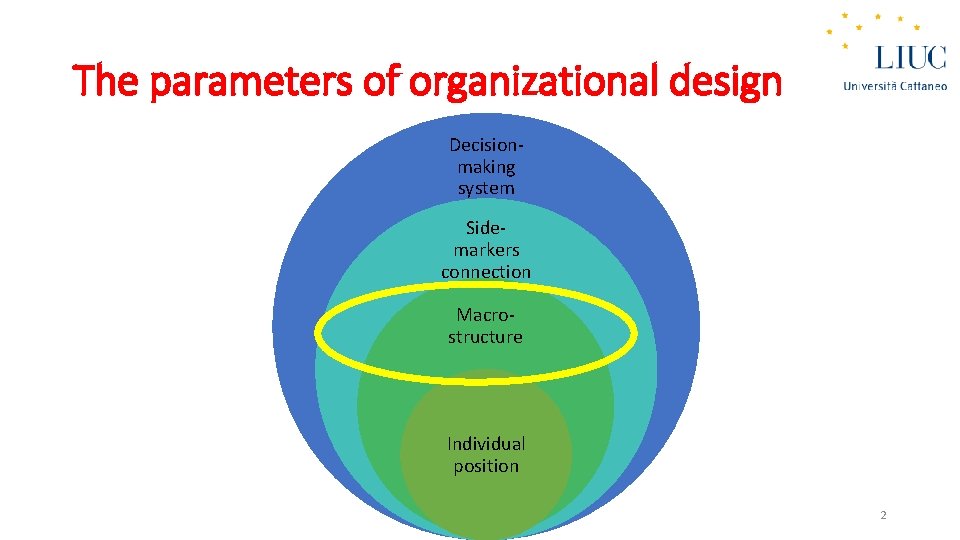
The parameters of organizational design Decisionmaking system Sidemarkers connection Macrostructure Individual position 2
Agenda • Introduction • Units grouping • Units’ dimension 3
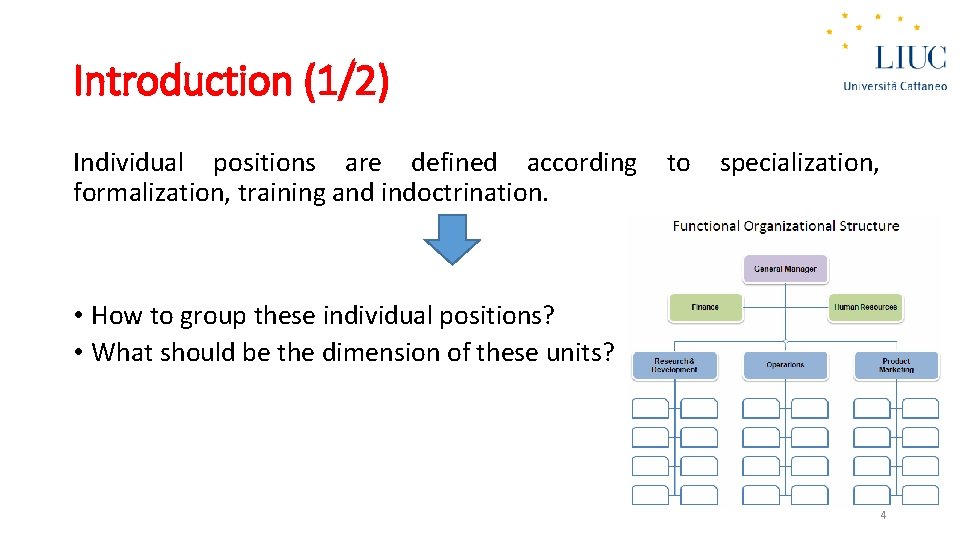
Introduction (1/2) Individual positions are defined according formalization, training and indoctrination. to specialization, • How to group these individual positions? • What should be the dimension of these units? 4
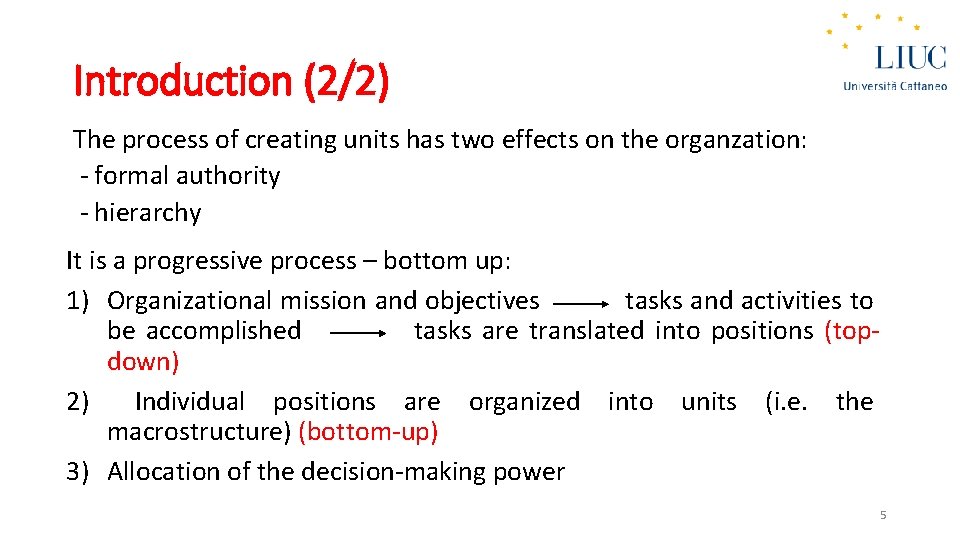
Introduction (2/2) The process of creating units has two effects on the organzation: - formal authority - hierarchy It is a progressive process – bottom up: 1) Organizational mission and objectives tasks and activities to be accomplished tasks are translated into positions (topdown) 2) Individual positions are organized into units (i. e. the macrostructure) (bottom-up) 3) Allocation of the decision-making power 5
UNITS GROUPING AY 2018/2019
Units grouping (1/2) • The creation of units favors the introduction of coordination inside the organization: o COMMON SUPERVISION o COMMON RESOURCES o COMMON PERFORMANCE INDICATORS o MUTUAL ADJUSTEMENT 7
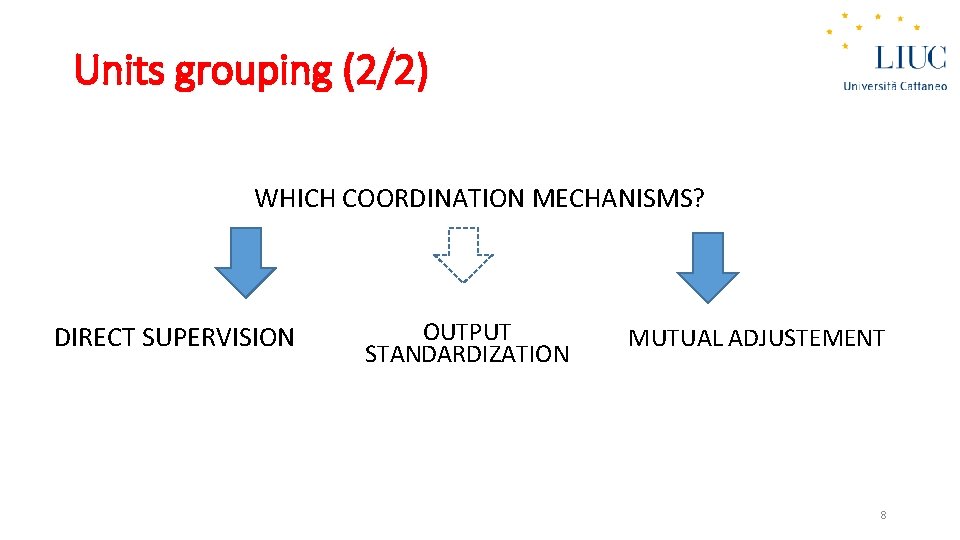
Units grouping (2/2) WHICH COORDINATION MECHANISMS? DIRECT SUPERVISION OUTPUT STANDARDIZATION MUTUAL ADJUSTEMENT 8
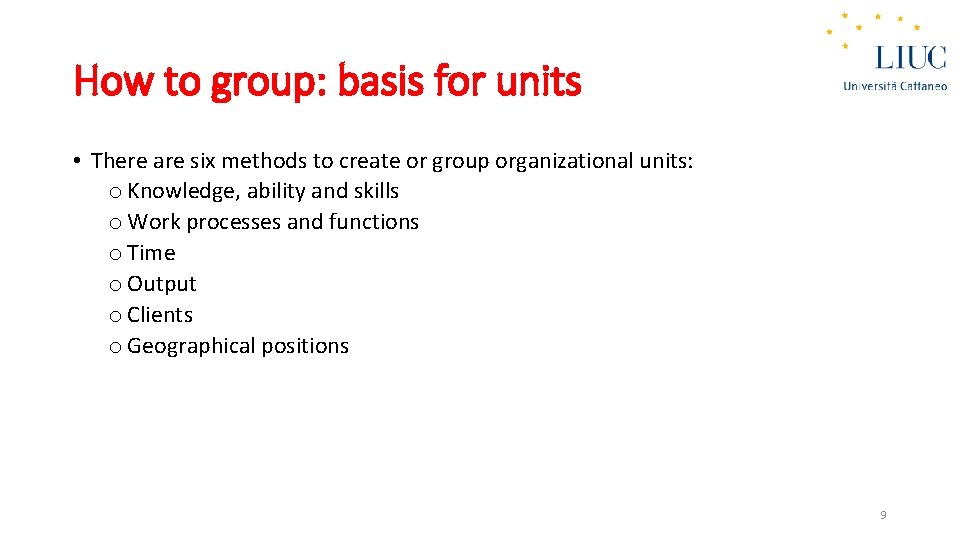
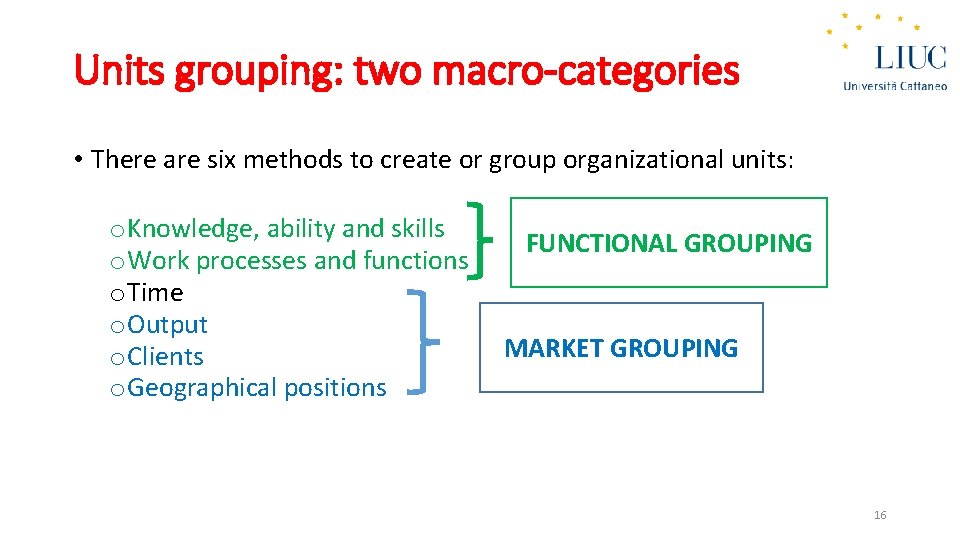
How to group: basis for units • There are six methods to create or group organizational units: o Knowledge, ability and skills o Work processes and functions o Time o Output o Clients o Geographical positions 9
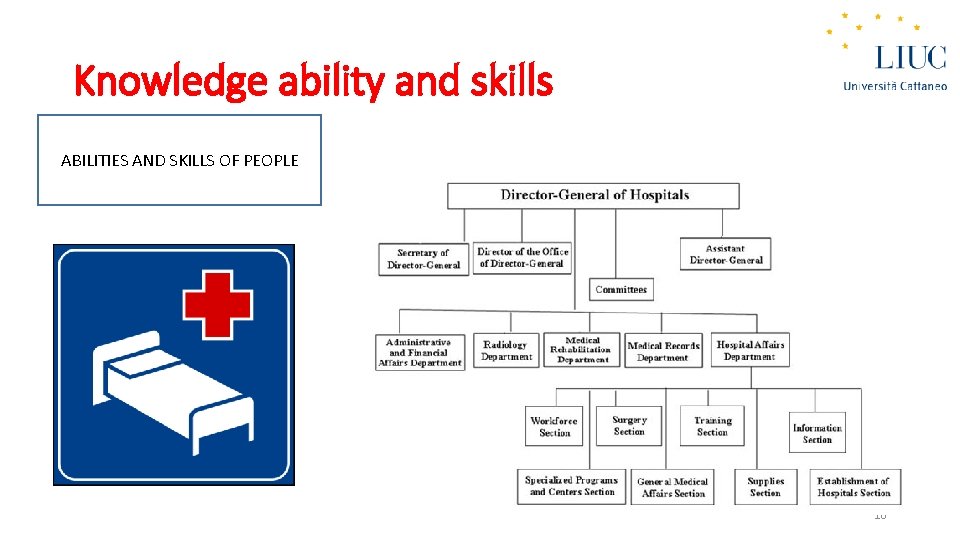
Knowledge ability and skills ABILITIES AND SKILLS OF PEOPLE 10
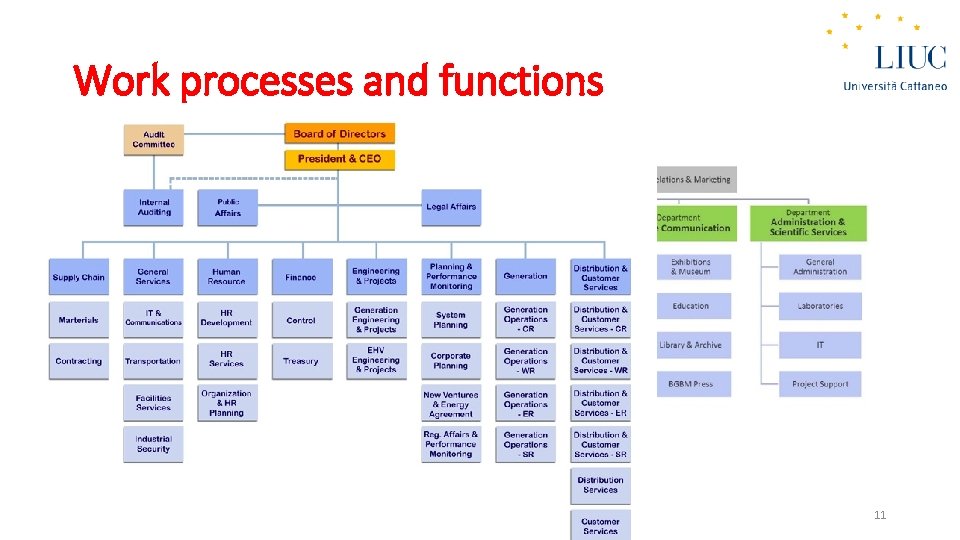
Work processes and functions PROCESS OR ACTIVITIES CARRIED OUT BY PEOPLE 11
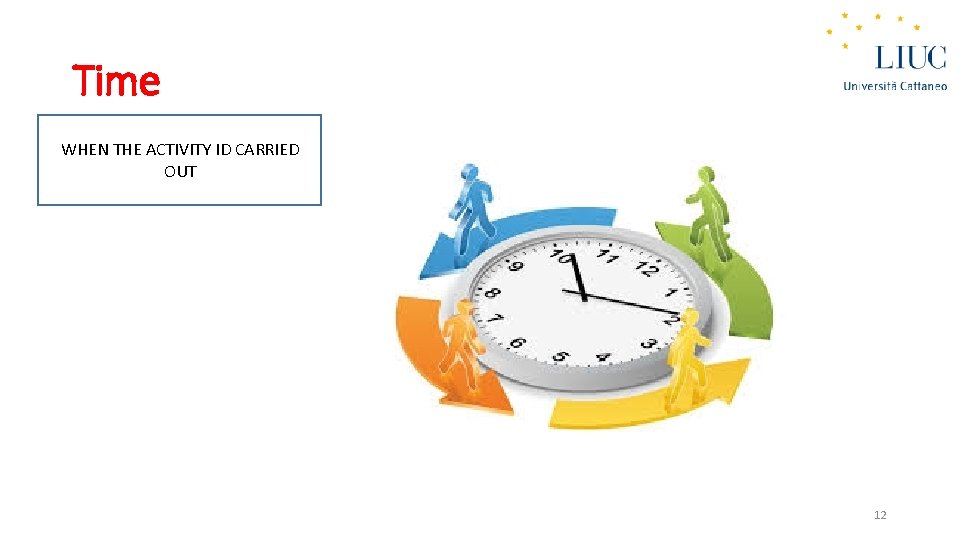
Time WHEN THE ACTIVITY ID CARRIED OUT 12
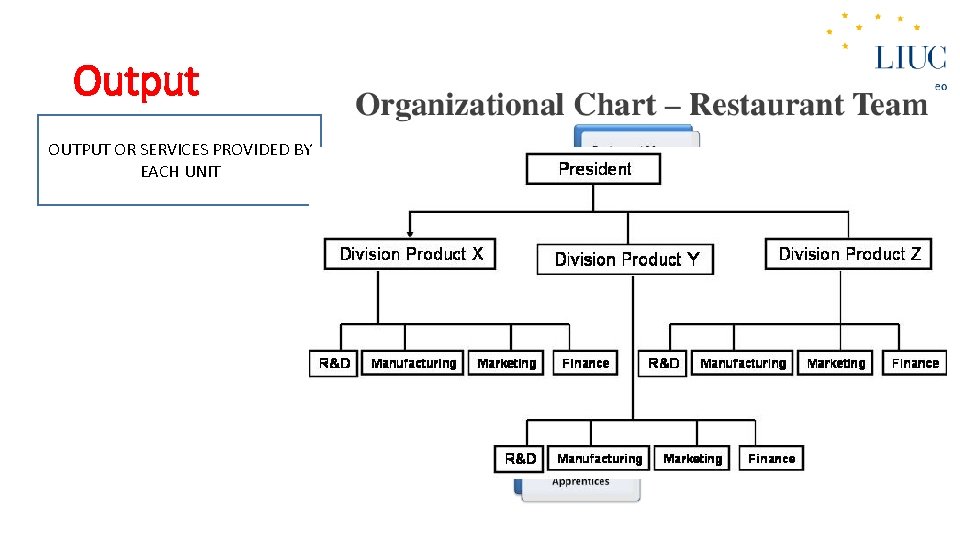
Output OUTPUT OR SERVICES PROVIDED BY EACH UNIT 13
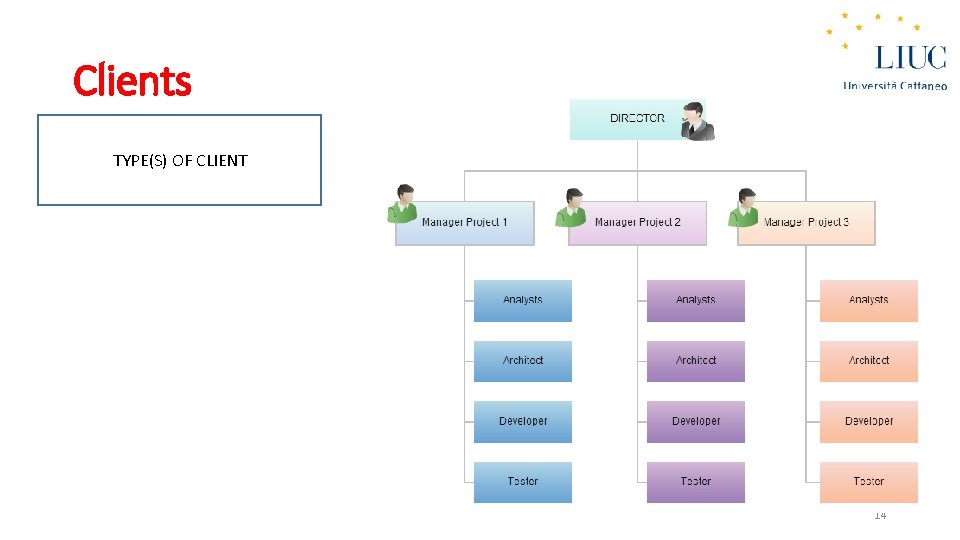
Clients TYPE(S) OF CLIENT 14
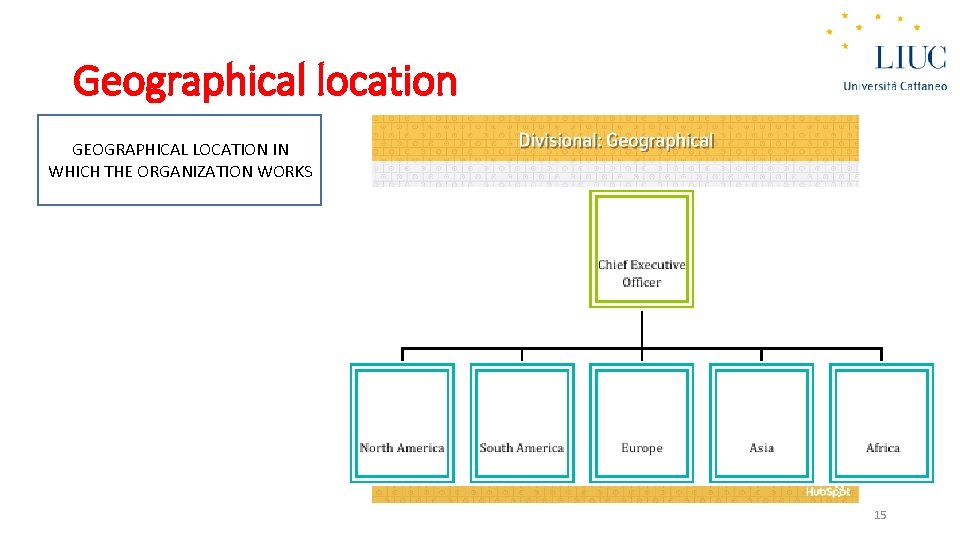
Geographical location GEOGRAPHICAL LOCATION IN WHICH THE ORGANIZATION WORKS 15
Units grouping: two macro-categories • There are six methods to create or group organizational units: o Knowledge, ability and skills o Work processes and functions o Time o Output o Clients o Geographical positions FUNCTIONAL GROUPING MARKET GROUPING 16
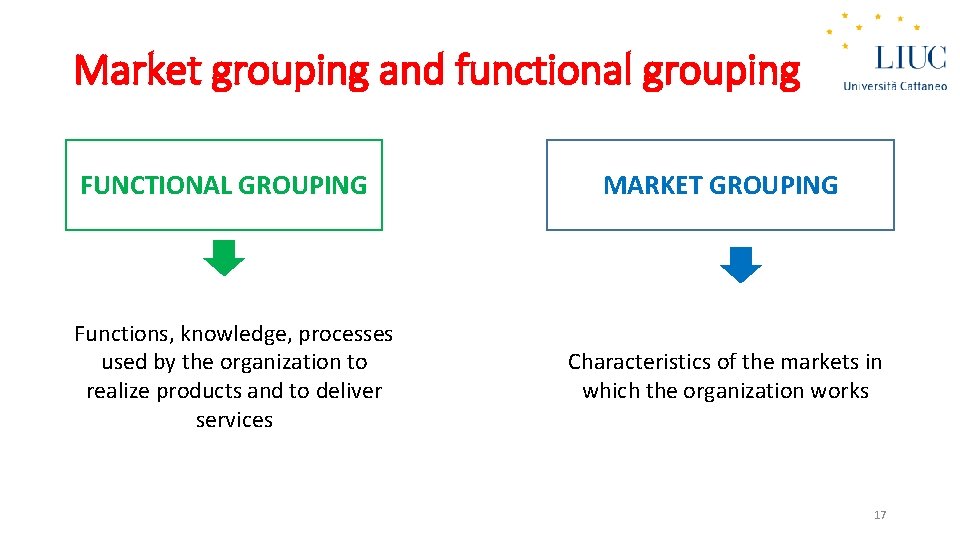
Market grouping and functional grouping FUNCTIONAL GROUPING Functions, knowledge, processes used by the organization to realize products and to deliver services MARKET GROUPING Characteristics of the markets in which the organization works 17
Functional grouping Focus on: o Work flow processes interdependencies o Economies of scale Weaknesses o Focus on processes and not on organizational objectives o Need to find a coordination mechanism o Burocracy: § High fomalization § More structured strategic apex § Strong hierarchy 18
Market grouping Focus on: o (more or less) independent units o Mutual adjustment and direct supervision are «inside» each unit o Less formalization o Coordination between specialized functions o Fexibility Weaknesses o Higher need for resources o Not able to use economies of scale 19
DEFINING UNITS’ DIMENSION AY 2018/2019
Stating the problem Addressing the problem of the dimension means answering the following questions: o How many positions should be grouped? o How many people should be controlled by the same manager? o How should be the extent of mangers’ control? o Which form should the organization have? Vertical or flt and enlarged? IT IS NOT ONLY A PROBLEM OF CONTROL, BECAUSE OTHER FACTORS AFFECT THE CHOICE OF THE UNITS’ DIMENSION 21
Functional grouping The 5 coordination mechanisms are, more or less, interchangeable therefore Variations on units’ dimension by looking at the coordination mechanisms employed Two propositions 22
Proposition 1: Standardization «The higher is the standardization, the higher is the dimension of the unit» o If processes are standardized, less managerial direct supervision is required and, therefore, the unit could be bigger o If capabilities are standardized, and the higher is the training of workers, less managerial direct supervision is required and, therefore, the unit could be bigger o If outputs are standardized, less managerial direct supervision is required with respect to the outputs control and, therefore, the unit could be bigger 23
Proposition 2: Mutual adjustment «The higher is the mutual adjustment, the lower is the dimension of the unit» o If tasks are interdependent, workers need frequent contacts with the manager, who must have time to control workers and to speak with workers o If tasks are interdependent and they need mutual adjustement, workers should establish face-to-face contact 24
Higher units’ dimension Which factors favor a higher units’ dimension? o Standardization o Similarity of tasks and activities o Need for autonomy for workers 25
Lower units’ dimension Which factors favor a lower units’ dimension? o Need for direct supervision o Need for mutual adjustment o The manager has control over different activities o Workers need help and counselling from the manager frequently 26