The concept of law lex et ius Introduction

- Slides: 11
The concept of law: lex et ius Introduction to Law Criminal Justice – fall & winter 2019/2020 Dr. Maciej Pichlak | Department of Legal Theory and Philosophy of Law | University of Wroclaw | Maciej. Pichlak@uwr. edu. pl
Legal reason – a controversy 'God had endowed His Majesty with excellent science, and great endowments of nature. . . ' still 'his Majesty was not learned in the laws of his realm of England, and causes which concern the life, or inheritance, or goods, or fortunes of his subjects, are not to be decided by natural reason but by the artificial reason and judgment of law, which law is an art which requires long study and experience, before that a man can attain to the cognisance of it. ' Sir Edward Coke to King James I, in 1607 The first thing we do, let's kill all the lawyers. W. Shakespeare, Henry The Sixth, Part 2, about 1590
Law as a multi-layered system „Shrek Principle” 'Typical' rules, that is legal provisions which are formulated in legal texts (or other traditional sources of law), creates only a 'surface-level' of law. Next to this level, law includes also other components. Concepts of legal system and legal order
Lex et ius • Lex: formally enacted law • Ius: a) b) c) d) ‚lawyers-made law’ natural (moral) law (a) and/or (b) + lex final legal decision Ius est ars boni et aequi. Celsus
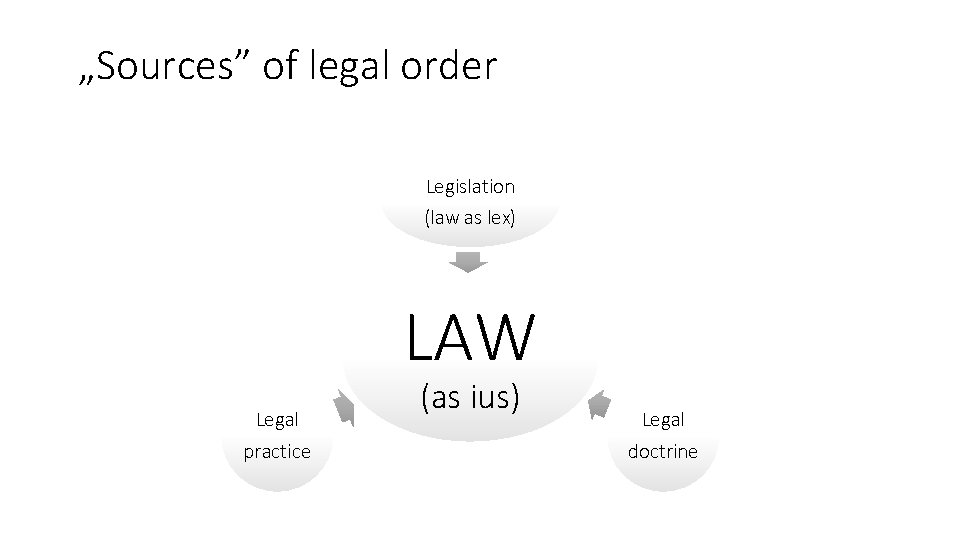
„Sources” of legal order Legislation (law as lex) LAW Legal practice (as ius) Legal doctrine
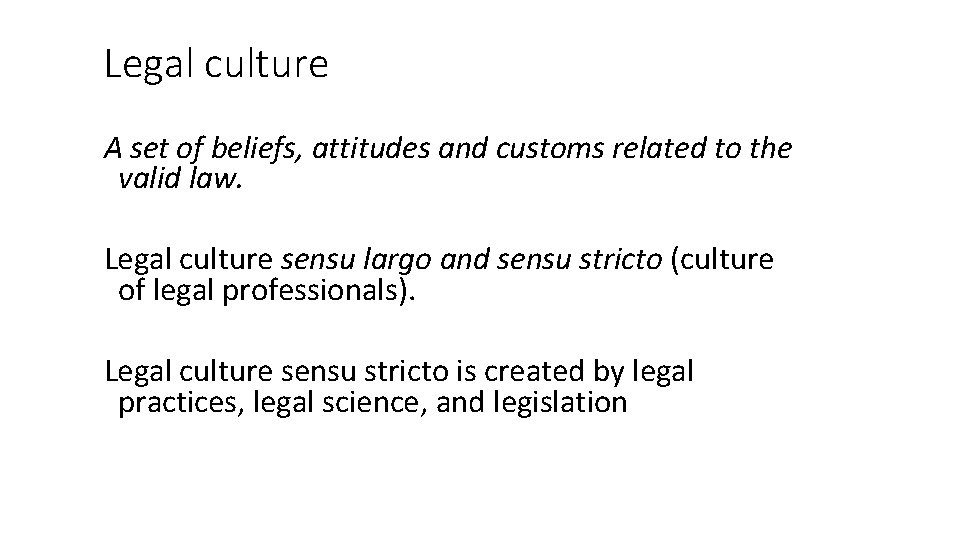
Legal culture A set of beliefs, attitudes and customs related to the valid law. Legal culture sensu largo and sensu stricto (culture of legal professionals). Legal culture sensu stricto is created by legal practices, legal science, and legislation
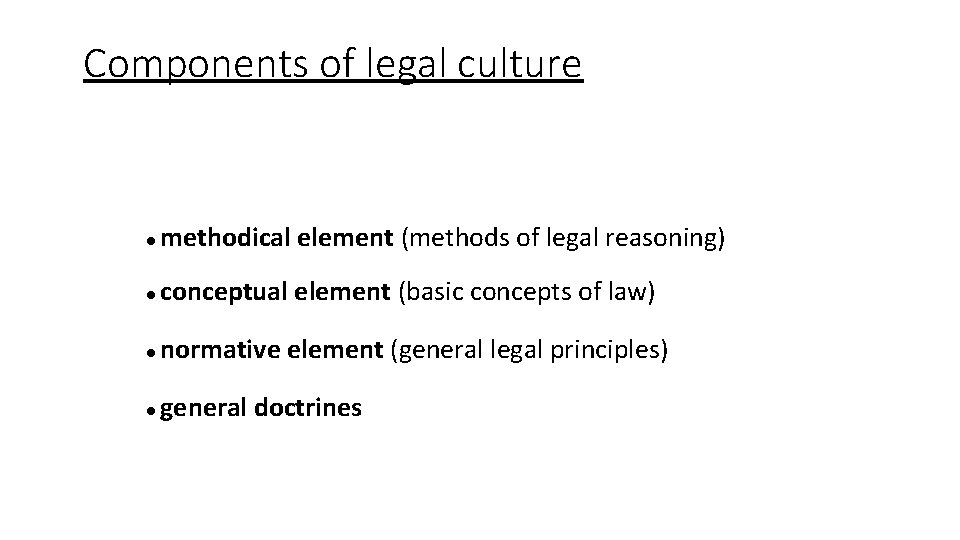
Components of legal culture methodical element (methods of legal reasoning) conceptual element (basic concepts of law) normative element (general legal principles) general doctrines
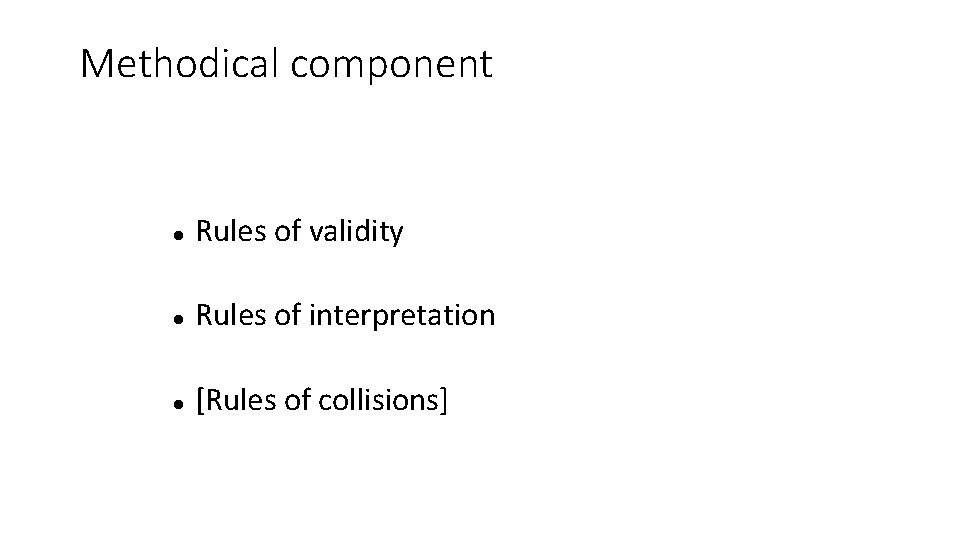
Methodical component Rules of validity Rules of interpretation [Rules of collisions]
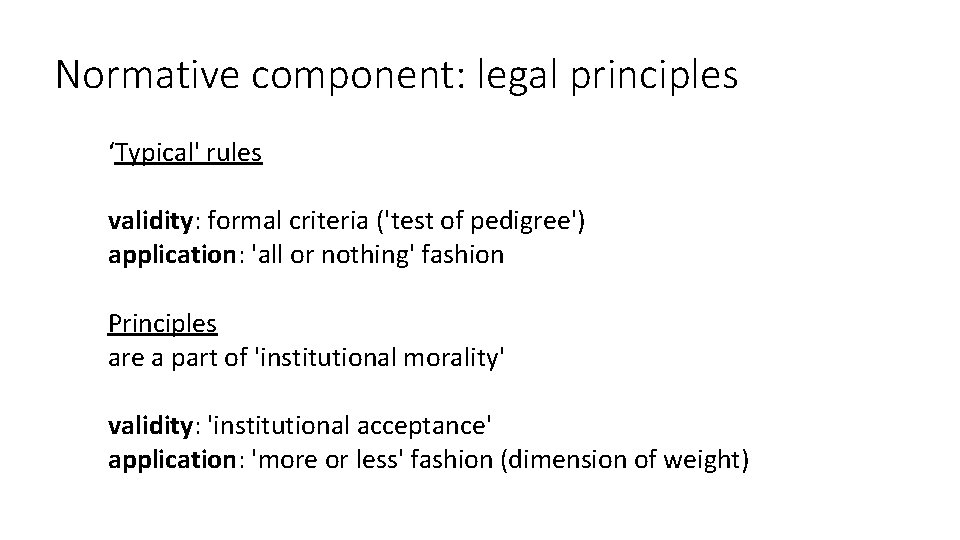
Normative component: legal principles ‘Typical' rules validity: formal criteria ('test of pedigree') application: 'all or nothing' fashion Principles are a part of 'institutional morality' validity: 'institutional acceptance' application: 'more or less' fashion (dimension of weight)
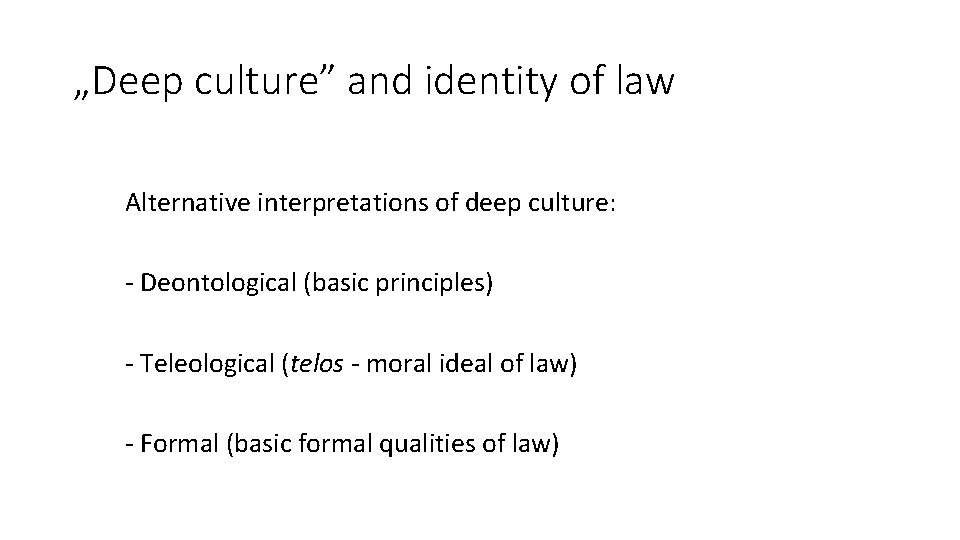
„Deep culture” and identity of law Alternative interpretations of deep culture: - Deontological (basic principles) - Teleological (telos - moral ideal of law) - Formal (basic formal qualities of law)
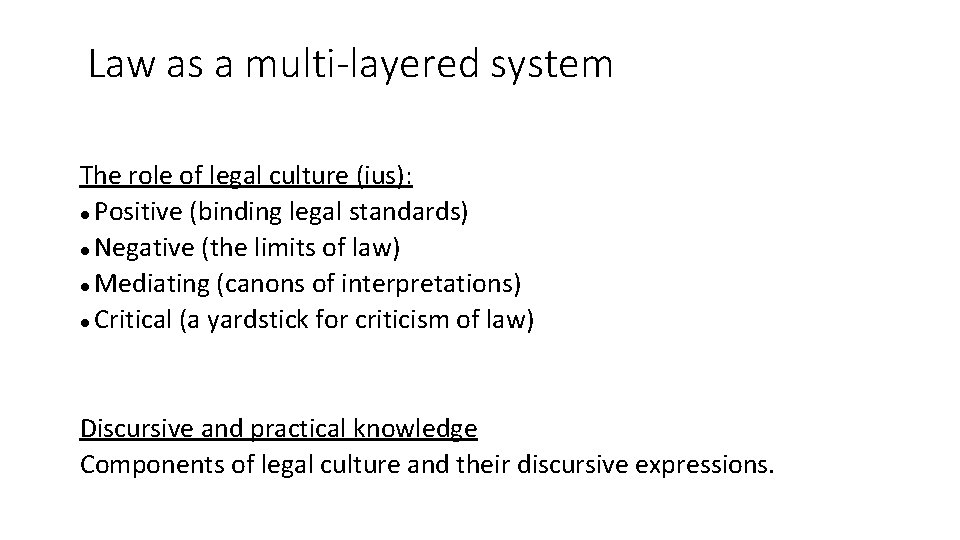
Law as a multi-layered system The role of legal culture (ius): Positive (binding legal standards) Negative (the limits of law) Mediating (canons of interpretations) Critical (a yardstick for criticism of law) Discursive and practical knowledge Components of legal culture and their discursive expressions.