Taxonomy and Kingdom Animalia Part 1 Classification Domain

- Slides: 29
Taxonomy and Kingdom Animalia Part 1
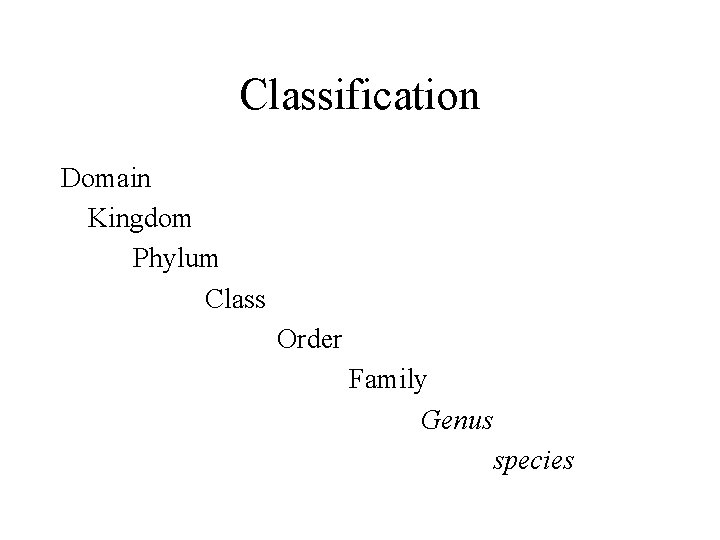
Classification Domain Kingdom Phylum Class Order Family Genus species
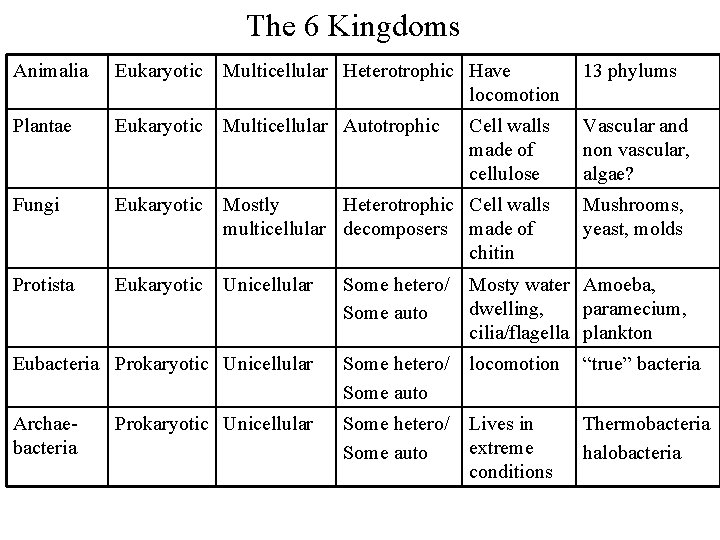
The 6 Kingdoms Animalia Eukaryotic Multicellular Heterotrophic Have locomotion 13 phylums Plantae Eukaryotic Multicellular Autotrophic Vascular and non vascular, algae? Fungi Eukaryotic Mostly Heterotrophic Cell walls multicellular decomposers made of chitin Protista Eukaryotic Unicellular Some hetero/ Some auto Mosty water Amoeba, dwelling, paramecium, cilia/flagella plankton Eubacteria Prokaryotic Unicellular Some hetero/ Some auto locomotion “true” bacteria Archaebacteria Some hetero/ Some auto Lives in extreme conditions Thermobacteria halobacteria Prokaryotic Unicellular Cell walls made of cellulose Mushrooms, yeast, molds
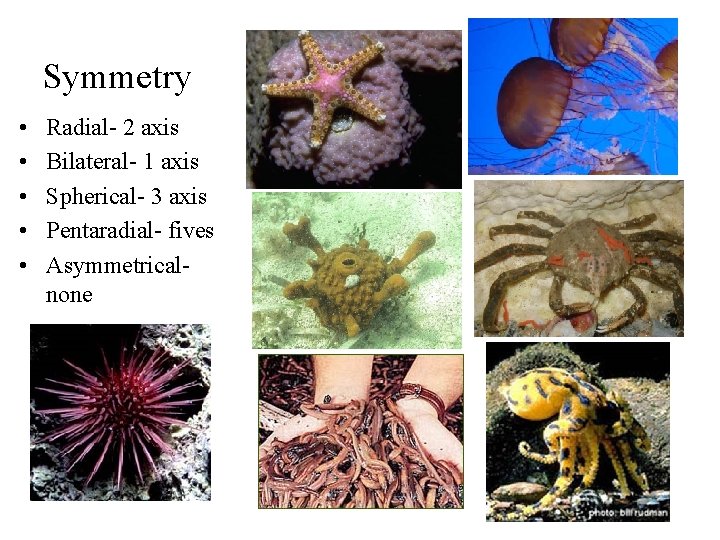
Symmetry • • • Radial- 2 axis Bilateral- 1 axis Spherical- 3 axis Pentaradial- fives Asymmetricalnone
Needed terminology • Adaptation-survival traits that are genetic • Nocturnal • Diurnal • Sessile • Parasite • Mutualist • Commensalist • Terrestrial – Arboreal – Aerial – fossorial • Aquatic – Marine – Freshwater – Brakish
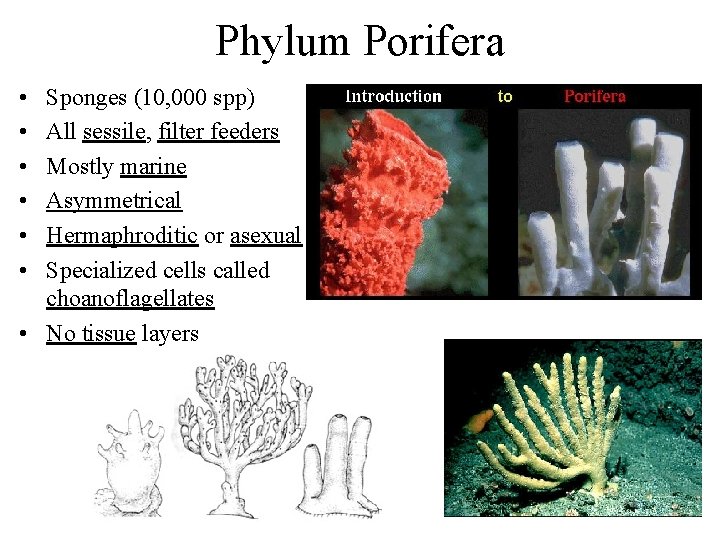
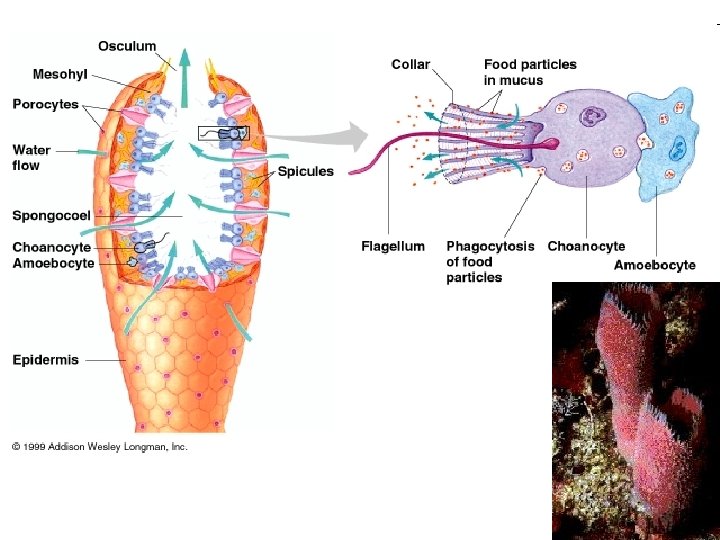
Phylum Porifera • • • Sponges (10, 000 spp) All sessile, filter feeders Mostly marine Asymmetrical Hermaphroditic or asexual Specialized cells called choanoflagellates • No tissue layers
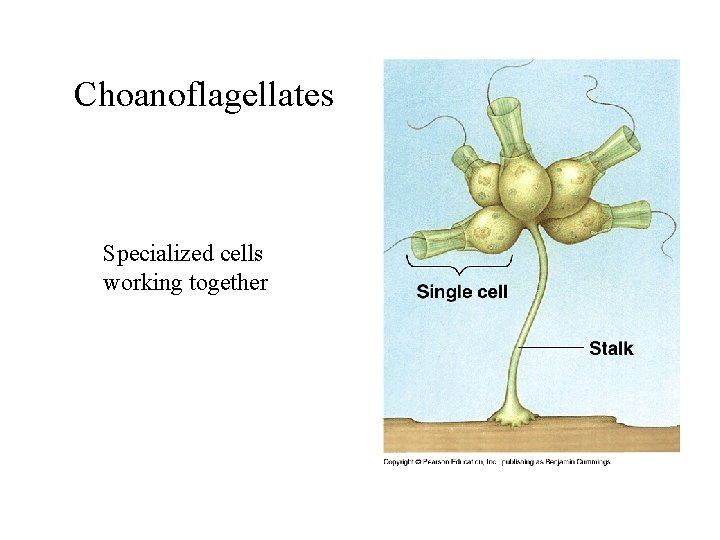
Choanoflagellates Specialized cells working together
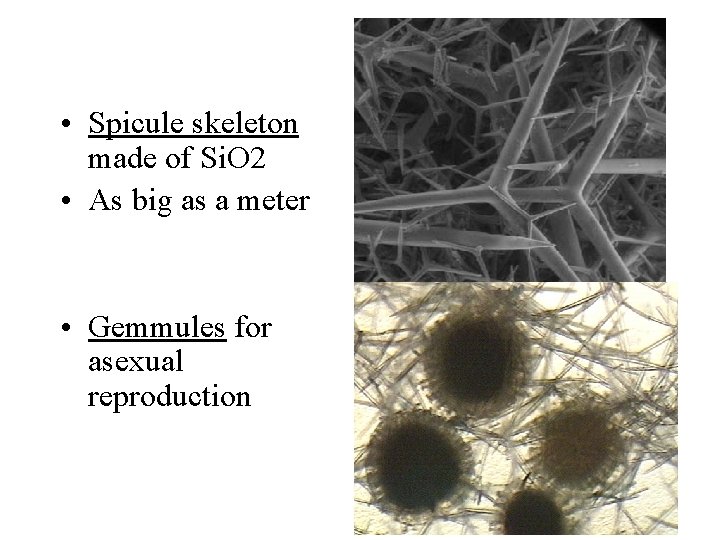
• Spicule skeleton made of Si. O 2 • As big as a meter • Gemmules for asexual reproduction
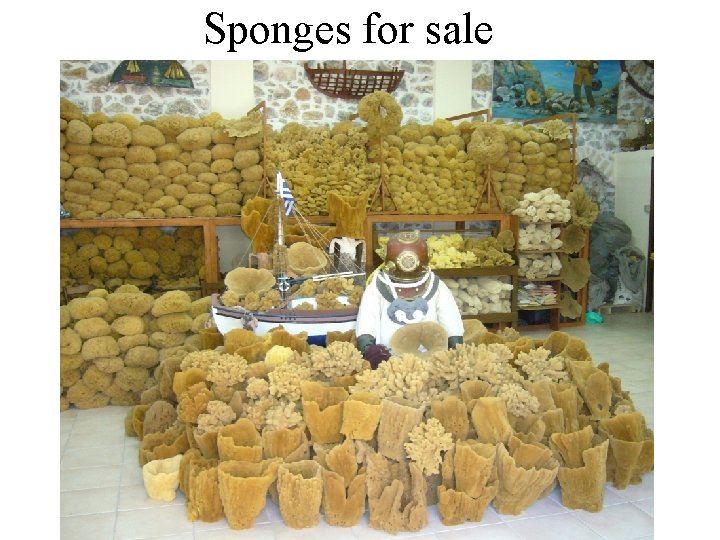
Sponges for sale
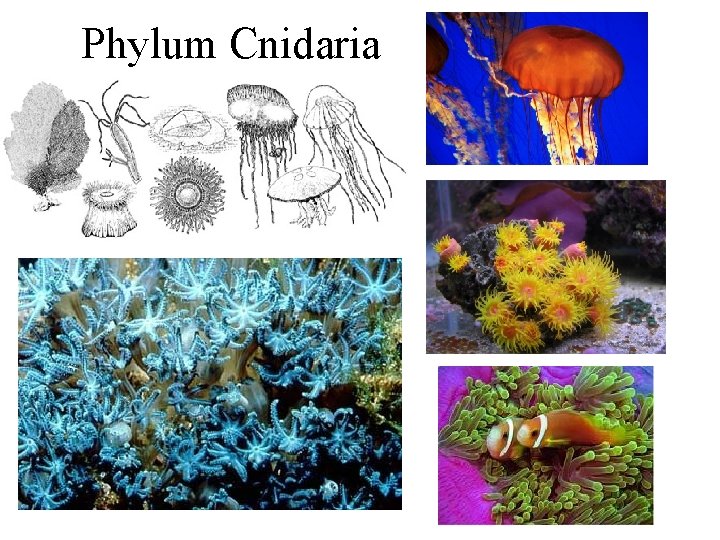
Phylum Cnidaria
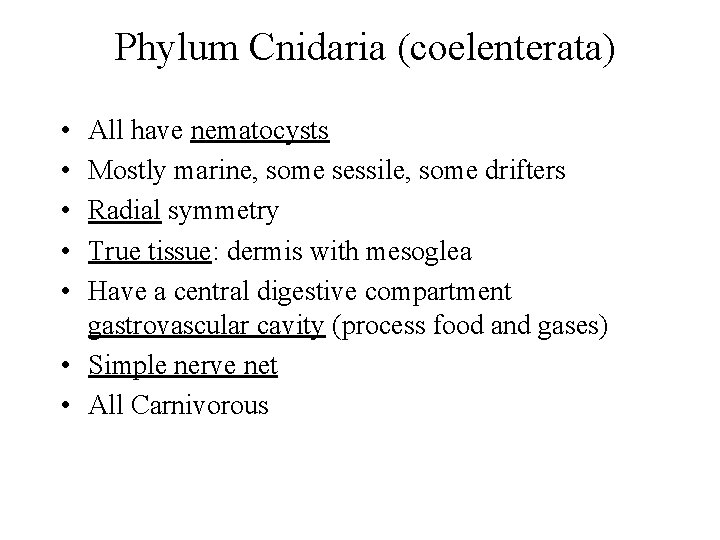
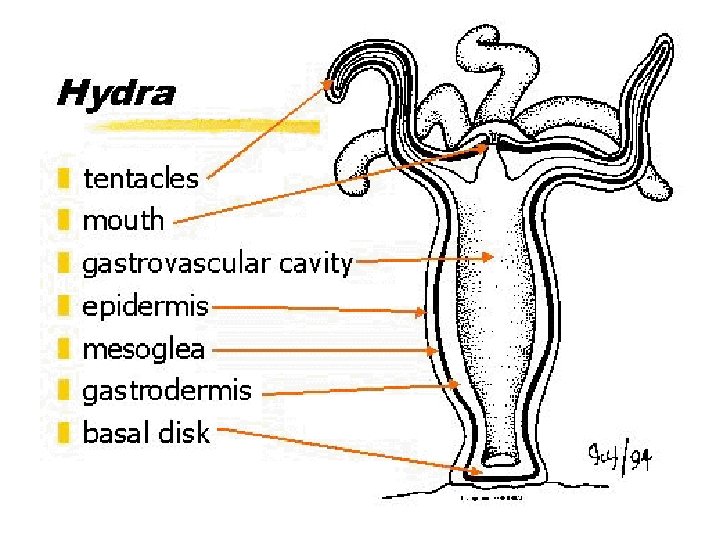
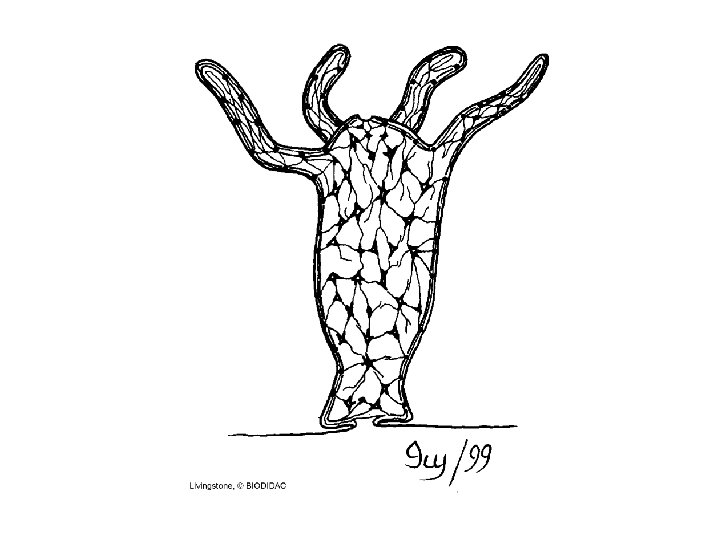
Phylum Cnidaria (coelenterata) • • • All have nematocysts Mostly marine, some sessile, some drifters Radial symmetry True tissue: dermis with mesoglea Have a central digestive compartment gastrovascular cavity (process food and gases) • Simple nerve net • All Carnivorous
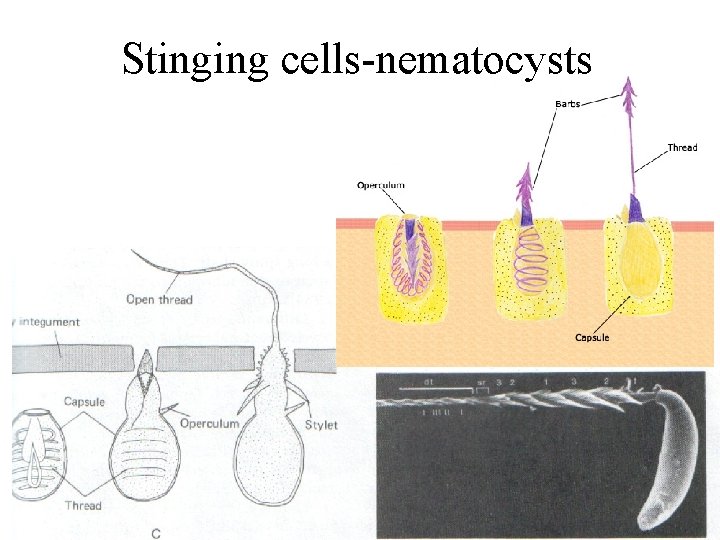
Stinging cells-nematocysts
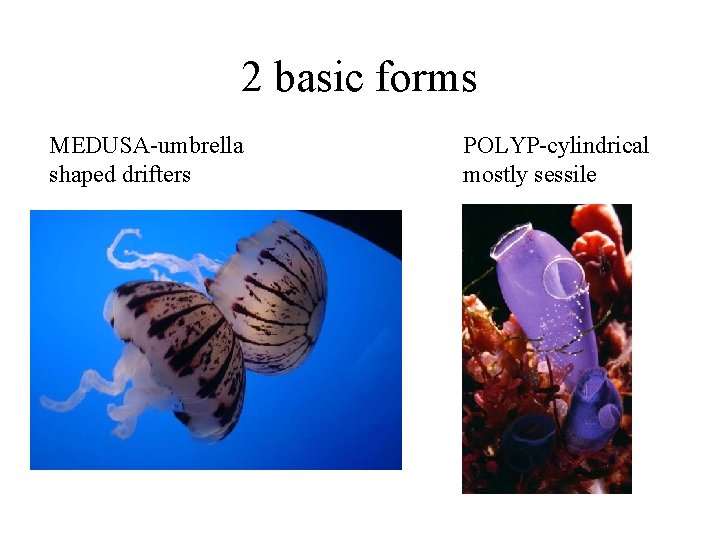
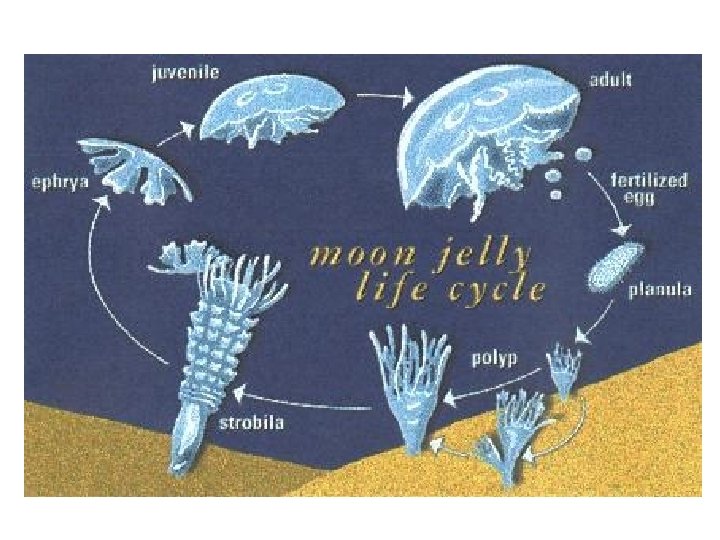
2 basic forms MEDUSA-umbrella shaped drifters POLYP-cylindrical mostly sessile
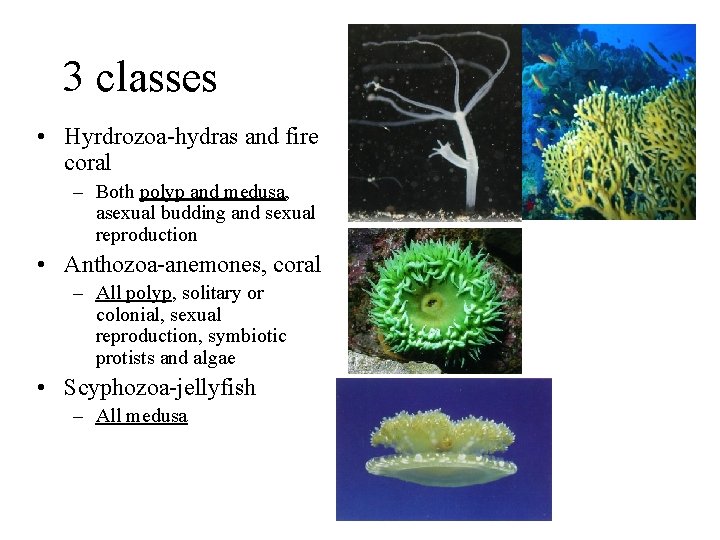
3 classes • Hyrdrozoa-hydras and fire coral – Both polyp and medusa, asexual budding and sexual reproduction • Anthozoa-anemones, coral – All polyp, solitary or colonial, sexual reproduction, symbiotic protists and algae • Scyphozoa-jellyfish – All medusa
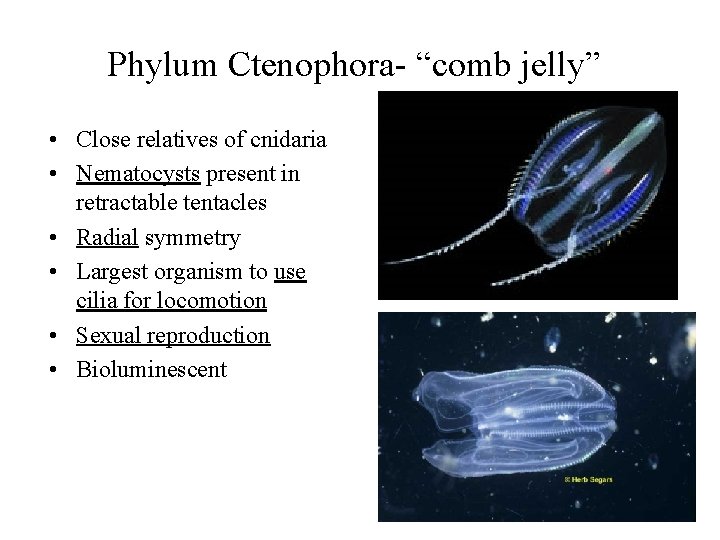
Phylum Ctenophora- “comb jelly” • Close relatives of cnidaria • Nematocysts present in retractable tentacles • Radial symmetry • Largest organism to use cilia for locomotion • Sexual reproduction • Bioluminescent
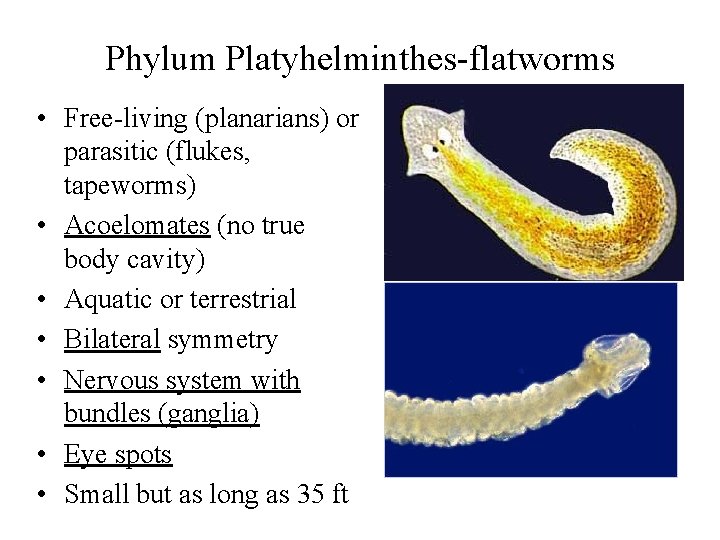
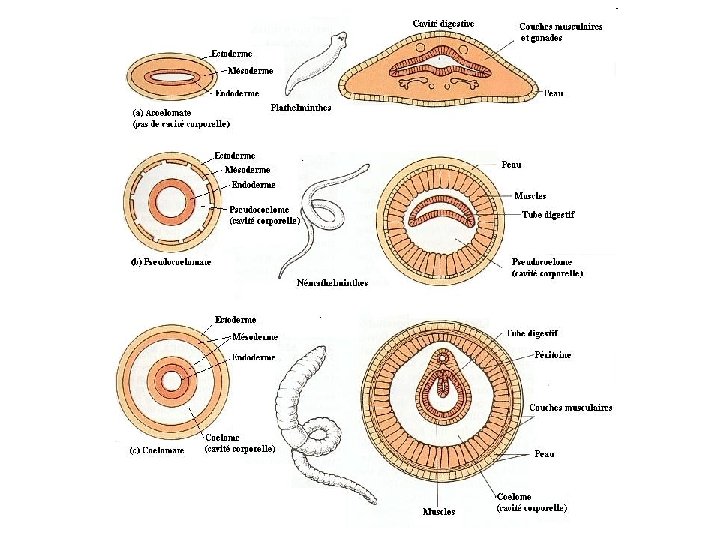
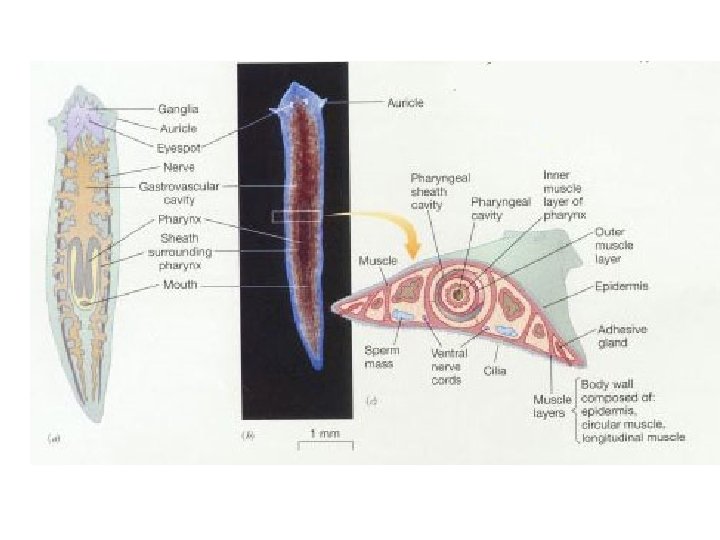
Phylum Platyhelminthes-flatworms • Free-living (planarians) or parasitic (flukes, tapeworms) • Acoelomates (no true body cavity) • Aquatic or terrestrial • Bilateral symmetry • Nervous system with bundles (ganglia) • Eye spots • Small but as long as 35 ft
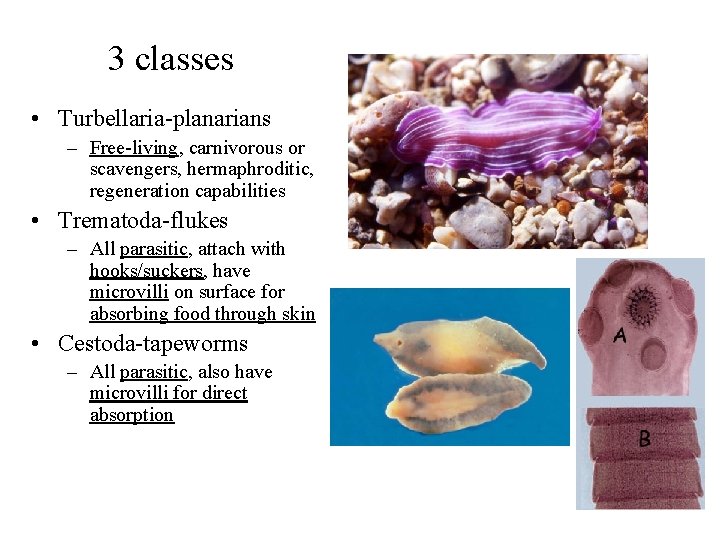
3 classes • Turbellaria-planarians – Free-living, carnivorous or scavengers, hermaphroditic, regeneration capabilities • Trematoda-flukes – All parasitic, attach with hooks/suckers, have microvilli on surface for absorbing food through skin • Cestoda-tapeworms – All parasitic, also have microvilli for direct absorption
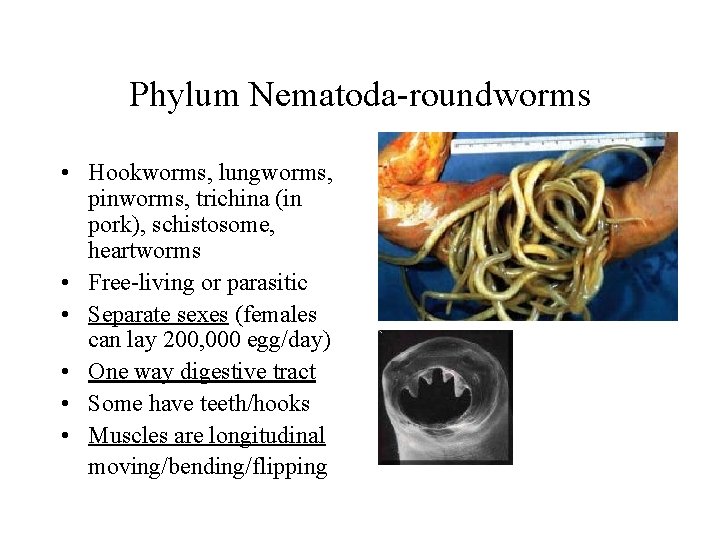
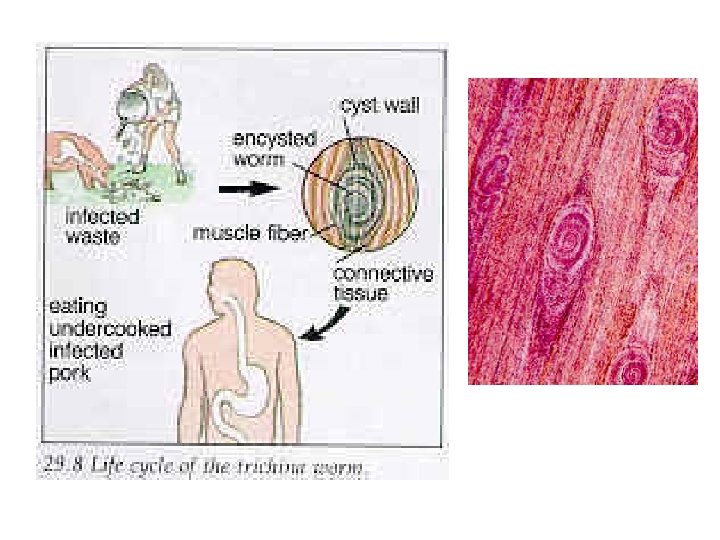
Phylum Nematoda-roundworms • Hookworms, lungworms, pinworms, trichina (in pork), schistosome, heartworms • Free-living or parasitic • Separate sexes (females can lay 200, 000 egg/day) • One way digestive tract • Some have teeth/hooks • Muscles are longitudinal moving/bending/flipping
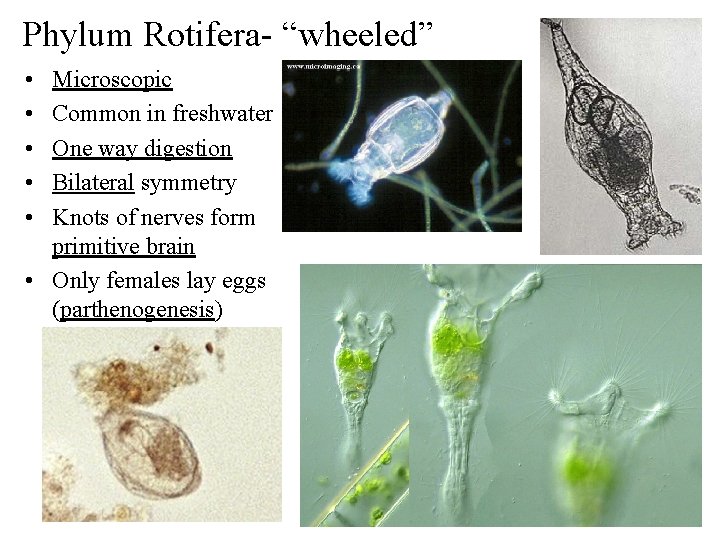
Phylum Rotifera- “wheeled” • • • Microscopic Common in freshwater One way digestion Bilateral symmetry Knots of nerves form primitive brain • Only females lay eggs (parthenogenesis)
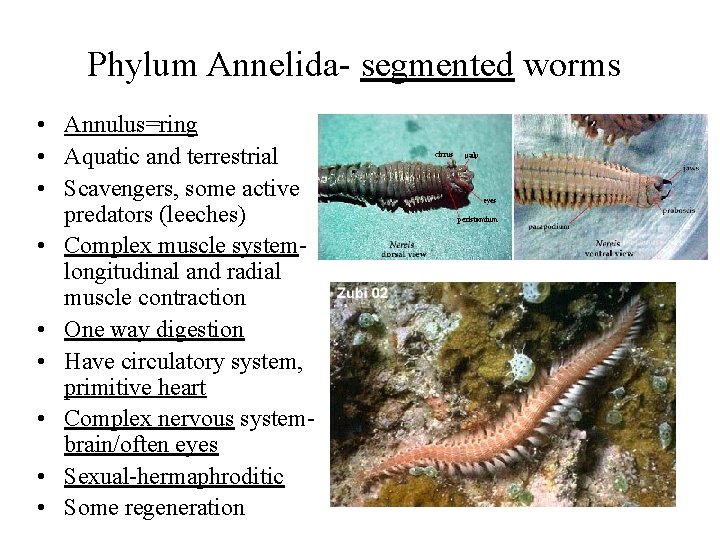
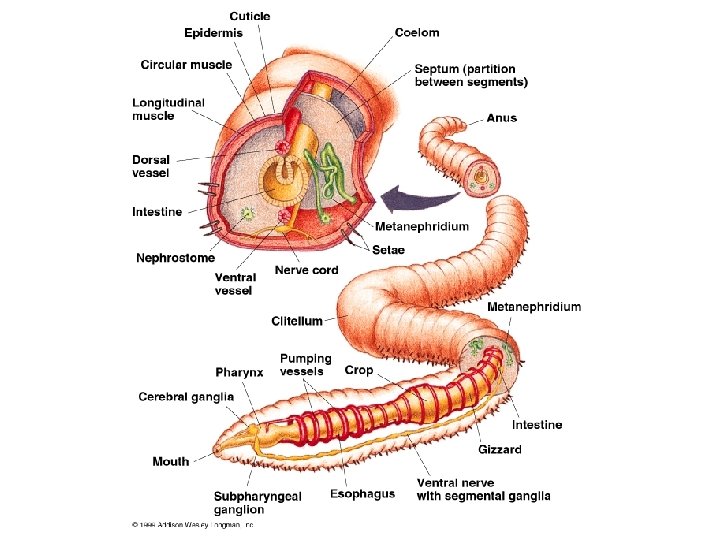
Phylum Annelida- segmented worms • Annulus=ring • Aquatic and terrestrial • Scavengers, some active predators (leeches) • Complex muscle systemlongitudinal and radial muscle contraction • One way digestion • Have circulatory system, primitive heart • Complex nervous systembrain/often eyes • Sexual-hermaphroditic • Some regeneration
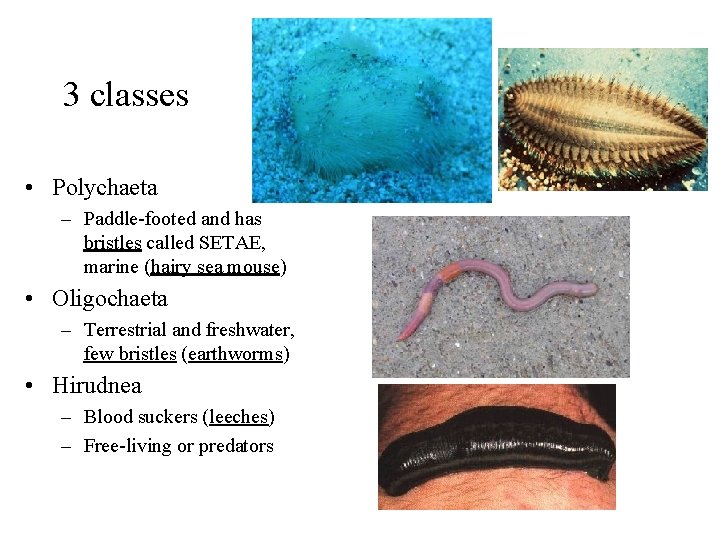
3 classes • Polychaeta – Paddle-footed and has bristles called SETAE, marine (hairy sea mouse) • Oligochaeta – Terrestrial and freshwater, few bristles (earthworms) • Hirudnea – Blood suckers (leeches) – Free-living or predators