
Take the pieces and group them into the


- Slides: 31
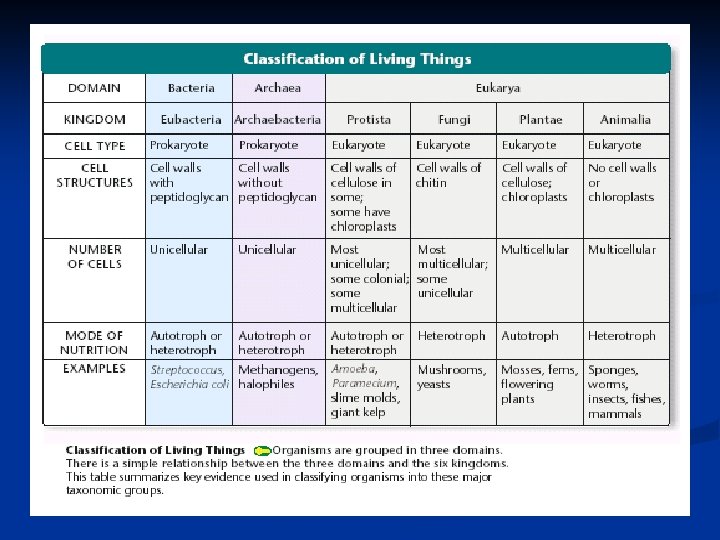
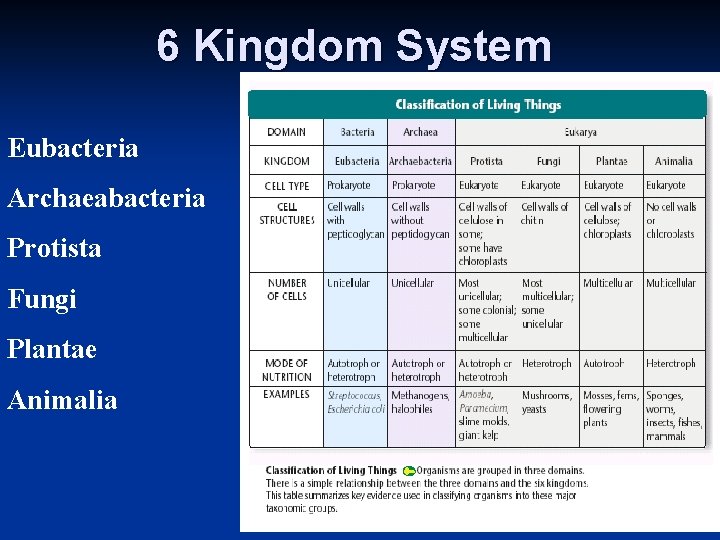
Take the pieces and group them into the following categories: Cell Type (prokaryote/eukaryote) n Cell Structure n # of Cells n Mode of Nutrition (autotroph/heterotroph) n Examples n
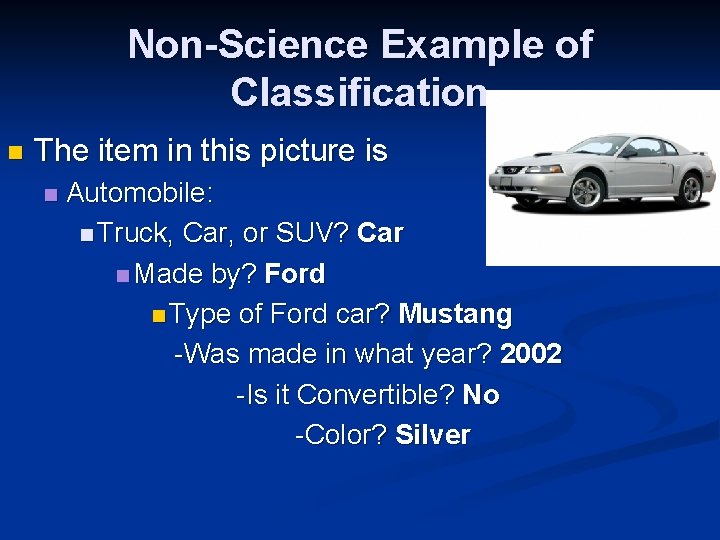
Non-Science Example of Classification n The item in this picture is n Automobile: n Truck, Car, or SUV? Car n Made by? Ford n Type of Ford car? Mustang -Was made in what year? 2002 -Is it Convertible? No -Color? Silver
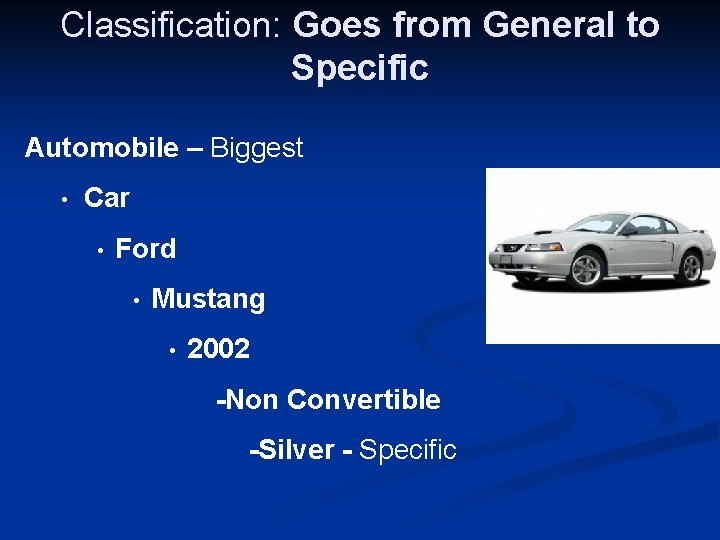
Classification: Goes from General to Specific Automobile – Biggest • Car • Ford • Mustang • 2002 -Non Convertible -Silver - Specific
Classification n Classify – to group things together based on similarities n Why Classify? n To make organisms easier to identify n To make organisms easier to compare n How do we classify? n Compare Traits – features or characteristics of an organisms
Little Known Fact: There are over ___1. 5 Million_____; and more are discovered each year. n What do we classify? Somewhere between 2 and 100 million have yet to be discovered. n n • Classification serves as an organization system for all the existing and new organisms The Science of Classification is called Taxonomy
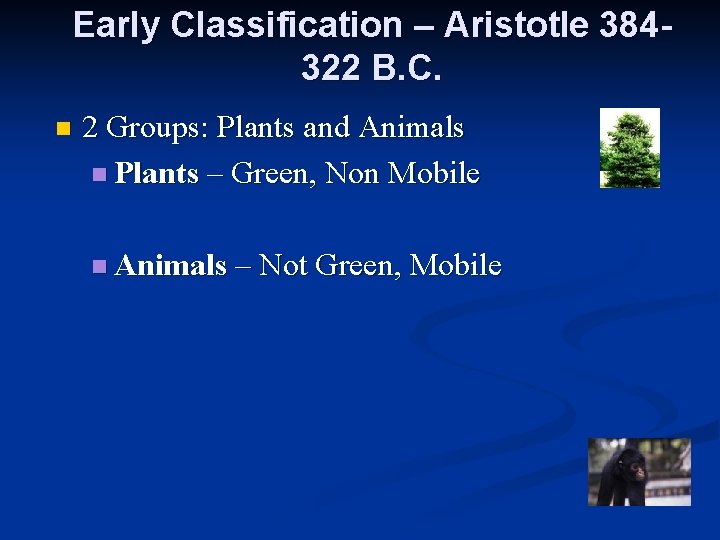
Early Classification – Aristotle 384322 B. C. n 2 Groups: Plants and Animals n Plants – Green, Non Mobile n Animals – Not Green, Mobile
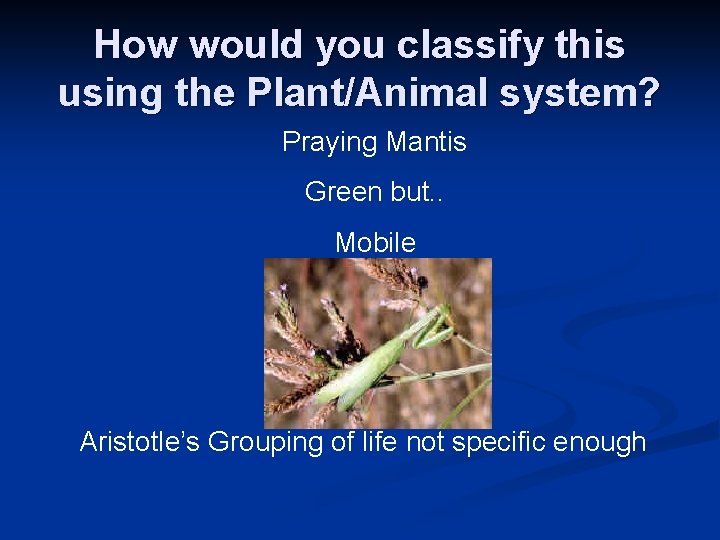
How would you classify this using the Plant/Animal system? Praying Mantis Green but. . Mobile Aristotle’s Grouping of life not specific enough
Tools Used to Classify Organisms 1. Comparative Anatomy n Compares Physical Structures, Traits 2. Biochemistry – DNA and RNA 3. Embryology – Developing Embryos 4. Molecular Basis – Cellular Structure 5. Phylogeny n Related Organisms with common ancestors, Derived Characters
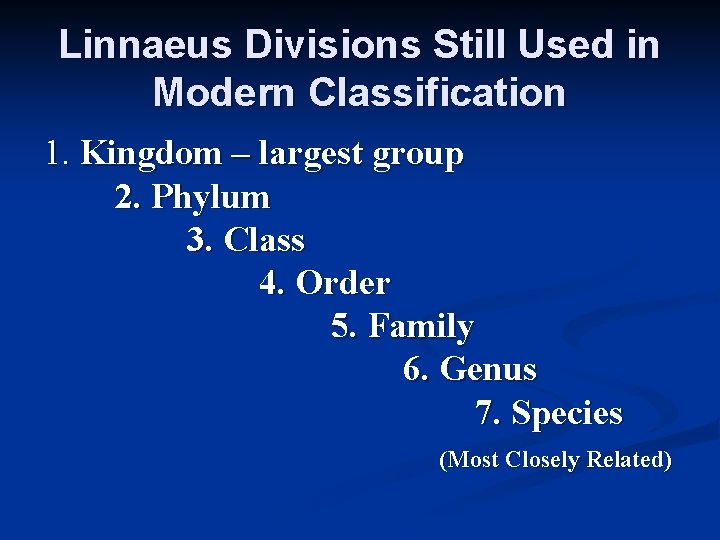
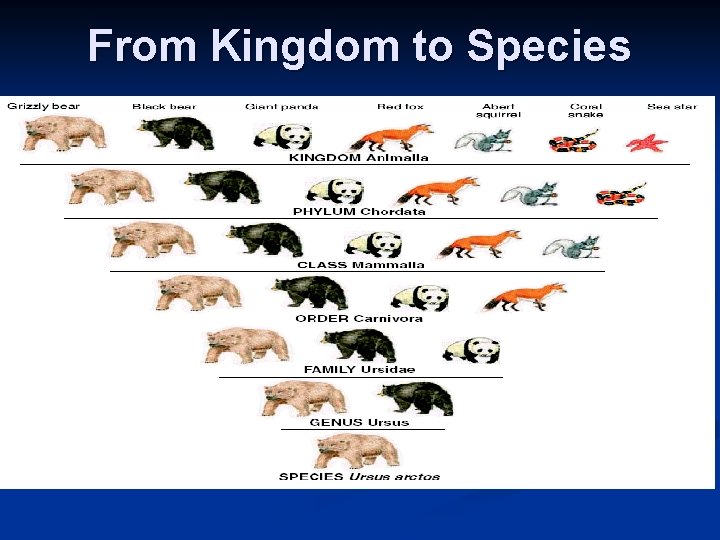
Linnaeus Divisions Still Used in Modern Classification 1. Kingdom – largest group 2. Phylum 3. Class 4. Order 5. Family 6. Genus 7. Species (Most Closely Related)
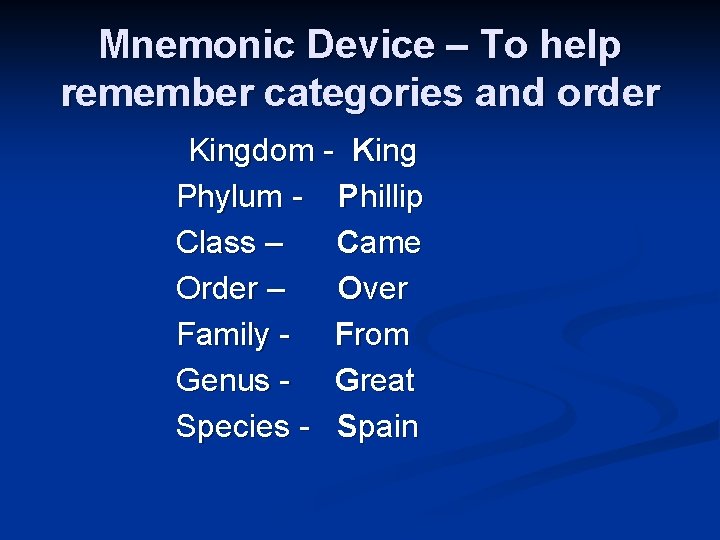
Mnemonic Device – To help remember categories and order Kingdom - King Phylum - Phillip Class – Came Order – Over Family - From Genus - Great Species - Spain
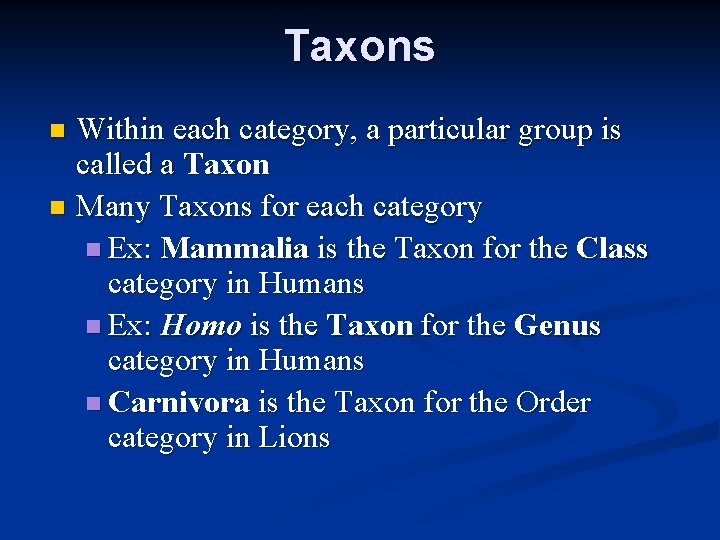
Taxons Within each category, a particular group is called a Taxon n Many Taxons for each category n Ex: Mammalia is the Taxon for the Class category in Humans n Ex: Homo is the Taxon for the Genus category in Humans n Carnivora is the Taxon for the Order category in Lions n
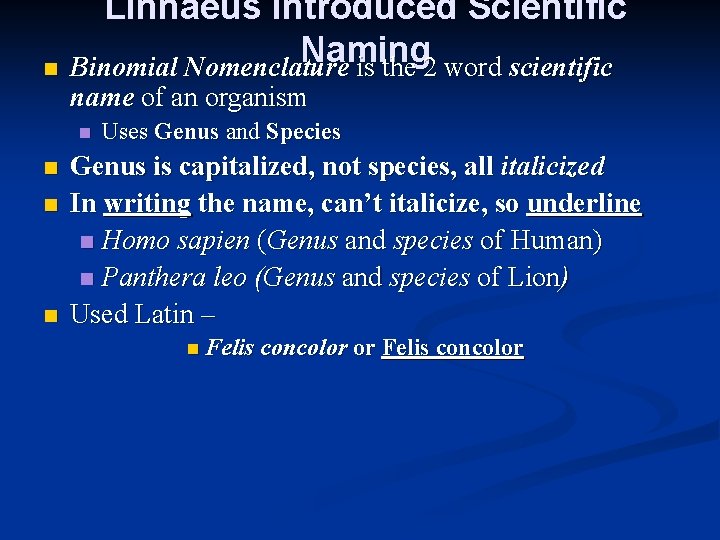
n Linnaeus Introduced Scientific Naming Binomial Nomenclature is the 2 word scientific name of an organism n n Uses Genus and Species Genus is capitalized, not species, all italicized In writing the name, can’t italicize, so underline n Homo sapien (Genus and species of Human) n Panthera leo (Genus and species of Lion) Used Latin – n Felis concolor or Felis concolor
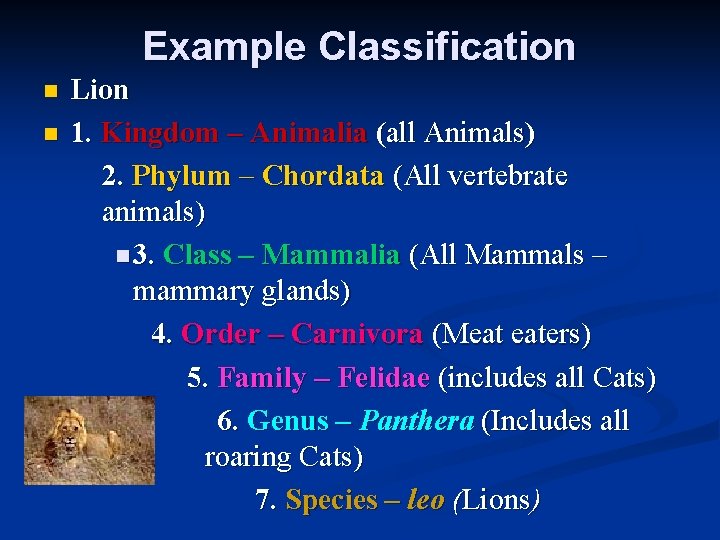
Example Classification n n Lion 1. Kingdom – Animalia (all Animals) 2. Phylum – Chordata (All vertebrate animals) n 3. Class – Mammalia (All Mammals – mammary glands) 4. Order – Carnivora (Meat eaters) 5. Family – Felidae (includes all Cats) 6. Genus – Panthera (Includes all roaring Cats) 7. Species – leo (Lions)
From Kingdom to Species
Three Domain System Classification
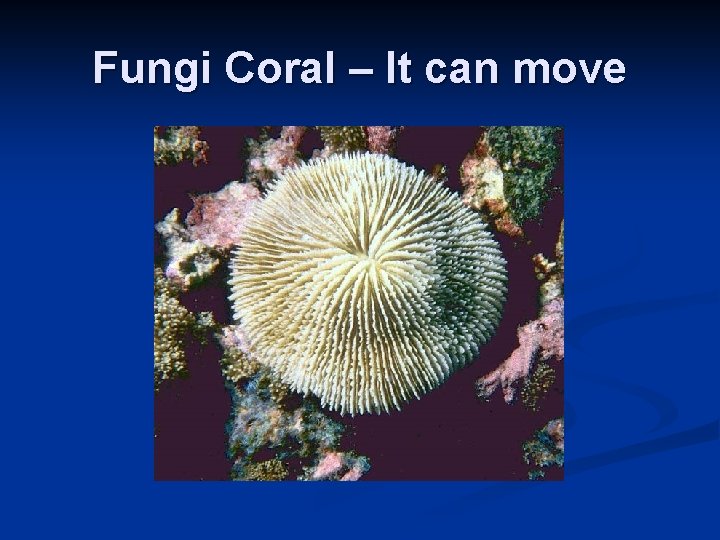
Fungi Coral – It can move
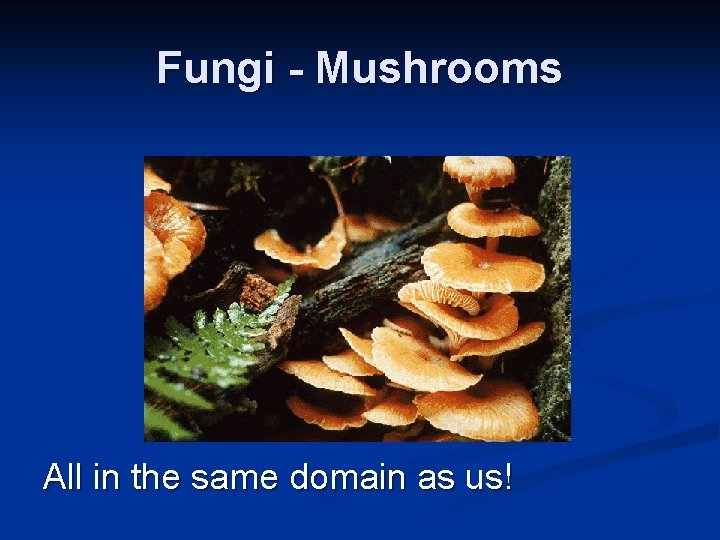
Fungi - Mushrooms All in the same domain as us!
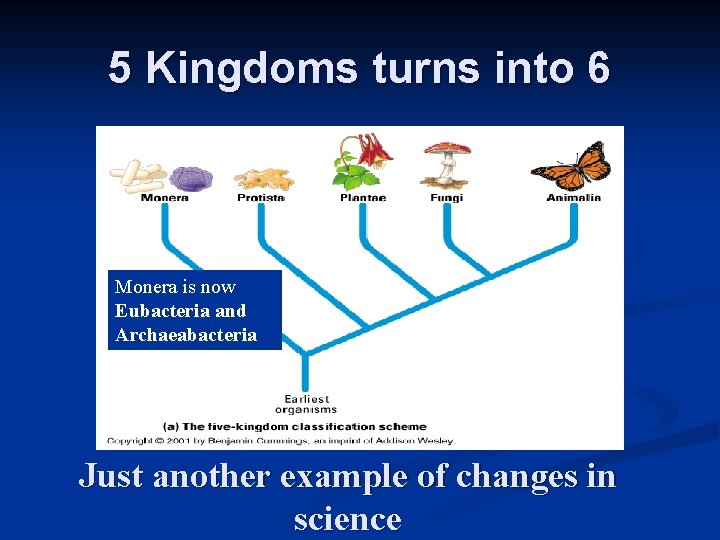
3 Domains contain 6 Kingdoms Classification
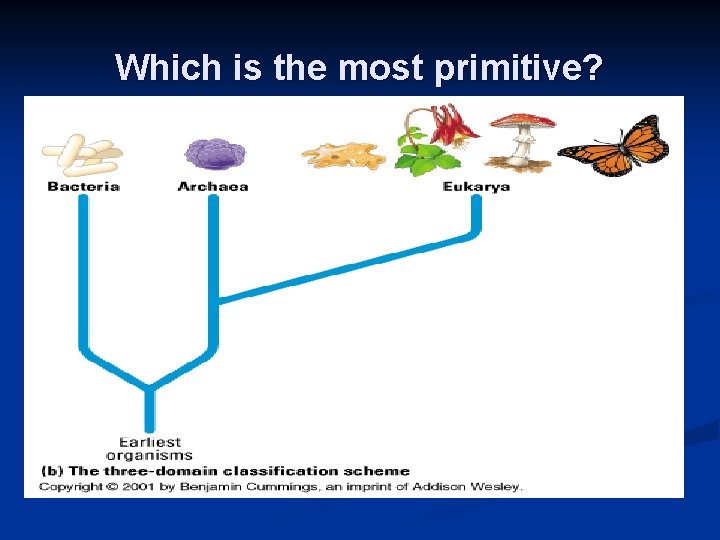
Three Domain System n Eubacteria – modern common bacteria n Archaea – ancient organisms related to common bacteria n Eukarya – Includes everything
Which is the most primitive?
5 Kingdoms turns into 6 Monera is now Eubacteria and Archaeabacteria Just another example of changes in science
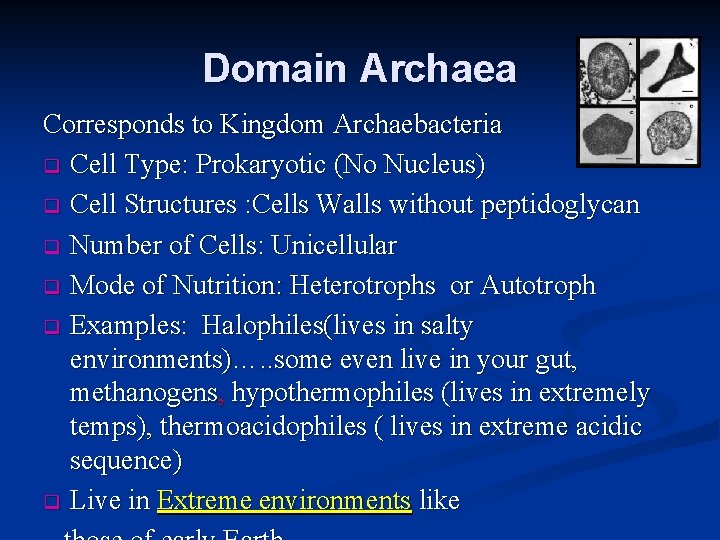
Domain Archaea Corresponds to Kingdom Archaebacteria q Cell Type: Prokaryotic (No Nucleus) q Cell Structures : Cells Walls without peptidoglycan q Number of Cells: Unicellular q Mode of Nutrition: Heterotrophs or Autotroph q Examples: Halophiles(lives in salty environments)…. . some even live in your gut, methanogens, hypothermophiles (lives in extremely temps), thermoacidophiles ( lives in extreme acidic sequence) q Live in Extreme environments like
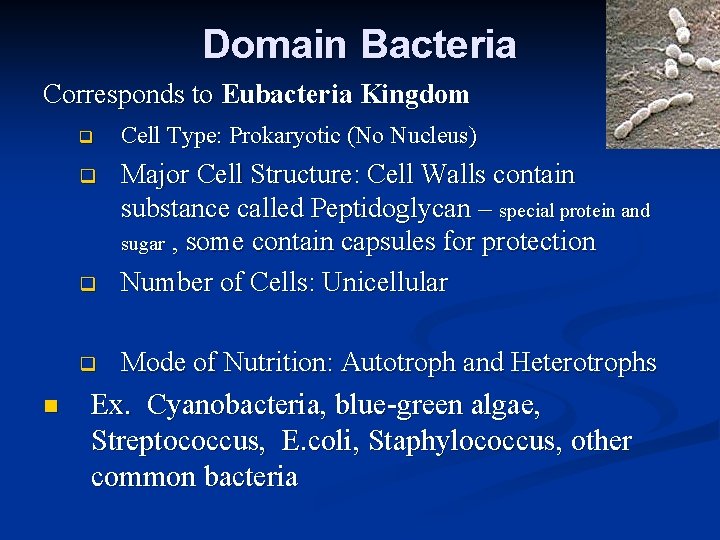
Domain Bacteria Corresponds to Eubacteria Kingdom n q Cell Type: Prokaryotic (No Nucleus) q q Major Cell Structure: Cell Walls contain substance called Peptidoglycan – special protein and sugar , some contain capsules for protection Number of Cells: Unicellular q Mode of Nutrition: Autotroph and Heterotrophs Ex. Cyanobacteria, blue-green algae, Streptococcus, E. coli, Staphylococcus, other common bacteria
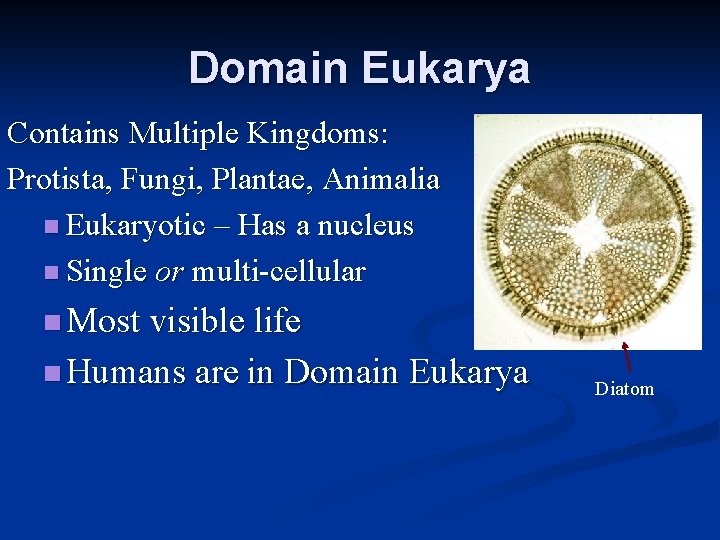
Domain Eukarya Contains Multiple Kingdoms: Protista, Fungi, Plantae, Animalia n Eukaryotic – Has a nucleus n Single or multi-cellular n Most visible life n Humans are in Domain Eukarya Diatom
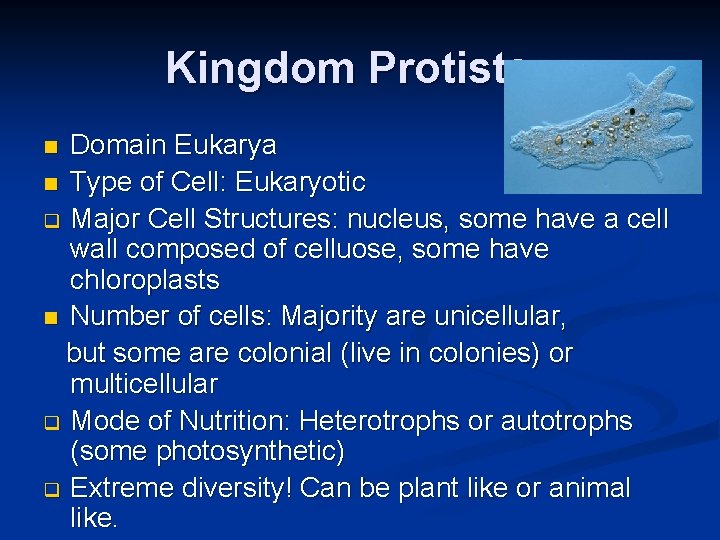
Kingdom Protista Domain Eukarya n Type of Cell: Eukaryotic q Major Cell Structures: nucleus, some have a cell wall composed of celluose, some have chloroplasts n Number of cells: Majority are unicellular, but some are colonial (live in colonies) or multicellular q Mode of Nutrition: Heterotrophs or autotrophs (some photosynthetic) q Extreme diversity! Can be plant like or animal like. n
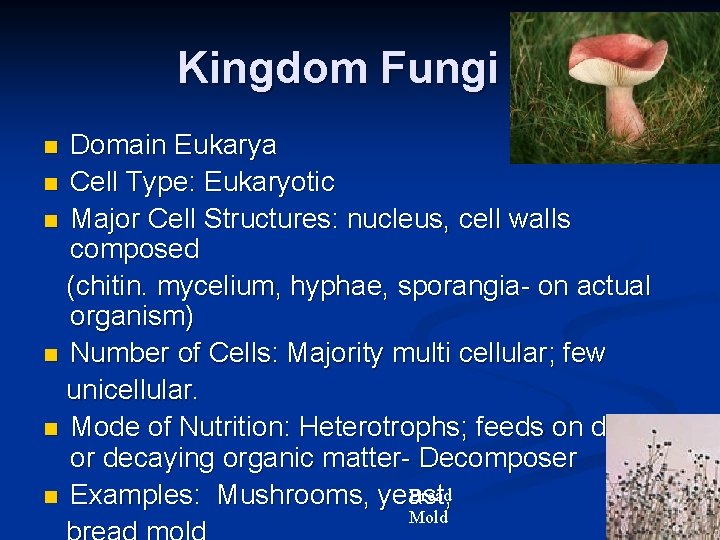
Kingdom Fungi Domain Eukarya n Cell Type: Eukaryotic n Major Cell Structures: nucleus, cell walls composed (chitin. mycelium, hyphae, sporangia- on actual organism) n Number of Cells: Majority multi cellular; few unicellular. n Mode of Nutrition: Heterotrophs; feeds on dead or decaying organic matter- Decomposer Bread n Examples: Mushrooms, yeast, n Mold
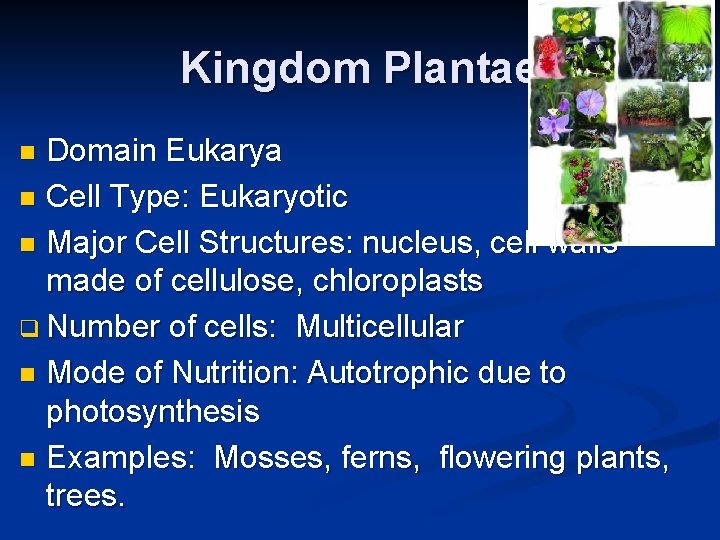
Kingdom Plantae Domain Eukarya n Cell Type: Eukaryotic n Major Cell Structures: nucleus, cell walls made of cellulose, chloroplasts q Number of cells: Multicellular n Mode of Nutrition: Autotrophic due to photosynthesis n Examples: Mosses, ferns, flowering plants, trees. n
Kingdom Animalia Domain Eukarya n Cell Type: Eukaryotic n Major cell structures: nucleus, ER, mitochondria, lysosome, vacuole, Golgi apparatus, etc. NO CELL WALL n Number of Cells: Multicellular, n Mode of Nutrition: Heterotrophic n Examples: Sponges, worms, insects, fishes, mammals, reptiles. n Extreme diversity is found in this kingdom n
6 Kingdom System Eubacteria Archaeabacteria Protista Fungi Plantae Animalia