SuperKamiokande detector 41 4 m A 50 k
- Slides: 22
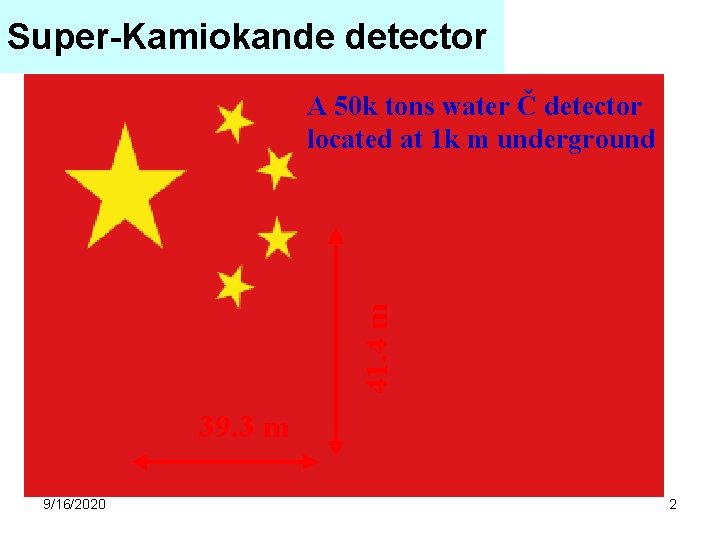
Super-Kamiokande detector 41. 4 m A 50 k tons water Č detector located at 1 k m underground 39. 3 m 9/16/2020 2
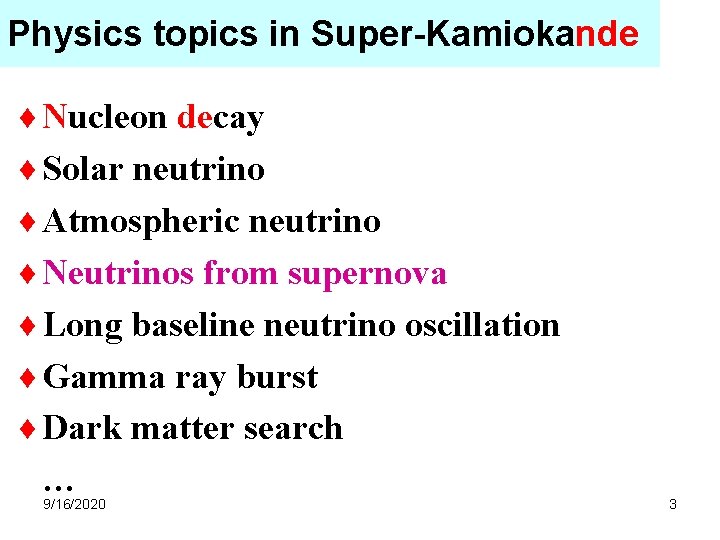
Physics topics in Super-Kamiokande ¨ Nucleon decay ¨ Solar neutrino ¨ Atmospheric neutrino ¨ Neutrinos from supernova ¨ Long baseline neutrino oscillation ¨ Gamma ray burst ¨ Dark matter search … 9/16/2020 3
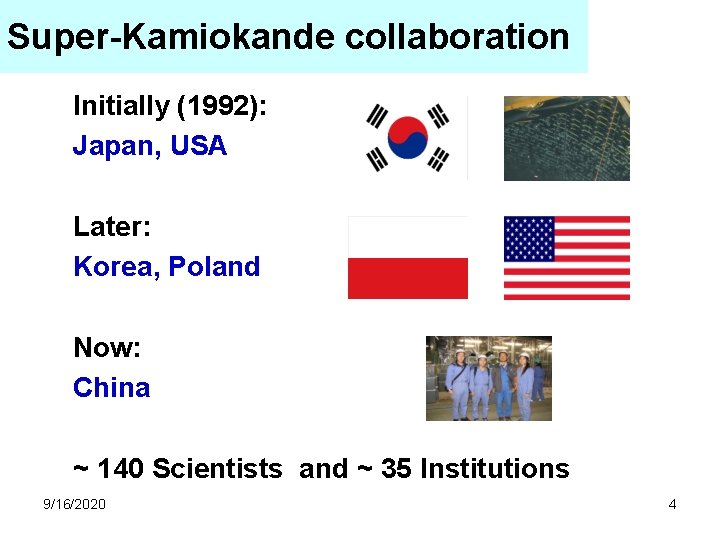
Super-Kamiokande collaboration Initially (1992): Japan, USA Later: Korea, Poland Now: China ~ 140 Scientists and ~ 35 Institutions 9/16/2020 4
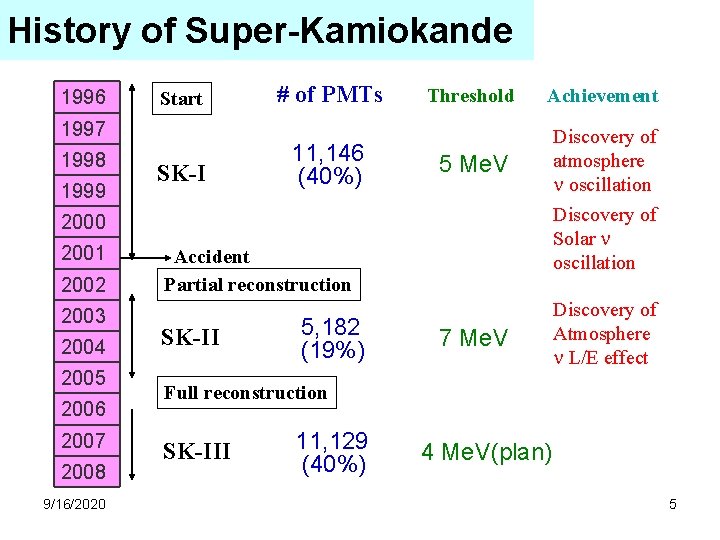
History of Super-Kamiokande 1996 Start 1997 1998 1999 SK-I # of PMTs 11, 146 (40%) Threshold Achievement 5 Me. V Discovery of atmosphere oscillation Discovery of Solar oscillation 2000 2001 2002 2003 2004 2005 2006 2007 2008 9/16/2020 Accident Partial reconstruction SK-II 5, 182 (19%) 7 Me. V Discovery of Atmosphere L/E effect Full reconstruction SK-III 11, 129 (40%) 4 Me. V(plan) 5
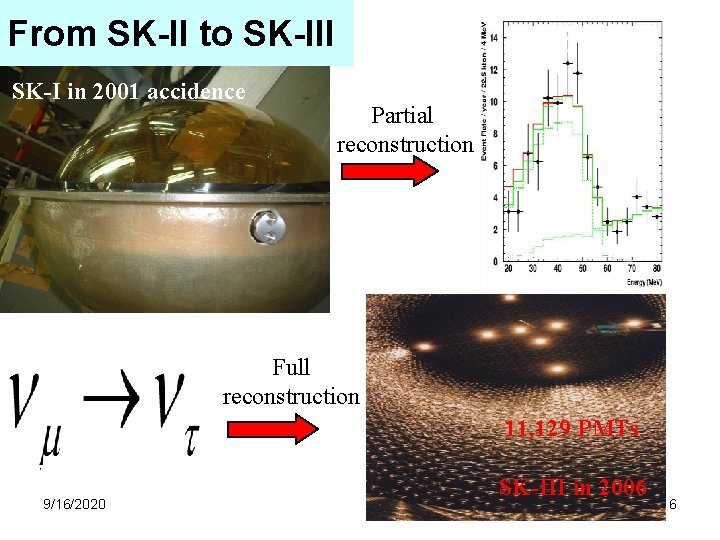
From SK-II to SK-III SK-I in 2001 accidence 5, 182 PMTs Partial reconstruction SK-II in 2002 Full reconstruction 11, 129 PMTs PMT with FRP mask 9/16/2020 SK-III in 2006 6
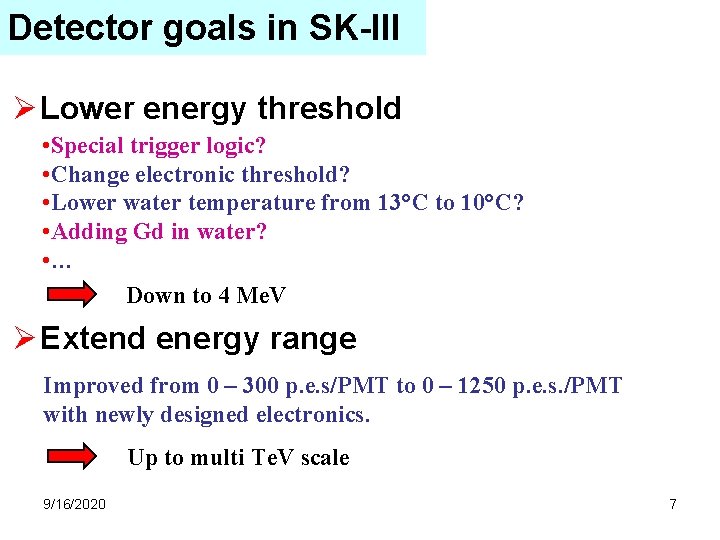
Detector goals in SK-III Ø Lower energy threshold • Special trigger logic? • Change electronic threshold? • Lower water temperature from 13°C to 10°C? • Adding Gd in water? • … Down to 4 Me. V Ø Extend energy range Improved from 0 – 300 p. e. s/PMT to 0 – 1250 p. e. s. /PMT with newly designed electronics. Up to multi Te. V scale 9/16/2020 7
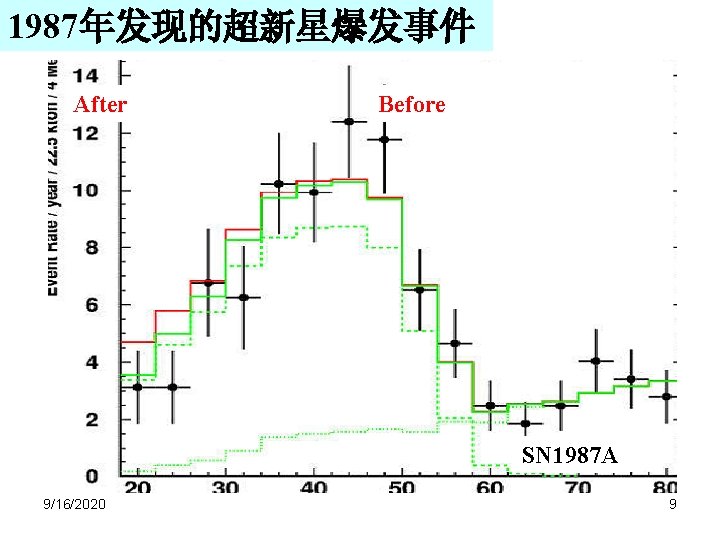
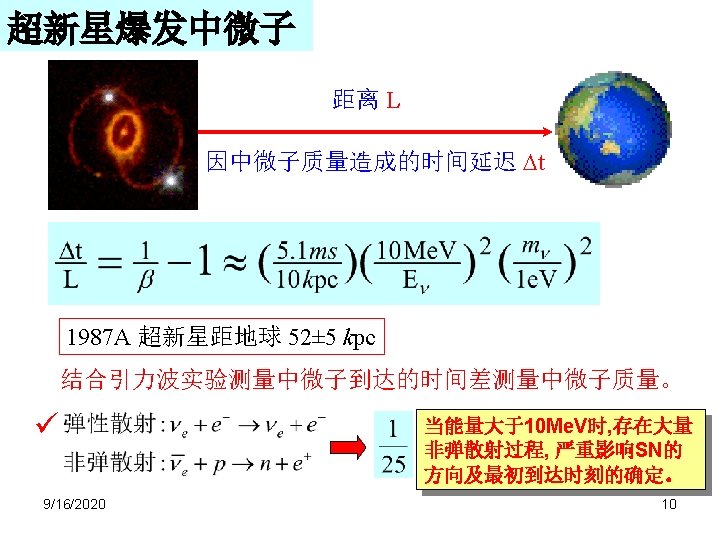
1987年发现的超新星爆发事件 After Before SN 1987 A 9/16/2020 9
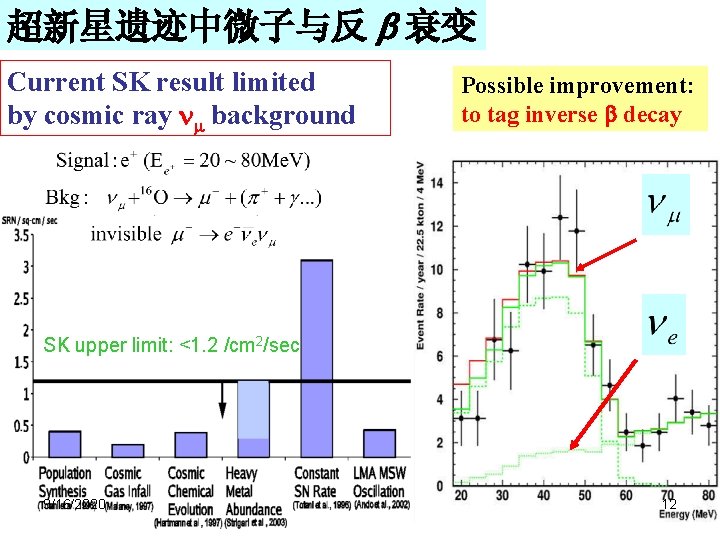
超新星遗迹中微子与反 衰变 Current SK result limited by cosmic ray background Possible improvement: to tag inverse decay SK upper limit: <1. 2 /cm 2/sec 9/16/2020 12
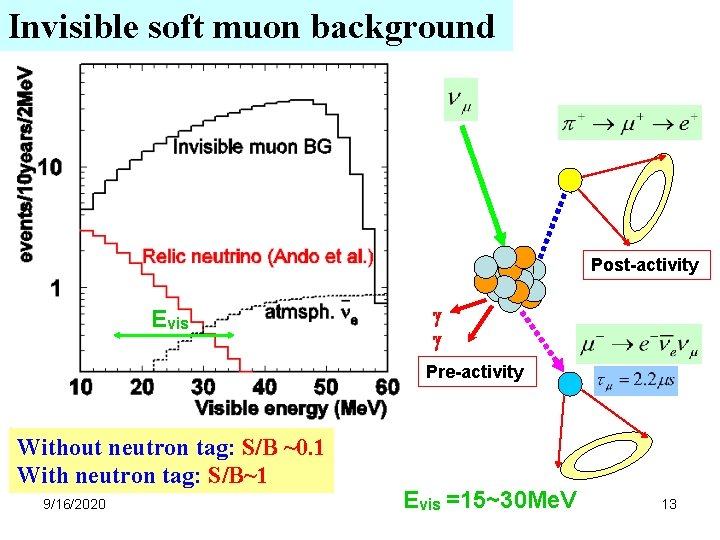
Invisible soft muon background Post-activity Evis Pre-activity Without neutron tag: S/B ~0. 1 With neutron tag: S/B~1 9/16/2020 Evis =15~30 Me. V 13
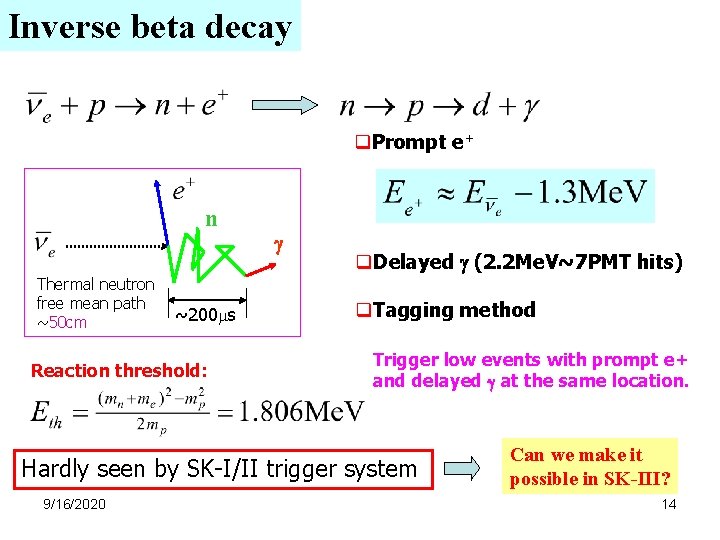
Inverse beta decay q. Prompt e+ n Thermal neutron free mean path ~50 cm ~200 s Reaction threshold: q. Delayed (2. 2 Me. V~7 PMT hits) q. Tagging method Trigger low events with prompt e+ and delayed at the same location. Hardly seen by SK-I/II trigger system 9/16/2020 Can we make it possible in SK-III? 14
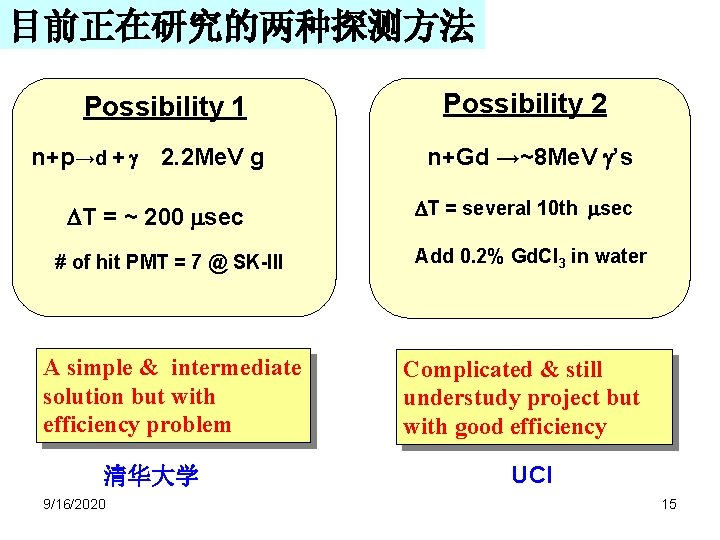
目前正在研究的两种探测方法 Possibility 1 n+p→d + 2. 2 Me. V g DT = ~ 200 sec # of hit PMT = 7 @ SK-III A simple & intermediate solution but with efficiency problem 清华大学 9/16/2020 Possibility 2 n+Gd →~8 Me. V ’s DT = several 10 th sec Add 0. 2% Gd. Cl 3 in water Complicated & still understudy project but with good efficiency UCI 15
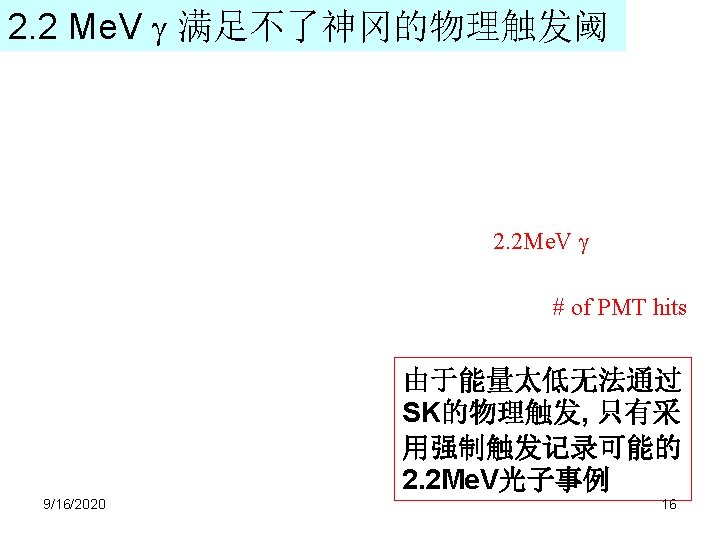
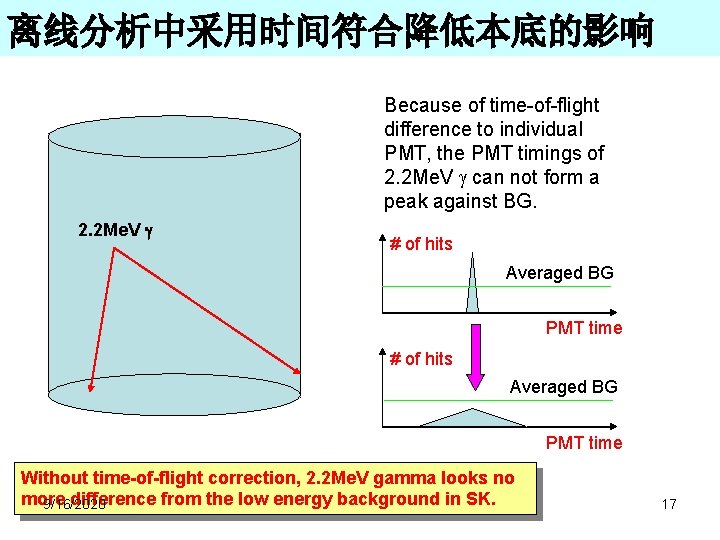
离线分析中采用时间符合降低本底的影响 Because of time-of-flight difference to individual PMT, the PMT timings of 2. 2 Me. V can not form a peak against BG. 2. 2 Me. V # of hits Averaged BG PMT time Without time-of-flight correction, 2. 2 Me. V gamma looks no more difference from the low energy background in SK. 9/16/2020 17
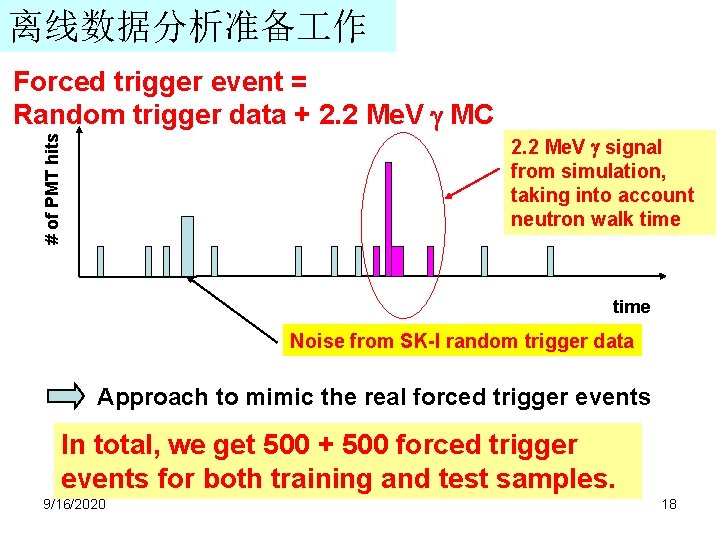
离线数据分析准备 作 # of PMT hits Forced trigger event = Random trigger data + 2. 2 Me. V MC 2. 2 Me. V signal from simulation, taking into account neutron walk time Noise from SK-I random trigger data Approach to mimic the real forced trigger events In total, we get 500 + 500 forced trigger events for both training and test samples. 9/16/2020 18
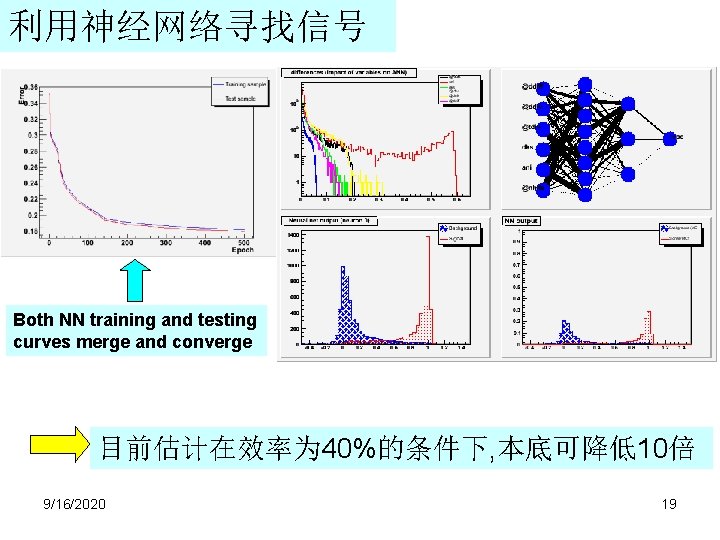
利用神经网络寻找信号 Both NN training and testing curves merge and converge 目前估计在效率为 40%的条件下, 本底可降低10倍 9/16/2020 19
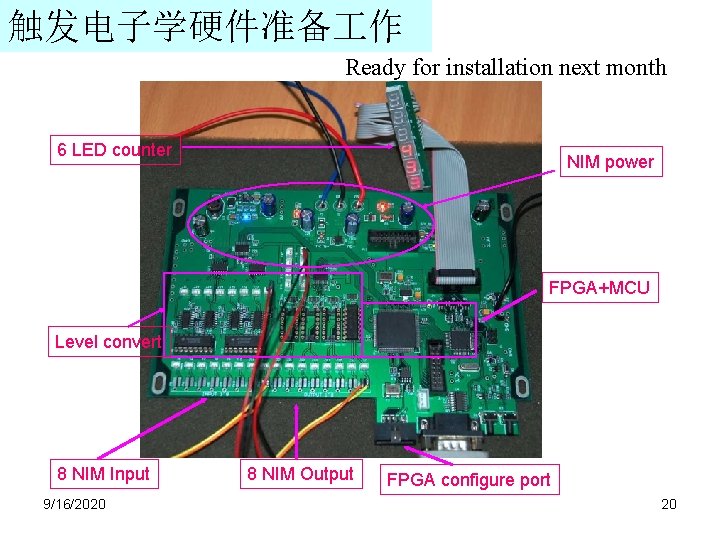
触发电子学硬件准备 作 Ready for installation next month 6 LED counter NIM power FPGA+MCU Level convert 8 NIM Input 9/16/2020 8 NIM Output FPGA configure port 20
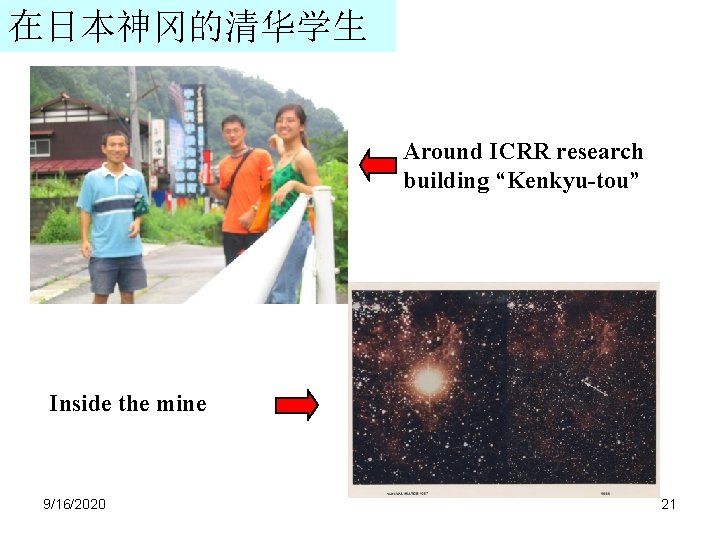
在日本神冈的清华学生 Around ICRR research building “Kenkyu-tou” Inside the mine 9/16/2020 21