Sponge Set up Cornell Notes on pg 81
- Slides: 30
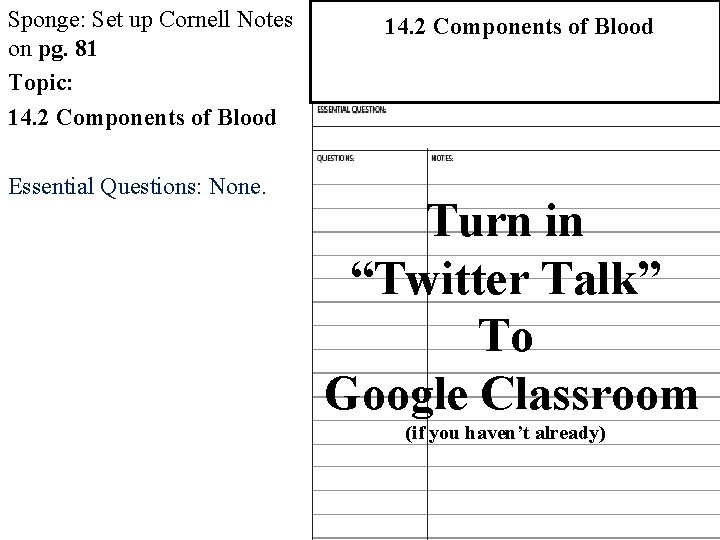
Sponge: Set up Cornell Notes on pg. 81 Topic: 14. 2 Components of Blood Essential Questions: None. 14. 2 Components of Blood 2. 1 Atoms, Ions, and Molecules Turn in “Twitter Talk” To Google Classroom (if you haven’t already)
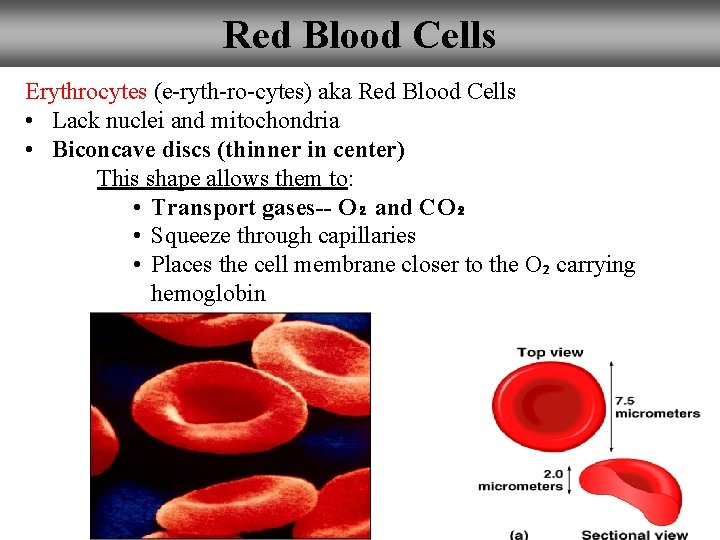
Red Blood Cells Erythrocytes (e-ryth-ro-cytes) aka Red Blood Cells • Lack nuclei and mitochondria • Biconcave discs (thinner in center) This shape allows them to: • Transport gases-- O₂ and CO₂ • Squeeze through capillaries • Places the cell membrane closer to the O₂ carrying hemoglobin 2
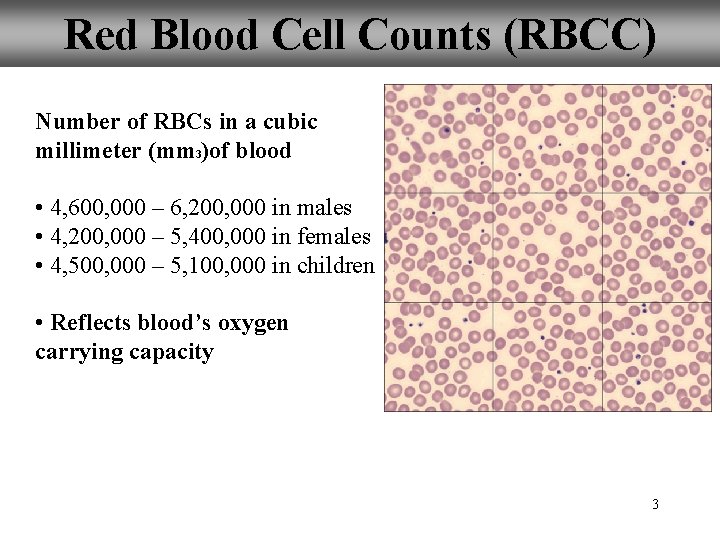
Red Blood Cell Counts (RBCC) Number of RBCs in a cubic millimeter (mm 3)of blood • 4, 600, 000 – 6, 200, 000 in males • 4, 200, 000 – 5, 400, 000 in females • 4, 500, 000 – 5, 100, 000 in children • Reflects blood’s oxygen carrying capacity 3
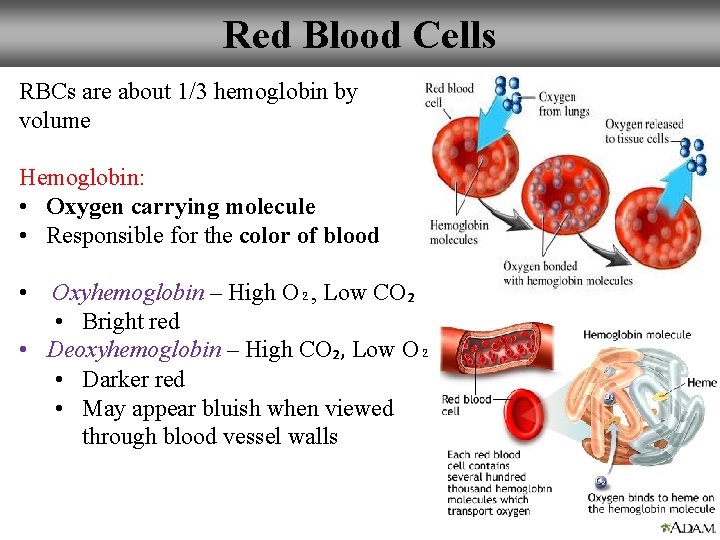
Red Blood Cells RBCs are about 1/3 hemoglobin by volume Hemoglobin: • Oxygen carrying molecule • Responsible for the color of blood • Oxyhemoglobin – High O₂, Low CO₂ • Bright red • Deoxyhemoglobin – High CO₂, Low O₂ • Darker red • May appear bluish when viewed through blood vessel walls 4
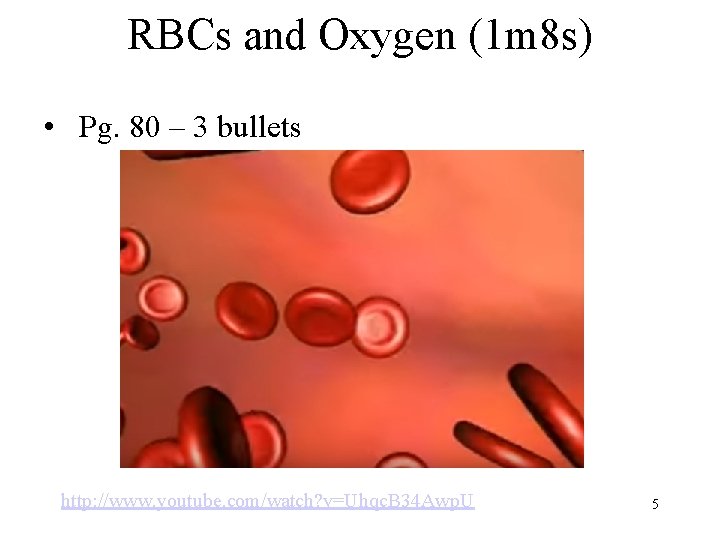
RBCs and Oxygen (1 m 8 s) • Pg. 80 – 3 bullets http: //www. youtube. com/watch? v=Uhqc. B 34 Awp. U 5
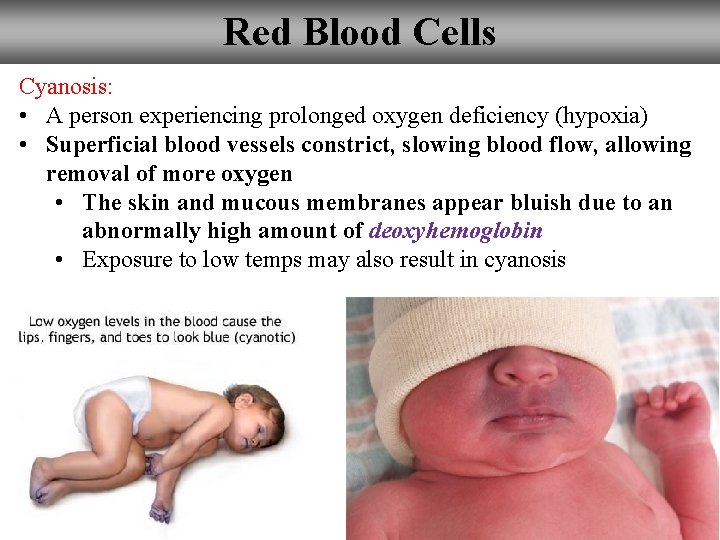
Red Blood Cells Cyanosis: • A person experiencing prolonged oxygen deficiency (hypoxia) • Superficial blood vessels constrict, slowing blood flow, allowing removal of more oxygen • The skin and mucous membranes appear bluish due to an abnormally high amount of deoxyhemoglobin • Exposure to low temps may also result in cyanosis 6
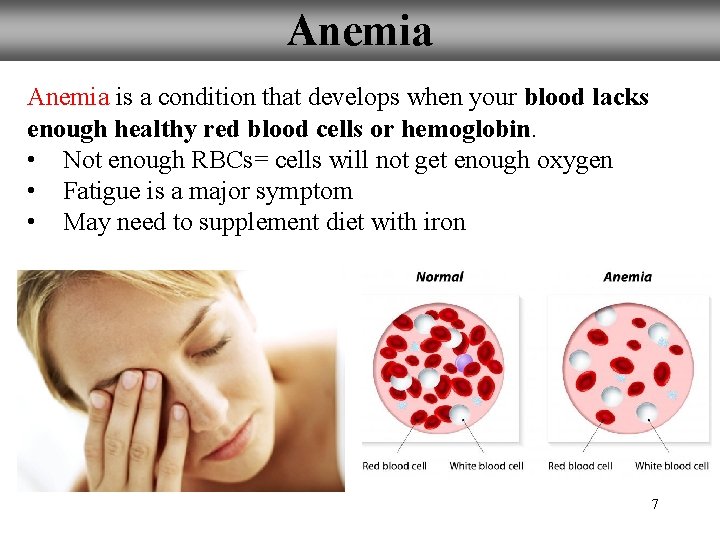
Anemia is a condition that develops when your blood lacks enough healthy red blood cells or hemoglobin. • Not enough RBCs= cells will not get enough oxygen • Fatigue is a major symptom • May need to supplement diet with iron 7
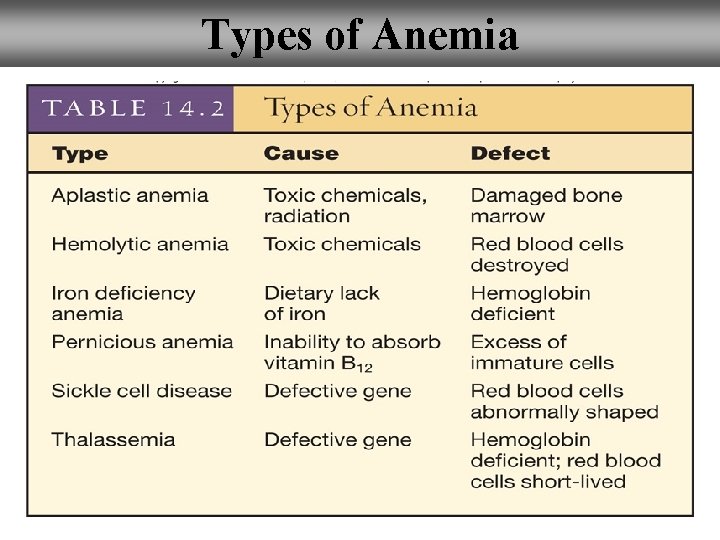
Types of Anemia 8
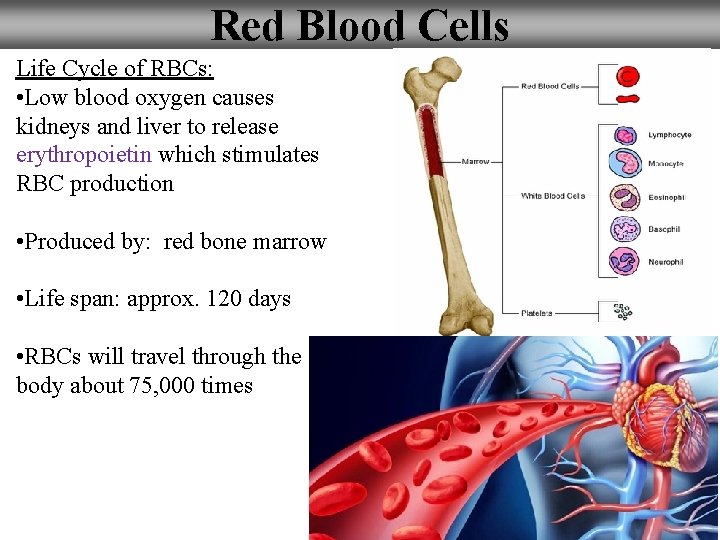
Red Blood Cells Life Cycle of RBCs: • Low blood oxygen causes kidneys and liver to release erythropoietin which stimulates RBC production • Produced by: red bone marrow • Life span: approx. 120 days • RBCs will travel through the body about 75, 000 times 9
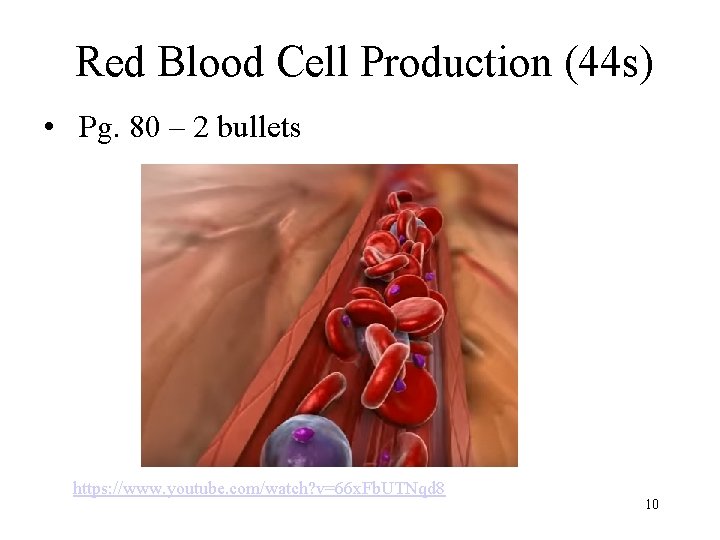
Red Blood Cell Production (44 s) • Pg. 80 – 2 bullets https: //www. youtube. com/watch? v=66 x. Fb. UTNqd 8 10
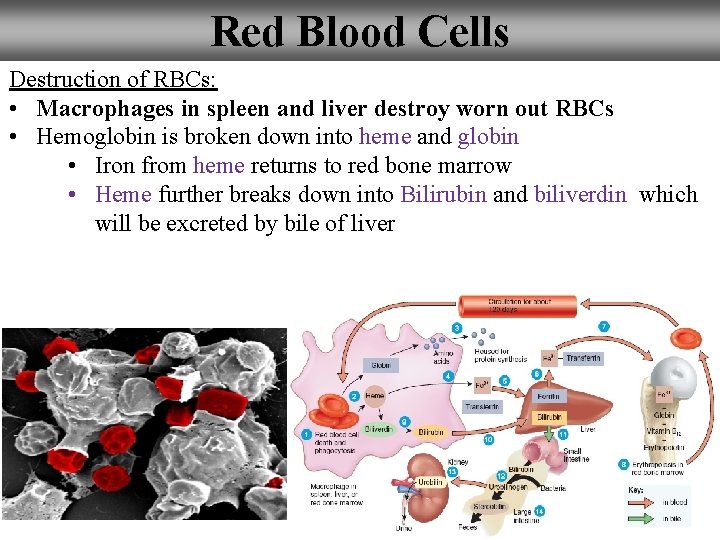
Red Blood Cells Destruction of RBCs: • Macrophages in spleen and liver destroy worn out RBCs • Hemoglobin is broken down into heme and globin • Iron from heme returns to red bone marrow • Heme further breaks down into Bilirubin and biliverdin which will be excreted by bile of liver 11
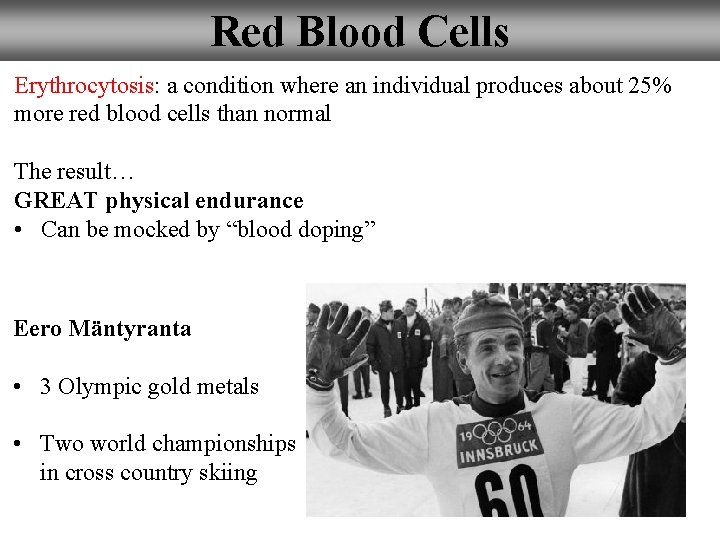
Red Blood Cells Erythrocytosis: a condition where an individual produces about 25% more red blood cells than normal The result… GREAT physical endurance • Can be mocked by “blood doping” Eero Mäntyranta • 3 Olympic gold metals • Two world championships in cross country skiing 12
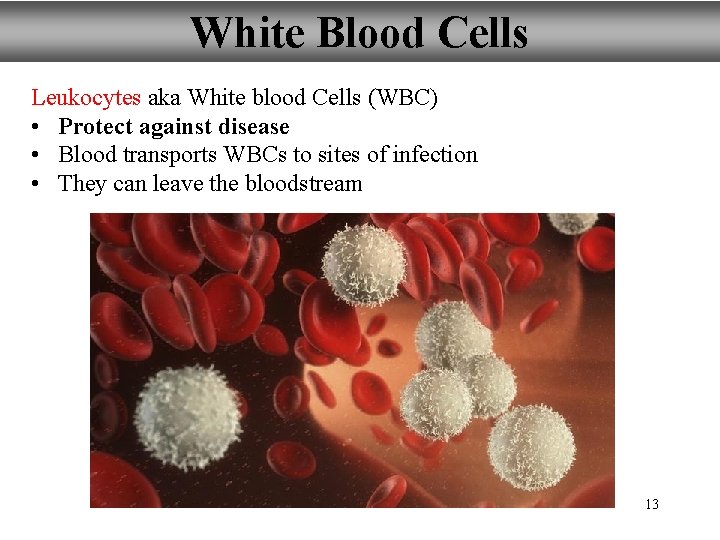
White Blood Cells Leukocytes aka White blood Cells (WBC) • Protect against disease • Blood transports WBCs to sites of infection • They can leave the bloodstream 13
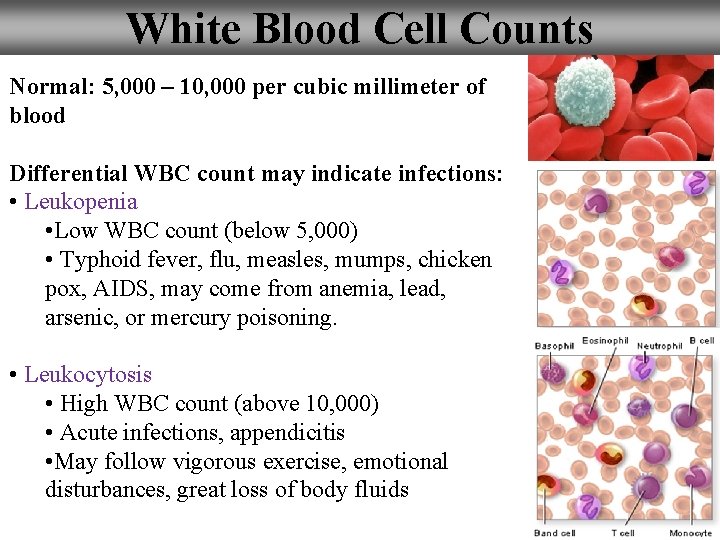
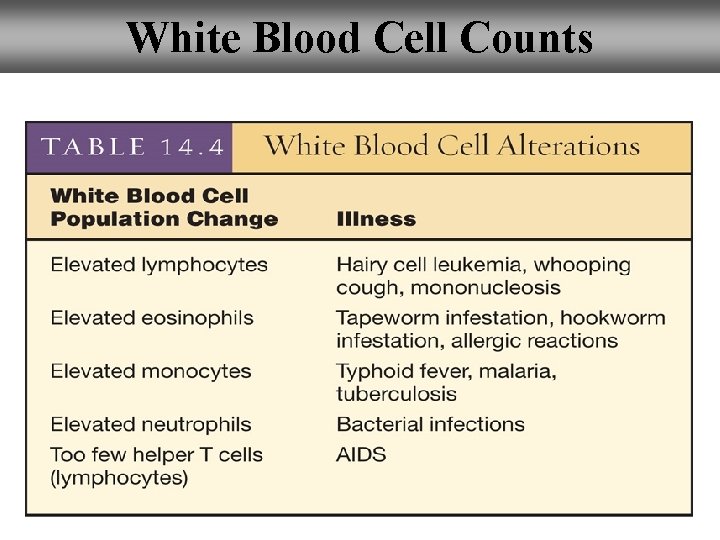
White Blood Cell Counts Normal: 5, 000 – 10, 000 per cubic millimeter of blood Differential WBC count may indicate infections: • Leukopenia • Low WBC count (below 5, 000) • Typhoid fever, flu, measles, mumps, chicken pox, AIDS, may come from anemia, lead, arsenic, or mercury poisoning. • Leukocytosis • High WBC count (above 10, 000) • Acute infections, appendicitis • May follow vigorous exercise, emotional disturbances, great loss of body fluids 14
White Blood Cell Counts 15
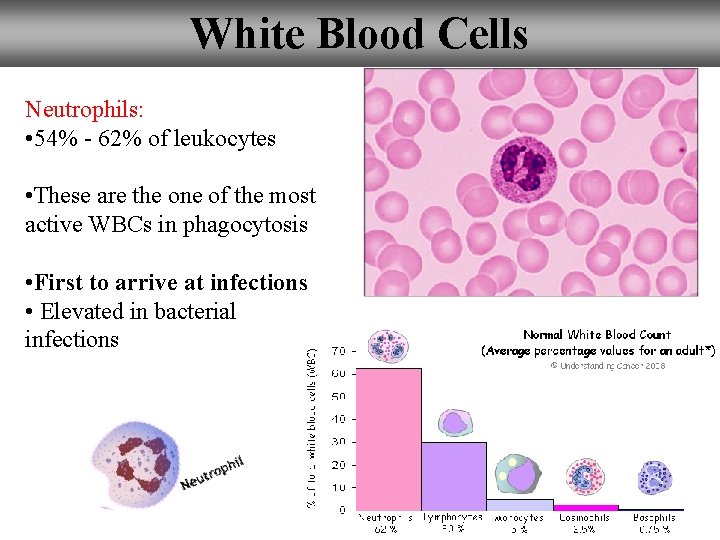
White Blood Cells Neutrophils: • 54% - 62% of leukocytes • These are the one of the most active WBCs in phagocytosis • First to arrive at infections • Elevated in bacterial infections 16
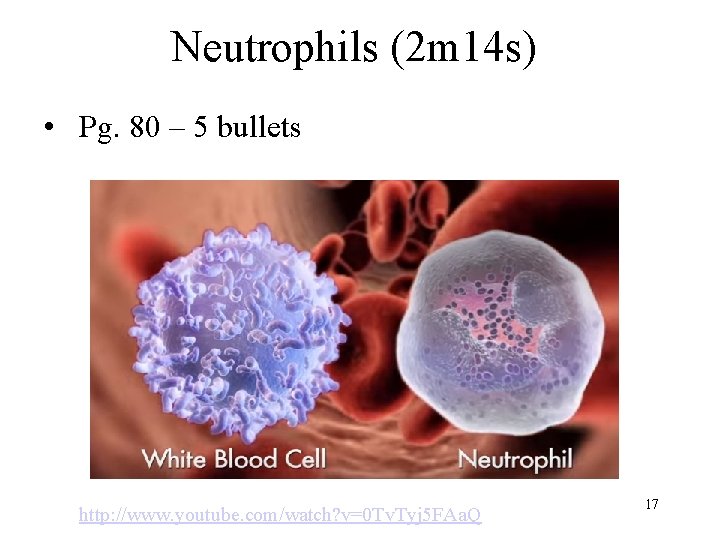
Neutrophils (2 m 14 s) • Pg. 80 – 5 bullets http: //www. youtube. com/watch? v=0 Tv. Tyj 5 FAa. Q 17
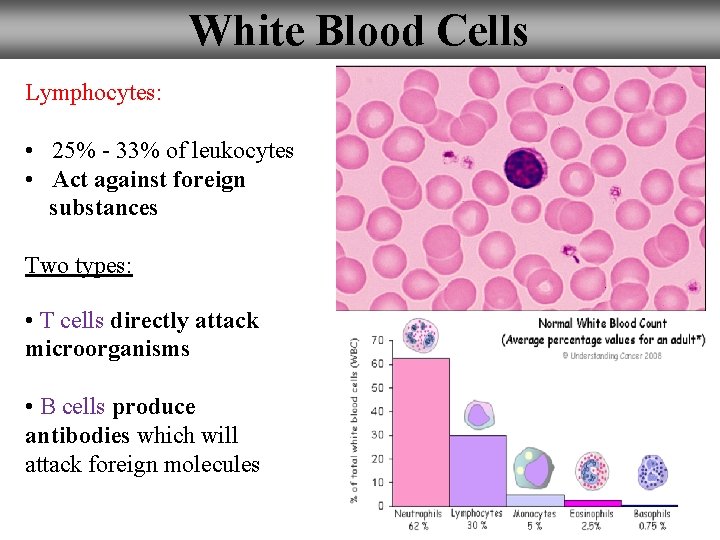
White Blood Cells Lymphocytes: • 25% - 33% of leukocytes • Act against foreign substances Two types: • T cells directly attack microorganisms • B cells produce antibodies which will attack foreign molecules 18
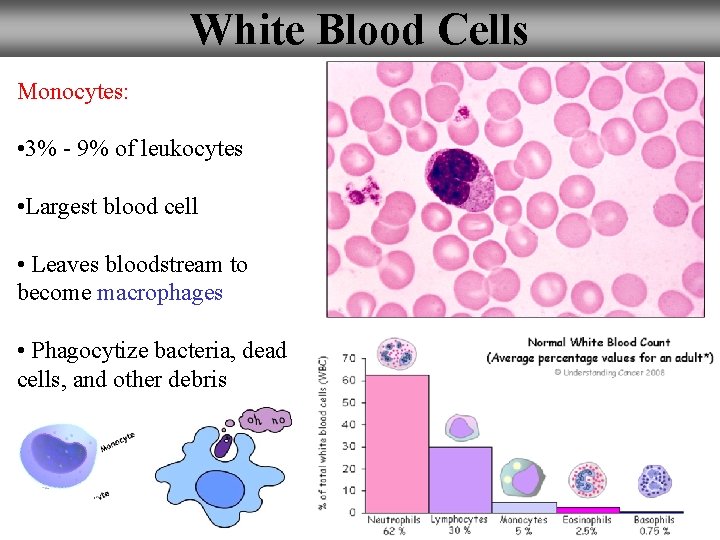
White Blood Cells Monocytes: • 3% - 9% of leukocytes • Largest blood cell • Leaves bloodstream to become macrophages • Phagocytize bacteria, dead cells, and other debris 19
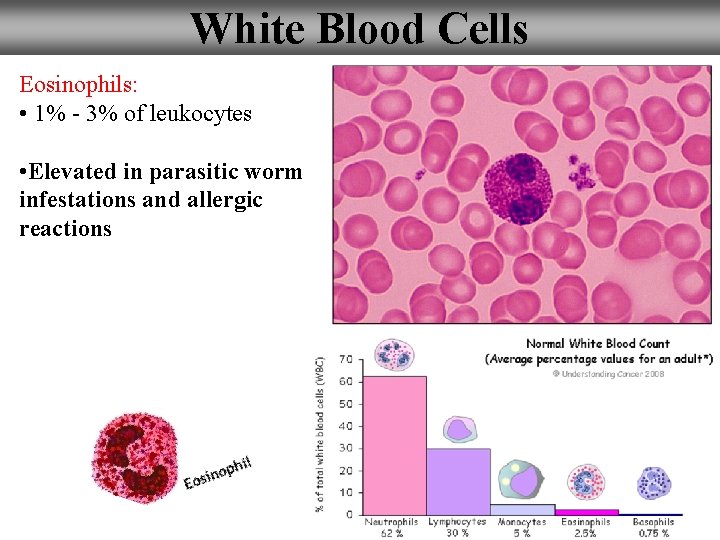
White Blood Cells Eosinophils: • 1% - 3% of leukocytes • Elevated in parasitic worm infestations and allergic reactions 20
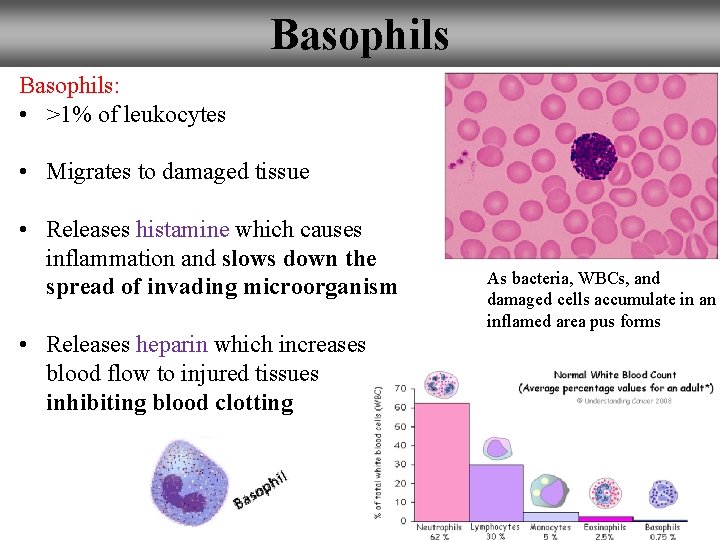
Basophils: • >1% of leukocytes • Migrates to damaged tissue • Releases histamine which causes inflammation and slows down the spread of invading microorganism • Releases heparin which increases blood flow to injured tissues inhibiting blood clotting As bacteria, WBCs, and damaged cells accumulate in an inflamed area pus forms 21
Types of WBCs and Their Functions (4 m 38 s) • Pg. 80 – 5 bullets http: //www. youtube. com/watch? v=Tdx-U 8 S 6 ZMk 22
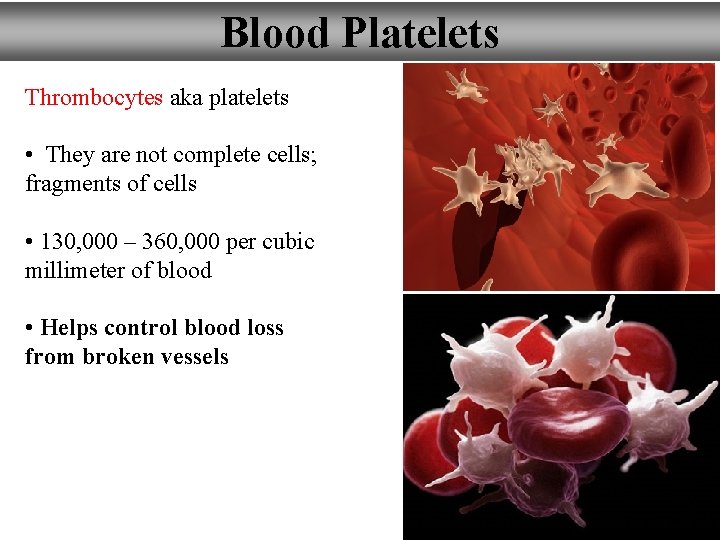
Blood Platelets Thrombocytes aka platelets • They are not complete cells; fragments of cells • 130, 000 – 360, 000 per cubic millimeter of blood • Helps control blood loss from broken vessels 23
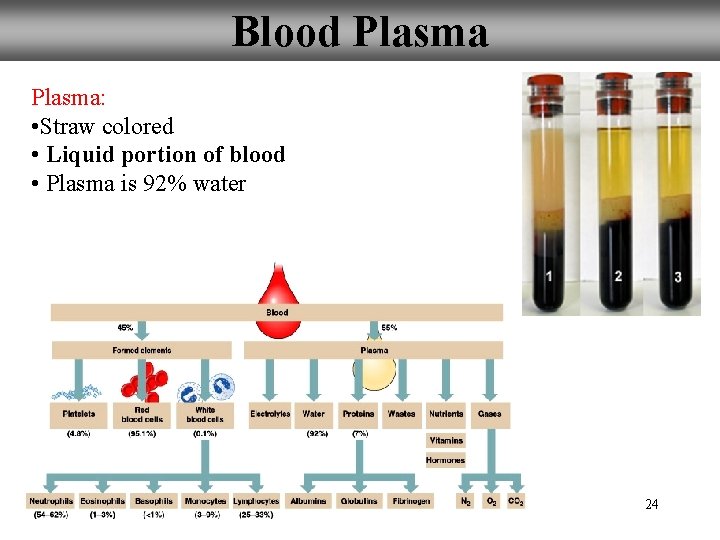
Blood Plasma: • Straw colored • Liquid portion of blood • Plasma is 92% water 24
Crash Course: Blood, Part I (4 m 28 s) • Pg. 80 – 5 bullets https: //www. youtube. com/watch? v=HQWlc. Sp 9 Sls&list=PLPXJmi. OQ 23 v 25 z. Xsbi. PZD 2 yc. T 1 k. JPRPXZb. G
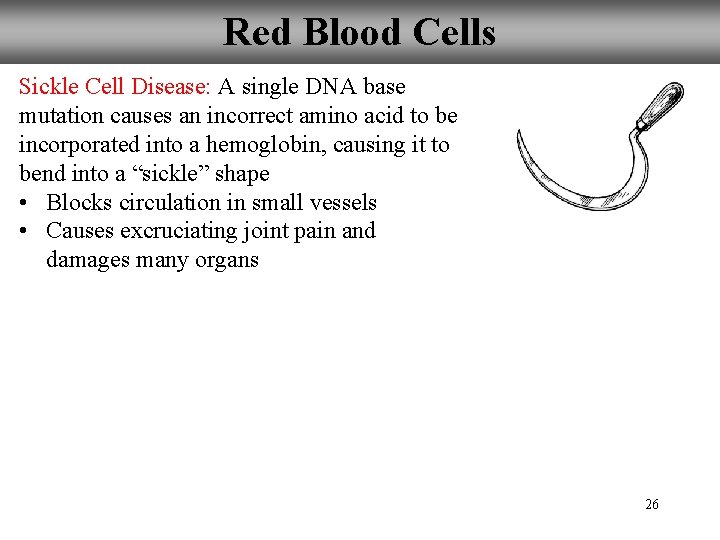
Red Blood Cells Sickle Cell Disease: A single DNA base mutation causes an incorrect amino acid to be incorporated into a hemoglobin, causing it to bend into a “sickle” shape • Blocks circulation in small vessels • Causes excruciating joint pain and damages many organs 26
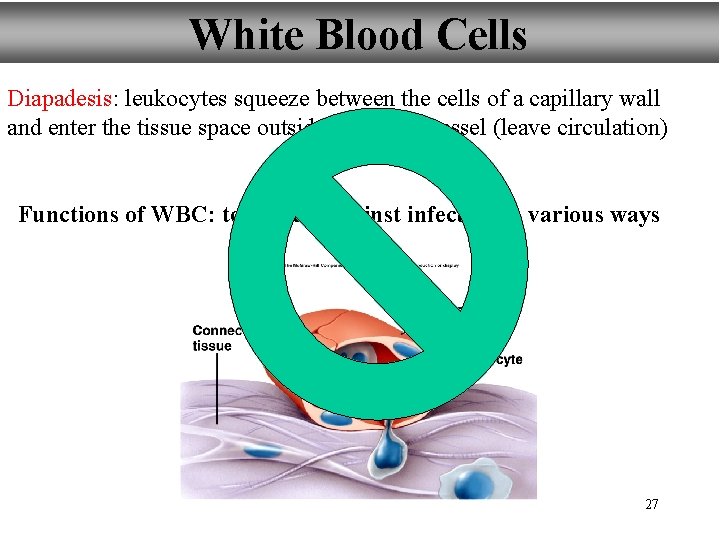
White Blood Cells Diapadesis: leukocytes squeeze between the cells of a capillary wall and enter the tissue space outside the blood vessel (leave circulation) Functions of WBC: to protect against infection in various ways 27
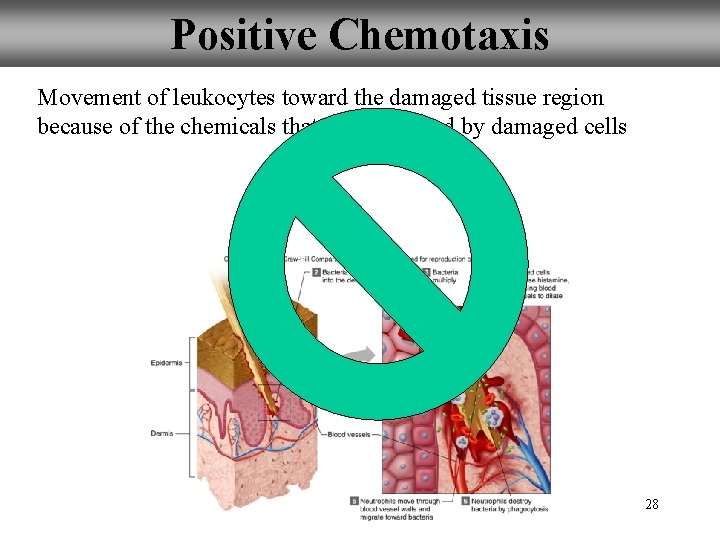
Positive Chemotaxis Movement of leukocytes toward the damaged tissue region because of the chemicals that were released by damaged cells 28
Diapedesis and Chemotaxis http: //www. youtube. com/watch? v=DMvix. Ap. Kz. Ks 29
Blood Cells Power. Point Directions: Please create a 1 -3 slide Powerpoint Presentation on the type of cell you are assigned. Mrs. Mc. Cobb will then grade/edit (as needed) the compilation PPT to present to the class on Thursday for notes. Save/Export as a Power. Point Presentation o File Export PPT Next Save as: (Title of PPT) Where: Desktop Export Submit to Edmodo. Please include all group members’ names in the comment section.