SOPHROLOGY Teachers Conference University of Essex Sandrine SingletonPerrin
- Slides: 12
SOPHROLOGY Teachers’ Conference, University of Essex Sandrine Singleton-Perrin June 2020
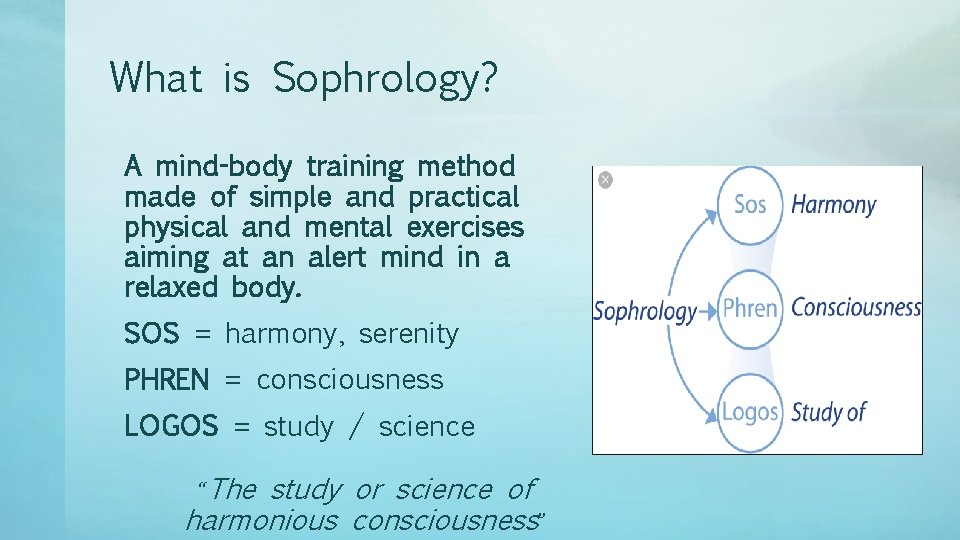
What is Sophrology? A mind-body training method made of simple and practical physical and mental exercises aiming at an alert mind in a relaxed body. SOS = harmony, serenity PHREN = consciousness LOGOS = study / science “The study or science of harmonious consciousness”
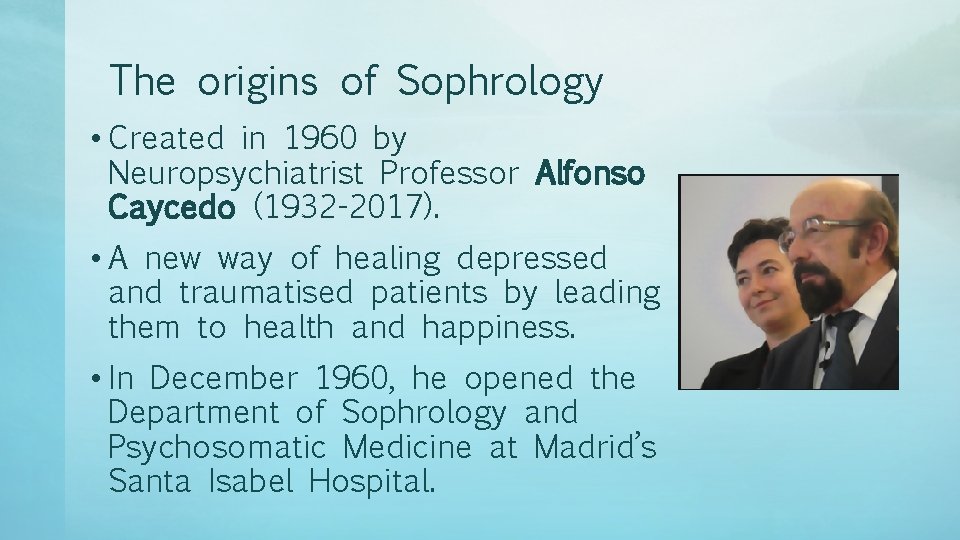
The origins of Sophrology • Created in 1960 by Neuropsychiatrist Professor Alfonso Caycedo (1932 -2017). • A new way of healing depressed and traumatised patients by leading them to health and happiness. • In December 1960, he opened the Department of Sophrology and Psychosomatic Medicine at Madrid’s Santa Isabel Hospital.
Sources and influences • Phenomenological psychiatry • Hypnosis • Western techniques of relaxation: Edmund Jacobson’s progressive muscle relaxation Johannes Schultz’s autogenic training. • Yoga and other Eastern techniques • Tibetan Buddhist meditation • Japanese Zen
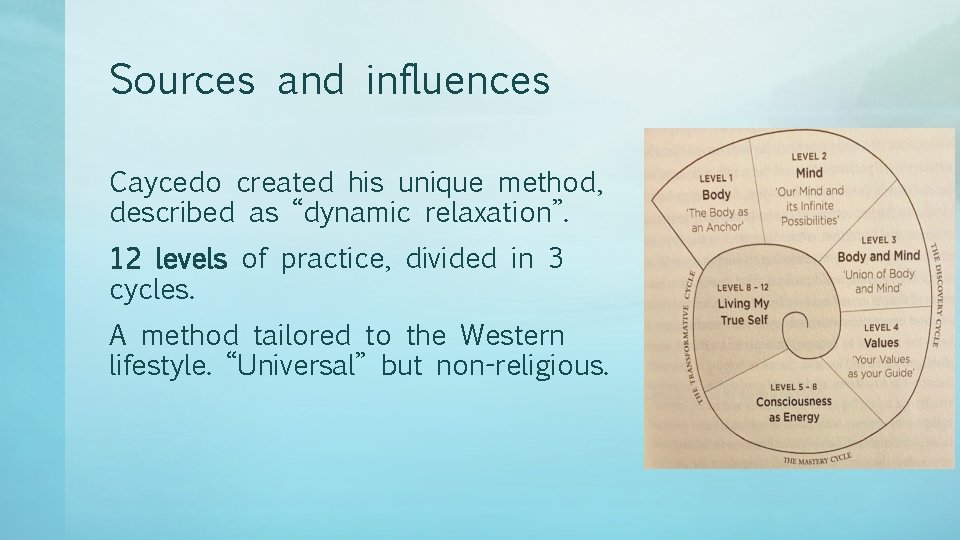
Sources and influences Caycedo created his unique method, described as “dynamic relaxation”. 12 levels of practice, divided in 3 cycles. A method tailored to the Western lifestyle. “Universal” but non-religious.
The areas of application of Sophrology § Medicine (palliative care, chronic diseases and sleep disorder …) § Ante-natal § Sports (nerve and pressure, motivation and energy levels, mental focus, maximise performance, and recovery for injuries) § Education (concentration, memory, preparing for exams, oral presentations, creativity , self-esteem, confidence…) § Performing arts (fright management, self-confidence) § Corporate world (stress management, burnout, managing performance, preparing for interviews , public speaking…) § Self-development and wellbeing (improve energy levels, building emotional resilience, managing stress and anxiety, restoring balance)
How does Sophrology work and is practised? • In a group setting where you will be taught a set sequence of exercises taking you through various levels of practice. • It can also be tailored to individual needs in one-toone sessions. It can help with specific issues (sleep disorder) • It is a guided practice combining breathing techniques, gentle movements and creative visualisations. • It is quick, easy, adaptable, and effective. It can also be very profound and powerful! No equipment is needed and it can be done anywhere. Once you
The power and uniqueness of Sophrology • It provides practical tools that can be integrated into daily life. An impowering practice. • Unlike traditional therapies, Sophrology doesn’t dwell on negativity. It doesn’t deny it, but rather it focuses on reinforcing the individual’s own inner resources for positivity. • Sophrology is “an immediate solution to everyday issues (…), but practised over time, it is able to transform your awareness and personal capacities for deep change”. (Dominique Antiglio) • Sophrology as the “unveiling of consciousness” (Prof Caycedo) • Ultimately the aim of Sophrology is to allow the person, through the mind-body connection, to permanently establish calm, balance and positivity in their life, to face life and its challenges but also act in the world in the best possible way.
The power and uniqueness of Sophrology • To encourage positive action: tapping into the resources of mind and body and making us focus intentionally on what feels good and positive in order to gradually change your whole sense of self /state of being. “All positive actions on one part of our consciousness will affect the totality of our being” (Caycedo) • Through repetition, the exercises in Sophrology help to create “virtuous circles”, ie to “rewire” the brain and forge new neural pathways that reinforce positive feelings. • A key part of the practice of Sophrology is the use of pauses in between exercises. The pauses allow the effects of the practice to settle into the body and mind. The person is able to record their subjective experience and deepen their awareness.
A typical Sophrology session A Body scan (to induce the “sophro-liminal state”) A Practice (dynamic relaxation, breath awareness, visualisations etc…) Pauses during which you listen to how you are feeling and observe sensations. No judgement. Come back to the room gently. Reflecting on the experience
BIBLIOGRAPHY • The Life-changing Power of Sophrology. Dominique Antiglio 2018 • The Sophrology Method Florence Parot (2019) • Empower your life with Sophrology By Philip Carr-Gomm (2019) Sandrine Singleton-Perrin: sandperrin 71@hotmail. com
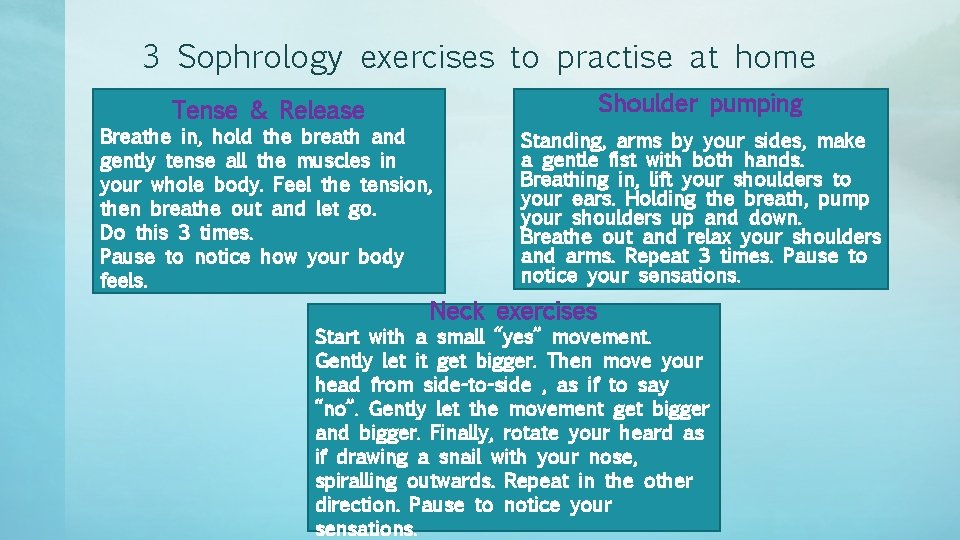
3 Sophrology exercises to practise at home Shoulder pumping Tense & Release Breathe in, hold the breath and gently tense all the muscles in your whole body. Feel the tension, then breathe out and let go. Do this 3 times. Pause to notice how your body feels. Standing, arms by your sides, make a gentle fist with both hands. Breathing in, lift your shoulders to your ears. Holding the breath, pump your shoulders up and down. Breathe out and relax your shoulders and arms. Repeat 3 times. Pause to notice your sensations. Neck exercises Start with a small “yes” movement. Gently let it get bigger. Then move your head from side-to-side , as if to say “no”. Gently let the movement get bigger and bigger. Finally, rotate your heard as if drawing a snail with your nose, spiralling outwards. Repeat in the other direction. Pause to notice your sensations.