
Aristotle Politics Part I Sandrine Bertaux Assistant Professor
Aristotle, Politics Part I Sandrine Bertaux Assistant Professor of Humanities Hum 101 31 October 2018
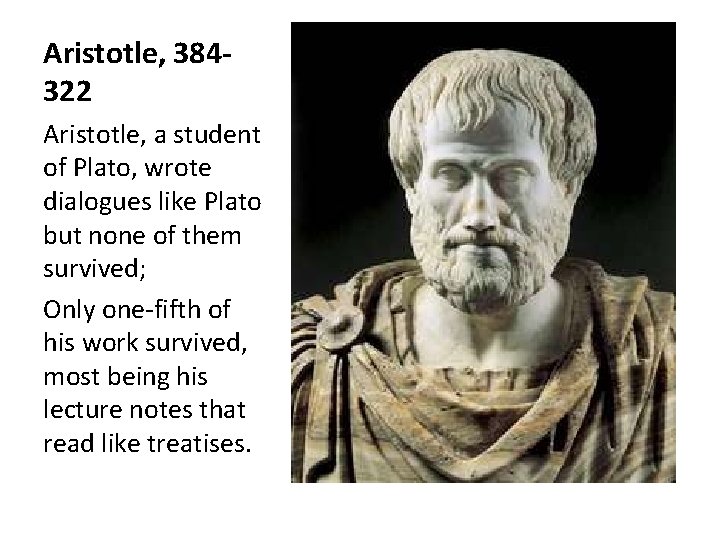
Aristotle, 384322 Aristotle, a student of Plato, wrote dialogues like Plato but none of them survived; Only one-fifth of his work survived, most being his lecture notes that read like treatises.
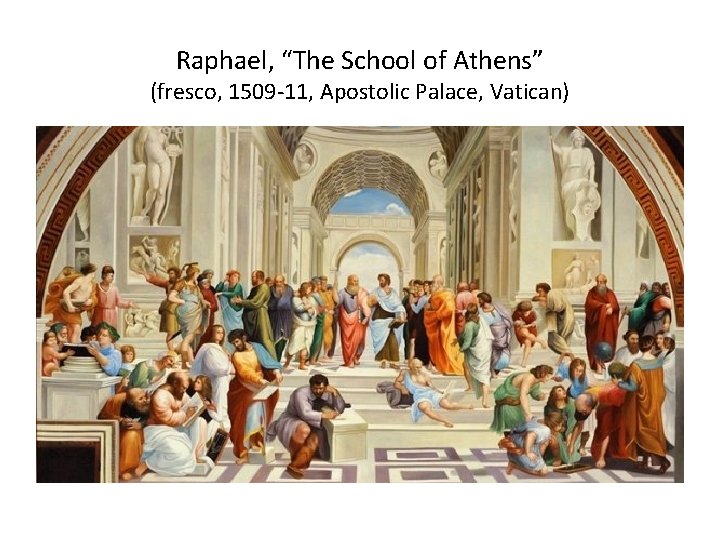
Raphael, “The School of Athens” (fresco, 1509 -11, Apostolic Palace, Vatican)
Outline of the Lecture I-Aristotle: a life between Macedon and Athens II-Politics as practical philosophy III- The Polis, a natural community
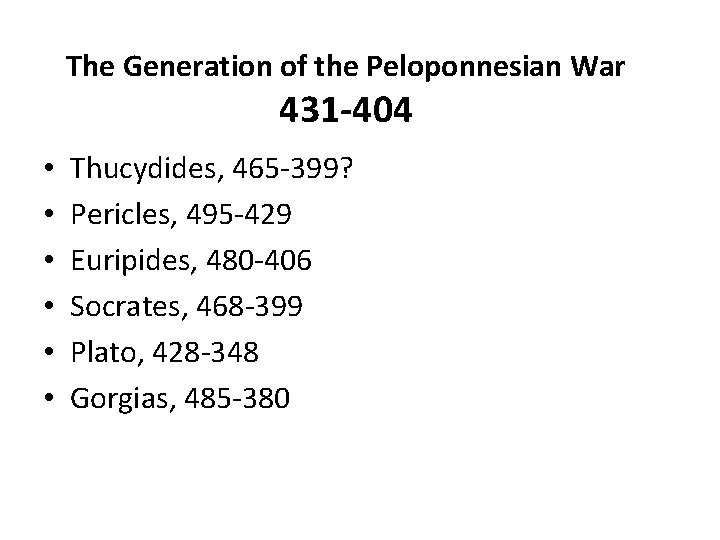
The Generation of the Peloponnesian War 431 -404 • • • Thucydides, 465 -399? Pericles, 495 -429 Euripides, 480 -406 Socrates, 468 -399 Plato, 428 -348 Gorgias, 485 -380
Aristotle, 384 -322 • Aristotle lived in the transition period that saw the end of the free city-states weakened by war with each other and the rising power of the kingdom of Macedon with Philip II. • In 338, Philip II defeated the Greek city-states and absorb them into his empire; his son Alexander the Great, expanded the empire. • Aristotle’s life is connected to both Athens and Macedon.
Aristotle’s life • Aristotle was born in Chalkidiki (near modern-day Thessaloniki) • Father: physician in the court of the king of Macedon Age 17, comes to Athens—Plato’s Academy. • In Athens, Aristotle is therefore a foreigner, a metics: cannot participate in political decision-making and cannot hold property • Macedon dominates Greek city-states depriving them of their liberties. Aristotle is the tutor of Alexander the Great. Dies in 323—Anti-Macedonian sentiments– Aristotle leaves Athens. • Credited to have said that he fears Athenians would commit of “a second crime against philosophy”
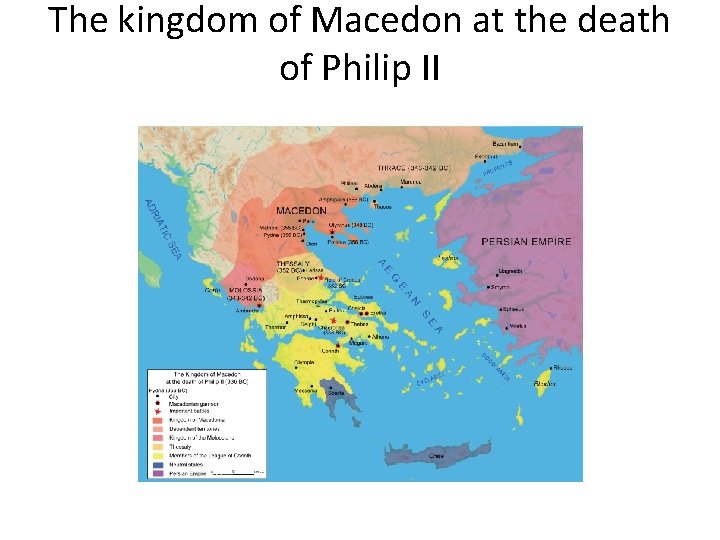
The kingdom of Macedon at the death of Philip II
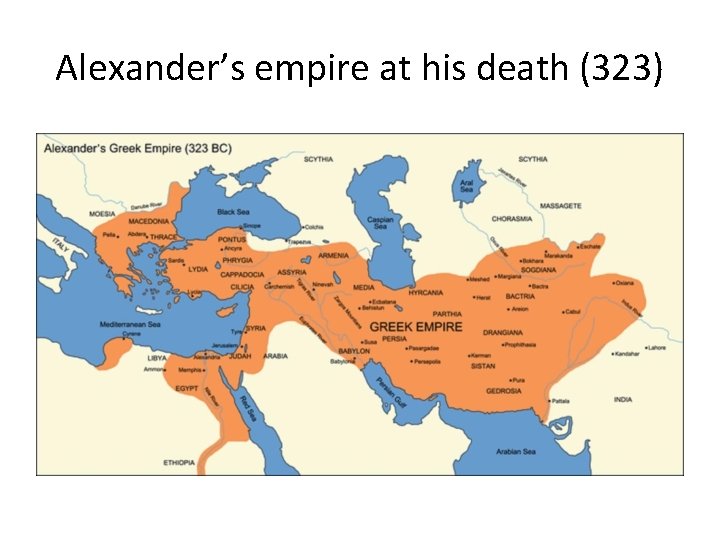
Alexander’s empire at his death (323)
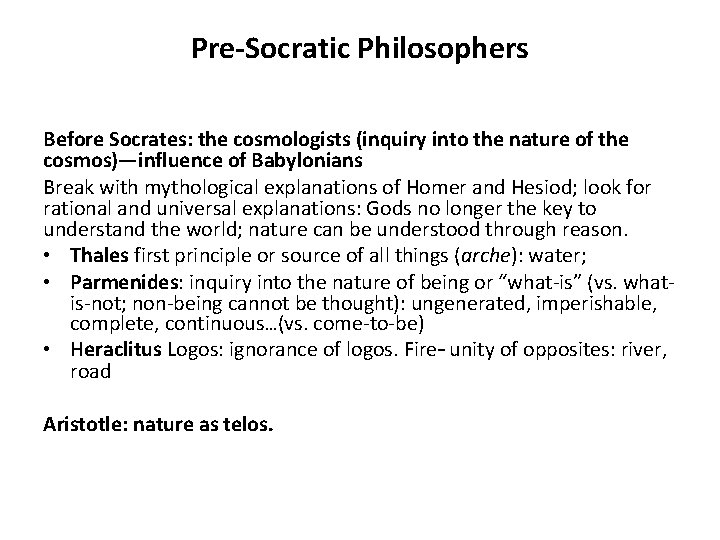
Pre-Socratic Philosophers Before Socrates: the cosmologists (inquiry into the nature of the cosmos)—influence of Babylonians Break with mythological explanations of Homer and Hesiod; look for rational and universal explanations: Gods no longer the key to understand the world; nature can be understood through reason. • Thales first principle or source of all things (arche): water; • Parmenides: inquiry into the nature of being or “what-is” (vs. whatis-not; non-being cannot be thought): ungenerated, imperishable, complete, continuous…(vs. come-to-be) • Heraclitus Logos: ignorance of logos. Fire– unity of opposites: river, road Aristotle: nature as telos.
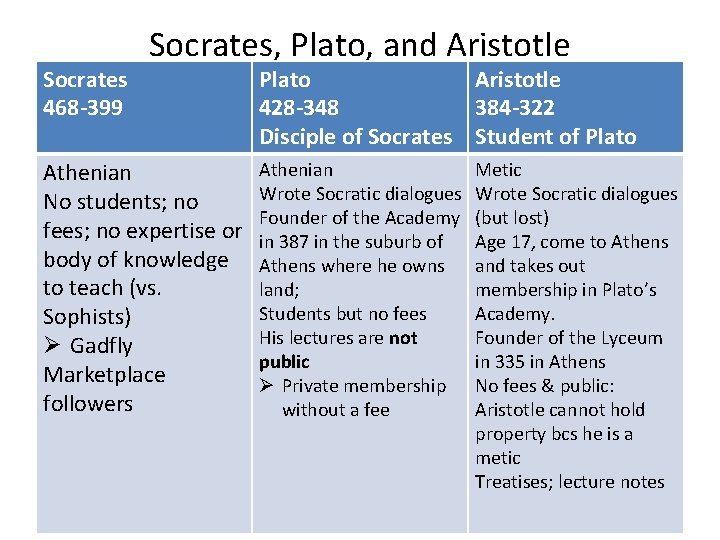
Socrates 468 -399 Socrates, Plato, and Aristotle Athenian No students; no fees; no expertise or body of knowledge to teach (vs. Sophists) Ø Gadfly Marketplace followers Plato Aristotle 428 -348 384 -322 Disciple of Socrates Student of Plato Athenian Wrote Socratic dialogues Founder of the Academy in 387 in the suburb of Athens where he owns land; Students but no fees His lectures are not public Ø Private membership without a fee Metic Wrote Socratic dialogues (but lost) Age 17, come to Athens and takes out membership in Plato’s Academy. Founder of the Lyceum in 335 in Athens No fees & public: Aristotle cannot hold property bcs he is a metic Treatises; lecture notes
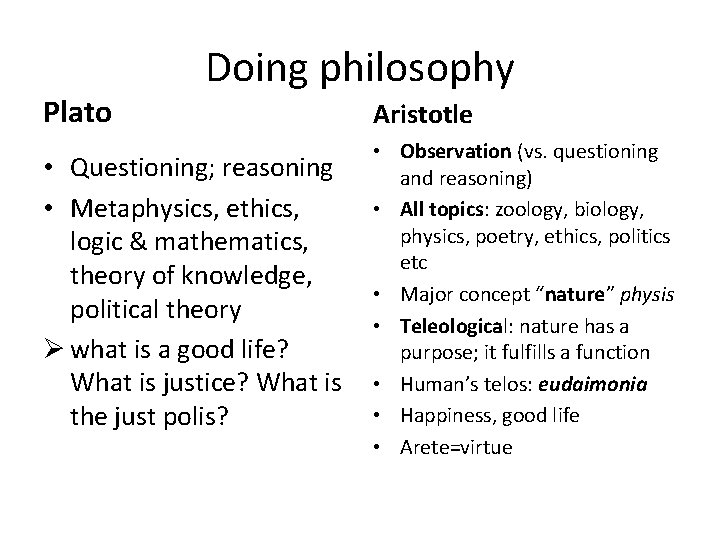
Plato Doing philosophy • Questioning; reasoning • Metaphysics, ethics, logic & mathematics, theory of knowledge, political theory Ø what is a good life? What is justice? What is the just polis? Aristotle • Observation (vs. questioning and reasoning) • All topics: zoology, biology, physics, poetry, ethics, politics etc • Major concept “nature” physis • Teleological: nature has a purpose; it fulfills a function • Human’s telos: eudaimonia • Happiness, good life • Arete=virtue
Philosophy: Love of wisdom “We must not listen to those who urge us to think human thoughts since we are human, and mortal thoughts since we are mortal; rather, we should as far as possible immortalize ourselves and do all we can to live by the finest element in us – for if in bulk it is small, in power and worth it is far greater than anything else. ” (Aristotle, Nicomachean Ethics)
Aristotle, Politics • Politics= Practical philosophy Not only pursuit of truth but action; no distinction between ethics and politics. Both are practical knowledge (vs. Plato): If a happy life is the one lived in accordance to virtue, which political community does best produce virtuous citizens? Politics is famous for its empirical material: Aristotle and his students gathered the history and form of government of 158 cities. Who can attain this practical knowledge? (mature) free men vs. women and slaves. The study and practice of politics is the preserve of a small fraction of the population. How is it justified?
Natural beings • Aristotle distinguishes things which exist by nature and those by causes: • those things that exist by nature have a nature of their own that explain their development (growth, decay, or alteration) ex: a feline embryo that would develop into a cat; • Ex: a house does not develop, its causes are external that is, in the craftsman’s work. • A thing’s nature (physis) has a function (ergon) and an end (telos). • Virtue: not a set of rules but fulfillment of one’s nature.
Telos: a purpose, an end • Living a virtuous life is fulfilling one’s humanity. • Yet an individual can only fulfill his telos under the right political community. • Hence it requires inquiry into the purpose (or telos) of the polis, and in doing so, Aristotle posits the naturalness of the polis or the polis as a natural phenomenon.
The naturalness of the polis and the origin of political communities • Against the opinion that the statesman, king, household manager, and master of slaves are of the same kind of authority; the difference being that they rule over few or many • “the assumption being that there is no difference between large household and citystate. (ch 1, 10 -11)
Natural Partnerships Natural partnership: “who cannot exist without each other”(ch 2, 25) Female and male for the sake of procreation (vs. deliberate choice) Natural ruler and natural ruled: master and slave -mutually beneficial. Preservation, survival. Households form villages, a polis.
The naturalness of the polis • “human being is a political animal” Outside the polis, he is either “a beast (poor specimen) or a god (superhuman)”. Man is like other gregarious animals such as bees, wasps, ants, a social animal. What does make him more than that? He is a political animal because he is equipped with rational speech that is with logos (speech/reason) rational speech is what allows distinctions: Beneficial or harmful, just or unjust: man is a moral agent
The polis is prior in nature to the household • self-sufficient not only because it satisfies essential needs but because only the polis provides the condition for the fulfillment of the nature and function of humanity. • “For if the whole body is dead, there will no longer be a foot or a hand”. • Move from household, to village and to polis: development of human virtue and practical wisdom.
The naturalness of the household • Three natural subordinate relationships: The master rules over the slave The husband rules over the wife The father rules over the child
Natural inferiority and superiority • “For free rules slaves, males rules female, and man rules child in different ways, because while the parts of the soul are present in all these people, they are present in a different way. • The deliberative part of the soul is entirely missing from a slave; a woman has it but it lacks authority; a child has it but it is incompletely developed. ”
Aristotle’s conception of citizenship: • The master/father/husband is also the citizen; • The women and slaves are what allow him to be a citizen. He is free by legal status but also from the task of reproduction of life.
- Slides: 23