Sexual Arousal and Response Copyright 2017 Cengage Learning
- Slides: 21
Sexual Arousal and Response Copyright © 2017 Cengage Learning. All Rights Reserved.
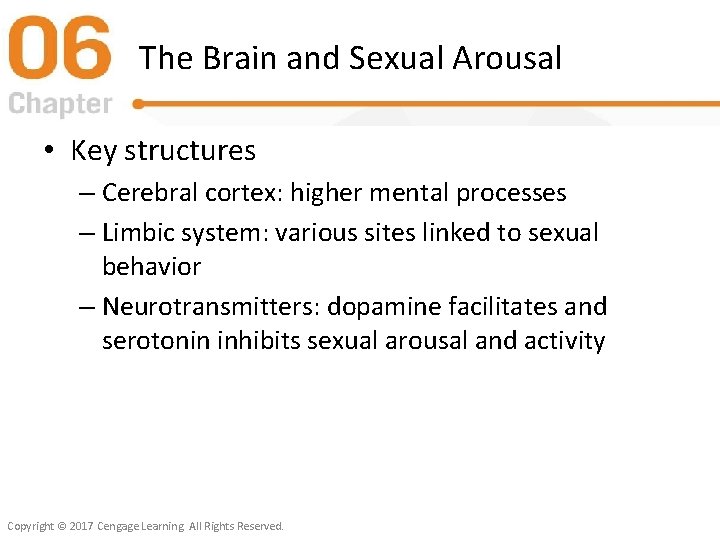
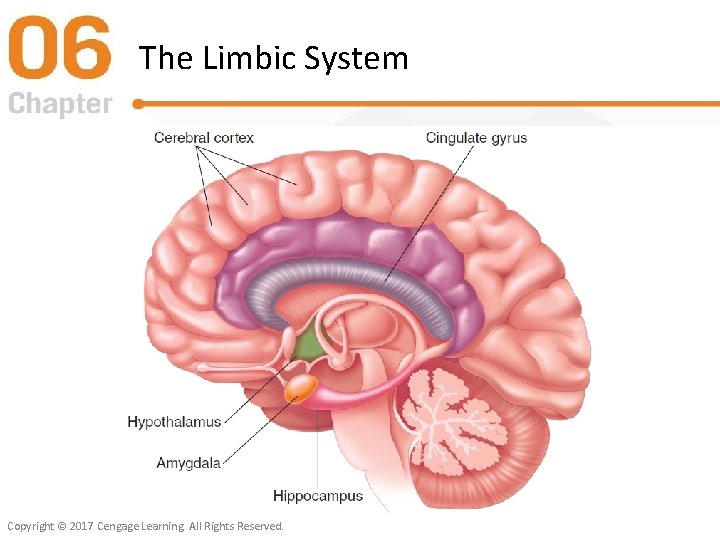
The Brain and Sexual Arousal • Key structures – Cerebral cortex: higher mental processes – Limbic system: various sites linked to sexual behavior – Neurotransmitters: dopamine facilitates and serotonin inhibits sexual arousal and activity Copyright © 2017 Cengage Learning. All Rights Reserved.
The Limbic System Copyright © 2017 Cengage Learning. All Rights Reserved.
The Senses and Sexual Arousal • All sensory systems can contribute to arousal – Touch tends to predominate • Primary erogenous zones • Secondary erogenous zones – Vision is the second dominate • Men self-report higher arousal to visual stimuli • Women and men have similar physiological responses Copyright © 2017 Cengage Learning. All Rights Reserved.
The Senses and Sexual Arousal (cont’d. ) – Smell may arouse or offend • Pheromones – Taste plays a minor role • Partly influenced by industry advertisements – Hearing plays a variable role • Some find sound arousing • Others prefer silence Copyright © 2017 Cengage Learning. All Rights Reserved.
Aphrodisiacs: Do They Work? • Substances believed to arouse sexual desire or increase capacity for sexual activity – Foods, drugs, and alcohol • No clear evidence of genuine aphrodisiac qualities – Role of expectations: if a person believes something will improve their sex life, it is often translated into subjective enhancement pleasure Copyright © 2017 Cengage Learning. All Rights Reserved.
Anaphrodisiacs • Inhibit sexual behavior – Drugs • Opiates, tranquilizers, antihypertensives, antidepressants, etc. – Birth control pills • Reduce blood levels of free testosterone – Nicotine • Constricts blood flow • Possibly reduces circulating testosterone Copyright © 2017 Cengage Learning. All Rights Reserved.
The Role of Hormones in Sexual Behavior • Steroid hormones – Androgens (including testosterone) • Produced by testes, adrenal glands, and ovaries – Estrogens • Produced by ovaries and testes – Women and men produce both types • Neuropeptide hormones – Oxytocin Copyright © 2017 Cengage Learning. All Rights Reserved.
Sex Hormones in Male Sexual Behavior • Testosterone – Linked to sexual desire and genital sensitivity – Castration leads to reduced sexual desire – Antiandrogen drugs reduce testosterone – Hypogonadism is a testosterone deficiency that results from certain endocrine system diseases Copyright © 2017 Cengage Learning. All Rights Reserved.
Sex Hormones in Female Sexual Behavior • Estrogens – Overall link between estrogen and female sexual behavior is unclear – Estrogen therapy (ET): can lead to sexual benefits (e. g. , heightened lubrication and desire) • Testosterone – Important libido-facilitating hormone in females Copyright © 2017 Cengage Learning. All Rights Reserved.
How Much Testosterone Is Necessary? • For normal sexual functioning – Too much testosterone is linked to adverse effects – Testosterone levels decrease with age • Fairly rapid decrease for women at menopause; more gradual decline for men • Testosterone replacement therapy: supplements Copyright © 2017 Cengage Learning. All Rights Reserved.
Oxytocin and Sexual Behavior • Secreted during cuddling and physical intimacy – Increased skin sensitivity – Associated with orgasmic release – Facilitates emotional and erotic bonding – Linked to social attachment Copyright © 2017 Cengage Learning. All Rights Reserved.
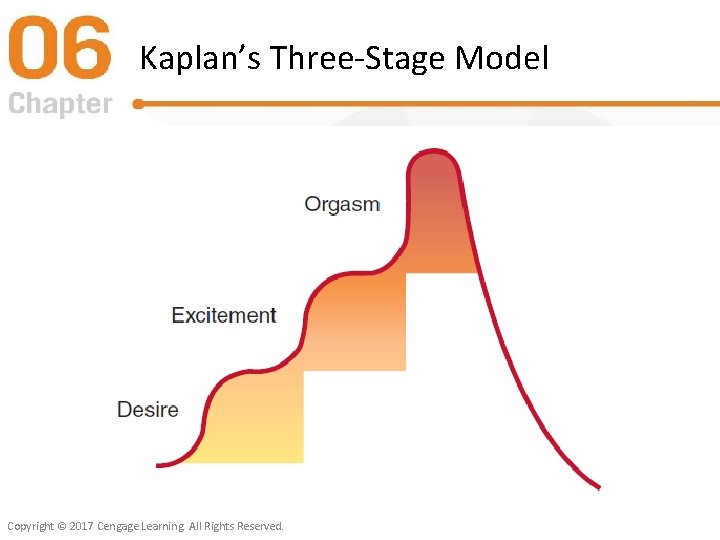
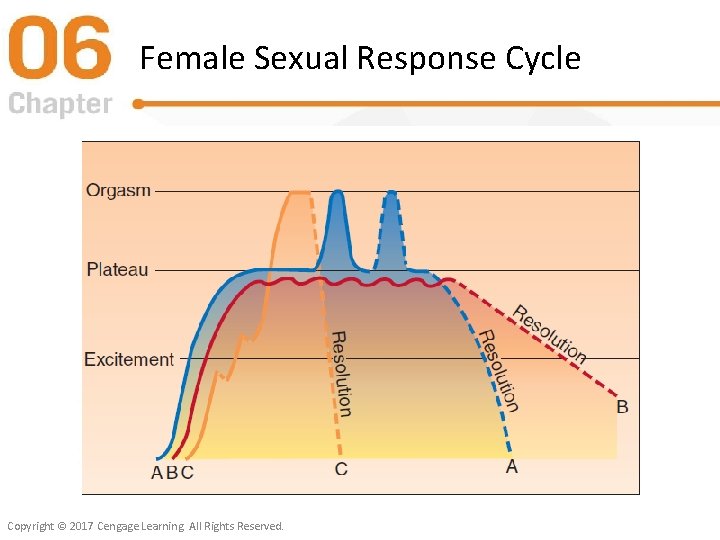
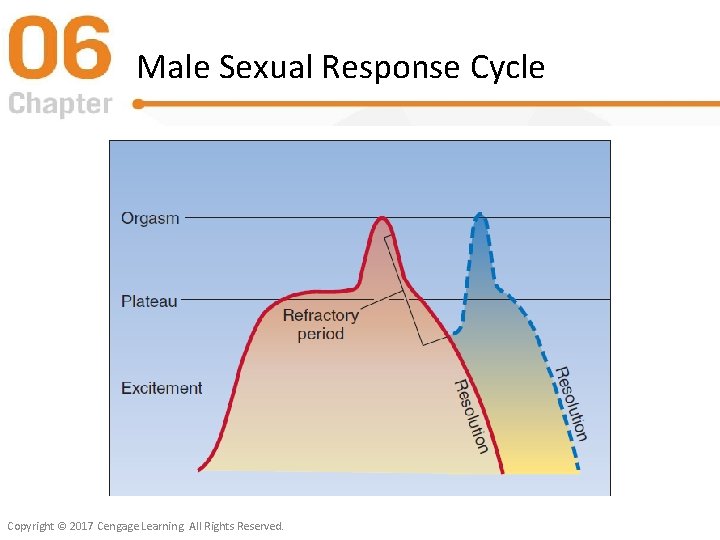
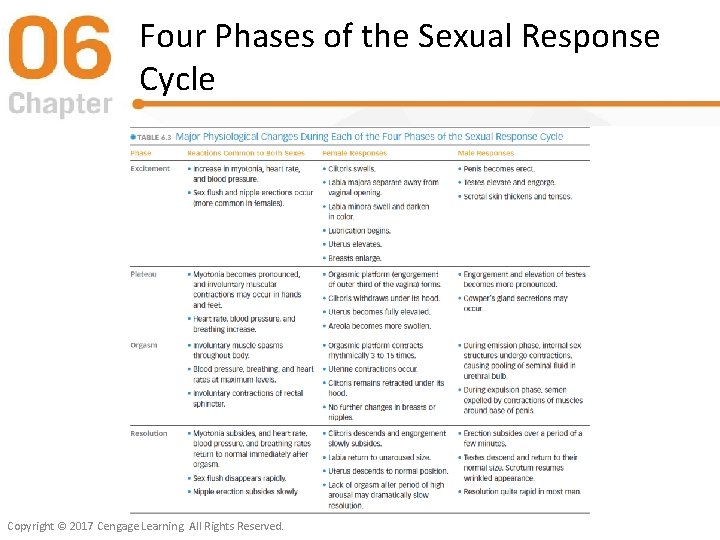
Sexual Response • Kaplan’s three-stage model – Desire, excitement, and orgasm • Masters and Johnson’s four-phase model – Excitement, plateau, orgasm, and resolution Copyright © 2017 Cengage Learning. All Rights Reserved.
Kaplan’s Three-Stage Model Copyright © 2017 Cengage Learning. All Rights Reserved.
Female Sexual Response Cycle Copyright © 2017 Cengage Learning. All Rights Reserved.
Male Sexual Response Cycle Copyright © 2017 Cengage Learning. All Rights Reserved.
Four Phases of the Sexual Response Cycle Copyright © 2017 Cengage Learning. All Rights Reserved.
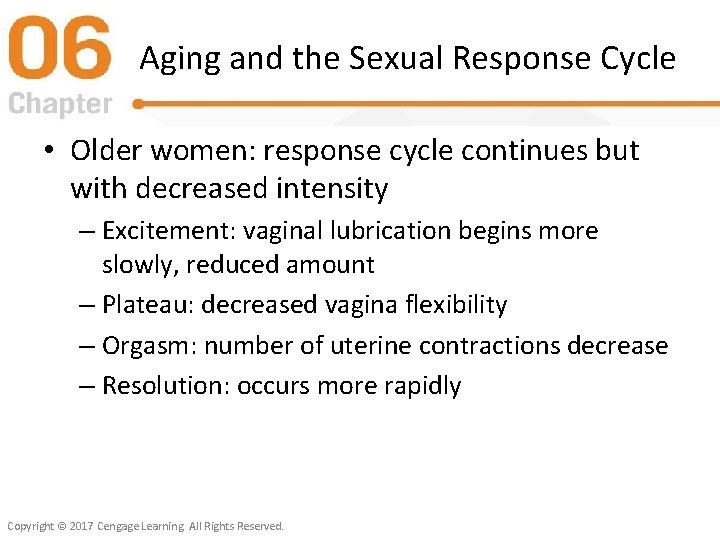
Aging and the Sexual Response Cycle • Older women: response cycle continues but with decreased intensity – Excitement: vaginal lubrication begins more slowly, reduced amount – Plateau: decreased vagina flexibility – Orgasm: number of uterine contractions decrease – Resolution: occurs more rapidly Copyright © 2017 Cengage Learning. All Rights Reserved.
Aging and the Sexual Response Cycle (cont’d. ) • Older men: response cycle continues, but with changes in intensity and duration of response – Excitement: more stimulation to obtain erection – Plateau: able to sustain plateau phase longer – Orgasm: reduced muscular contractions and force of ejaculation – Resolution: occurs more rapidly and refractory period lengthens Copyright © 2017 Cengage Learning. All Rights Reserved.
Differences Between the Sexes in Sexual Response • Greater variability in female response – See Figure 6. 3 • Male refractory period – Certain minimum time must elapse after orgasm before another climax • Multiple orgasms – More than one orgasm within a short time period – Most women have the capacity for multiple orgasms Copyright © 2017 Cengage Learning. All Rights Reserved.
Summary • Sexual arousal and sexual response in humans are influenced by many factors – Brain’s capacity to create images and fantasies – Our emotions and the level of intimacy – Various sensory processes and hormones – Biological factors and events – Differences between the sexes Copyright © 2017 Cengage Learning. All Rights Reserved.