Secure Navigation and Timing Todd Humphreys Aerospace Engineering

- Slides: 34
Secure Navigation and Timing Todd Humphreys | Aerospace Engineering The University of Texas at Austin LAAFB GPS Directorate | December 5, 2012
Acknowledgements • University of Texas Radionavigation Lab graduate students Jahshan Bhatti, Kyle Wesson, Ken Pesyna, Zak Kassas, and Daniel Shepard • Mark Psiaki, Brady O’Hanlon, Ryan Mitch (Cornell)
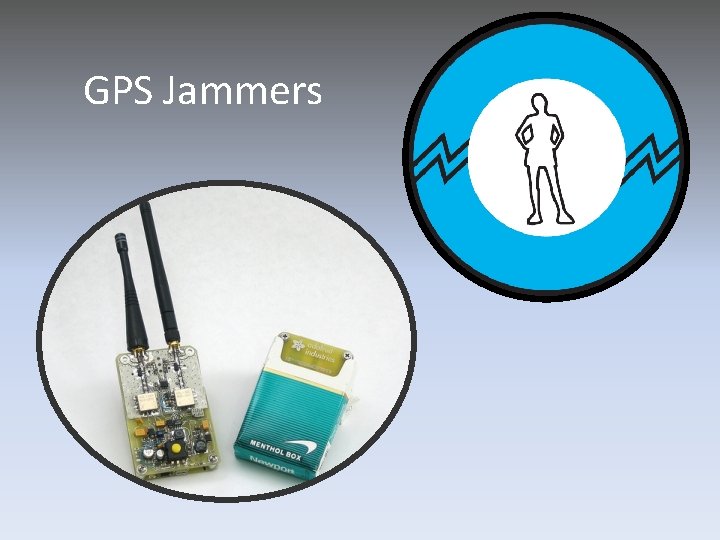
GPS Jammers
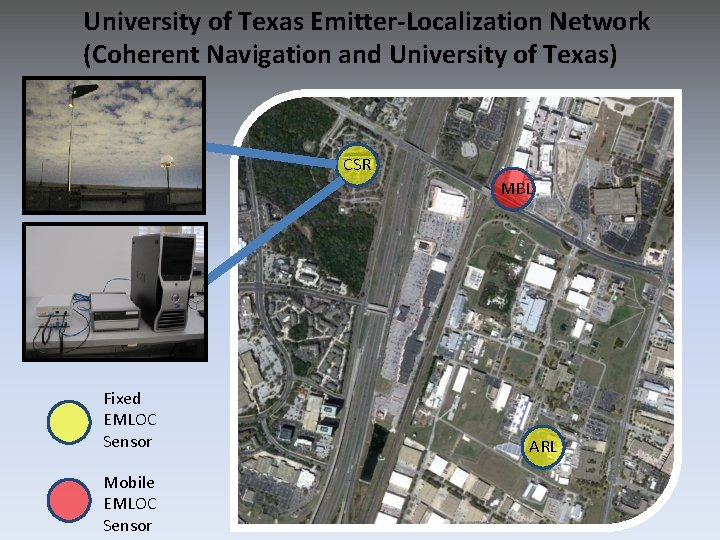
University of Texas Emitter-Localization Network (Coherent Navigation and University of Texas) CSR MBL Fixed EMLOC Sensor Mobile EMLOC Sensor ARL
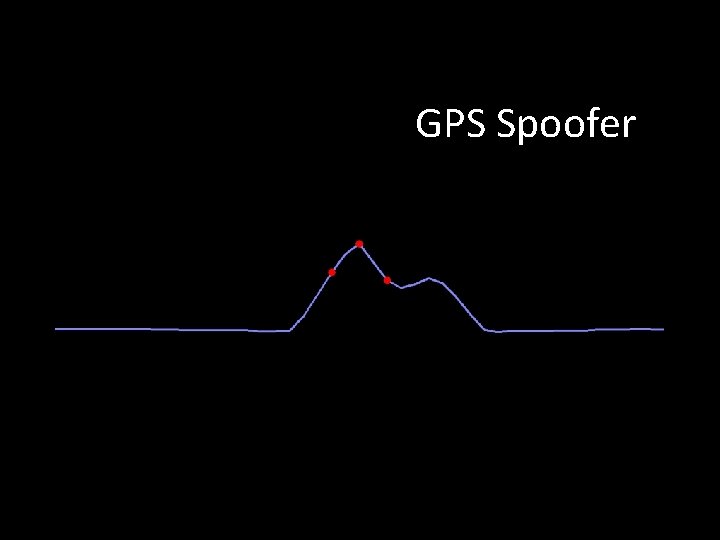
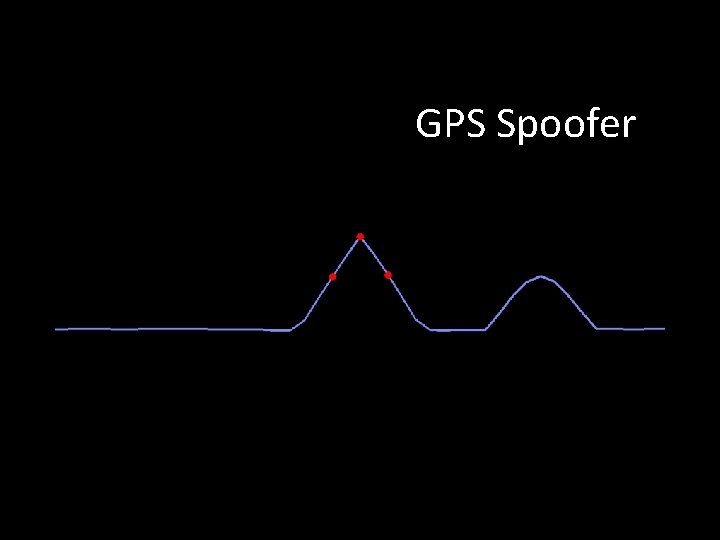
GPS Spoofer
GPS Spoofer
GPS Spoofer
GPS Spoofer
GPS Spoofer
GPS Spoofer
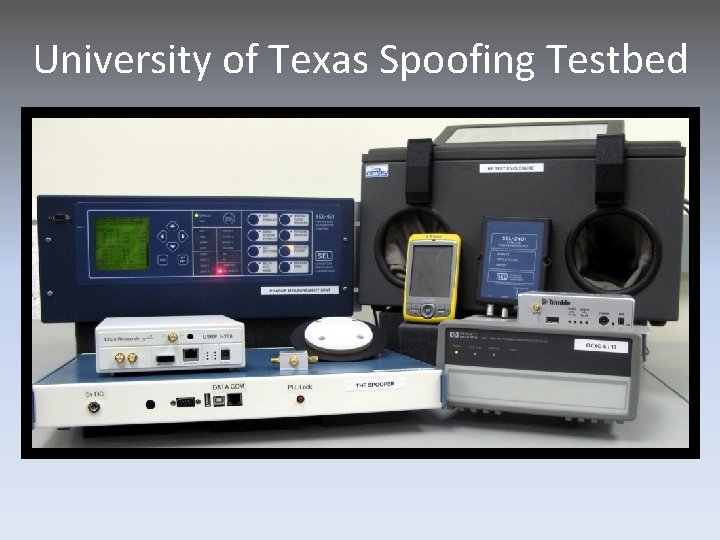
University of Texas Spoofing Testbed
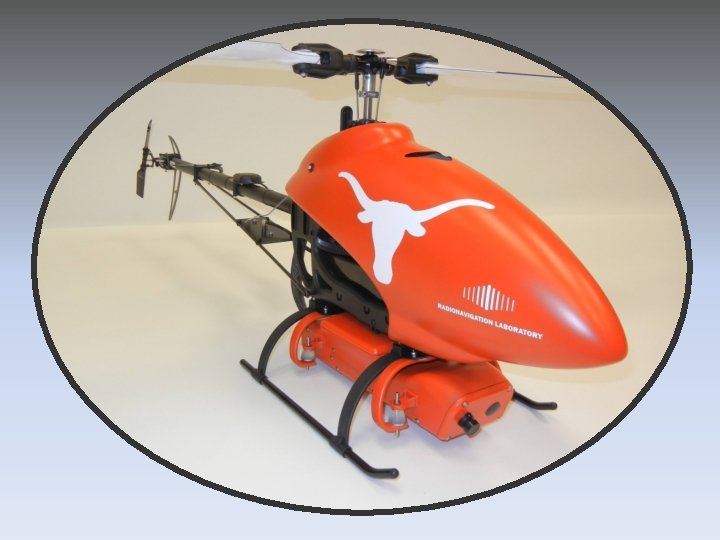
Commandeering a UAV via GPS Spoofing Receive Antenna Target UAV External Reference Clock Spoofed Signals as a “Virtual Tractor Beam” Control Computer Internet or LAN GPS Spoofer UAV coordinates from tracking system Transmit Antenna
UAV Video
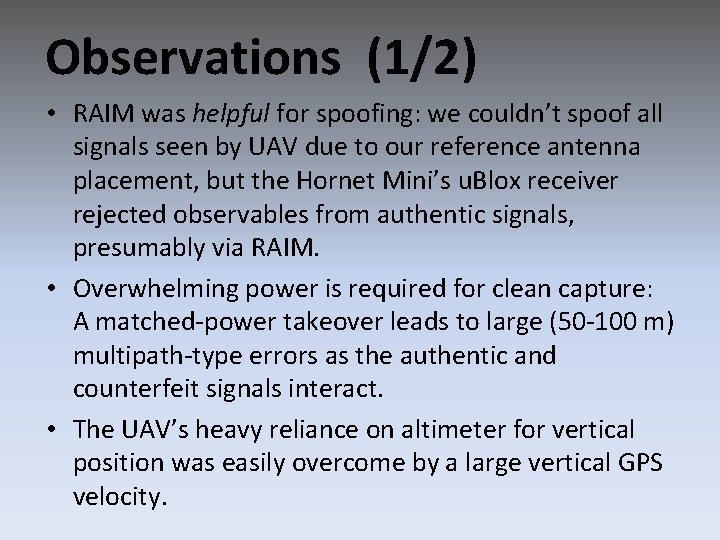
Observations (1/2) • RAIM was helpful for spoofing: we couldn’t spoof all signals seen by UAV due to our reference antenna placement, but the Hornet Mini’s u. Blox receiver rejected observables from authentic signals, presumably via RAIM. • Overwhelming power is required for clean capture: A matched-power takeover leads to large (50 -100 m) multipath-type errors as the authentic and counterfeit signals interact. • The UAV’s heavy reliance on altimeter for vertical position was easily overcome by a large vertical GPS velocity.
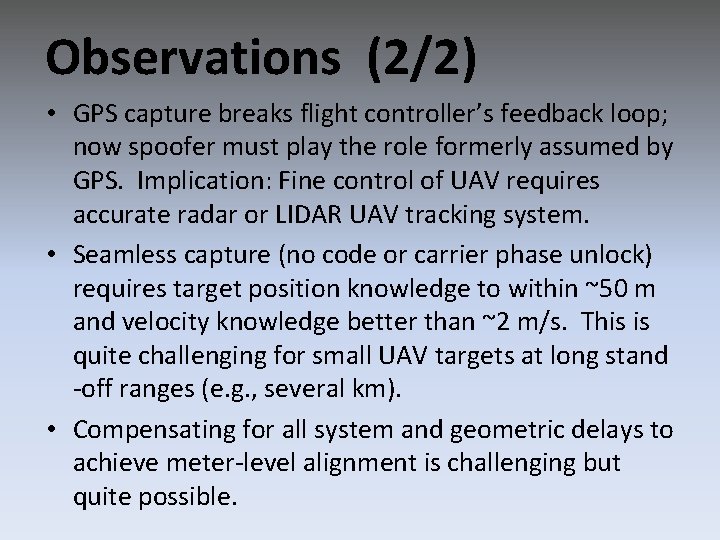
Observations (2/2) • GPS capture breaks flight controller’s feedback loop; now spoofer must play the role formerly assumed by GPS. Implication: Fine control of UAV requires accurate radar or LIDAR UAV tracking system. • Seamless capture (no code or carrier phase unlock) requires target position knowledge to within ~50 m and velocity knowledge better than ~2 m/s. This is quite challenging for small UAV targets at long stand -off ranges (e. g. , several km). • Compensating for all system and geometric delays to achieve meter-level alignment is challenging but quite possible.
Recommendations From testimony to House Committee on Homeland Security, July 19, 2012 • Require navigation systems for UAVs above 18 lbs to be certified “spoof-resistant” • Require navigation and timing systems in critical infrastructure to be certified “spoofresistant” • “Spoof resistant” defined by ability to withstand or detect civil GPS spoofing in a battery of tests performed in a spoofing testbed (e. g. , TEXBAT)
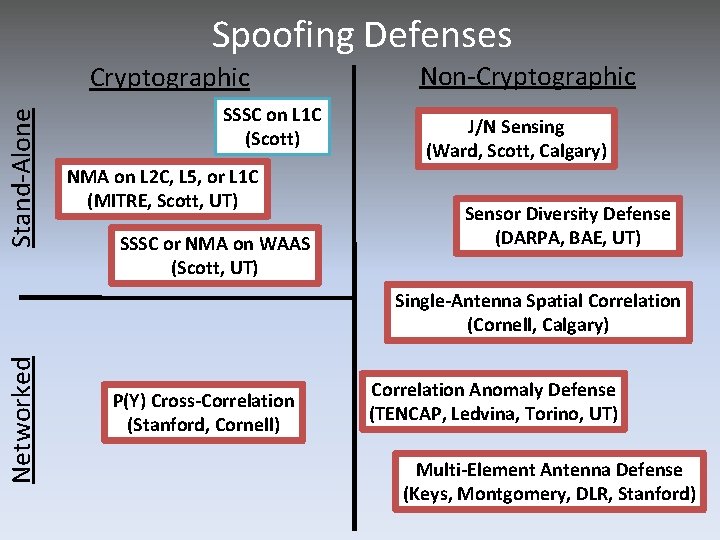
Spoofing Defenses Stand-Alone Cryptographic SSSC on L 1 C (Scott) NMA on L 2 C, L 5, or L 1 C (MITRE, Scott, UT) SSSC or NMA on WAAS (Scott, UT) Non-Cryptographic J/N Sensing (Ward, Scott, Calgary) Sensor Diversity Defense (DARPA, BAE, UT) Networked Single-Antenna Spatial Correlation (Cornell, Calgary) P(Y) Cross-Correlation (Stanford, Cornell) Correlation Anomaly Defense (TENCAP, Ledvina, Torino, UT) Multi-Element Antenna Defense (Keys, Montgomery, DLR, Stanford)
Observations on Defenses (1/3) • Navigation signal authentication is hard. Nothing is foolproof. There are no guarantees. But simple measures can vastly decrease the probability of a successful attack. Probability is the language of antispoofing. • Symmetric-key systems (e. g. , SAASM) offer short time to authenticate but require key management and tamper-proof hardware: more costly, less convenient. SAASM and M-code will never be a solution for a wide swath of applications (e. g. , civil aviation, low-cost location and time authentication).
Observations on Defenses (2/3) • Asymmetric-key (public-private key) systems have an unavoidable delay (e. g. , 40 seconds between authentication of any signal) but delay can be accepted in many applications; also, for non-complicit spoofing there is no need to tamper-proof the receiver: cheaper, more convenient. • Proof of location (proving to you where I am) is emerging as a vital security feature. It’s not easy: non -crypto approaches require elaborate tamper proofing; crypto approaches require high-rate security code. Beware black-market vendors with high-gain antennas who will sell an authenticated location.
Observations on Defenses (3/3) • Crypto defenses not a panacea: Ineffective against near-zero-delay replay (entire band record and playback) attacks. • Non-crypto defenses not so elegant mathematically, but can be quite effective.
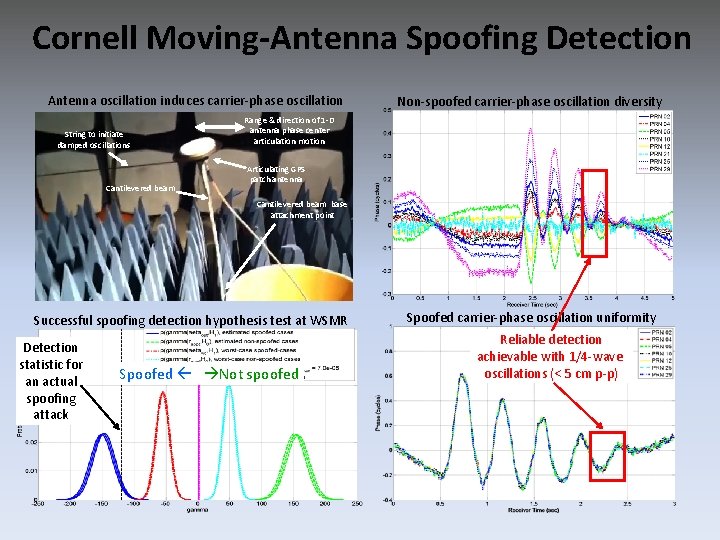
Cornell Moving-Antenna Spoofing Detection Antenna oscillation induces carrier-phase oscillation String to initiate damped oscillations Cantilevered beam Non-spoofed carrier-phase oscillation diversity Range & direction of 1 -D antenna phase center articulation motion Articulating GPS patch antenna Cantilevered beam base attachment point Successful spoofing detection hypothesis test at WSMR Detection statistic for an actual spoofing attack Spoofed Not spoofed Spoofed carrier-phase oscillation uniformity Reliable detection achievable with 1/4 -wave oscillations (< 5 cm p-p)
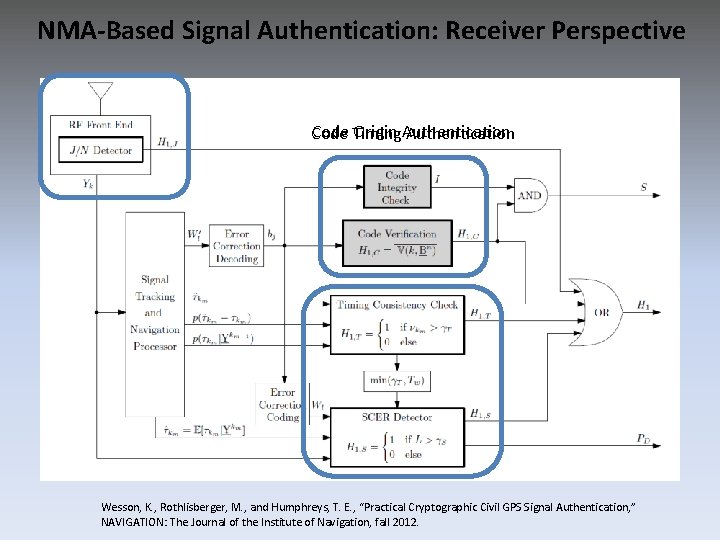
Observations on Defenses (3/3) • Crypto defenses not a panacea: Ineffective against near-zero-delay meaconing (entire band record and playback) attacks. • Non-crypto defenses not so elegant mathematically, but can be quite effective. • Best shield: a coupled crypto-non-crypto defense. • When implemented properly, navigation message authentication (NMA) authenticates not only the data message but also the underlying signal. It is surprisingly effective.
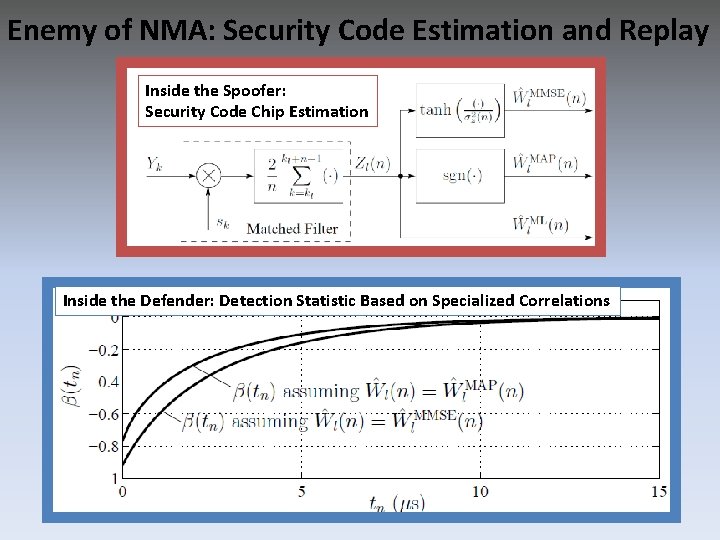
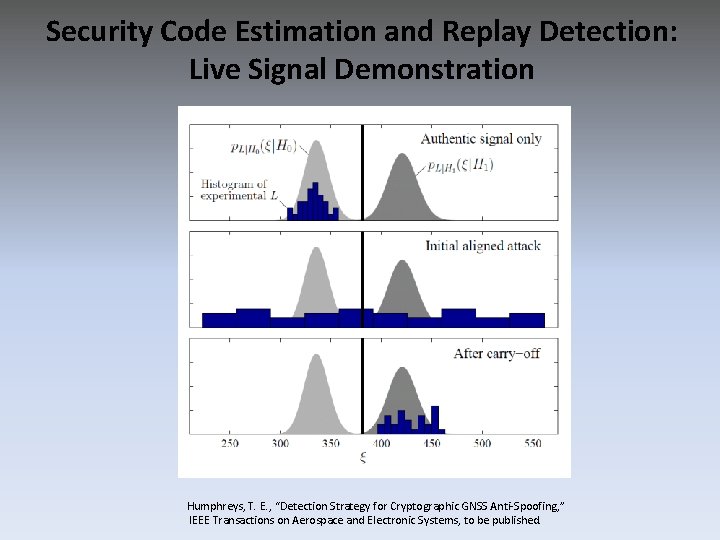
Enemy of NMA: Security Code Estimation and Replay Inside the Spoofer: Security Code Chip Estimation Inside the Defender: Detection Statistic Based on Specialized Correlations
NMA-Based Signal Authentication: Receiver Perspective Origin Authentication Code Timing Authentication Wesson, K. , Rothlisberger, M. , and Humphreys, T. E. , “Practical Cryptographic Civil GPS Signal Authentication, ” NAVIGATION: The Journal of the Institute of Navigation, fall 2012.
Security Code Estimation and Replay Detection: Live Signal Demonstration Humphreys, T. E. , “Detection Strategy for Cryptographic GNSS Anti-Spoofing, ” IEEE Transactions on Aerospace and Electronic Systems, to be published.
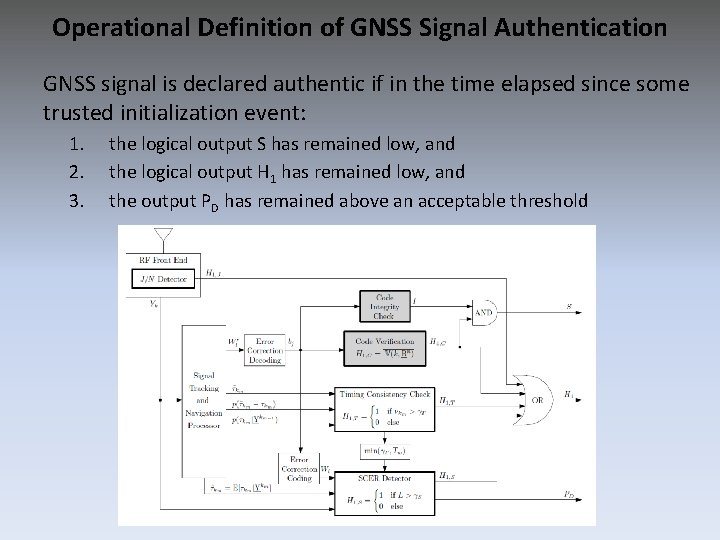
Operational Definition of GNSS Signal Authentication GNSS signal is declared authentic if in the time elapsed since some trusted initialization event: 1. 2. 3. the logical output S has remained low, and the logical output H 1 has remained low, and the output PD has remained above an acceptable threshold
Key Ingredients for Developing and Evaluating GNSS Signal Authentication Techniques: 1. Visibility 2. Testability
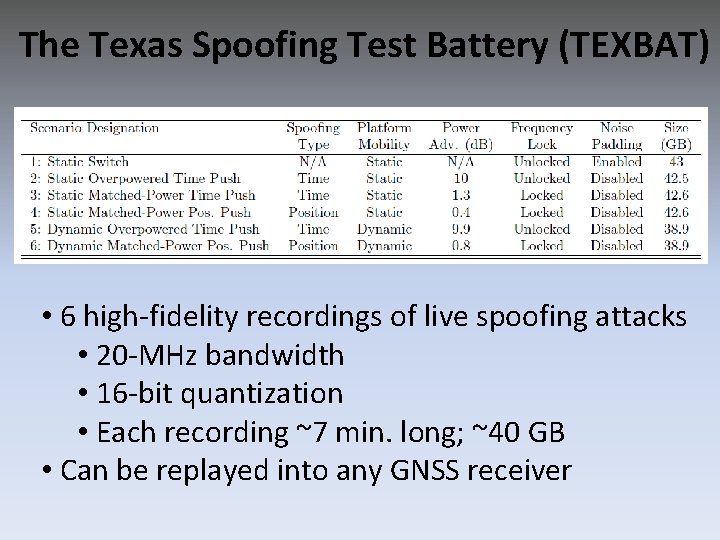
The Texas Spoofing Test Battery (TEXBAT) • 6 high-fidelity recordings of live spoofing attacks • 20 -MHz bandwidth • 16 -bit quantization • Each recording ~7 min. long; ~40 GB • Can be replayed into any GNSS receiver
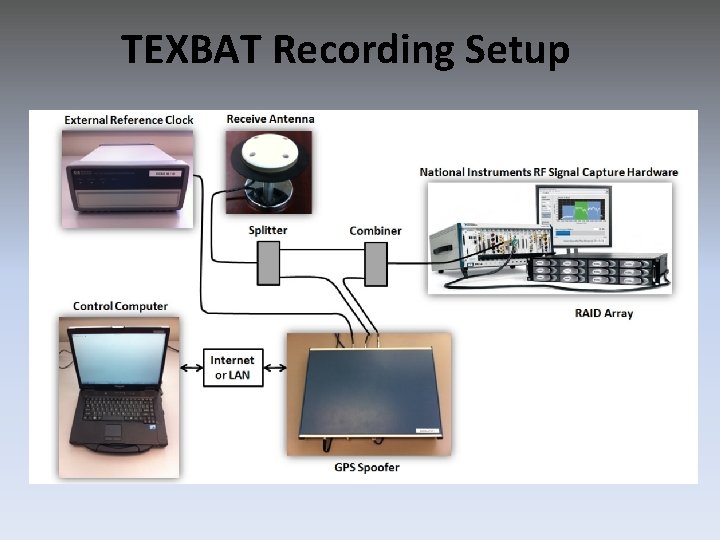
TEXBAT Recording Setup
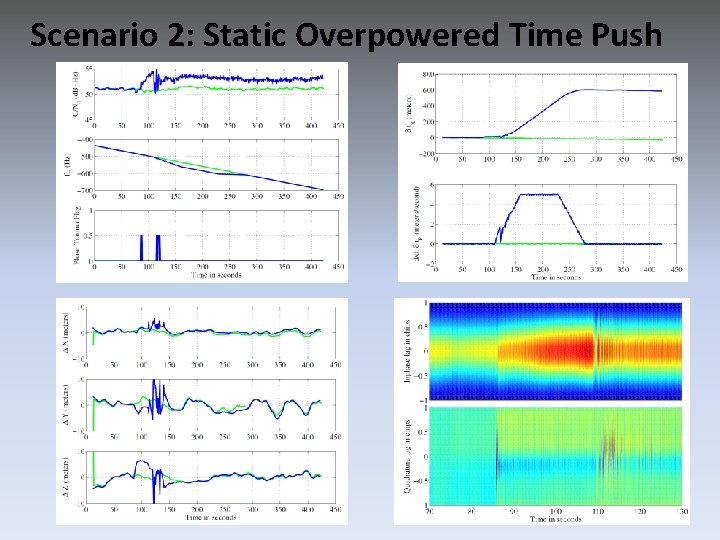
Scenario 2: Static Overpowered Time Push
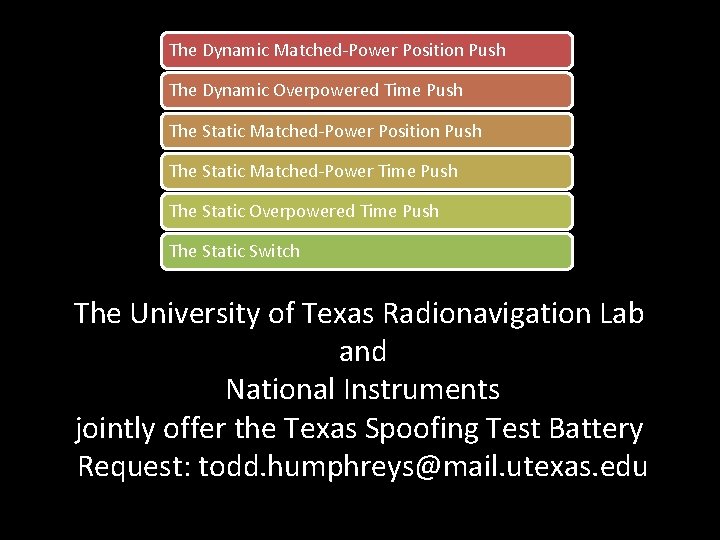
The Dynamic Matched-Power Position Push The Dynamic Overpowered Time Push The Static Matched-Power Position Push The Static Matched-Power Time Push The Static Overpowered Time Push The Static Switch The University of Texas Radionavigation Lab and National Instruments jointly offer the Texas Spoofing Test Battery Request: todd. humphreys@mail. utexas. edu
radionavlab. ae. utexas. edu