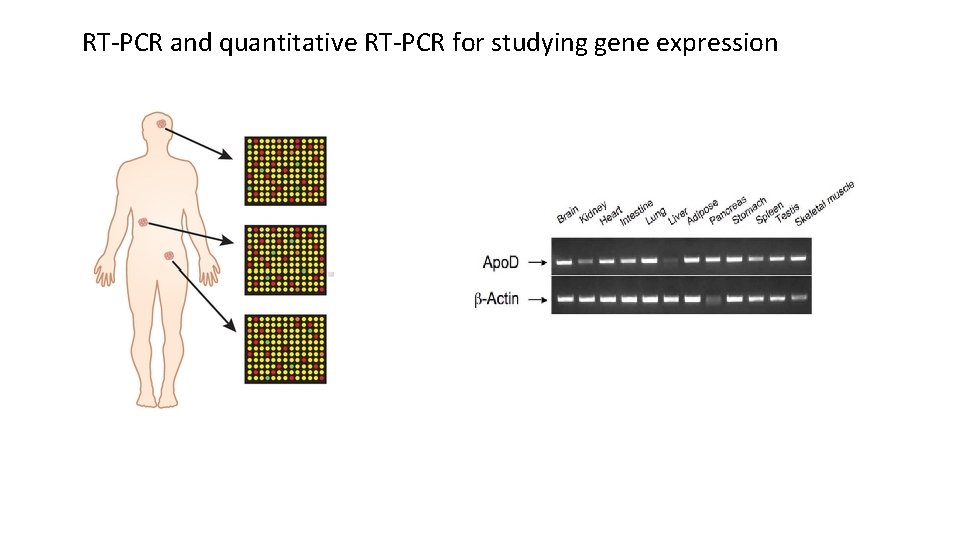
RTPCR and quantitative RTPCR for studying gene expression

- Slides: 20
RT-PCR and quantitative RT-PCR for studying gene expression
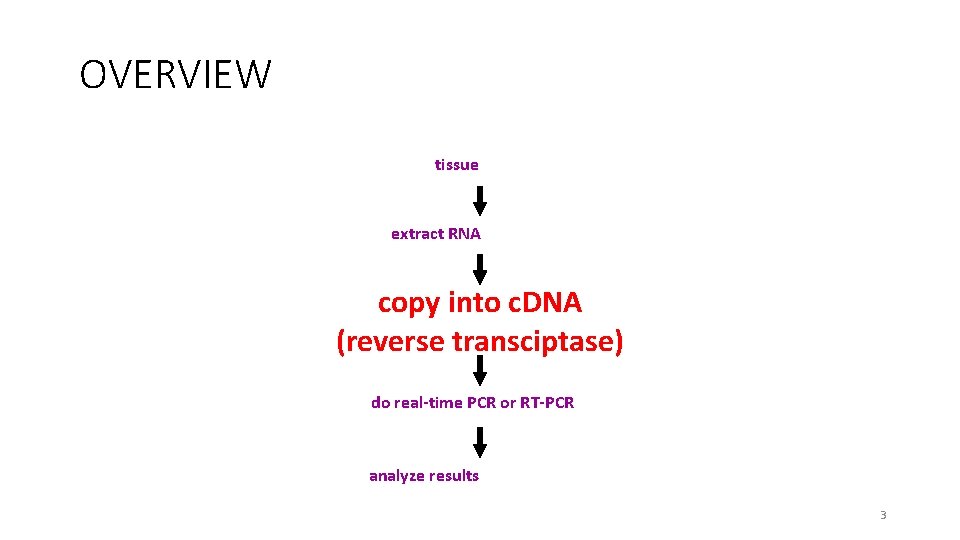
OVERVIEW tissue extract RNA copy into c. DNA (reverse transciptase) do real-time PCR or RT-PCR analyze results 3
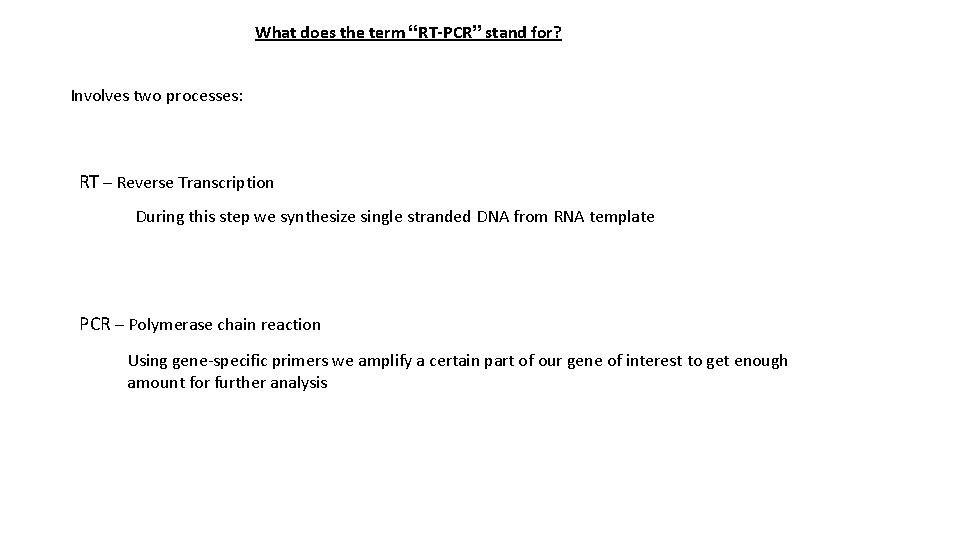
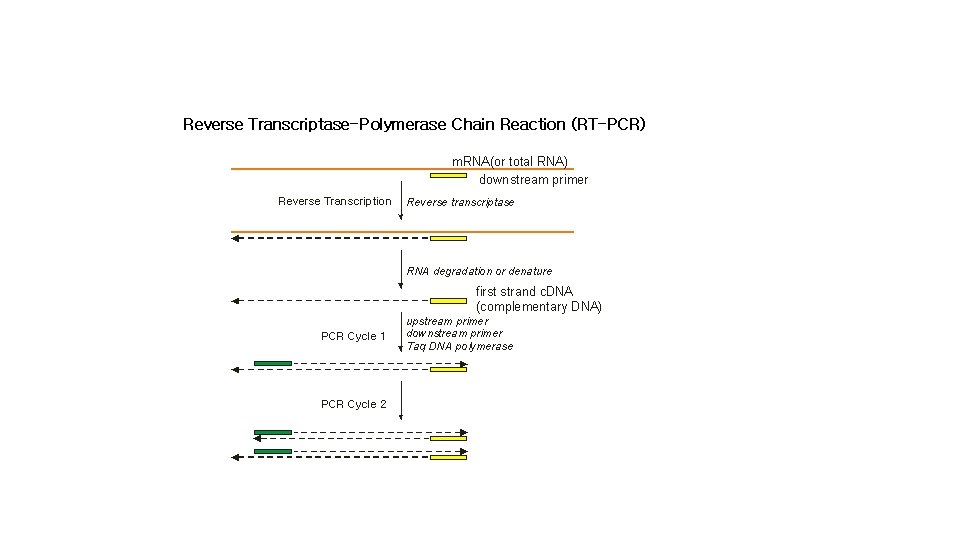
What does the term “RT-PCR” stand for? Involves two processes: RT – Reverse Transcription During this step we synthesize single stranded DNA from RNA template PCR – Polymerase chain reaction Using gene-specific primers we amplify a certain part of our gene of interest to get enough amount for further analysis
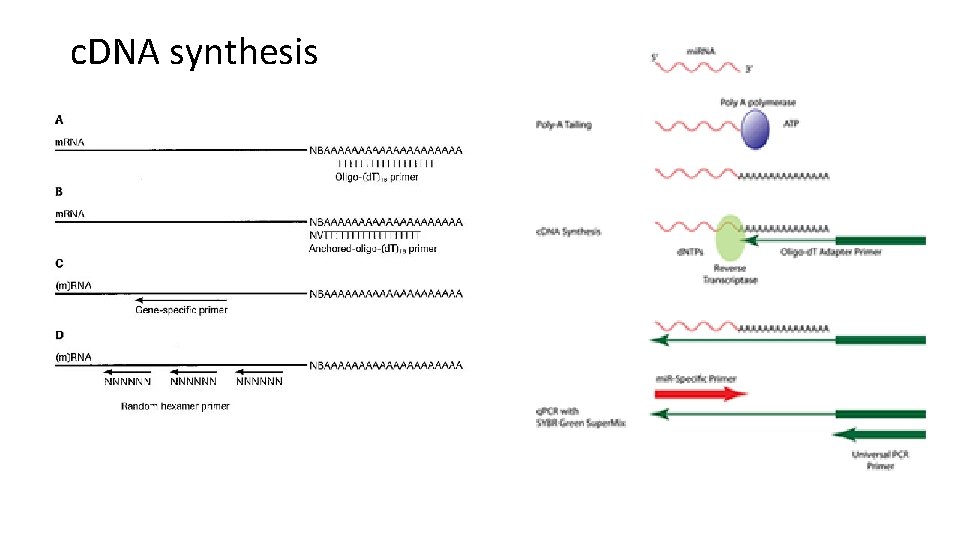
c. DNA synthesis
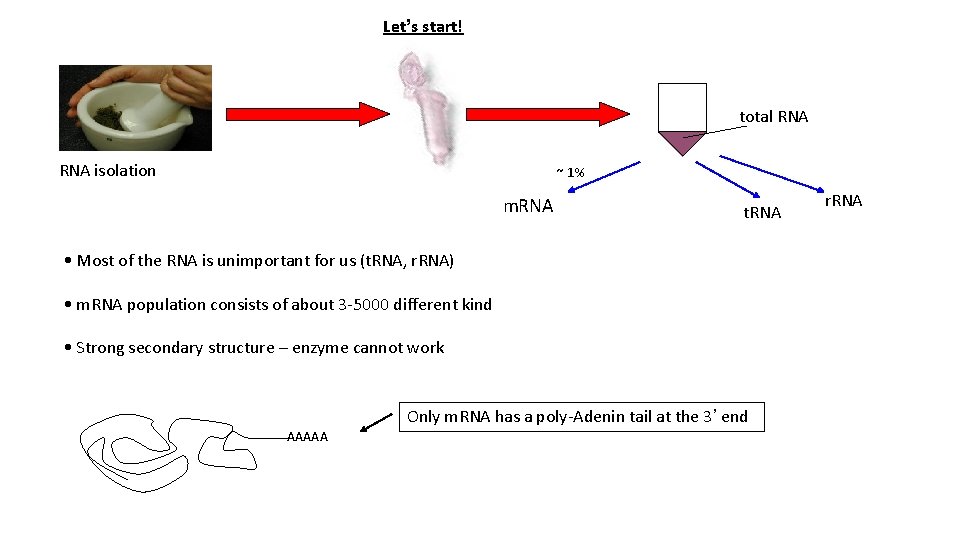
Let’s start! total RNA isolation ~ 1% m. RNA t. RNA • Most of the RNA is unimportant for us (t. RNA, r. RNA) • m. RNA population consists of about 3 -5000 different kind • Strong secondary structure – enzyme cannot work Only m. RNA has a poly-Adenin tail at the 3’ end AAAAA r. RNA
Sampling and Template Preparation Important to be familiar with general principles of working with RNA: Avoid RNAses Always wear gloves when handling reagents or equipment that will be used in the RNA extraction and reverse transcription procedures RNAse-free water can be commercially purchased or nanopure water can be treated with diethyl pyrocarbonate (DEPC) http: //www. promega. com/~/media/files/resources/product%20 guides/rna%20 analysis%20 notebook/workingwithrna. ashx? la=en
IMPORTANCE OF RNA QUALITY • Should be free of protein (absorbance 260 nm/280 nm) • Should be undegraded (28 S/18 S ~2: 1) • Should be free of DNA (DNAse treat) • Should be free of PCR inhibitors • Purification methods • Clean-up methods 8
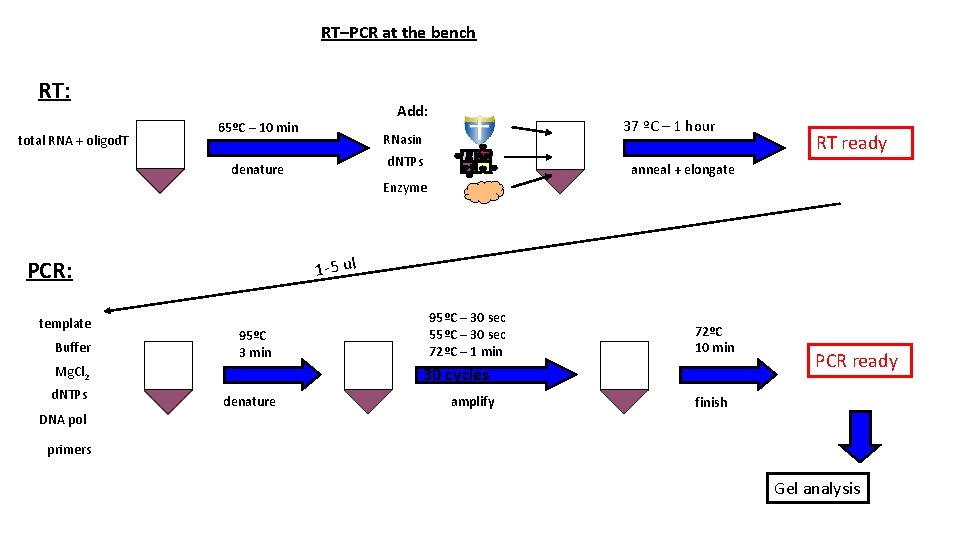
RT–PCR at the bench RT: total RNA + oligod. T Add: 65ºC – 10 min 37 ºC – 1 hour RNasin d. NTPs denature RT ready anneal + elongate Enzyme 1 -5 ul PCR: template Buffer 95ºC 3 min Mg. Cl 2 d. NTPs 95ºC – 30 sec 55ºC – 30 sec 72ºC – 1 min 72ºC 10 min 30 cycles denature amplify PCR ready finish DNA pol primers Gel analysis
Applications of RT-PCR • Cloning genes’ expressed forms (not genomic version) • Monitor a gene’s expression level in any tissue • Monitor expression changes following treatments • Sophisticated RT-PCR: The real time PCR • sequencing a whole m. RNA profile • EST (Expressed Sequence Tags) – database • Microarray (DNA chip) • Diagnose and easily differentiate between different cancer types • Early detection of hidden illnesses • etc…
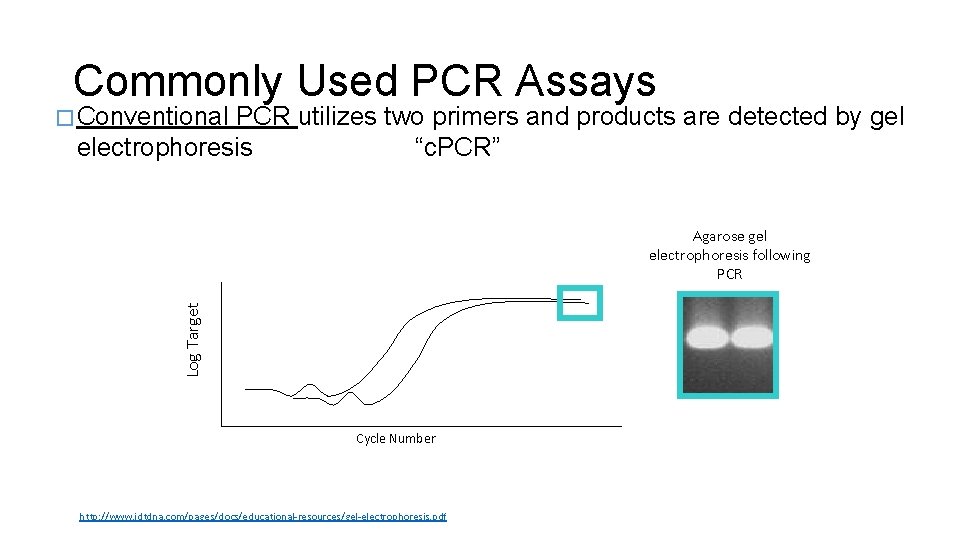
Commonly Used PCR Assays � Conventional PCR utilizes two primers and products are detected by gel electrophoresis “c. PCR” Log Target Agarose gel electrophoresis following PCR Cycle Number http: //www. idtdna. com/pages/docs/educational-resources/gel-electrophoresis. pdf
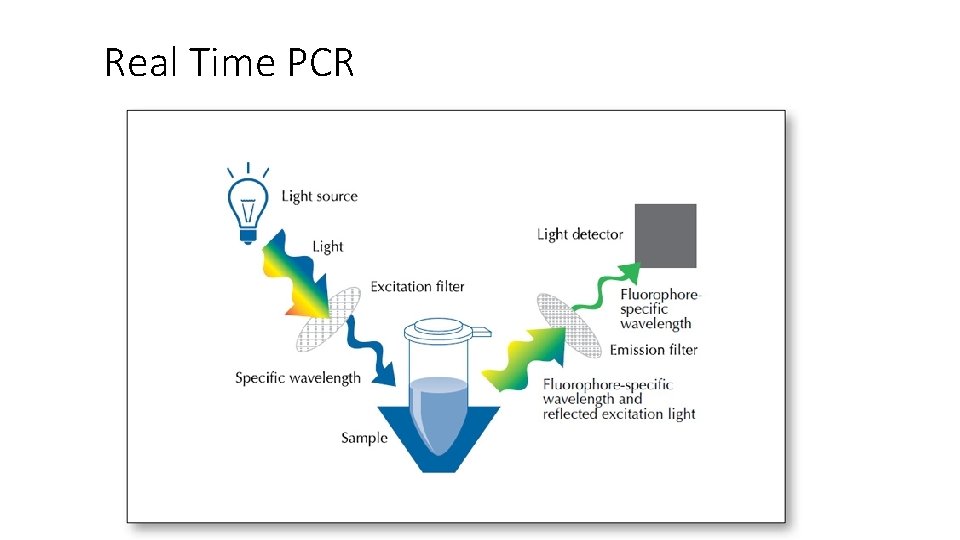
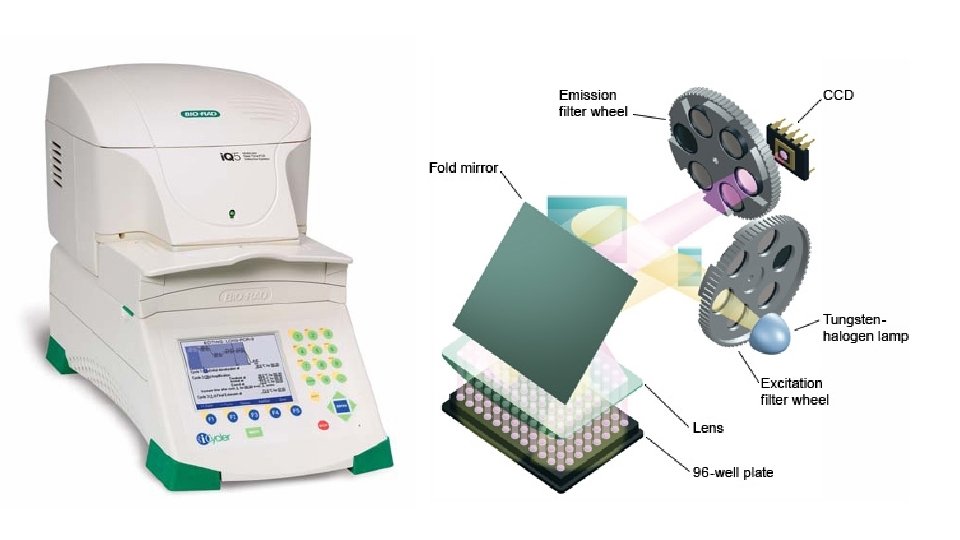
Real Time PCR
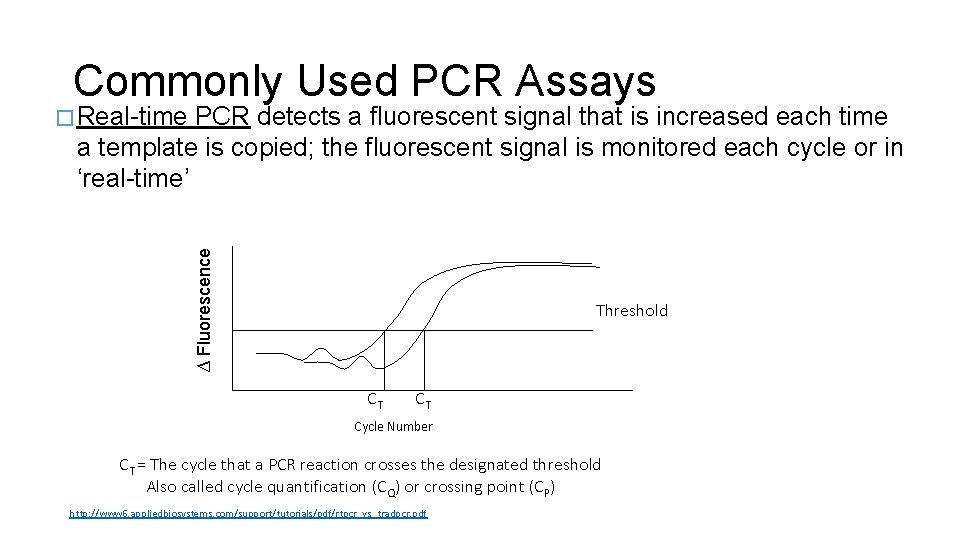
Commonly Used PCR Assays PCR detects a fluorescent signal that is increased each time a template is copied; the fluorescent signal is monitored each cycle or in ‘real-time’ ∆ Fluorescence � Real-time Threshold CT CT Cycle Number CT = The cycle that a PCR reaction crosses the designated threshold Also called cycle quantification (CQ) or crossing point (CP) http: //www 6. appliedbiosystems. com/support/tutorials/pdf/rtpcr_vs_tradpcr. pdf
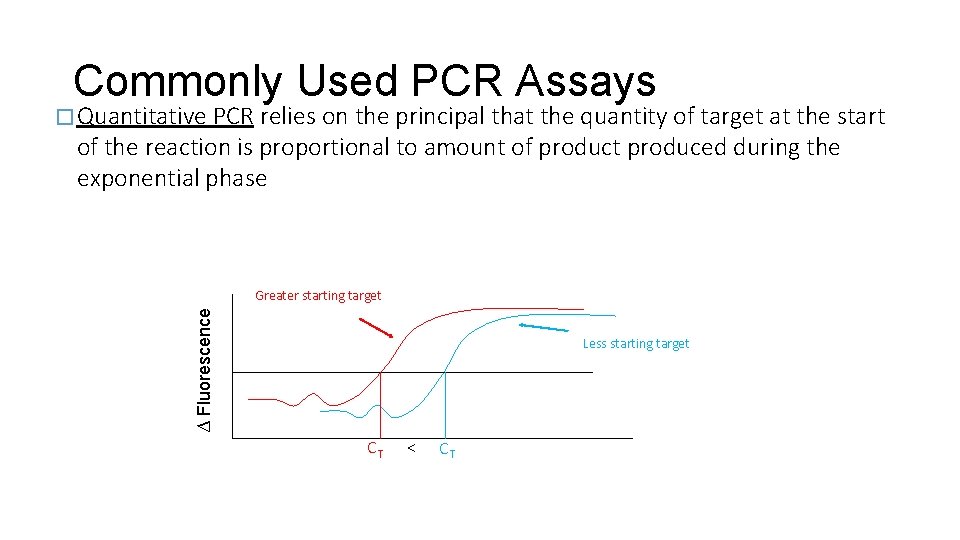
Commonly Used PCR Assays � Quantitative PCR relies on the principal that the quantity of target at the start of the reaction is proportional to amount of product produced during the exponential phase ∆ Fluorescence Greater starting target Less starting target CT < CT
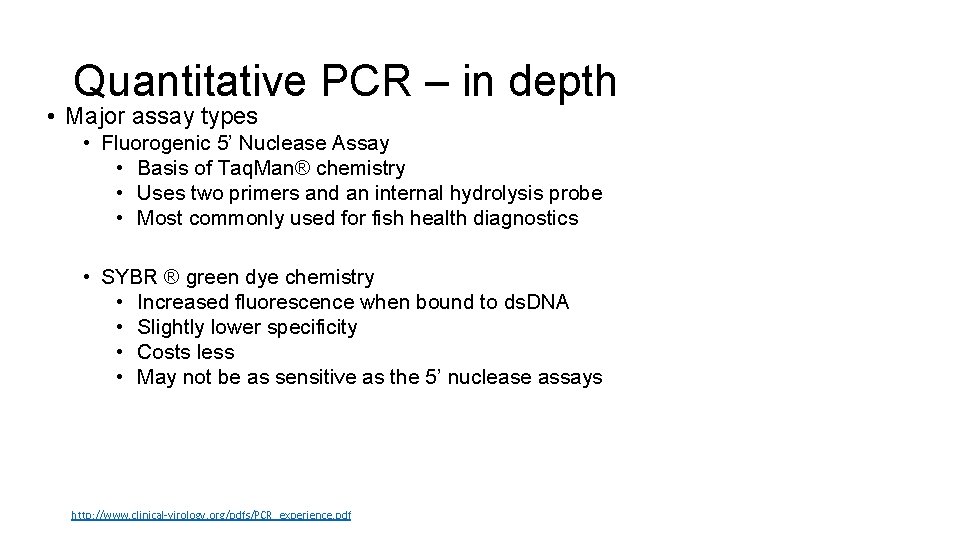
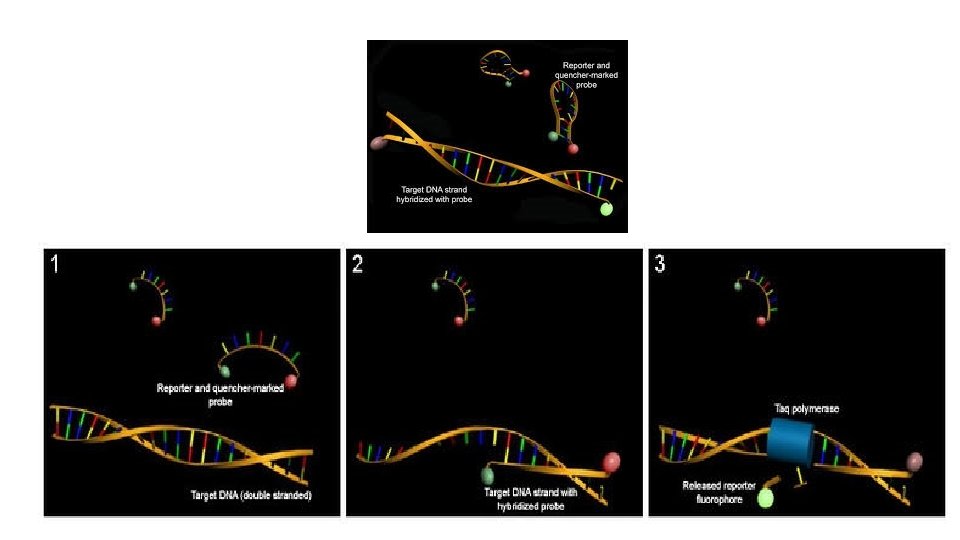
Quantitative PCR – in depth • Major assay types • Fluorogenic 5’ Nuclease Assay • Basis of Taq. Man® chemistry • Uses two primers and an internal hydrolysis probe • Most commonly used for fish health diagnostics • SYBR ® green dye chemistry • Increased fluorescence when bound to ds. DNA • Slightly lower specificity • Costs less • May not be as sensitive as the 5’ nuclease assays http: //www. clinical-virology. org/pdfs/PCR_experience. pdf
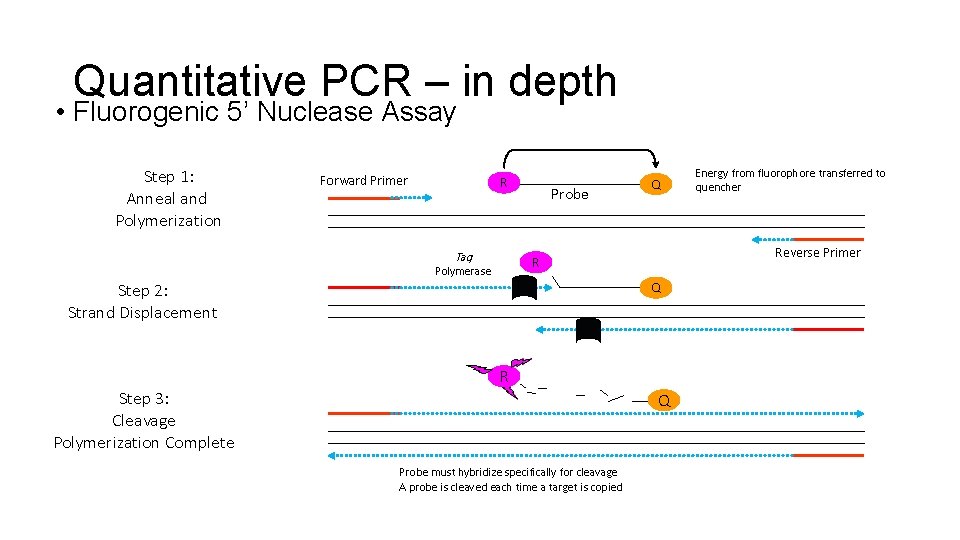
Quantitative PCR – in depth • Fluorogenic 5’ Nuclease Assay Step 1: Anneal and Polymerization Forward Primer R Probe Taq Q Reverse Primer R Polymerase T Step 2: Strand Displacement Q R Step 3: Cleavage Polymerization Complete Q Probe must hybridize specifically for cleavage A probe is cleaved each time a target is copied Energy from fluorophore transferred to quencher
Quantitative PCR – in depth • Dual-labeled internal hydrolysis probes • 5’ reporter dye (typically Fam/Vic etc. ) • 3’ quencher (typically non-fluorescent) • Can order from a range of oligo companies • Many companies have proprietary modifications for internal hydrolysis probes • Minor Grove Binding (MGB) – Applied Biosystems Inc. • The MGB linker raises the melting temperature of the internal hydrolysis probe and increases probe specificity http: //www 3. appliedbiosystems. com/cms/groups/mcb_support/documents/generaldocuments/cms_083618. pdf