Ratios Rates Unit 2 Today I am learning
- Slides: 17
Ratios / Rates Unit 2
§ Today I am learning how to use ratios and rates to solve real-world problems because this will allow me to make comparisons and solve problems. § Agenda § Warm up : Example in MSG: Lizette and Miguel/Cookies § P. 236 Example #3 ; p. 237 #1 § P. 237 #2 -8 with a partner § Closing Question: How can you use unit rates and multiplication to solve for missing measures in equivalent ratio problems? § Homework § P. 243 #2 & #4
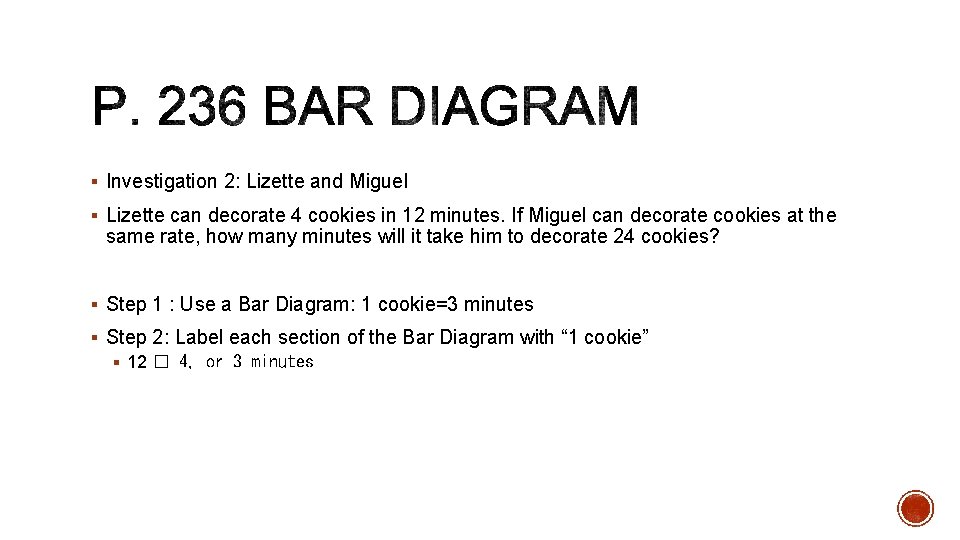
§ Investigation 2: Lizette and Miguel § Lizette can decorate 4 cookies in 12 minutes. If Miguel can decorate cookies at the same rate, how many minutes will it take him to decorate 24 cookies? § Step 1 : Use a Bar Diagram: 1 cookie=3 minutes § Step 2: Label each section of the Bar Diagram with “ 1 cookie” § 12 � 4, or 3 minutes
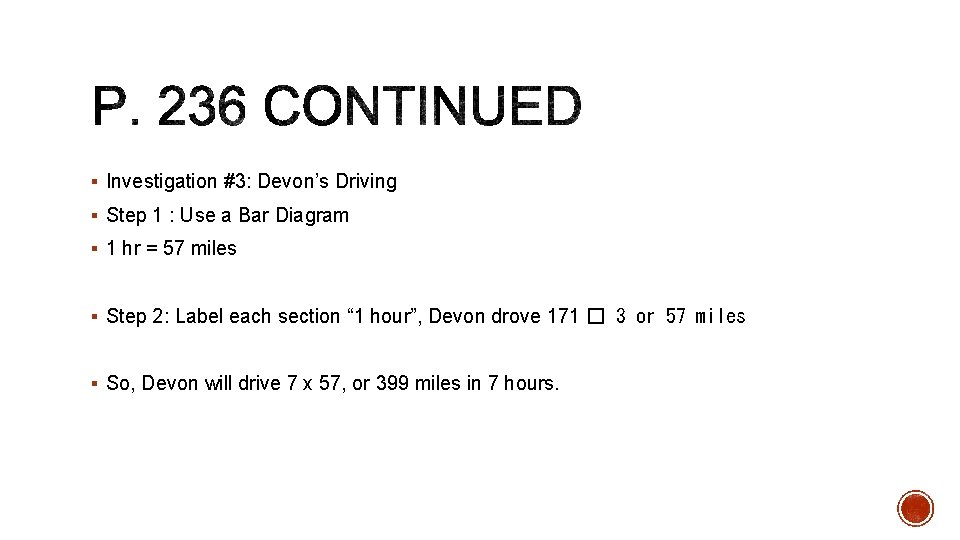
§ Investigation #3: Devon’s Driving § Step 1 : Use a Bar Diagram § 1 hr = 57 miles § Step 2: Label each section “ 1 hour”, Devon drove 171 � 3 or 57 miles § So, Devon will drive 7 x 57, or 399 miles in 7 hours.
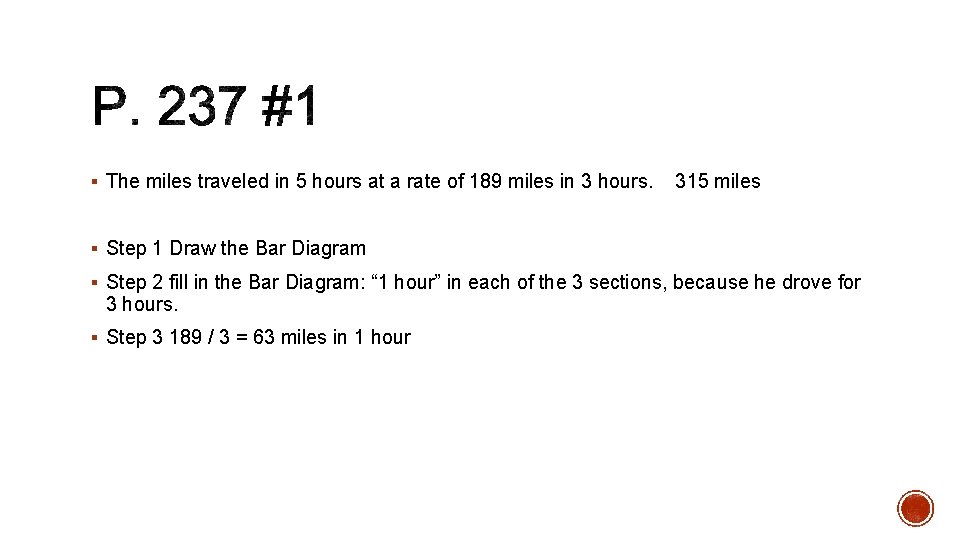
§ The miles traveled in 5 hours at a rate of 189 miles in 3 hours. 315 miles § Step 1 Draw the Bar Diagram § Step 2 fill in the Bar Diagram: “ 1 hour” in each of the 3 sections, because he drove for 3 hours. § Step 3 189 / 3 = 63 miles in 1 hour
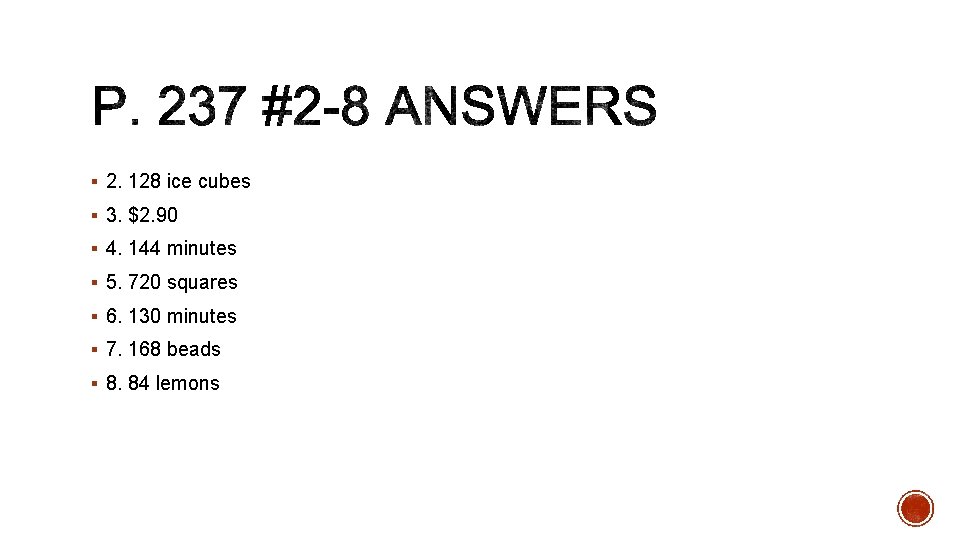
§ 2. 128 ice cubes § 3. $2. 90 § 4. 144 minutes § 5. 720 squares § 6. 130 minutes § 7. 168 beads § 8. 84 lemons
§ How can you use unit rates and multiplication to solve for missing measures in equivalent ratio problems?
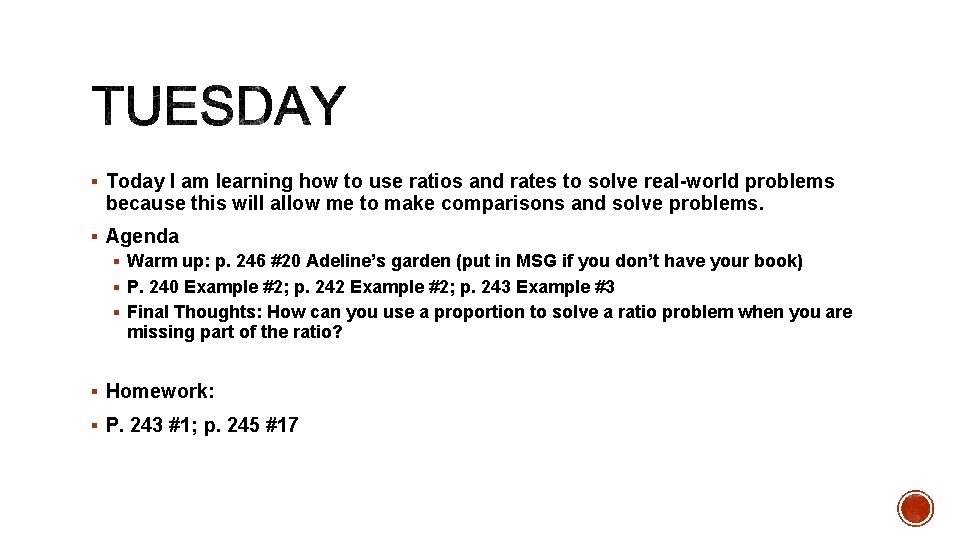
§ Today I am learning how to use ratios and rates to solve real-world problems because this will allow me to make comparisons and solve problems. § Agenda § Warm up: p. 246 #20 Adeline’s garden (put in MSG if you don’t have your book) § P. 240 Example #2; p. 242 Example #2; p. 243 Example #3 § Final Thoughts: How can you use a proportion to solve a ratio problem when you are missing part of the ratio? § Homework: § P. 243 #1; p. 245 #17
§ Method 1: Bar Diagram § Method 2: Equivalent fractions
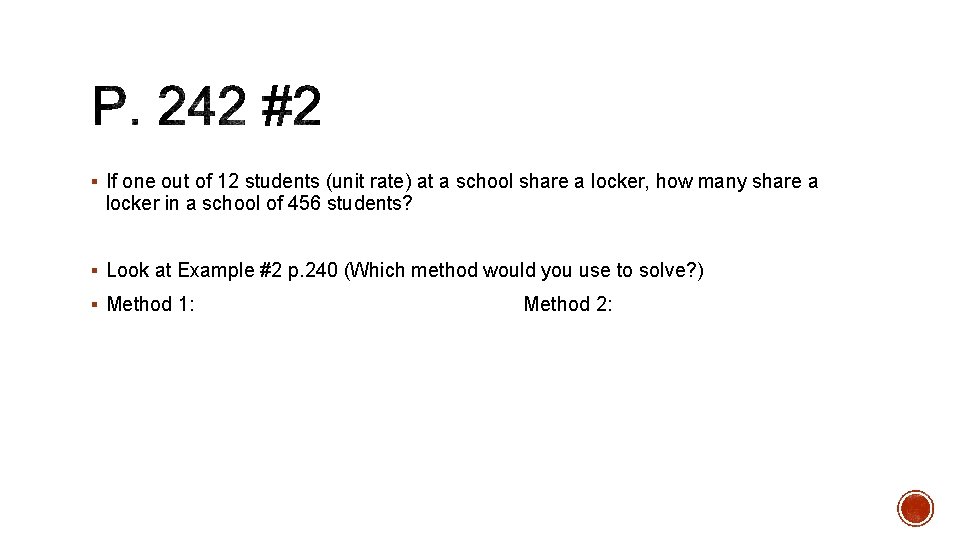
§ If one out of 12 students (unit rate) at a school share a locker, how many share a locker in a school of 456 students? § Look at Example #2 p. 240 (Which method would you use to solve? ) § Method 1: Method 2:
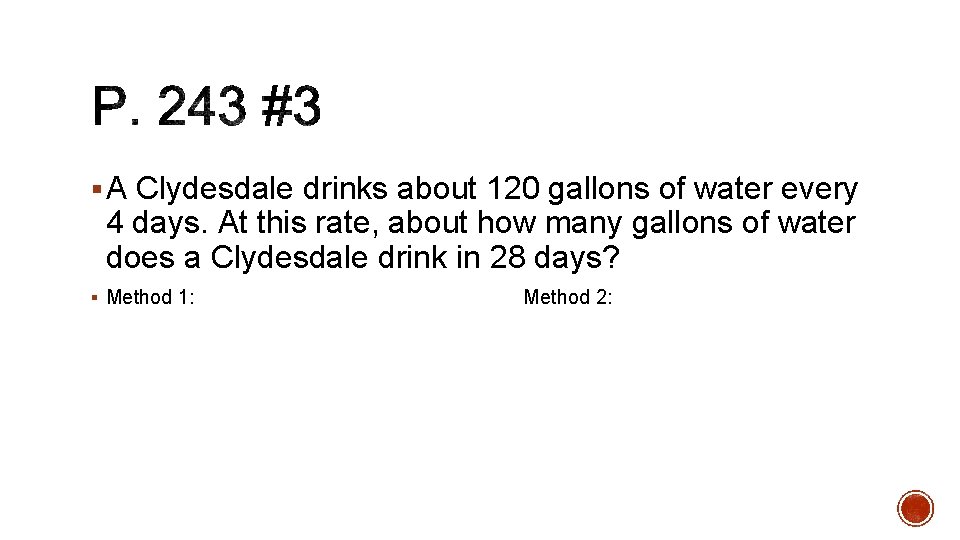
§ A Clydesdale drinks about 120 gallons of water every 4 days. At this rate, about how many gallons of water does a Clydesdale drink in 28 days? § Method 1: Method 2:
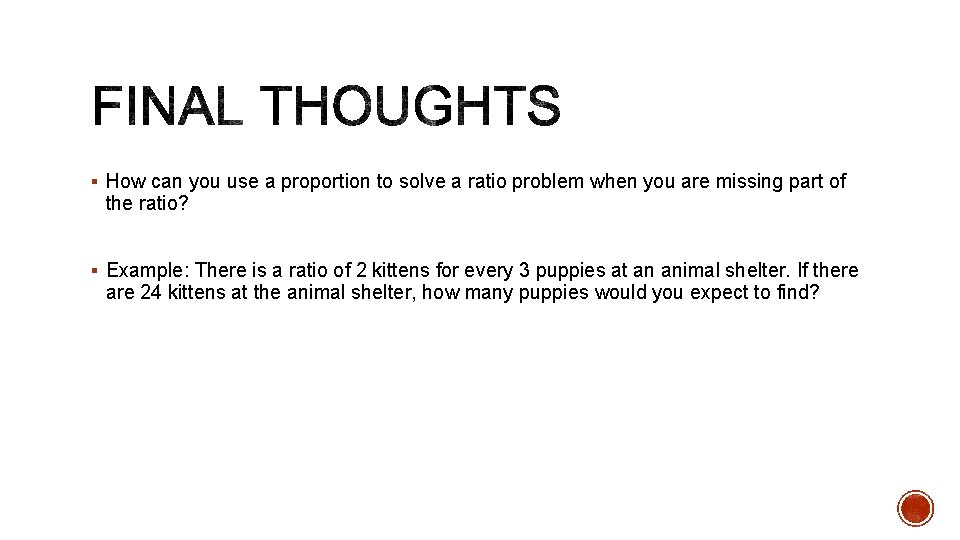
§ How can you use a proportion to solve a ratio problem when you are missing part of the ratio? § Example: There is a ratio of 2 kittens for every 3 puppies at an animal shelter. If there are 24 kittens at the animal shelter, how many puppies would you expect to find?
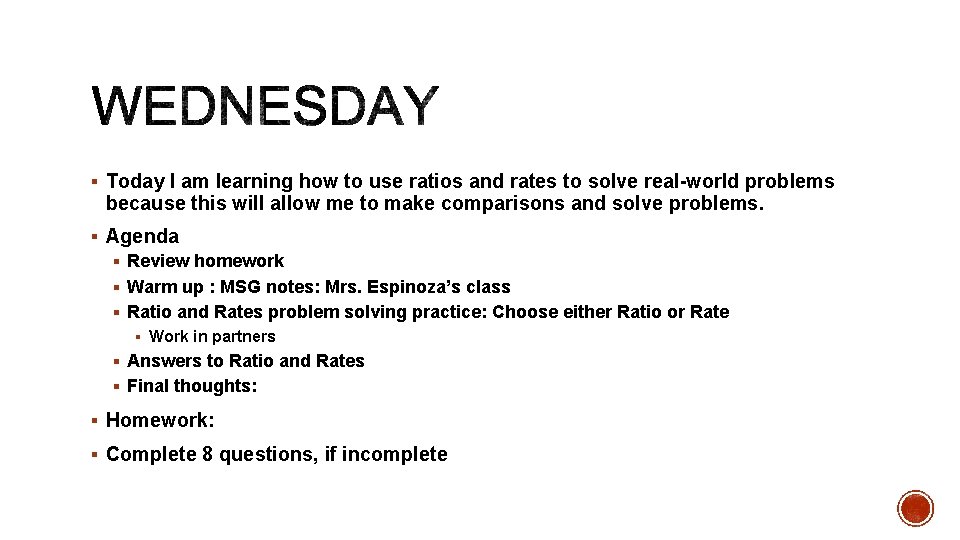
§ Today I am learning how to use ratios and rates to solve real-world problems because this will allow me to make comparisons and solve problems. § Agenda § Review homework § Warm up : MSG notes: Mrs. Espinoza’s class § Ratio and Rates problem solving practice: Choose either Ratio or Rate § Work in partners § Answers to Ratio and Rates § Final thoughts: § Homework: § Complete 8 questions, if incomplete
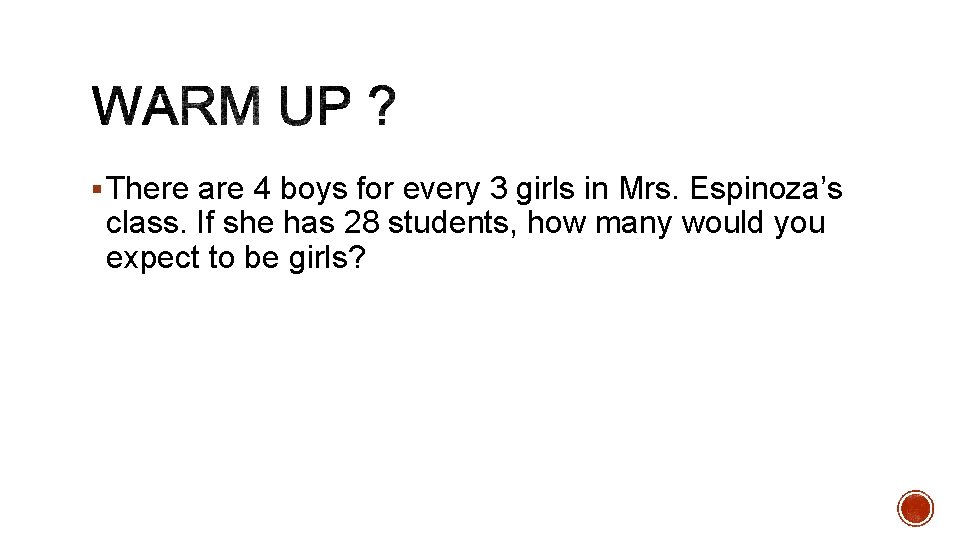
§ There are 4 boys for every 3 girls in Mrs. Espinoza’s class. If she has 28 students, how many would you expect to be girls?
§ How do we know we are solving for a ratio? § How do we know we are solving for a rate? § What information tells us we are solving for a ratio or rate?
§ Today I am learning how to use ratios and rates to solve real-world problems because this will allow me to make comparisons and solve problems. § Agenda § Review homework, if answers were not covered Wednesday § Proportions and Converting Measurements § Final thoughts: What measurement could you relate to in your life? § Homework: § Proportions homework sheet in MSG
§ Today I am learning how to use ratios and rates to solve real-world problems because this will allow me to make comparisons and solve problems. § Agenda § Review homework answers and questions § Some students will get caught up on their work / others will begin the Quiz § Quick Write: in MSG § Homework: § Study MSG notes and examples. Practice method 1 and 2 for proportions