Puzzles Solving and Writing Tips UMS talk 5412

- Slides: 47
Puzzles: Solving and Writing Tips ΣUMS talk - 5/4/12 Sean Gardiner
Introduction • Puzzles are presented as a bunch of words and/or pictures, and little else • The goal is always to extract a word or phrase – Done by searching for patterns and identifying and utilising themes (cf. solving maths problems) • The crux is the intuitive leap(s) – Always motivatable, but rarely obvious • Different categories (based on appearance)
Word Puzzles • Words can have multiple properties: – Meaning (double meaning, “cryptic” definitions) – Letter/constituent properties (too many to list!) – Sound (rhymes, phonetics, . . . ) • Varied forms of presentation: – List – Hidden (e. g. in a paragraph/poem) – Codes (Caesar cypher, Morse, Braille, alphanumeric. . . ) – Clues (straight, cryptic)
Solving Word Puzzles • Huge range of word puzzle mechanics • Expect puzzles to use at least two properties • Always look for patterns (in letters/meanings) • Numbers => convert or index (usually)
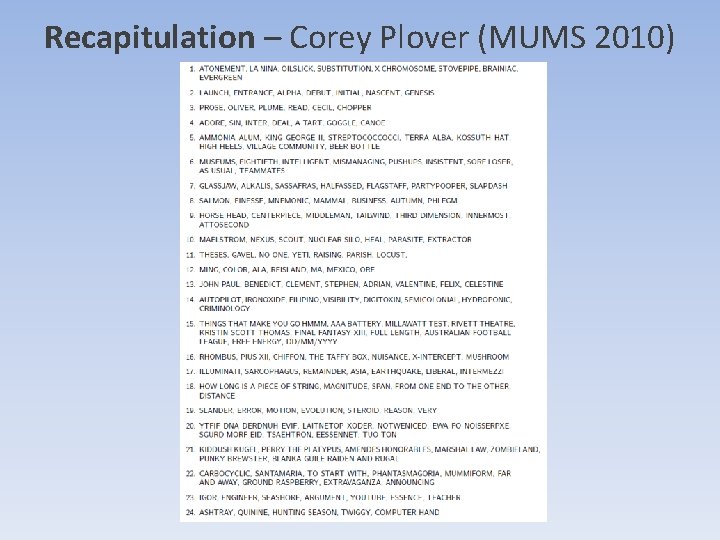
Recapitulation – Corey Plover (MUMS 2010)
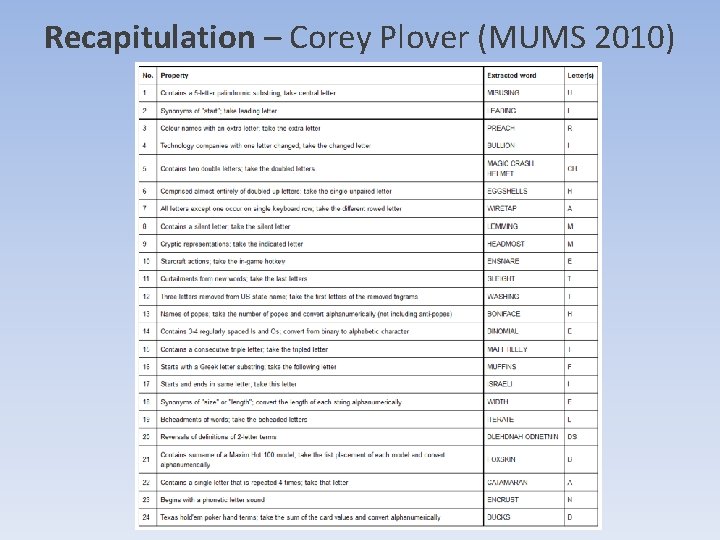
Recapitulation – Corey Plover (MUMS 2010)
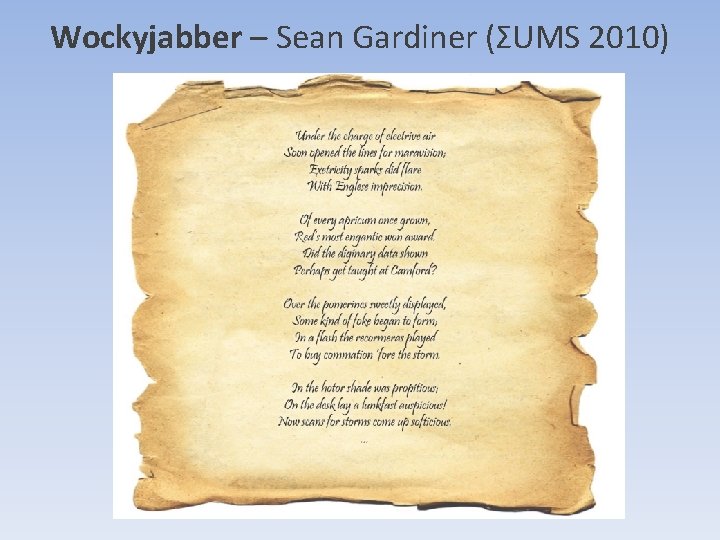
Wockyjabber – Sean Gardiner (ΣUMS 2010)
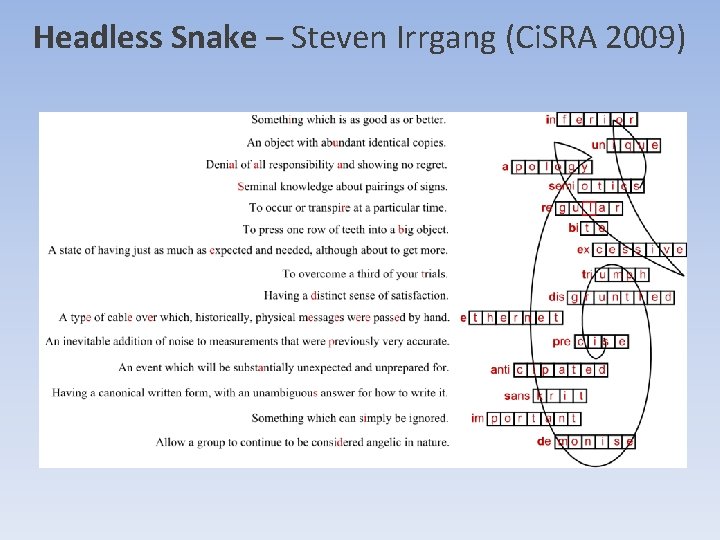
Headless Snake – Steven Irrgang (Ci. SRA 2009)
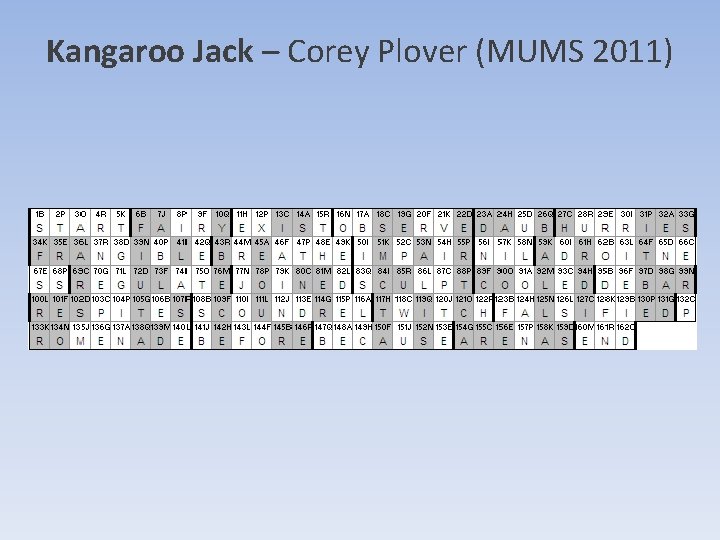
Kangaroo Jack – Corey Plover (MUMS 2011)
Picture Puzzles • Pure picture puzzles rely on image interpretation • Usually employ different perspectives as a mechanic • Sometimes drawing/adding to the picture is required
Solving Picture Puzzles • Be artistic! – Think visually (or know someone who can) • While puzzle type can vary wildly, the answer extraction (last step) is very restricted: – Find/construct letters that spell out the answer – Find/construct an easily and uniquely-identifiable image or set of images (more likely)
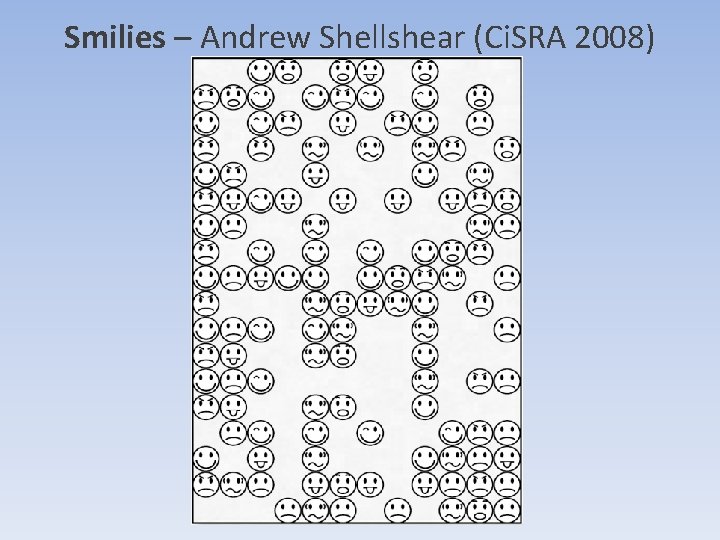
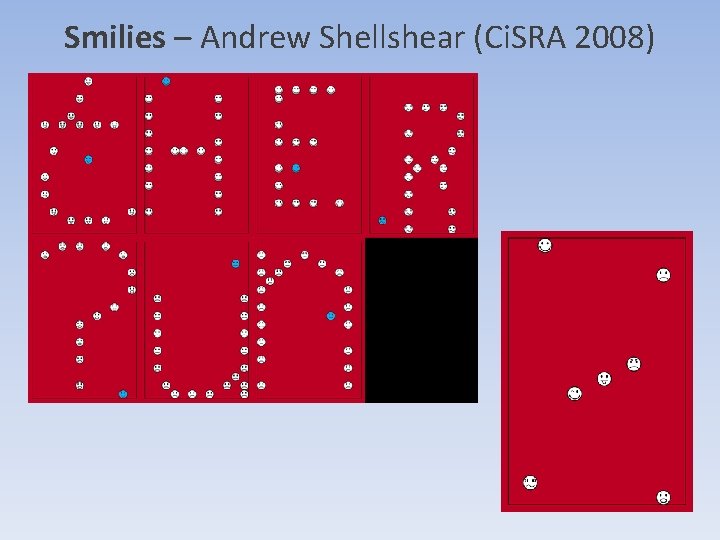
Smilies – Andrew Shellshear (Ci. SRA 2008)
Smilies – Andrew Shellshear (Ci. SRA 2008)
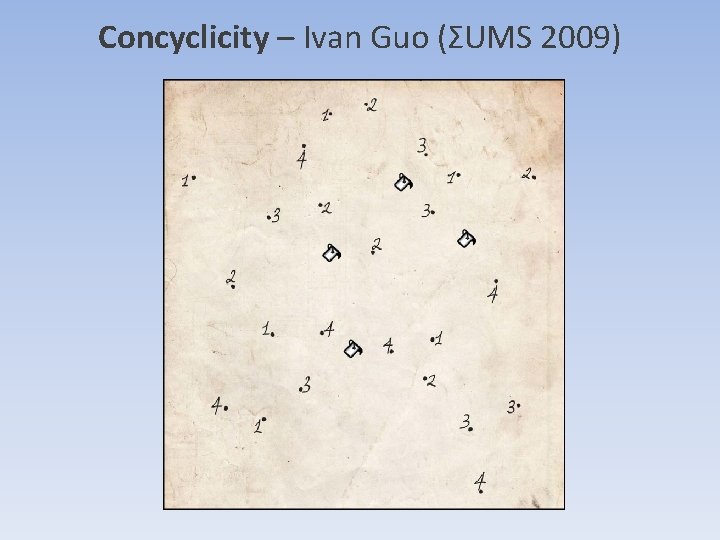
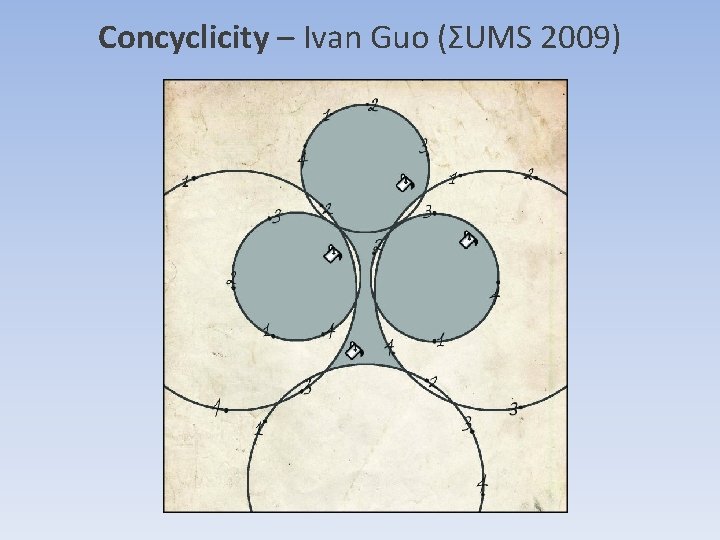
Concyclicity – Ivan Guo (ΣUMS 2009)
Concyclicity – Ivan Guo (ΣUMS 2009)
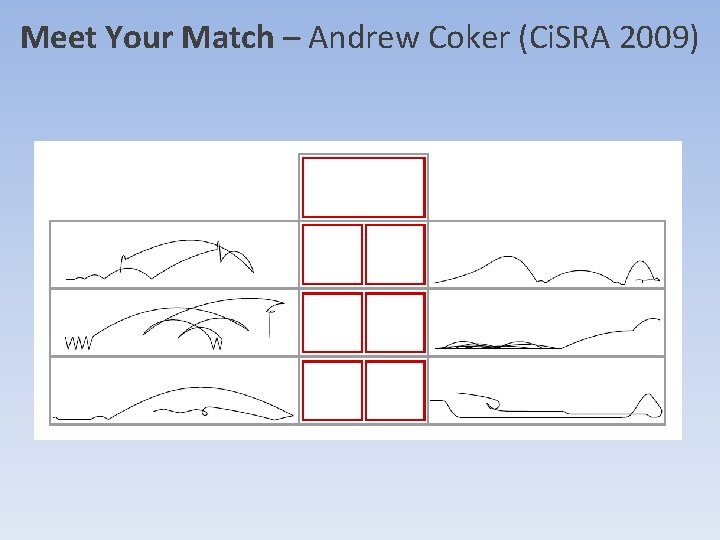
Meet Your Match – Andrew Coker (Ci. SRA 2009)
Logic Puzzles • “Logic” puzzles are self-contained and often original ideas: – Follow a series of steps (usually disguised) – Identify/determine a rule set – Reinterpretations (e. g. board games) • All puzzle types overlap with this one in one way or another
Solving Logic Puzzles • An inherent property of logic puzzles is that everything needed to solve one is already on the page in some capacity (and usually there’s only just enough information) – In some cases new rules/steps might be implied from old ones (mechanic repetition is common) • Using deduction can often prove just as useful as induction
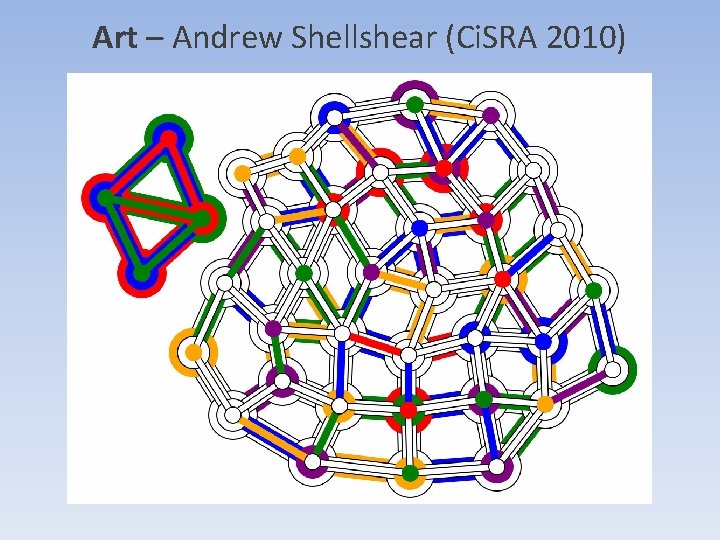
Art – Andrew Shellshear (Ci. SRA 2010)
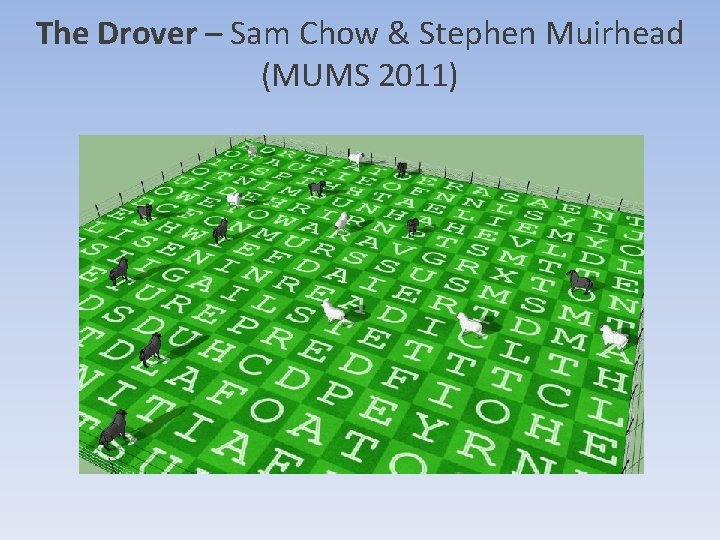
The Drover – Sam Chow & Stephen Muirhead (MUMS 2011)
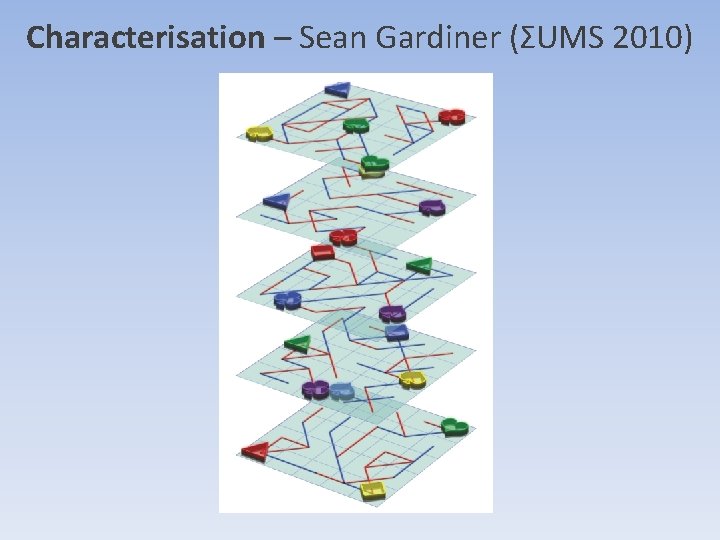
Characterisation – Sean Gardiner (ΣUMS 2010)
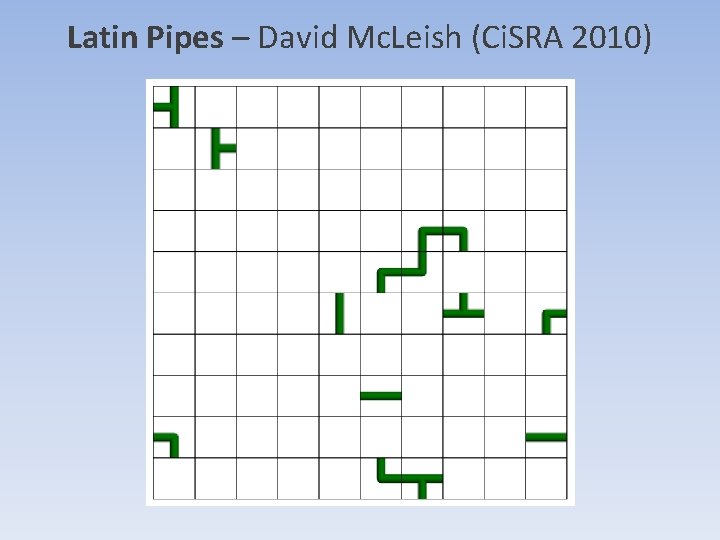
Latin Pipes – David Mc. Leish (Ci. SRA 2010)
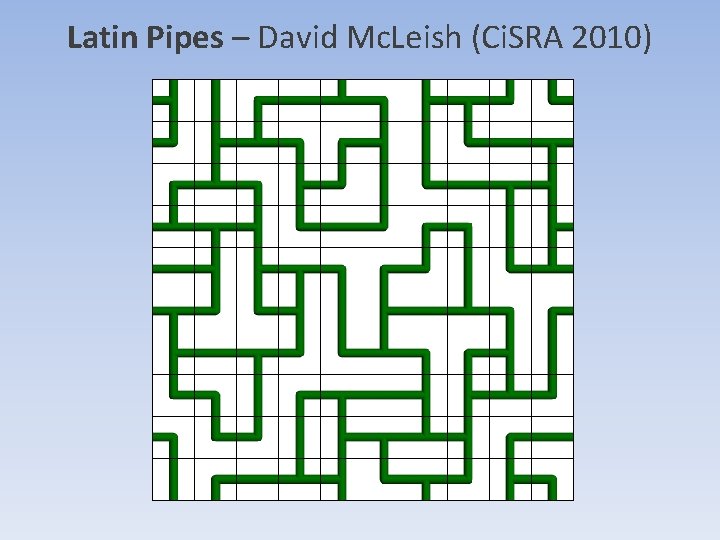
Latin Pipes – David Mc. Leish (Ci. SRA 2010)
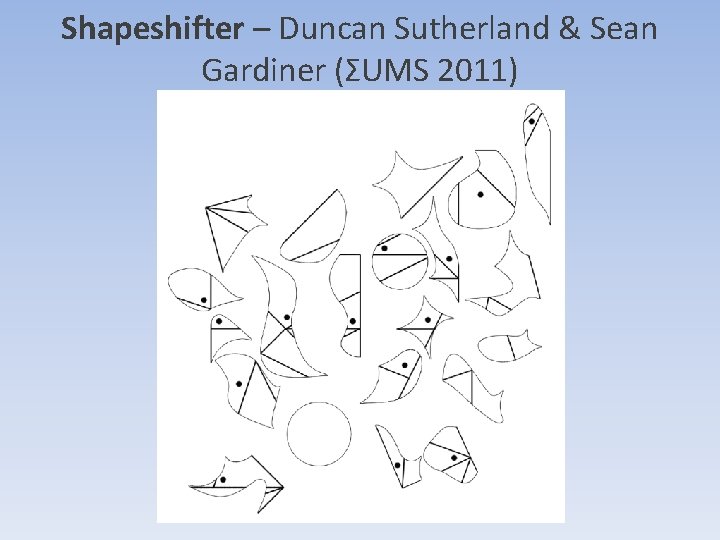
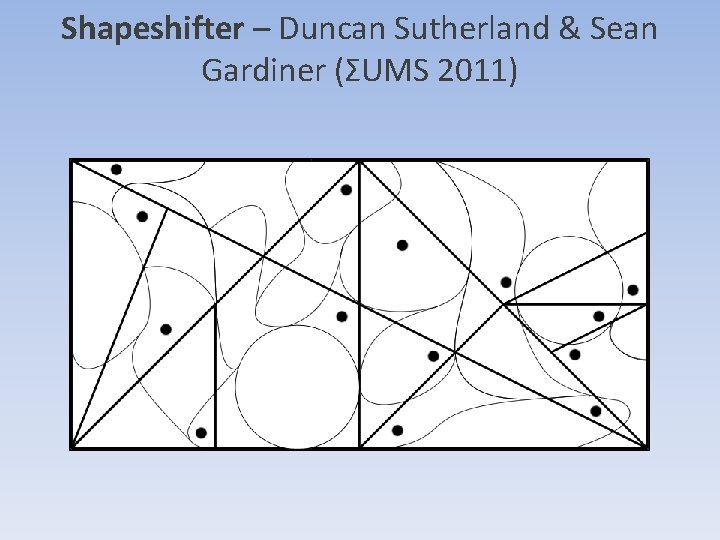
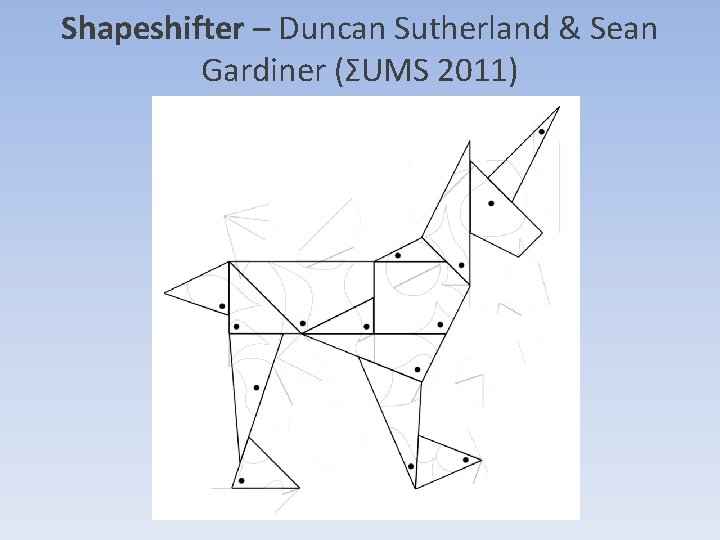
Construction Puzzles • Basically a mix of picture and logic types • Involve cutting/folding/pasting – The construction rules are usually made clear • Most basic construction ideas have already been exhausted
Solving Construction Puzzles • First step: Always cut everything out! • Expect the construction step to be relevant to the overall puzzle: – If cutting is involved, there ought be a reason the pieces were originally separated – If folding is involved, you’ll want to use the 3 D property at some point
Shapeshifter – Duncan Sutherland & Sean Gardiner (ΣUMS 2011)
Shapeshifter – Duncan Sutherland & Sean Gardiner (ΣUMS 2011)
Shapeshifter – Duncan Sutherland & Sean Gardiner (ΣUMS 2011)
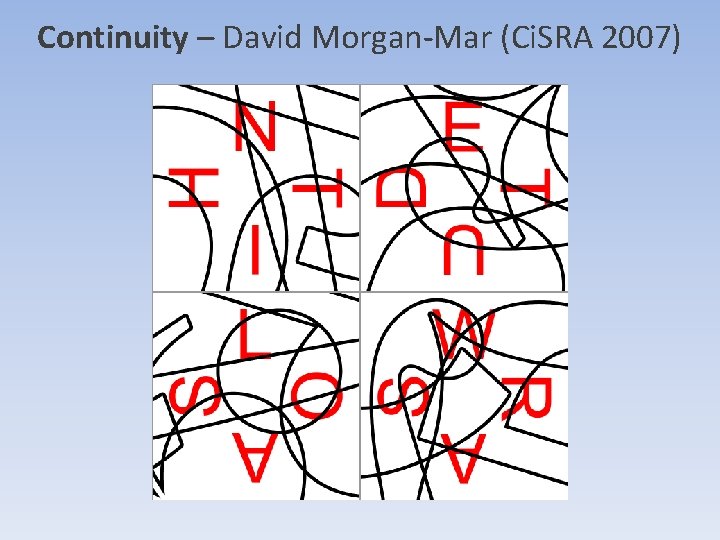
Continuity – David Morgan-Mar (Ci. SRA 2007)
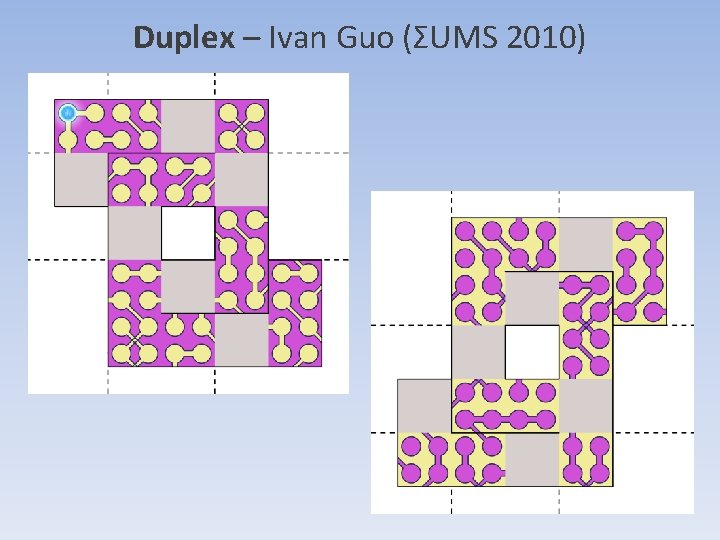
Duplex – Ivan Guo (ΣUMS 2010)
Research Puzzles • These tend to contain very specific descriptions/jargon/pictures/themes: – Rarely solvable without doing some research • Can involve retrieving facts/stats, recognising pictures/music, etc.
Solving Research Puzzles • Research! – Wikipedia/Google/specialist websites – Ask around – the topic might be someone’s field of expertise • Try to identify the puzzle’s theme as early as possible, as this will greatly help narrow down the research
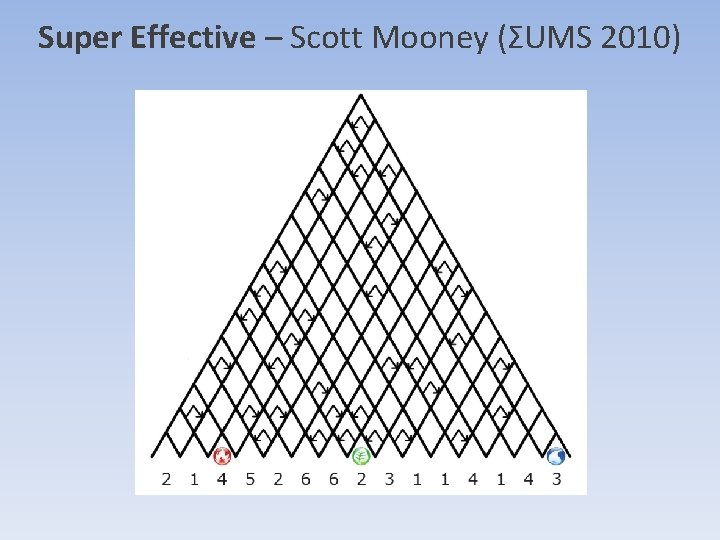
Super Effective – Scott Mooney (ΣUMS 2010)
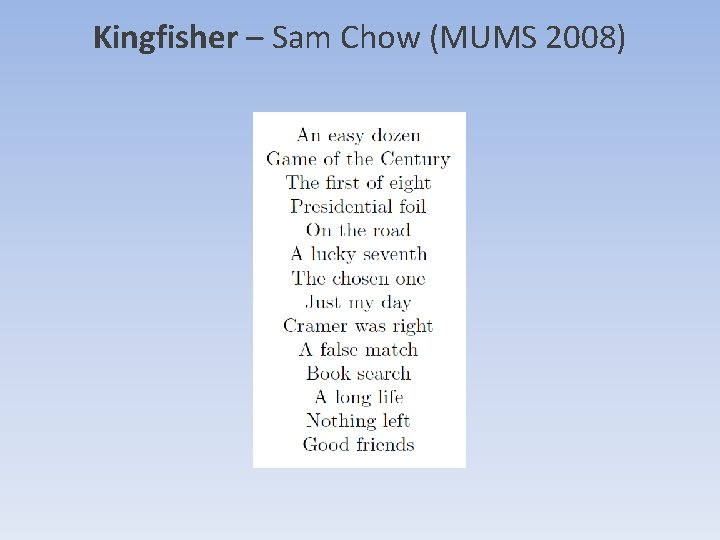
Kingfisher – Sam Chow (MUMS 2008)
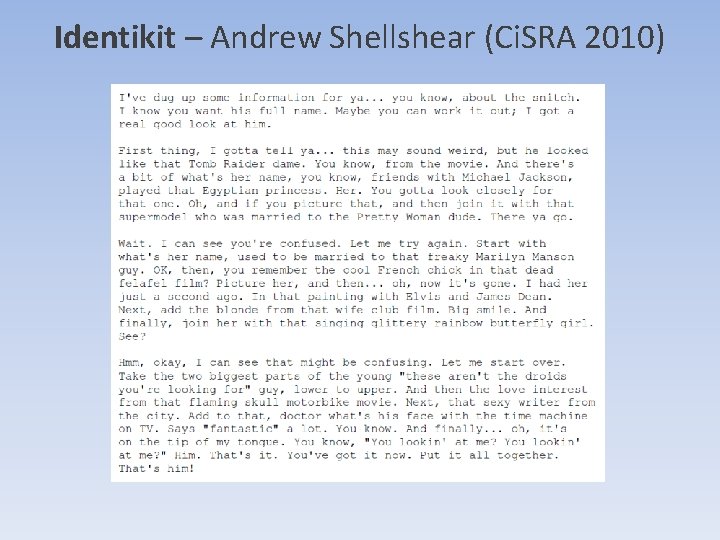
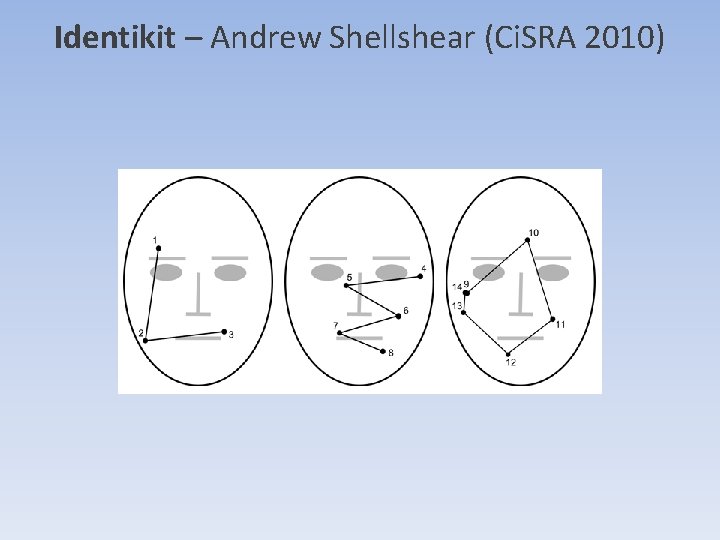
Identikit – Andrew Shellshear (Ci. SRA 2010)
Identikit – Andrew Shellshear (Ci. SRA 2010)
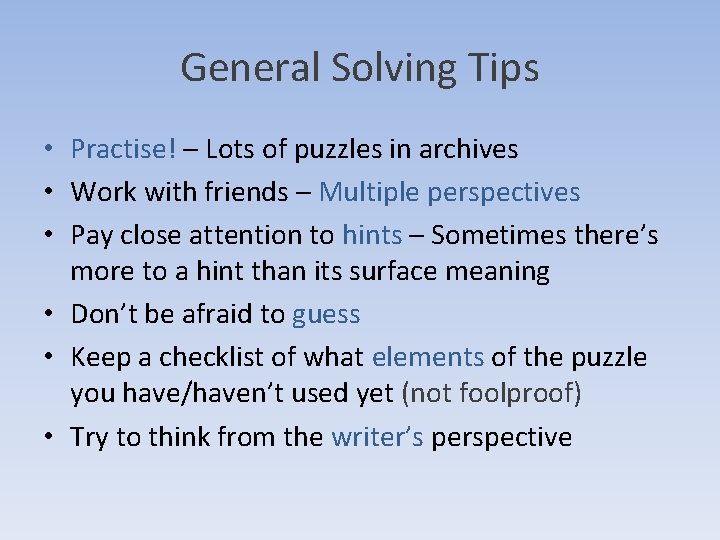
General Solving Tips • Practise! – Lots of puzzles in archives • Work with friends – Multiple perspectives • Pay close attention to hints – Sometimes there’s more to a hint than its surface meaning • Don’t be afraid to guess • Keep a checklist of what elements of the puzzle you have/haven’t used yet (not foolproof) • Try to think from the writer’s perspective
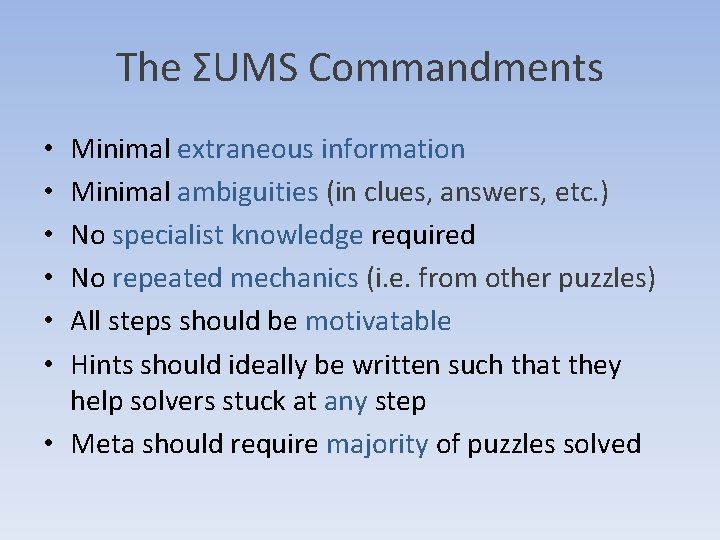
The ΣUMS Commandments Minimal extraneous information Minimal ambiguities (in clues, answers, etc. ) No specialist knowledge required No repeated mechanics (i. e. from other puzzles) All steps should be motivatable Hints should ideally be written such that they help solvers stuck at any step • Meta should require majority of puzzles solved • • •
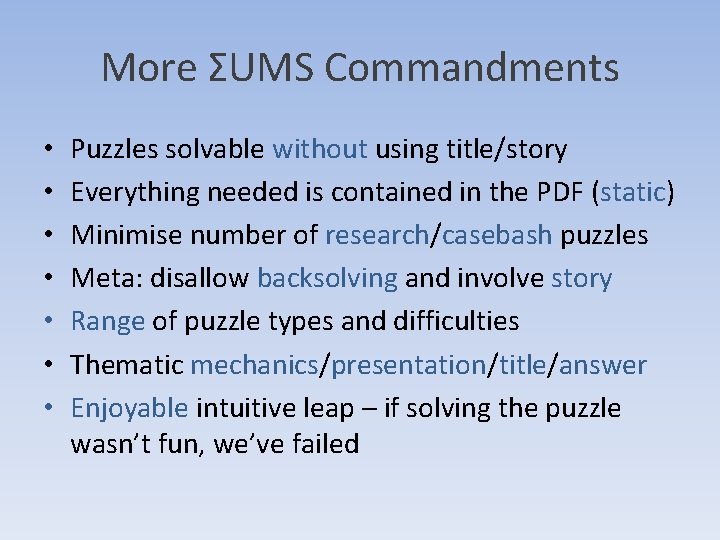
More ΣUMS Commandments • • Puzzles solvable without using title/story Everything needed is contained in the PDF (static) Minimise number of research/casebash puzzles Meta: disallow backsolving and involve story Range of puzzle types and difficulties Thematic mechanics/presentation/title/answer Enjoyable intuitive leap – if solving the puzzle wasn’t fun, we’ve failed
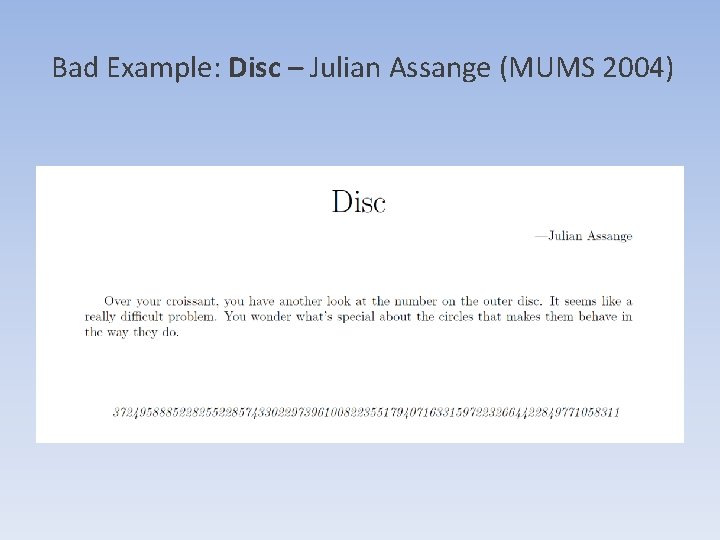
Bad Example: Disc – Julian Assange (MUMS 2004)
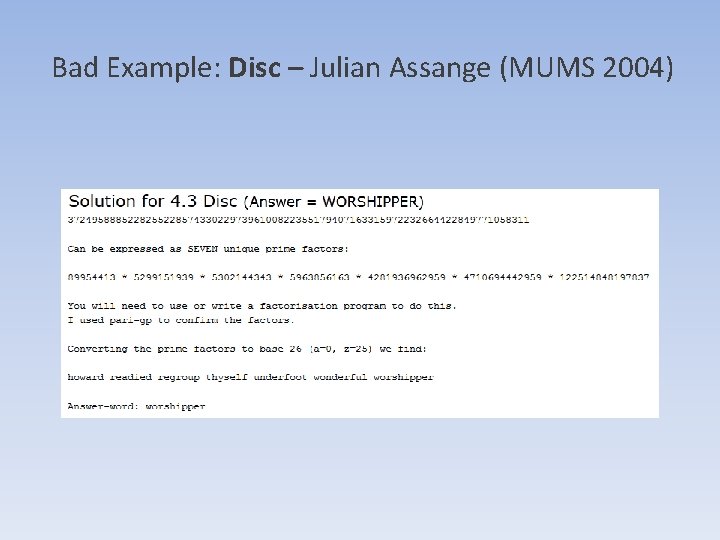
Bad Example: Disc – Julian Assange (MUMS 2004)
Writing Puzzles • Start with an idea/theme and build the puzzle naturally around it • Test every iteration with new people • Write good hints (difficult!) • Be aware of the other puzzles – Is your mechanic or theme too similar to another? – Does the Meta enforce any requirements?
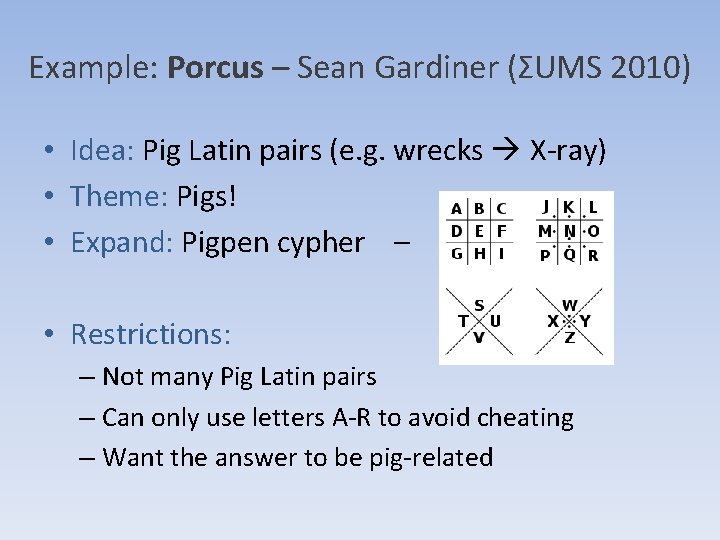
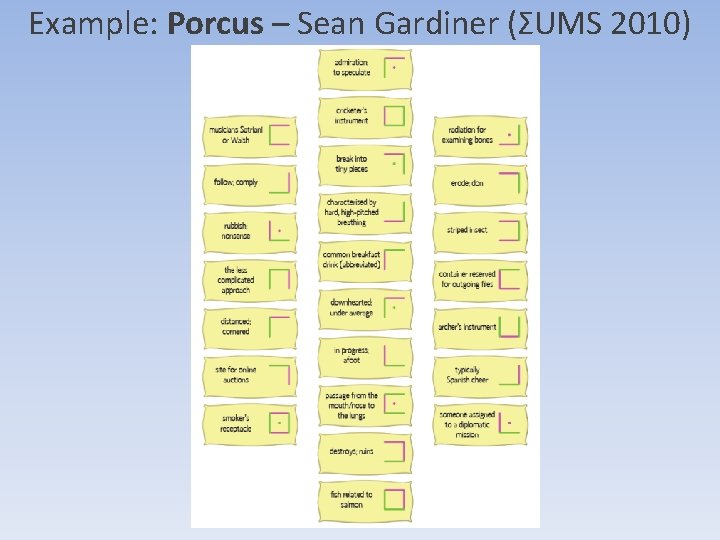
Example: Porcus – Sean Gardiner (ΣUMS 2010) • Idea: Pig Latin pairs (e. g. wrecks X-ray) • Theme: Pigs! • Expand: Pigpen cypher – • Restrictions: – Not many Pig Latin pairs – Can only use letters A-R to avoid cheating – Want the answer to be pig-related
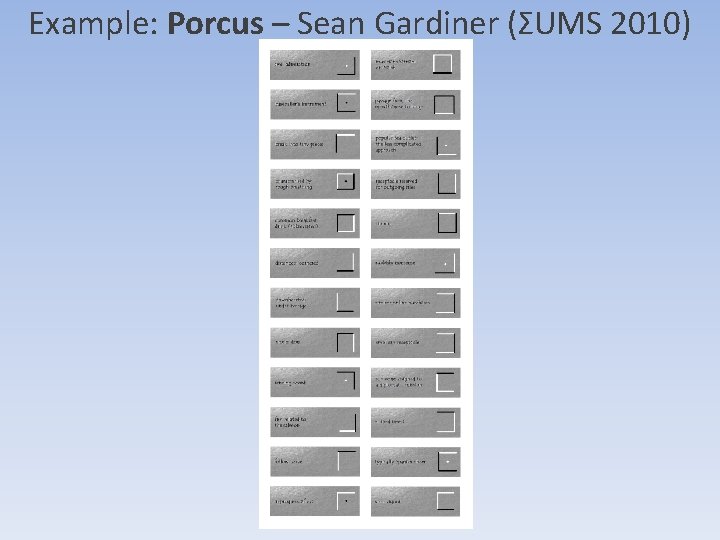
Example: Porcus – Sean Gardiner (ΣUMS 2010)
Example: Porcus – Sean Gardiner (ΣUMS 2010) • Refinement: – Adjusted some of the clues to be fairer – Removed the alphabetic ordering restriction to include a better hint – Changed black/white to pink/green (to avoid people trying to mix colours – minimise confusion) – Changed rocks to “biscuits” (more thematic)
Example: Porcus – Sean Gardiner (ΣUMS 2010)
References • Ci. SRA Puzzle Competition: – http: //puzzle. cisra. com. au/ • MUMS Puzzle Hunt: – http: //www. ms. unimelb. edu. au/~mums/puzzlehunt/ • ΣUMS Puzzle Hunt: – http: //www. maths. usyd. edu. au/u/sums/puzzlehunt