Protozoa Animal LikeProtista Protozoa All are unicellular heterotrophs

- Slides: 16
Protozoa
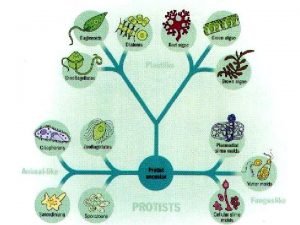
Animal Like-Protista (Protozoa) • All are unicellular heterotrophs. • Nutrition by ingesting other organisms or dead organic material. • Some organisms are parasitic, since they cannot actively capture food. They must live in an area of the host organism that has a constant food supply, such as the intestines or bloodstream of an animal.
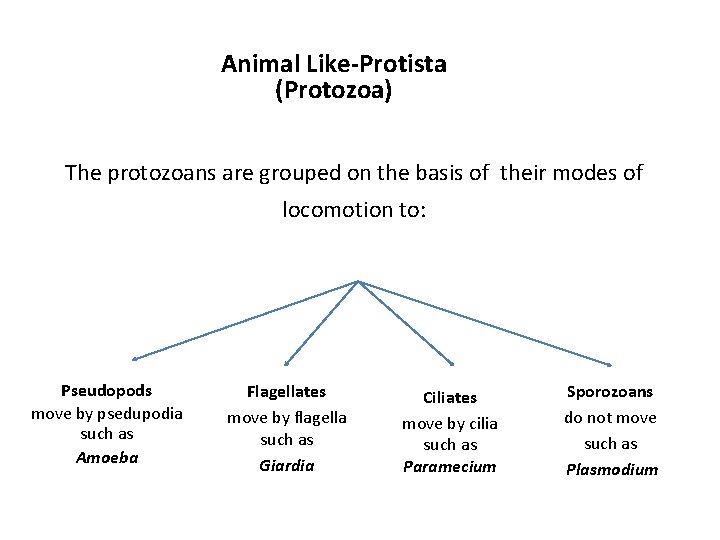
Animal Like-Protista (Protozoa) The protozoans are grouped on the basis of their modes of locomotion to: Pseudopods move by psedupodia such as Amoeba Flagellates move by flagella such as Giardia Ciliates move by cilia such as Paramecium Sporozoans do not move such as Plasmodium
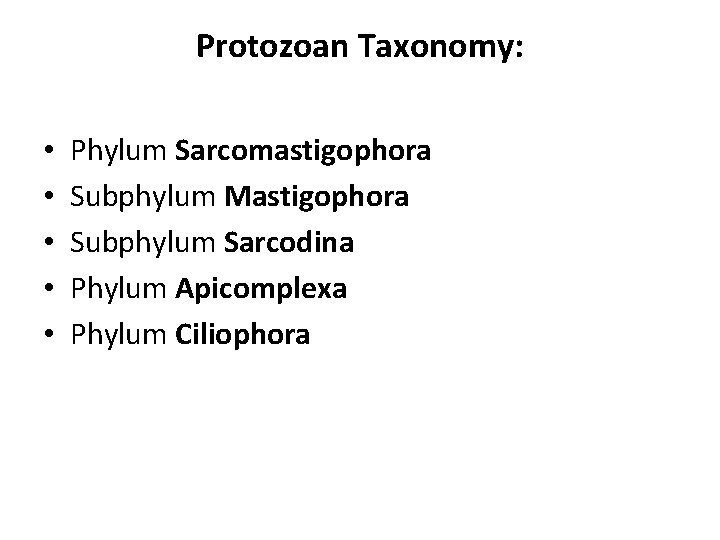
Protozoan Taxonomy: • • • Phylum Sarcomastigophora Subphylum Mastigophora Subphylum Sarcodina Phylum Apicomplexa Phylum Ciliophora
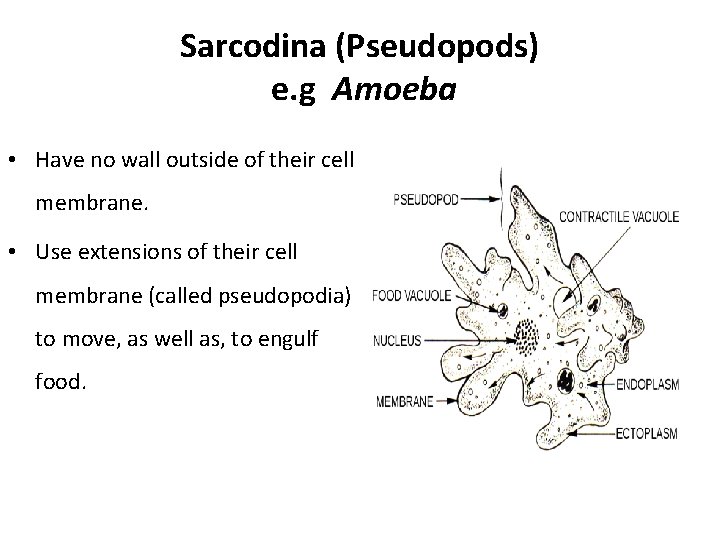
Sarcodina (Pseudopods) e. g Amoeba • Have no wall outside of their cell membrane. • Use extensions of their cell membrane (called pseudopodia) to move, as well as, to engulf food.
Sarcodina (Pseudopods) e. g Amoeba • Amoebas live in water, dissolved nutrients from the environment can diffuse directly through their cell membranes. • Most amoebas live in marine environments, although some freshwater species exist. • Freshwater amoebas use contractile vacuoles to pump excess water out of the cell.
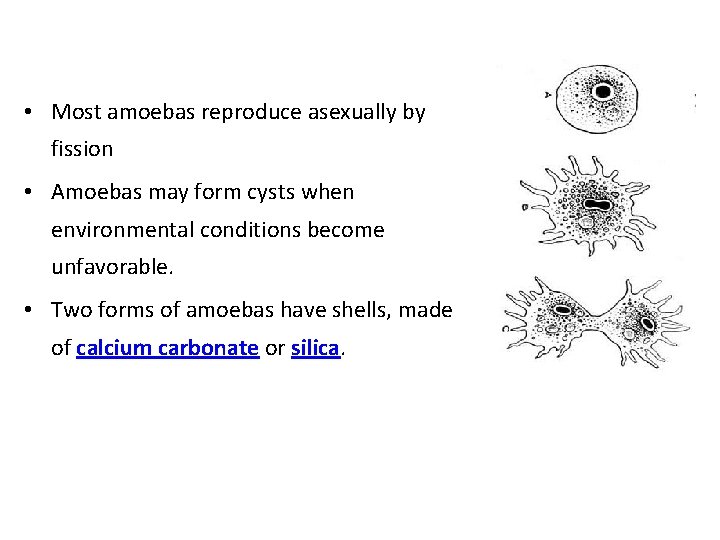
• Most amoebas reproduce asexually by fission • Amoebas may form cysts when environmental conditions become unfavorable. • Two forms of amoebas have shells, made of calcium carbonate or silica.
Feeding: • When the pseudopodium traps a bit of food, the cell membrane closes around the meal, this forms a food vacuole. • Digestive enzymes are secreted into the food vacuole, which break down the food. The cell then absorbs the nutrients.
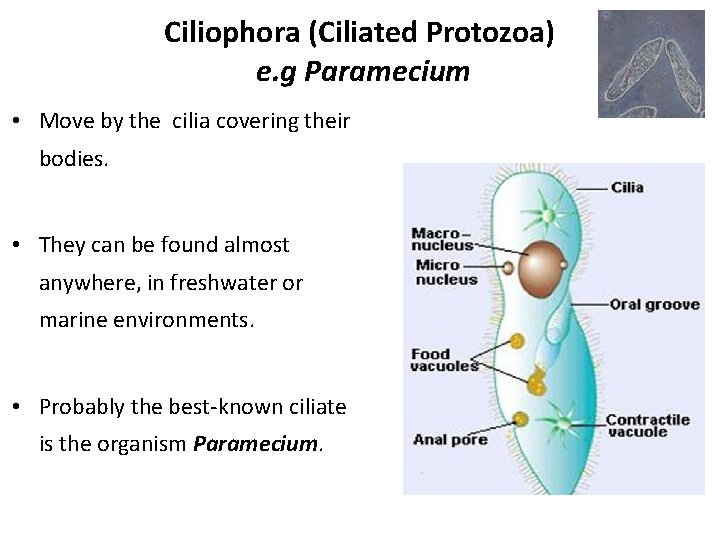
Ciliophora (Ciliated Protozoa) e. g Paramecium • Move by the cilia covering their bodies. • They can be found almost anywhere, in freshwater or marine environments. • Probably the best-known ciliate is the organism Paramecium.
Ciliophora (Ciliated Protozoa) e. g Paramecium • Paramecia have many well-developed organelles. • Paramecia have two nuclei, a macronucleus and a micronucleus. • The larger macronucleus controls most of the metabolic functions of the cell. • The smaller micronucleus controls much of the pathways involved in sexual reproduction.
Ciliophora (Ciliated Protozoa) e. g Paramecium • Thousands of cilia appear through the pellicle, a tough, protective covering surrounding the cell membrane.
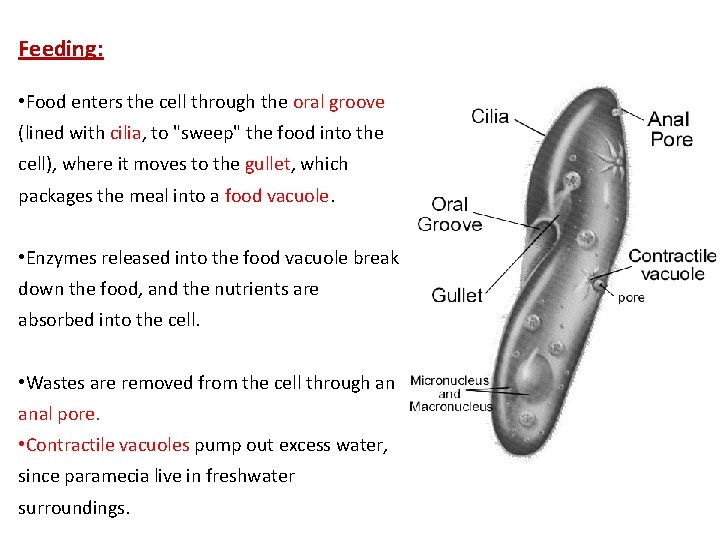
Feeding: • Food enters the cell through the oral groove (lined with cilia, to "sweep" the food into the cell), where it moves to the gullet, which packages the meal into a food vacuole. • Enzymes released into the food vacuole break down the food, and the nutrients are absorbed into the cell. • Wastes are removed from the cell through an anal pore. • Contractile vacuoles pump out excess water, since paramecia live in freshwater surroundings.
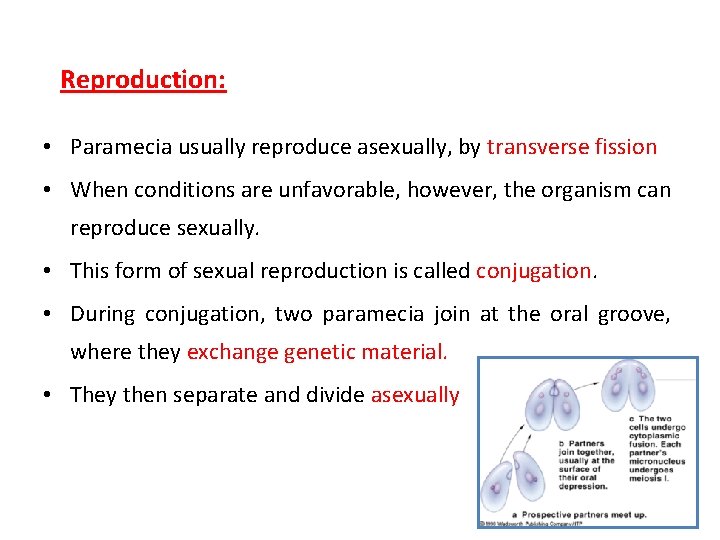
Reproduction: • Paramecia usually reproduce asexually, by transverse fission • When conditions are unfavorable, however, the organism can reproduce sexually. • This form of sexual reproduction is called conjugation. • During conjugation, two paramecia join at the oral groove, where they exchange genetic material. • They then separate and divide asexually
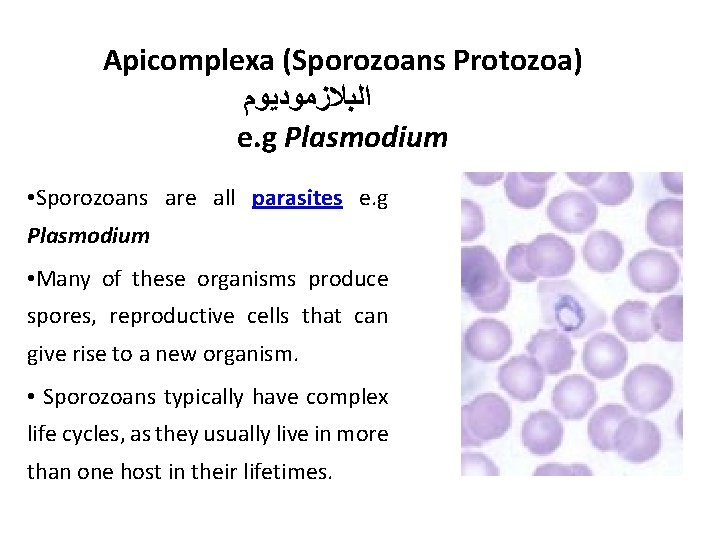
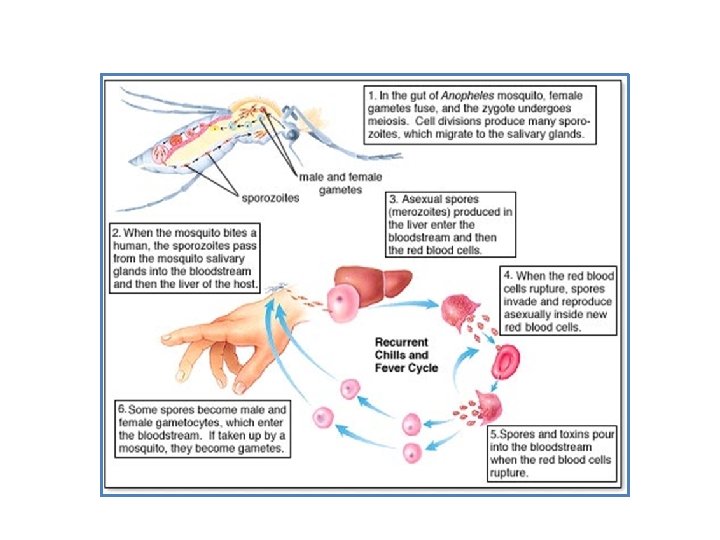
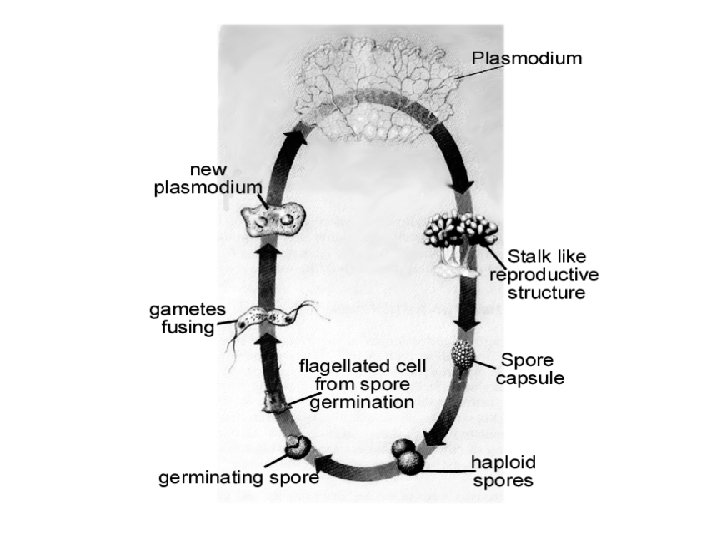
Apicomplexa (Sporozoans Protozoa) ﺍﻟﺒﻼﺯﻣﻮﺩﻳﻮﻡ e. g Plasmodium • Sporozoans are all parasites e. g Plasmodium • Many of these organisms produce spores, reproductive cells that can give rise to a new organism. • Sporozoans typically have complex life cycles, as they usually live in more than one host in their lifetimes.