Profile of a Virginia Graduate New ways of


- Slides: 17
Profile of a Virginia Graduate: New ways of learning and teaching and their impact on technology in schools October 8, 2018 Leading Edge Forum
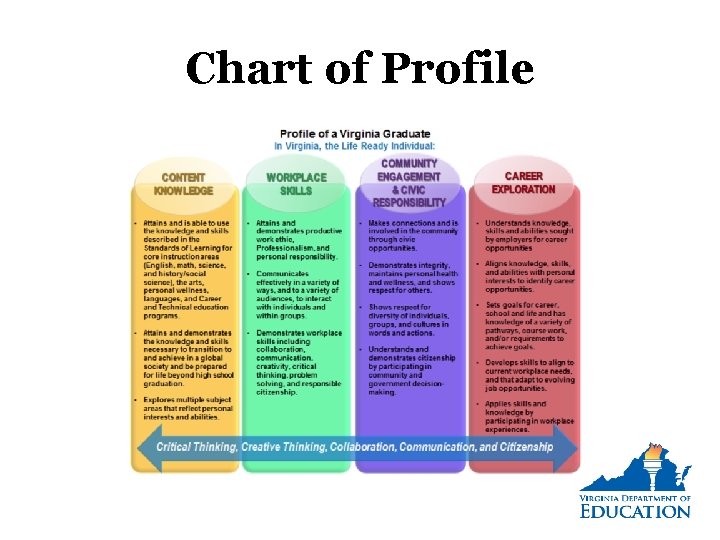
Profile of a Virginia Graduate
Chart of Profile
Impact: Software and Systems 1 • Student management systems – User-friendly so can be used by parents and students as well as teachers and administrators • Digital portfolios – Organizational tool that provides storage space and student/parent access • Flexible filtering system – Allows for changes on the fly – Secure but allows for innovation
Impact: Software and Systems 2 • Learning management system – Provide platform for blended learning • Interoperability – More than ever, systems need to work together • Portals allow student access from home computers – Allows access to major digital resources and systems
Impact: Software and Systems 3 • Prepare for more access to variety of online courses – Especially for students in last 2 years of HS • Prepare for systems to handle simulations, virtual reality, robots, etc. – Individual students pursue their own passions and learning goals
Impact: Broadband Wi. Fi • Students need Internet access 24/7 – Home and community – School system locations (i. e. , school grounds) outside of school hours • Increase Wi. Fi access points – Add locations throughout school and grounds • Access during SOL testing – Avoid shutting down all other access
Impact: Devices • New learning demands creating and sharing, not just consuming – Devices need to reflect this • 24/7 access to devices in HS – Students need for anywhere, anytime learning • BYOD is empowering – Still need some devices for those without
Impact: Spaces • A variety of spaces: small (individual learning); medium (small groups); large (large groups or multiple small groups)—all able to support digital learning – Headphones – Outlets – Charging stations • Places for creation of learning objects/products by teachers and students
Impact: Policies 1 • Responsible Use Policies updated to support: – Access to new systems and digital materials – Variety of devices – Practices that enable individualized learning • Digital Porfolios – Storage rules – Access to materials by graduates • Student Privacy
Impact: Policies 2 • Digitally enabled communication – Between students when working outside school – Between non-school adults and students (mentorships, internships, teleworking) • Students with no home Internet access • Use of social media to provide student voice and to develop/support school culture
Impact: Policies 3 • BYOD – Privacy of student phones/devices (and how to support students with software/connections) – Students with own Internet provider – Helping parents with supervision • Compromises between safety and innovation – Must follow state and federal laws – Flexibility needed by individualized learning demands
Impact: Management and Leadership 1 • Collaborate with everyone – Students/parents along with staff/faculty/administration – Balance too much IT control vs. too little control, and clearly explain when there are conflicts (don’t just say ‘no’) • Be clear on definitions: personalized learning, competency-based, etc. – These should be readily available to everyone – Don’t let vendors mislead you
Impact: Management and Leadership 2 • Adopt a growth mindset for yourself and your staff – Mistakes are for learning • Flexibility and fast response need to be priorities • Stay aware of issues (like on effective screen time, parental controls, unplugged activities, age-appropriate device usage) that concern parents and reach out with research • Support small pilots before jumping in to widespread implementations
Impact: Management and Leadership 3 • Leverage school level personnel – Support principals so they are digitally savvy and can make good decisions at school level – Librarians and ITRTs both work with all grades and subject areas in a school; use them to support integration – Encourage teachers to share their resources and ideas with each other, and then maybe the state (OER)
Impact: Teacher Professional Development • Develop user-friendly guides on how to manage devices in classrooms to support pedagogical changes • Provide just-in-time training (preferably digital so it is available anytime) for student management software and other data systems • Support collaboration between teachers with choice of systems
Questions? Contact: • Jean Weller, jean. weller@doe. virginia. gov