Principles of Health Administration Dr Rasha Salama Ph




- Slides: 42
Principles of Health Administration Dr. Rasha Salama Ph. D. Community Medicine Suez Canal University Egypt
Health Administration Sound administration is essential for the success of any public health program whether on the national, intermediate or the local level.
Definition of Sound Administration n We can define sound administration as: “ The process of achieving defined goals at a defined time through the guidance, leadership, and control of the efforts of a group of individuals and the efficient utilization of nonhuman resources bearing in mind adequacy, speed, and economy to the utmost possible level. ”
Another definition “Administration is the art and science of guidance, leadership, and control of the efforts of a group of individuals towards some common goal. ”
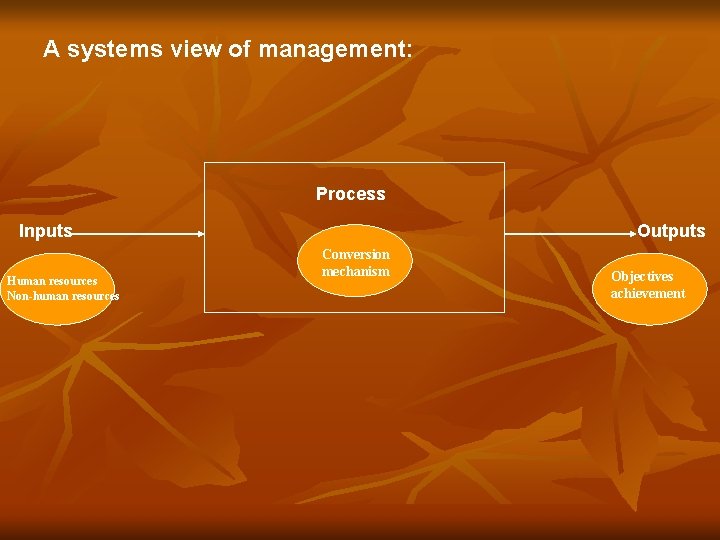
Management is the operational part of administration. n It is defined as: “ It is a set of interactive processes through which the utilization of resources results in the accomplishment of organization objectives. ” n It is a “conversion mechanism”. n
A systems view of management: Process Inputs Human resources Non-human resources Outputs Conversion mechanism Objectives achievement
n n n It is through “management” that the objectives of the health care organization are achieved by gathering and positioning of resources. There are several elements for administration. In practice all these elements are interrelated to one another. There also 3 levels of administration.
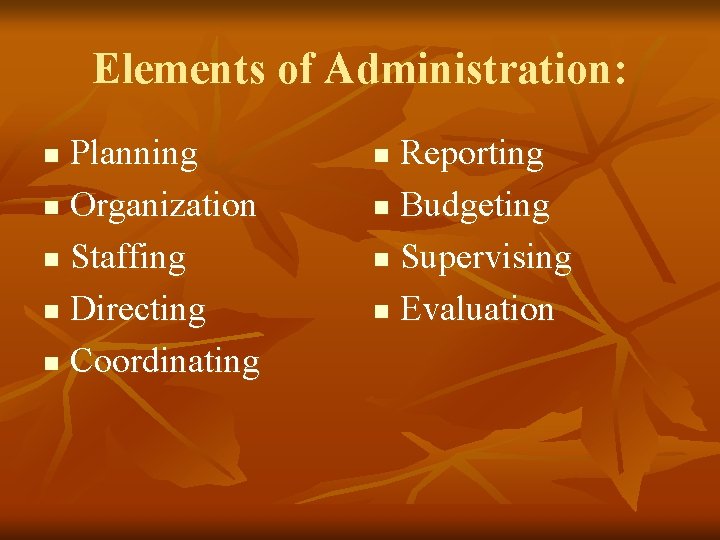
Elements of Administration: Planning n Organization n Staffing n Directing n Coordinating n Reporting n Budgeting n Supervising n Evaluation n
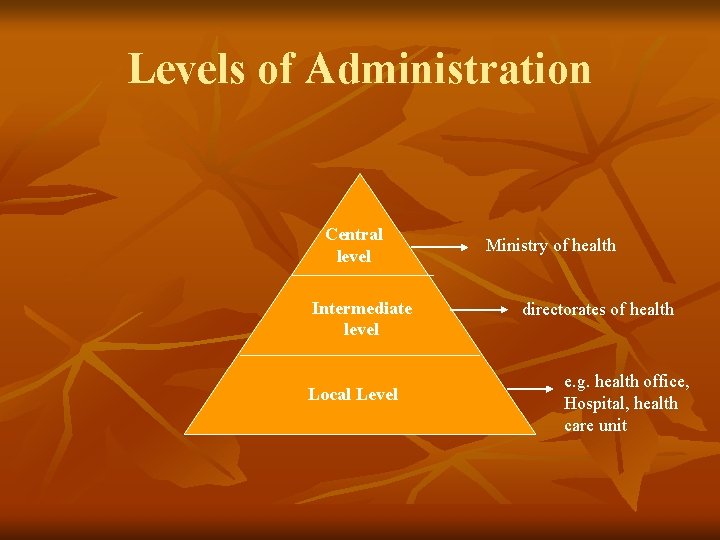
Levels of Administration Central level Intermediate level Local Level Ministry of health directorates of health e. g. health office, Hospital, health care unit
Every program must have an overall (general) goal which confirms with that of the nation’s policy, and various objectives to be achieved according to a definite plan.
Goals versus Objectives n n A GOAL: is a long range specified state of accomplishment towards the activity it is directed. Goals are not constrained by time or existing resources. AN OBJECTIVE: is a measurable state of accomplishment aimed towards the goal. The objective should include a description of “what” outcome is desired, “when” it is expected, and “where” it will take place.
Planning n Planning is considered the most important element of the administrative process. The higher the level of administration, the more the involvement and time devoting to planning. A good plan is the basis of any successful program. Sufficient time should be given to the process of planning. More than one plan should be available to choose from to meet the existing plan.
Definition of Planning n n n “Planning is a projected or predetermined course of action designed to achieve a specific goal or objective. ” Planning determines What? When? Where? How? Why? And by whom? Things will be done. It involves “decision making for future events”.
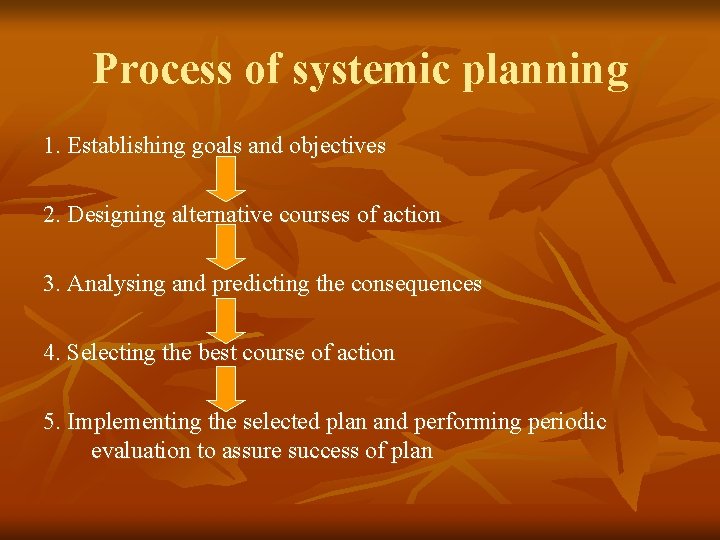
Process of systemic planning 1. Establishing goals and objectives 2. Designing alternative courses of action 3. Analysing and predicting the consequences 4. Selecting the best course of action 5. Implementing the selected plan and performing periodic evaluation to assure success of plan
Principles of planning n Being an intellectual activity it needs knowledge, experience, foresight, reasoning and the mastering of special skills and techniques. Examples of different techniques of planning are: n n n PPBS: Planning/Programming/Budgeting system PERT: Performance/Evaluation/Review technique CPM: Critical Path Method
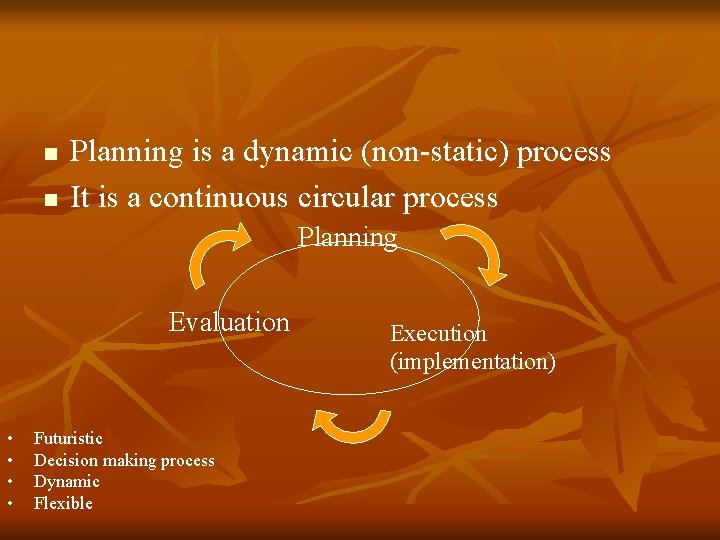
n n Planning is a dynamic (non-static) process It is a continuous circular process Planning Evaluation • • Futuristic Decision making process Dynamic Flexible Execution (implementation)
n n Participative planning is sharing the program planning with other people, staff and agencies concerned with the program. Participative planning have advantages and disadvantages.
n Planning of a program is based on: n n n Needs and demands of the public Available resources Attitude of the public
n Constraints (intervening factors) to a plan may be social, economical or political, and they may be related to either: n n External environment (community) Internal environment (the organization) Establishing priorities are essential in planning (What are these priorities? ? ? ) n
Organization n Definitions: “ Organization is any collection of persons, materials, procedures, ideas or facts arranged and ordered that the combination of parts makes a meaningful whole that works towards achieving organizational objectives. ” “The process of organization implies to the arrangement of human and non-human resources in an orderly fashion to make a meaningful whole that accomplishes organizational objectives. ”
n The organizational process is classified into: n Structural organization n Functional organization
n Principles of organization: n n n n Departmentation Acquisition of human and non-human resources Specialization and division of labor Coordination Authority and responsibility Centralization and de-centralization Unity of command Line and staff
Staffing n It is the process of “personnelizing” the organization, by hiring the right type and adequate number of workers to each unit for the time required for the program, through the following steps: n n Identifying the type and number of personnel Recruitment Selection and appointment Orientation n Job analysis Job description Job specification
Budgeting n n Financial administration consists of a series activities were funds are made available for certain people in the organization under procedures that will ensure their efficient use. The main activities are: n n Budgeting Accounting Auditing Purchasing
Definitions n Budgeting: It is the allocation of financial resources in support for programs or projects for a special period of time. A budget is defined as “a balanced estimate of expenditures and receipts for a given period of time”.
n Accounting: “It is recording assembly and summarization of financial effects of executive action. a harmonious relationship between budget and account is important to current comparisons, between goals set in and accomplished. ”
n Auditing: “It is the investigation and report on the fidelity and legality of all financial transactions”.
n Purchasing: “It is the acquisition of the property and materials needed in administration”.
Supervision n n Supervision refers to the day-to-day relationship between an executive and his immediate subordinates. Supervision aims at satisfying both: n n Workers
Supervision n n Motivation is defined as: “an externally induced behaviour which occurs in order to bring about or maintain need fulfillment”. The following conditions if present build high levels of motivation: • Achievement • Recognition • Advancement • Working conditions • Responsibility • Organizational policy • Technical supervision • Interpersonal relations • Salary and compansations • Job security
Supervision n Styles of leader authority: n n n Autocratic Consultative Participative Democratic Free rein
Supervision n Factors affecting style of supervision: n n Condition present Type of work Subordinates characteristics Personal characteristic of manager
Evaluation n Definition: “systemic collection of information about the activities, characteristics and outcomes of programs, personnel, and products fpr use by specific people to reduce uncertainties, improve effectiveness and make decision with regard to what those programs, personnel or products are doing and affecting. ”
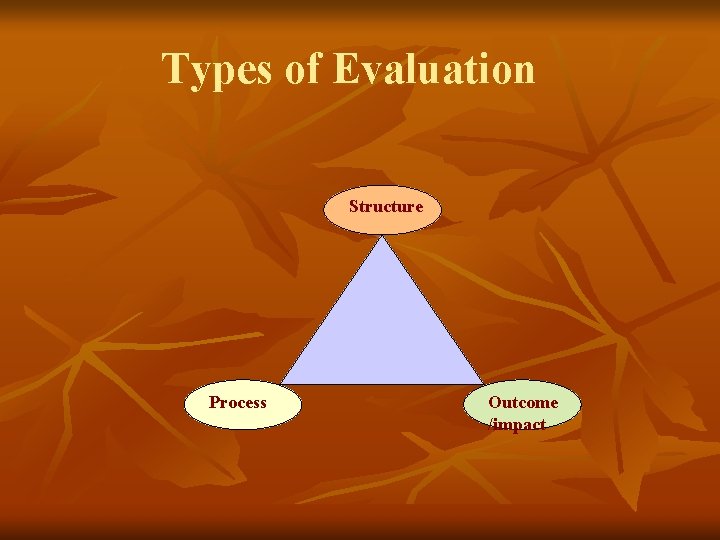
Types of Evaluation Structure Process Outcome /impact
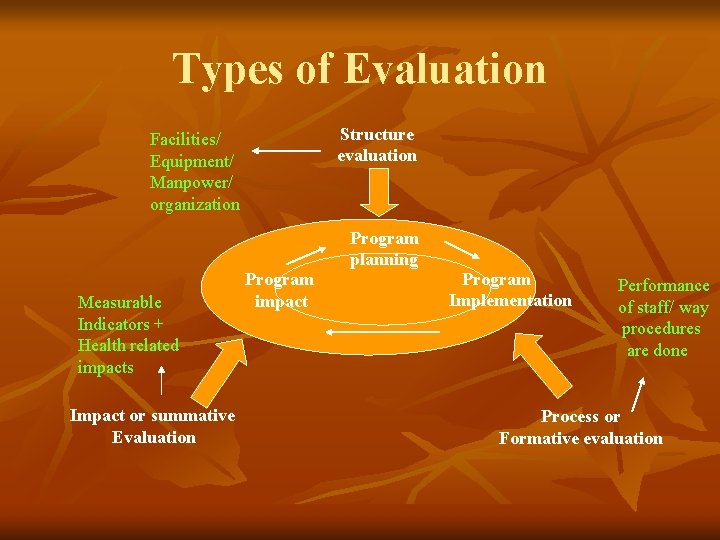
Types of Evaluation Structure evaluation Facilities/ Equipment/ Manpower/ organization Program planning Measurable Indicators + Health related impacts Impact or summative Evaluation Program impact Program Implementation Performance of staff/ way procedures are done Process or Formative evaluation
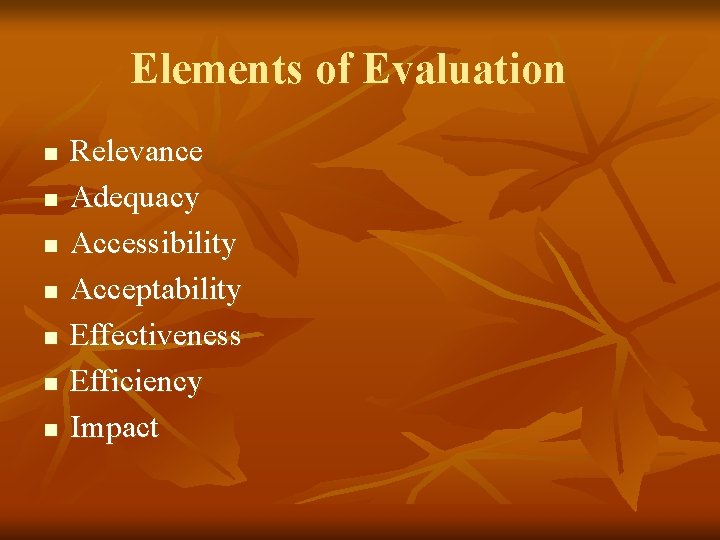
Elements of Evaluation n n n Relevance Adequacy Accessibility Acceptability Effectiveness Efficiency Impact
Steps of Evaluation (1) Describe the program in terms of objectives expected. Objectives can be either outcome or process objectives. n Outcome objectives: “a statement of the amount of change expected for a given health problem for a specified population within a given time frame” n Process objectives: “a statement of the amount of change expected in the performance and utilization of interventions that impact on the outcome. ”
n n (2) specify the evaluation design. Define the purpose of evaluation Define the methodology of evaluation (census/ client records/ interviews/ surveys/ expenditures reports). Define who will be making use of the data (audience/ policy makers).
(3) gather credible evidence (information): Types of data include: n n n Demographic description Indicators of health status (morbidity, mortality, disability) Qualitative indicators ( community values, public and private policies) Utilization indicators Expenditures
(4) Analysis and justification of results n n What does the findings mean? How do they compare to the objectives? What is the degree of success of the program? What recommendations are indicated for program improvement?
(5) Taking action Evaluation findings has to be used and shred for the purpose of improvement of the effectiveness of the program. “evaluations that are not or inadequately used are simply not worth of doing”. (6) Re-evaluation Evaluation is an ongoing process.
Thank you