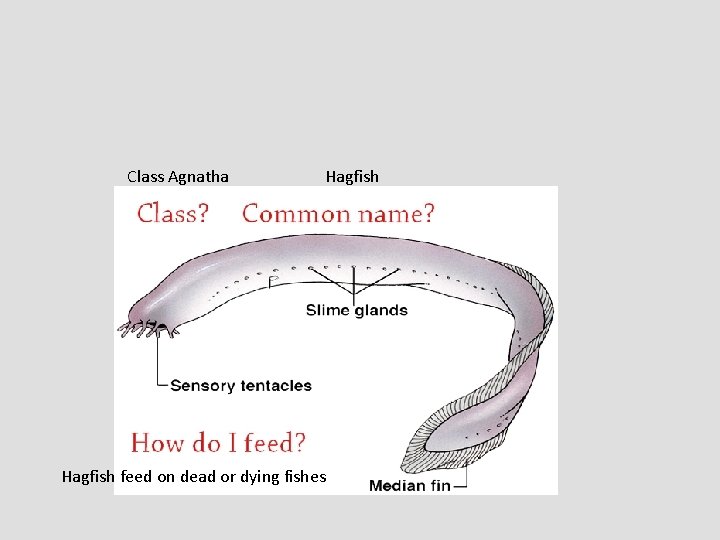
Practice Quiz Fish Class Agnatha Hagfish feed on

- Slides: 17
Practice Quiz Fish
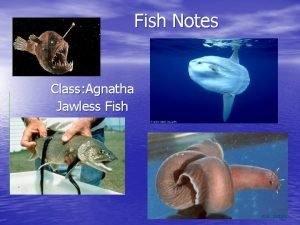
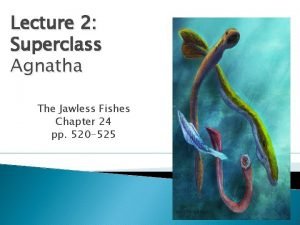
Class Agnatha Hagfish feed on dead or dying fishes
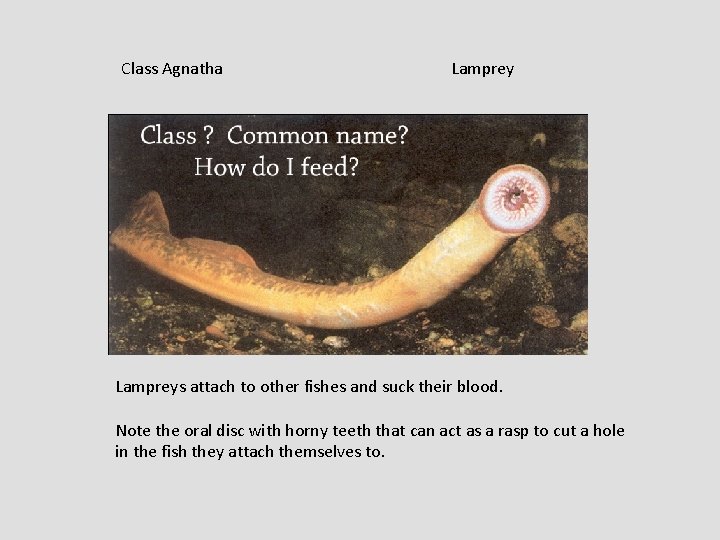
Class Agnatha Lampreys attach to other fishes and suck their blood. Note the oral disc with horny teeth that can act as a rasp to cut a hole in the fish they attach themselves to.
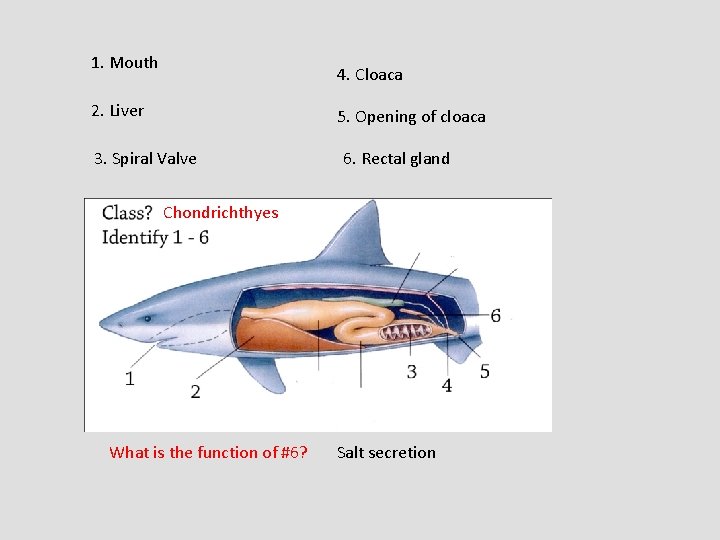
1. Mouth 4. Cloaca 2. Liver 5. Opening of cloaca 3. Spiral Valve 6. Rectal gland Chondrichthyes What is the function of #6? Salt secretion
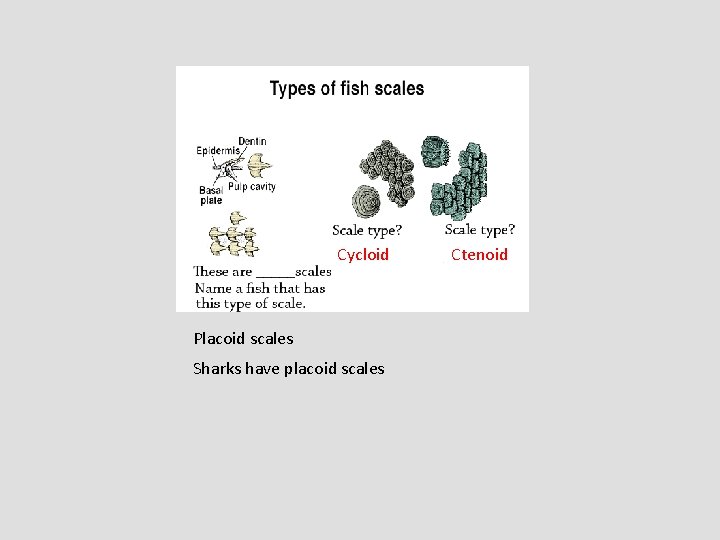
Cycloid Placoid scales Sharks have placoid scales Ctenoid
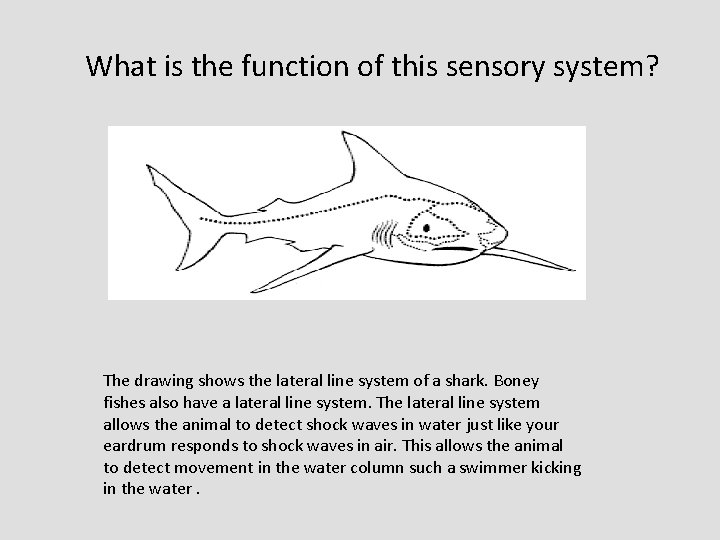
What is the function of this sensory system? The drawing shows the lateral line system of a shark. Boney fishes also have a lateral line system. The lateral line system allows the animal to detect shock waves in water just like your eardrum responds to shock waves in air. This allows the animal to detect movement in the water column such a swimmer kicking in the water.
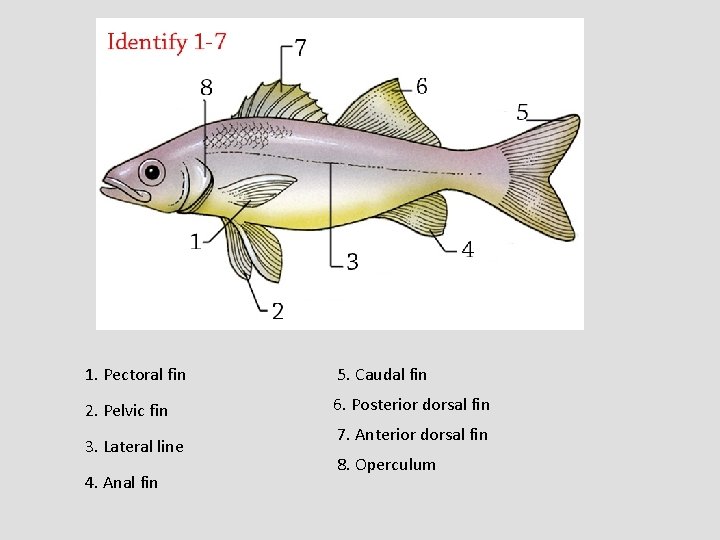
1. Pectoral fin 5. Caudal fin 2. Pelvic fin 6. Posterior dorsal fin 3. Lateral line 4. Anal fin 7. Anterior dorsal fin 8. Operculum
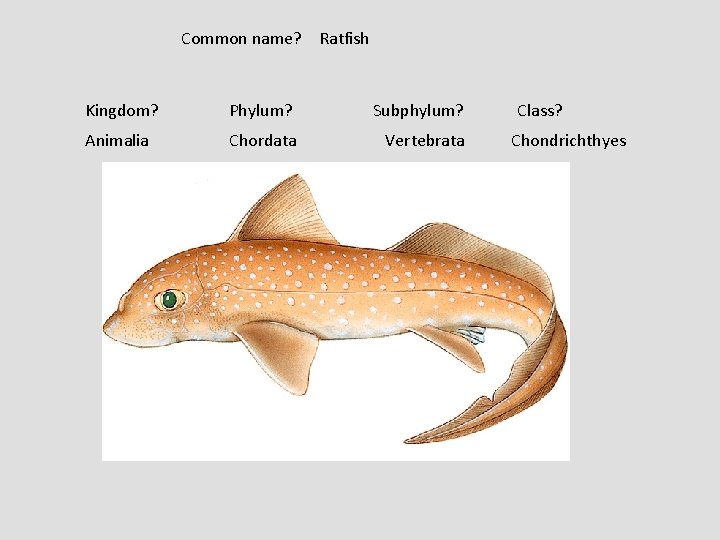
Common name? Ratfish Kingdom? Phylum? Subphylum? Animalia Chordata Vertebrata Class? Chondrichthyes
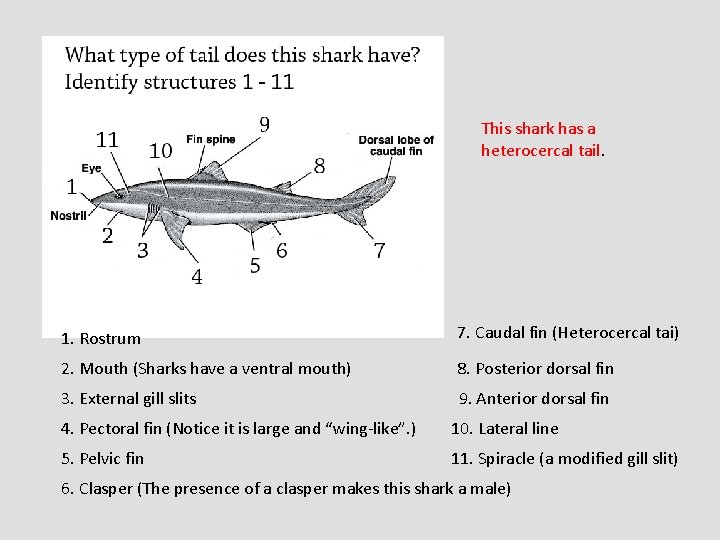
This shark has a heterocercal tail. 1. Rostrum 7. Caudal fin (Heterocercal tai) 2. Mouth (Sharks have a ventral mouth) 8. Posterior dorsal fin 3. External gill slits 9. Anterior dorsal fin 4. Pectoral fin (Notice it is large and “wing-like”. ) 10. Lateral line 5. Pelvic fin 11. Spiracle (a modified gill slit) 6. Clasper (The presence of a clasper makes this shark a male)
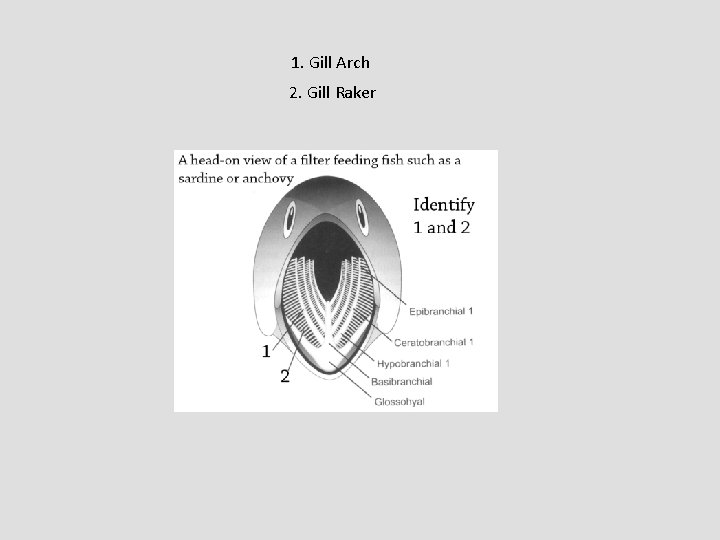
1. Gill Arch 2. Gill Raker
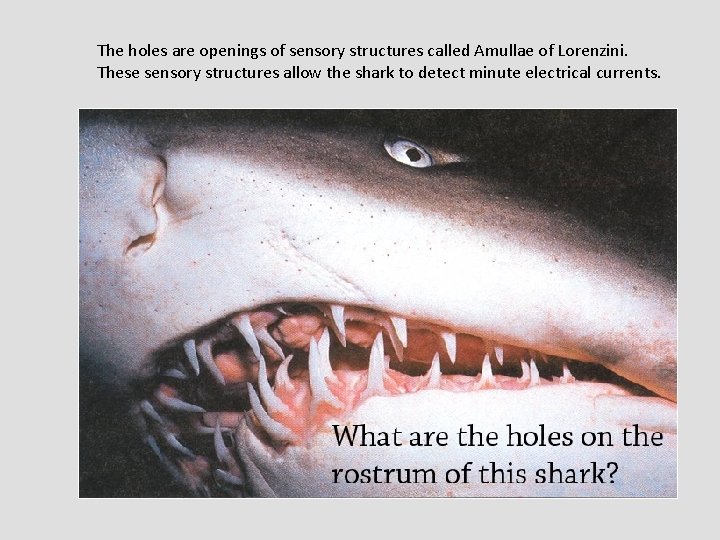
The holes are openings of sensory structures called Amullae of Lorenzini. These sensory structures allow the shark to detect minute electrical currents.
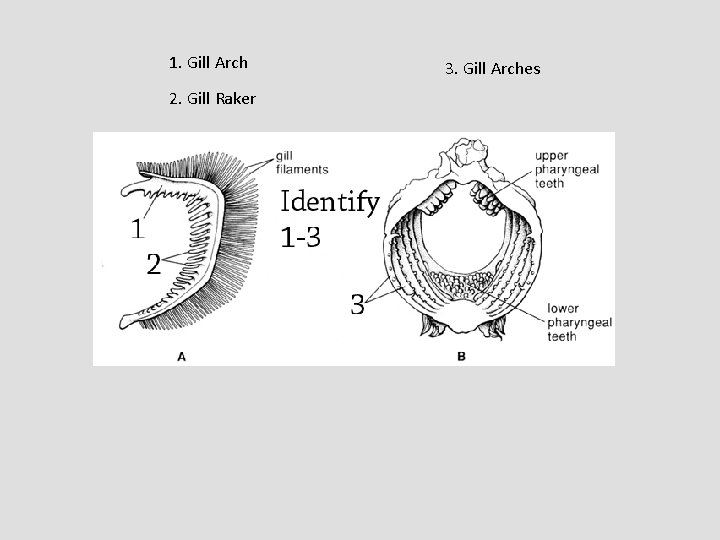
1. Gill Arch 2. Gill Raker 3. Gill Arches
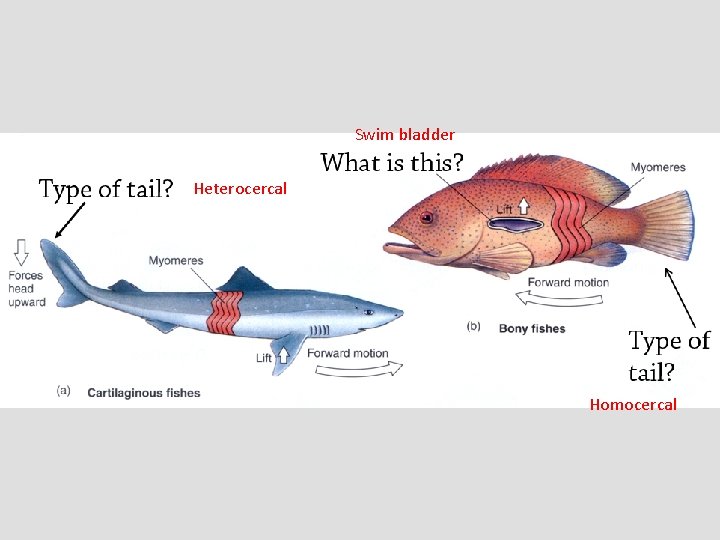
Swim bladder Heterocercal Homocercal
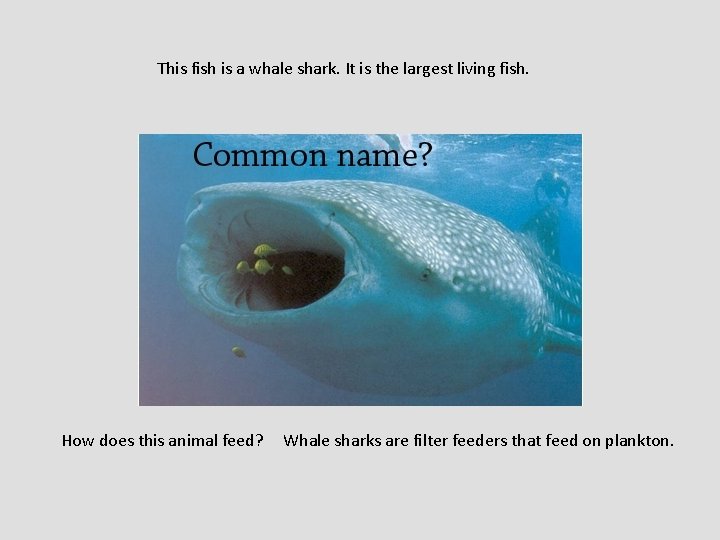
This fish is a whale shark. It is the largest living fish. How does this animal feed? Whale sharks are filter feeders that feed on plankton.
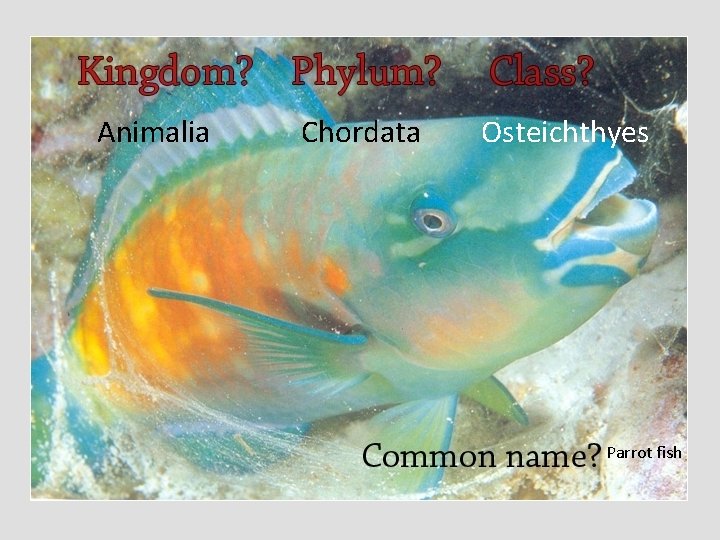
Animalia Chordata Osteichthyes Parrot fish
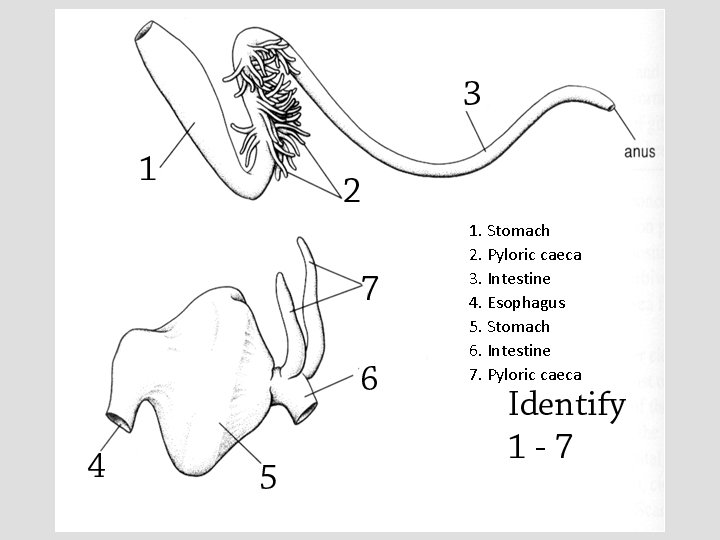
1. Stomach 2. Pyloric caeca 3. Intestine 4. Esophagus 5. Stomach 6. Intestine 7. Pyloric caeca
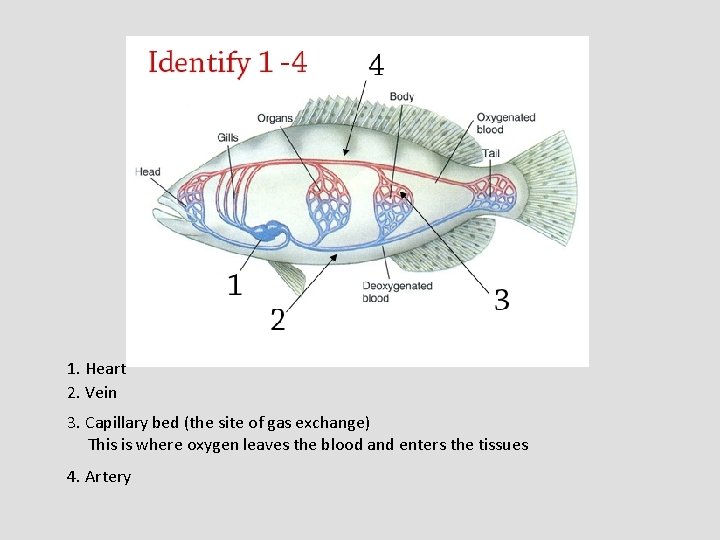
1. Heart 2. Vein 3. Capillary bed (the site of gas exchange) This is where oxygen leaves the blood and enters the tissues 4. Artery