Fish diets and feeding A man may fish







- Slides: 22
Fish diets and feeding A man may fish with the worm that hath eat of a king, and eat of the fish that hath fed of that worm. Shakespeare
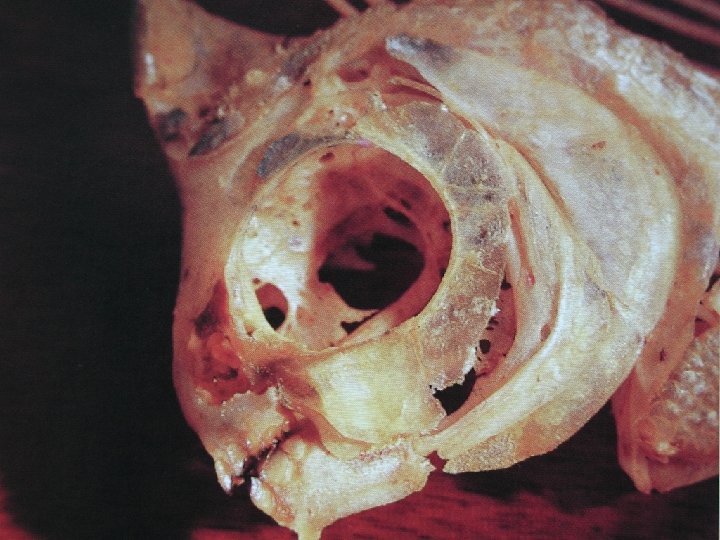
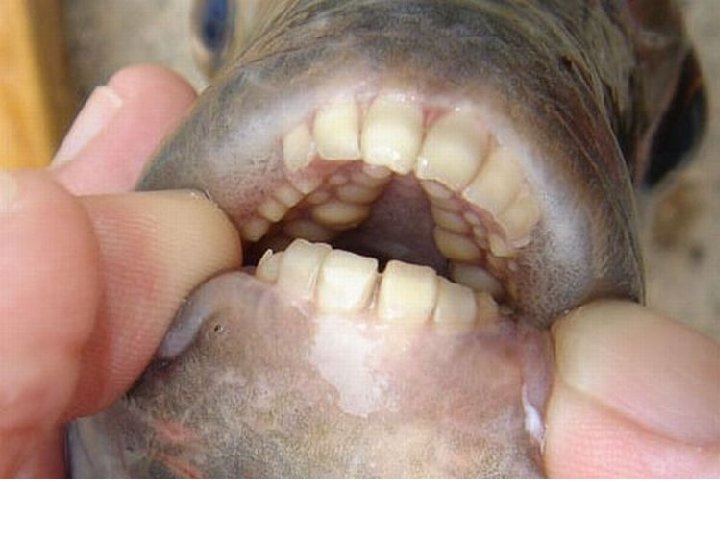
Perciformes: Bumphead parrotfish
Fish food resources piscivores (fish-eating) planktivores (mostly zooplankton) herbivores (rare) – periphyton, phytoplankton, filamentous algae, macrophytes pickers, scrapers, molluscivores - insect larvae, snails, etc. detritivores
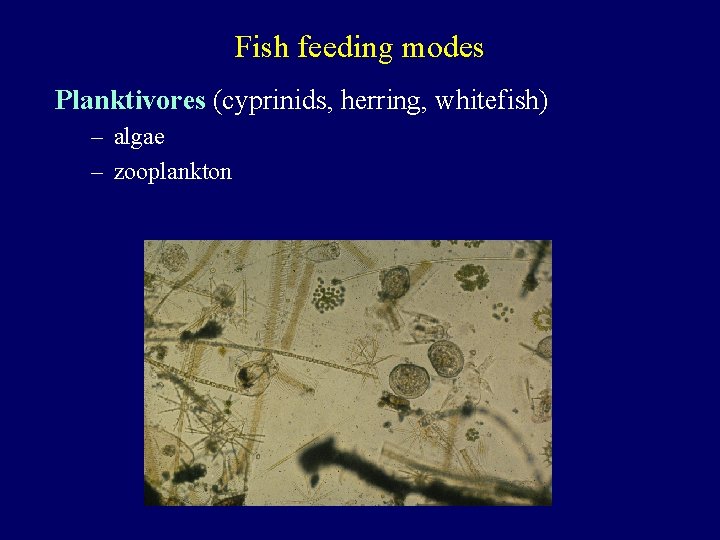
Fish feeding modes Planktivores (cyprinids, herring, whitefish) – algae – zooplankton
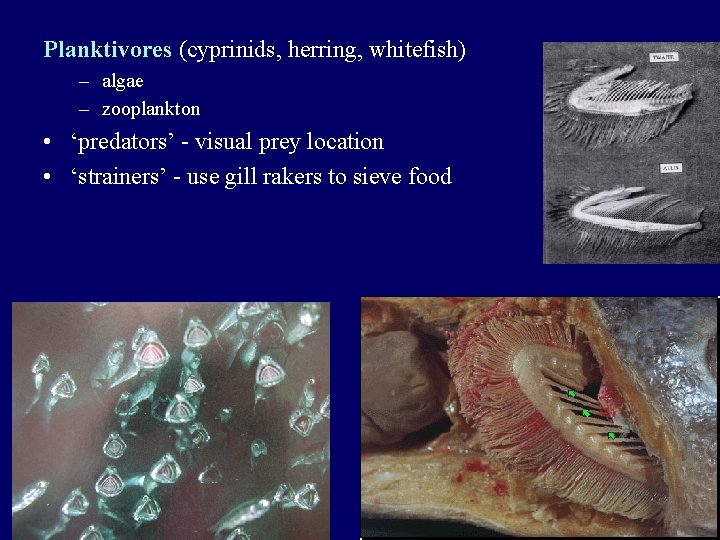
Planktivores (cyprinids, herring, whitefish) – algae – zooplankton • ‘predators’ - visual prey location • ‘strainers’ - use gill rakers to sieve food
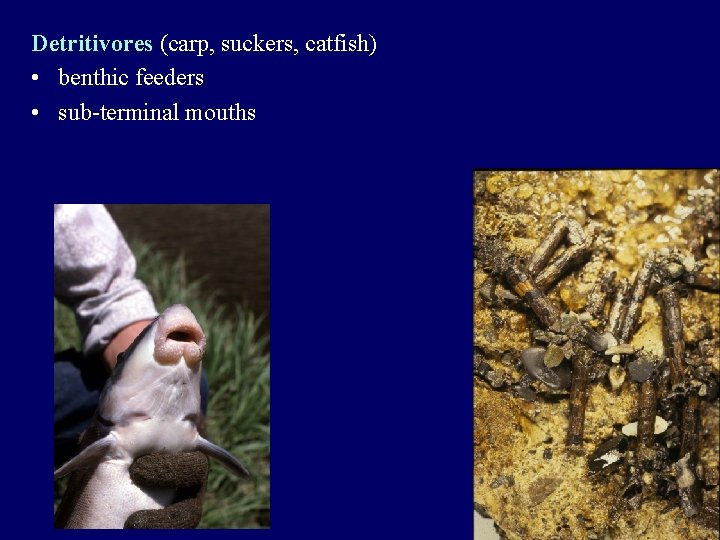
Detritivores (carp, suckers, catfish) • benthic feeders • sub-terminal mouths
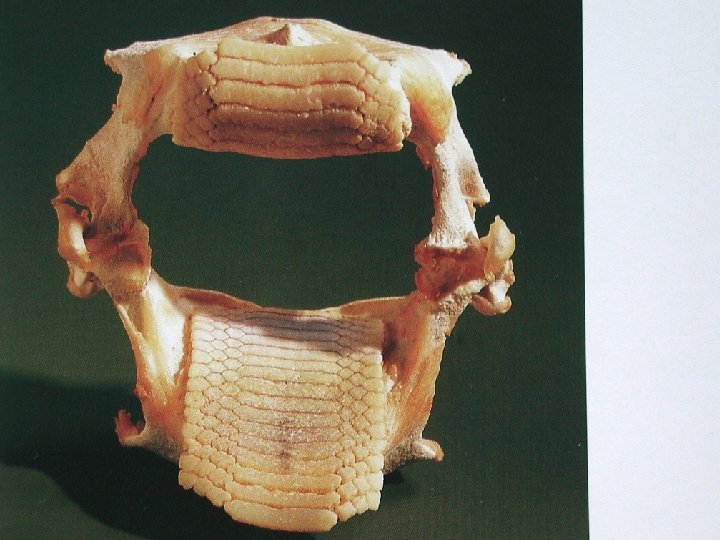
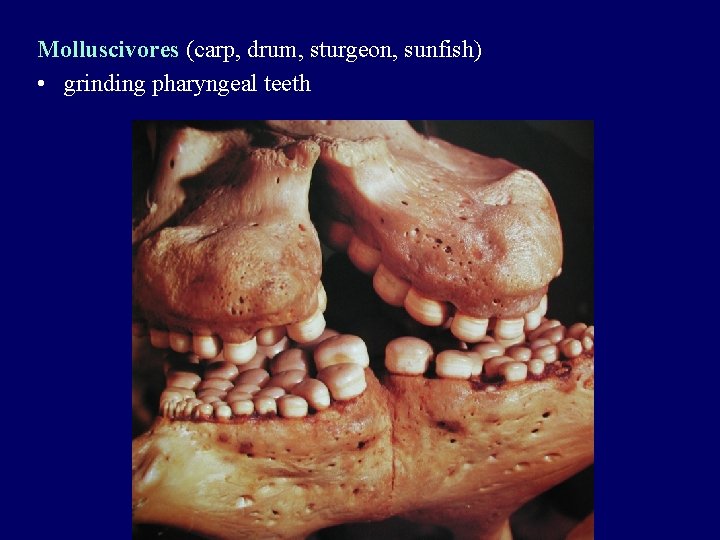
Molluscivores (carp, drum, sturgeon, sunfish) • grinding pharyngeal teeth
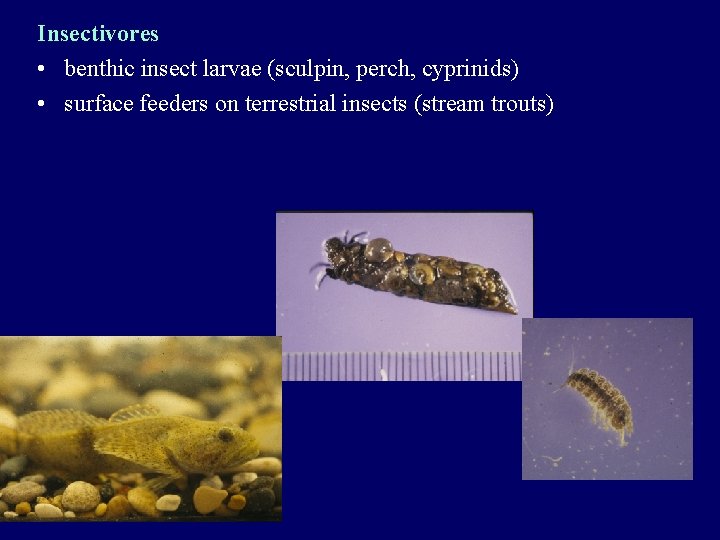
Insectivores • benthic insect larvae (sculpin, perch, cyprinids) • surface feeders on terrestrial insects (stream trouts)
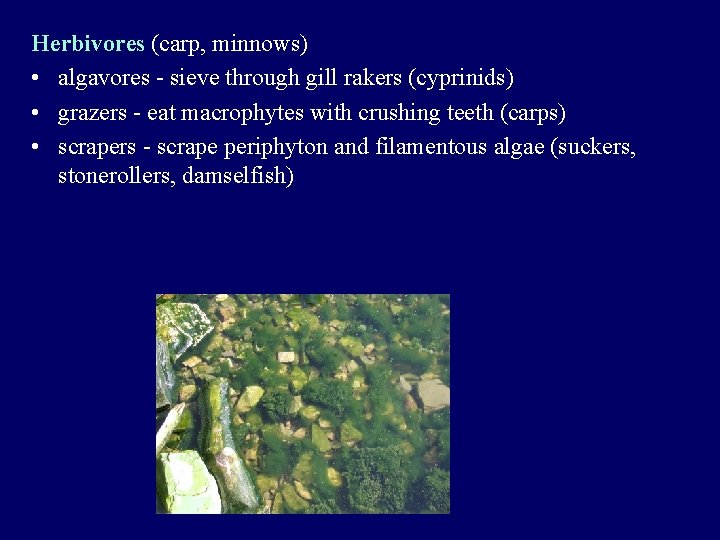
Herbivores (carp, minnows) • algavores - sieve through gill rakers (cyprinids) • grazers - eat macrophytes with crushing teeth (carps) • scrapers - scrape periphyton and filamentous algae (suckers, stonerollers, damselfish)
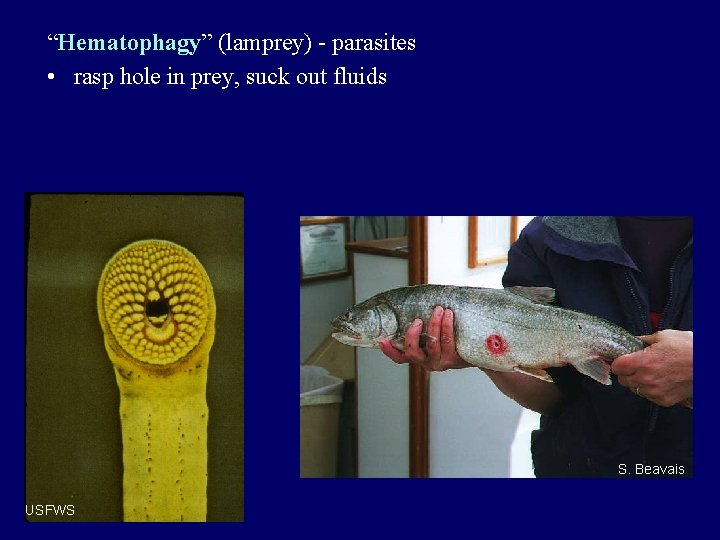
“Hematophagy” (lamprey) - parasites • rasp hole in prey, suck out fluids S. Beavais USFWS
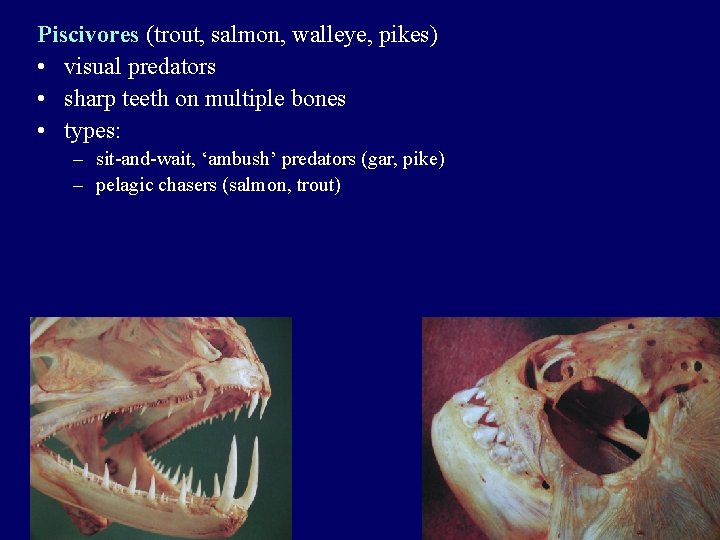
Piscivores (trout, salmon, walleye, pikes) • visual predators • sharp teeth on multiple bones • types: – sit-and-wait, ‘ambush’ predators (gar, pike) – pelagic chasers (salmon, trout)
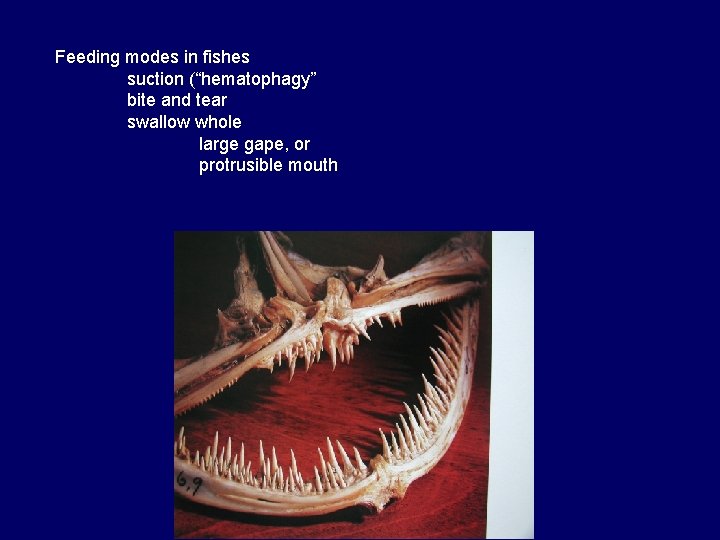
Feeding modes in fishes suction (“hematophagy” bite and tear swallow whole large gape, or protrusible mouth
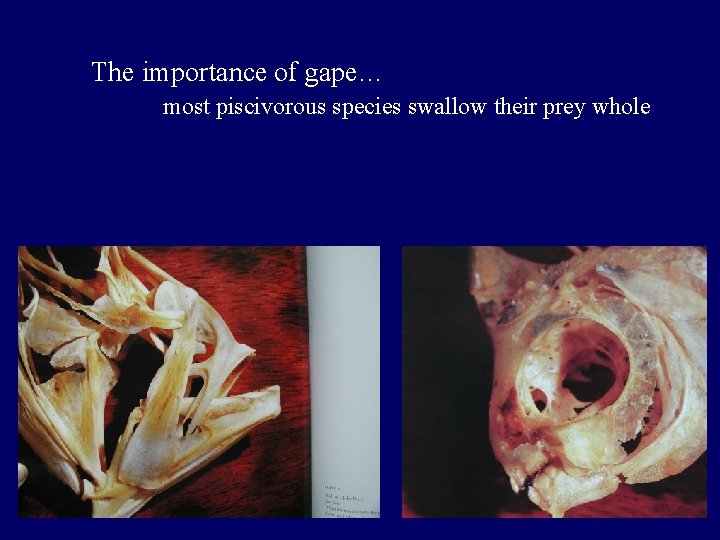
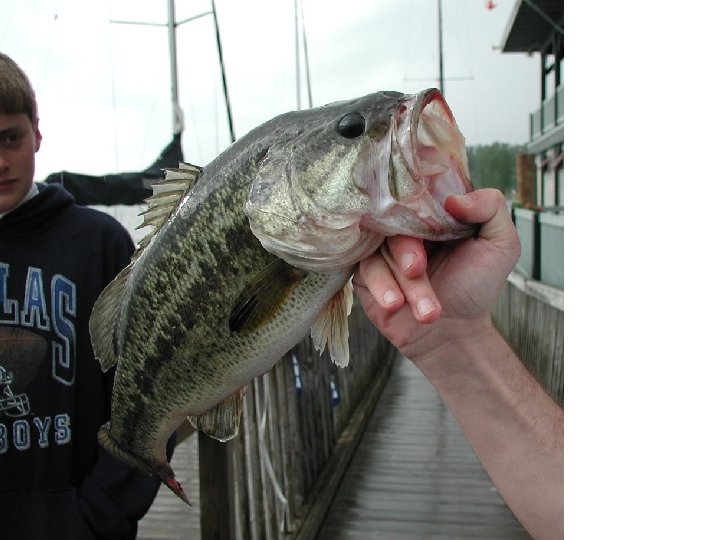
The importance of gape… most piscivorous species swallow their prey whole
Slingjaw wrasse
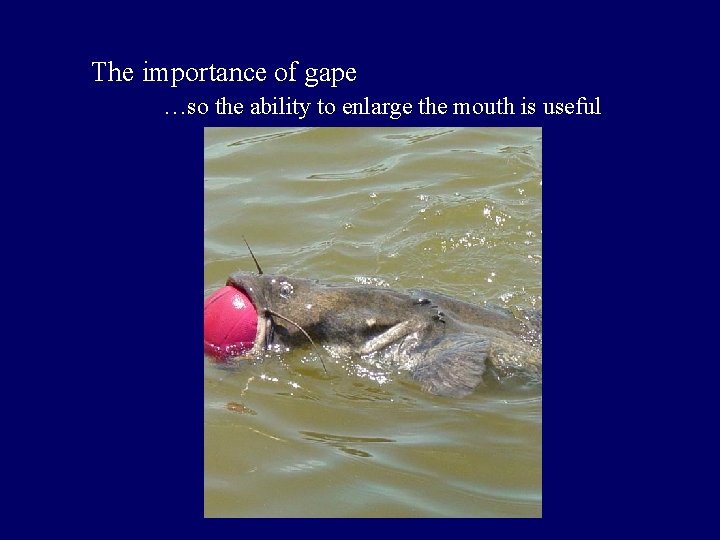
The importance of gape …so the ability to enlarge the mouth is useful
The importance of gape