Physics 1161 Lecture 18 Total Internal Reflection Dispersion


- Slides: 32
Physics 1161: Lecture 18 Total Internal Reflection, Dispersion, Polarization • section 26 -8
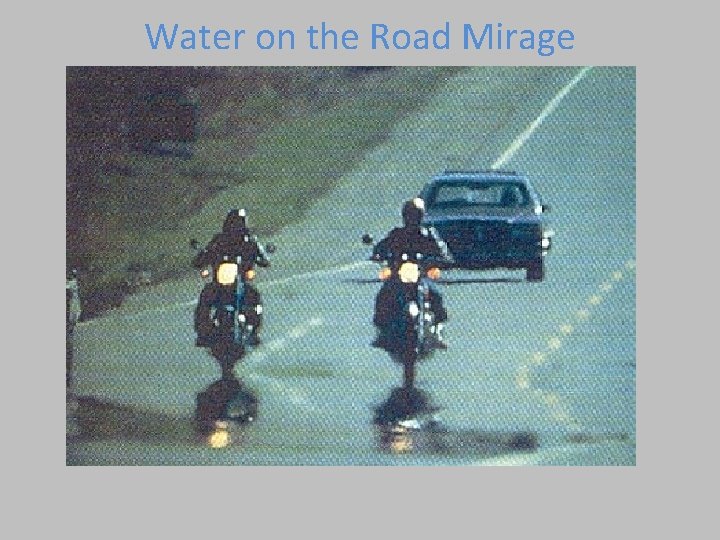
Water on the Road Mirage
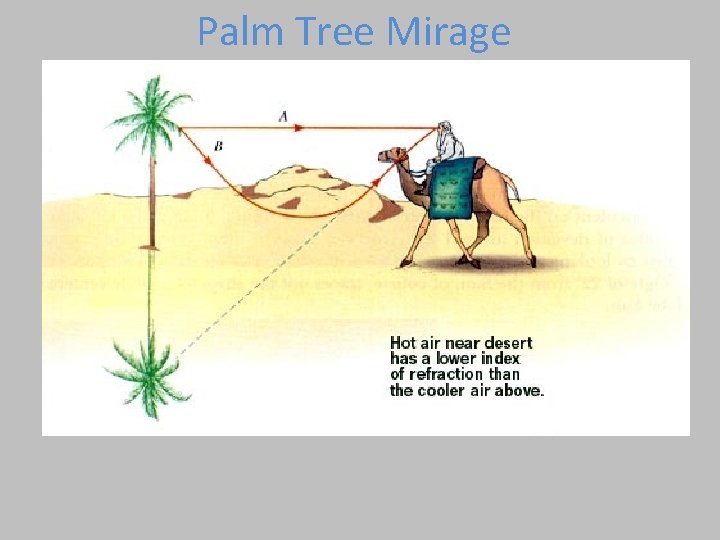
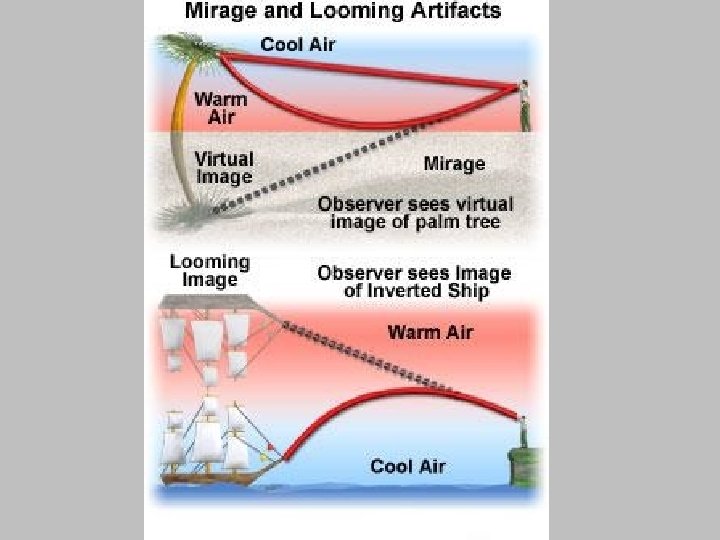
Palm Tree Mirage
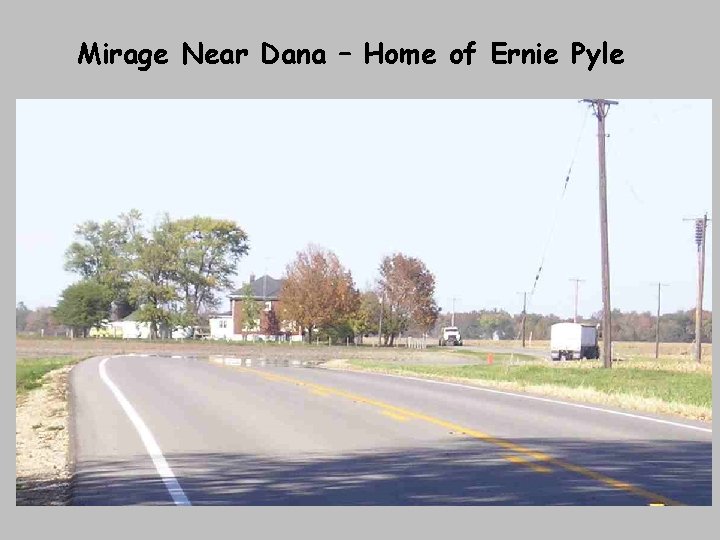
Mirage Near Dana – Home of Ernie Pyle
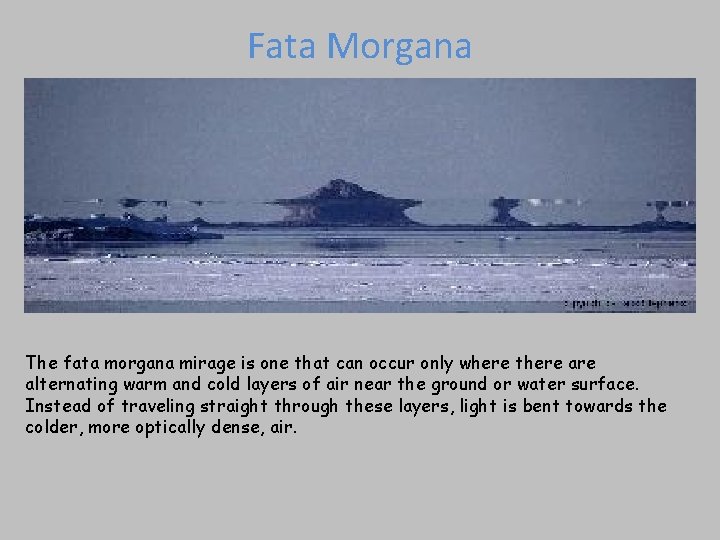
Fata Morgana The fata morgana mirage is one that can occur only where there alternating warm and cold layers of air near the ground or water surface. Instead of traveling straight through these layers, light is bent towards the colder, more optically dense, air.
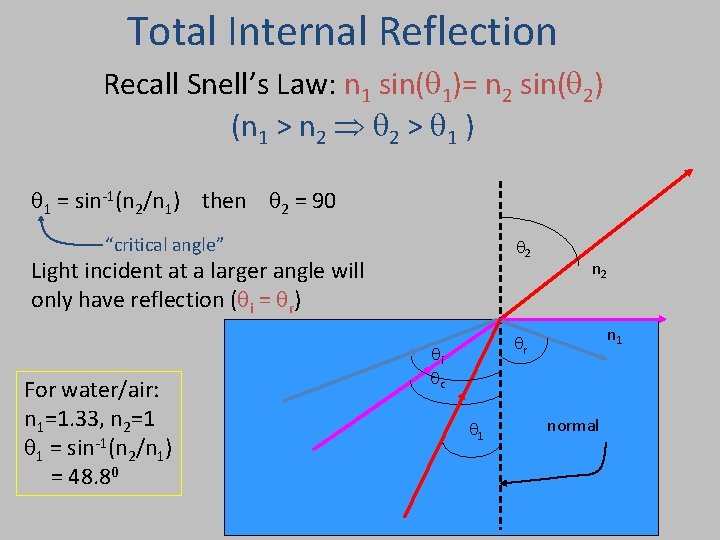
Total Internal Reflection Recall Snell’s Law: n 1 sin(q 1)= n 2 sin(q 2) (n 1 > n 2 q 2 > q 1 ) q 1 = sin-1(n 2/n 1) then q 2 = 90 “critical angle” q 2 Light incident at a larger angle will only have reflection (qi = qr) For water/air: n 1=1. 33, n 2=1 q 1 = sin-1(n 2/n 1) = 48. 80 n 2 n 1 qr qi qc q 1 normal
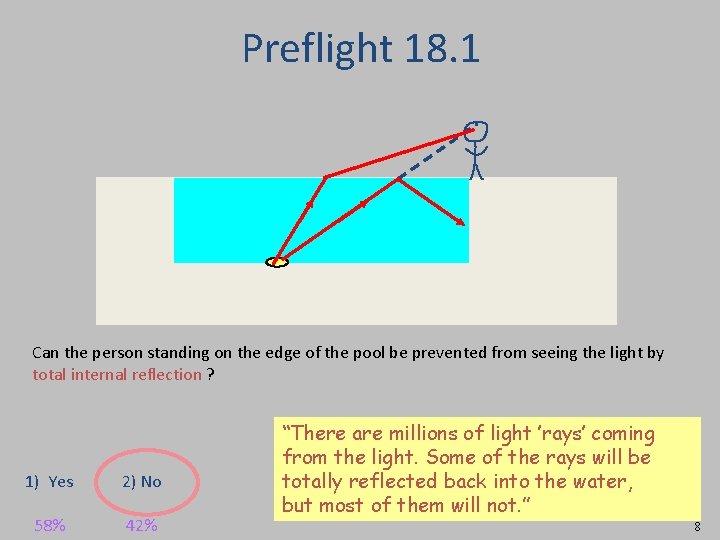
Preflight 18. 1 Can the person standing on the edge of the pool be prevented from seeing the light by total internal reflection ? 1) Yes 2) No 58% 42% “There are millions of light ’rays’ coming from the light. Some of the rays will be totally reflected back into the water, but most of them will not. ” 10 8
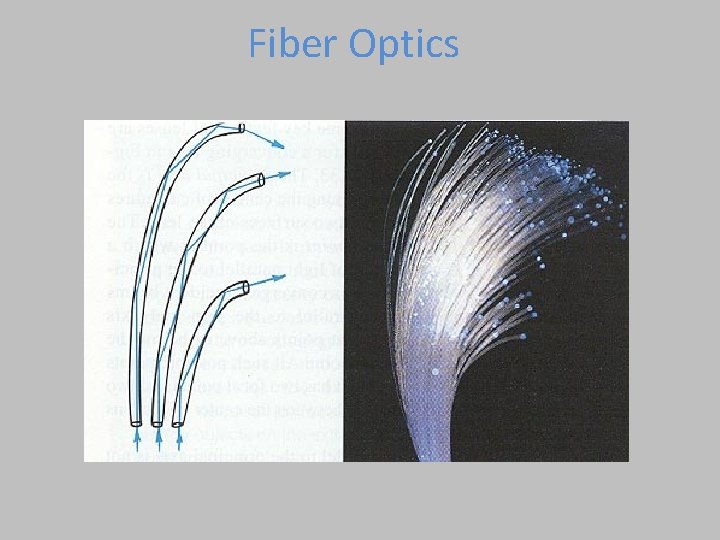
Fiber Optics
Fiber Optics
Indices of Refraction
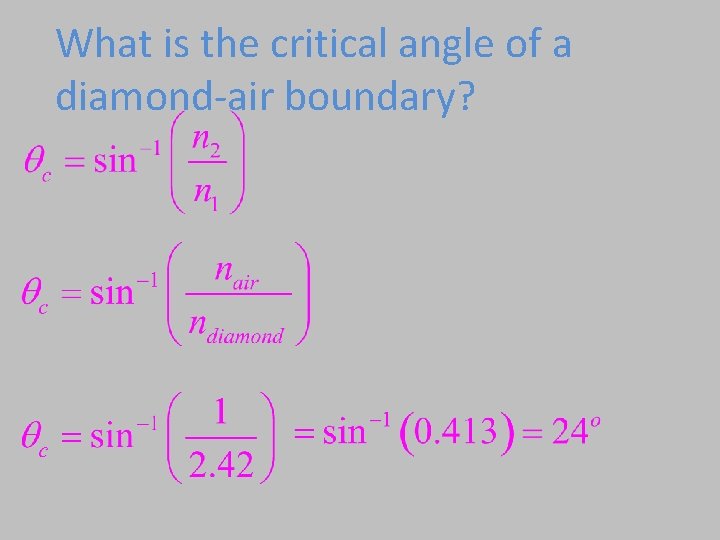
What is the critical angle of a diamond-air boundary?
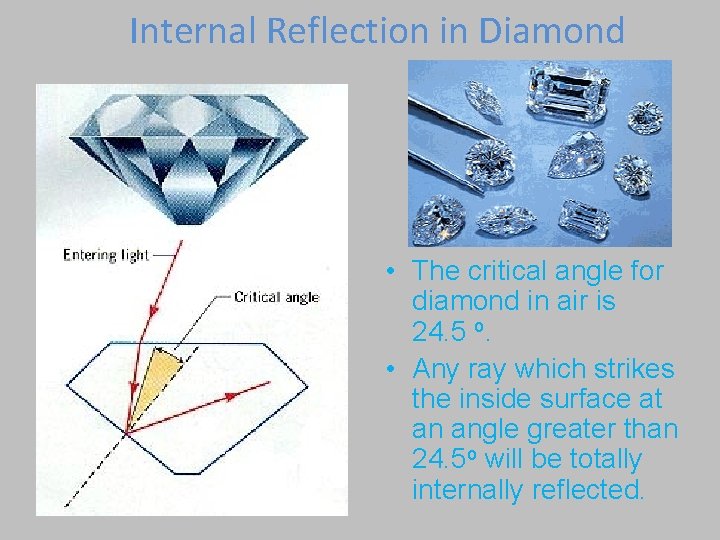
Internal Reflection in Diamond • The critical angle for diamond in air is 24. 5 o. • Any ray which strikes the inside surface at an angle greater than 24. 5 o will be totally internally reflected.
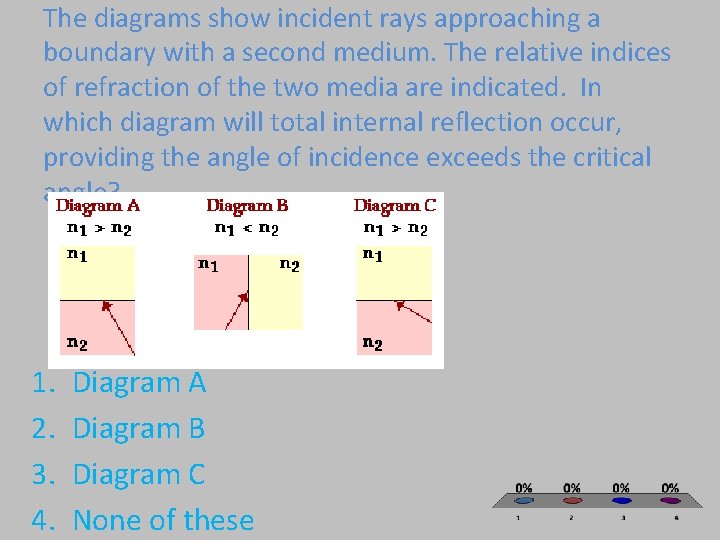
The diagrams show incident rays approaching a boundary with a second medium. The relative indices of refraction of the two media are indicated. In which diagram will total internal reflection occur, providing the angle of incidence exceeds the critical angle? 1. 2. 3. 4. Diagram A Diagram B Diagram C None of these
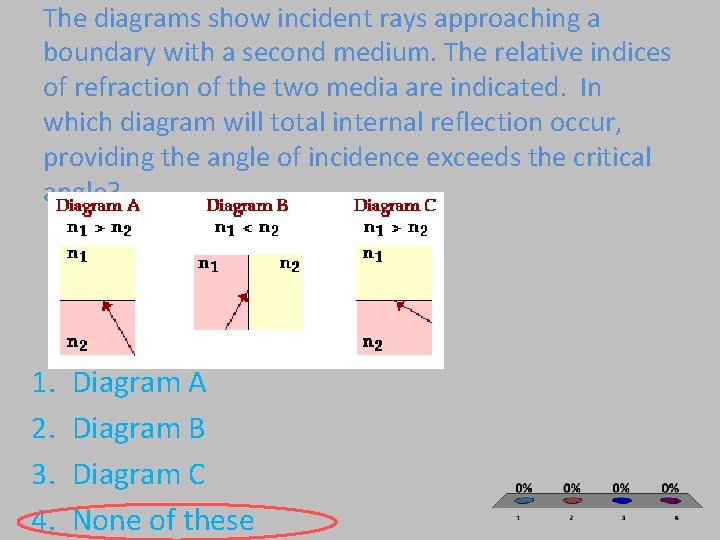
The diagrams show incident rays approaching a boundary with a second medium. The relative indices of refraction of the two media are indicated. In which diagram will total internal reflection occur, providing the angle of incidence exceeds the critical angle? 1. 2. 3. 4. Diagram A Diagram B Diagram C None of these
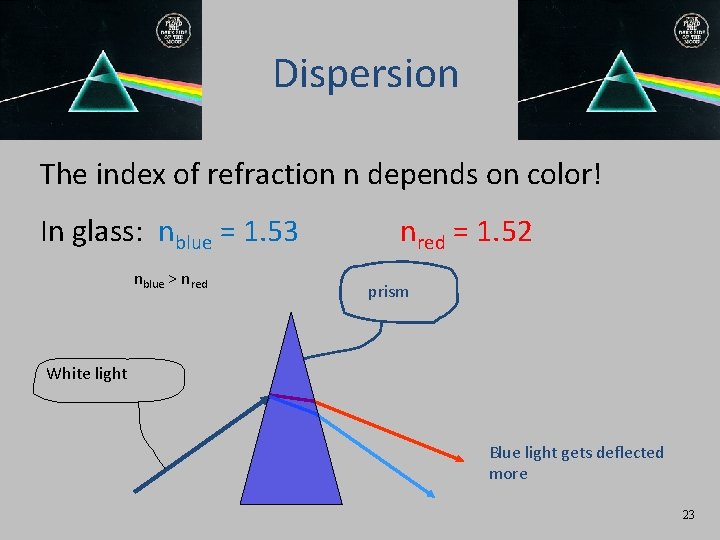
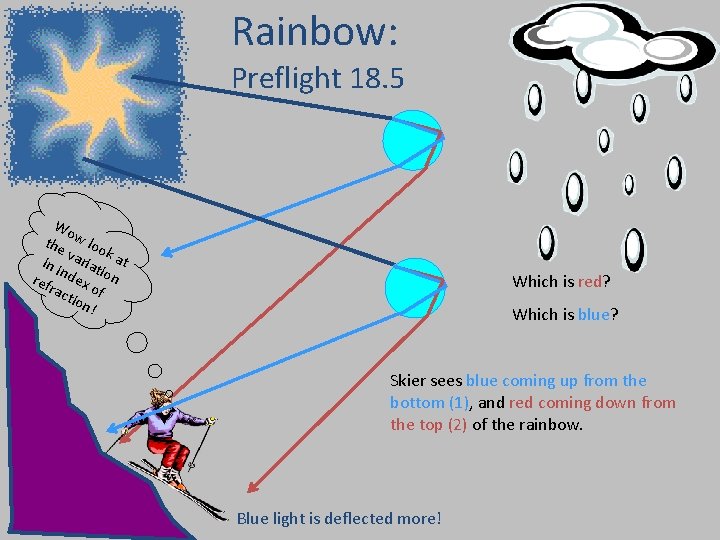
Dispersion The index of refraction n depends on color! In glass: nblue = 1. 53 nblue > nred = 1. 52 prism White light Blue light gets deflected more 23
Rainbow: Preflight 18. 5 Wo t he w l oo k v i n i ar i at at r e f nde x i on r ac o t io f n! Which is red? Which is blue? Skier sees blue coming up from the bottom (1), and red coming down from the top (2) of the rainbow. Blue light is deflected more!
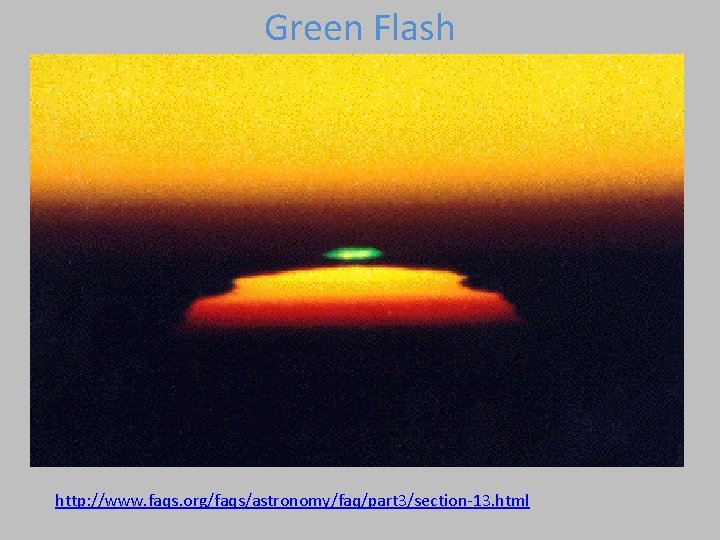
Green Flash http: //www. faqs. org/faqs/astronomy/faq/part 3/section-13. html
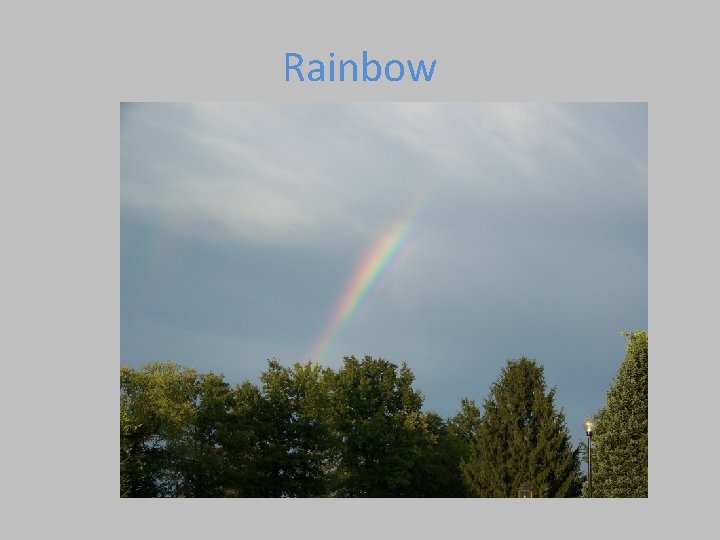
Rainbow
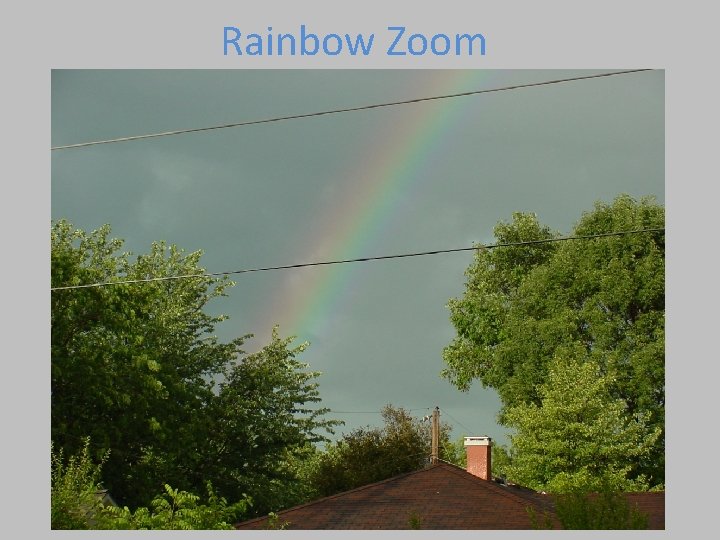
Rainbow Zoom
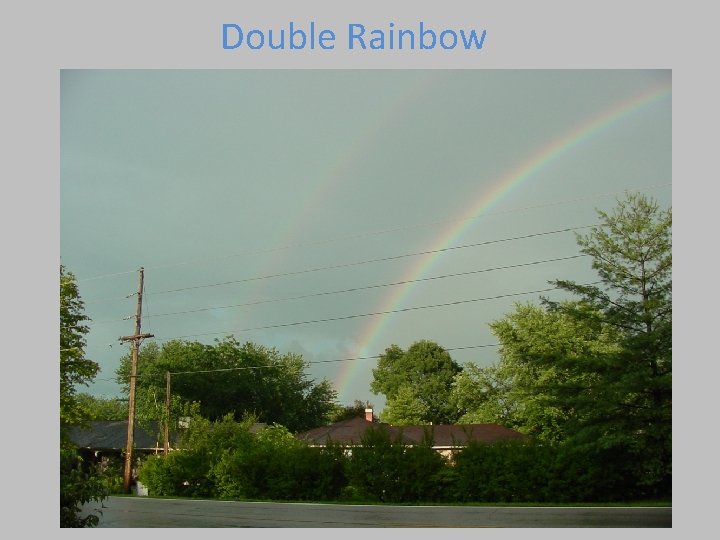
Double Rainbow
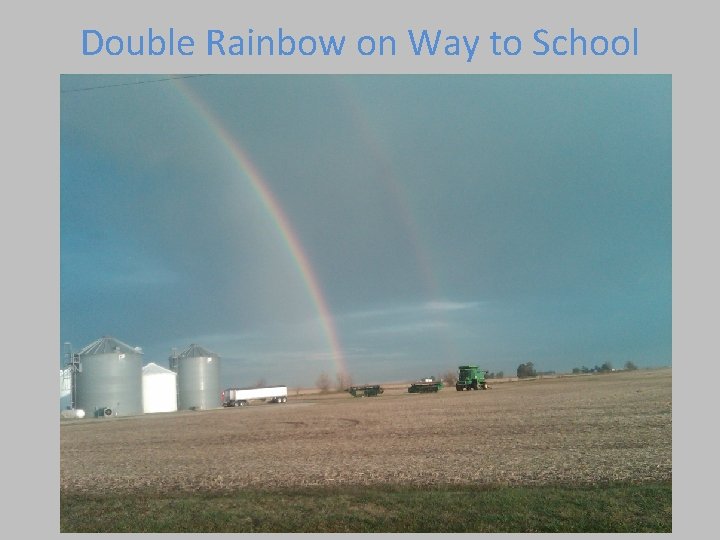
Double Rainbow on Way to School
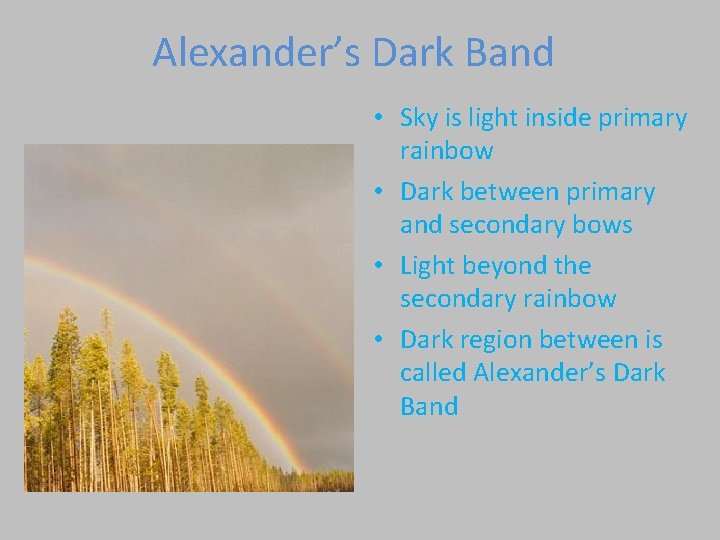
Alexander’s Dark Band • Sky is light inside primary rainbow • Dark between primary and secondary bows • Light beyond the secondary rainbow • Dark region between is called Alexander’s Dark Band
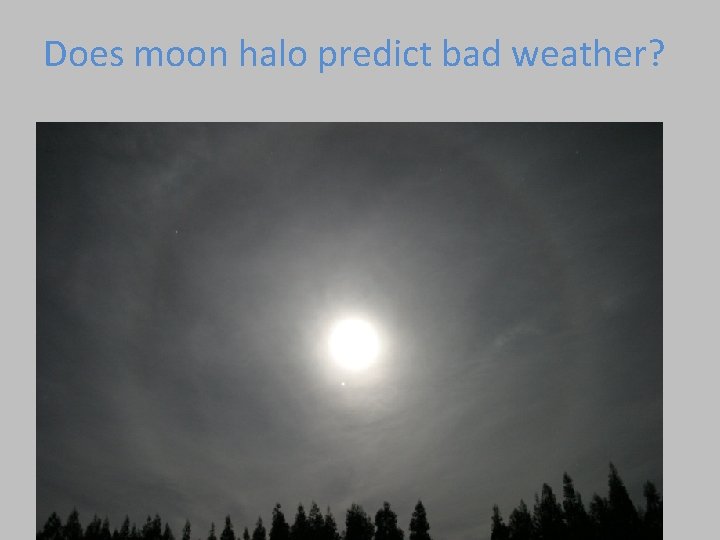
Does moon halo predict bad weather?
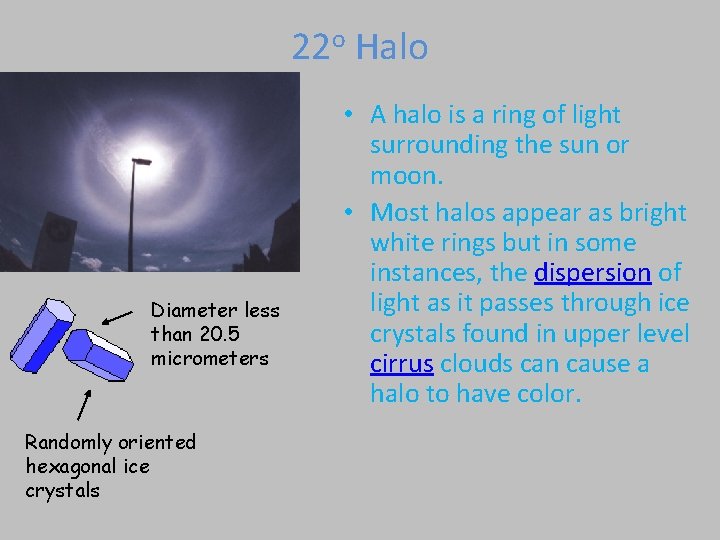
22 o Halo Diameter less than 20. 5 micrometers Randomly oriented hexagonal ice crystals • A halo is a ring of light surrounding the sun or moon. • Most halos appear as bright white rings but in some instances, the dispersion of light as it passes through ice crystals found in upper level cirrus clouds can cause a halo to have color.
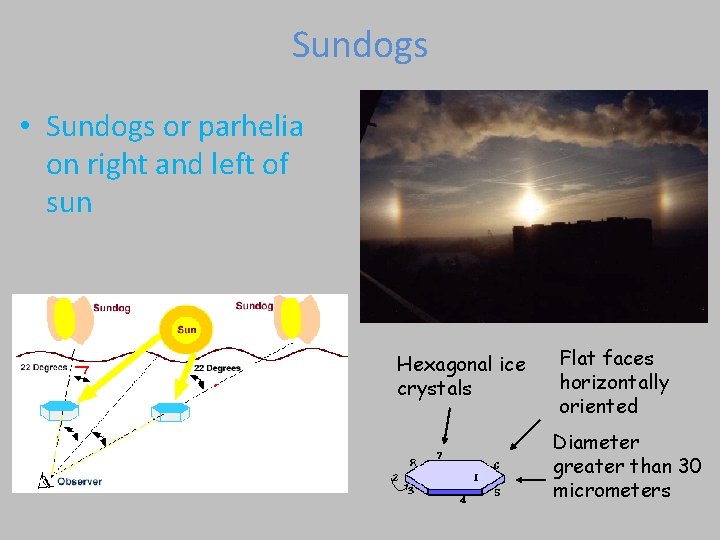
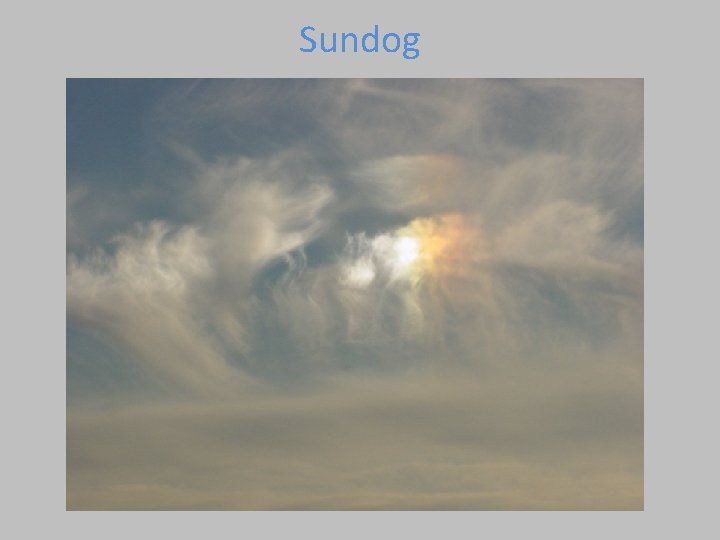
Sundogs • Sundogs or parhelia on right and left of sun Hexagonal ice crystals Flat faces horizontally oriented Diameter greater than 30 micrometers
Sundog
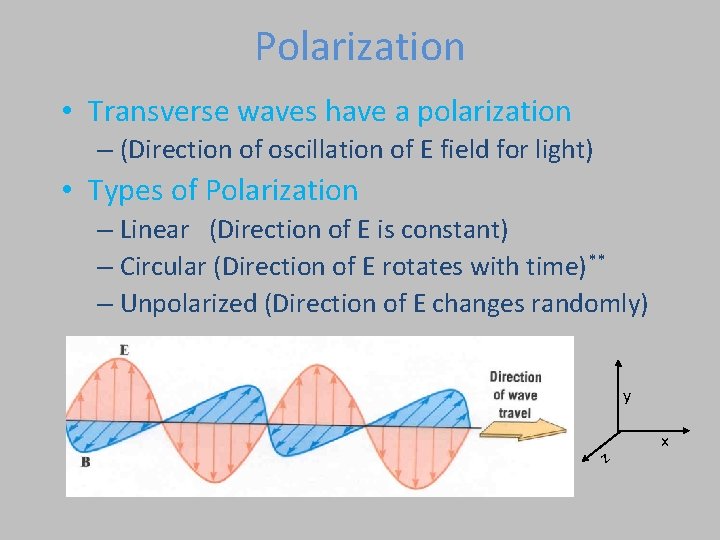
Polarization • Transverse waves have a polarization – (Direction of oscillation of E field for light) • Types of Polarization – Linear (Direction of E is constant) – Circular (Direction of E rotates with time)** – Unpolarized (Direction of E changes randomly) y z x
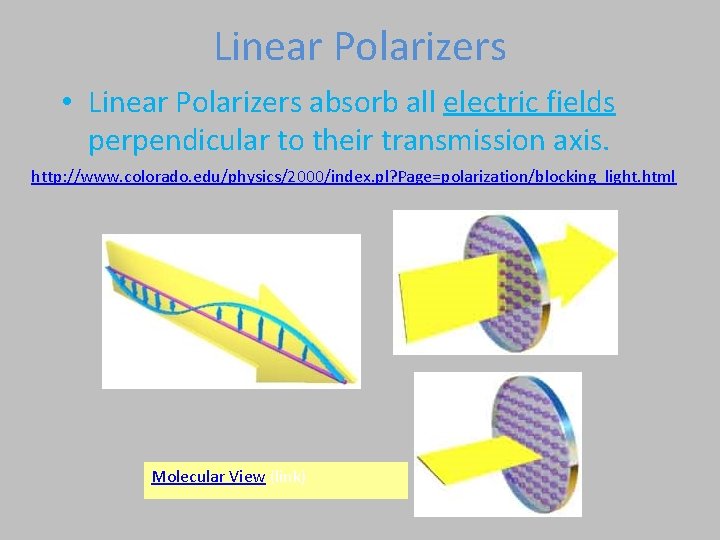
Linear Polarizers • Linear Polarizers absorb all electric fields perpendicular to their transmission axis. http: //www. colorado. edu/physics/2000/index. pl? Page=polarization/blocking_light. html Molecular View (link)
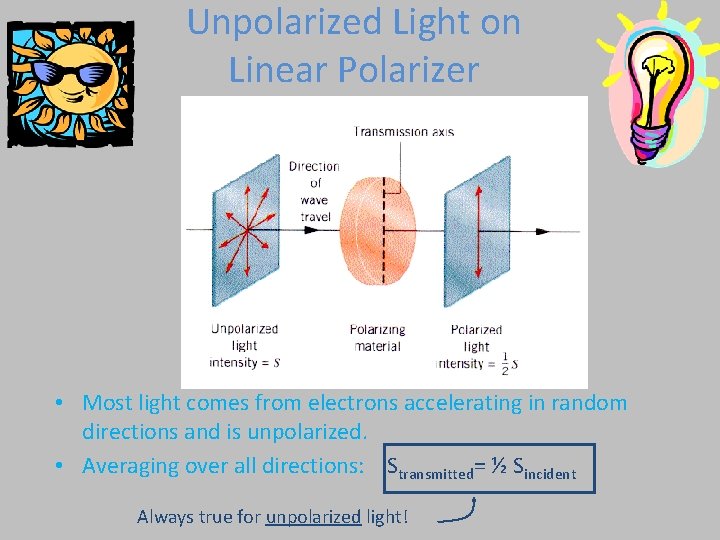
Unpolarized Light on Linear Polarizer • Most light comes from electrons accelerating in random directions and is unpolarized. • Averaging over all directions: Stransmitted= ½ Sincident Always true for unpolarized light!
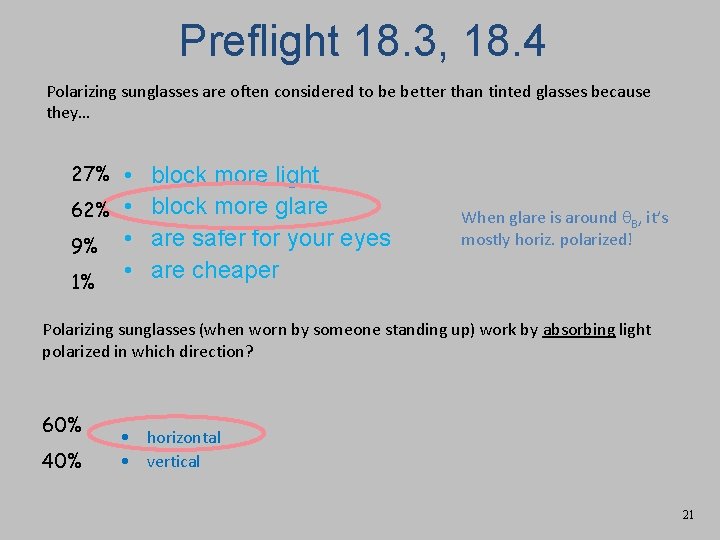
Preflight 18. 3, 18. 4 Polarizing sunglasses are often considered to be better than tinted glasses because they… 27% • 62% • 9% • • 1% block more light block more glare safer for your eyes are cheaper When glare is around q. B, it’s mostly horiz. polarized! Polarizing sunglasses (when worn by someone standing up) work by absorbing light polarized in which direction? 60% 40% • horizontal • vertical 21
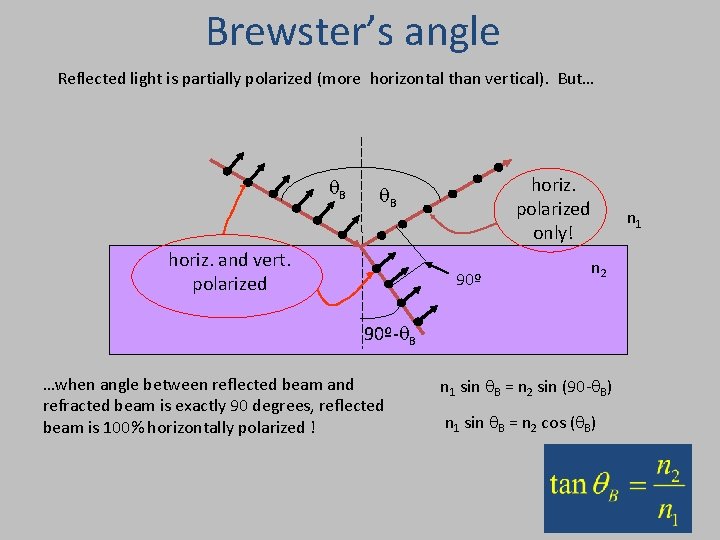
Brewster’s angle Reflected light is partially polarized (more horizontal than vertical). But… q. B horiz. polarized only! q. B horiz. and vert. polarized 90º n 1 n 2 90º-q. B …when angle between reflected beam and refracted beam is exactly 90 degrees, reflected beam is 100% horizontally polarized ! n 1 sin q. B = n 2 sin (90 -q. B) n 1 sin q. B = n 2 cos (q. B)