PHOTOSYNTHESIS The light reactions occur on the thylakoid











- Slides: 21
PHOTOSYNTHESIS
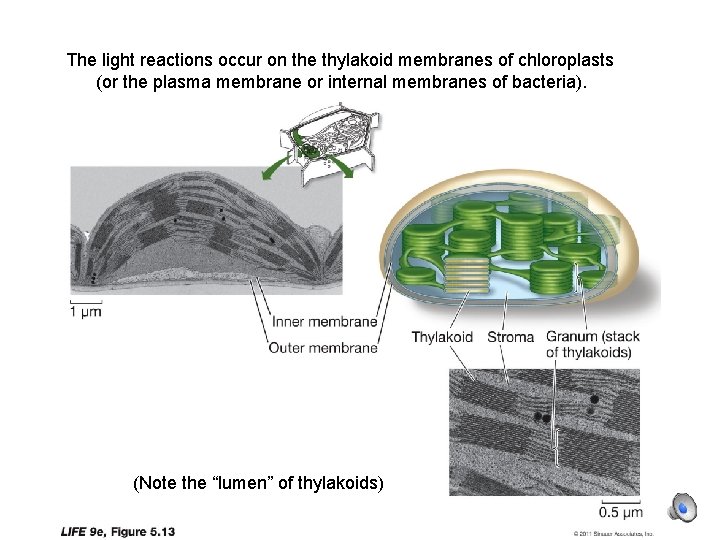
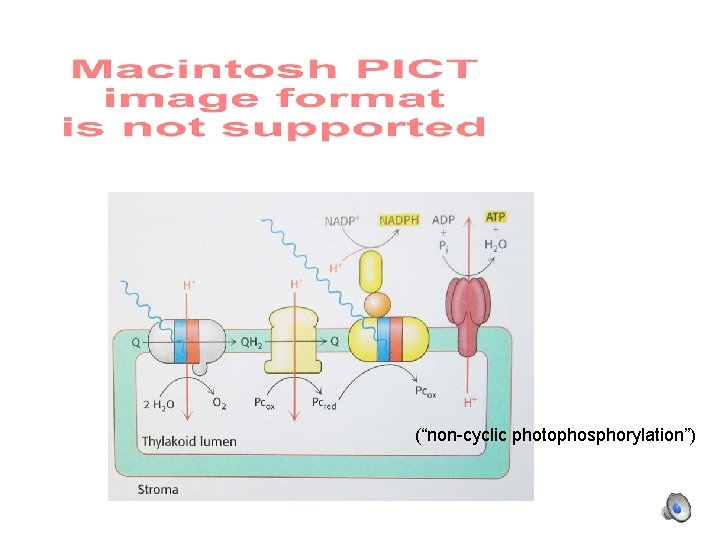
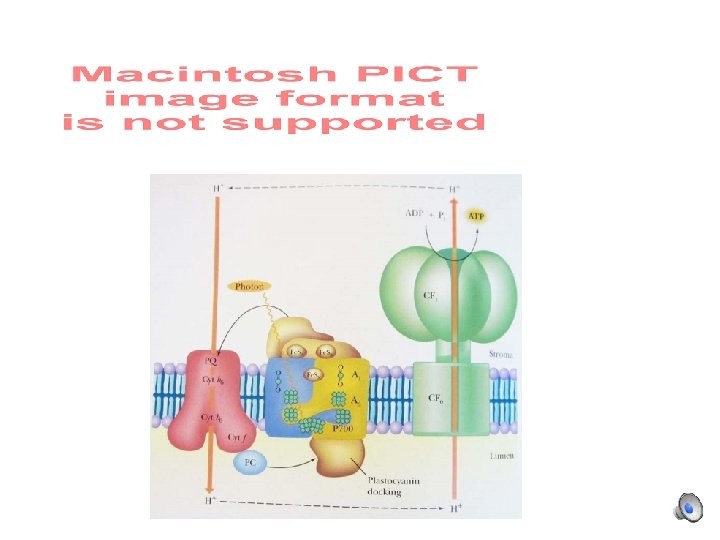
The light reactions occur on the thylakoid membranes of chloroplasts (or the plasma membrane or internal membranes of bacteria). (Note the “lumen” of thylakoids)
The light reactions occur on the thylakoid membranes of chloroplasts (or the plasma membrane or internal membranes of bacteria).
(“non-cyclic photophosphorylation”)
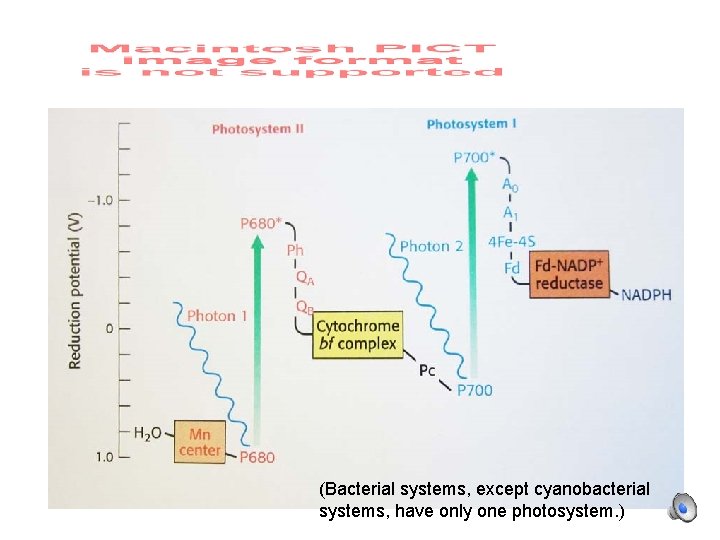
(Bacterial systems, except cyanobacterial systems, have only one photosystem. )
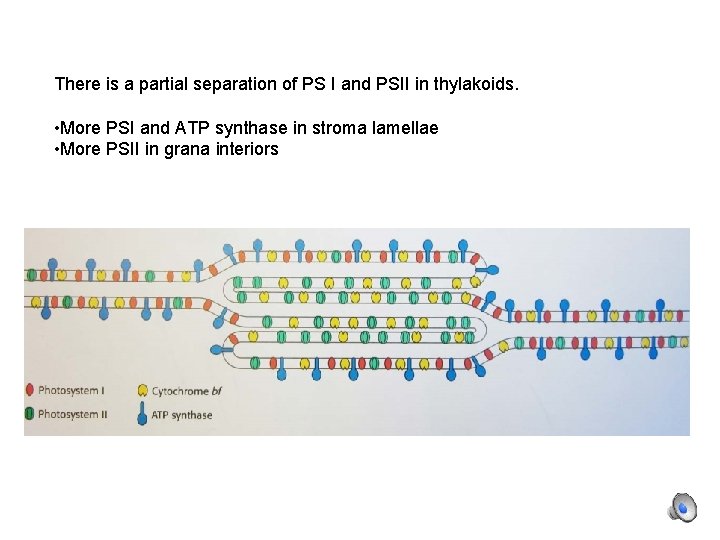
There is a partial separation of PS I and PSII in thylakoids. • More PSI and ATP synthase in stroma lamellae • More PSII in grana interiors
Why is Rubisco called a “carboxylase-oxygenase? - Alternative activity at high temperatures: CH 2 OPO 32 CO 2 - phosphoglycolate O 2 + O 2
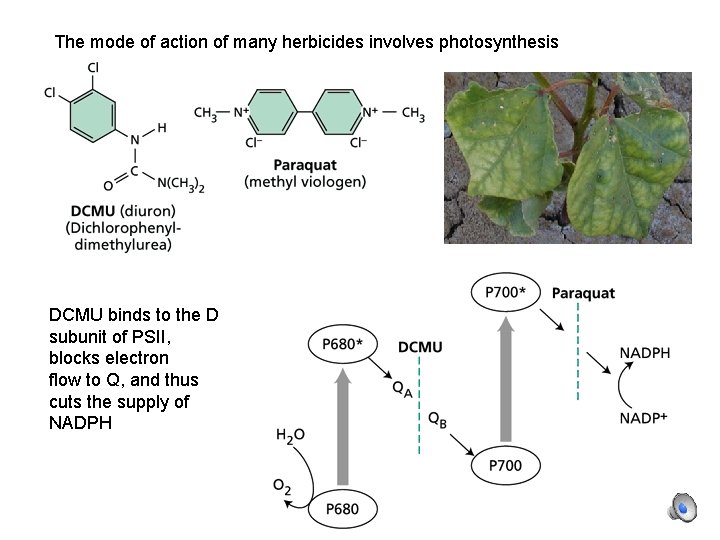
The mode of action of many herbicides involves photosynthesis DCMU binds to the D subunit of PSII, blocks electron flow to Q, and thus cuts the supply of NADPH
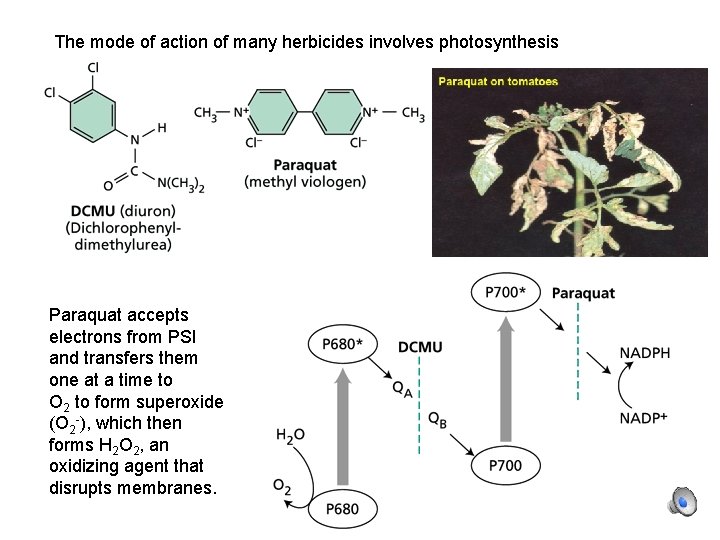
The mode of action of many herbicides involves photosynthesis Paraquat accepts electrons from PSI and transfers them one at a time to O 2 to form superoxide (O 2 -), which then forms H 2 O 2, an oxidizing agent that disrupts membranes.
Summary: • Light reactions reduce NADP+ to NADPH. • Light reactions also phosphorylate ADP to ATP. • Rubisco incorporates CO 2 into organic compound: PGA. • Dark reactions use NADPH and ATP to force reduction of PGA.