Parasites Ruminants Deworming strategy Producers understand importance of








- Slides: 32
Parasites – Ruminants
Deworming strategy -Producers understand importance of internal parasite control for production efficiency. -Clinical parasitism is mostly disappeared. -Deworming is now standard practice on beef and dairy farms. -Must have correct product at the correct time.
Reasons For Economic Losses -Producer Unaware of wormdamage - Timing & Frequency of treatments -Choice of dewormer -Parasites have greatest impact on high producing animals.
Level of Parasitism Related To n Age of animals n Pasture contamination level n Stocking rate of animals n Grazing environment & Weather n Immune status of animals
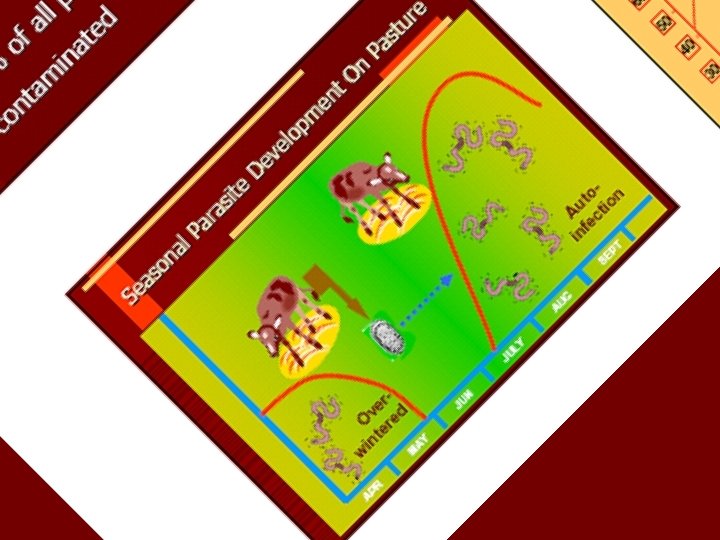
What is ruminants Parasitism? n It is a herd disease n It is a production disease n It develops during grazing n 99% of all pastures contaminated
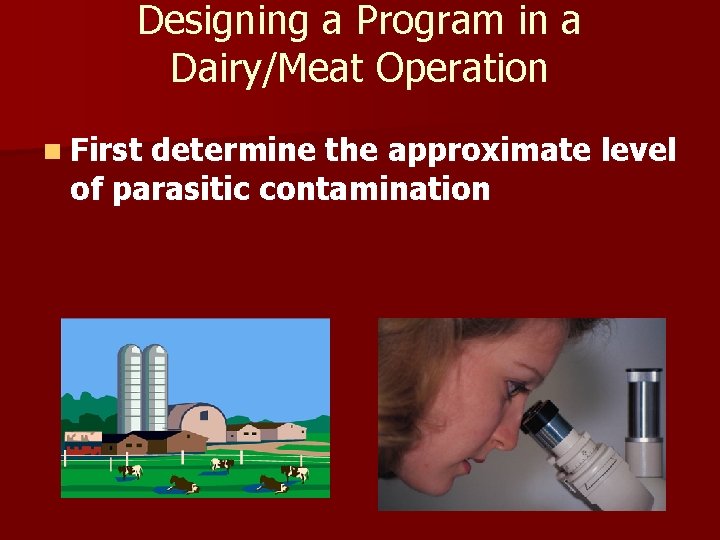
Designing a Program in a Dairy/Meat Operation n First determine the approximate level of parasitic contamination
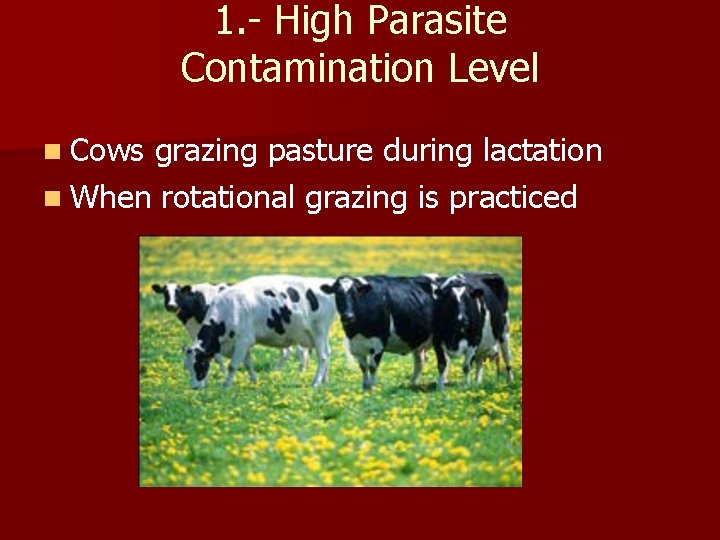
1. - High Parasite Contamination Level n Cows grazing pasture during lactation n When rotational grazing is practiced
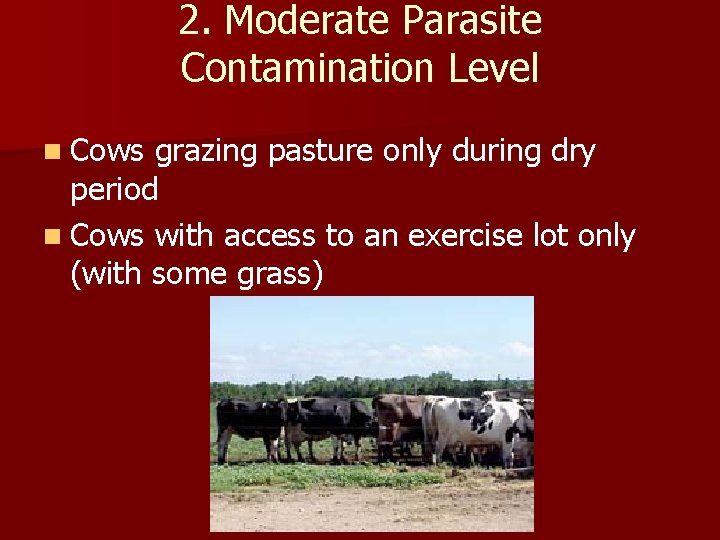
2. Moderate Parasite Contamination Level n Cows grazing pasture only during dry period n Cows with access to an exercise lot only (with some grass)
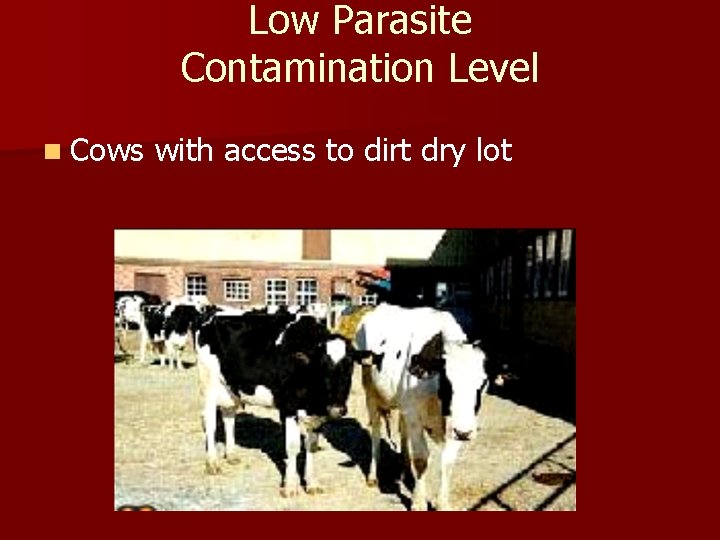
Low Parasite Contamination Level n Cows with access to dirt dry lot
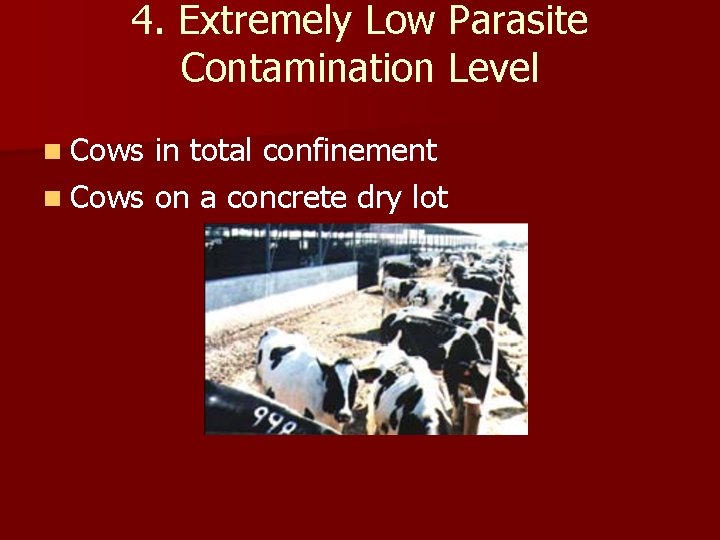
4. Extremely Low Parasite Contamination Level n Cows in total confinement n Cows on a concrete dry lot
Summary Strategy For Lactating Cows n Parasites have been shown to decrease milk production in early lactation n Identify parasite contamination levels in each dairy operation n Design deworming program based on individuals or herd treatment relative to contamination levels
Parasite – Indications Purpose of the tests 1. Direct-aids in the detection of certain protozoan trophozoites. 2. Flotation method-eggs in feces are mixed with flotation solution that will cause them to float to the top. 3. Baerman Funnel Technique-larva migrate to the bottom. Used to detect lungworms in ruminants. 4. Centrifugation technique-will detect parasitic eggs when other techniques do not, specially heavier eggs that will not float. 5. MIF (merthiolate iodine formalin) –satins and preserves protozoans & larvae
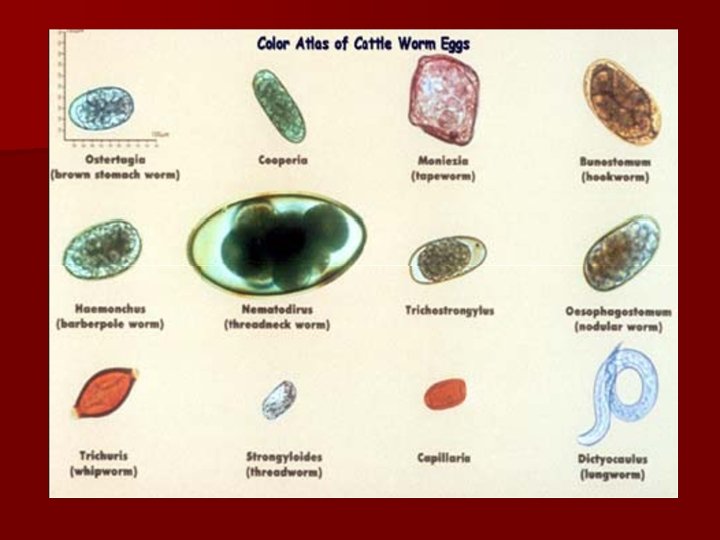
n CD parasites
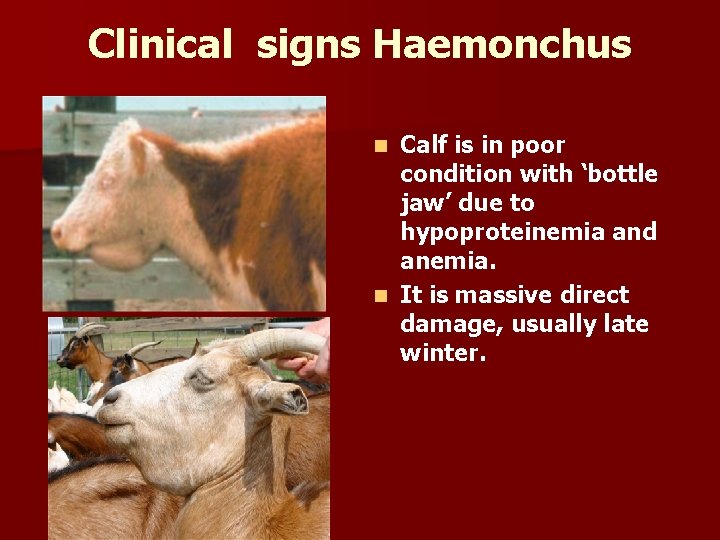
Clinical signs Haemonchus Calf is in poor condition with ‘bottle jaw’ due to hypoproteinemia and anemia. n It is massive direct damage, usually late winter. n
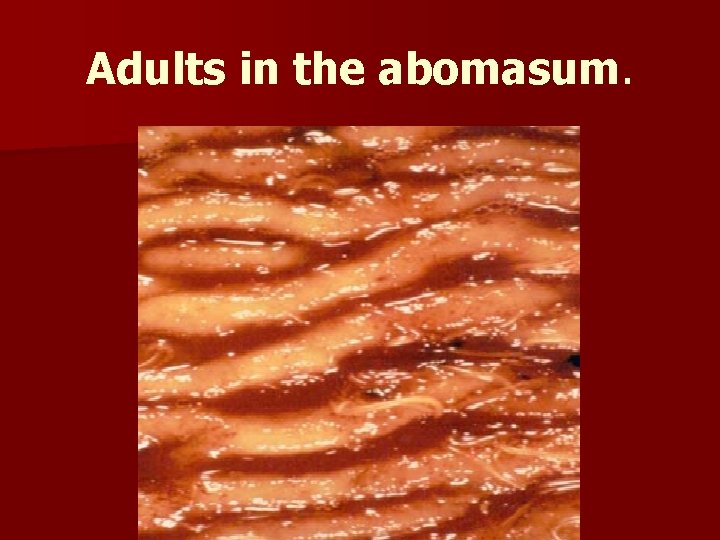
Adults in the abomasum.
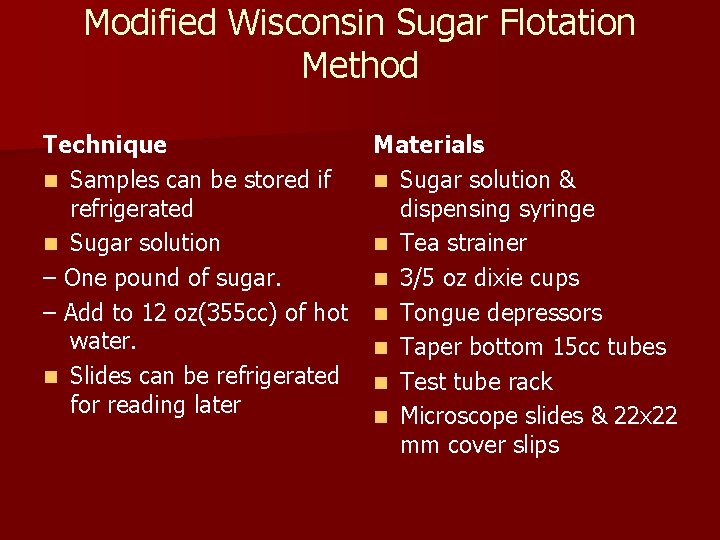
Modified Wisconsin Sugar Flotation Method Technique n Samples can be stored if refrigerated n Sugar solution – One pound of sugar. – Add to 12 oz(355 cc) of hot water. n Slides can be refrigerated for reading later Materials n Sugar solution & dispensing syringe n Tea strainer n 3/5 oz dixie cups n Tongue depressors n Taper bottom 15 cc tubes n Test tube rack n Microscope slides & 22 x 22 mm cover slips
Modified Wisconsin Sugar Flotation Method Add 15 - 17 cc sugar solution to sample
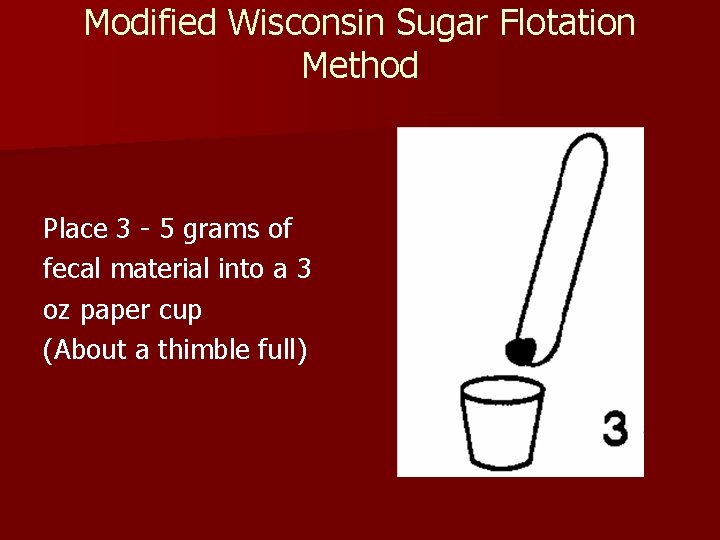
Modified Wisconsin Sugar Flotation Method Place 3 - 5 grams of fecal material into a 3 oz paper cup (About a thimble full)
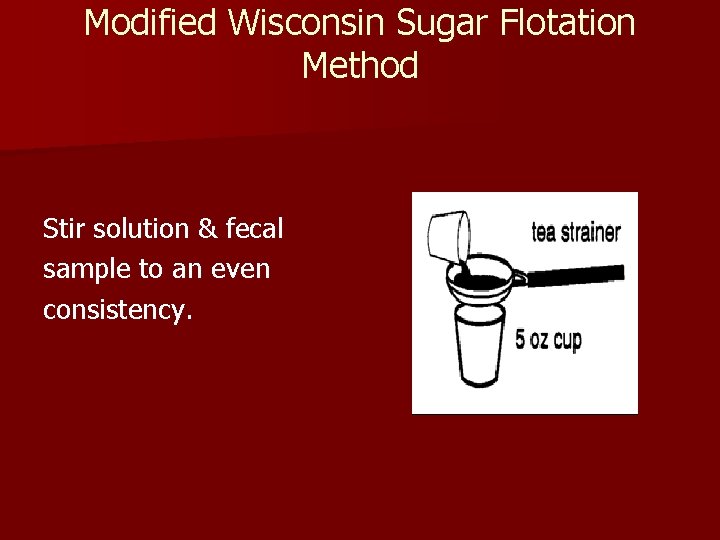
Modified Wisconsin Sugar Flotation Method Stir solution & fecal sample to an even consistency.
Modified Wisconsin Sugar Flotation Method Stir solution & fecal sample to an even consistency.
Modified Wisconsin Sugar Flotation Method Use a tongue depressor, press as much material through strainer as possible.
Modified Wisconsin Sugar Flotation Method 1. Pour into 15 cc taper bottom centrifuge tube. 2. Centrifuge in swinging arm centrifuge at 900 rpm for 5 – 7 minutes.
Modified Wisconsin Sugar Flotation Method 1. Place tube in rack and top off with sugar solution to form a meniscus. 2. Place 22 x 22 mm cover slip on tube and leave in place for 2 - 4 minutes.
Modified Wisconsin Sugar Flotation Method Lift cover slip upward & place on slide
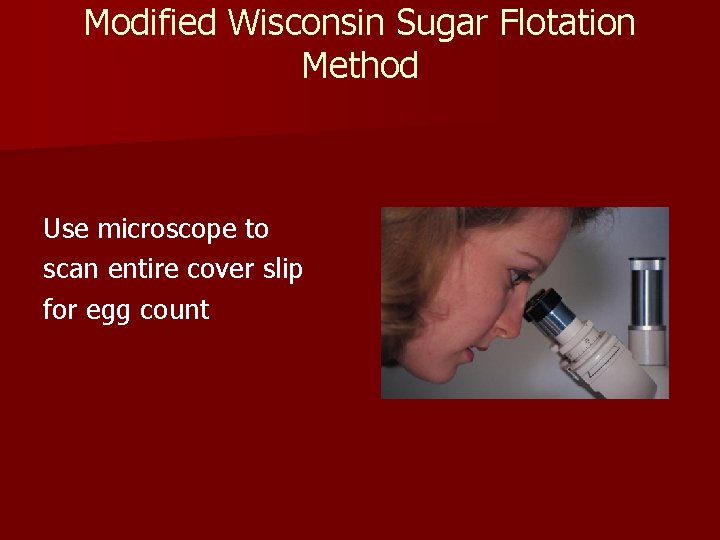
Modified Wisconsin Sugar Flotation Method Use microscope to scan entire cover slip for egg count
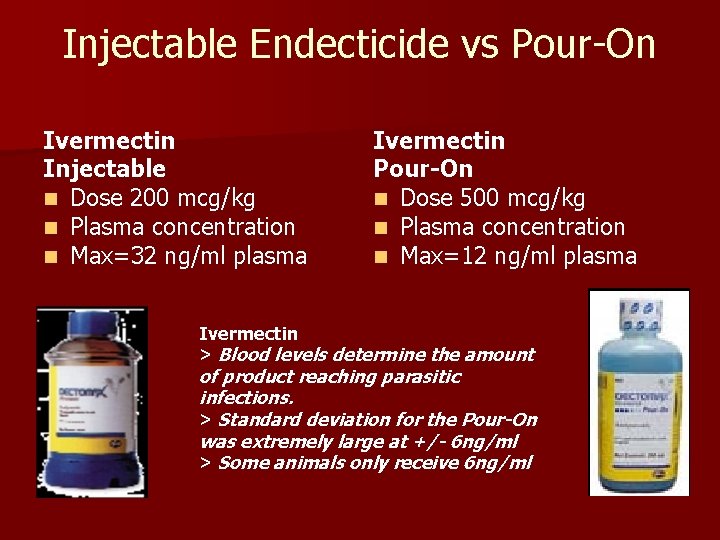
Injectable Endecticide vs Pour-On Ivermectin Injectable n Dose 200 mcg/kg n Plasma concentration n Max=32 ng/ml plasma Ivermectin Pour-On n Dose 500 mcg/kg n Plasma concentration n Max=12 ng/ml plasma Ivermectin > Blood levels determine the amount of product reaching parasitic infections. > Standard deviation for the Pour-On was extremely large at +/- 6 ng/ml > Some animals only receive 6 ng/ml
n Ivermectin resistant parasites removed with fenbendazole – albendazole n CD