
Organisational context of PM Project Management Organisation within


- Slides: 32
Organisational context of PM Project Management
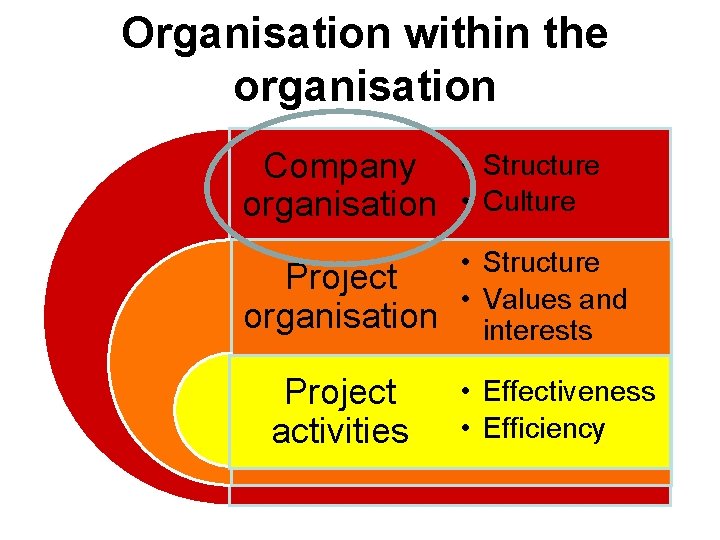
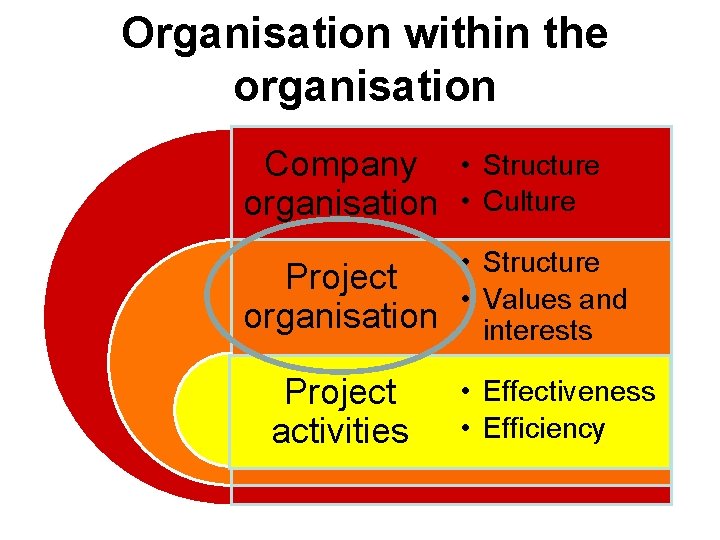
Organisation within the organisation Company • Structure organisation • Culture Project organisation Project activities • Structure • Values and interests • Effectiveness • Efficiency
Organisational structures as project environments • Hierarchical functional structure • Matrix structure • Pure project structure
Hierarchical functional structure (linear-functional structure) • Longest history • Heads of specialist functions report directly to the CEO • The CEO is responsible for co-ordinating the functions • Strict hierarchical chain
Advantages • Tight control at the top • Logically represents the functions & maintains their power and prestige • Reduces duplication of functional effort • Concentrates functional skills • Simple reporting relations • High utilisation
Disadvantages • • • Over-specialisation Parochialism of key personnel Weak co-ordination between functions It stifles the development of generalist leaders Ineffecient in fast changing and diverse market environment • It imposes an increasing burden on the chief executive as the rate of change increases • It requires extremely detailed pre-production plans (extremely high rate of formalised work)
Problems arise when… • Jobs requires greater resources than a single function has. • Jobs cut across functional boundaries. • Chief executive is overburdened with coordination problems between functions. • The solution: project manager(s) & project team(s) PM Office (PMO)
Projects in a functional structure • Place in the structure – Staff (team): where do they come from? – Project manager: where does it came from? • What if the project team is not enough? – Professional skills – Resources of one or more functions • Responsibility of the staff – Project team – Functional staff involved in the project
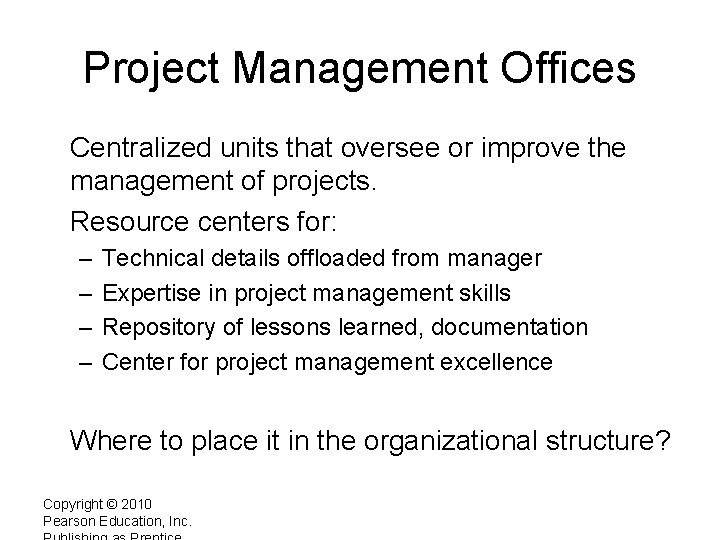
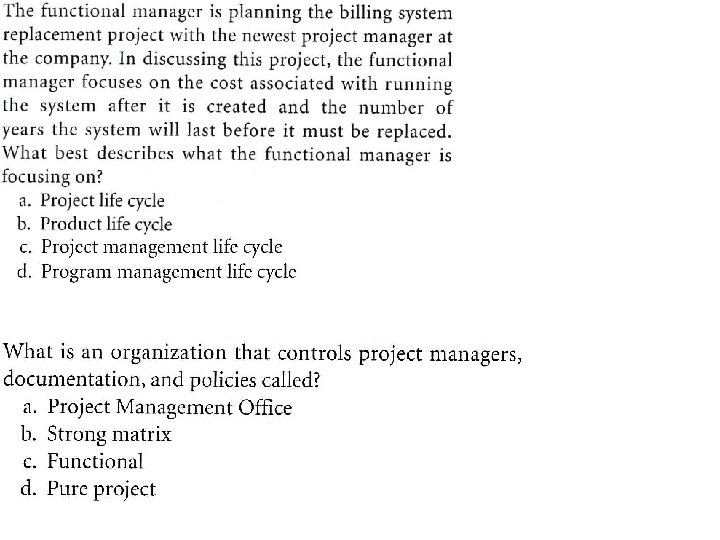
Project Management Offices Centralized units that oversee or improve the management of projects. Resource centers for: – – Technical details offloaded from manager Expertise in project management skills Repository of lessons learned, documentation Center for project management excellence Where to place it in the organizational structure? Copyright © 2010 Pearson Education, Inc.
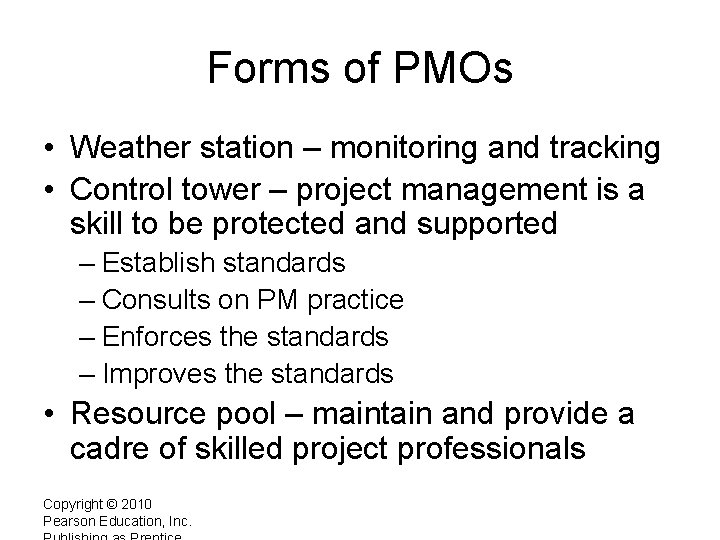
Forms of PMOs • Weather station – monitoring and tracking • Control tower – project management is a skill to be protected and supported – Establish standards – Consults on PM practice – Enforces the standards – Improves the standards • Resource pool – maintain and provide a cadre of skilled project professionals Copyright © 2010 Pearson Education, Inc.
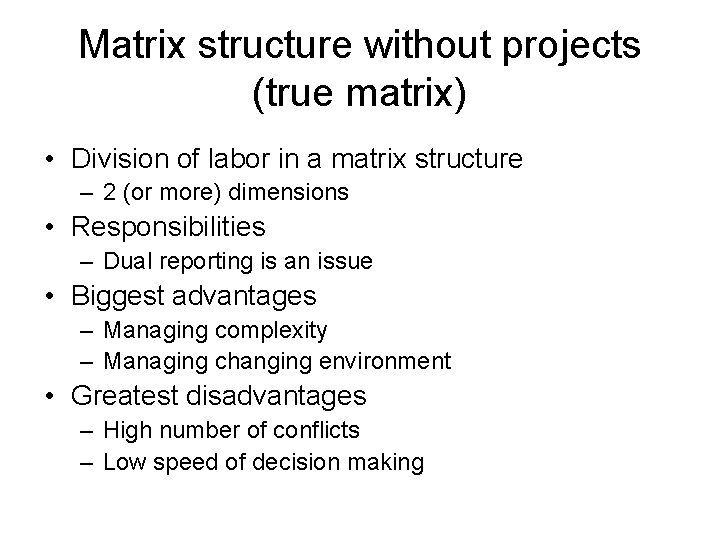
Matrix structure without projects (true matrix) • Division of labor in a matrix structure – 2 (or more) dimensions • Responsibilities – Dual reporting is an issue • Biggest advantages – Managing complexity – Managing changing environment • Greatest disadvantages – High number of conflicts – Low speed of decision making
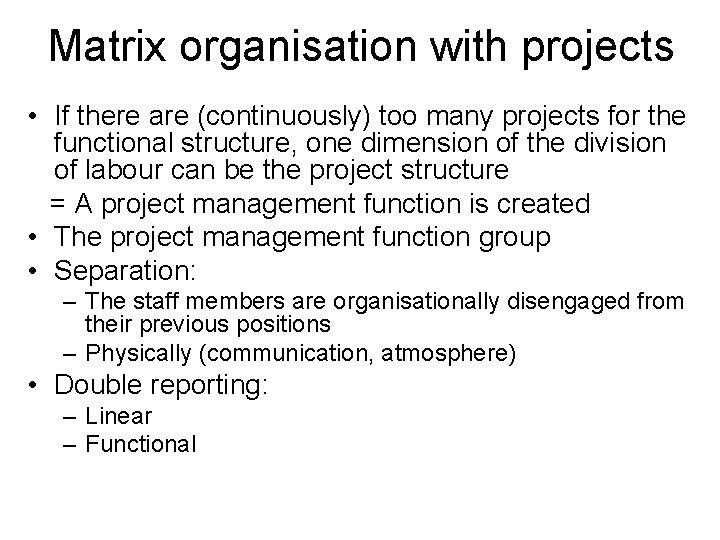
Matrix organisation with projects • If there are (continuously) too many projects for the functional structure, one dimension of the division of labour can be the project structure = A project management function is created • The project management function group • Separation: – The staff members are organisationally disengaged from their previous positions – Physically (communication, atmosphere) • Double reporting: – Linear – Functional
Problems with the project-matrix structure • Latent responsibility and loyalty – It affects career – Dual reporting: • Confusion and conflicts on two levels • Problems arise at the CEO’s level • Temporary structure: uncertainty
A possible solution: strong corporate culture • Shared views (and values) – Different project teams – Functional managers
Advantages of the project-matrix structure • Rapid response to changes • Better balance between time, cost and resources • Independent policies and budgets for different projects • Clear definition of responsibility and authority (project managers)
Disadvantages of the project-matrix structure Requires significant effort from the top management to: • Define policies, procedures, authorities for the whole organisation • Monitoring and controlling the balance of power between project and functional managers • Ensuring the shared view on company objectives (project and functional managers)
The true project structure • The usual business activity is in form of projects • Frequent only in some industries • Functions disappeared: skills are concentrated in project teams • Reserve staff (central pool of extra resources) • Project teams are not temporary
Advantages • Clear project responsibilities and authorities • Clear and controlled project budgets • Better communication between project managers and the CEO • Generalists managers are developed who can manage change • Strong team loyalty and understanding • Management costs are identified • ? subcultures
Readings • Lockyer – Gordon (2005) Chapter 2
Structure of projects
Organisation within the organisation Company • Structure organisation • Culture Project organisation Project activities • Structure • Values and interests • Effectiveness • Efficiency
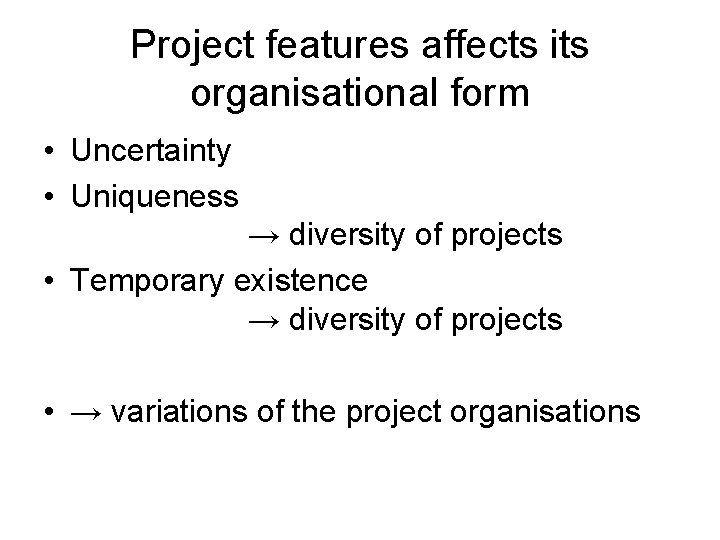
Project features affects its organisational form • Uncertainty • Uniqueness → diversity of projects • Temporary existence → diversity of projects • → variations of the project organisations
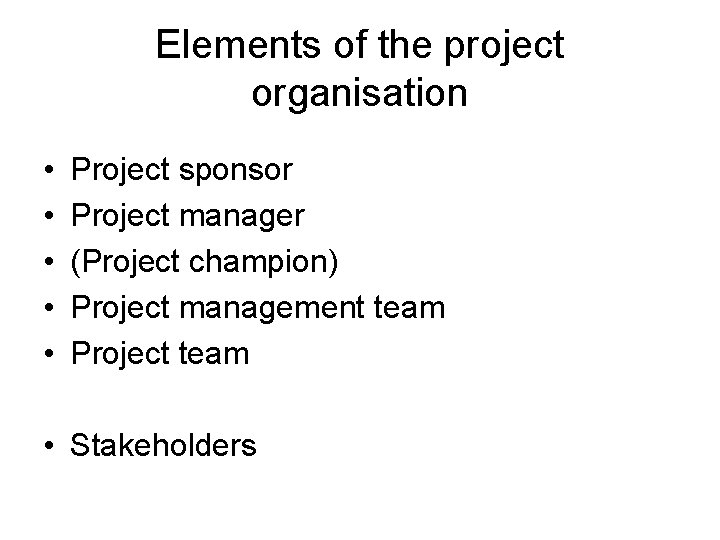
Elements of the project organisation • • • Project sponsor Project manager (Project champion) Project management team Project team • Stakeholders
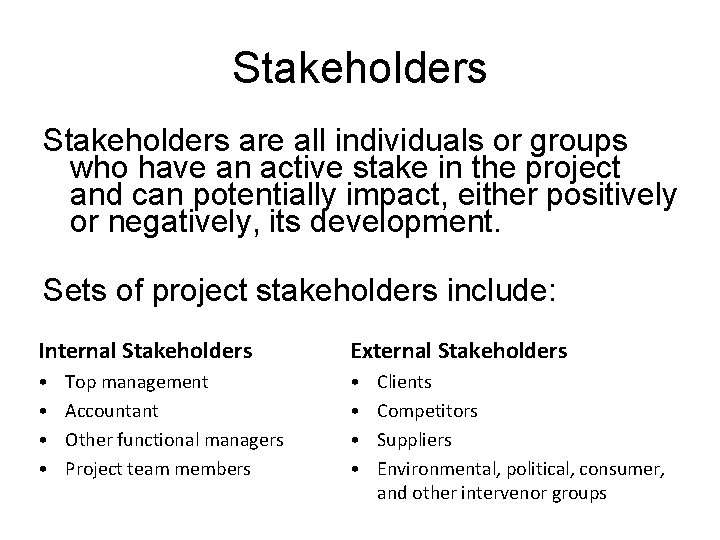
Stakeholders are all individuals or groups who have an active stake in the project and can potentially impact, either positively or negatively, its development. Sets of project stakeholders include: Internal Stakeholders External Stakeholders • • Top management Accountant Other functional managers Project team members Clients Competitors Suppliers Environmental, political, consumer, and other intervenor groups
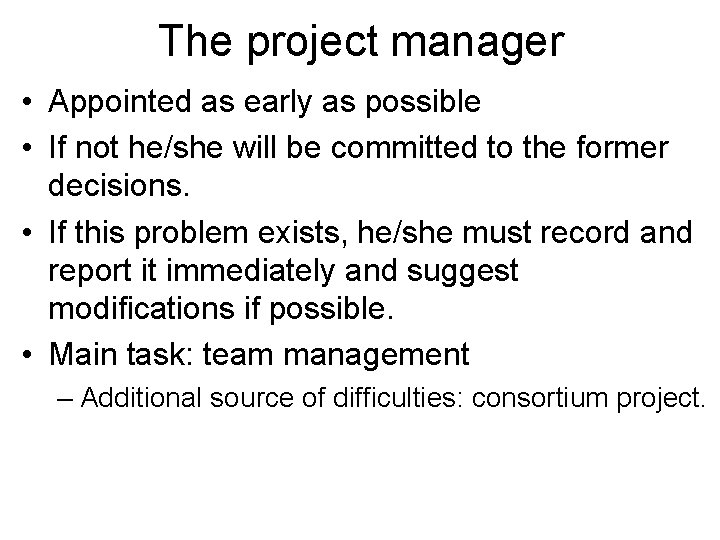
The project manager • Appointed as early as possible • If not he/she will be committed to the former decisions. • If this problem exists, he/she must record and report it immediately and suggest modifications if possible. • Main task: team management – Additional source of difficulties: consortium project.
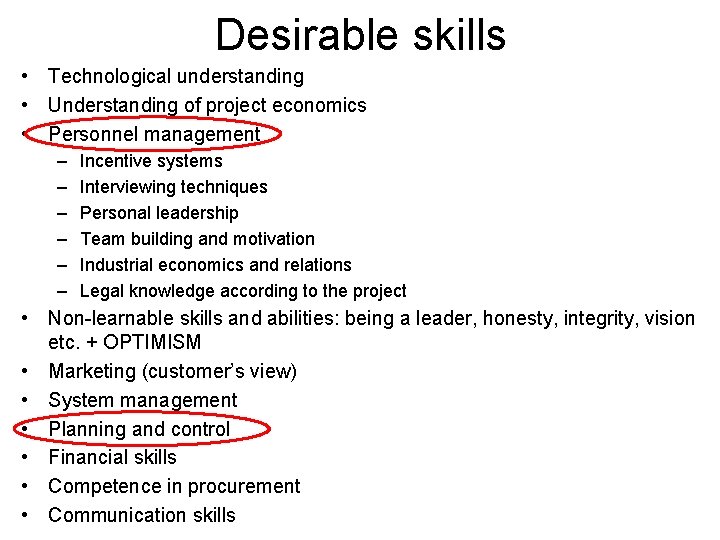
Desirable skills • Technological understanding • Understanding of project economics • Personnel management – – – Incentive systems Interviewing techniques Personal leadership Team building and motivation Industrial economics and relations Legal knowledge according to the project • Non-learnable skills and abilities: being a leader, honesty, integrity, vision etc. + OPTIMISM • Marketing (customer’s view) • System management • Planning and control • Financial skills • Competence in procurement • Communication skills
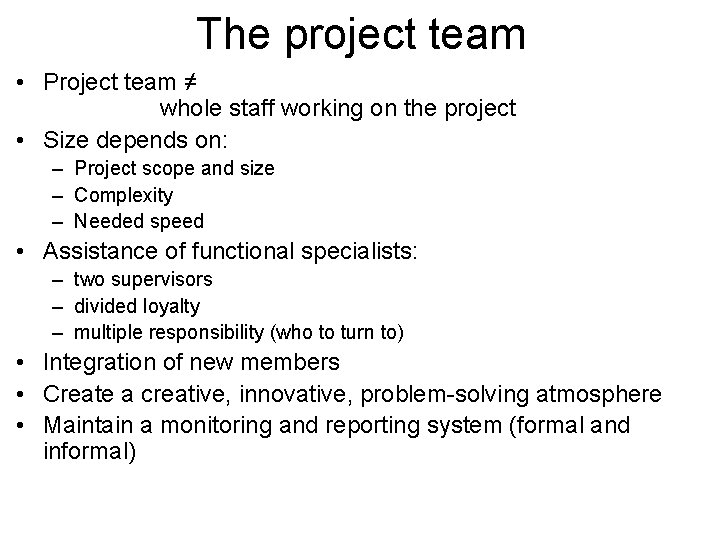
The project team • Project team ≠ whole staff working on the project • Size depends on: – Project scope and size – Complexity – Needed speed • Assistance of functional specialists: – two supervisors – divided loyalty – multiple responsibility (who to turn to) • Integration of new members • Create a creative, innovative, problem-solving atmosphere • Maintain a monitoring and reporting system (formal and informal)
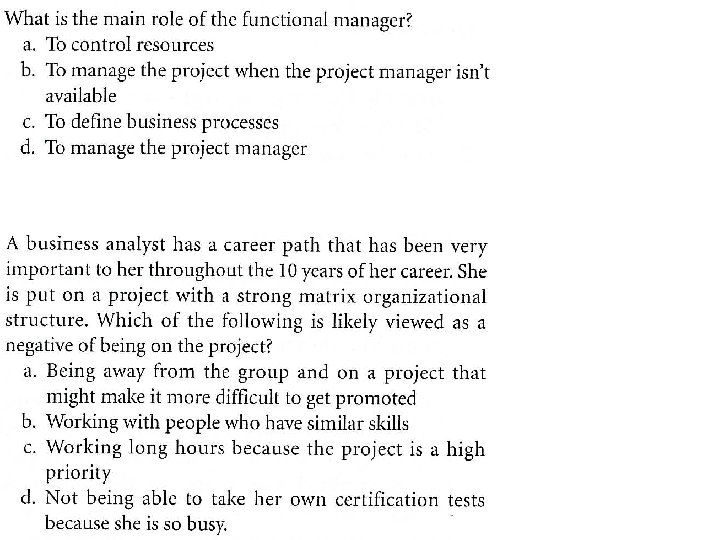
Some questions
Readings • Lockyer – Gordon (2005) Chapter 3
Thanks for the attention!