Office of Ethics and Compliance ETHICS AND ADVISING
- Slides: 38
Office of Ethics and Compliance
ETHICS AND ADVISING: VALUES, DECISION MAKING, AND DILEMMAS October 23, 2018 Tim Balliett, Ph. D. , LPEC trb 133@psu. edu Director, Center for Character, Conscience & Public Purpose (814) 867 -6402 www. studentaffairs. psu. edu/thecenter University Ethics Officer (814) 867 -5088 www. universityethics. psu. edu Office of Ethics and Compliance
Topics • Organizational ethics • Ethical Decision Making • Ethical challenges in advising – Advising models – Institutional changes – Technological changes – Relationships with stakeholders Office of Ethics and Compliance
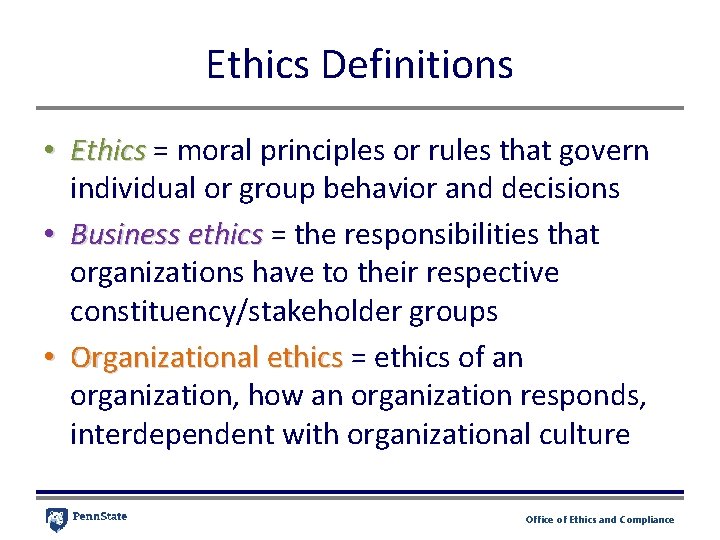
Ethics Definitions • Ethics = moral principles or rules that govern individual or group behavior and decisions • Business ethics = the responsibilities that organizations have to their respective constituency/stakeholder groups • Organizational ethics = ethics of an organization, how an organization responds, interdependent with organizational culture Office of Ethics and Compliance
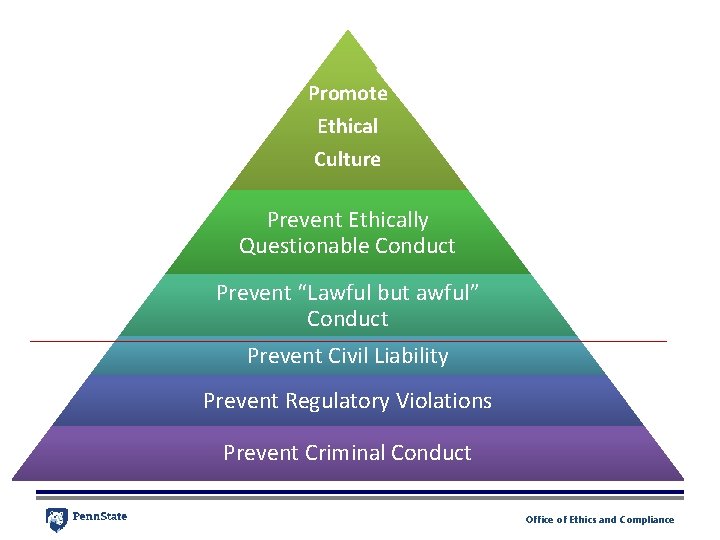
Promote Ethical Culture Prevent Ethically Questionable Conduct Prevent “Lawful but awful” Conduct Prevent Civil Liability Prevent Regulatory Violations Prevent Criminal Conduct Office of Ethics and Compliance
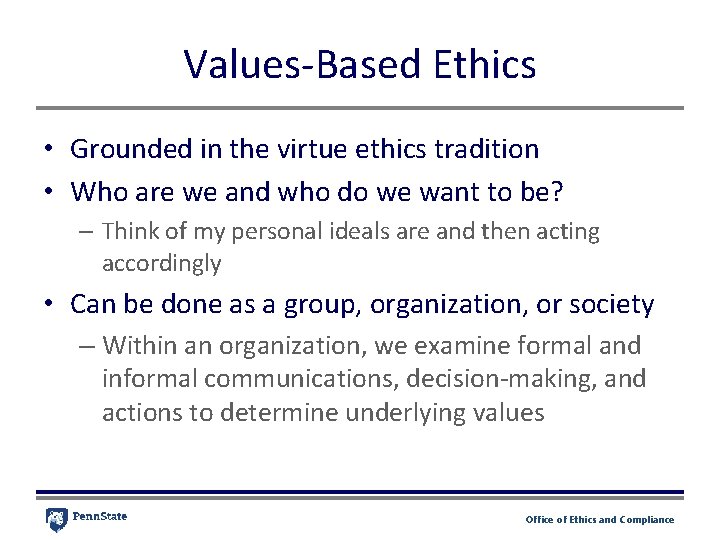
Values-Based Ethics • Grounded in the virtue ethics tradition • Who are we and who do we want to be? – Think of my personal ideals are and then acting accordingly • Can be done as a group, organization, or society – Within an organization, we examine formal and informal communications, decision-making, and actions to determine underlying values Office of Ethics and Compliance
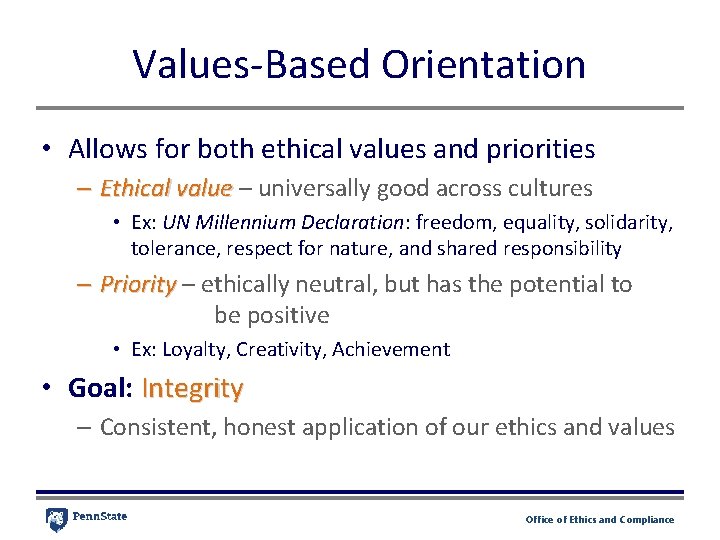
Values-Based Orientation • Allows for both ethical values and priorities – Ethical value – universally good across cultures • Ex: UN Millennium Declaration: freedom, equality, solidarity, tolerance, respect for nature, and shared responsibility – Priority – ethically neutral, but has the potential to be positive • Ex: Loyalty, Creativity, Achievement • Goal: Integrity – Consistent, honest application of our ethics and values Office of Ethics and Compliance
Office of Ethics and Compliance
Office of Ethics and Compliance
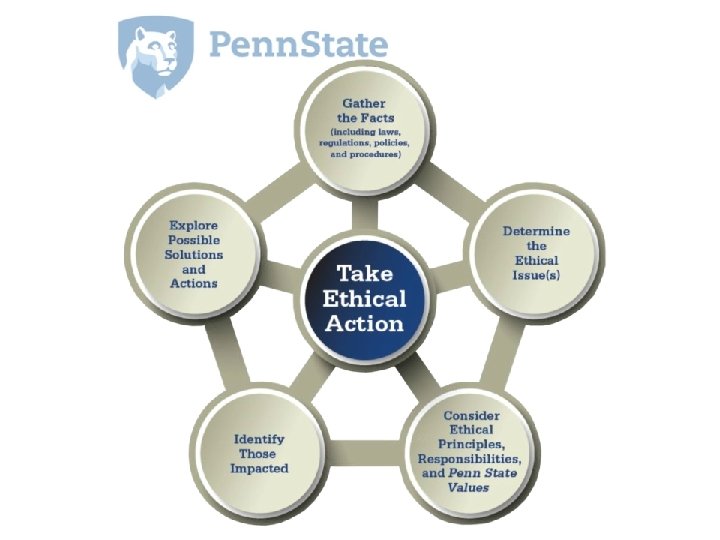
ETHICAL DECISION MAKING Office of Ethics and Compliance
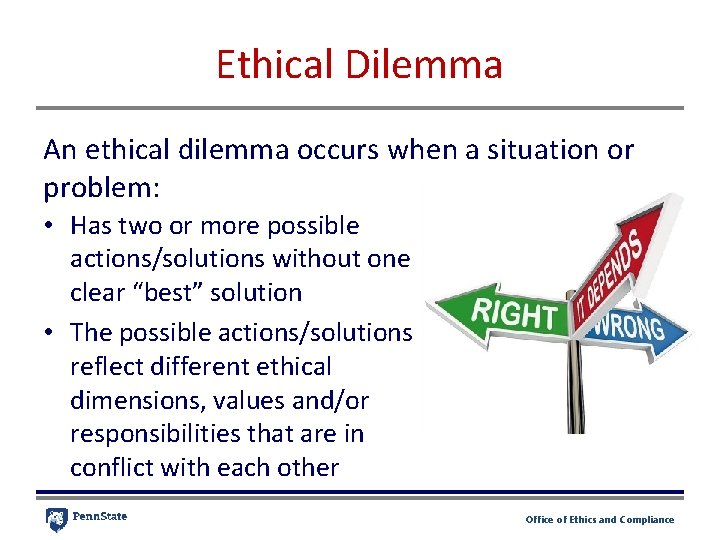
Ethical Dilemma An ethical dilemma occurs when a situation or problem: • Has two or more possible actions/solutions without one clear “best” solution • The possible actions/solutions reflect different ethical dimensions, values and/or responsibilities that are in conflict with each other Office of Ethics and Compliance
Ethical Dilemma You are an adviser in a low-enrolled program. The number of majors has been declining during the past fifteen years to the point that the University is threatening to dissolve the program if the trend is not reversed. You do not want this to happen. This morning, a sophomore student is in your office for general advising. She has not yet declared her major and is considering three possible choices, one of which is in your program. She is bright, articulate, and motivated—exactly the kind of student that is ideal for your program. As you start to discuss her choices, you laud the advantages of majoring in your program in the hopes she will declare her major in your program. Although hesitant at first, she becomes increasingly enthusiastic about the possibilities of your major, and decides she will declare her major that afternoon. Office of Ethics and Compliance
Common Ethical Pitfalls • We often fail to recognize ethical dimensions of decisions • Most erroneously believe they are more ethical than the majority of their peers (Tenbrunsel, 1998) Office of Ethics and Compliance
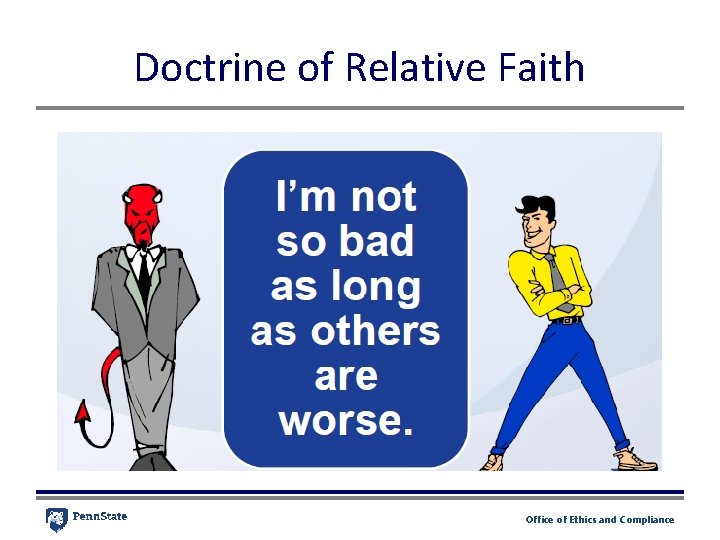
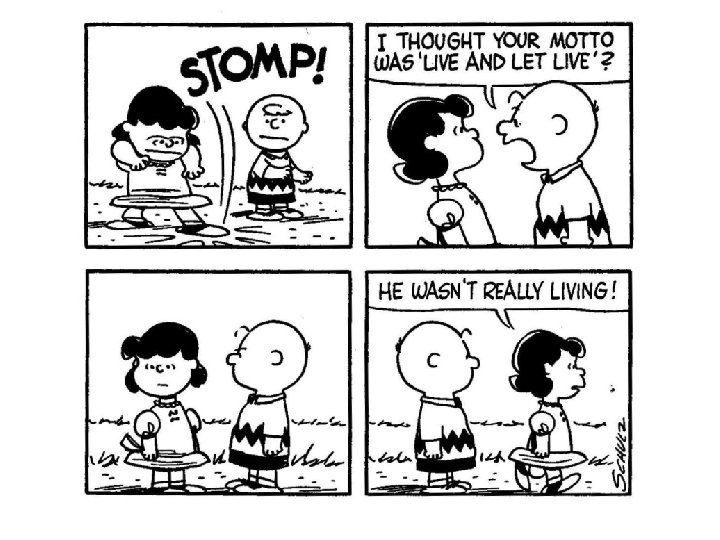
Doctrine of Relative Faith Office of Ethics and Compliance
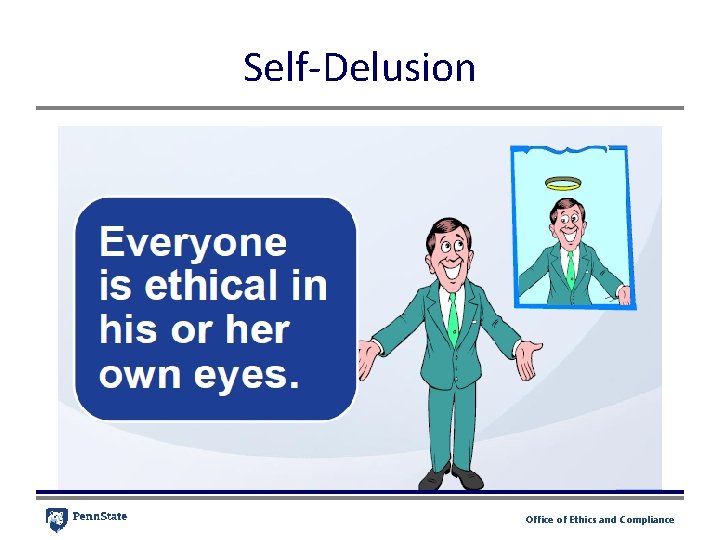
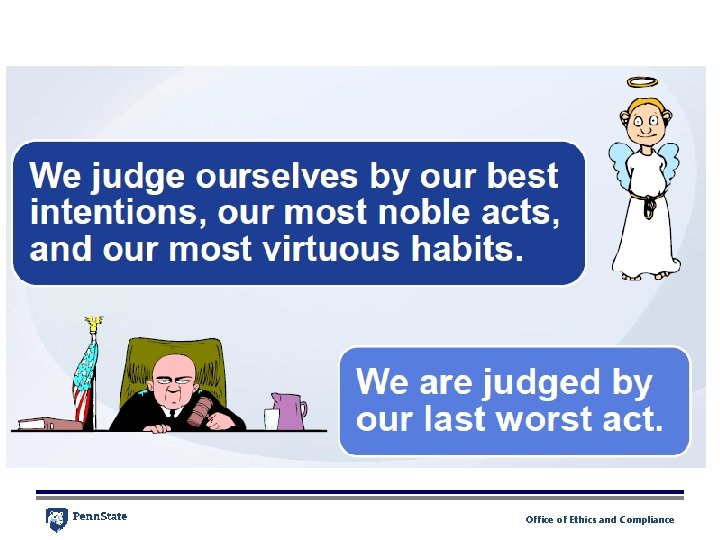
Self-Delusion Office of Ethics and Compliance
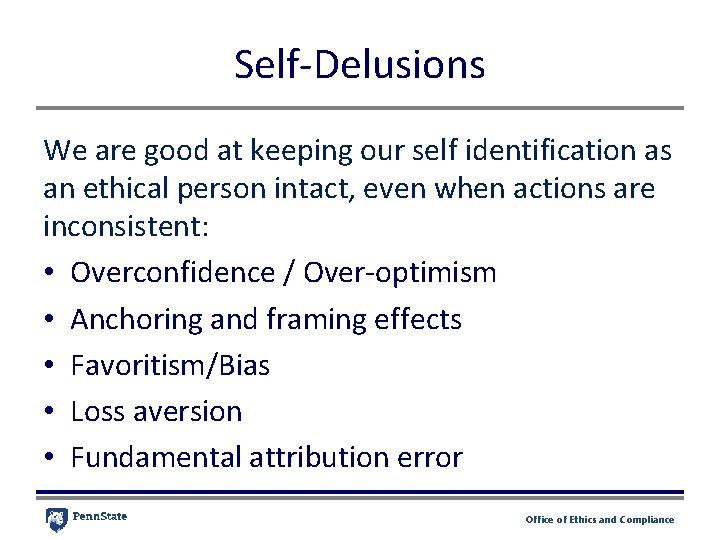
Self-Delusions We are good at keeping our self identification as an ethical person intact, even when actions are inconsistent: • Overconfidence / Over-optimism • Anchoring and framing effects • Favoritism/Bias • Loss aversion • Fundamental attribution error Office of Ethics and Compliance
Office of Ethics and Compliance
Office of Ethics and Compliance
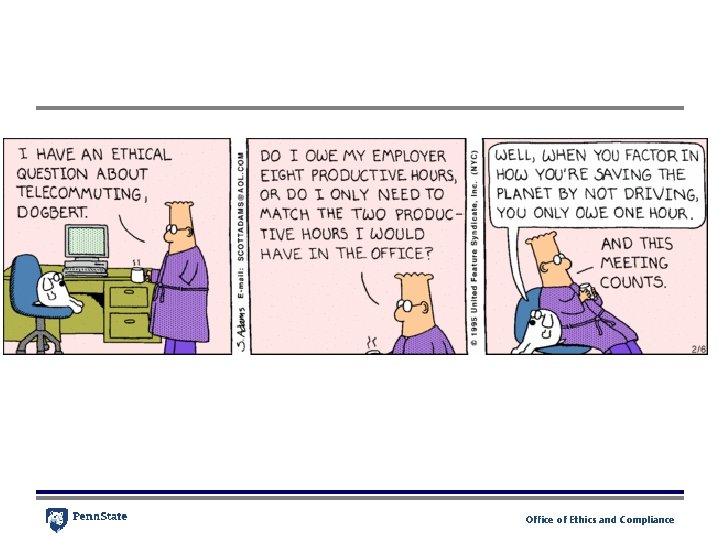
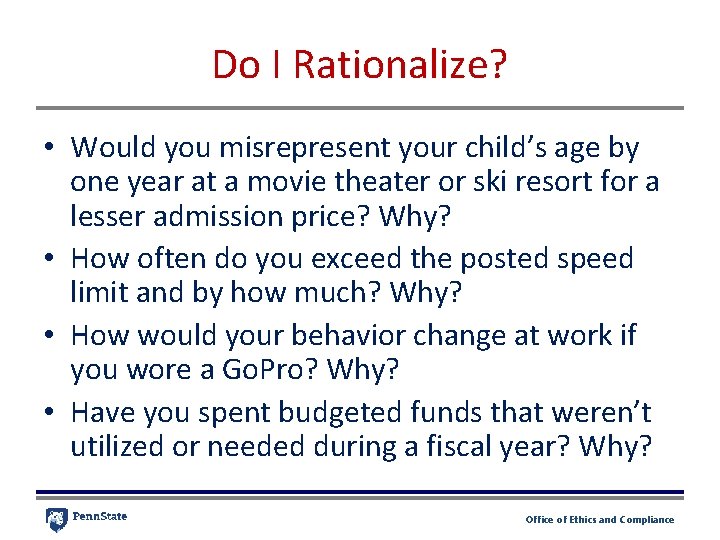
Do I Rationalize? • Would you misrepresent your child’s age by one year at a movie theater or ski resort for a lesser admission price? Why? • How often do you exceed the posted speed limit and by how much? Why? • How would your behavior change at work if you wore a Go. Pro? Why? • Have you spent budgeted funds that weren’t utilized or needed during a fiscal year? Why? Office of Ethics and Compliance
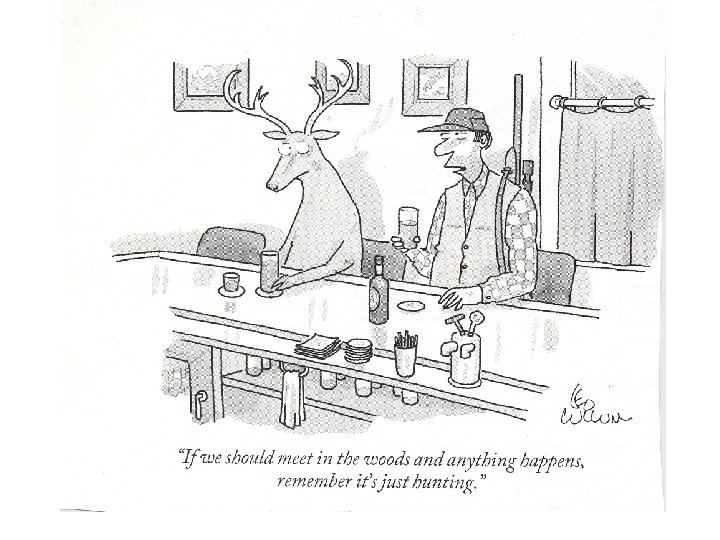
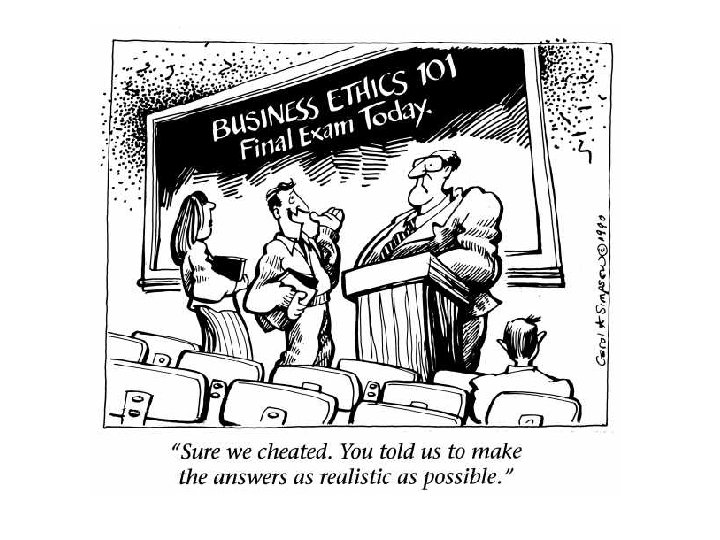
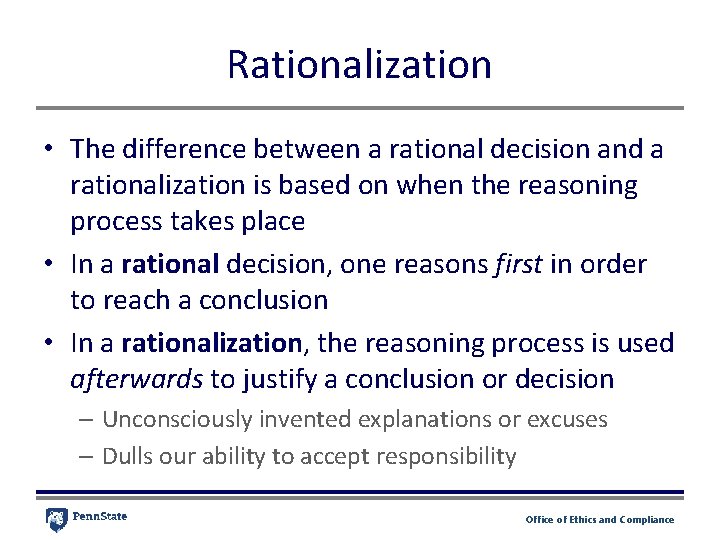
Rationalization • The difference between a rational decision and a rationalization is based on when the reasoning process takes place • In a rational decision, one reasons first in order to reach a conclusion • In a rationalization, the reasoning process is used afterwards to justify a conclusion or decision – Unconsciously invented explanations or excuses – Dulls our ability to accept responsibility Office of Ethics and Compliance
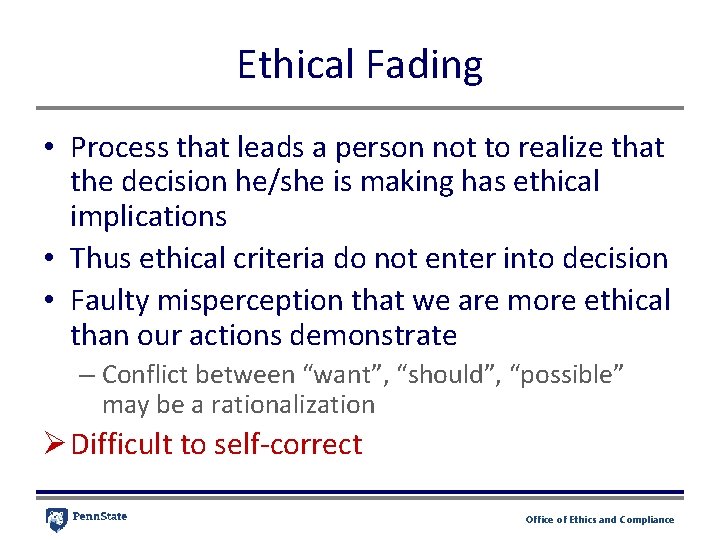
Ethical Fading • Process that leads a person not to realize that the decision he/she is making has ethical implications • Thus ethical criteria do not enter into decision • Faulty misperception that we are more ethical than our actions demonstrate – Conflict between “want”, “should”, “possible” may be a rationalization Ø Difficult to self-correct Office of Ethics and Compliance
Evaluating Decisions • • Rule of Universality Publicity Test Parenting Test Golden Rule mutants Office of Ethics and Compliance
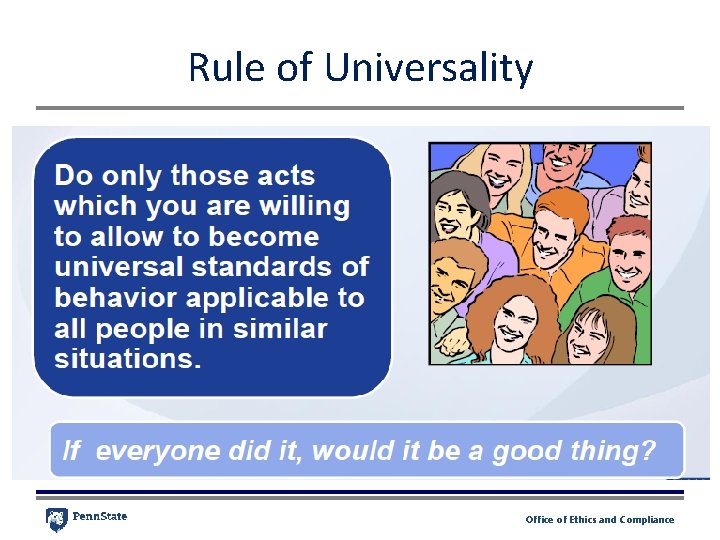
Rule of Universality Office of Ethics and Compliance
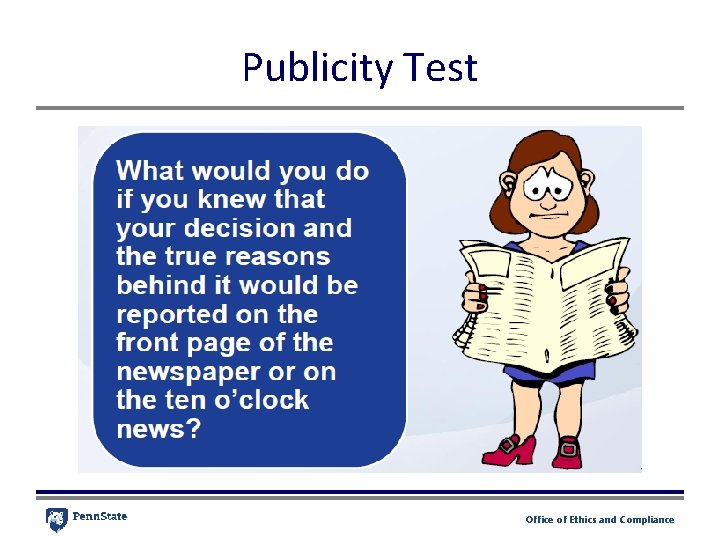
Publicity Test Office of Ethics and Compliance
Parenting Test • What would you do if you knew your kid was looking over your shoulder? • What would you advise your child to do? • What would you hope your child would do? • What would the kind of person you want your child to date or marry do? Office of Ethics and Compliance
Golden Rule Mutants Golden Rule Do unto others as you would have them do unto you. Rule of Revenge • Do unto others as they have done unto you. Rule of Self-Defense • Do unto others before they do unto you. Rule of Investment • Do unto others so they will do unto you. Office of Ethics and Compliance
Ethical Dilemma An undeclared sophomore who loves her introductory psychology course is intrigued by the work of a clinical psychologist. She has no prior exposure to this field other than what she has learned from her course and possibly some media exposure. She decides to ask her adviser about the work of a clinical psychologist, as well as what she can do to become one. The adviser, perceiving the student has just expressed her career goals, discusses the various work clinical psychologists do and tells her that if she desires to engage in professional practice, she needs to complete the psychology bachelor’s degree, continue on to a doctoral program, and become licensed as a psychologist. The student then asks the adviser if she will be able to obtain a job with a bachelor’s degree in psychology. The adviser says, “Of course! There are plenty of jobs you can get with this degree. ” The adviser continues by providing some specific examples of jobs that students may obtain. Office of Ethics and Compliance
ETHICAL CHALLENGES IN ADVISING Office of Ethics and Compliance
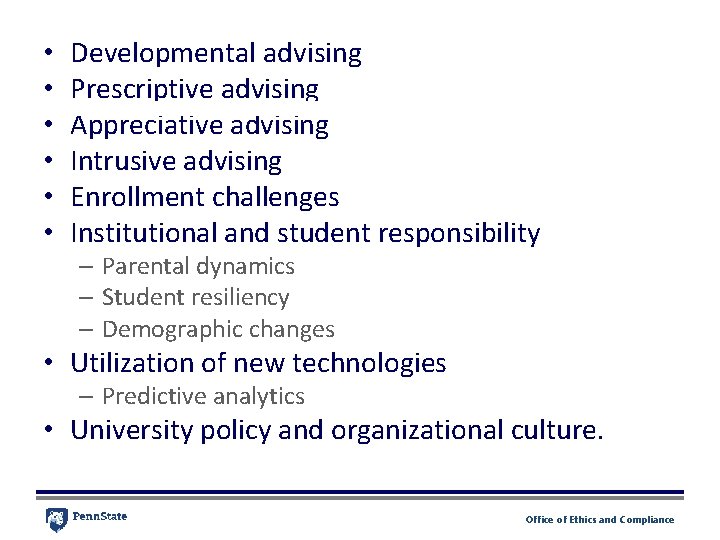
• • • Developmental advising Prescriptive advising Appreciative advising Intrusive advising Enrollment challenges Institutional and student responsibility – Parental dynamics – Student resiliency – Demographic changes • Utilization of new technologies – Predictive analytics • University policy and organizational culture. Office of Ethics and Compliance
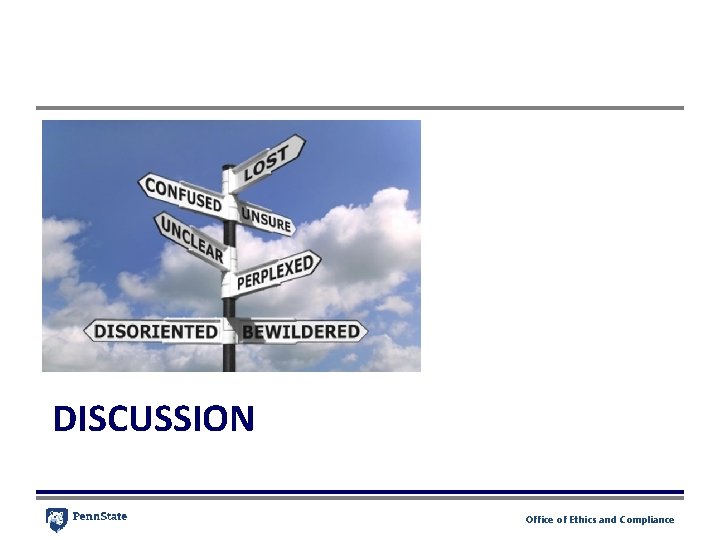
DISCUSSION Office of Ethics and Compliance
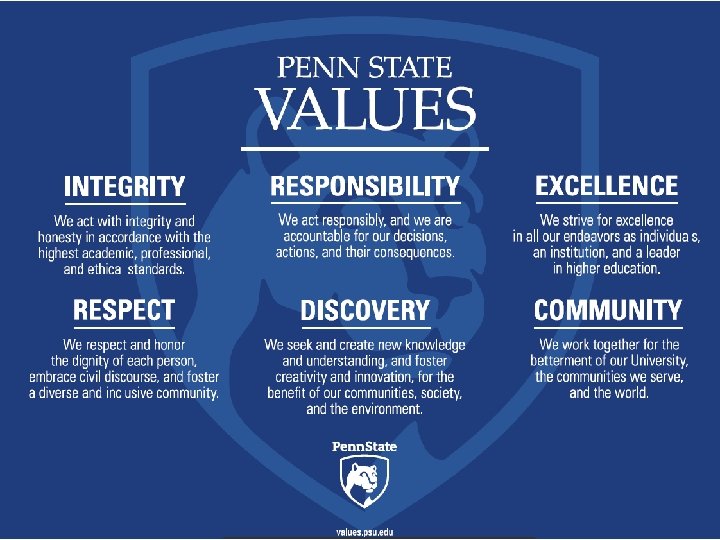
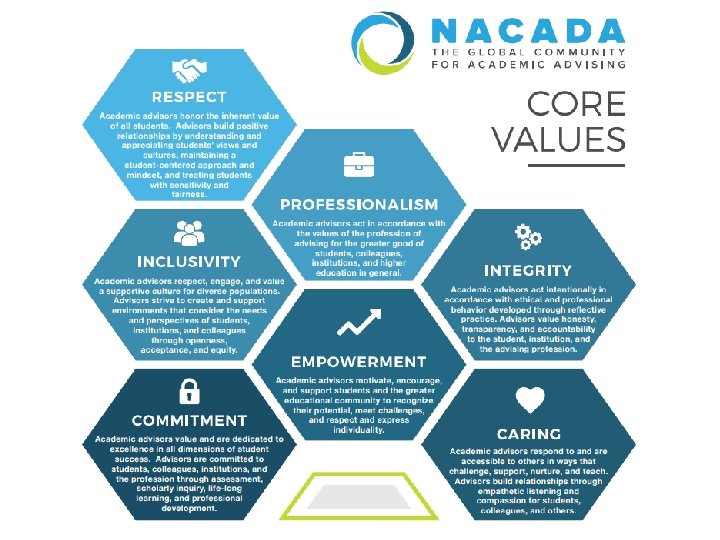
Resources • NACADA Ethics resource links: – https: //www. nacada. ksu. edu/Resources/Clearing house/View-Articles/Ethics-resource-links. aspx • Penn State Values resources: – https: //values. psu. edu • NACADA “Ethical Issues in Academic Advising” seminar: – https: //www. youtube. com/watch? v=Iiz. CPxqfg. AM Office of Ethics and Compliance
THANK YOU! Office of Ethics and Compliance