NEXT GENERATION NETWORK 1 NextG networks Definitions Realization


- Slides: 24
NEXT GENERATION NETWORK 1
Next-G networks: Definitions • Realization of Convergence of the telecommunication networks • Using Distributed Control Architecture instead of Traditional common control architecture 2
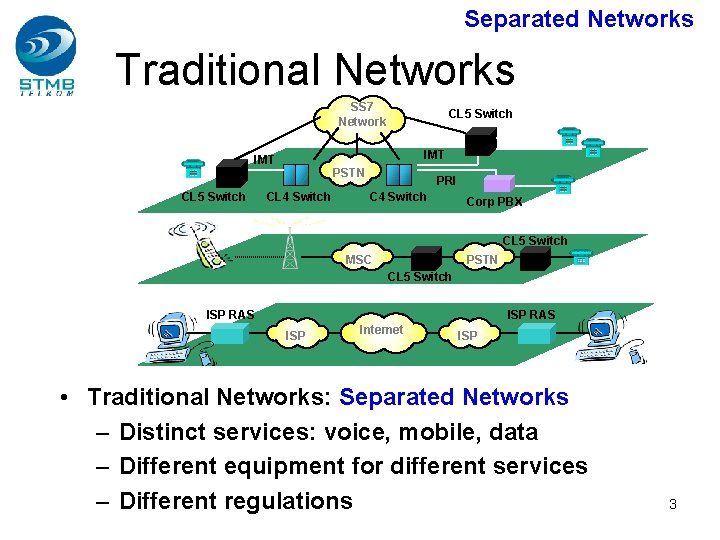
Separated Networks Traditional Networks SS 7 Network IMT CL 5 Switch PSTN CL 4 Switch PRI C 4 Switch Corp PBX CL 5 Switch MSC PSTN CL 5 Switch ISP RAS ISP Internet ISP • Traditional Networks: Separated Networks – Distinct services: voice, mobile, data – Different equipment for different services – Different regulations 3
Separated Networks Traditional Networks Access Switch DLC Central Office Switch PSTN Point of Presence PSPDN • PSTN uses a circuit-switched network to carry voice – Proven, reliable, Qo. S, feature rich, intelligence is in network • PSPDN uses a packet-switched network to carry data – Open interfaces, flexible bandwidth, lower costs, 4 intelligence is in CPE
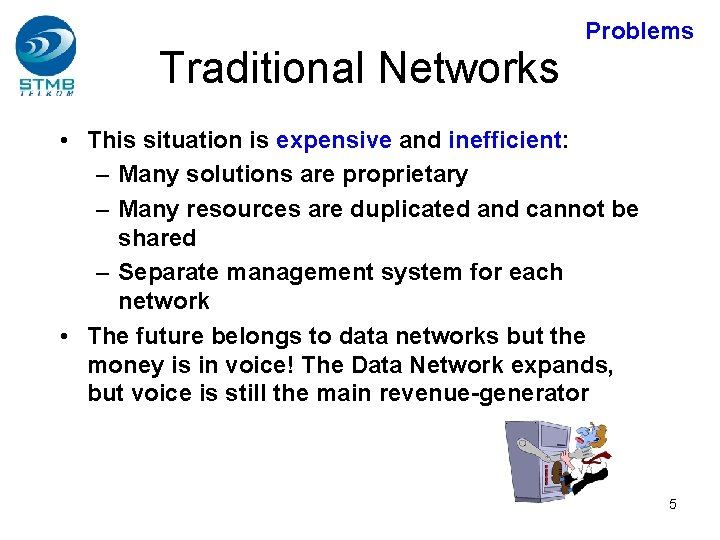
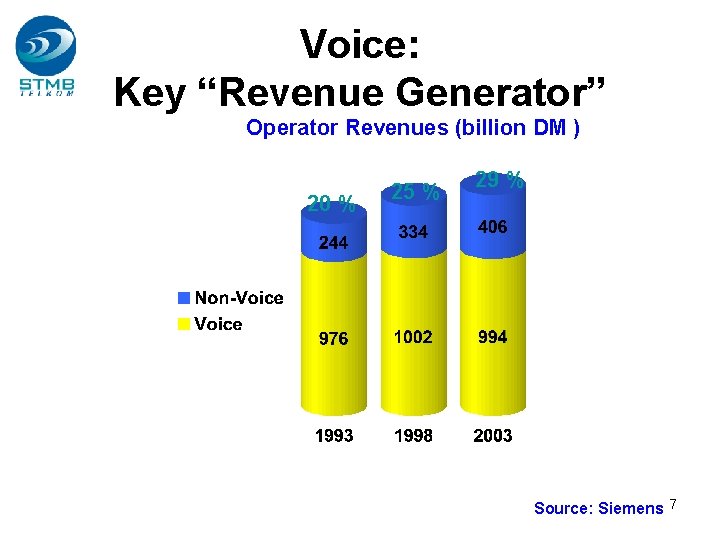
Traditional Networks Problems • This situation is expensive and inefficient: – Many solutions are proprietary – Many resources are duplicated and cannot be shared – Separate management system for each network • The future belongs to data networks but the money is in voice! The Data Network expands, but voice is still the main revenue-generator 5
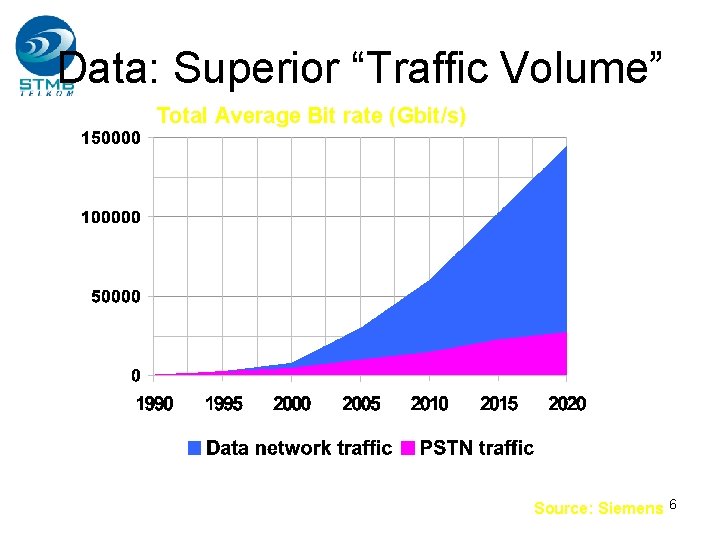
Data: Superior “Traffic Volume” Total Average Bit rate (Gbit/s) Source: Siemens 6
Voice: Key “Revenue Generator” Operator Revenues (billion DM ) 20 % 25 % 29 % Source: Siemens 7
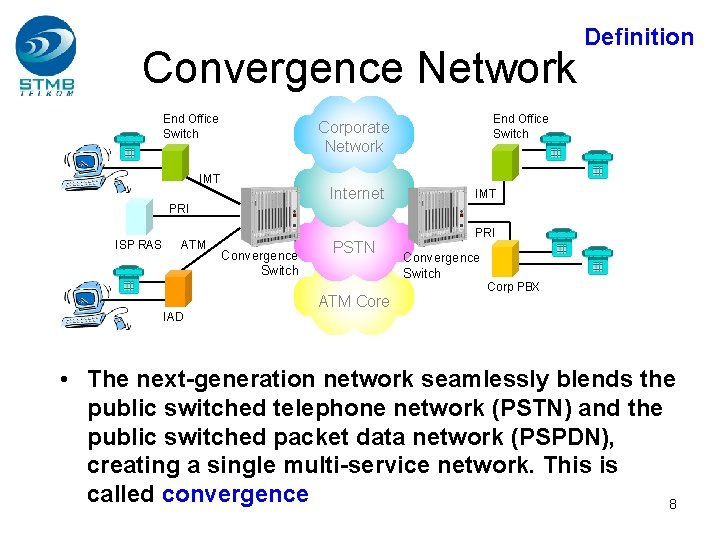
Convergence Network End Office Switch Internet PRI ISP RAS ATM IAD End Office Switch Corporate Network IMT Convergence Switch PSTN ATM Core Definition IMT PRI Convergence Switch Corp PBX • The next-generation network seamlessly blends the public switched telephone network (PSTN) and the public switched packet data network (PSPDN), creating a single multi-service network. This is called convergence 8
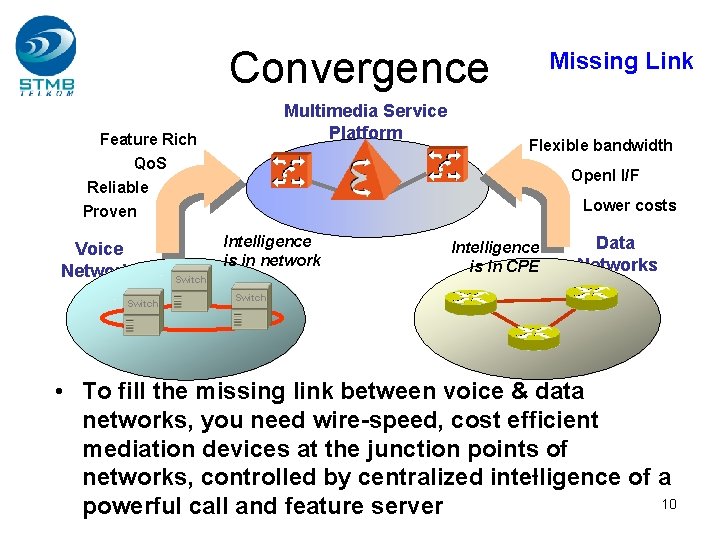
Convergence Multimedia Service Platform Feature Rich Qo. S Reliable Proven Voice Networks Switch Missing Link Flexible bandwidth Open. I I/F Lower costs Intelligence is in network Switch Intelligence is in CPE Data Networks Switch • To fill the missing link between voice & data networks, you need wire-speed, cost efficient mediation devices at the junction points of. . . networks, controlled by centralized intelligence of a 10 powerful call and feature server
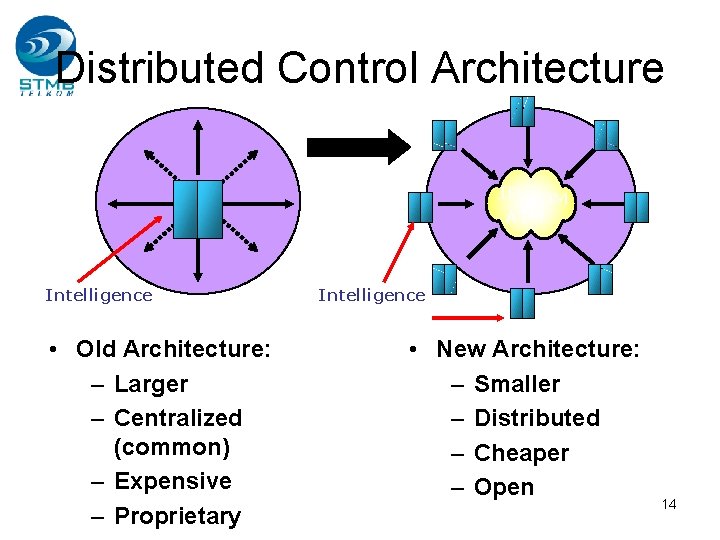
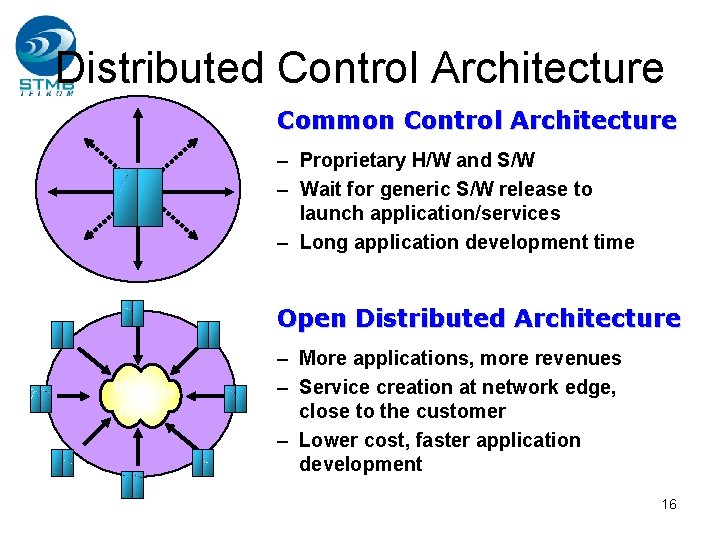
Distributed Control Architecture IP TDM ATM Intelligence • Old Architecture: – Larger – Centralized (common) – Expensive – Proprietary Intelligence • New Architecture: – Smaller – Distributed – Cheaper – Open 14
Distributed Control Architecture Common Control Architecture – Proprietary H/W and S/W – Wait for generic S/W release to launch application/services – Long application development time Open Distributed Architecture IP TDM ATM – More applications, more revenues – Service creation at network edge, close to the customer – Lower cost, faster application development 16
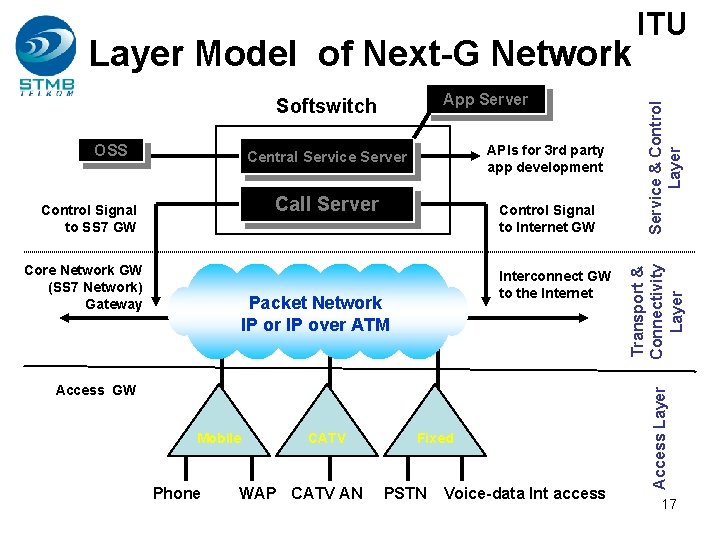
APIs for 3 rd party app development Central Service Server Call Server Control Signal to SS 7 GW Core Network GW (SS 7 Network) Gateway Control Signal to Internet GW Interconnect GW to the Internet Packet Network IP or IP over ATM Access GW Mobile Phone CATV WAP CATV AN Fixed PSTN Voice-data Int access Access Layer OSS Transport & Connectivity Layer App Server Softswitch Service & Control Layer Model of Next-G Network ITU 17
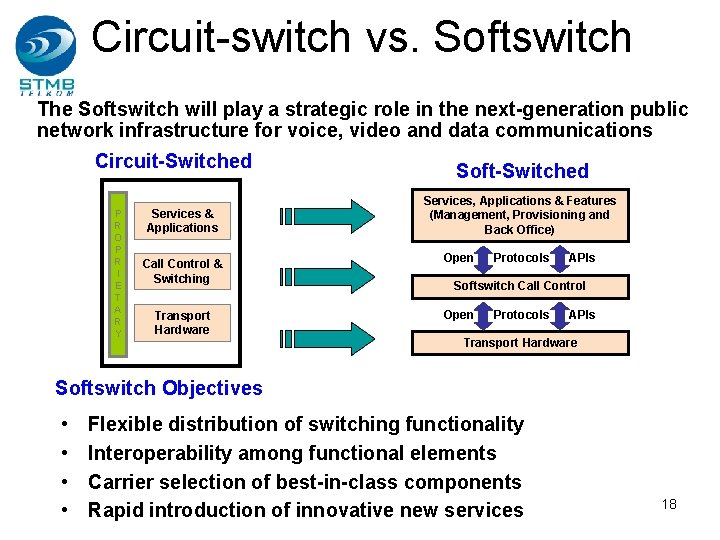
Circuit-switch vs. Softswitch The Softswitch will play a strategic role in the next-generation public network infrastructure for voice, video and data communications Circuit-Switched P R O P R I E T A R Y Services & Applications Soft-Switched Services, Applications & Features (Management, Provisioning and Back Office) Call Control & Switching Open Transport Hardware Open Protocols APIs Softswitch Call Control Protocols APIs Transport Hardware Softswitch Objectives • • Flexible distribution of switching functionality Interoperability among functional elements Carrier selection of best-in-class components Rapid introduction of innovative new services 18
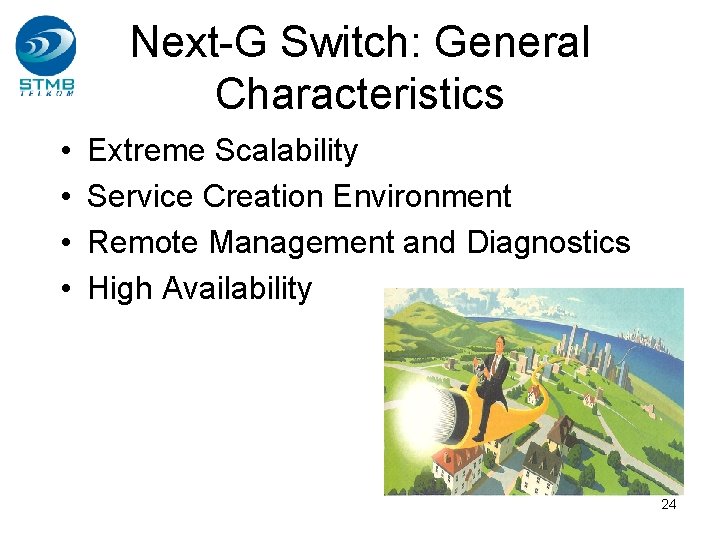
Next-G Switch: General Characteristics • • Extreme Scalability Service Creation Environment Remote Management and Diagnostics High Availability 24
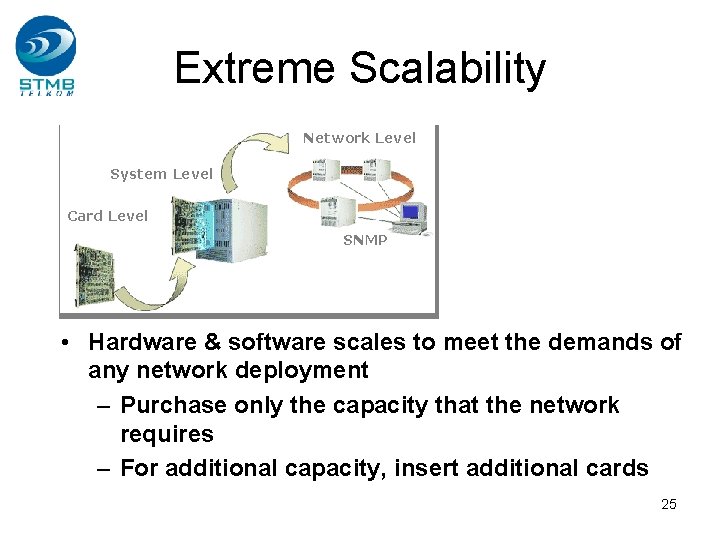
Extreme Scalability Network Level System Level Card Level SNMP • Hardware & software scales to meet the demands of any network deployment – Purchase only the capacity that the network requires – For additional capacity, insert additional cards 25
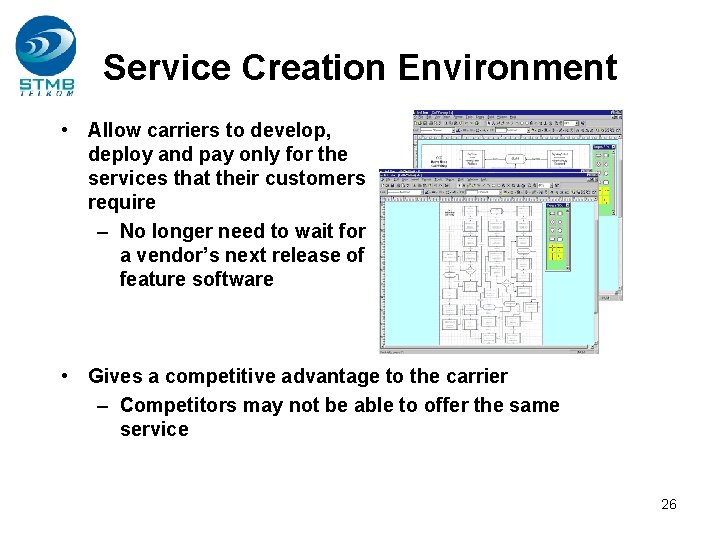
Service Creation Environment • Allow carriers to develop, deploy and pay only for the services that their customers require – No longer need to wait for a vendor’s next release of feature software • Gives a competitive advantage to the carrier – Competitors may not be able to offer the same service 26
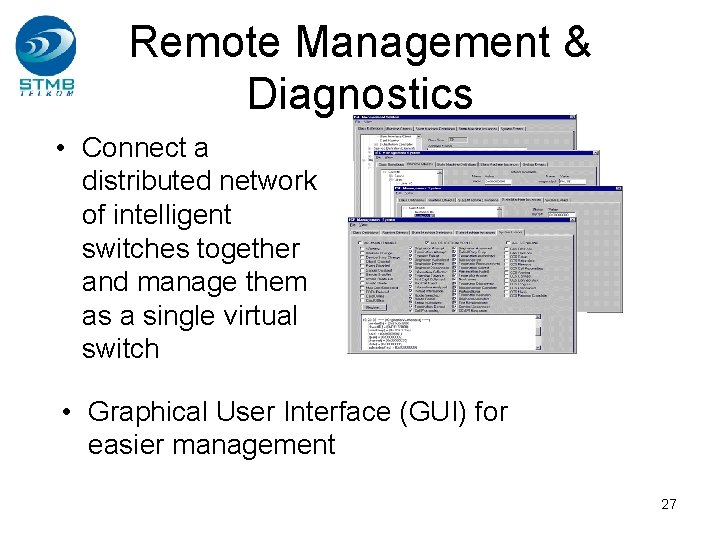
Remote Management & Diagnostics • Connect a distributed network of intelligent switches together and manage them as a single virtual switch • Graphical User Interface (GUI) for easier management 27
Highest Availability • Hot-swappable, fault-tolerant system – Switch does not have to be brought down for hardware upgrades – New software can be uploaded and activated while the switch is in service • Zero downtime 28
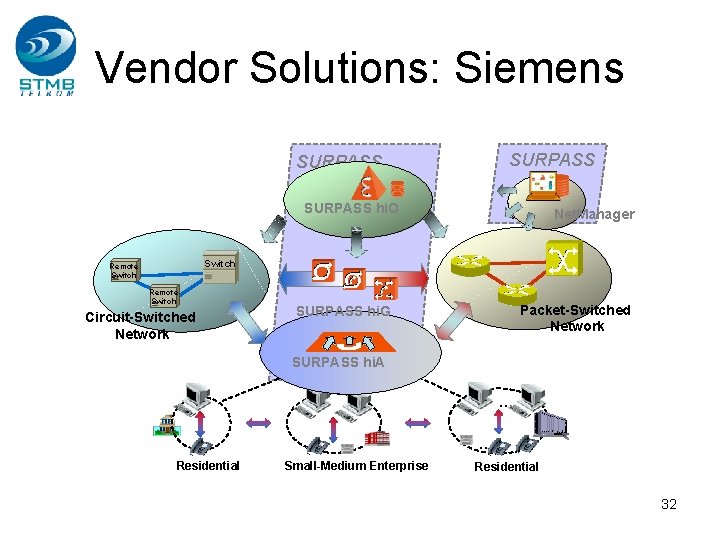
Vendor Solutions: Siemens SURPASS hi. Q Net. Manager Switch Remote Switch Circuit-Switched Network Packet-Switched Network SURPASS hi. G SURPASS hi. A . . . Residential Small-Medium Enterprise Residential 32
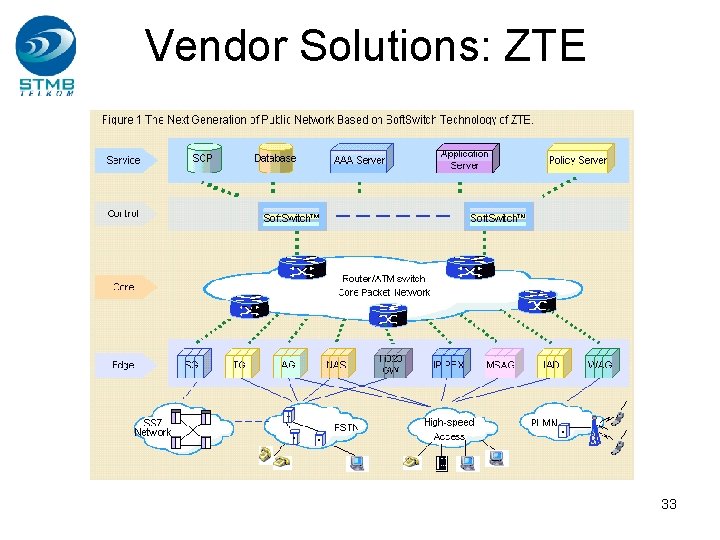
Vendor Solutions: ZTE 33
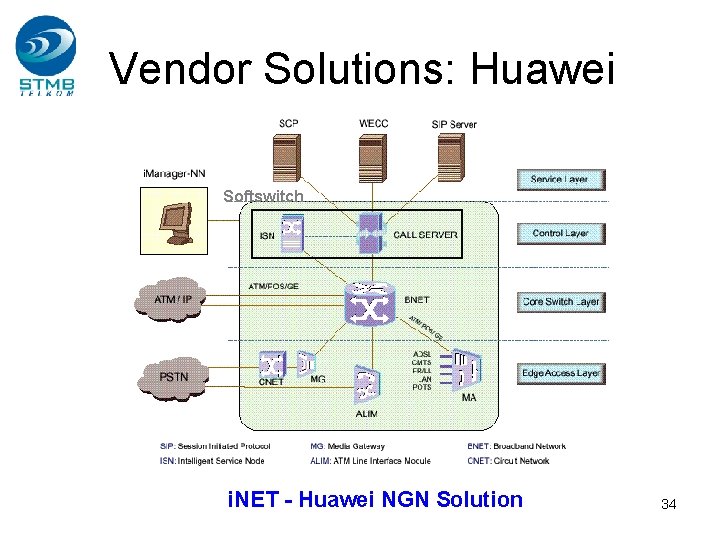
Vendor Solutions: Huawei Softswitch i. NET - Huawei NGN Solution 34
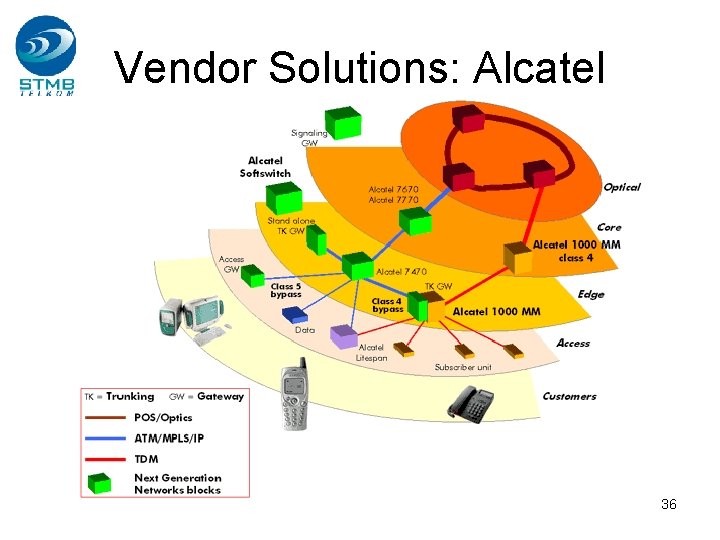
Vendor Solutions: Alcatel 36
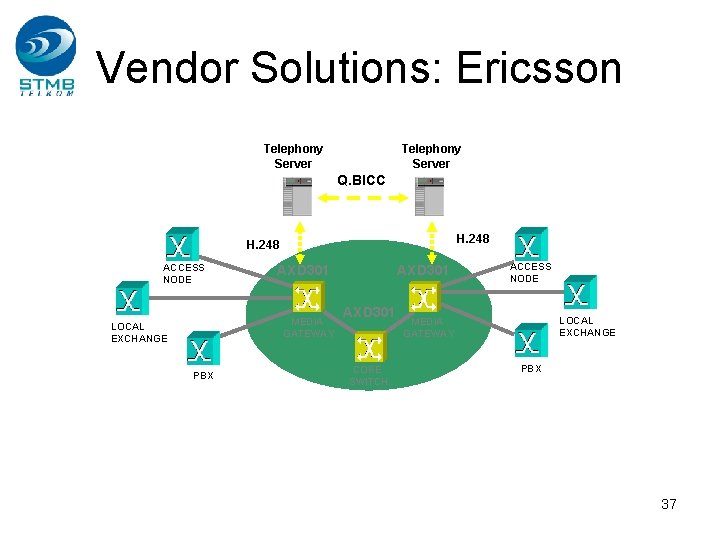
Vendor Solutions: Ericsson Telephony Server Q. BICC H. 248 ACCESS NODE AXD 301 MEDIA GATEWAY LOCAL EXCHANGE PBX AXD 301 CORE SWITCH ACCESS NODE LOCAL EXCHANGE MEDIA GATEWAY PBX 37
Summary • The next-generation network seamlessly blends the public switched telephone network (PSTN) and the public switched packet data network (PSPDN), creating a single multi-service network. • Rather than large, centralized, proprietary switch infrastructures, this next-generation architecture pushes central-office (CO) functionality to the edge of the network. • The result is a distributed network infrastructure that leverages new, open technologies to reduce the cost of market entry dramatically, increase flexibility, and accommodate both circuit-switched voice and packet-switched data. 41