NEUROLOGIC ASSESSMENT Denise Coffey MSN RN Structure and


- Slides: 28
NEUROLOGIC ASSESSMENT Denise Coffey MSN, RN
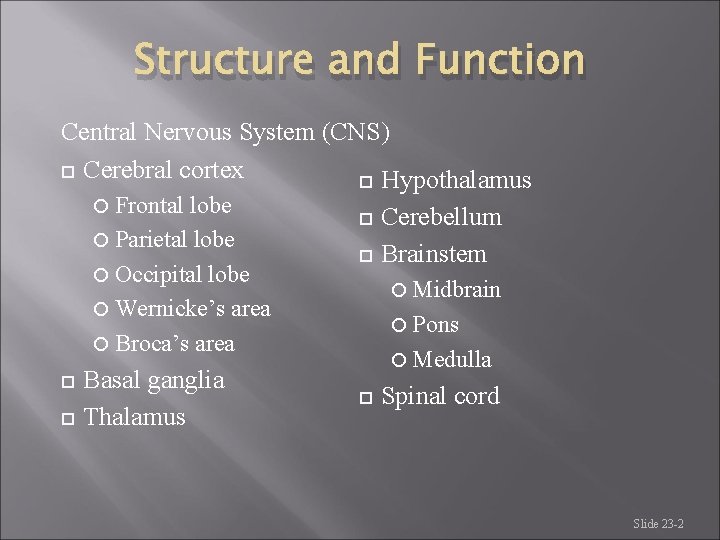
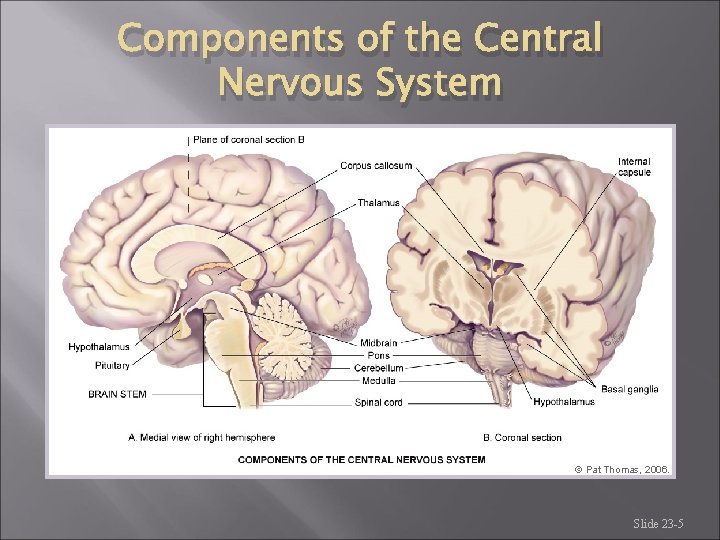
Structure and Function Central Nervous System (CNS) Cerebral cortex Hypothalamus Frontal lobe Parietal lobe Occipital lobe Wernicke’s area Broca’s area Basal ganglia Thalamus Cerebellum Brainstem Midbrain Pons Medulla Spinal cord Slide 23 -2
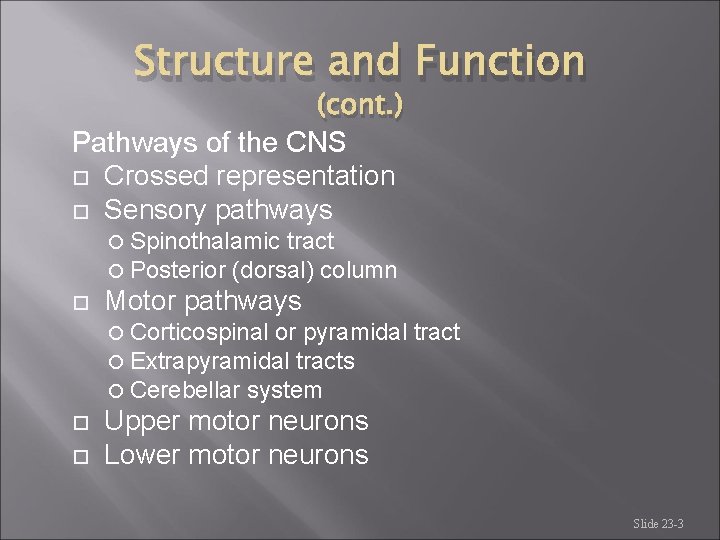
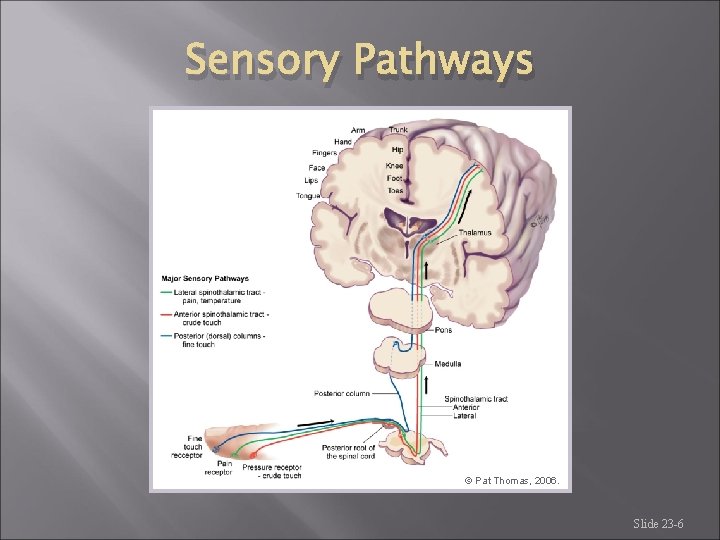
Structure and Function (cont. ) Pathways of the CNS Crossed representation Sensory pathways Spinothalamic tract Posterior (dorsal) column Motor pathways Corticospinal or pyramidal Extrapyramidal tracts Cerebellar system tract Upper motor neurons Lower motor neurons Slide 23 -3
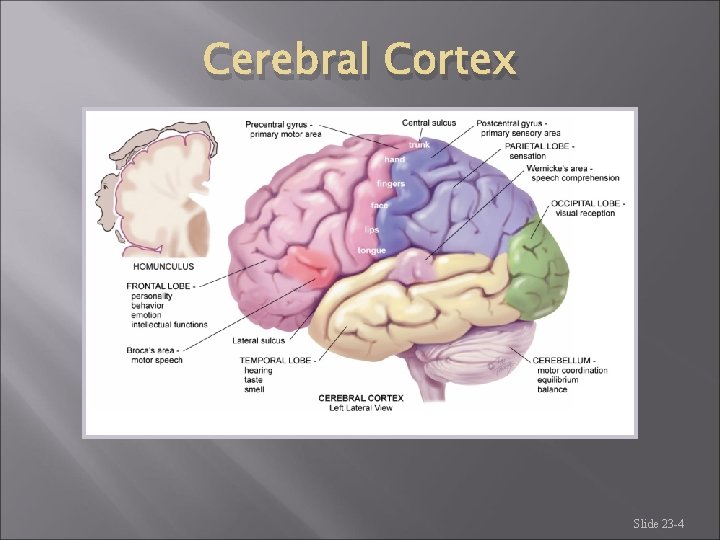
Cerebral Cortex Slide 23 -4
Components of the Central Nervous System [PRODUCTION NOTE: Please insert Figure 23 -2 (from Jarvis Physical Examination and Health Assessment, 5 e, ISBN: 978 -1 -4160 -3243 -4)] © Pat Thomas, 2006. Slide 23 -5
Sensory Pathways © Pat Thomas, 2006. Slide 23 -6
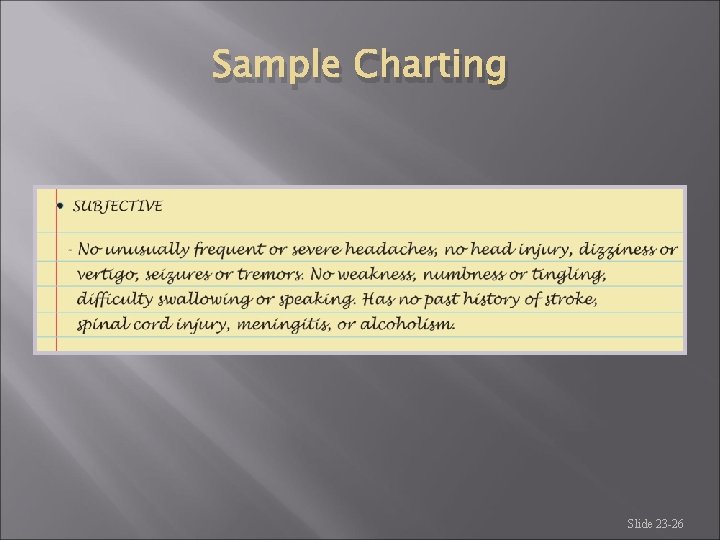
Subjective Data— Health History Questions Headache Head injury Dizziness/vertigo Seizures Tremors Weakness Slide 23 -7
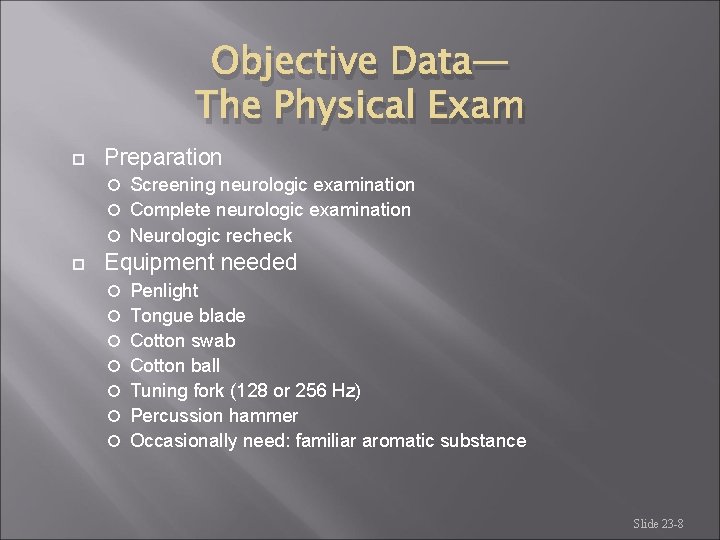
Objective Data— The Physical Exam Preparation Screening neurologic examination Complete neurologic examination Neurologic recheck Equipment needed Penlight Tongue blade Cotton swab Cotton ball Tuning fork (128 or 256 Hz) Percussion hammer Occasionally need: familiar aromatic substance Slide 23 -8
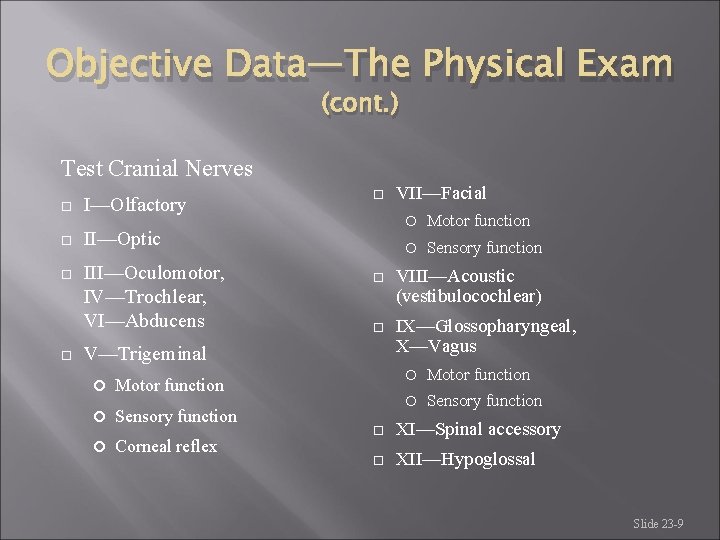
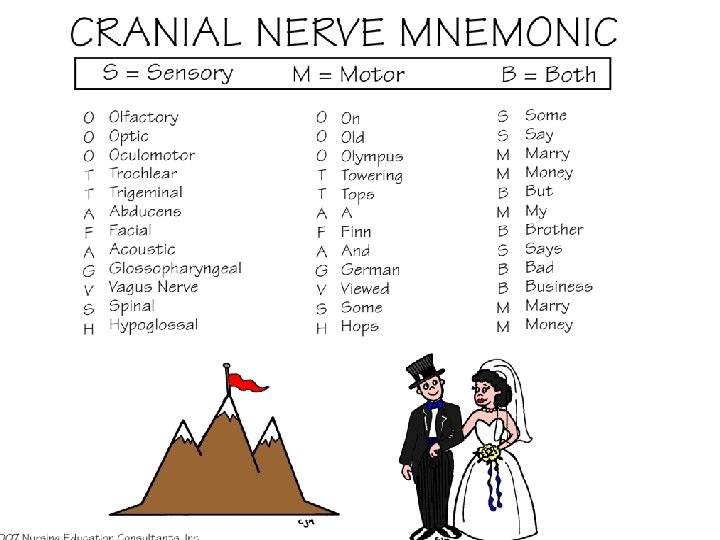
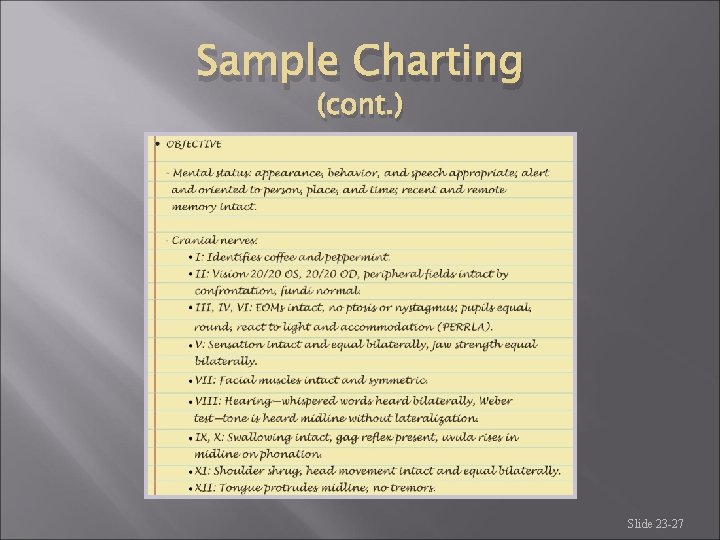
Objective Data—The Physical Exam (cont. ) Test Cranial Nerves I—Olfactory II—Optic III—Oculomotor, IV—Trochlear, VI—Abducens Motor function Sensory function Corneal reflex Motor function Sensory function VIII—Acoustic (vestibulocochlear) IX—Glossopharyngeal, X—Vagus V—Trigeminal VII—Facial Motor function Sensory function XI—Spinal accessory XII—Hypoglossal Slide 23 -9
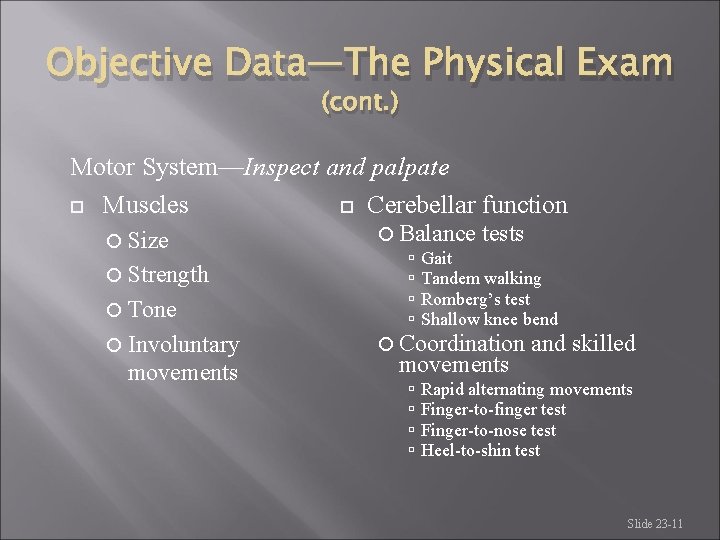
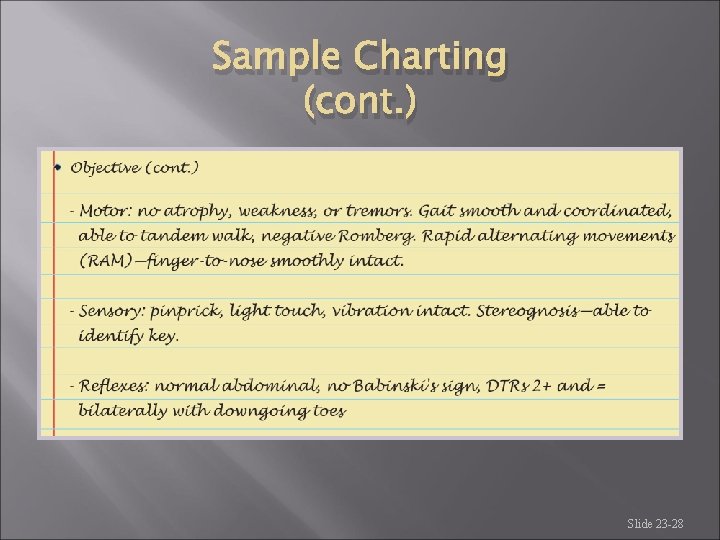
Objective Data—The Physical Exam (cont. ) Motor System—Inspect and palpate Muscles Cerebellar function Size Strength Tone Involuntary movements Balance tests Gait Tandem walking Romberg’s test Shallow knee bend Coordination movements and skilled Rapid alternating movements Finger-to-finger test Finger-to-nose test Heel-to-shin test Slide 23 -11
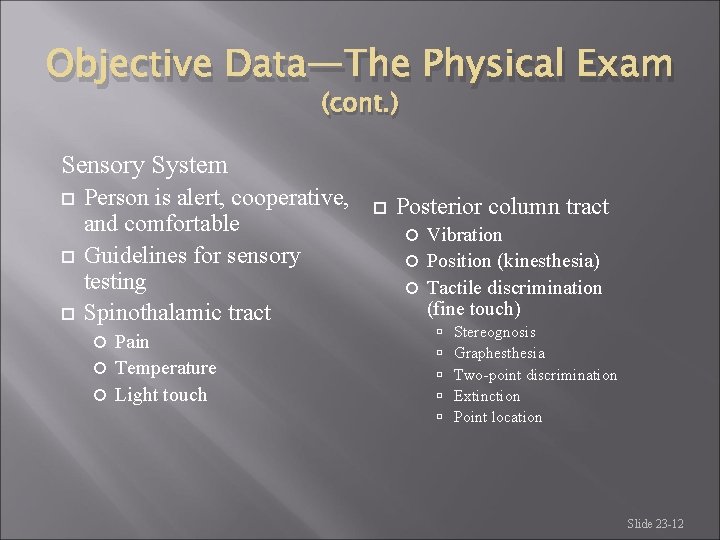
Objective Data—The Physical Exam (cont. ) Sensory System Person is alert, cooperative, and comfortable Guidelines for sensory testing Spinothalamic tract Pain Temperature Light touch Posterior column tract Vibration Position (kinesthesia) Tactile discrimination (fine touch) Stereognosis Graphesthesia Two-point discrimination Extinction Point location Slide 23 -12
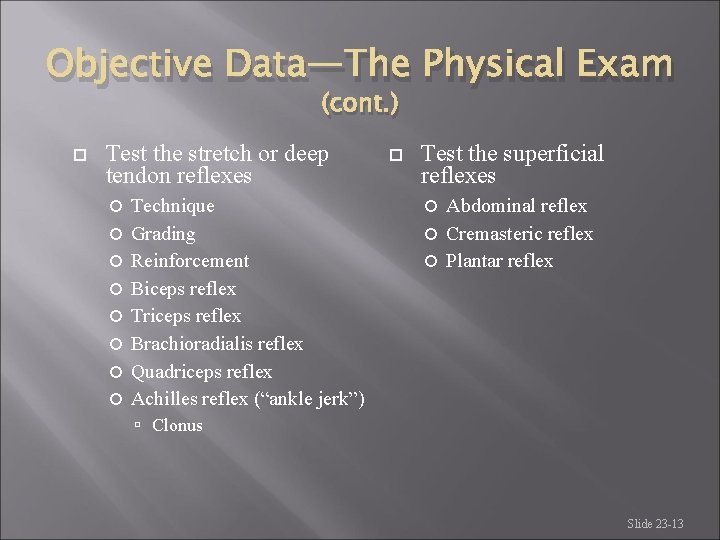
Objective Data—The Physical Exam (cont. ) Test the stretch or deep tendon reflexes Technique Grading Reinforcement Biceps reflex Triceps reflex Brachioradialis reflex Quadriceps reflex Achilles reflex (“ankle jerk”) Test the superficial reflexes Abdominal reflex Cremasteric reflex Plantar reflex Clonus Slide 23 -13
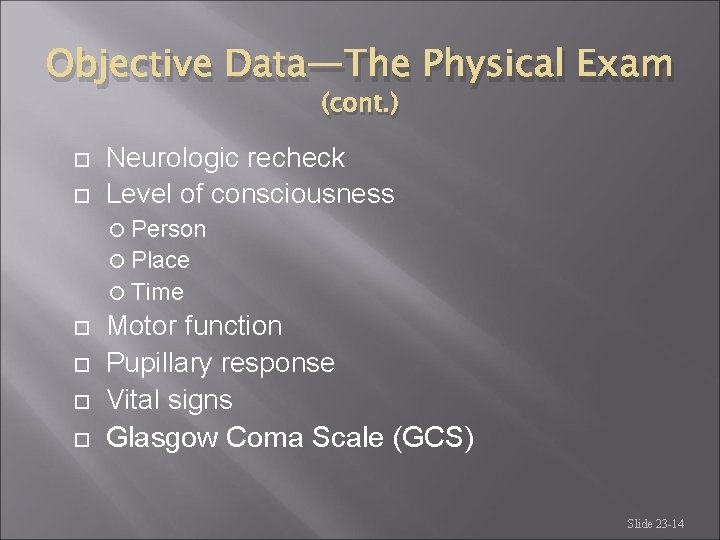
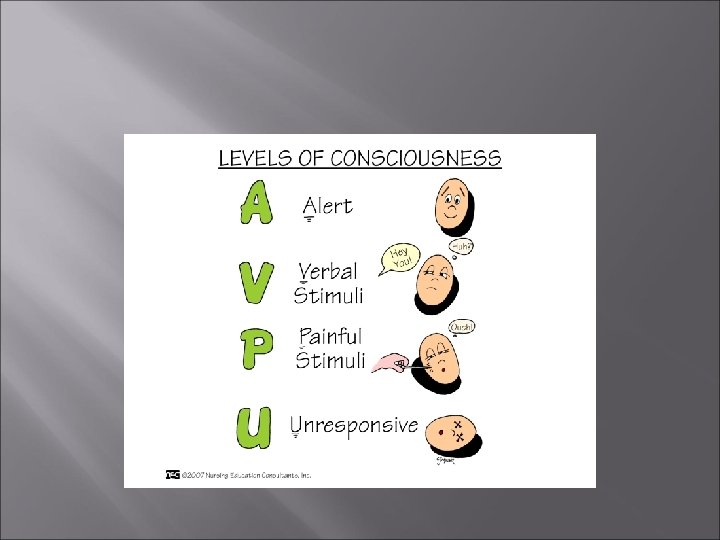
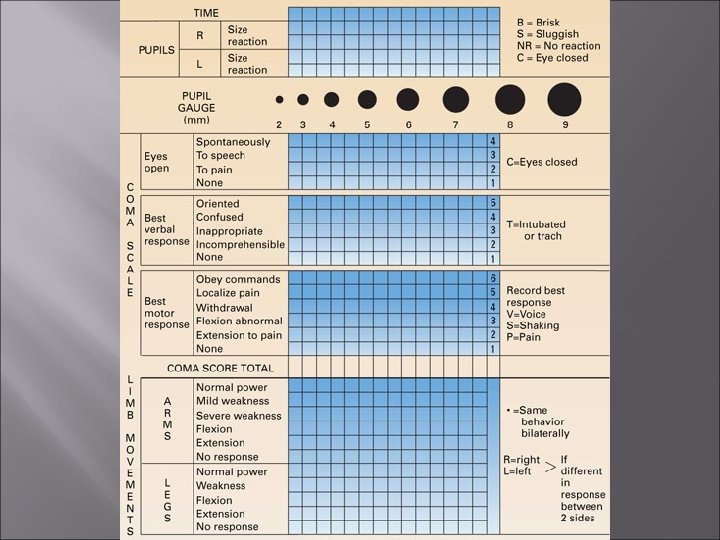
Objective Data—The Physical Exam (cont. ) Neurologic recheck Level of consciousness Person Place Time Motor function Pupillary response Vital signs Glasgow Coma Scale (GCS) Slide 23 -14
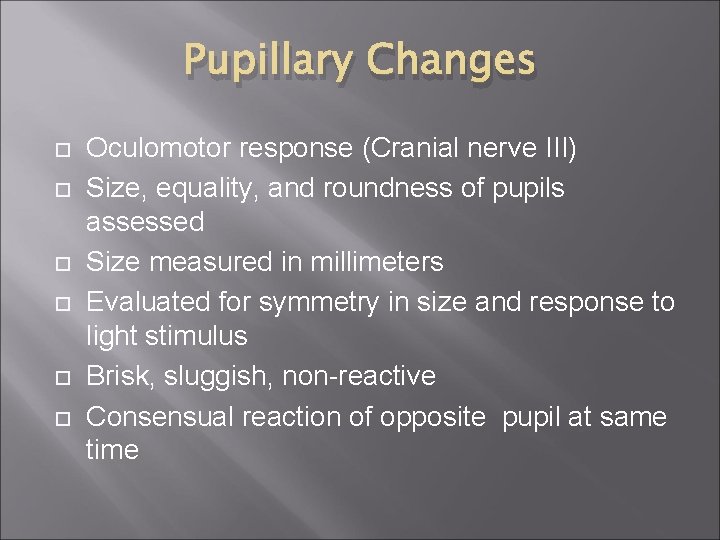
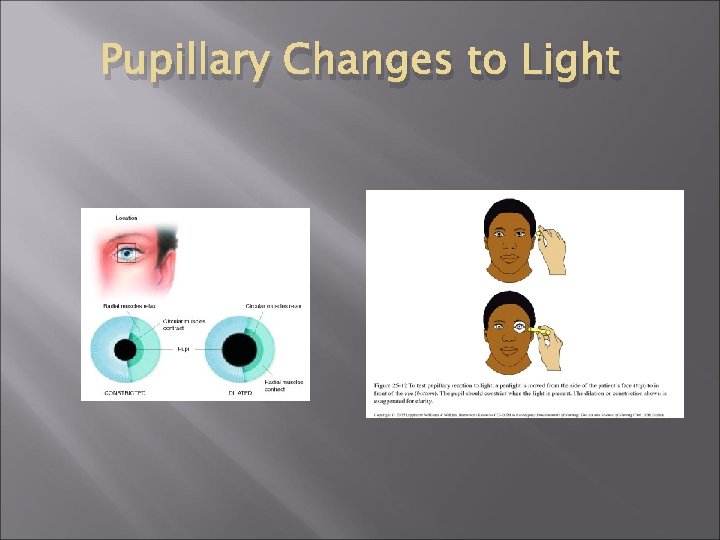
Pupillary Changes Oculomotor response (Cranial nerve III) Size, equality, and roundness of pupils assessed Size measured in millimeters Evaluated for symmetry in size and response to light stimulus Brisk, sluggish, non-reactive Consensual reaction of opposite pupil at same time
Pupillary Changes to Light
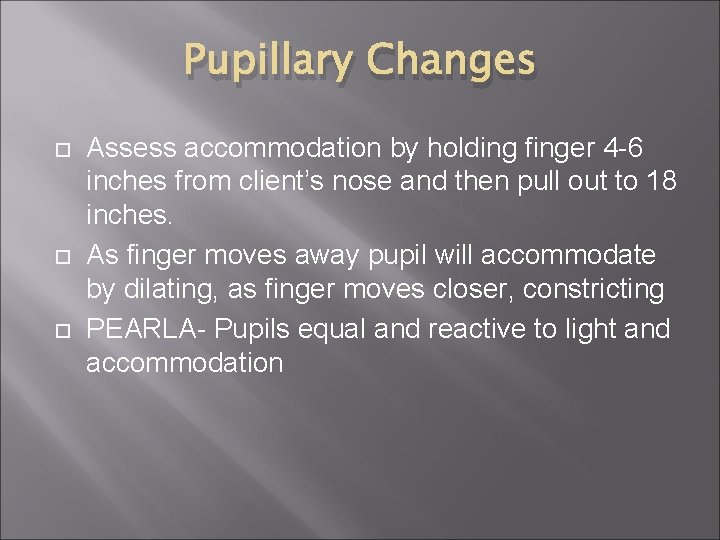
Pupillary Changes Assess accommodation by holding finger 4 -6 inches from client’s nose and then pull out to 18 inches. As finger moves away pupil will accommodate by dilating, as finger moves closer, constricting PEARLA- Pupils equal and reactive to light and accommodation
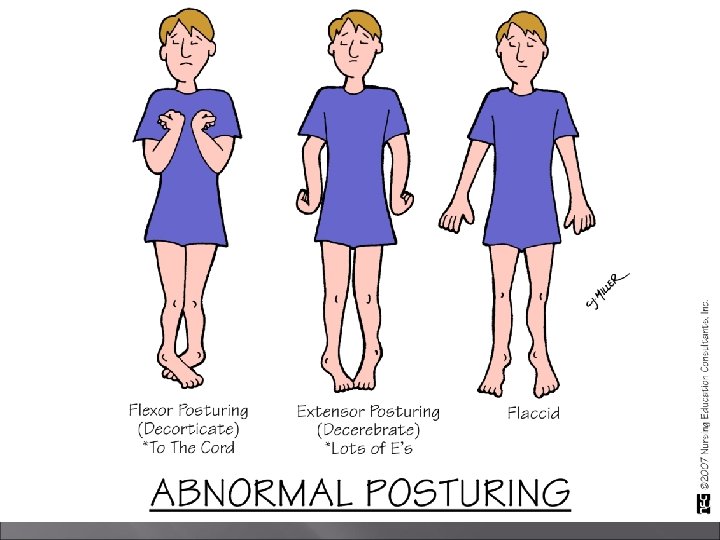
Motor Function Ability to follow commands Muscle tone Muscle strength Coordination Balance (Romberg test) Posturing (Decorticate, Decerebrate)
Sensory Function Tactile sensation Pain Temperature Vibratory sensation Tactile discrimination
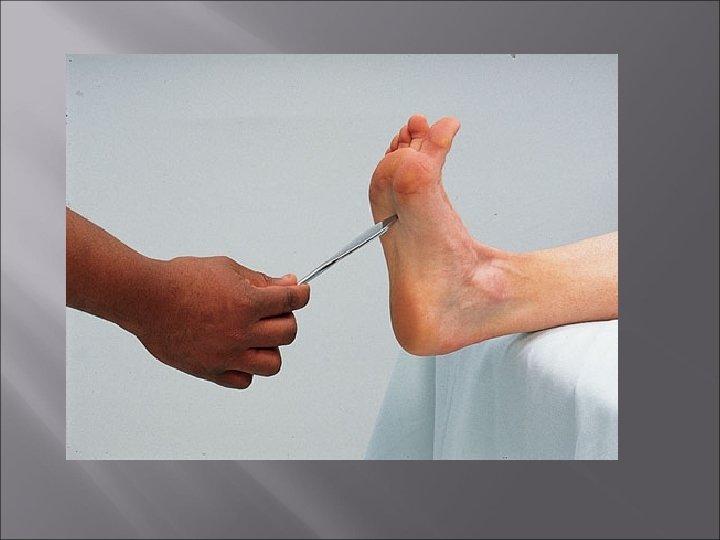
Reflexes Superficial Deep tendon Biceps Triceps Patellar Achilles Plantar (Babinski Response)
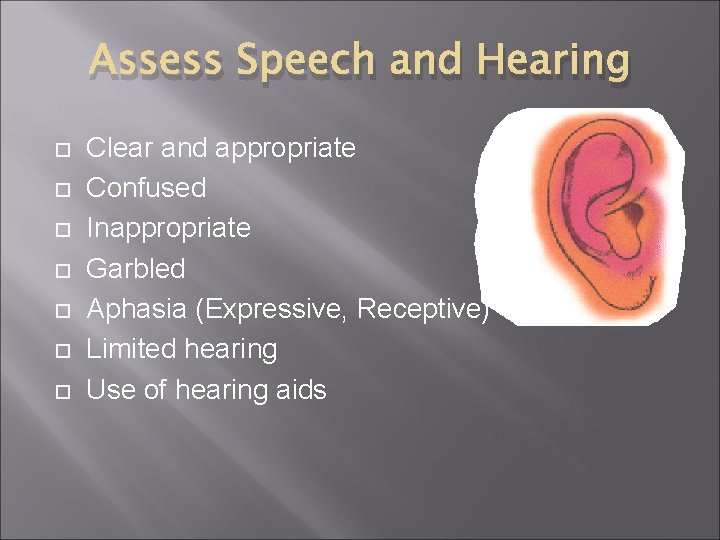
Assess Speech and Hearing Clear and appropriate Confused Inappropriate Garbled Aphasia (Expressive, Receptive) Limited hearing Use of hearing aids
Sample Charting Slide 23 -26
Sample Charting (cont. ) Slide 23 -27
Sample Charting (cont. ) Slide 23 -28