Neonatal Therapeutic Hypothermia Case Report Discussion Dr Julia

- Slides: 22
Neonatal Therapeutic Hypothermia: Case Report & Discussion Dr Julia Uffindell Consultant Neonatologist
Cooling 'cure' averts infant brain damage Hi-tech 'ice pack' helps to protect newborns starved of oxygen through suffocation Cooling ‘cuts baby brain damage’ Volume 361(14): 1349 -1358. October 1, 2009 Moderate Hypothermia to Treat Perinatal Asphyxial Encephalopathy
� Case Report – highlighting use of NPEU TOBY Register criteria and guidelines for Cooling � Discussion about rationale and evidence for Therapeutic Neonatal Hypothermia
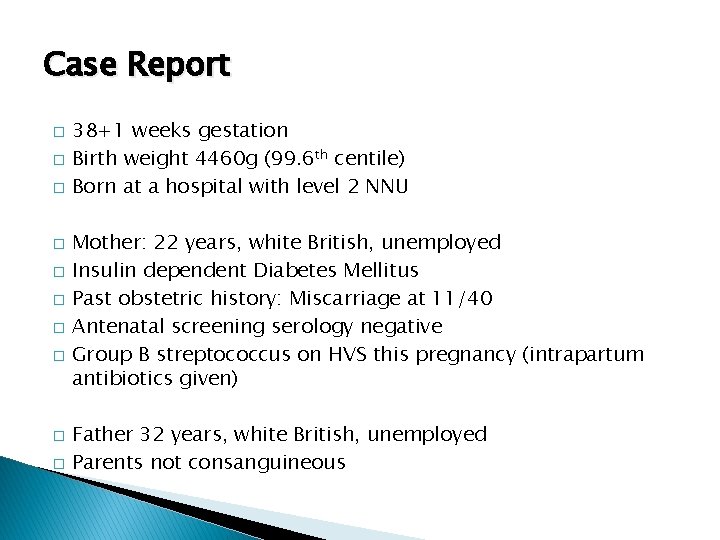
Case Report � � � � � 38+1 weeks gestation Birth weight 4460 g (99. 6 th centile) Born at a hospital with level 2 NNU Mother: 22 years, white British, unemployed Insulin dependent Diabetes Mellitus Past obstetric history: Miscarriage at 11/40 Antenatal screening serology negative Group B streptococcus on HVS this pregnancy (intrapartum antibiotics given) Father 32 years, white British, unemployed Parents not consanguineous
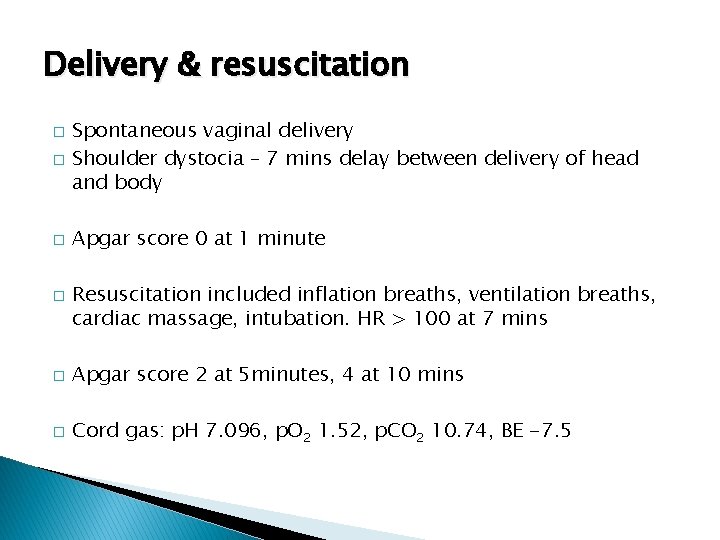
Delivery & resuscitation � Spontaneous vaginal delivery Shoulder dystocia – 7 mins delay between delivery of head and body � Apgar score 0 at 1 minute � � Resuscitation included inflation breaths, ventilation breaths, cardiac massage, intubation. HR > 100 at 7 mins � Apgar score 2 at 5 minutes, 4 at 10 mins � Cord gas: p. H 7. 096, p. O 2 1. 52, p. CO 2 10. 74, BE -7. 5
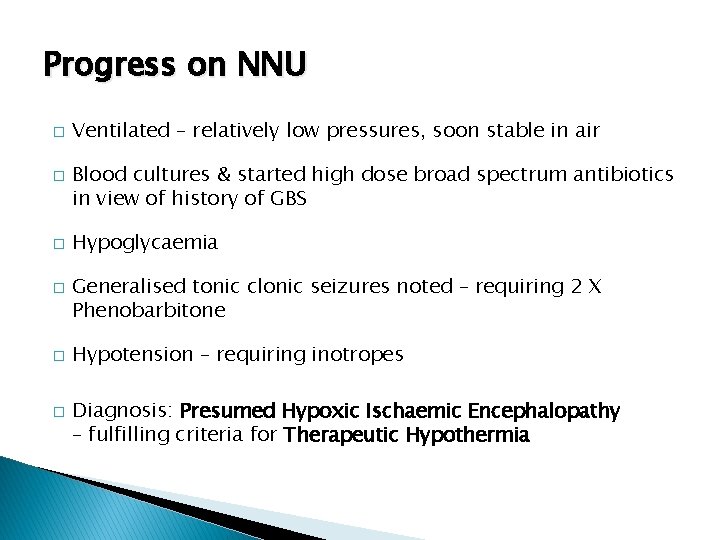
Progress on NNU � � � Ventilated – relatively low pressures, soon stable in air Blood cultures & started high dose broad spectrum antibiotics in view of history of GBS Hypoglycaemia Generalised tonic clonic seizures noted – requiring 2 X Phenobarbitone Hypotension – requiring inotropes Diagnosis: Presumed Hypoxic Ischaemic Encephalopathy – fulfilling criteria for Therapeutic Hypothermia
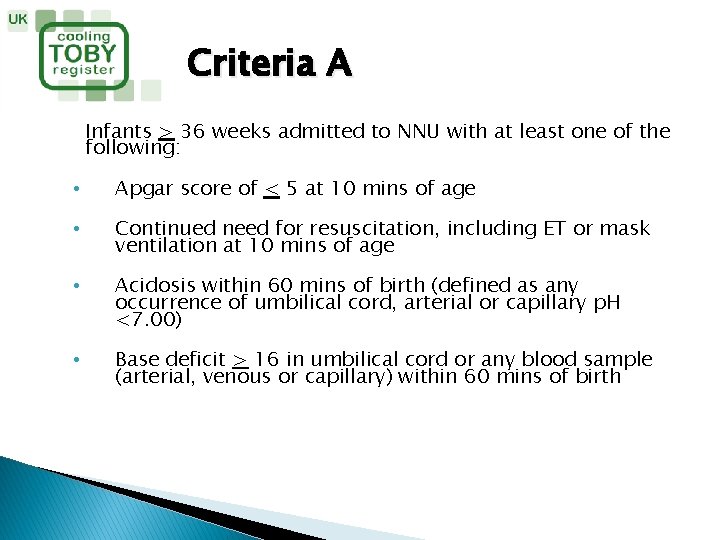
Criteria A Infants > 36 weeks admitted to NNU with at least one of the following: • Apgar score of < 5 at 10 mins of age • Continued need for resuscitation, including ET or mask ventilation at 10 mins of age • Acidosis within 60 mins of birth (defined as any occurrence of umbilical cord, arterial or capillary p. H <7. 00) • Base deficit > 16 in umbilical cord or any blood sample (arterial, venous or capillary) within 60 mins of birth
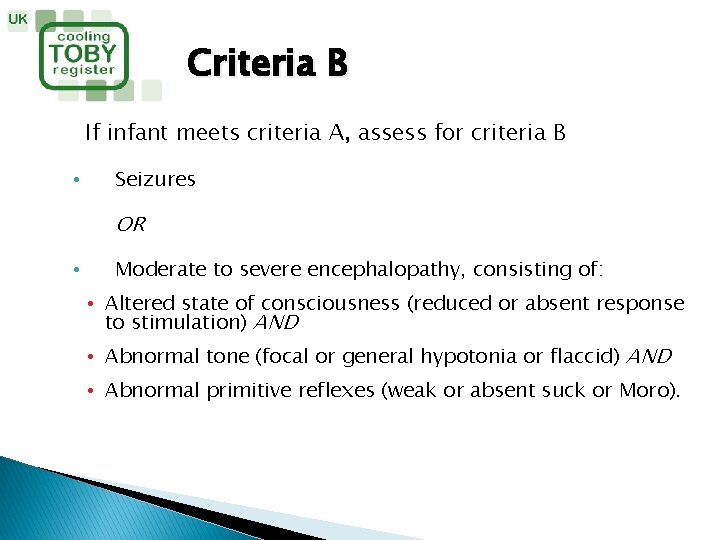
Criteria B If infant meets criteria A, assess for criteria B • Seizures OR • Moderate to severe encephalopathy, consisting of: • Altered state of consciousness (reduced or absent response to stimulation) AND • Abnormal tone (focal or general hypotonia or flaccid) AND • Abnormal primitive reflexes (weak or absent suck or Moro).
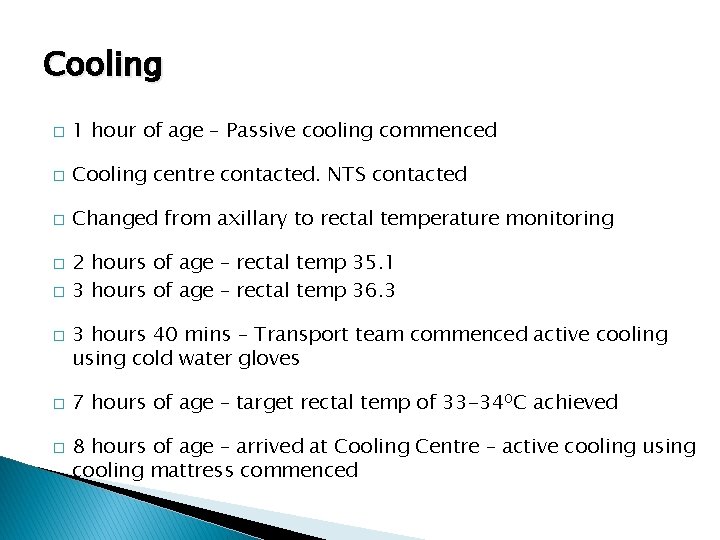
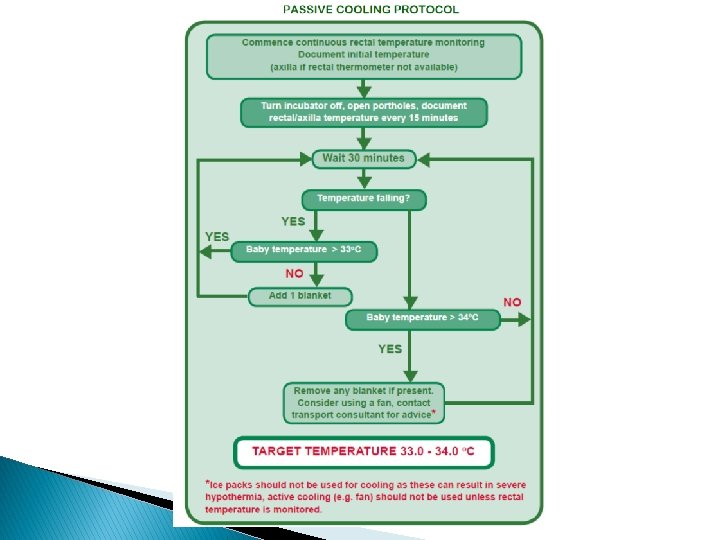
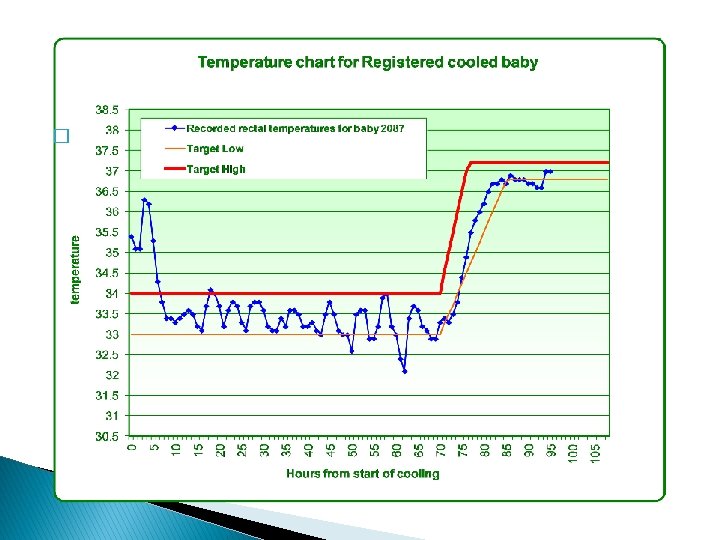
Cooling � 1 hour of age – Passive cooling commenced � Cooling centre contacted. NTS contacted � Changed from axillary to rectal temperature monitoring � � � 2 hours of age – rectal temp 35. 1 3 hours of age – rectal temp 36. 3 3 hours 40 mins – Transport team commenced active cooling using cold water gloves 7 hours of age – target rectal temp of 33 -340 C achieved 8 hours of age – arrived at Cooling Centre – active cooling using cooling mattress commenced
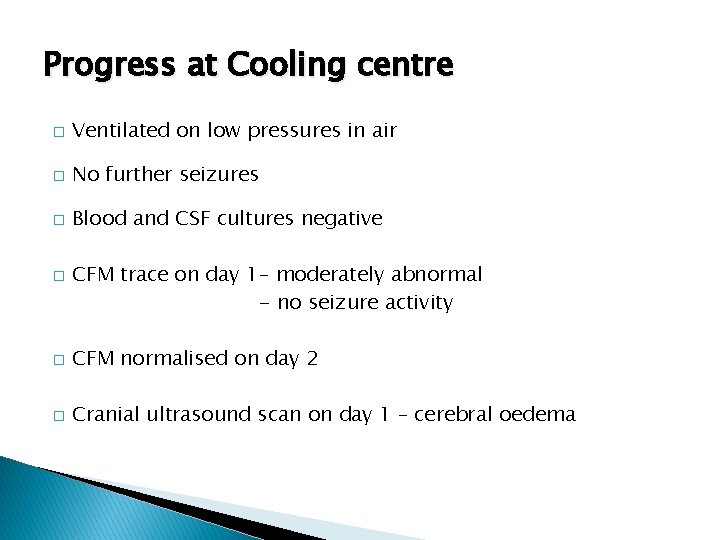
Progress at Cooling centre � Ventilated on low pressures in air � No further seizures � Blood and CSF cultures negative � CFM trace on day 1– moderately abnormal - no seizure activity � CFM normalised on day 2 � Cranial ultrasound scan on day 1 – cerebral oedema
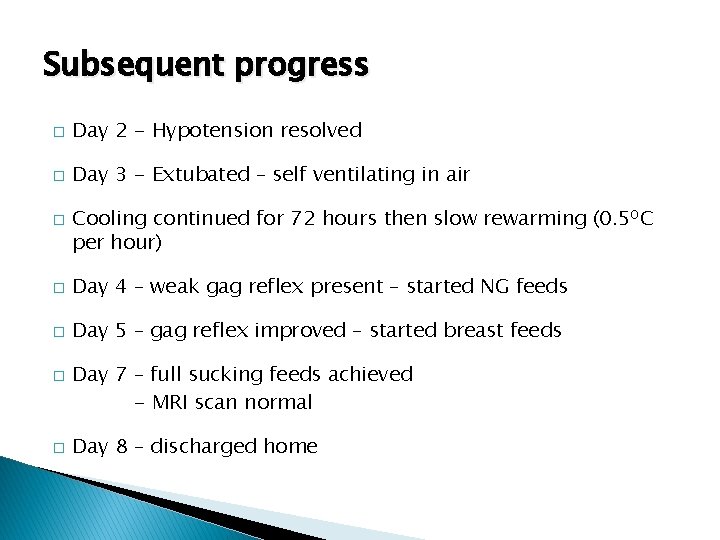
Subsequent progress � Day 2 - Hypotension resolved � Day 3 - Extubated – self ventilating in air � Cooling continued for 72 hours then slow rewarming (0. 50 C per hour) � Day 4 – weak gag reflex present – started NG feeds � Day 5 – gag reflex improved – started breast feeds � � Day 7 – full sucking feeds achieved - MRI scan normal Day 8 – discharged home
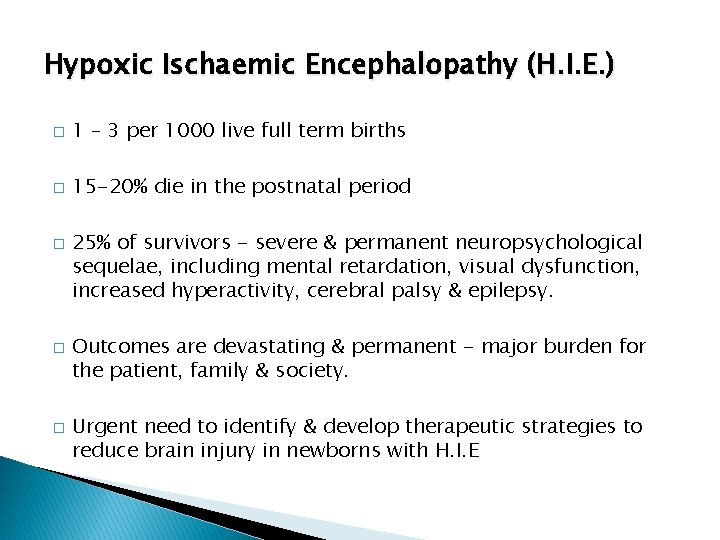
Hypoxic Ischaemic Encephalopathy (H. I. E. ) � 1 – 3 per 1000 live full term births � 15 -20% die in the postnatal period � � � 25% of survivors - severe & permanent neuropsychological sequelae, including mental retardation, visual dysfunction, increased hyperactivity, cerebral palsy & epilepsy. Outcomes are devastating & permanent - major burden for the patient, family & society. Urgent need to identify & develop therapeutic strategies to reduce brain injury in newborns with H. I. E
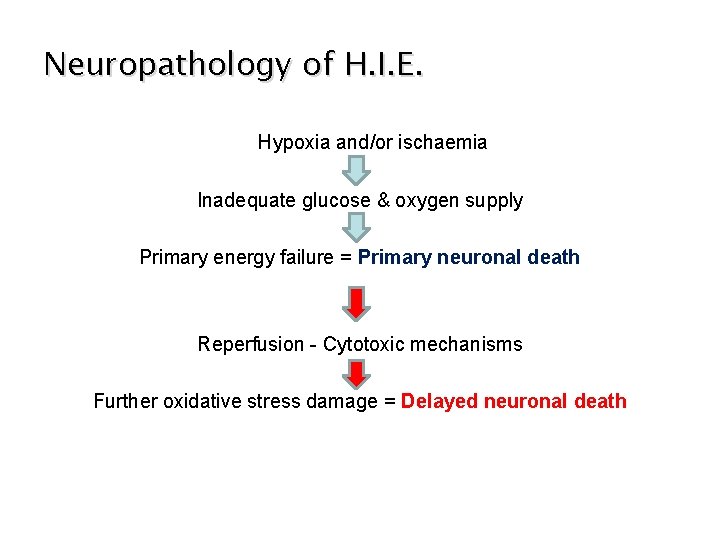
Neuropathology of H. I. E. Hypoxia and/or ischaemia Inadequate glucose & oxygen supply Primary energy failure = Primary neuronal death Reperfusion - Cytotoxic mechanisms Further oxidative stress damage = Delayed neuronal death
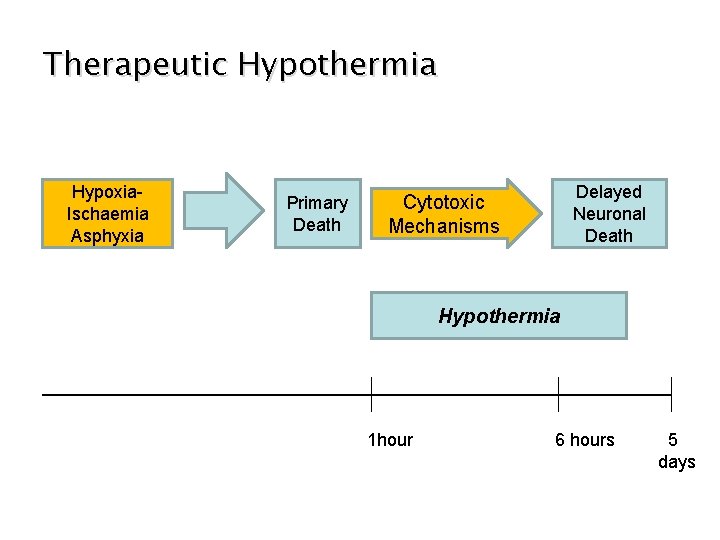
Therapeutic Hypothermia Hypoxia. Ischaemia Asphyxia Primary Death Delayed Neuronal Death Cytotoxic Mechanisms Hypothermia 1 hour 6 hours 5 days
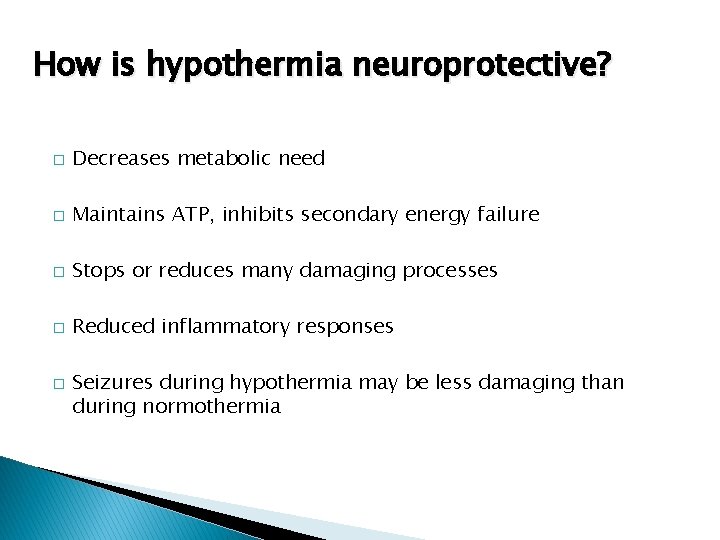
How is hypothermia neuroprotective? � Decreases metabolic need � Maintains ATP, inhibits secondary energy failure � Stops or reduces many damaging processes � Reduced inflammatory responses � Seizures during hypothermia may be less damaging than during normothermia
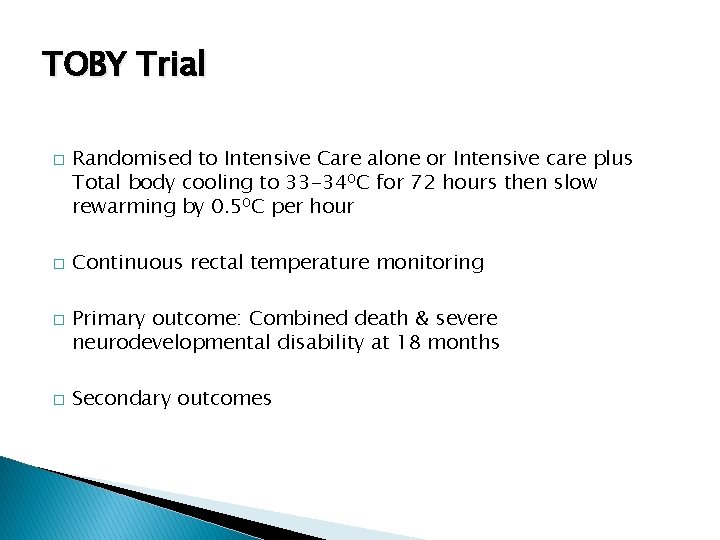
TOBY Trial � � Randomised to Intensive Care alone or Intensive care plus Total body cooling to 33 -340 C for 72 hours then slow rewarming by 0. 50 C per hour Continuous rectal temperature monitoring Primary outcome: Combined death & severe neurodevelopmental disability at 18 months Secondary outcomes
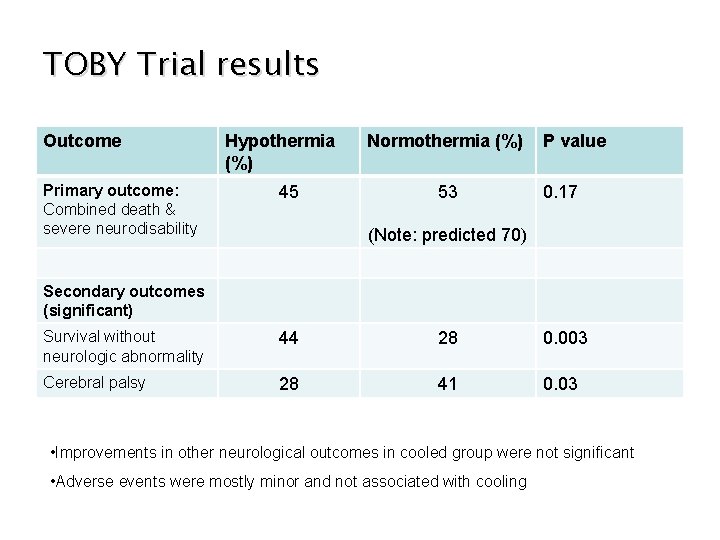
TOBY Trial results Outcome Primary outcome: Combined death & severe neurodisability Hypothermia (%) 45 Normothermia (%) 53 P value 0. 17 (Note: predicted 70) Secondary outcomes (significant) Survival without neurologic abnormality 44 28 0. 003 Cerebral palsy 28 41 0. 03 • Improvements in other neurological outcomes in cooled group were not significant • Adverse events were mostly minor and not associated with cooling
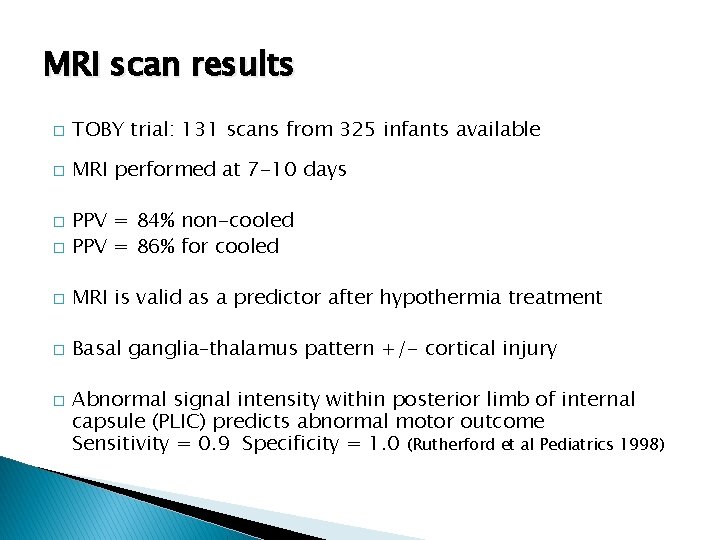
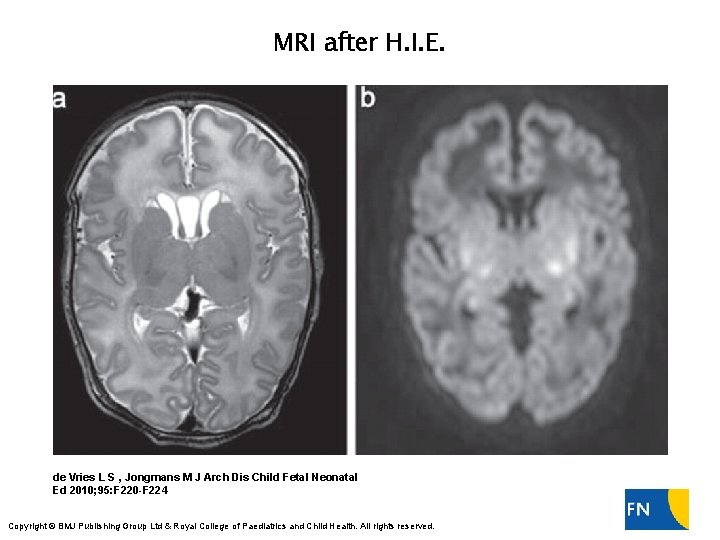
MRI scan results � TOBY trial: 131 scans from 325 infants available � MRI performed at 7 -10 days � PPV = 84% non-cooled PPV = 86% for cooled � MRI is valid as a predictor after hypothermia treatment � Basal ganglia–thalamus pattern +/- cortical injury � � Abnormal signal intensity within posterior limb of internal capsule (PLIC) predicts abnormal motor outcome Sensitivity = 0. 9 Specificity = 1. 0 (Rutherford et al Pediatrics 1998)
MRI after H. I. E. de Vries L S , Jongmans M J Arch Dis Child Fetal Neonatal Ed 2010; 95: F 220 -F 224 Copyright © BMJ Publishing Group Ltd & Royal College of Paediatrics and Child Health. All rights reserved.
Any questions?