Mycology Conception The fungi are nonphotosynthetic protist growing


- Slides: 20
Mycology
Conception The fungi are nonphotosynthetic protist growing as a mass of branching interlacing filament.
Biological properties 1. cell wall (1) The fungal cell wall consists primarily of chitin (chitin is a homopolymer of Nacetylglucosamine); thus fungi are insensitive to antibiotics, such as penicillin.
Biological properties (2)The fungal cell membrane contains ergosterol and zymosterol, in contrast to human cell membranes, which contain cholesterol. The selective action of amphotericin B on fungi is based on this difference in membrane sterols.
Biological properties (3)cell wall polysaccharides may activate the complement cascade and provoke an inflammatory reaction. cell wall release immunodominant antigen that may elicit cellular immune responses and diagnostic antibodies.
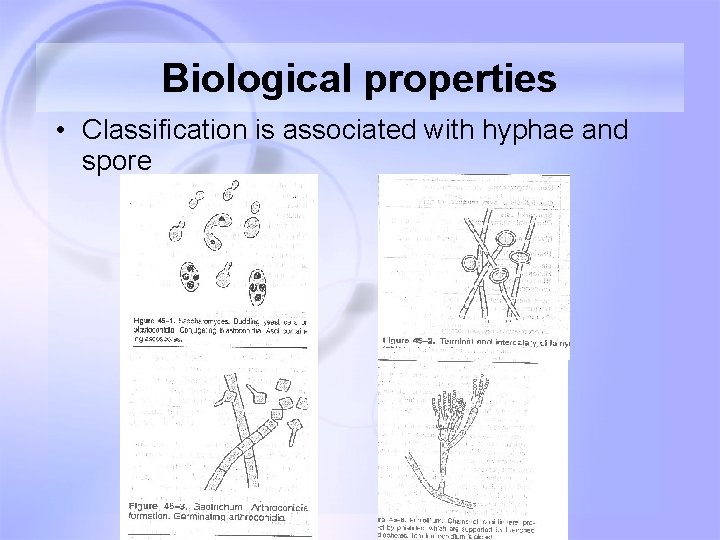
Biological properties 2. morphology unicellular-yeast, yeast-like fungus multicellular-hyphae plus spore, molds. (1) hyphae-branching cylindric tubules (filament) mycelium-intertwined mass of hyphae. a. vegetative mycelium b. reproductive mycelium c. aerial mycelium
Biological properties (2) spores. sexual spore: are produced by the fusion of two cells. asexual spore: arise by differentiation of the cell of spore-bearing hyphae without fusion. blast spore chlamydo spores Arthro spore conidia
Biological properties • Classification is associated with hyphae and spore
Biological properties 3. culture sabouraud’s agar, PH 4~ 6, 22~ 28℃; pathogenic fungi, 37℃.
Clinical finding 1. cutaneous Mycoses Dermatophytes three genera Microsporum Trichophyton Epidermophyton diseases: Tinea pedis (Athlete’s Foot) Tinea unguium Tinea corporis Tinea capitis
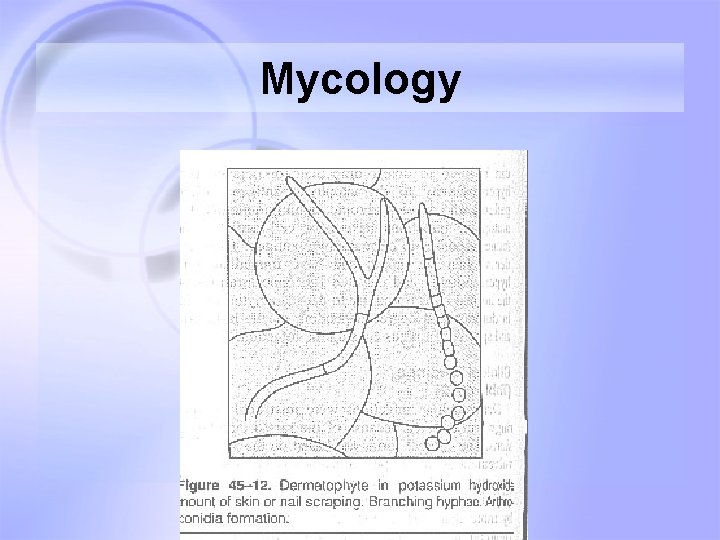
Diagnostic Lab. Test (1) Microscopic examination Specimens + 10~ 20% KOH →ME (hyphae or arthroconidia) (2) culture
Mycology
Mycology 2. opportunistic Mycoses Fungi that usually do not induce disease may do so in persons who have a l t e r e d h o s t defense mechanisms. Predisposing factors: Antibiotics, hormone, catheter, Immunosuppressed patients, diabetes mellites, etc.
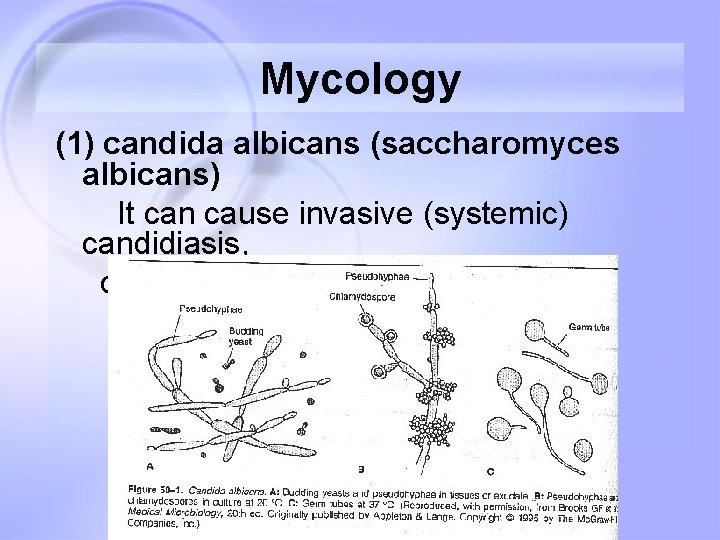
Mycology (1) candida albicans (saccharomyces albicans) It can cause invasive (systemic) candidiasis, cutaneous and mucosal candidiasis.
Mycology a. cutaneous and Mucosal candidiasis thrush vulvovaginitis (associated with diabetes, pregnancy, antibiotics, local acidity)
Mycology b. systemic candidiasis (invasive candidiasis) induced factors: catheters, surgery, intravenous drug abuse, aspiration, damage to the skin or gastrointestinal tract. systemic candidiasis is most often associated with chronic administration of corticosteroids or other immunosuppessive agents, leukemia, lymphoma, aplastic anemia, etc.
Mycology organ involvement may include lung, peritoneum, central nervous system, gastrointestinal tract, kidneys and heart. treatment: Amphotericin B flucytosine miconazole ketoconazole
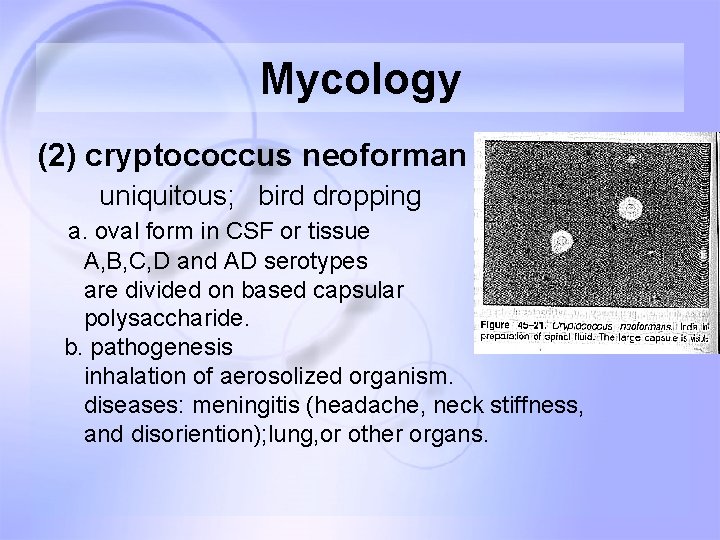
Mycology (2) cryptococcus neoforman uniquitous; bird dropping a. oval form in CSF or tissue A, B, C, D and AD serotypes are divided on based capsular polysaccharide. b. pathogenesis inhalation of aerosolized organism. diseases: meningitis (headache, neck stiffness, and disoriention); lung, or other organs.
Mycology c. examination Microscopic examination Cryptococcus capsular polysaccharide test (slide agglutination test) d. treatment combination therapy of amphotericin B and flucytosine. fluconazole
Mycology (3) Aspergillus (4) Mucor (5) pneumocystis carinii