Monday 13 th July 2020 Year 5 English




- Slides: 24
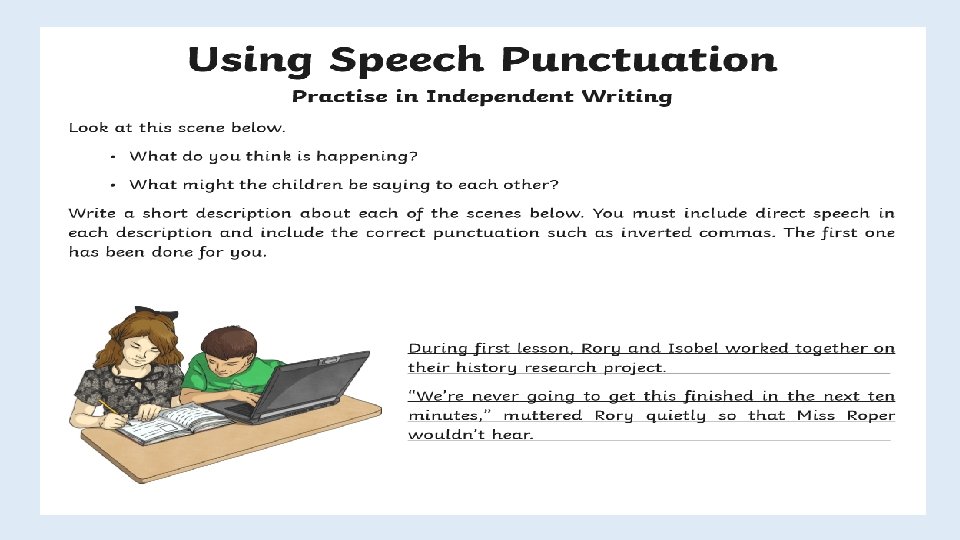
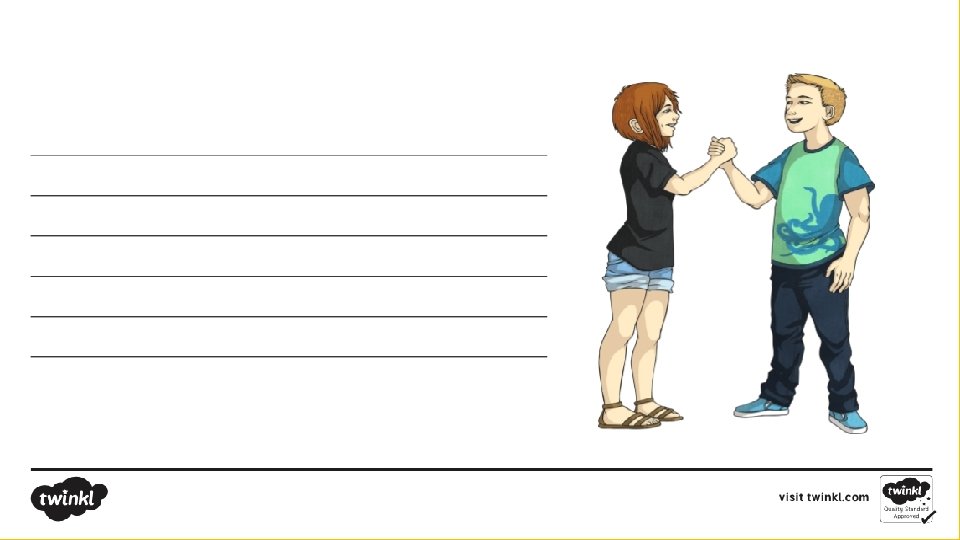
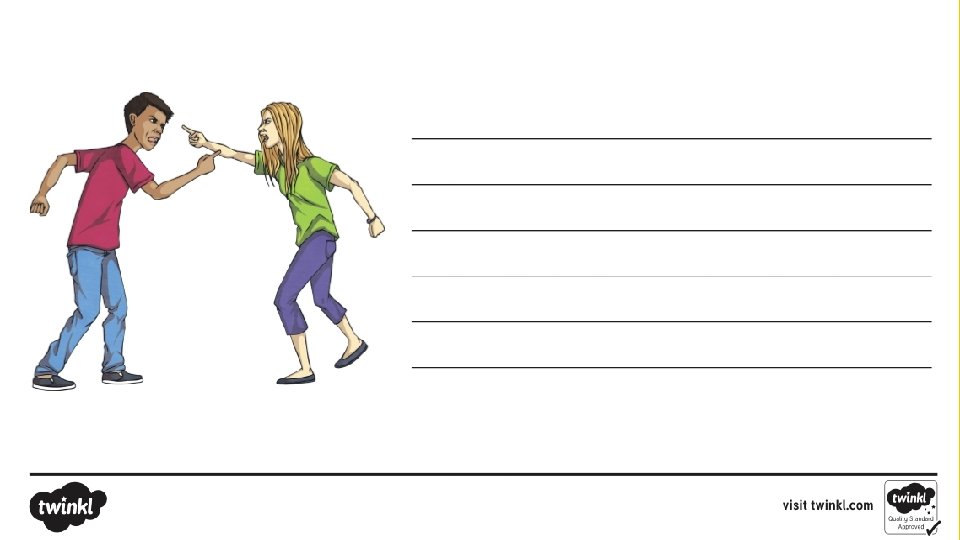
Monday 13 th July 2020 - Year 5 English LO: To be able to punctuate dialogue accurately.
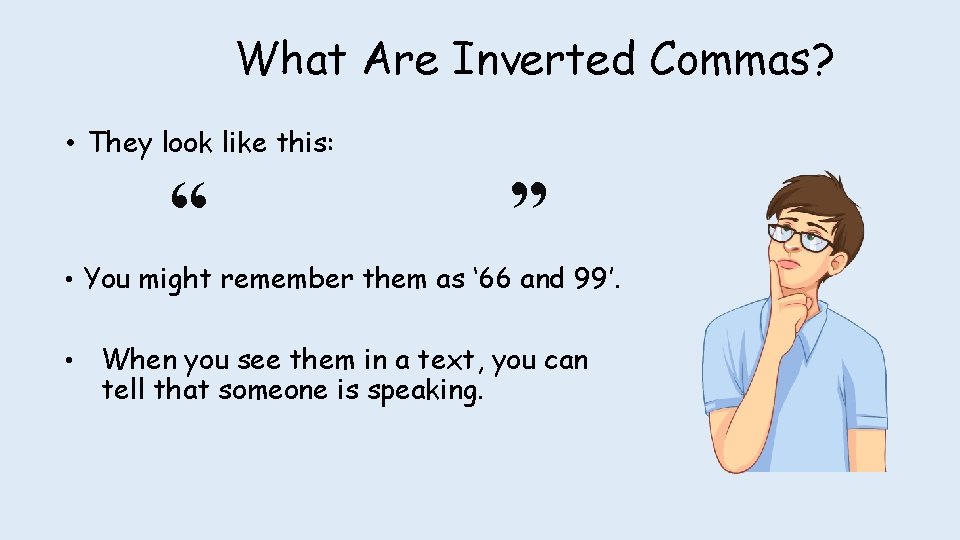
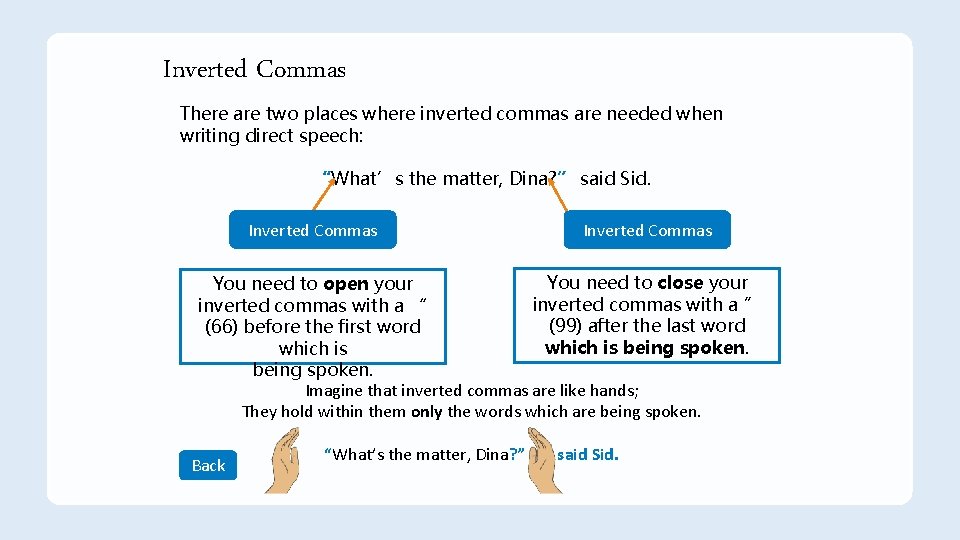
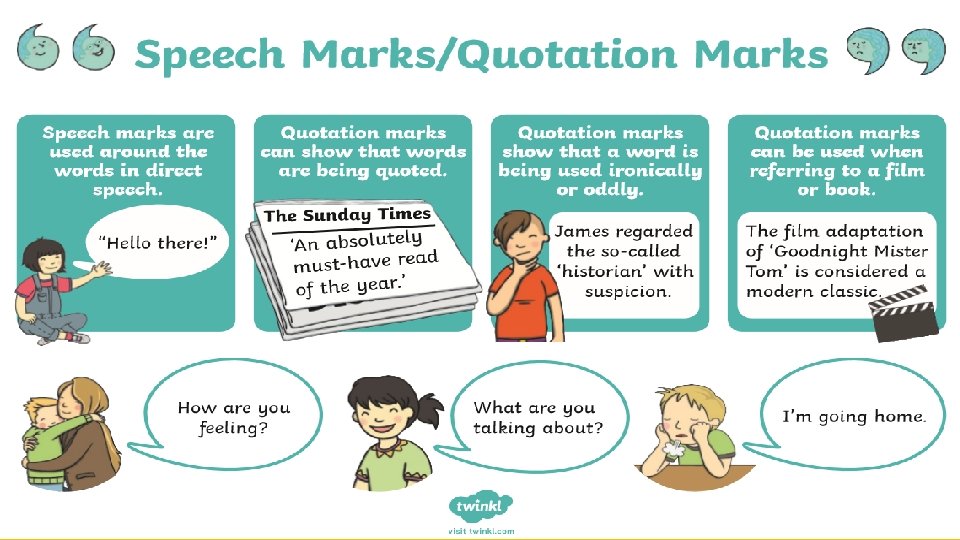
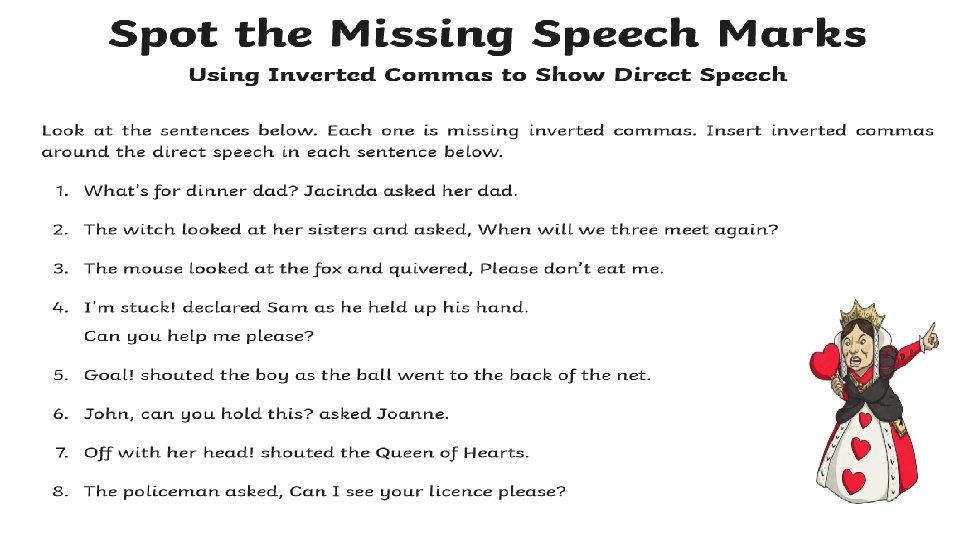
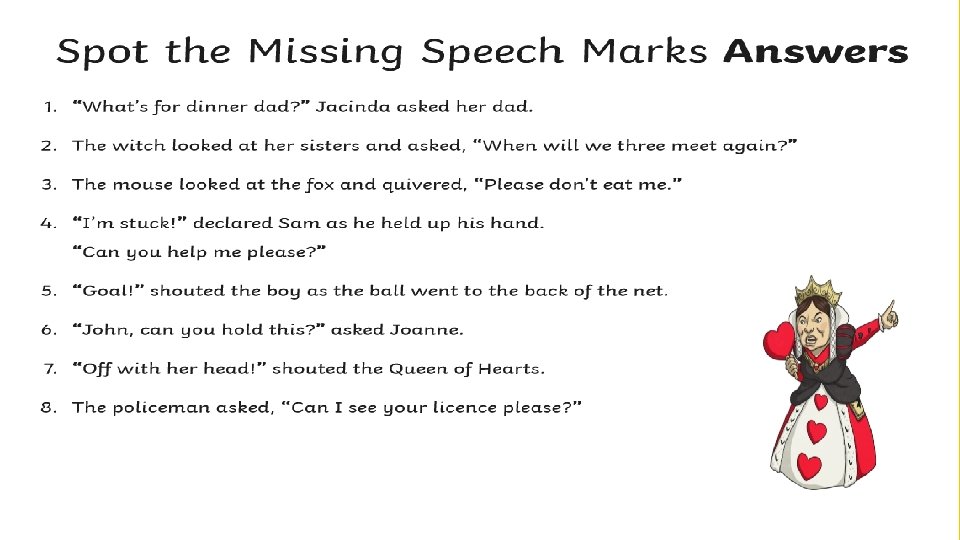
What Are Inverted Commas? • They look like this: “ ” • You might remember them as ‘ 66 and 99’. • When you see them in a text, you can tell that someone is speaking.
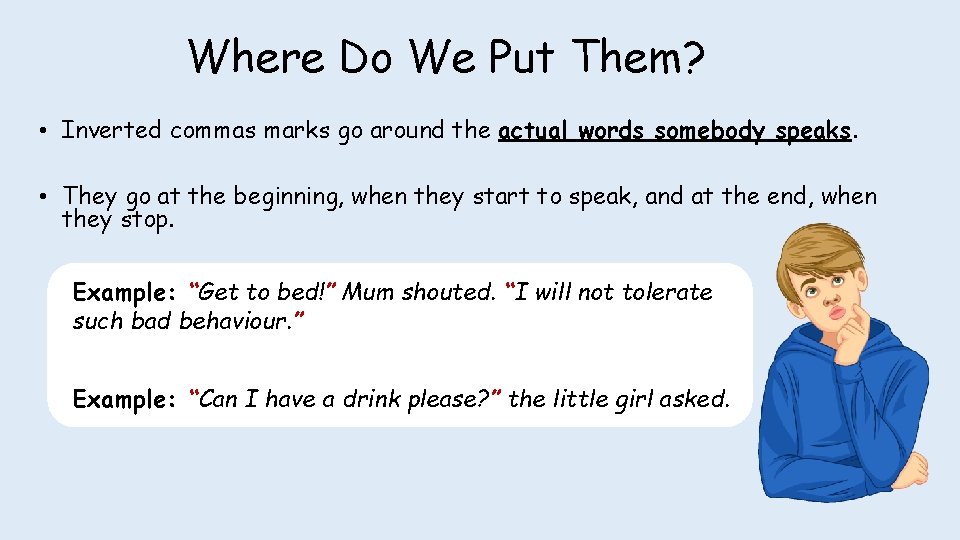
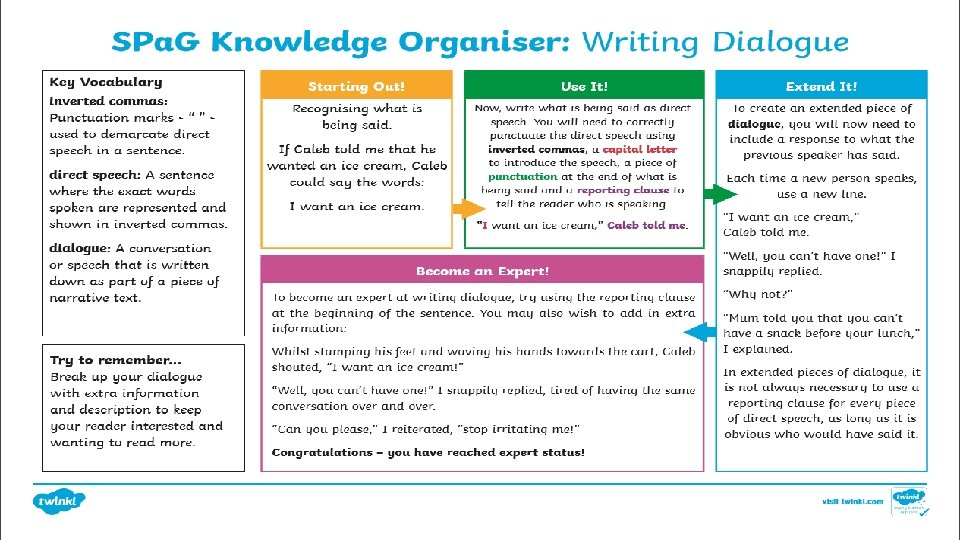
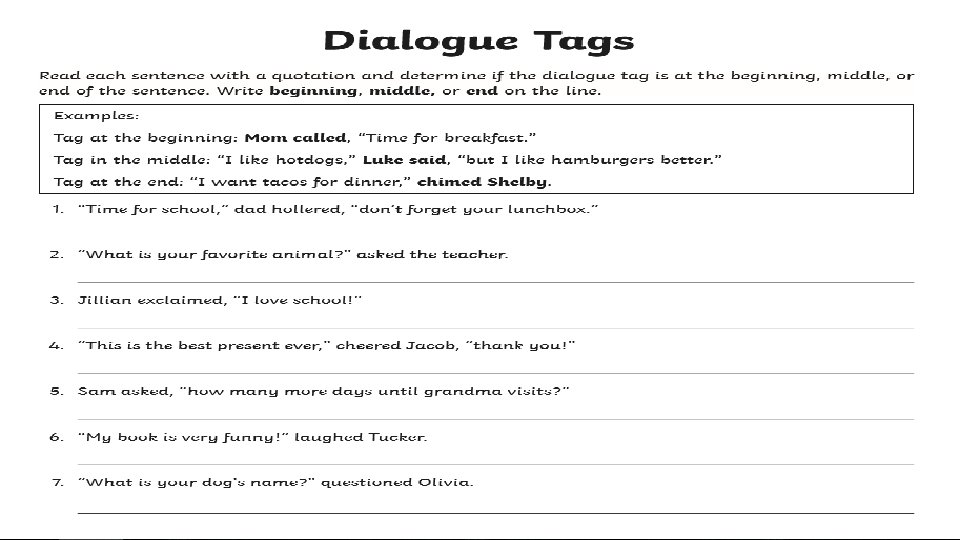
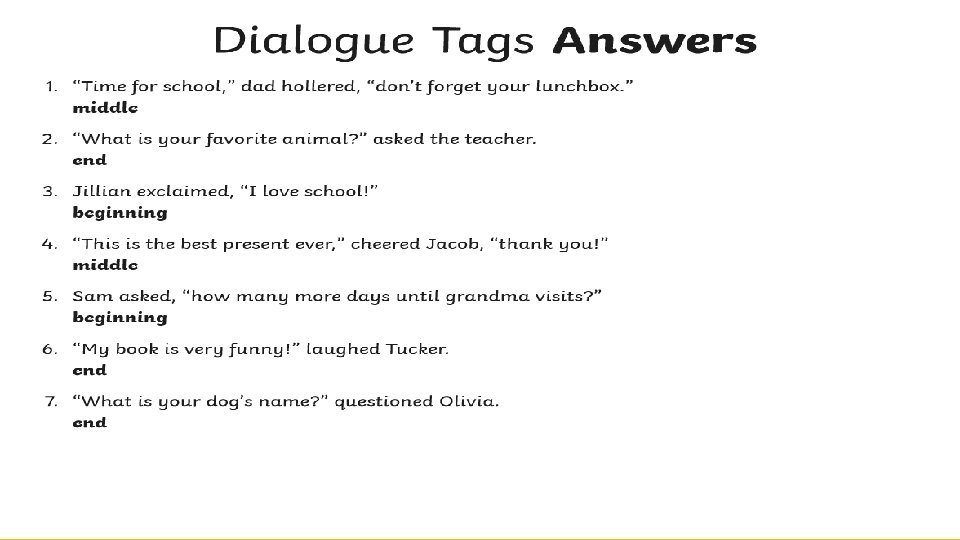
Where Do We Put Them? • Inverted commas marks go around the actual words somebody speaks. • They go at the beginning, when they start to speak, and at the end, when they stop. Example: “Get to bed!” Mum shouted. “I will not tolerate such bad behaviour. ” Example: “Can I have a drink please? ” the little girl asked.
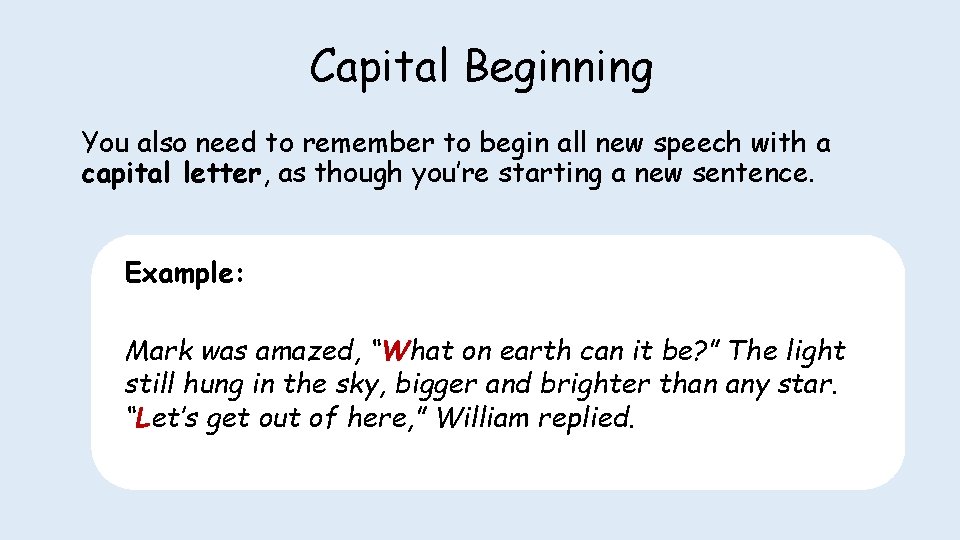
Capital Beginning You also need to remember to begin all new speech with a capital letter, as though you’re starting a new sentence. Example: Mark was amazed, “What on earth can it be? ” The light still hung in the sky, bigger and brighter than any star. “Let’s get out of here, ” William replied.
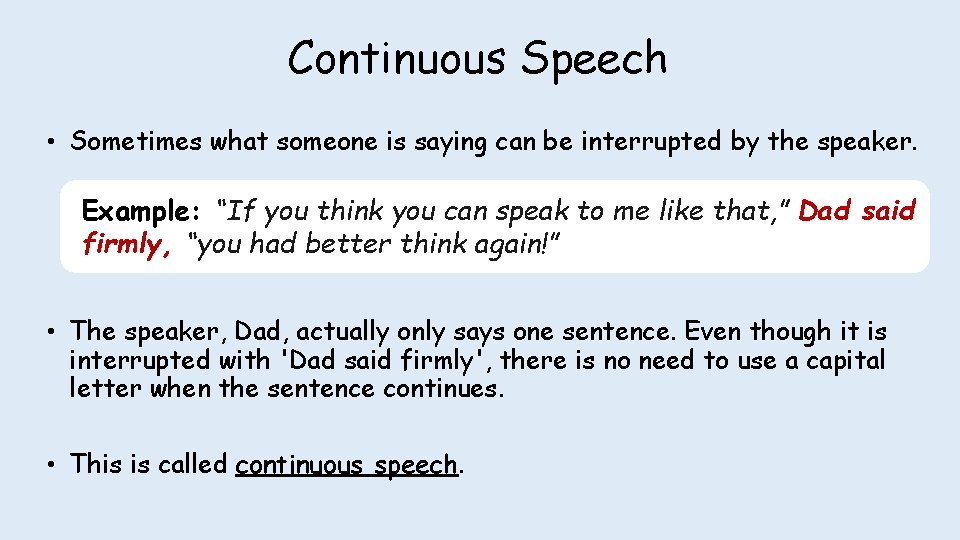
Continuous Speech • Sometimes what someone is saying can be interrupted by the speaker. Example: “If you think you can speak to me like that, ” Dad said firmly, “you had better think again!” • The speaker, Dad, actually only says one sentence. Even though it is interrupted with 'Dad said firmly', there is no need to use a capital letter when the sentence continues. • This is called continuous speech.
Summary • Speech marks go at the beginning and end of the words someone speaks. • The first word inside the inverted commas always has a capital letter, unless it is continuous speech.
Inverted Commas There are two places where inverted commas are needed when writing direct speech: “What’s the matter, Dina? ” said Sid. Inverted Commas You need to close your You need to open your inverted commas with a ” inverted commas with a “ (99) after the last word (66) before the first word which is being spoken. Imagine that inverted commas are like hands; They hold within them only the words which are being spoken. Back “What’s the matter, Dina? ” said Sid.
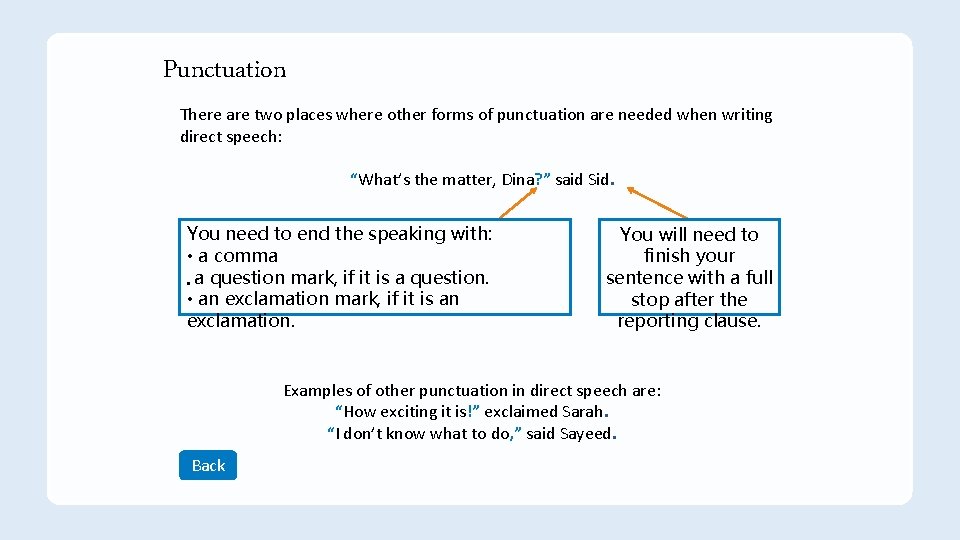
Punctuation There are two places where other forms of punctuation are needed when writing direct speech: “What’s the matter, Dina? ” said Sid. You need to end the speaking with: • a comma • a question mark, if it is a question. • an exclamation mark, if it is an exclamation. You will need to finish your sentence with a full stop after the reporting clause. Examples of other punctuation in direct speech are: “How exciting it is!” exclaimed Sarah. “I don’t know what to do, ” said Sayeed. Back
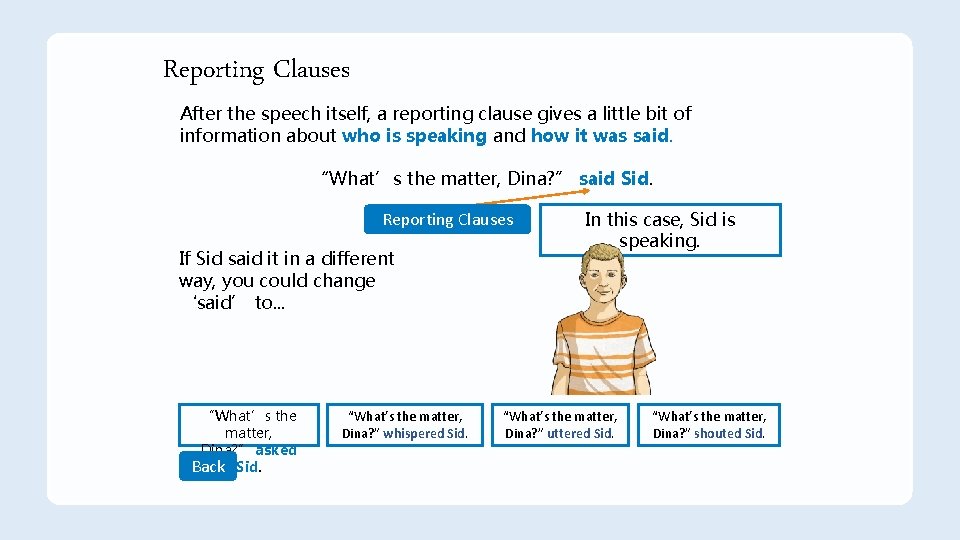
Reporting Clauses After the speech itself, a reporting clause gives a little bit of information about who is speaking and how it was said. “What’s the matter, Dina? ” said Sid. Reporting Clauses If Sid said it in a different way, you could change ‘said’ to. . . “What’s the matter, Dina? ” asked Back Sid. “What’s the matter, Dina? ” whispered Sid. In this case, Sid is speaking. “What’s the matter, Dina? ” uttered Sid. “What’s the matter, Dina? ” shouted Sid.
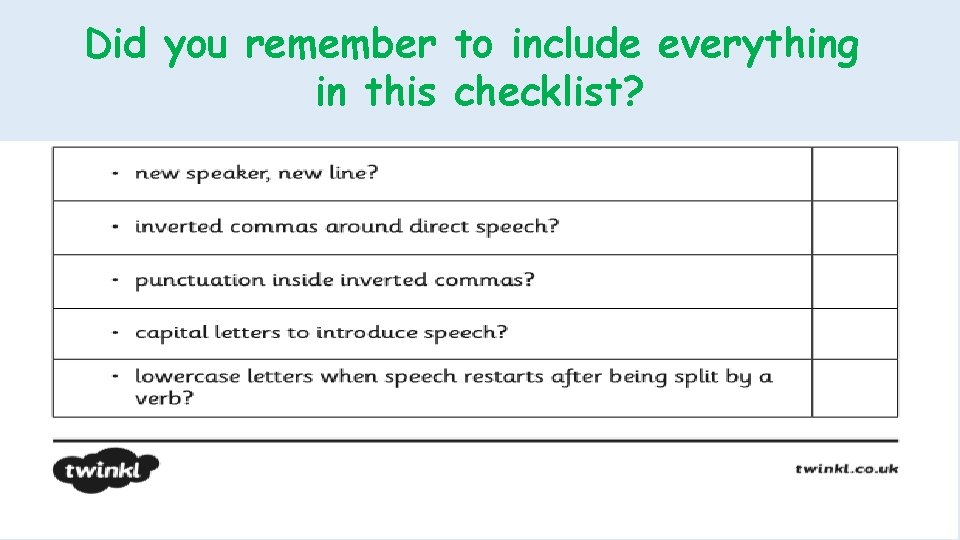
Did you remember to include everything in this checklist?