Modeling Neurological Disease Katie A Ferguson University of

- Slides: 32
“Modeling Neurological Disease” Katie A. Ferguson University of Toronto Western Research Institute, UHN May 17, 2012 Fields Introductory Tutorial Part of Thematic Program: “Towards Mathematical Modeling of Neurological Disease from Cellular Perspectives”
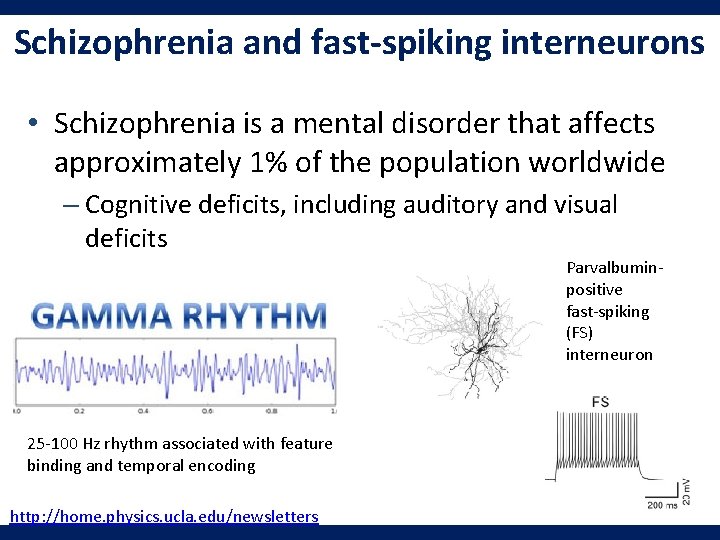
Schizophrenia and fast-spiking interneurons • Schizophrenia is a mental disorder that affects approximately 1% of the population worldwide – Cognitive deficits, including auditory and visual deficits Parvalbuminpositive fast-spiking (FS) interneuron 25 -100 Hz rhythm associated with feature binding and temporal encoding http: //home. physics. ucla. edu/newsletters
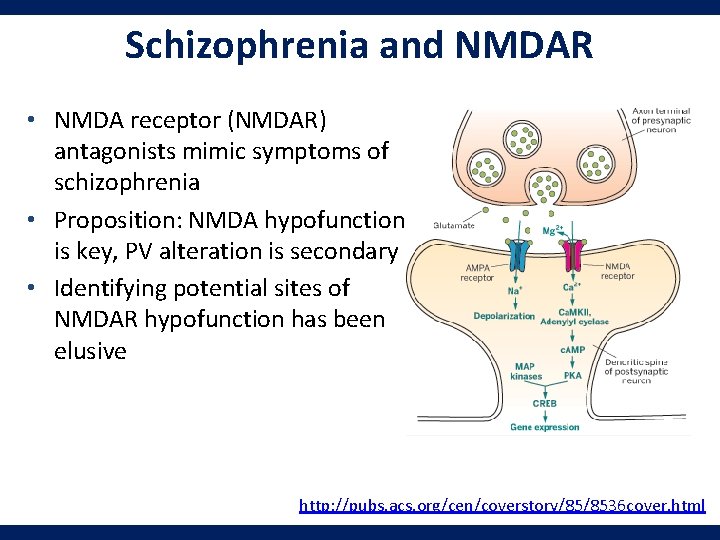
Schizophrenia and NMDAR • NMDA receptor (NMDAR) antagonists mimic symptoms of schizophrenia • Proposition: NMDA hypofunction is key, PV alteration is secondary • Identifying potential sites of NMDAR hypofunction has been elusive http: //pubs. acs. org/cen/coverstory/85/8536 cover. html
• In PFC, the contribution of NMDARs to the activation of specific populations of neurons is poorly understood – How is NMDA hypofunction linked to gamma oscillations abnormalities? (1) Examine NMDAR contribution to synaptic activation of FS interneurons and pyramidal cells (2) Look at the influence of AMPARs and NMDARs in the production of gamma
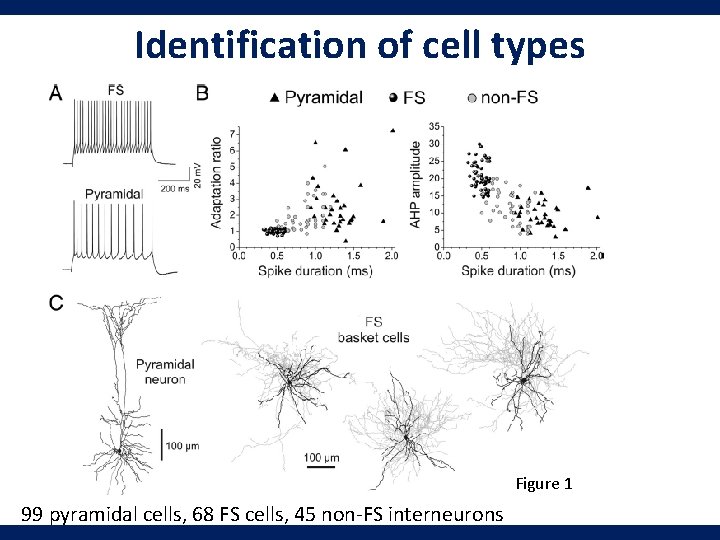
Identification of cell types Figure 1 99 pyramidal cells, 68 FS cells, 45 non-FS interneurons
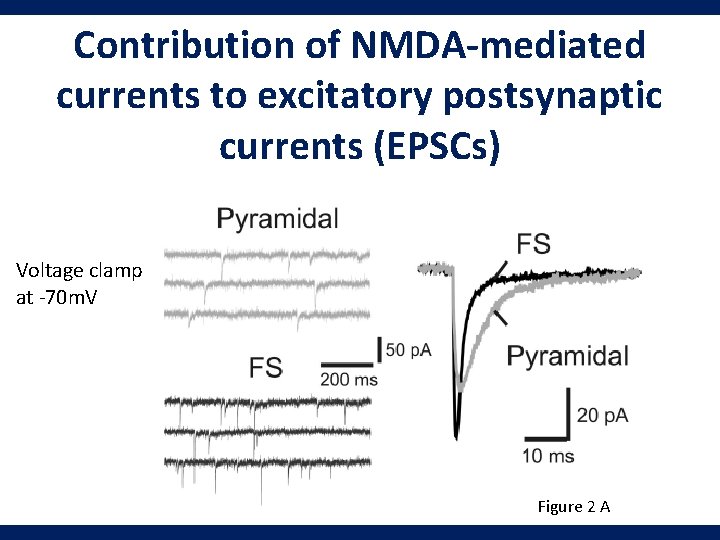
Contribution of NMDA-mediated currents to excitatory postsynaptic currents (EPSCs) Voltage clamp at -70 m. V Figure 2 A
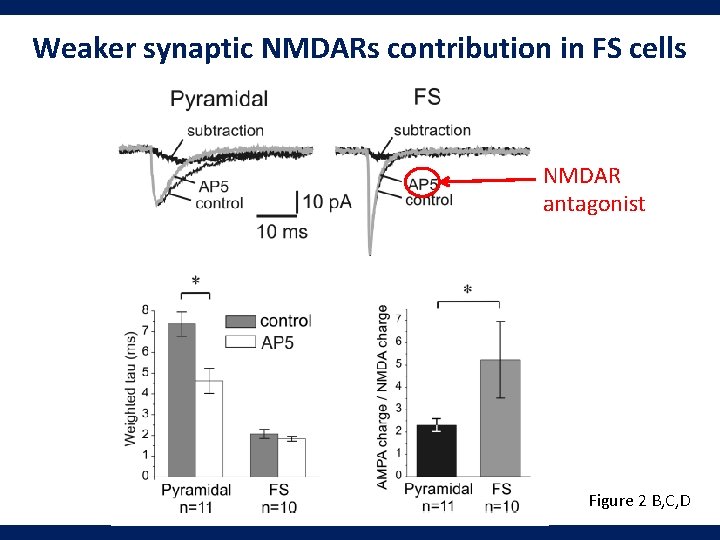
Weaker synaptic NMDARs contribution in FS cells NMDAR antagonist Figure 2 B, C, D
Perhaps the fast EPSC kinetics in FS neurons is important for interneuron activity during pyramidal cell-FS neuron feedback loops involved in gamma oscillations How do AMPARs and NMDARs influence the production of gamma?
The Model • • • What cell types to include? Size of network? Architecture/connectivity of network? How to model cells? How to model synapses?
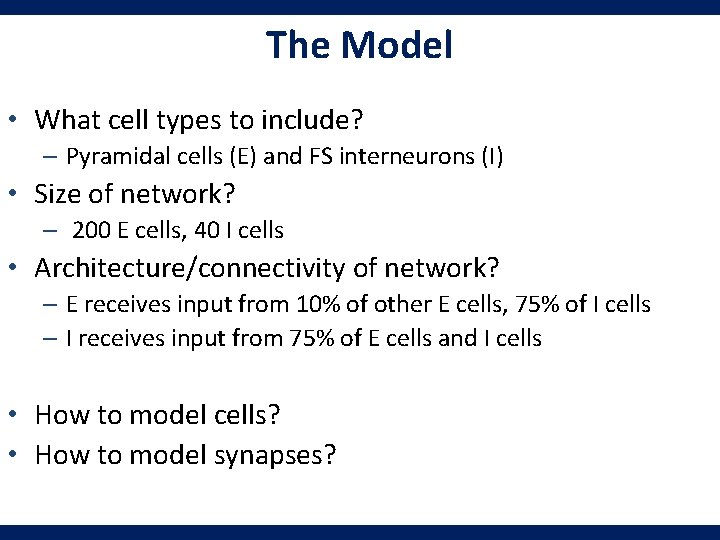
The Model • What cell types to include? – Pyramidal cells (E) and FS interneurons (I) • Size of network? – 200 E cells, 40 I cells • Architecture/connectivity of network? – E receives input from 10% of other E cells, 75% of I cells – I receives input from 75% of E cells and I cells • How to model cells? • How to model synapses?
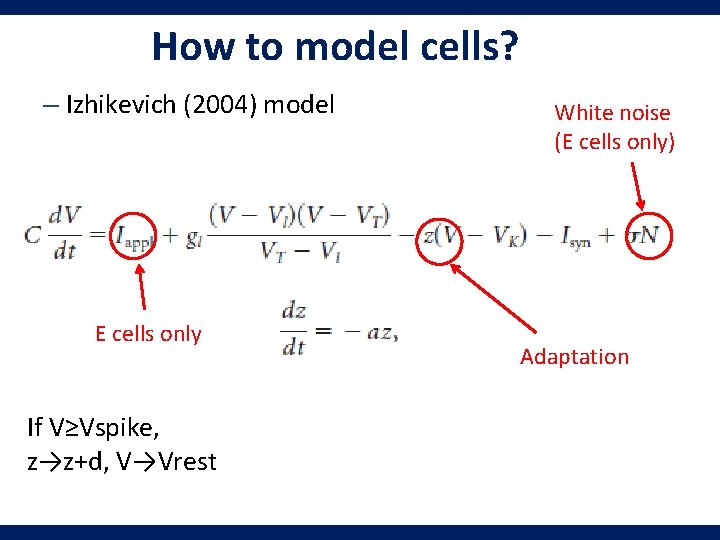
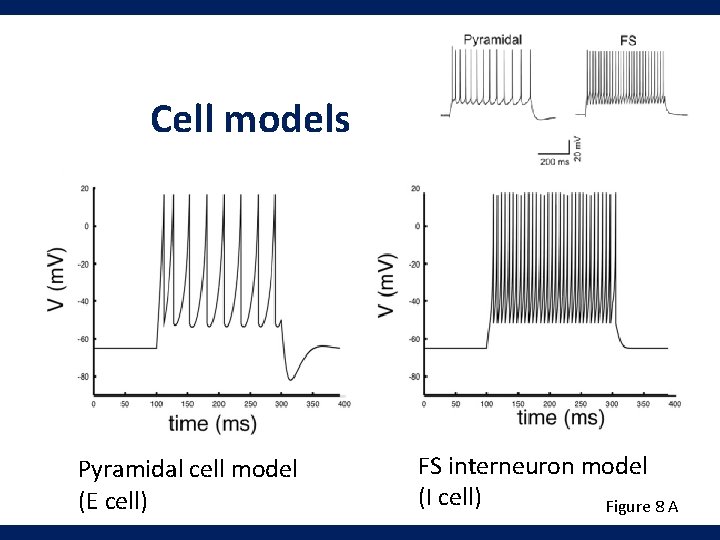
How to model cells? – Izhikevich (2004) model E cells only If V≥Vspike, z→z+d, V→Vrest White noise (E cells only) Adaptation
Cell models Pyramidal cell model (E cell) FS interneuron model (I cell) Figure 8 A
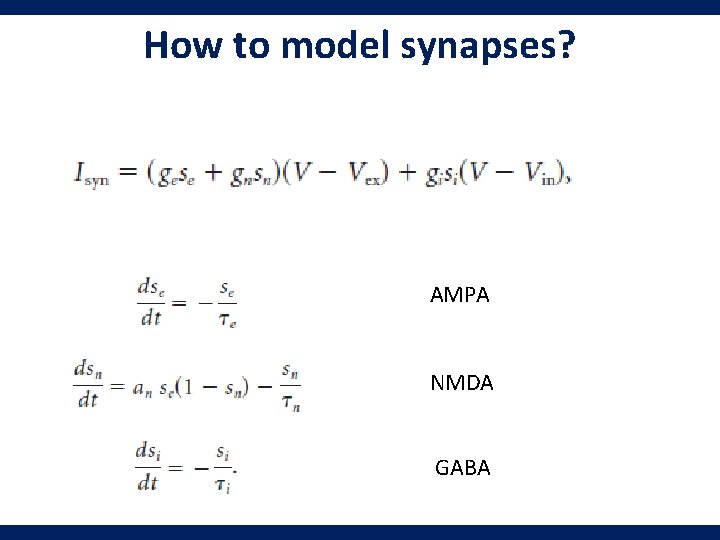
How to model synapses? AMPA NMDA GABA
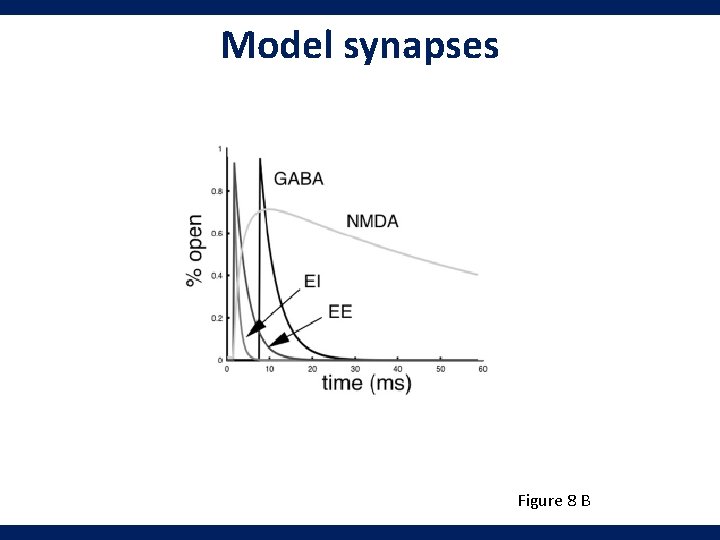
Model synapses Figure 8 B
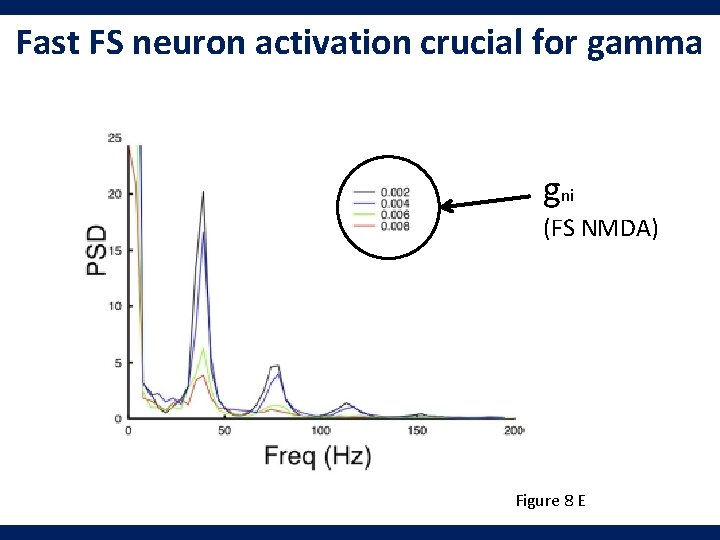
Fast FS neuron activation crucial for gamma gni (FS NMDA) Figure 8 E
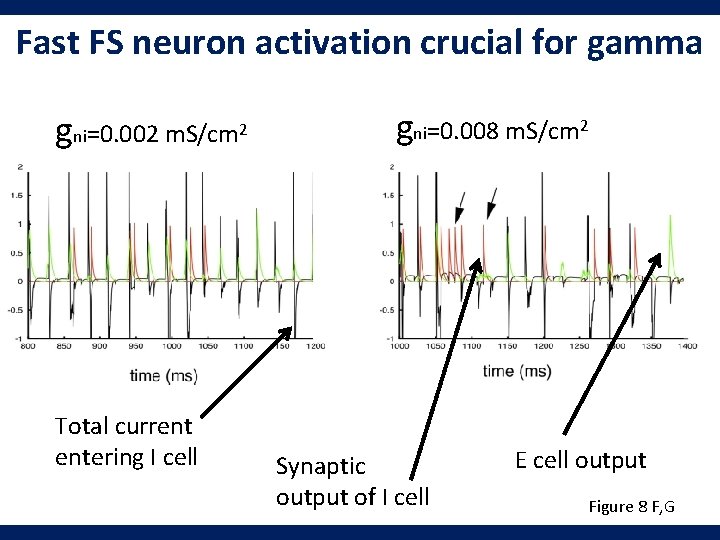
Fast FS neuron activation crucial for gamma gni=0. 002 m. S/cm 2 Total current entering I cell gni=0. 008 m. S/cm 2 Synaptic output of I cell E cell output Figure 8 F, G
Discussion • Model used to compare effects of fast AMPARmediated vs. slow NMDAR-mediated excitation of FS neurons on the mechanisms of gamma oscillations • Model suggests rapid FS neuron activation is crucial for production of gamma oscillations • Predict NMDAR hypofunction may affect PFC by acting at glutamatergic synapses different from those mediating the activation of FS parvalbumin-positive cells
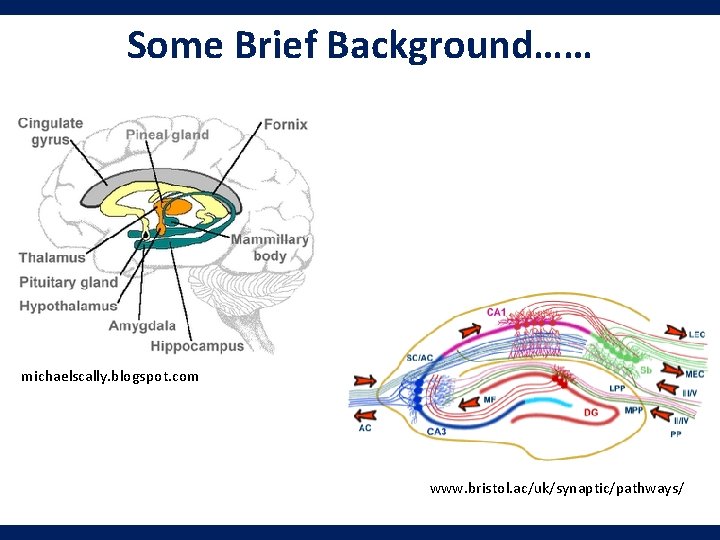
Some Brief Background…… michaelscally. blogspot. com www. bristol. ac/uk/synaptic/pathways/
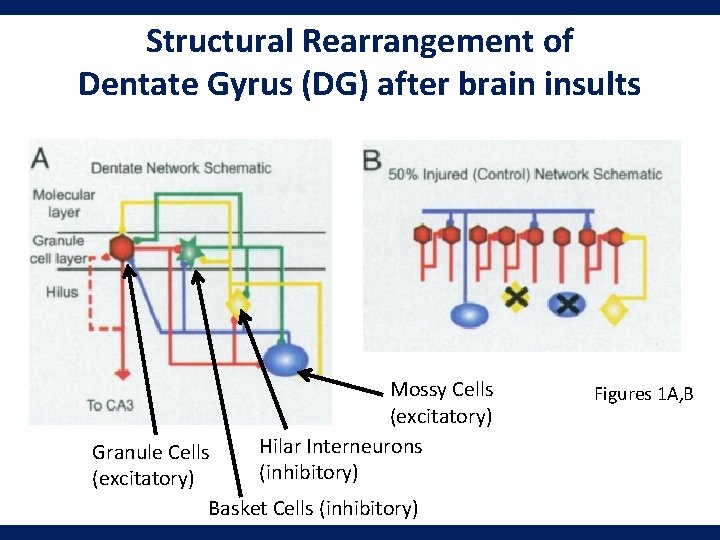
Structural Rearrangement of Dentate Gyrus (DG) after brain insults Mossy Cells (excitatory) Hilar Interneurons (inhibitory) Granule Cells (excitatory) Basket Cells (inhibitory) Figures 1 A, B
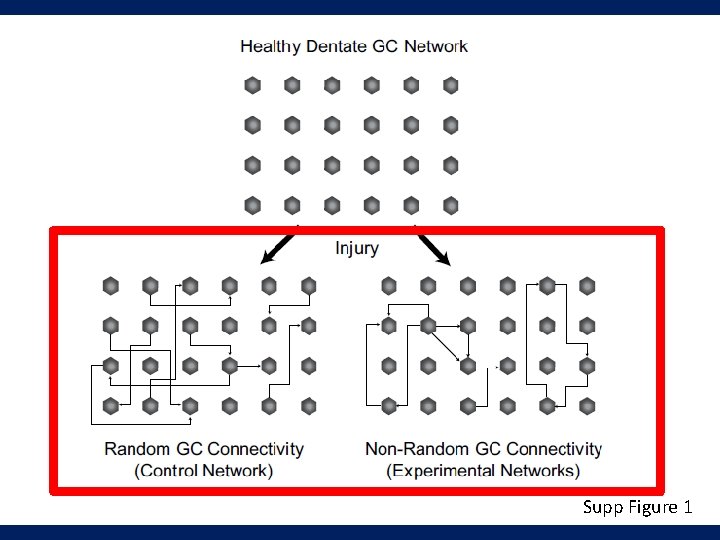
Supp Figure 1
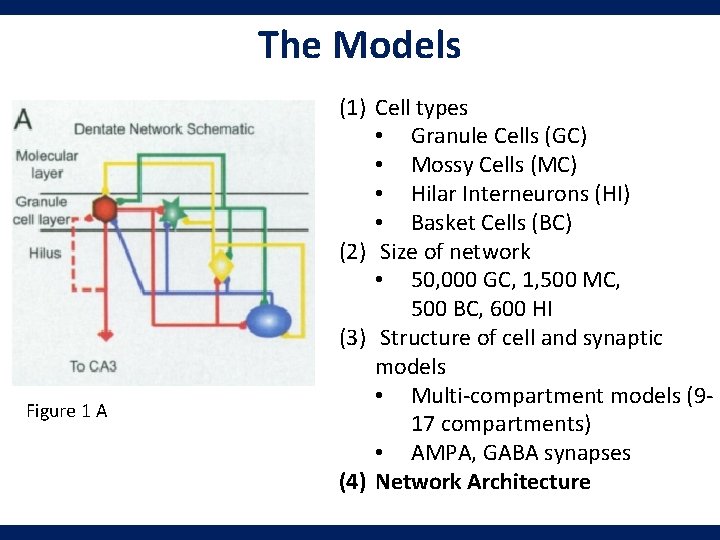
The Models Figure 1 A (1) Cell types • Granule Cells (GC) • Mossy Cells (MC) • Hilar Interneurons (HI) • Basket Cells (BC) (2) Size of network • 50, 000 GC, 1, 500 MC, 500 BC, 600 HI (3) Structure of cell and synaptic models • Multi-compartment models (917 compartments) • AMPA, GABA synapses (4) Network Architecture
Network Architecture and Analysis • Network Architecture (1) Control (2) Hebbian-like connectivity (3) Overrepresentation of small-motifs (4) Scale-free topology (5) Highly interconnected GC hubs without a scale-free topology • Analysis (1) Latency to full network activation (2) Duration of network activity (3) Mean number of spikes fired
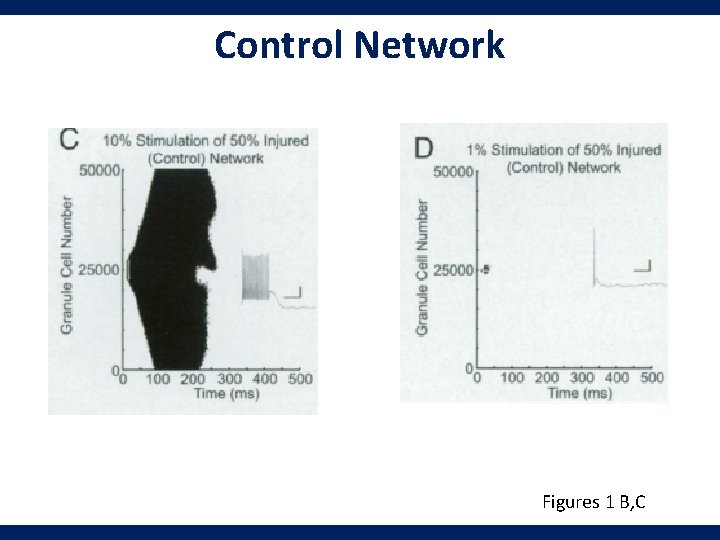
Control Network Figures 1 B, C
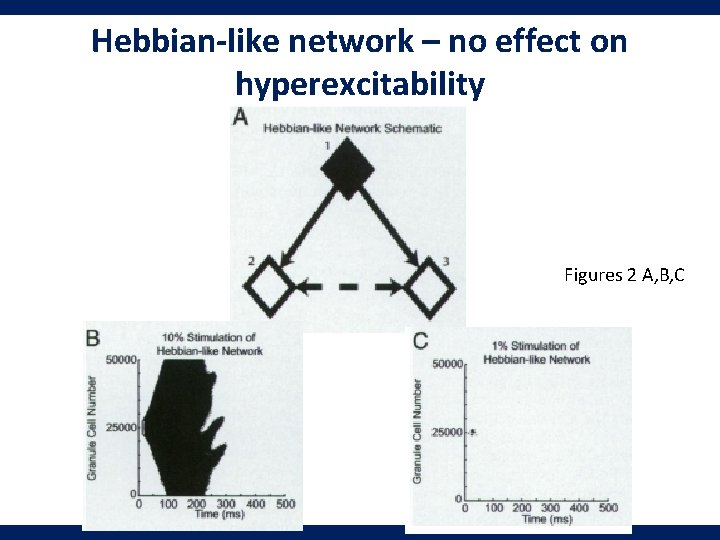
Hebbian-like network – no effect on hyperexcitability Figures 2 A, B, C
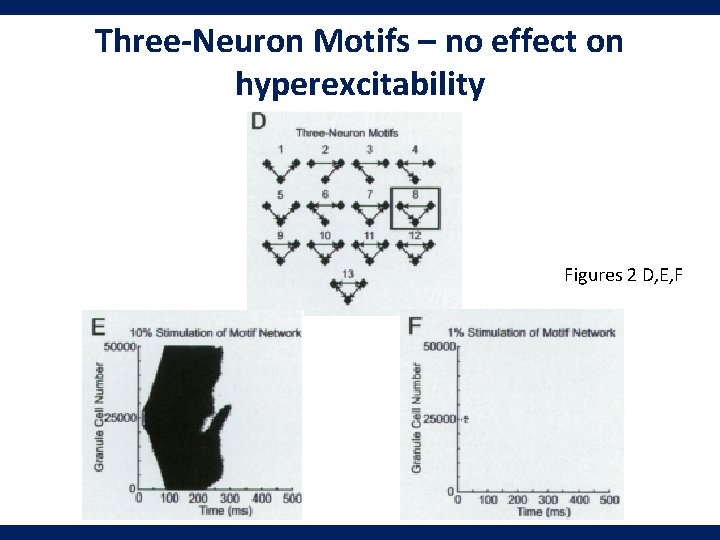
Three-Neuron Motifs – no effect on hyperexcitability Figures 2 D, E, F
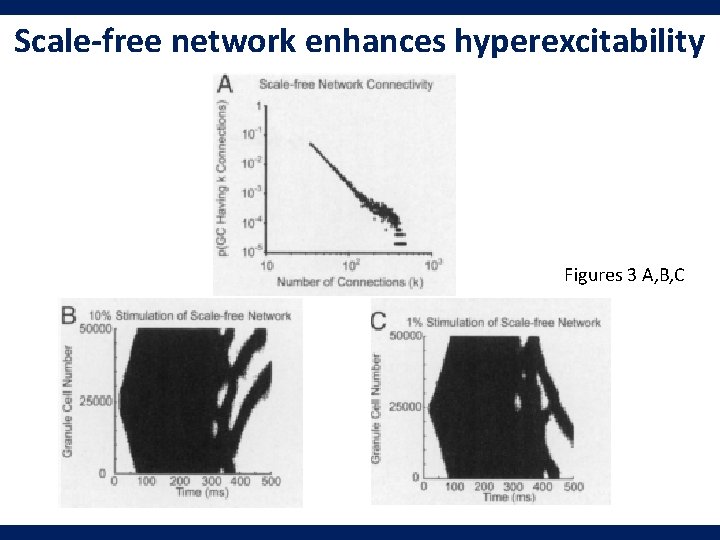
Scale-free network enhances hyperexcitability Figures 3 A, B, C
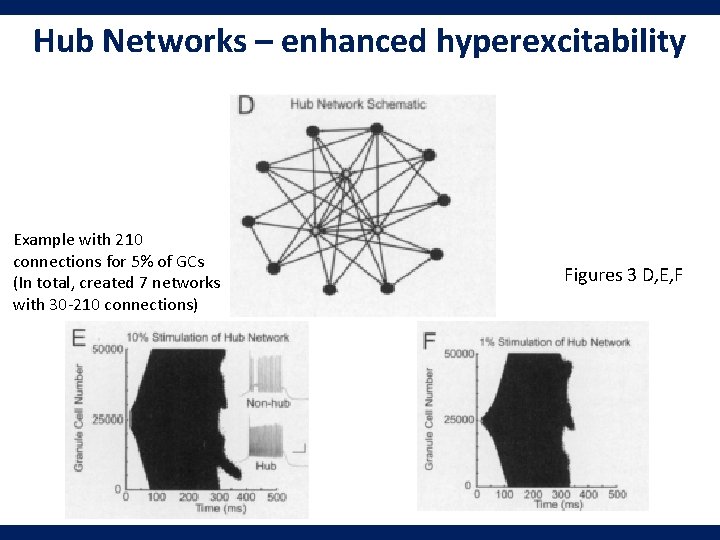
Hub Networks – enhanced hyperexcitability Example with 210 connections for 5% of GCs (In total, created 7 networks with 30 -210 connections) Figures 3 D, E, F
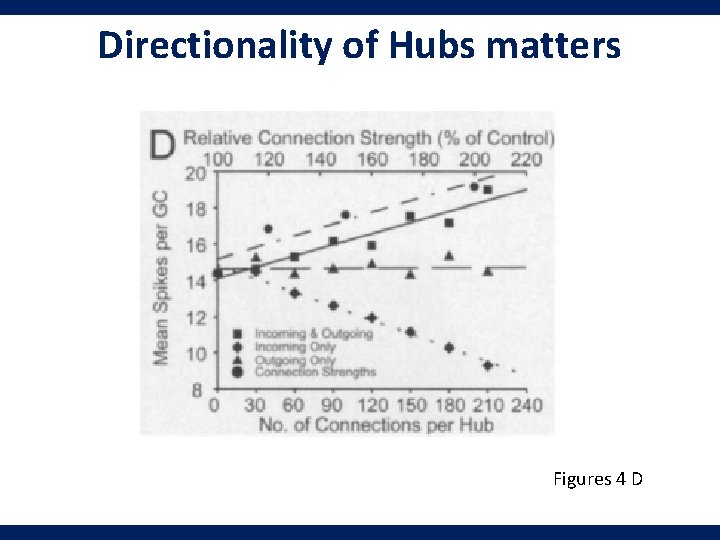
Directionality of Hubs matters Figures 4 D
Discussion • Specific microcircuit connectivity can have important effects on epileptiform network activity • In the injured dentate gyrus, the presence of a small population of highly interconnected GC hubs strongly contributes to hyperexcitability – hilar basal dendrites
Overall Context matters! – What is the question you are trying to answer? At any level you will be introducing some assumptions (error). What makes most sense for your application?