Neurological Assessment August 2017 v 2 1 1

- Slides: 21
Neurological Assessment August 2017 v 2. 1 1
Overview of Neurological Assessment • • • Nervous System Overview Decompression Illness Conducting a Neurological Assessment Skills Development Final Assessment and Review 2
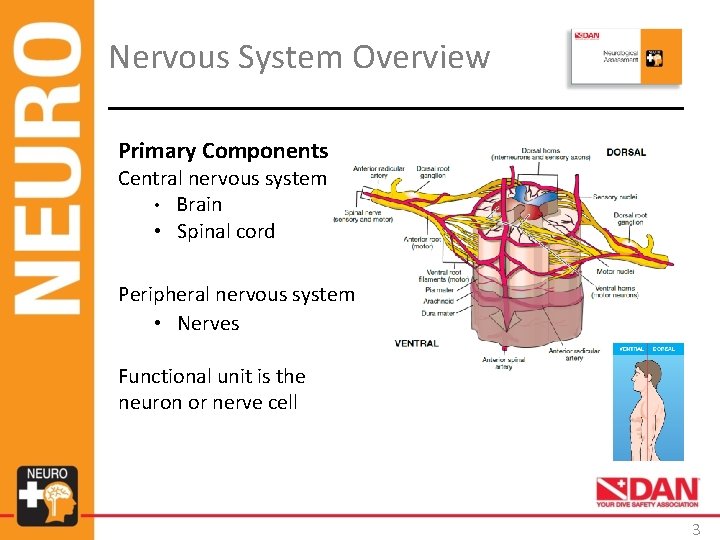
Nervous System Overview Primary Components Central nervous system • Brain • Spinal cord Peripheral nervous system • Nerves Functional unit is the neuron or nerve cell 3
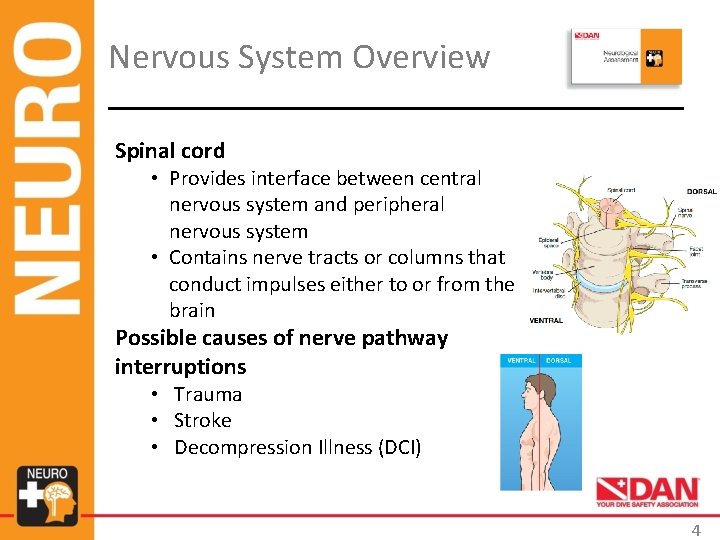
Nervous System Overview Spinal cord • Provides interface between central nervous system and peripheral nervous system • Contains nerve tracts or columns that conduct impulses either to or from the brain Possible causes of nerve pathway interruptions • Trauma • Stroke • Decompression Illness (DCI) 4
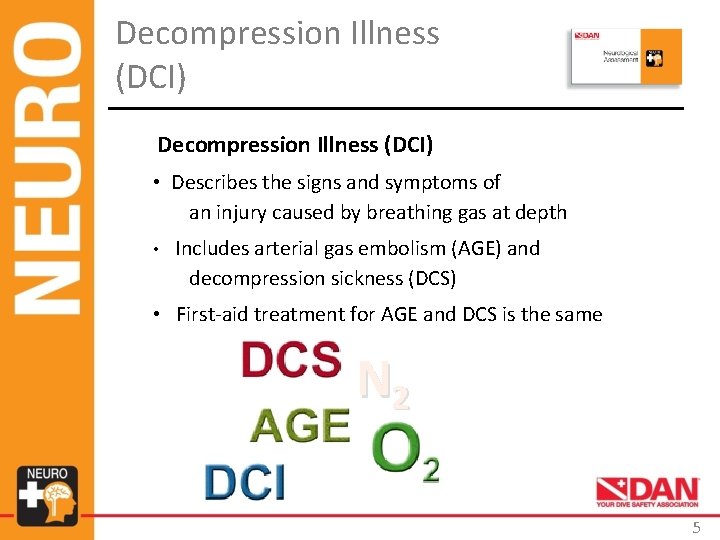
Decompression Illness (DCI) • Describes the signs and symptoms of an injury caused by breathing gas at depth • Includes arterial gas embolism (AGE) and decompression sickness (DCS) • First-aid treatment for AGE and DCS is the same N 2 5
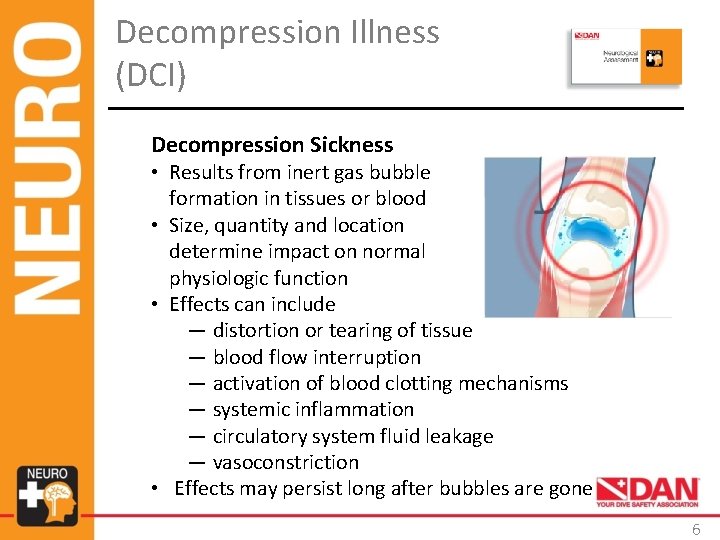
Decompression Illness (DCI) Decompression Sickness • Results from inert gas bubble formation in tissues or blood • Size, quantity and location determine impact on normal physiologic function • Effects can include — distortion or tearing of tissue — blood flow interruption — activation of blood clotting mechanisms — systemic inflammation — circulatory system fluid leakage — vasoconstriction • Effects may persist long after bubbles are gone 6
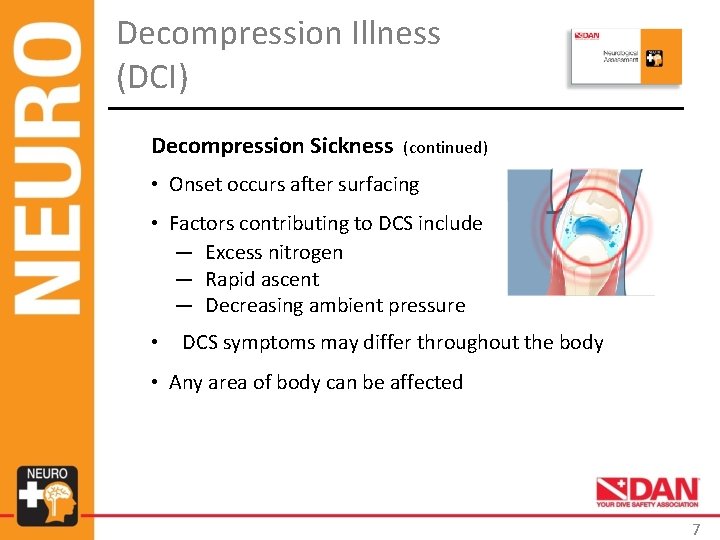
Decompression Illness (DCI) Decompression Sickness (continued) • Onset occurs after surfacing • Factors contributing to DCS include — Excess nitrogen — Rapid ascent — Decreasing ambient pressure • DCS symptoms may differ throughout the body • Any area of body can be affected 7
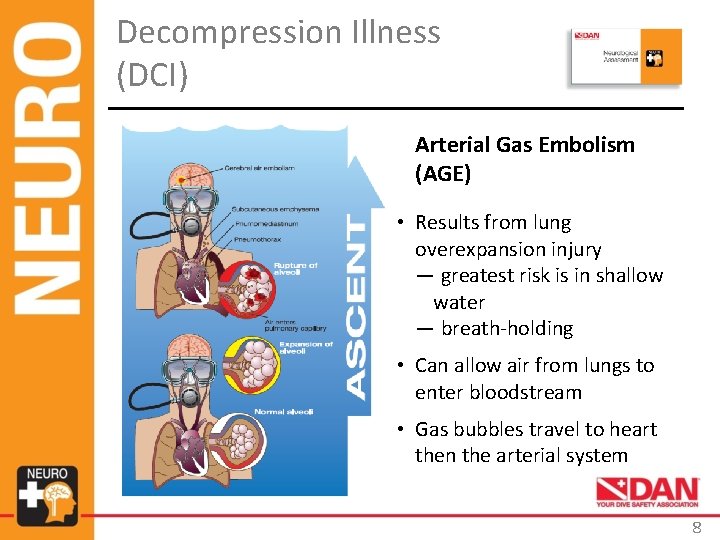
Decompression Illness (DCI) Arterial Gas Embolism (AGE) • Results from lung overexpansion injury — greatest risk is in shallow water — breath-holding • Can allow air from lungs to enter bloodstream • Gas bubbles travel to heart then the arterial system 8
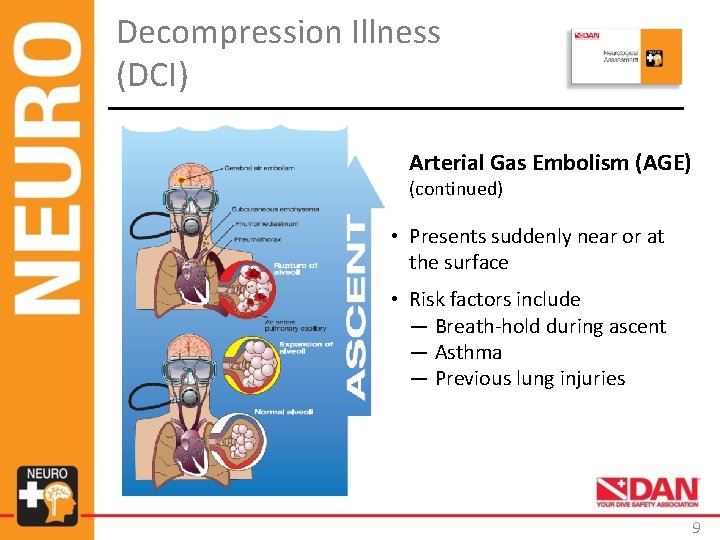
Decompression Illness (DCI) Arterial Gas Embolism (AGE) (continued) • Presents suddenly near or at the surface • Risk factors include — Breath-hold during ascent — Asthma — Previous lung injuries 9
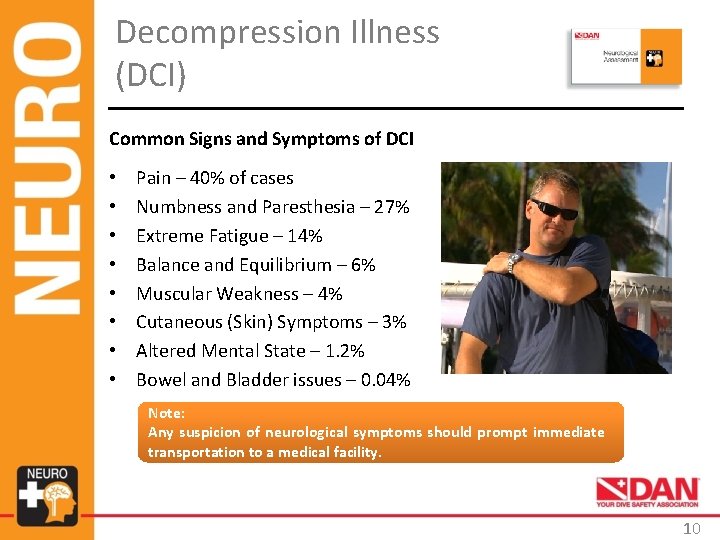
Decompression Illness (DCI) Common Signs and Symptoms of DCI • • Pain – 40% of cases Numbness and Paresthesia – 27% Extreme Fatigue – 14% Balance and Equilibrium – 6% Muscular Weakness – 4% Cutaneous (Skin) Symptoms – 3% Altered Mental State – 1. 2% Bowel and Bladder issues – 0. 04% Note: Any suspicion of neurological symptoms should prompt immediate transportation to a medical facility. 10
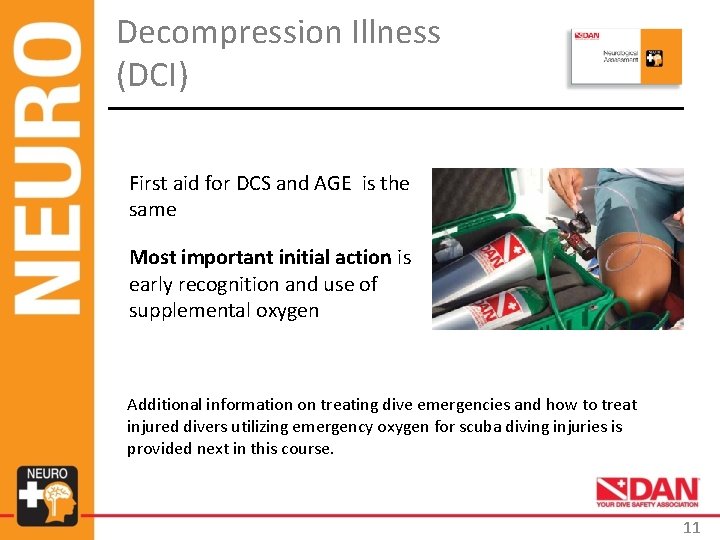
Decompression Illness (DCI) First aid for DCS and AGE is the same Most important initial action is early recognition and use of supplemental oxygen Additional information on treating dive emergencies and how to treat injured divers utilizing emergency oxygen for scuba diving injuries is provided next in this course. 11
Conducting a Neurological Assessment Remember F-A-S-T First Regardless of cause, if a neurological injury is suspected • Call local EMS immediately • Be prepared to initiate CPR • If injury is dive related, provide oxygen first aid if trained to do so • Complete full neurological assessment Note: Performing a neurological assessment should never interfere with EMS activation, evacuation or essential first-aid measures. 12
Conducting a Neurological Assessment Taking a History Assists in understanding what happened Can reveal underlying medical issues. Utilize mnemonic SAMPLE Signs/symptoms Allergies Medications Pertinent medical history Last oral intake Events leading to the current situation 13
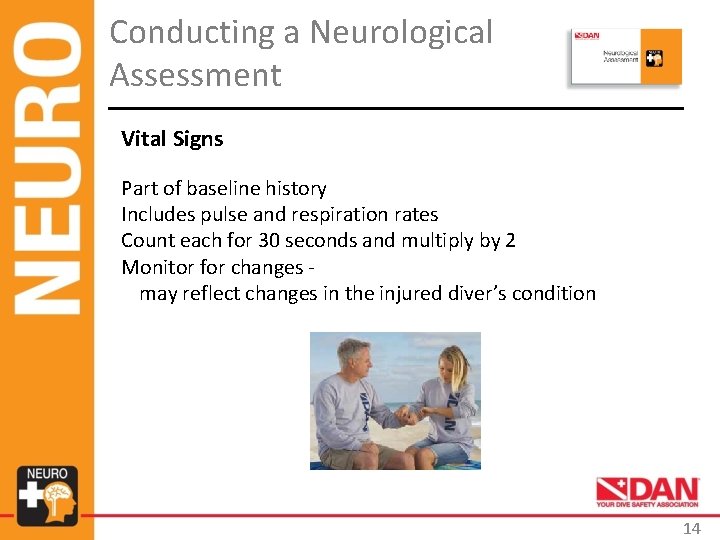
Conducting a Neurological Assessment Vital Signs Part of baseline history Includes pulse and respiration rates Count each for 30 seconds and multiply by 2 Monitor for changes may reflect changes in the injured diver’s condition 14
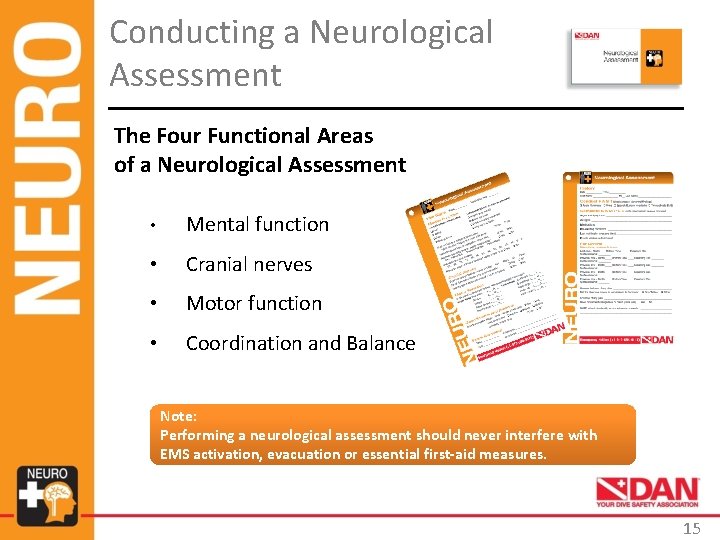
Conducting a Neurological Assessment The Four Functional Areas of a Neurological Assessment • Mental function • Cranial nerves • Motor function • Coordination and Balance Note: Performing a neurological assessment should never interfere with EMS activation, evacuation or essential first-aid measures. 15
Conducting a Neurological Assessment Mental Function Assess Level of Consciousness (A V P U) A lert V erbal stimulus P ainful stimulus U nresponsive • Includes orientation to person, place, time, reason for being there • Additional questions address • Speech • Comprehension • Computational skills • Memory • Note responses 16
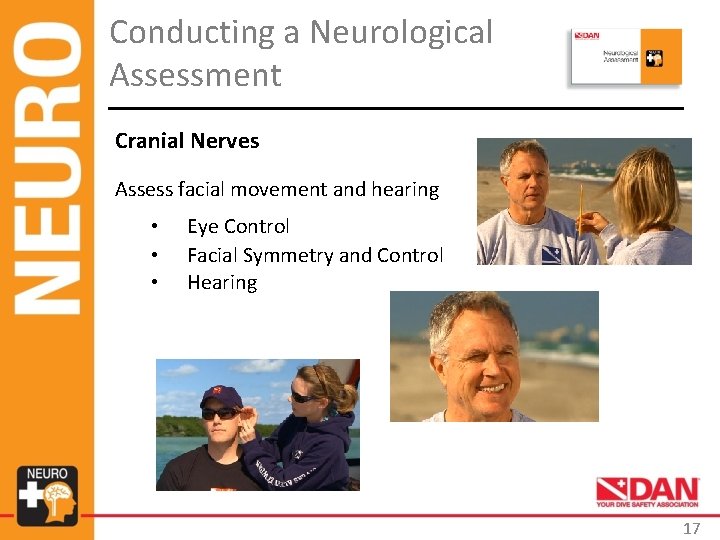
Conducting a Neurological Assessment Cranial Nerves Assess facial movement and hearing • • • Eye Control Facial Symmetry and Control Hearing 17
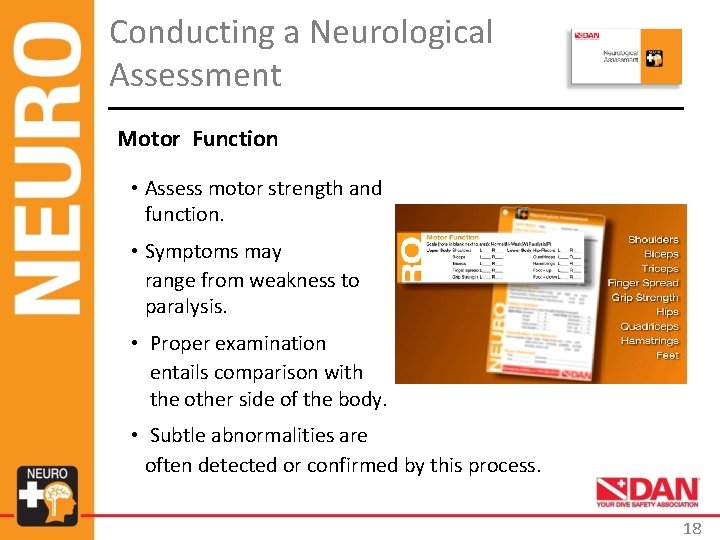
Conducting a Neurological Assessment Motor Function • Assess motor strength and function. • Symptoms may range from weakness to paralysis. • Proper examination entails comparison with the other side of the body. • Subtle abnormalities are often detected or confirmed by this process. 18
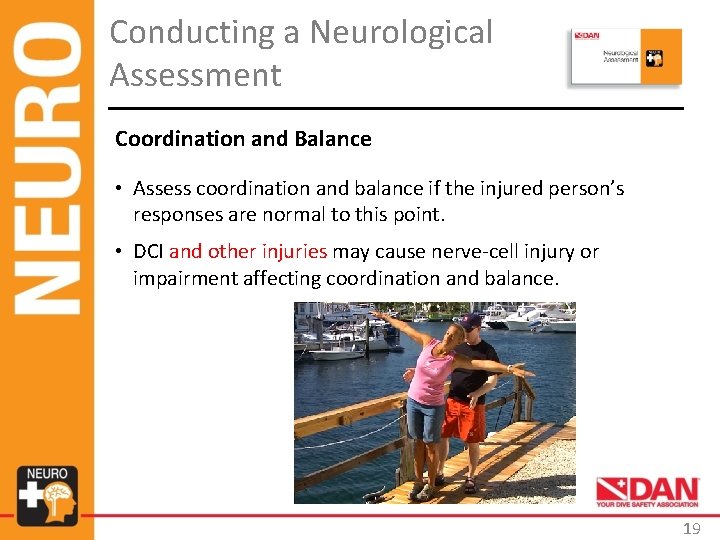
Conducting a Neurological Assessment Coordination and Balance • Assess coordination and balance if the injured person’s responses are normal to this point. • DCI and other injuries may cause nerve-cell injury or impairment affecting coordination and balance. 19
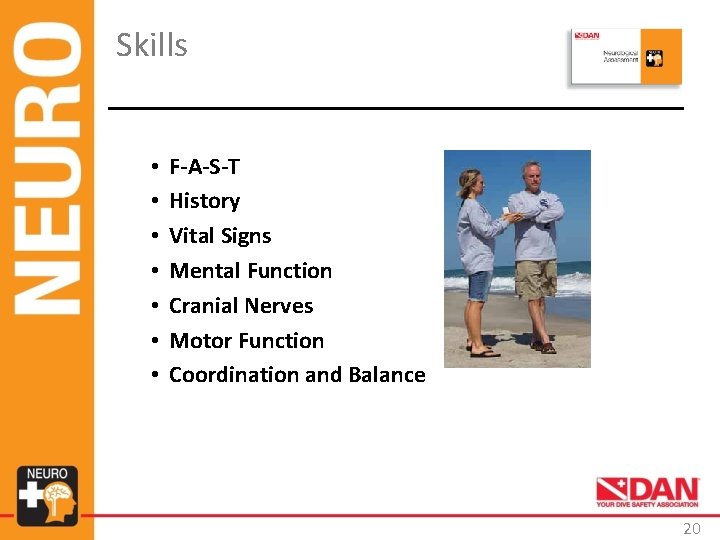
Skills • • F-A-S-T History Vital Signs Mental Function Cranial Nerves Motor Function Coordination and Balance 20
Questions? 21