Modeling Edging Forces in Skiing using Merchants Theory



- Slides: 26
Modeling Edging Forces in Skiing using Merchant's Theory for Metal Cutting Christopher A. Brown Mechanical Engineering Department Worcester Polytechnic Institute Worcester, Massachusetts, USA
outline • Lean and edge angle – speed, radius, side cut and angulation • Ski-snow forces – Merchant theory – friction, edge angle and penetration
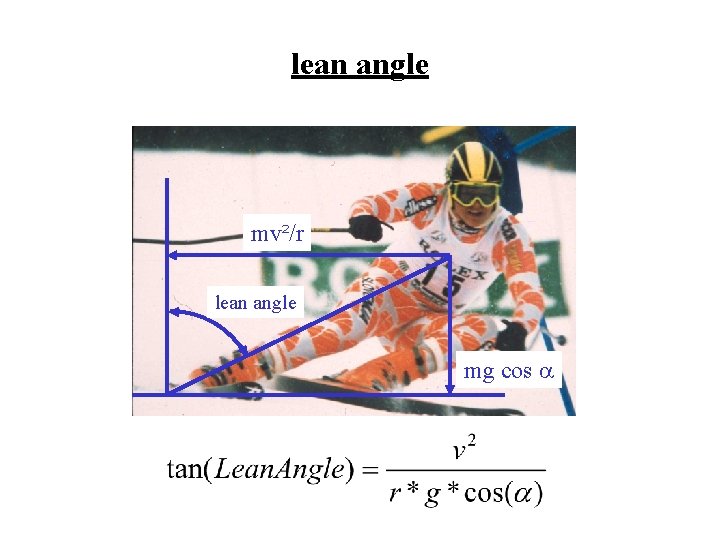
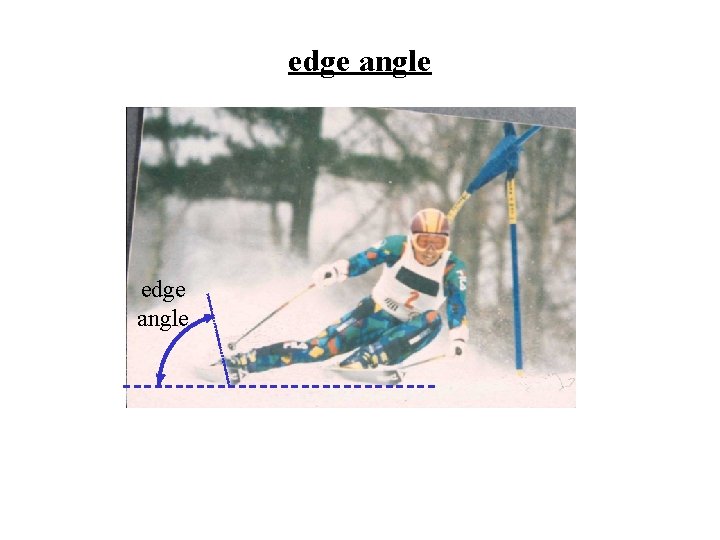
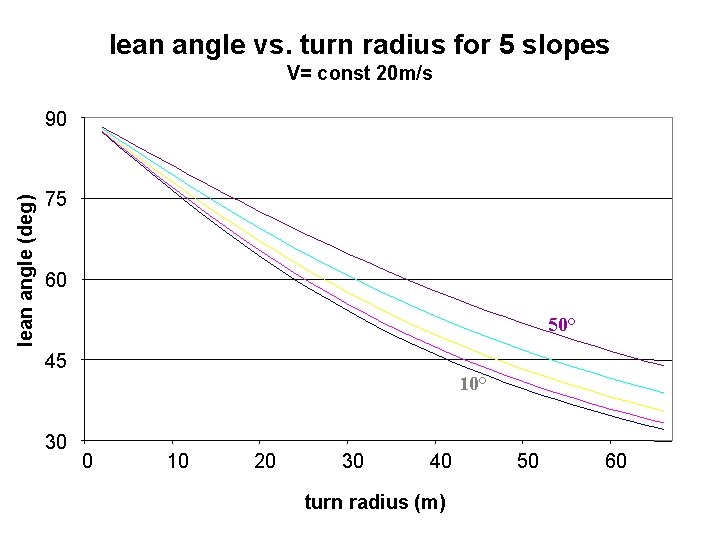
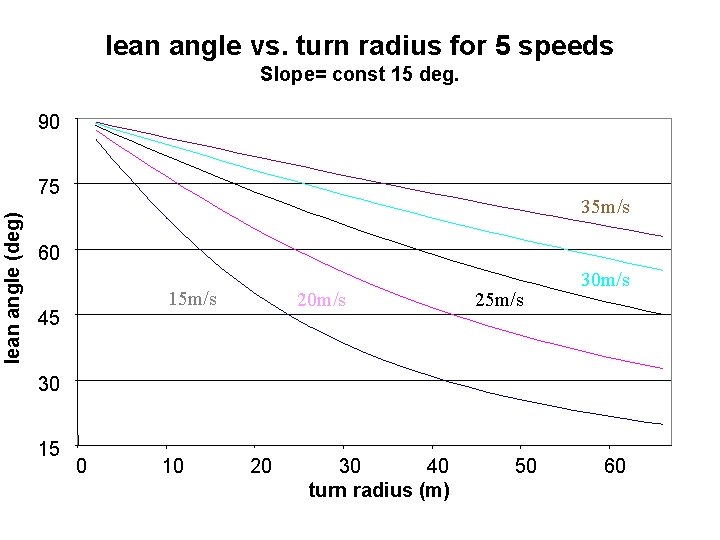
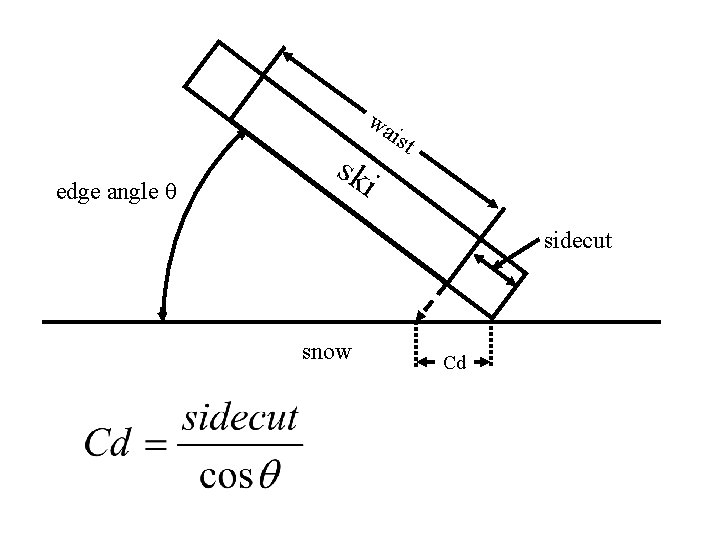
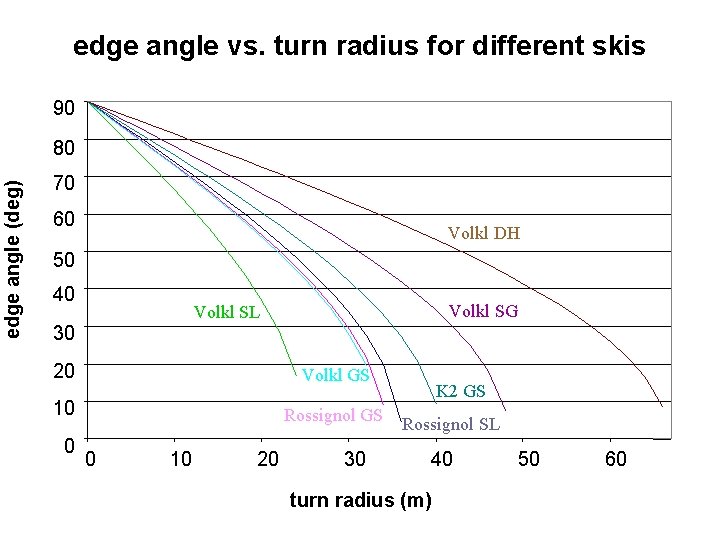
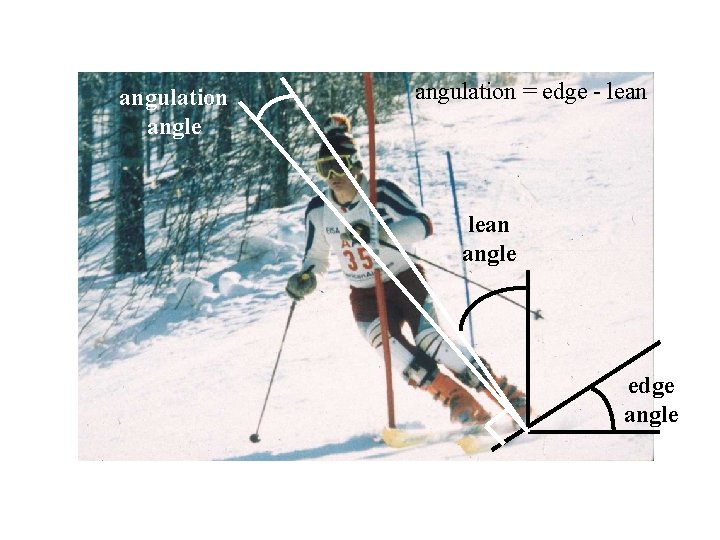
Lean and edge angle • Lean angle and balancing centrifugal forces – changes with speed and slope • Edge angle and geometric turning – considering side cut radius • Angulation – difference between edge and lean angles
lean angle mv²/r lean angle mg cos
edge angle
lean angle vs. turn radius for 5 slopes V= const 20 m/s lean angle (deg) 90 75 60 50° 45 30 10° 0 10 20 30 40 turn radius (m) 50 60
lean angle vs. turn radius for 5 speeds Slope= const 15 deg. 90 lean angle (deg) 75 35 m/s 60 15 m/s 45 20 m/s 25 m/s 30 15 0 10 20 30 40 turn radius (m) 50 60
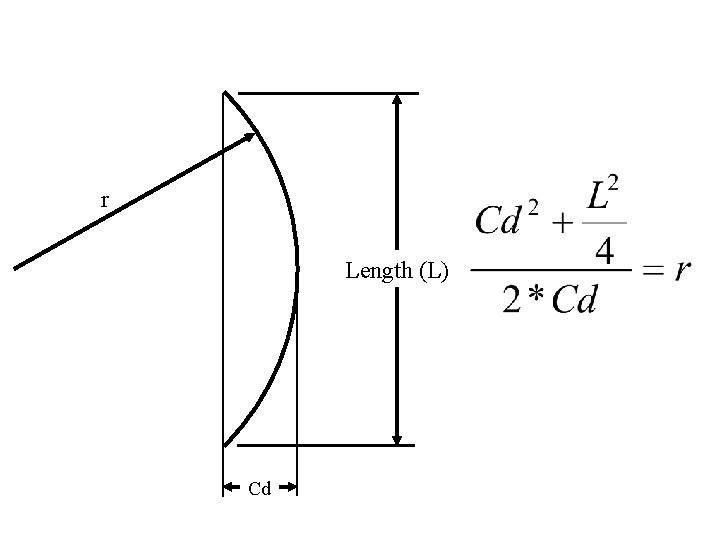
r Length (L) Cd
edge angle wa is sk t i sidecut snow Cd
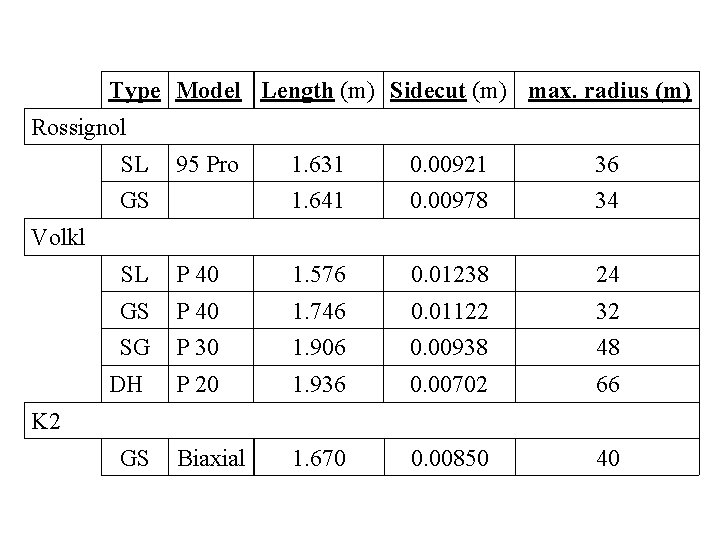
Type Model Length (m) Sidecut (m) max. radius (m) Rossignol SL 95 Pro GS 1. 631 0. 00921 36 1. 641 0. 00978 34 Volkl SL P 40 1. 576 0. 01238 24 GS P 40 1. 746 0. 01122 32 SG P 30 1. 906 0. 00938 48 DH P 20 1. 936 0. 00702 66 Biaxial 1. 670 0. 00850 40 K 2 GS
edge angle vs. turn radius for different skis 90 edge angle (deg) 80 70 60 Volkl DH 50 40 Volkl SG Volkl SL 30 20 Volkl GS 10 Rossignol GS 0 0 10 20 30 K 2 GS Rossignol SL 40 turn radius (m) 50 60
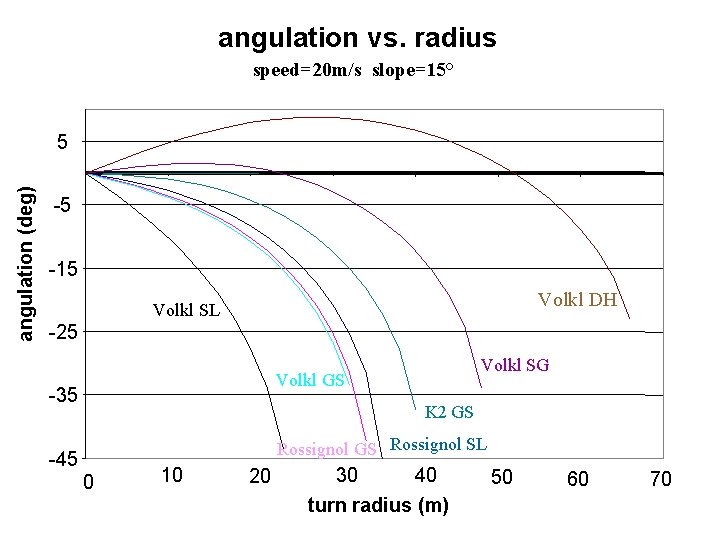
angulation angle angulation = edge - lean angle edge angle
angulation vs. radius speed=20 m/s slope=15° angulation (deg) 5 -5 -15 Volkl DH Volkl SL -25 Volkl SG Volkl GS -35 K 2 GS Rossignol SL -45 0 10 20 40 30 turn radius (m) 50 60 70
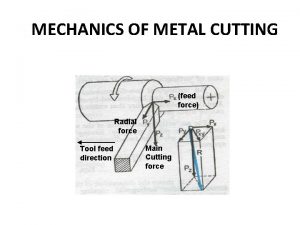
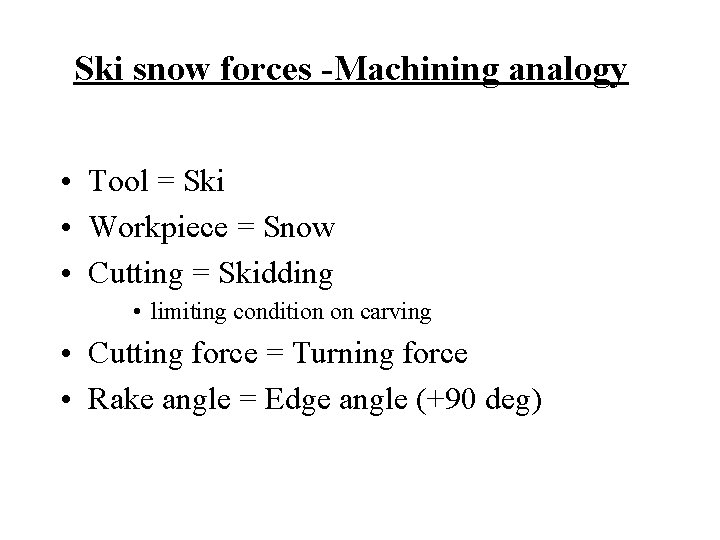
Ski snow forces -Machining analogy • Tool = Ski • Workpiece = Snow • Cutting = Skidding • limiting condition on carving • Cutting force = Turning force • Rake angle = Edge angle (+90 deg)
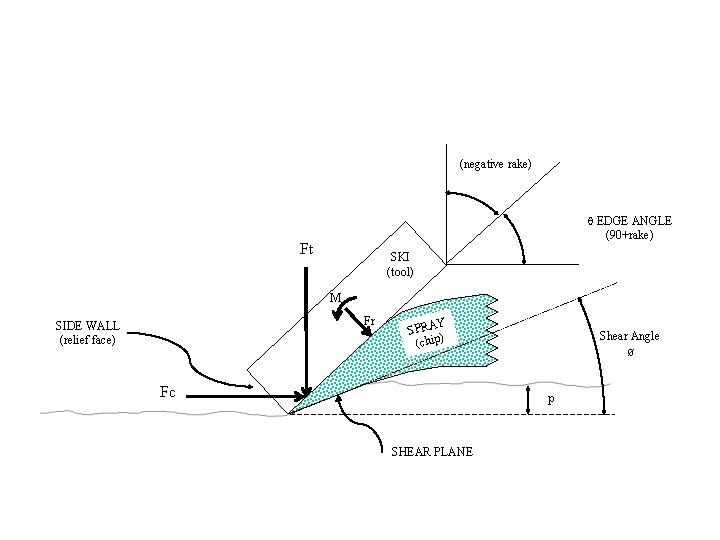
(negative rake) EDGE ANGLE (90+rake) Ft SKI (tool) M Fr SIDE WALL (relief face) Y SPRA (chip) Fc Shear Angle ø p SHEAR PLANE
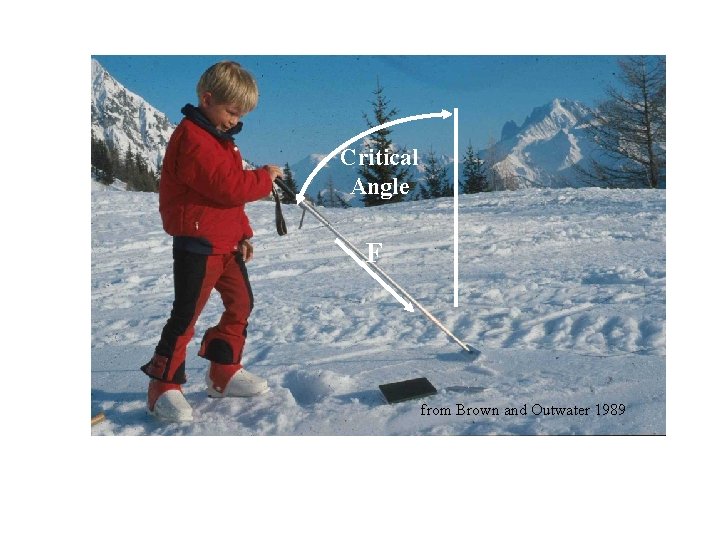
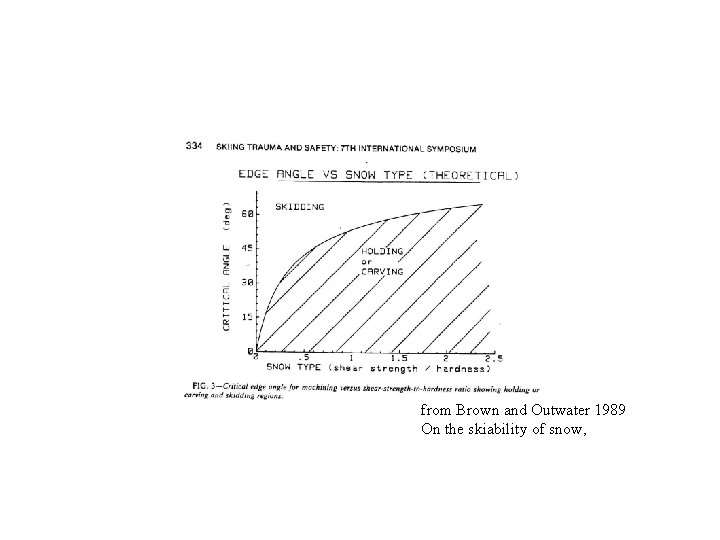
Critical Angle F from Brown and Outwater 1989
from Brown and Outwater 1989 On the skiability of snow,
Objectives of machining calculations - minimum conditions for carving • Turning force from mass, speed and radius • Edge penetration – as a function of edge angle and friction • Thrust force (normal to the snow) – can be influenced by body movements
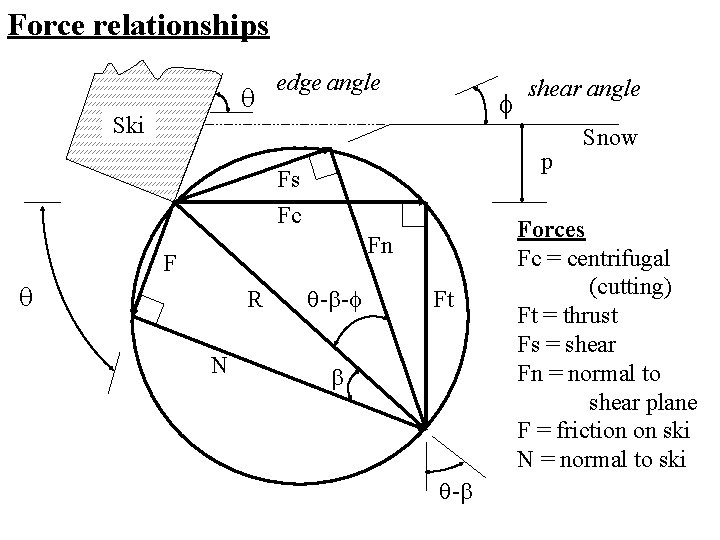
Force relationships Ski edge angle p Fs Fc Fn F R N shear angle - - Ft - Snow Forces Fc = centrifugal (cutting) Ft = thrust Fs = shear Fn = normal to shear plane F = friction on ski N = normal to ski
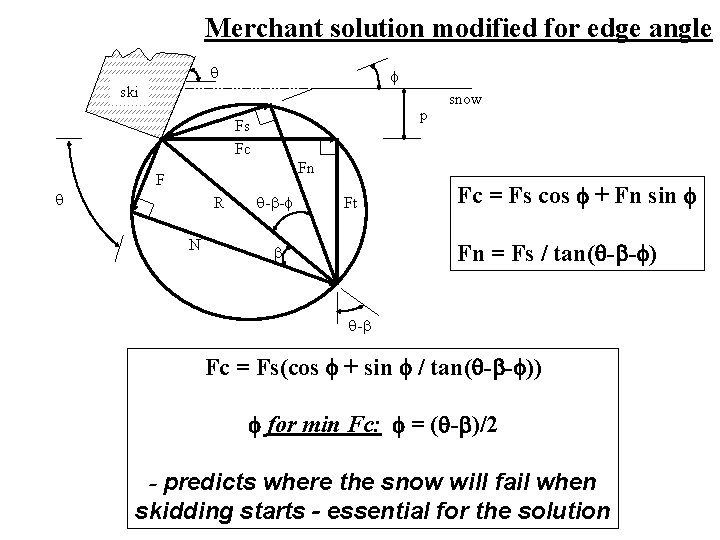
Merchant solution modified for edge angle ski p Fs Fc snow Fn F R N - - Ft Fc = Fs cos + Fn sin Fn = Fs / tan( - - ) - Fc = Fs(cos + sin / tan( - - )) for min Fc: = ( - )/2 - predicts where the snow will fail when skidding starts - essential for the solution
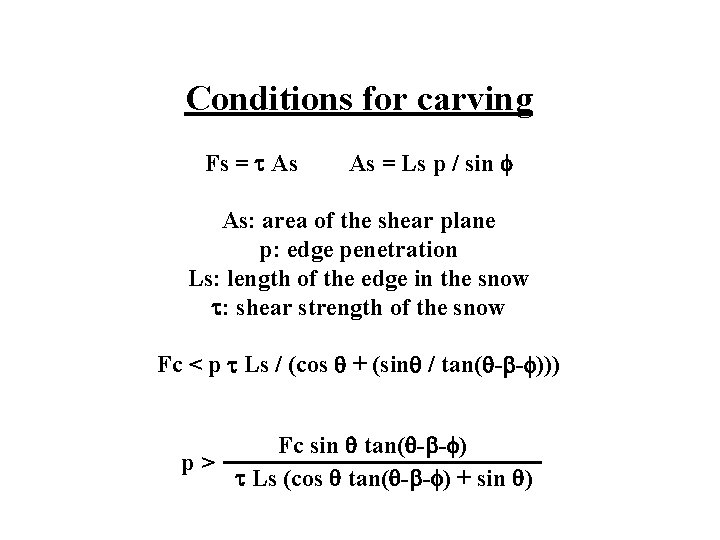
Conditions for carving Fs = As As = Ls p / sin As: area of the shear plane p: edge penetration Ls: length of the edge in the snow : shear strength of the snow Fc < p Ls / (cos + (sin / tan( - - ))) Fc sin tan( - - ) p> Ls (cos tan( - - ) + sin )
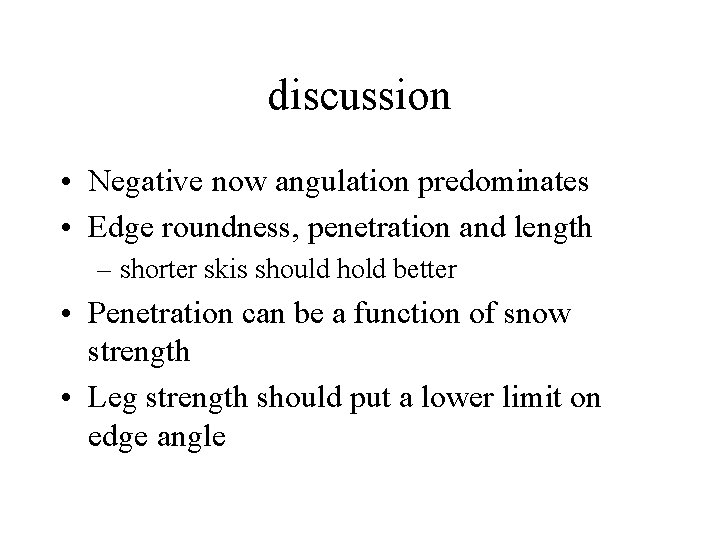
discussion • Negative now angulation predominates • Edge roundness, penetration and length – shorter skis should hold better • Penetration can be a function of snow strength • Leg strength should put a lower limit on edge angle
acknowledgements Thanks to Chris Hamel and Mike Malchiodi of WPI for help in preparation and equation checking. Thanks to Dan Mote for explaining that skiing is machining. Thanks to Branny von Turkovich for teaching me machining.