Maths Network Division For All Division is splitting
- Slides: 25
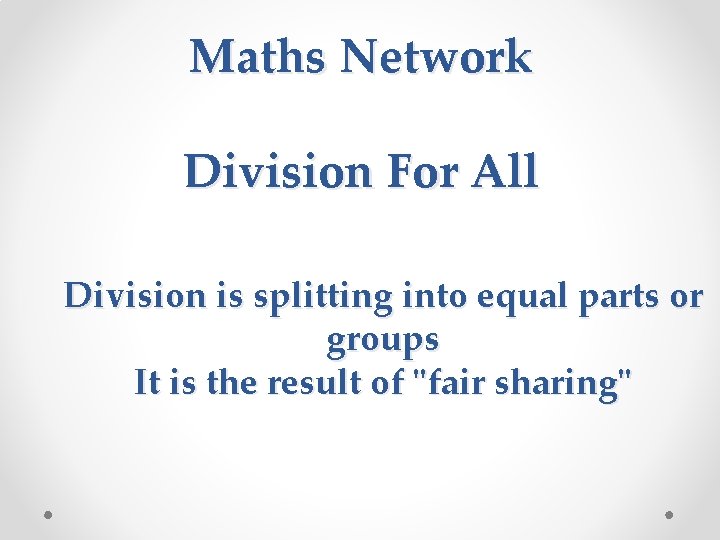
Maths Network Division For All Division is splitting into equal parts or groups It is the result of "fair sharing"
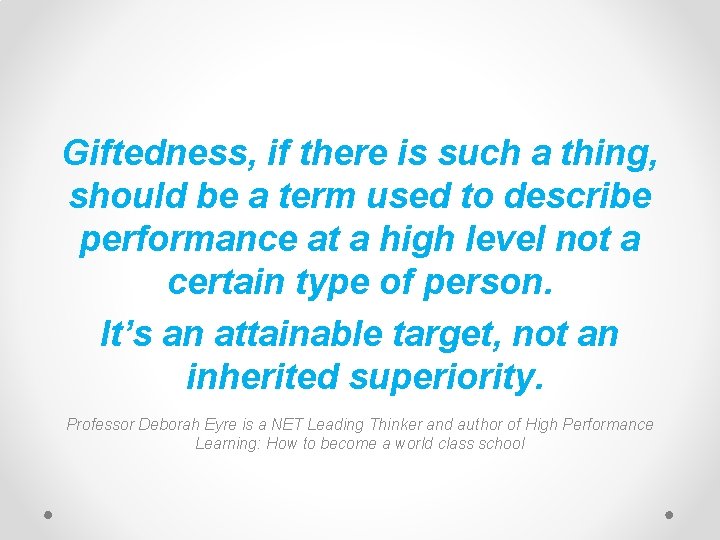
Giftedness, if there is such a thing, should be a term used to describe performance at a high level not a certain type of person. It’s an attainable target, not an inherited superiority. Professor Deborah Eyre is a NET Leading Thinker and author of High Performance Learning: How to become a world class school
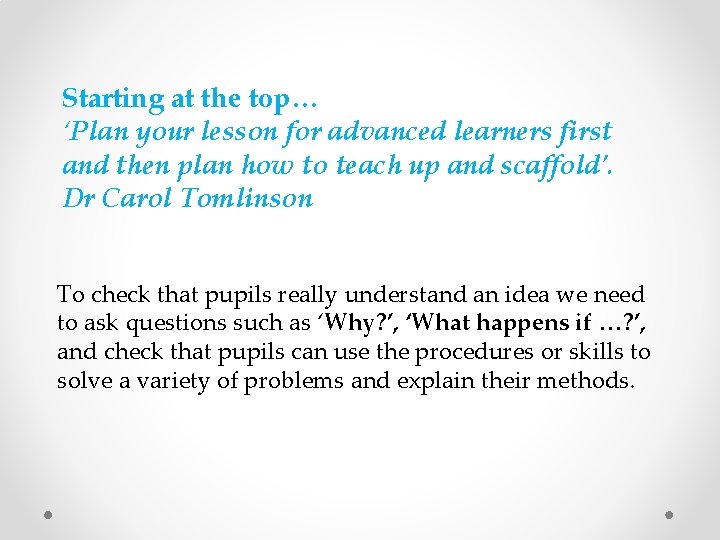
Starting at the top… ‘Plan your lesson for advanced learners first and then plan how to teach up and scaffold'. Dr Carol Tomlinson To check that pupils really understand an idea we need to ask questions such as ‘Why? ’, ‘What happens if …? ’, and check that pupils can use the procedures or skills to solve a variety of problems and explain their methods.
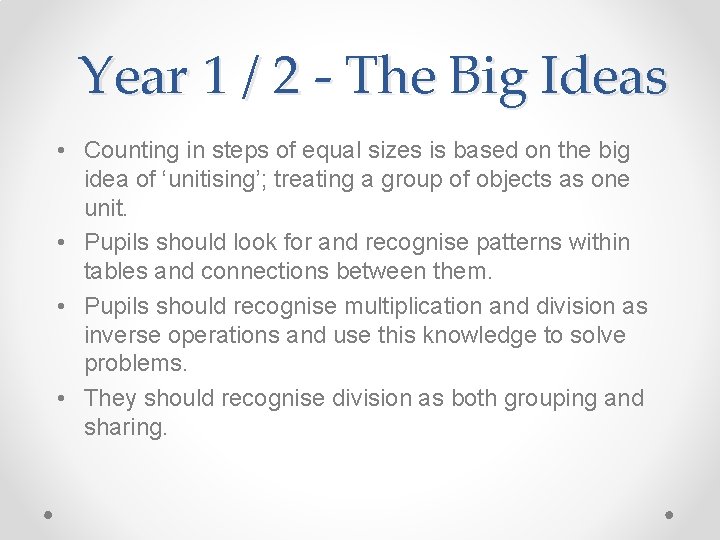
Year 1 / 2 - The Big Ideas • Counting in steps of equal sizes is based on the big idea of ‘unitising’; treating a group of objects as one unit. • Pupils should look for and recognise patterns within tables and connections between them. • Pupils should recognise multiplication and division as inverse operations and use this knowledge to solve problems. • They should recognise division as both grouping and sharing.
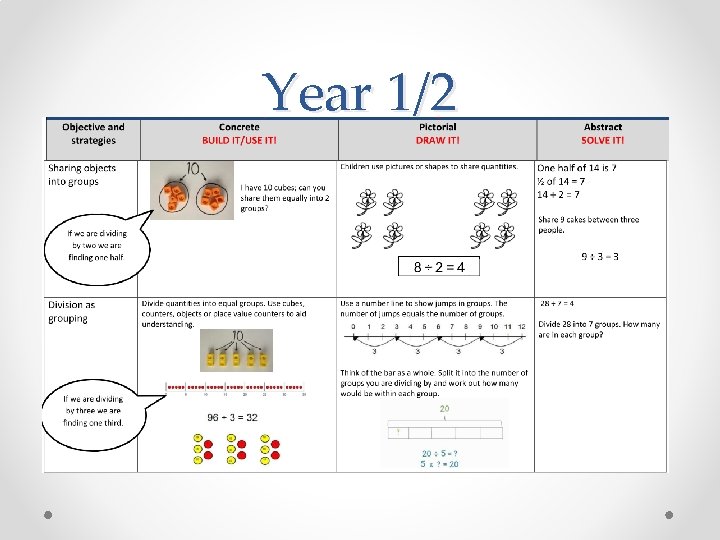
Year 1/2
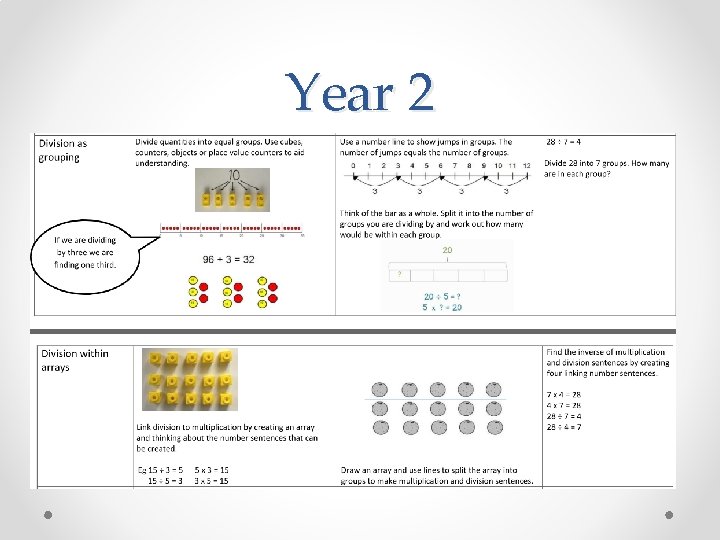
Year 2
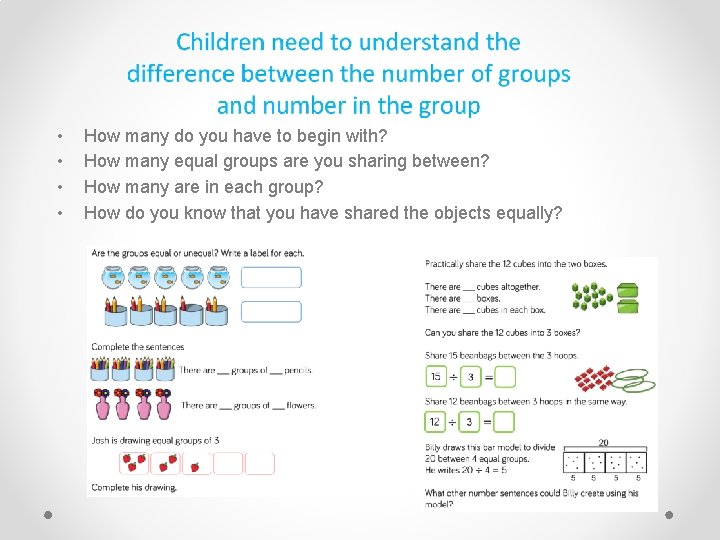
• • How many do you have to begin with? How many equal groups are you sharing between? How many are in each group? How do you know that you have shared the objects equally?
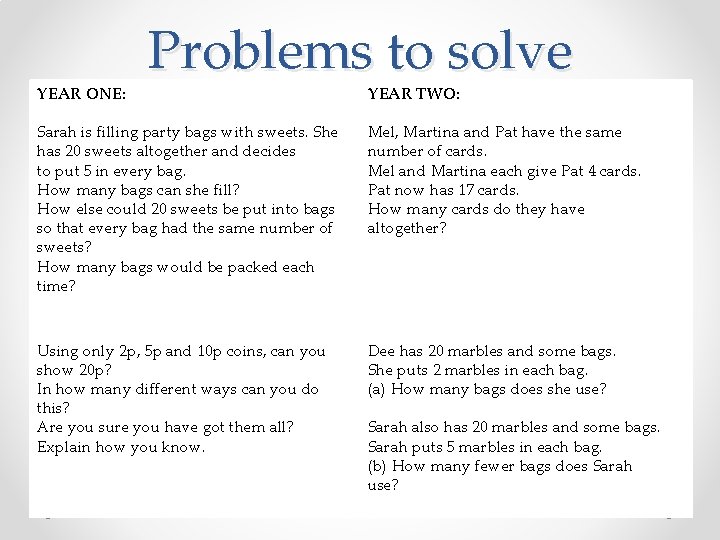
YEAR ONE: Problems to solve YEAR TWO: Sarah is filling party bags with sweets. She has 20 sweets altogether and decides to put 5 in every bag. How many bags can she fill? How else could 20 sweets be put into bags so that every bag had the same number of sweets? How many bags would be packed each time? Mel, Martina and Pat have the same number of cards. Mel and Martina each give Pat 4 cards. Pat now has 17 cards. How many cards do they have altogether? Using only 2 p, 5 p and 10 p coins, can you show 20 p? In how many different ways can you do this? Are you sure you have got them all? Explain how you know. Dee has 20 marbles and some bags. She puts 2 marbles in each bag. (a) How many bags does she use? Sarah also has 20 marbles and some bags. Sarah puts 5 marbles in each bag. (b) How many fewer bags does Sarah use?
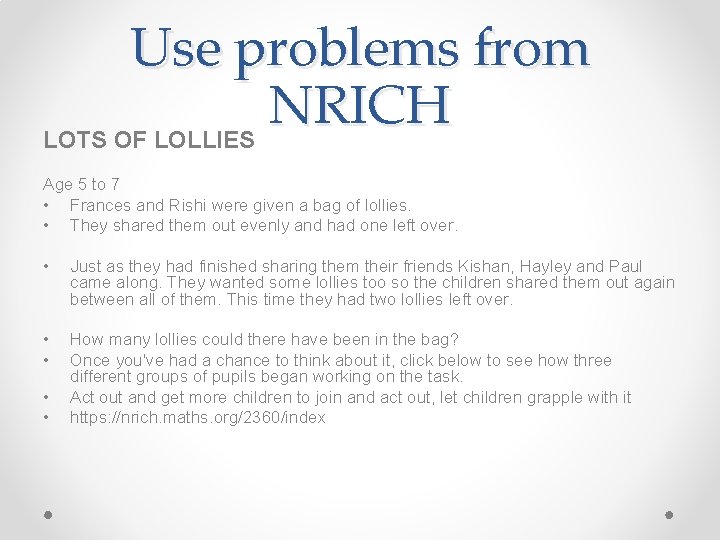
Use problems from NRICH LOTS OF LOLLIES Age 5 to 7 • Frances and Rishi were given a bag of lollies. • They shared them out evenly and had one left over. • Just as they had finished sharing them their friends Kishan, Hayley and Paul came along. They wanted some lollies too so the children shared them out again between all of them. This time they had two lollies left over. • • How many lollies could there have been in the bag? Once you've had a chance to think about it, click below to see how three different groups of pupils began working on the task. Act out and get more children to join and act out, let children grapple with it https: //nrich. maths. org/2360/index • •
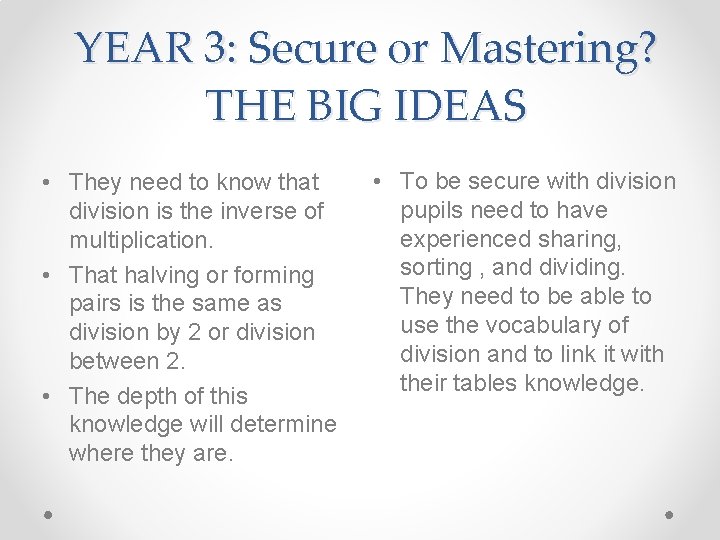
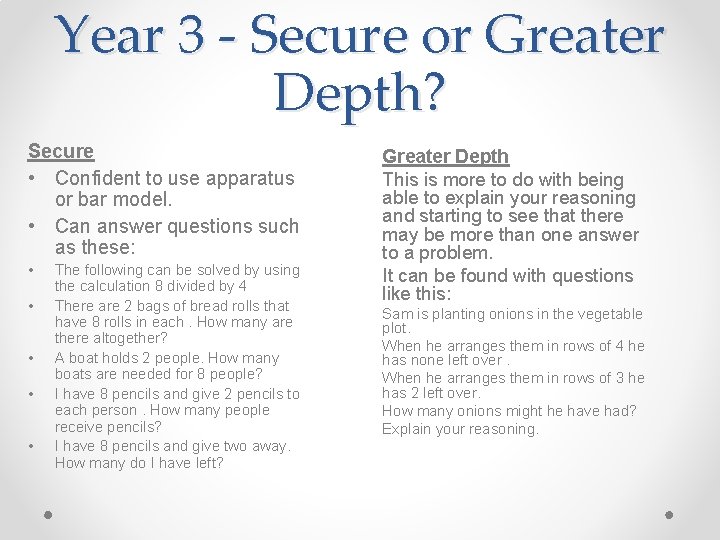
YEAR 3: Secure or Mastering? THE BIG IDEAS • They need to know that division is the inverse of multiplication. • That halving or forming pairs is the same as division by 2 or division between 2. • The depth of this knowledge will determine where they are. • To be secure with division pupils need to have experienced sharing, sorting , and dividing. They need to be able to use the vocabulary of division and to link it with their tables knowledge.
Year 3 - Secure or Greater Depth? Secure • Confident to use apparatus or bar model. • Can answer questions such as these: • • • The following can be solved by using the calculation 8 divided by 4 There are 2 bags of bread rolls that have 8 rolls in each. How many are there altogether? A boat holds 2 people. How many boats are needed for 8 people? I have 8 pencils and give 2 pencils to each person. How many people receive pencils? I have 8 pencils and give two away. How many do I have left? Greater Depth This is more to do with being able to explain your reasoning and starting to see that there may be more than one answer to a problem. It can be found with questions like this: Sam is planting onions in the vegetable plot. When he arranges them in rows of 4 he has none left over. When he arranges them in rows of 3 he has 2 left over. How many onions might he have had? Explain your reasoning.
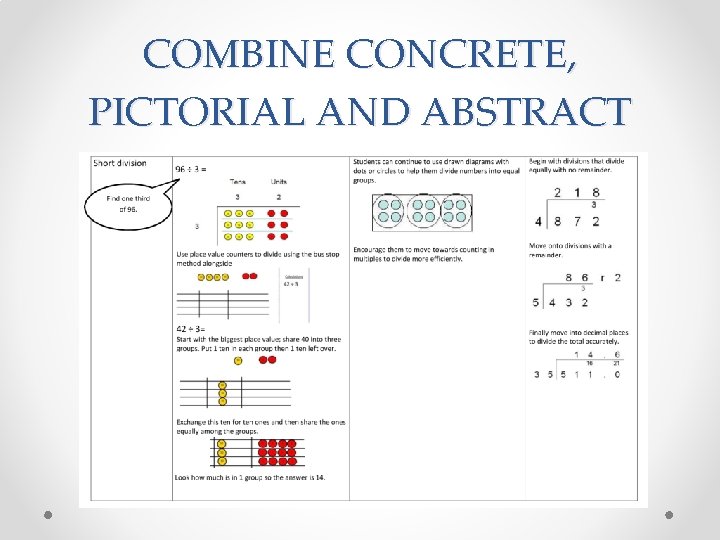
COMBINE CONCRETE, PICTORIAL AND ABSTRACT
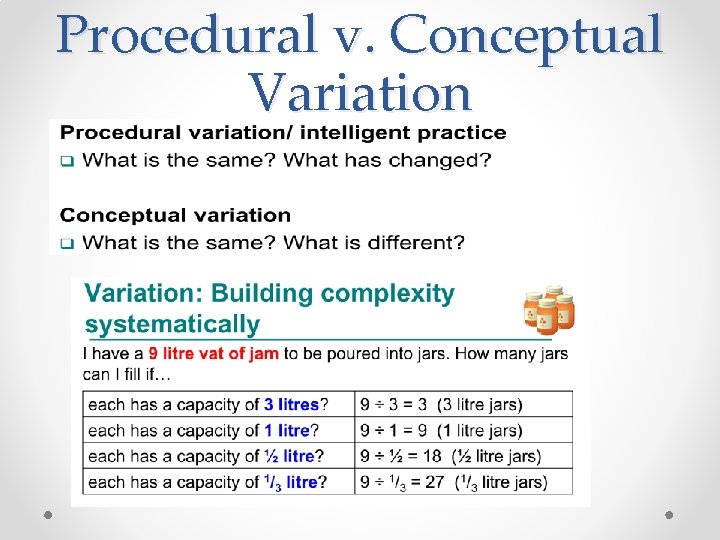
Procedural v. Conceptual Variation
Year 4 – The Big Ideas • It is important for children not just to be able to chant their multiplication tables but to understand what the facts in them mean, to be able to use these facts to figure out others and to use them in problems. • It is also important for children to be able to link facts within the tables (e. g. 5× is half of 10×). • They understand what multiplication means and see division as both grouping and sharing, and to see division as the inverse of multiplication.
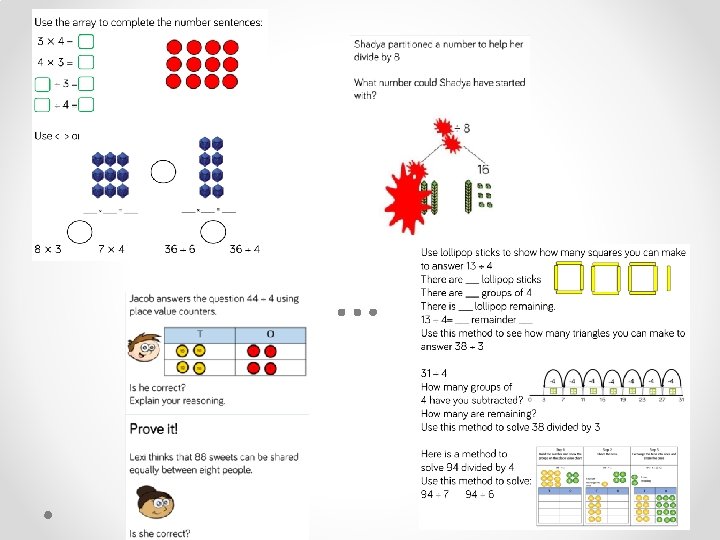
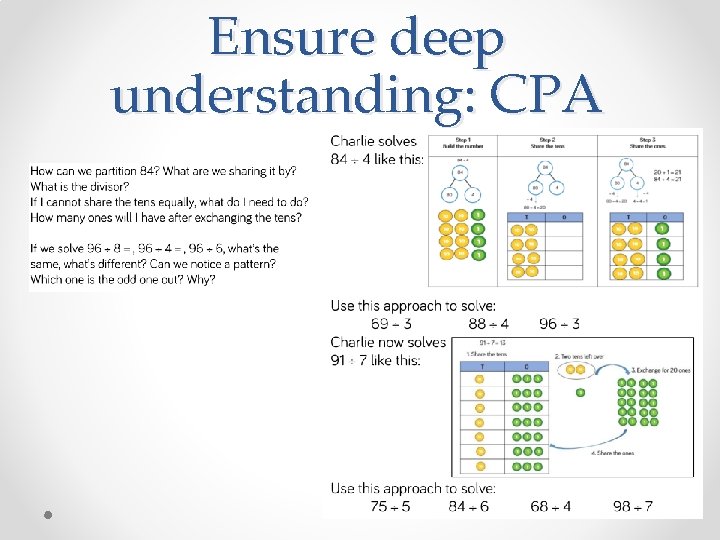
Ensure deep understanding: CPA
NRICH Problem Division Rules • • Age 7 to 11 Challenge Level: This challenge is about dividing a three-digit number by a single-digit number. Begin by deciding which number you are going to be dividing by. This is your divisor. Your challenge is going to be to come up with some rules for this divisor. Now generate a three-digit number. This is your dividend. You could use the spinners here to generate the digits, you could use dice or could just use your imagination! Now divide your dividend by your divisor. Record the answer. Create other dividends and divide them by the same divisor. Record the answers. Look carefully at the answers. When is the answer a whole number? When is there a remainder of 1? Can you spot any patterns? Can you come up with any rules?
Year 5 – The Big Ideas • Pupils have a firm understanding of what multiplication and division mean and have a range of strategies for dealing with large numbers, including both mental and standard written methods. • They see the idea of factors, multiples and prime numbers as connected and not separate ideas to learn. • They recognise how to use their skills of multiplying and dividing in new problem solving situations. • Fractions and division are connected ideas: 36 ÷ 18 = • 3168 = 2; 1386 = 1 2. • Factors and multiples are connected ideas: 48 is a multiple of 6 and 6 is a factor of 48.
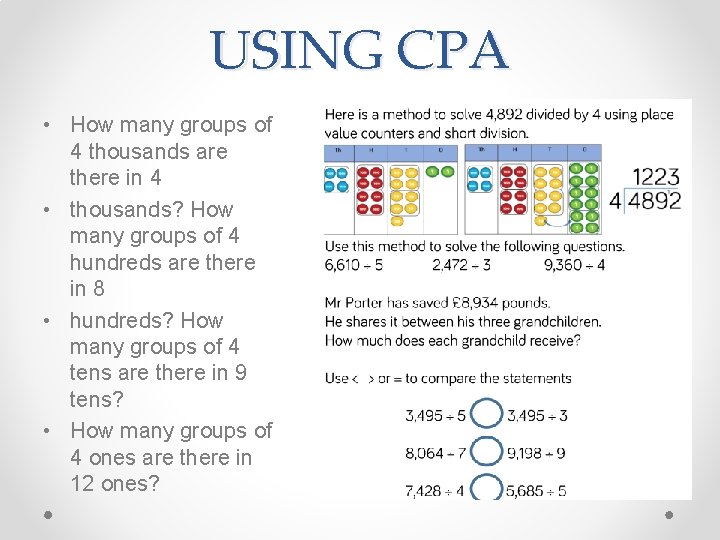
USING CPA • How many groups of 4 thousands are there in 4 • thousands? How many groups of 4 hundreds are there in 8 • hundreds? How many groups of 4 tens are there in 9 tens? • How many groups of 4 ones are there in 12 ones?
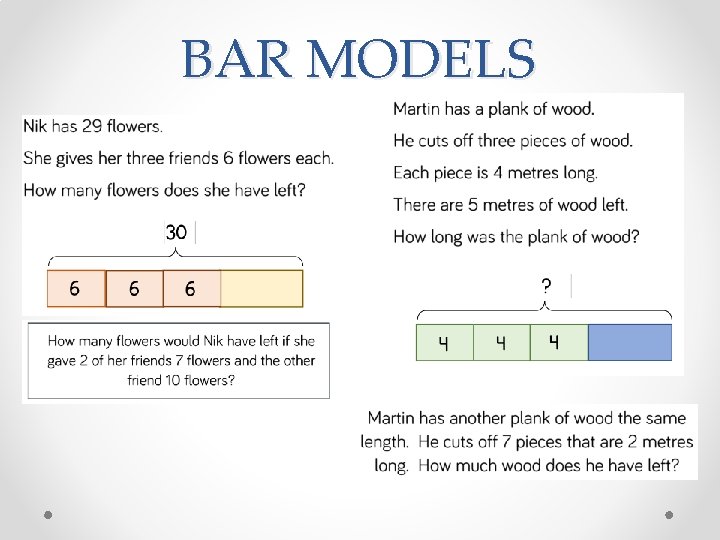
BAR MODELS
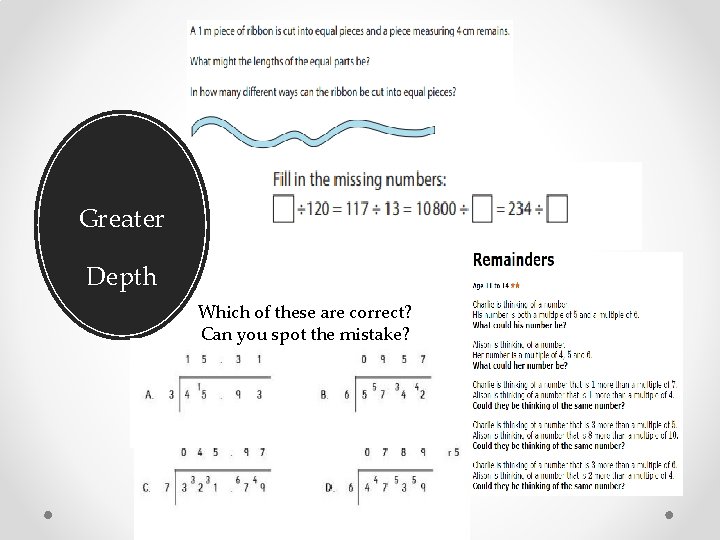
Greater Depth Which of these are correct? Can you spot the mistake?
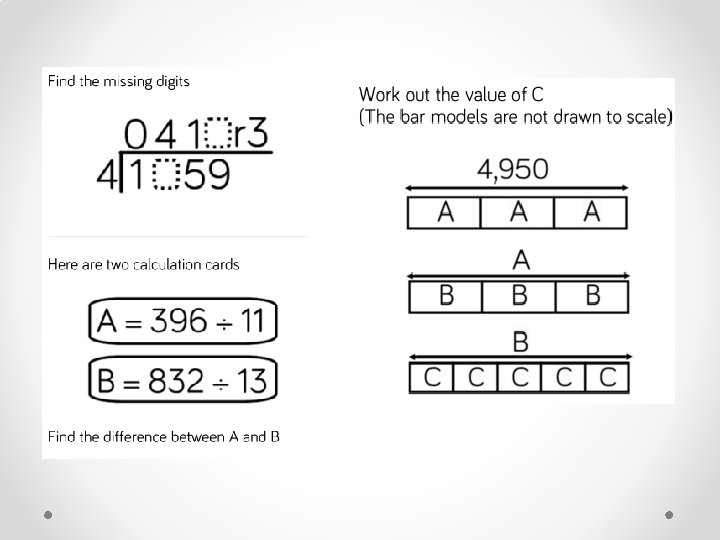
Year 6 – The Big Ideas • Standard written algorithms use the conceptual structures of the mathematics to produce efficient methods of calculation. • Standard written multiplication method involves a number of partial products. For example, 36 × 24 is made up of four partial products 30 × 20, 30 × 4, 6 × 20, 6 × 4. • There are connections between factors, multiples and prime numbers and between fractions, division and ratios. • Long division (up to 4 digits by a 2 digit number, interpret remainders)
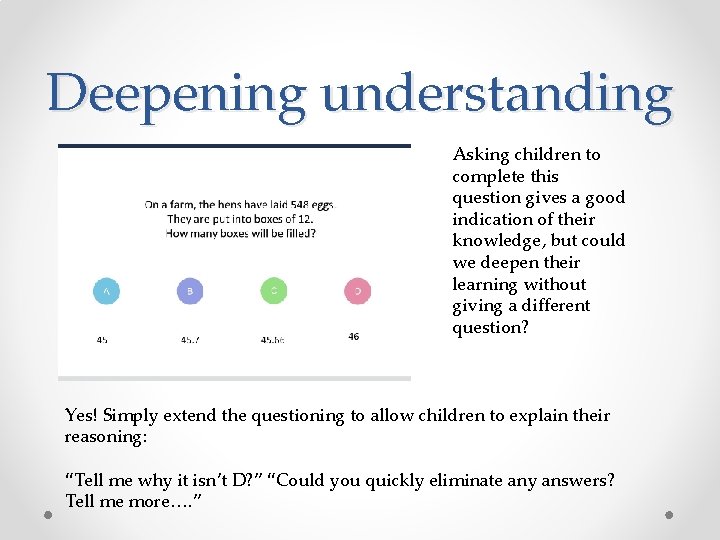
Deepening understanding Asking children to complete this question gives a good indication of their knowledge, but could we deepen their learning without giving a different question? Yes! Simply extend the questioning to allow children to explain their reasoning: “Tell me why it isn’t D? ” “Could you quickly eliminate any answers? Tell me more…. ”
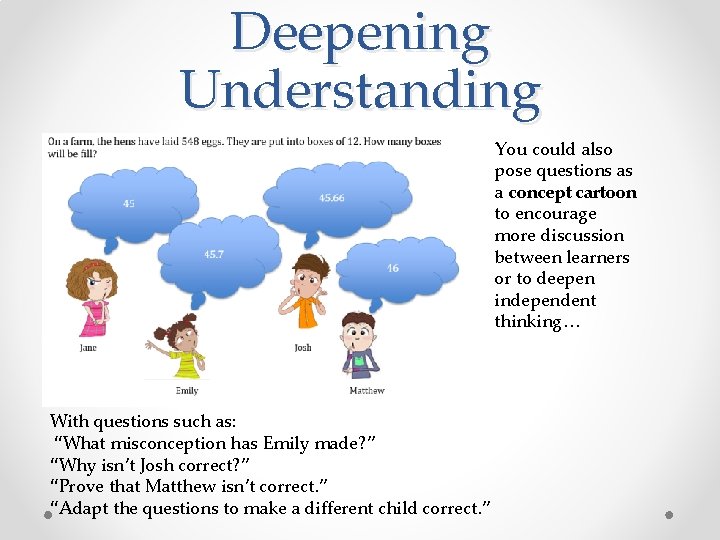
Deepening Understanding You could also pose questions as a concept cartoon to encourage more discussion between learners or to deepen independent thinking… With questions such as: “What misconception has Emily made? ” “Why isn’t Josh correct? ” “Prove that Matthew isn’t correct. ” “Adapt the questions to make a different child correct. ”