Lorna Augustin Tony Huynh Whitney Howzell Ni Kim

- Slides: 39
Lorna Augustin, Tony Huynh, Whitney Howzell, Ni Kim, Adam Langston
Physical Fitness & You
What is Physical Fitness? n The ability to carry out daily tasks easily and have enough energy to respond to unexpected demands
Benefits of Physical Fitness Physical Health n Emotional Health n Social Health n
Physical Health Lowers risk for health problems and diseases n Allows you to be more active and capable at any age n Give you higher energy levels for longer periods n Improves your posture n
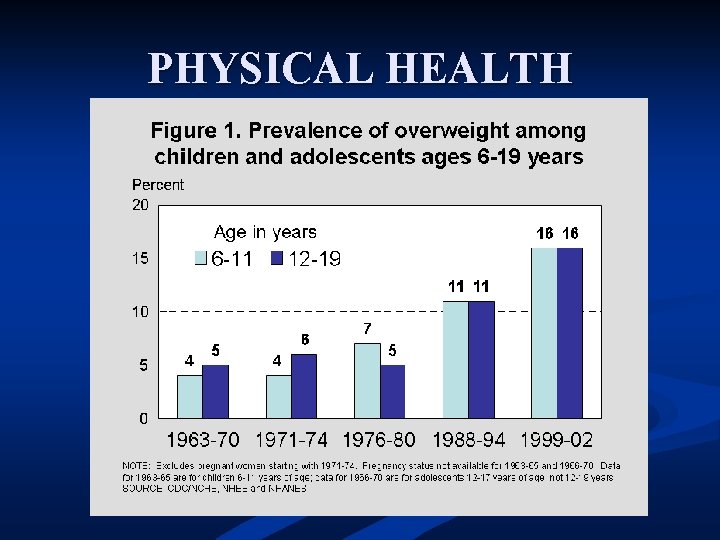
PHYSICAL HEALTH
Emotional Health Stress relief n Control depression n Sense of pride and accomplishment for taking care of yourself n Positive self-esteem n
Social Health Good relationships n Self-confidence n Better interaction n
5 Components of Physical Health Composition n Flexibility n Muscular Strength n Muscular Endurance n Cardiorespiratory Endurance n
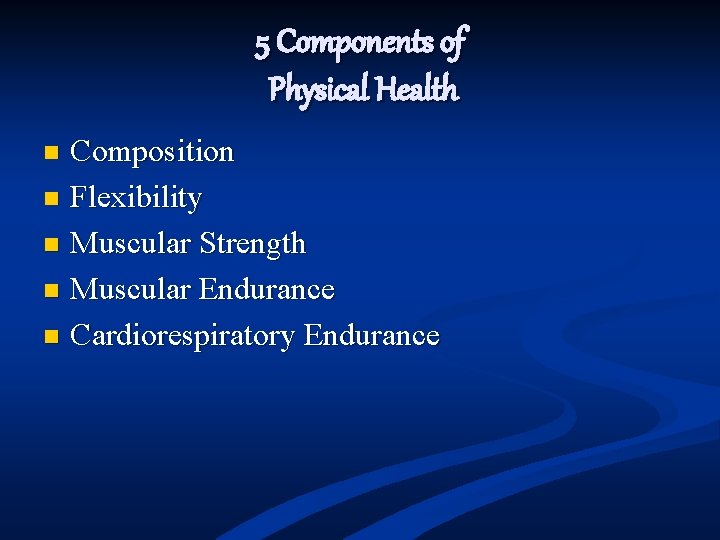
Composition n The ratio of body fat to body tissue, including muscle, bone, water, and connective tissue such as ligaments, cartilage and tendons
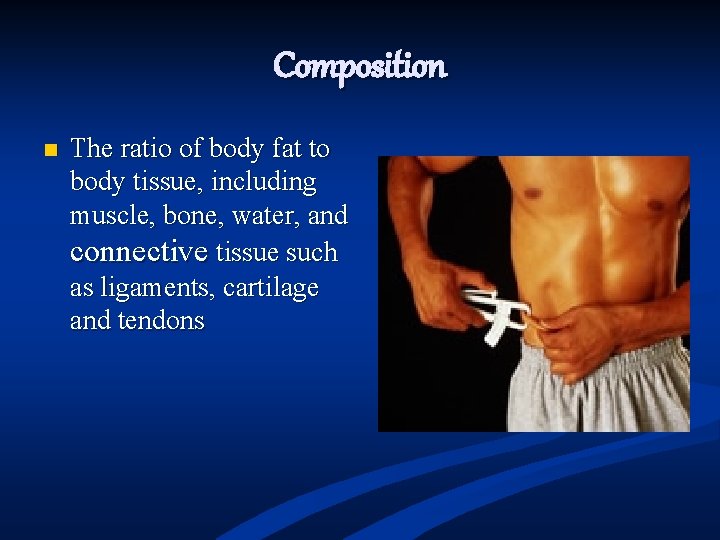
Flexibility n The ability to move a body through a full range of motion
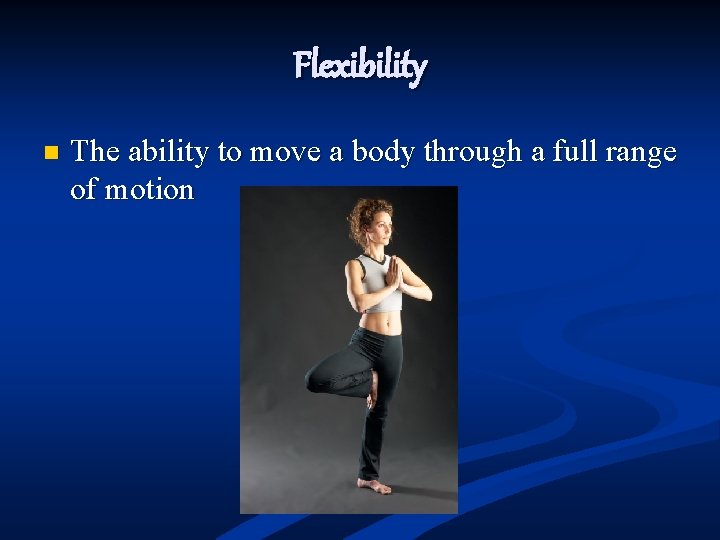
Muscular Strength n The amount of force a muscle can exert
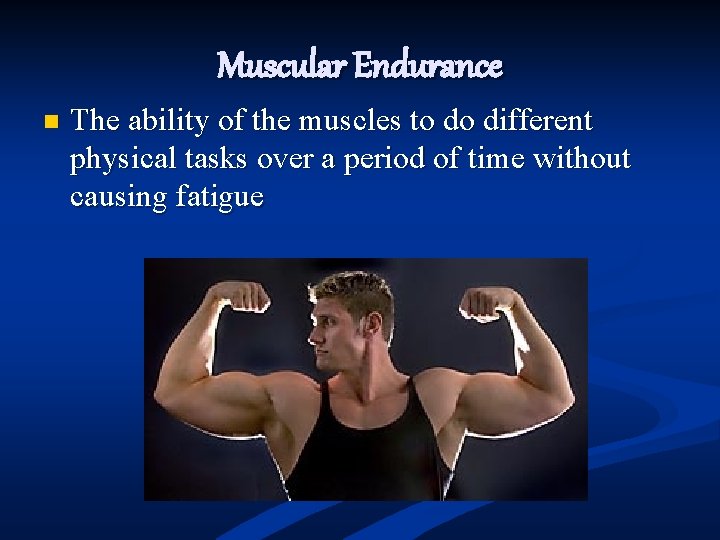
Muscular Endurance n The ability of the muscles to do different physical tasks over a period of time without causing fatigue
Cardiovascular Endurance n The ability of the heart, lungs and blood vessels to send fuel and oxygen to the body’s tissues during long periods of vigorous activity
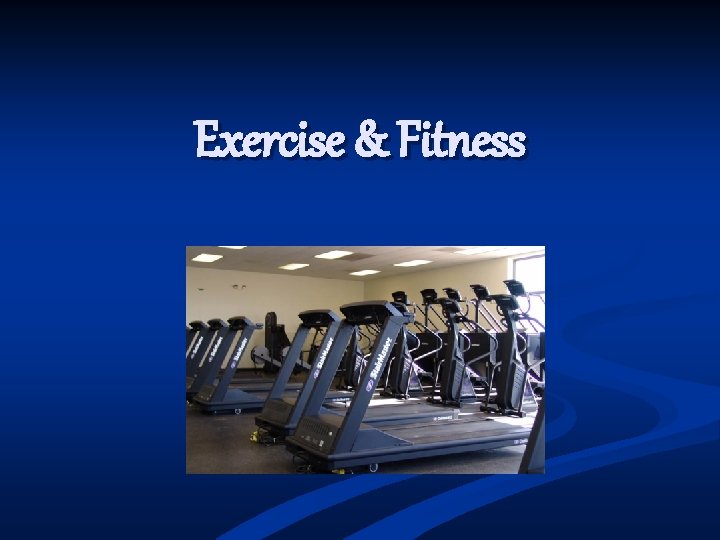
Exercise & Fitness
Benefits of Exercise Physical Health n Mental & Emotional Health n Social Health n
Physical Health Builds a strong body n Reduce the feelings of chronic fatigue & stiffness n Improve motor response n Strengthens the body’s muscles, skeleton, and other moving parts n Enhances the body’s protection against disease n Contributes to the functioning of the nervous, circulatory and respiratory system n
Mental/Emotional Health Reduces emotional stress n Stretching exercises helps you tense your muscles and sleep better n Refreshes people with jobs and makes them more productive n Increase brain activity n
Social Health Enhances self-esteem n Increases your preparedness to meet people n
2 Main Categories of Exercise Aerobic Exercise n Anaerobic Exercise n
Aerobic Exercise Vigorous activity in which oxygen is continuously taken in for a period of at least 20 minutes n Improves cardiovascular endurance n
Aerobic Activities Jogging n Swimming n Bicycling n Brisk walking n Jumping on a trampoline n
Anaerobic Exercise Intense bursts of activity in which muscles work so hard that they produce energy without using oxygen n Improves muscular strength, endurance, and flexibility n
Anaerobic Activities 100 -meter dash n Weight training n Resistance training n
3 Types of Resistance Training Exercise Isometric Exercise n Isotonic Exercise n Isokinetic Exercise n
Isometric Exercise Activity that uses muscle tension to improve muscular strength with little or no movement of the body part n Involves muscles pushing against muscle n Example: n Putting the palms of your hands together in front of you and pushing n
Isotonic Exercise Activity that combines muscle contraction with repeated movement n Examples: n Push-ups & pull-ups n Lifting weights n
Isokinetic Exercise Activity that involves resistance through an entire range of motion n Increases the flexibility of joints n Example: n Pushing or pulling against a hydraulic lever of certain exercise equipment n
Planning a Fitness Program
Planning a Fitness Program Getting started n Selecting the right activity n Monitor your progress n
Getting Started Plan your exercise a week ahead of time n Mark the activities time on a calendar n Set short-term goals at first n If goals are met, reward yourself n
Selecting the Right Activity Location n Interest n Level of health n Time & place n Personal safety n Comprehensive planning n
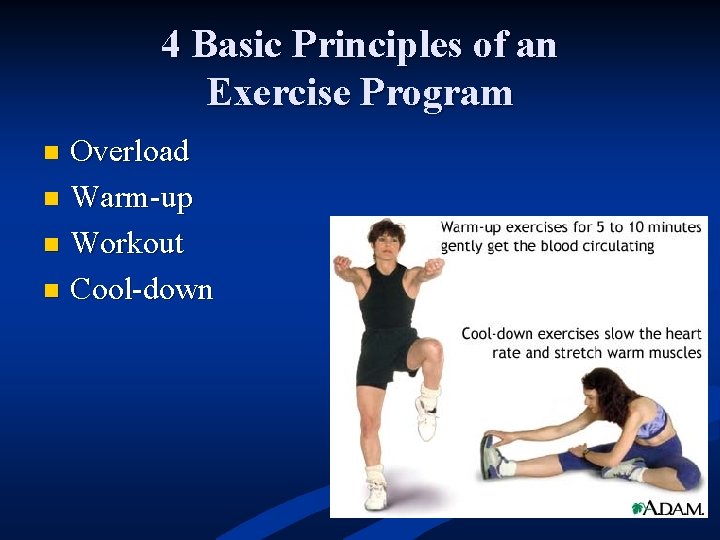
4 Basic Principles of an Exercise Program Overload n Warm-up n Workout n Cool-down n
Overload Working the body harder than it is normally worked n Builds muscular strength & contributes to overall fitness n Progression n Gradual increase in overload n Specificity n Particular exercises & activities improve particular areas n
Warm-up Engaging in activity that prepares the muscles for work n 1 st Step n Raise your body temperature n 2 nd Step n Stretch large muscles slowly & smoothly n 3 rd Step n Perform the activity slowly for about 5 minutes n
Workout Performing activity at its highest peak n F. I. T. formula n Frequency n How often you do the activity each week n Intensity n How hard you work at the activity during a session n Time n How much time you devote to a given session n
Cool-Down n Engaging in activity to gradually decrease activity
Monitor Your Progress Ask yourself these questions: n Do I feel better? n Am I walking or bicycling or jogging farther in a shorter amount of time? n Can I lift weights for a longer period of time n Keep an exercise journal n Resting heart rate n
THE END