Life Cycle of a Star 8 8 A





- Slides: 31
Life Cycle of a Star 8. 8 A describe components of the universe, including stars, nebulae, and galaxies, and use models such as the Herztsprung-Russell diagram for classification. Essential Questions 1. How do stars change over time? 2. How are stars classified on a Herztsprung-Russell Diagram? 3. How does our sun compare to other stars in the universe? Objectives 1. Describe objects in space such as stars (in all life stages) and galaxies. 2. Describe the life cycle of a star and correlate a star’s life stage to its placement on the HR-Diagram. 3. Classify the types of stars on the HRDiagram.
Warm Up l Look at the page: Supernova in Chaco Canyon -What predictions can you make about the words SUPERNOVA and NEBULA? -Record your predictions in your Interactive Notebook.
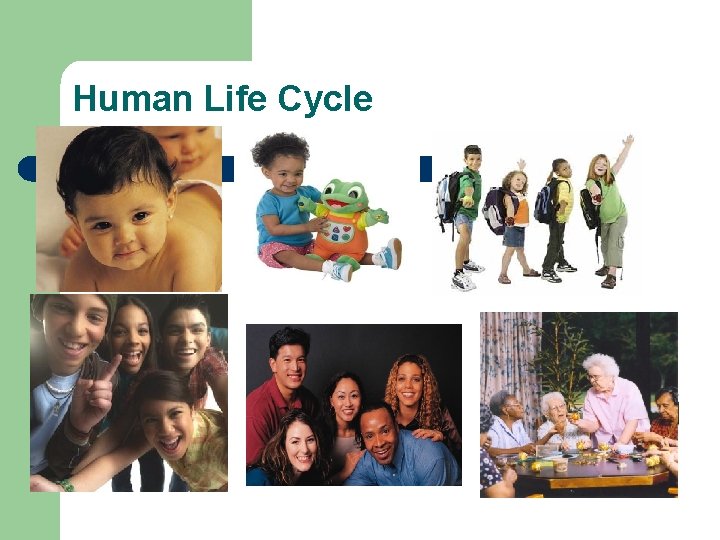
ENGAGE: Life Cycle of a Human l Humans change through time. Describe the Life Cycle of a Human -Record at least 4 Stages in your Notebook. -Include the length of the stages and important details about each stage.
Human Life Cycle
EXPLORE: Life Cycles of Stars Each Group will get a packet of pictures taken from the Hubble Telescope. YOUR TASK -Read the descriptions on each picture. -Use clues from what you read to try to construct a “Life Cycle” for the star you have. -Be prepared to share your groups ideas! l
Warm Up: QUICK WRITE Record the Chart in your Notebook and fill it in using what you learned yesterday about how stars change over time. TOPIC: Life Cycle of a Star: Stars Change Over Time Key Points: Questions I Still Have:
Space School: Stars l Stars
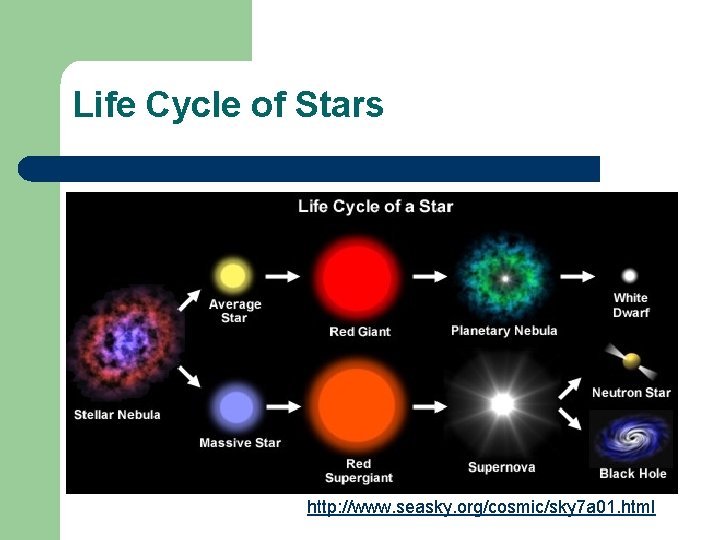
EXPLAIN: Life Cycle Foldable Use pg 717 to illustrate your Life Cycle Foldable. Read pgs. 716 -719 to record information about each phase. Nebula Average Star Red Giant Planetary Nebula White Dwarf Super Red Giant Supernova Neutron Star or Black Hole (low mass star) Nebula Massive Star (high mass star)
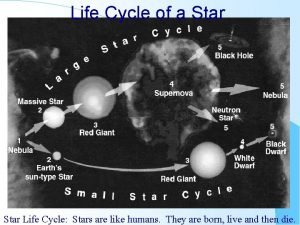
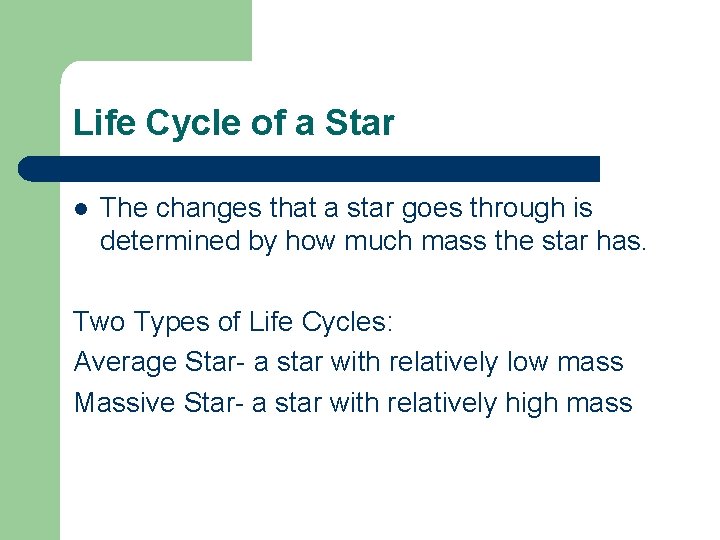
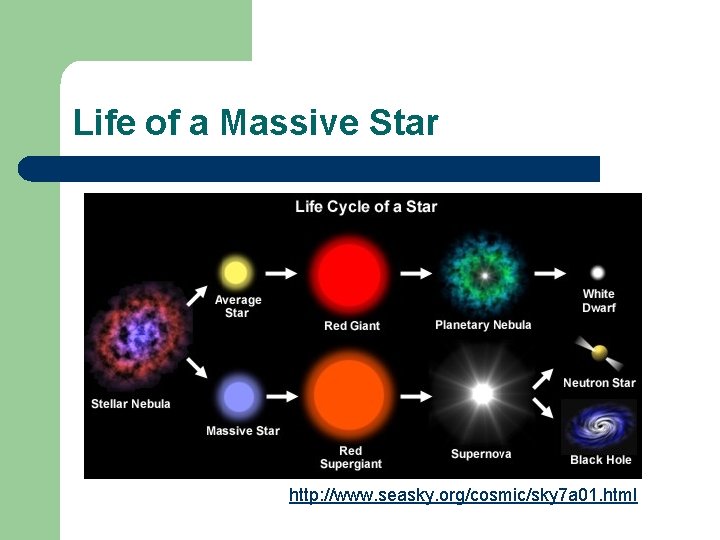
Life Cycle of a Star l The changes that a star goes through is determined by how much mass the star has. Two Types of Life Cycles: Average Star- a star with relatively low mass Massive Star- a star with relatively high mass
Life Cycle of Stars http: //www. seasky. org/cosmic/sky 7 a 01. html
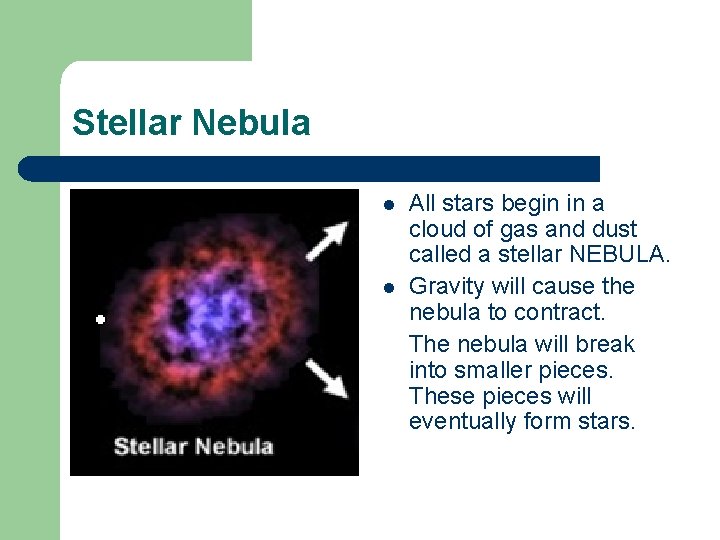
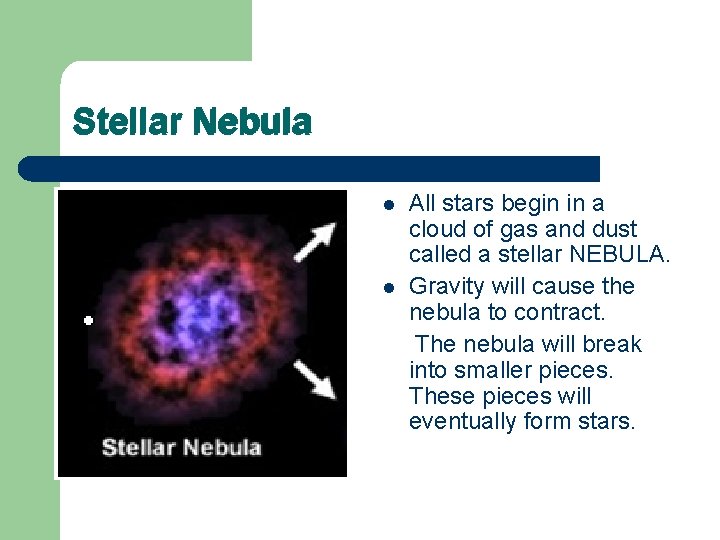
Stellar Nebula l l All stars begin in a cloud of gas and dust called a stellar NEBULA. Gravity will cause the nebula to contract. The nebula will break into smaller pieces. These pieces will eventually form stars.
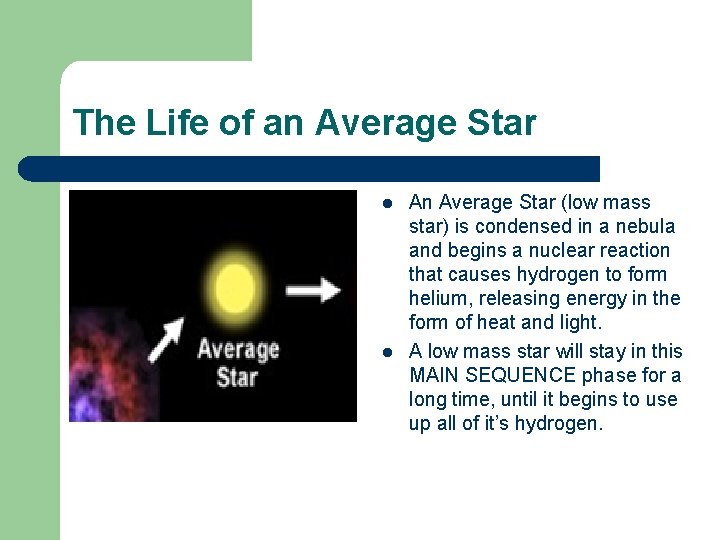
The Life of an Average Star l l An Average Star (low mass star) is condensed in a nebula and begins a nuclear reaction that causes hydrogen to form helium, releasing energy in the form of heat and light. A low mass star will stay in this MAIN SEQUENCE phase for a long time, until it begins to use up all of it’s hydrogen.
The Life of an Average Star l l Towards the end of it’s MAIN SEQUENCE phase, a star begins to burn all of its hydrogen. The outer layers will collapse, become heated by the core and expand out forming a red giant.
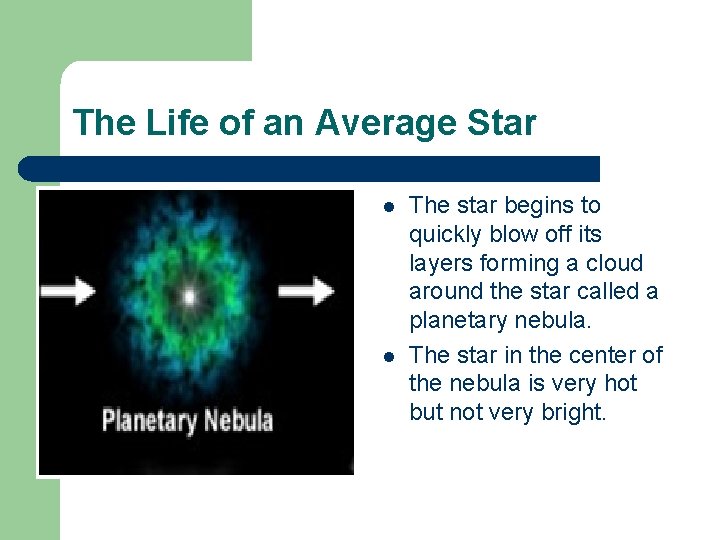
The Life of an Average Star l l The star begins to quickly blow off its layers forming a cloud around the star called a planetary nebula. The star in the center of the nebula is very hot but not very bright.
The Life of an Average Star l l When a star has burned all it’s fuel it will collapse under the pressure of gravity. The white dwarf that forms is very small and dense.
Life of a Massive Star http: //www. seasky. org/cosmic/sky 7 a 01. html
Stellar Nebula l l All stars begin in a cloud of gas and dust called a stellar NEBULA. Gravity will cause the nebula to contract. The nebula will break into smaller pieces. These pieces will eventually form stars.
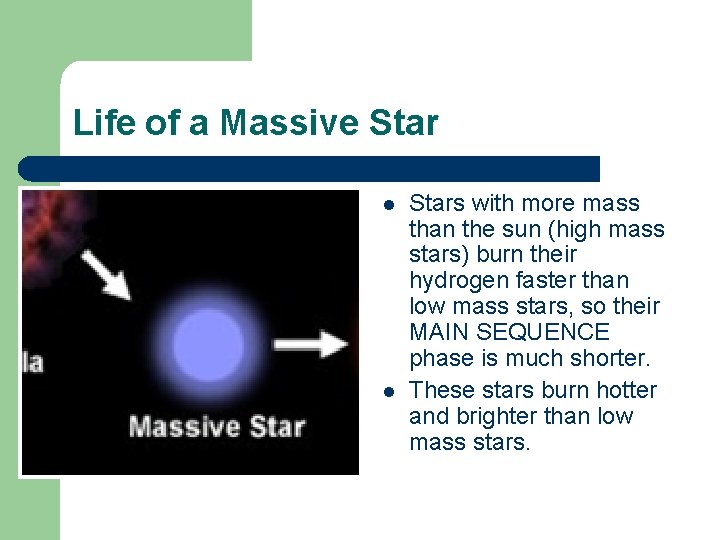
Life of a Massive Star l l Stars with more mass than the sun (high mass stars) burn their hydrogen faster than low mass stars, so their MAIN SEQUENCE phase is much shorter. These stars burn hotter and brighter than low mass stars.
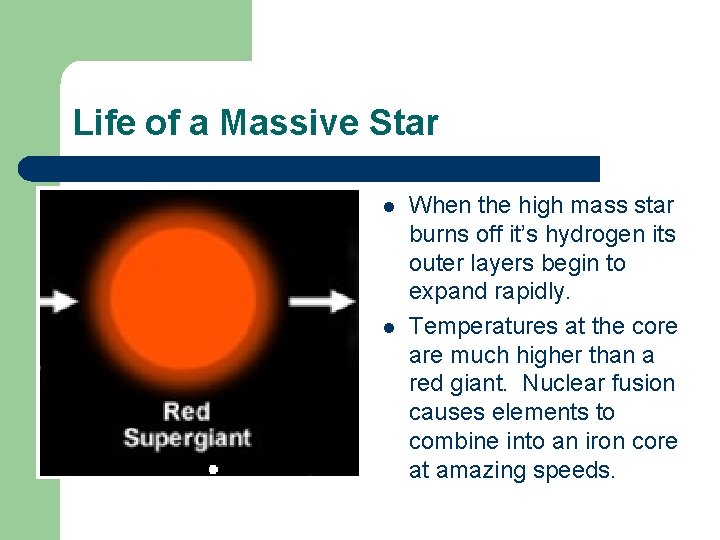
Life of a Massive Star l l When the high mass star burns off it’s hydrogen its outer layers begin to expand rapidly. Temperatures at the core are much higher than a red giant. Nuclear fusion causes elements to combine into an iron core at amazing speeds.
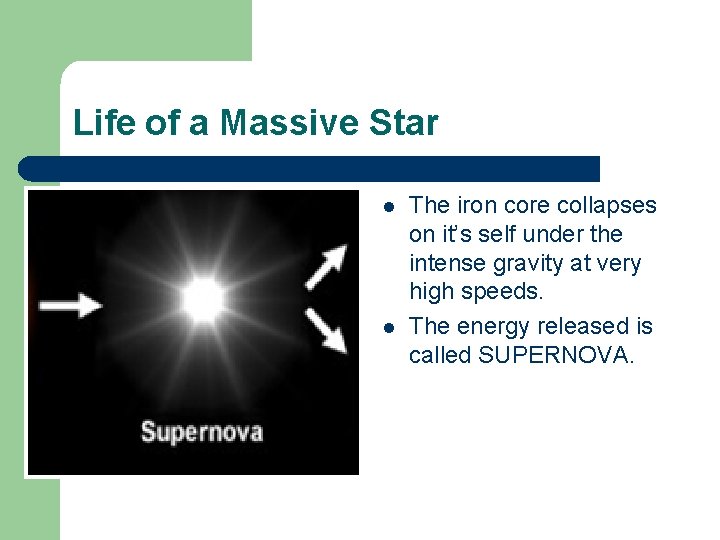
Life of a Massive Star l l The iron core collapses on it’s self under the intense gravity at very high speeds. The energy released is called SUPERNOVA.
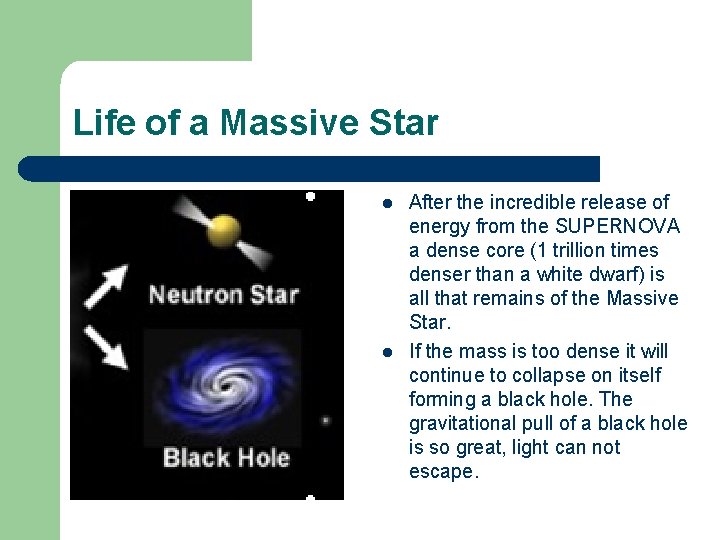
Life of a Massive Star l l After the incredible release of energy from the SUPERNOVA a dense core (1 trillion times denser than a white dwarf) is all that remains of the Massive Star. If the mass is too dense it will continue to collapse on itself forming a black hole. The gravitational pull of a black hole is so great, light can not escape.
Warm Up: Read to Learn l Read page 706 in your textbook. -In your journals use the word Brightness in a sentence. -In your journals use the word magnitude in a sentence.
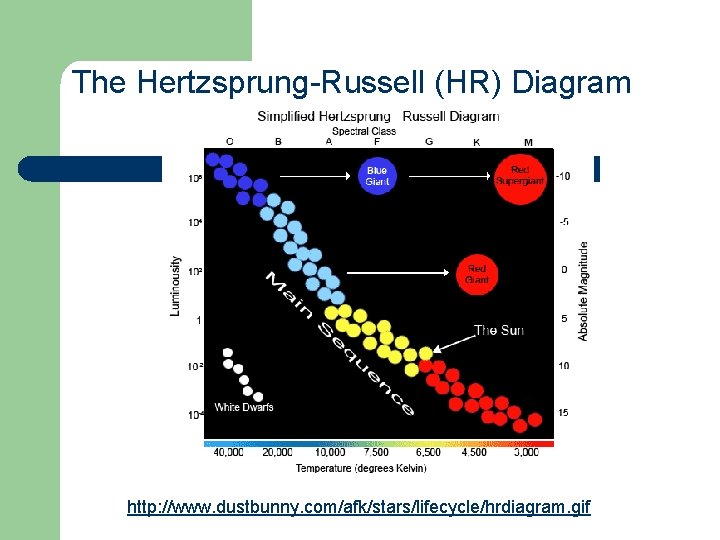
The Hertzsprung-Russell (HR) Diagram l In groups, make observations about the HR Diagram. -In your Interactive Journal record and fill in the following sentence: I notice that _______. l Record all observations made by your group.
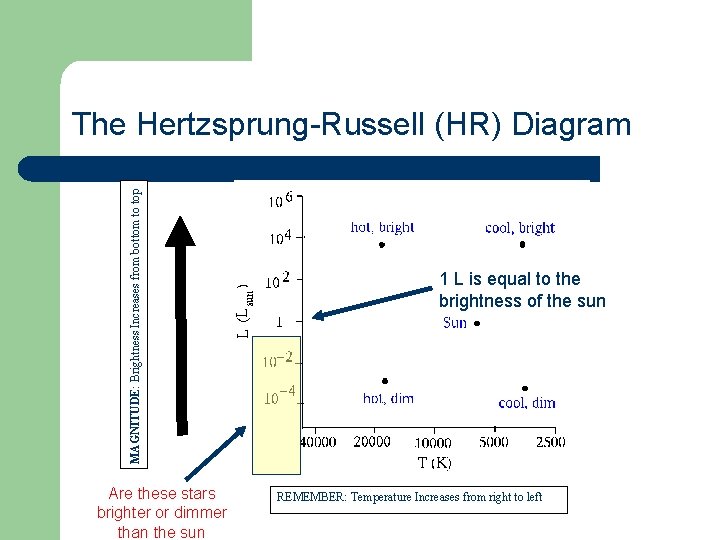
MAGNITUDE: Brightness Increases from bottom to top The Hertzsprung-Russell (HR) Diagram Are these stars brighter or dimmer than the sun 1 L is equal to the brightness of the sun REMEMBER: Temperature Increases from right to left
Characteristics of Stars The Hertzsprung-Russell (HR) Diagram l Temperature & Color – – The color of a star indicates the T of the star Stars are classified by T l Decreasing T (bright to dim) l O, B, A, F, G, K, M [Oh Be A Fine Girl, Kiss Me ] http: //www. seasky. org/cosmic/sky 7 a 01. html
The Hertzsprung-Russell (HR) Diagram l Time to Practice: Challenge #1 -Use the Temperature and Magnitude (brightness) on Each Star to place it on it’s correct location on the HR Diagram.
The Hertzsprung-Russell (HR) Diagram Time to Practice: Challenge #2 -Check your HR Diagram with the teacher. Remove the stars and place them in the correct spot on the Life Cycle of a Star Diagram. -Make observations and inferences the relationship of the HR Diagram to the Star’s Life Cycle. l Record your thoughts in your journal using the sentence: I notice that _____.
The Hertzsprung-Russell (HR) Diagram http: //www. dustbunny. com/afk/stars/lifecycle/hrdiagram. gif
Warm Up: Chaco Article l Read the Chaco Article -Look back in your Interactive Notebook at your first journal entry about Chaco. -What predictions did you make. Record your new understanding in your journal.
The Hertzsprung-Russell (HR) Diagram l Complete pg 112 -114 in the Gateways book.
EVALUATE: RAFT Activity l l Read the RAFT Instruction Sheet. Work Silently to complete your RAFT by the end of class. Essential Questions 1. How do stars change over time? 2. How are stars classified on a Herztsprung-Russell Diagram? Objectives Describe objects in space such as stars (in all life stages) and galaxies. Describe the life cycle of a star and correlate a star’s life stage to its placement on the HR-Diagram.