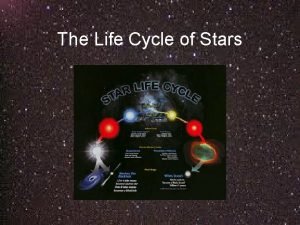
The Life Cycle of a Star The Horsehead



- Slides: 24
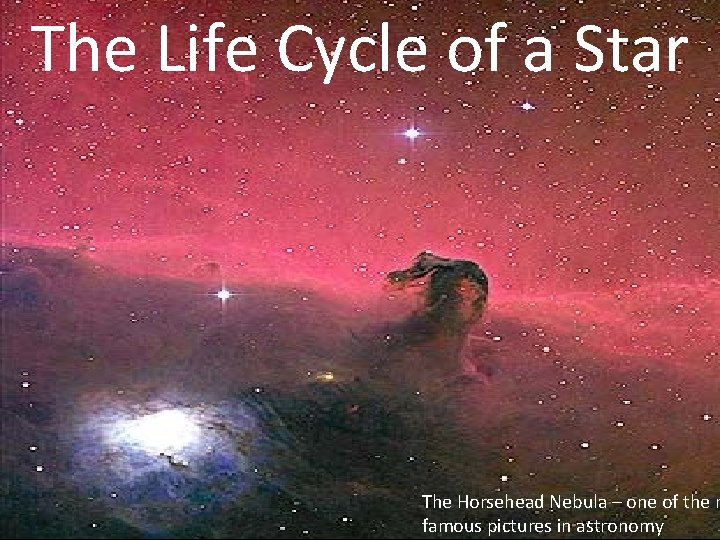
The Life Cycle of a Star The Horsehead Nebula – one of the m famous pictures in astronomy
Lesson Objectives • All – To name the stages of a star • Most – To describe the life cycle of a star larger than the Sun • Some – To explain why a star moves from one stage to another
Interstellar medium is the total mass of the gas and dust between the stars.
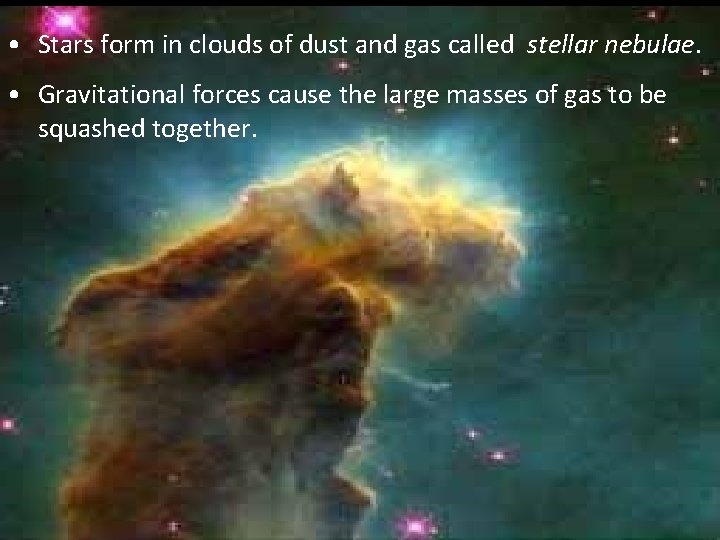
• Stars form in clouds of dust and gas called stellar nebulae. • Gravitational forces cause the large masses of gas to be squashed together.
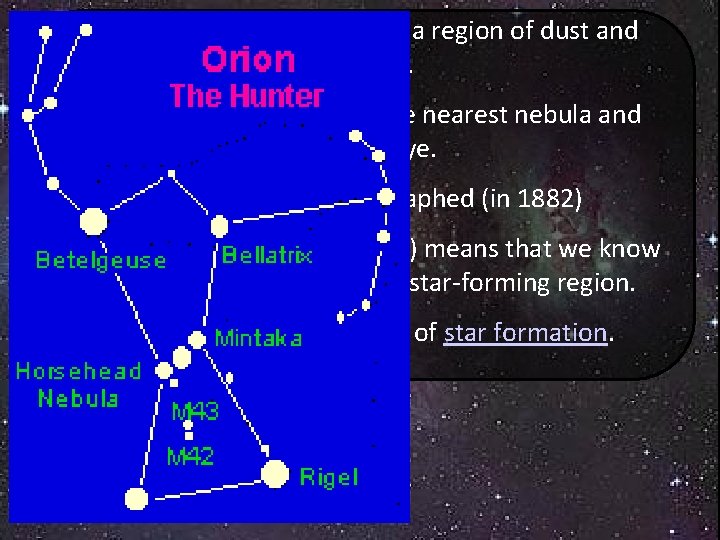
• A Nebula is a stellar nursery - a region of dust and gas where new stars are born. • The Orion Nebula (M 42) is the nearest nebula and can be seen with the naked eye. • The first nebula ever photographed (in 1882) • Its proximity (1500 light years) means that we know more about it than any other star-forming region. • It is also in a very active stage of star formation.
• Dense regions in the clouds collapse due to gravity • As it gets smaller the protostar at its centre gets hotter • Once the star contracts enough that its central core can burn hydrogen to helium, it becomes a "main sequence" star.
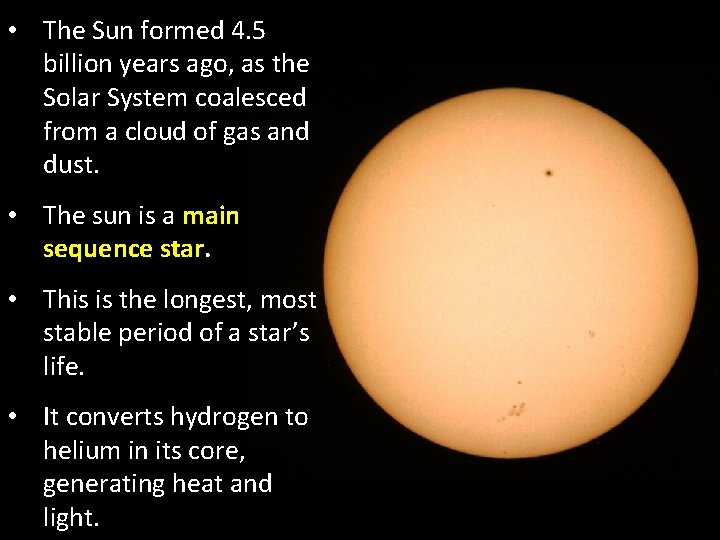
• The Sun formed 4. 5 billion years ago, as the Solar System coalesced from a cloud of gas and dust. • The sun is a main sequence star. • This is the longest, most stable period of a star’s life. • It converts hydrogen to helium in its core, generating heat and light.
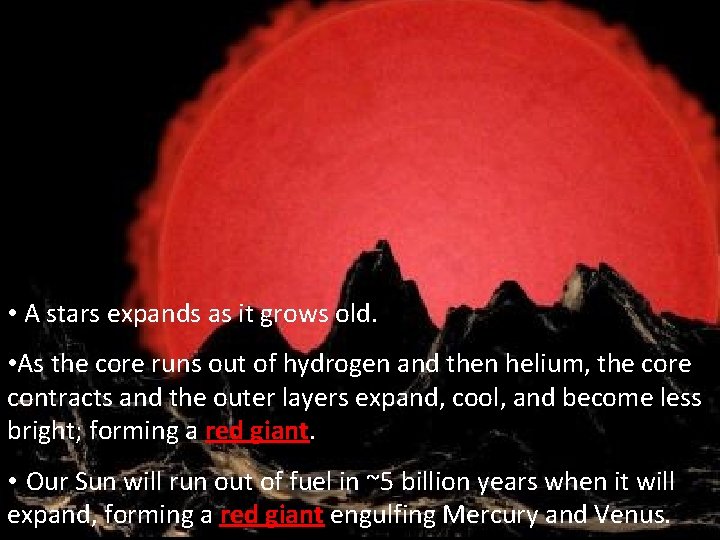
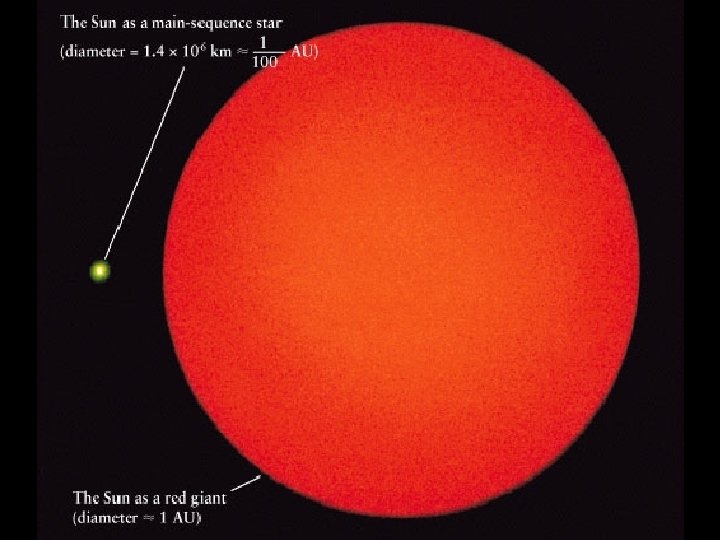
• A stars expands as it grows old. • As the core runs out of hydrogen and then helium, the core contracts and the outer layers expand, cool, and become less bright; forming a red giant. • Our Sun will run out of fuel in ~5 billion years when it will expand, forming a red giant engulfing Mercury and Venus.
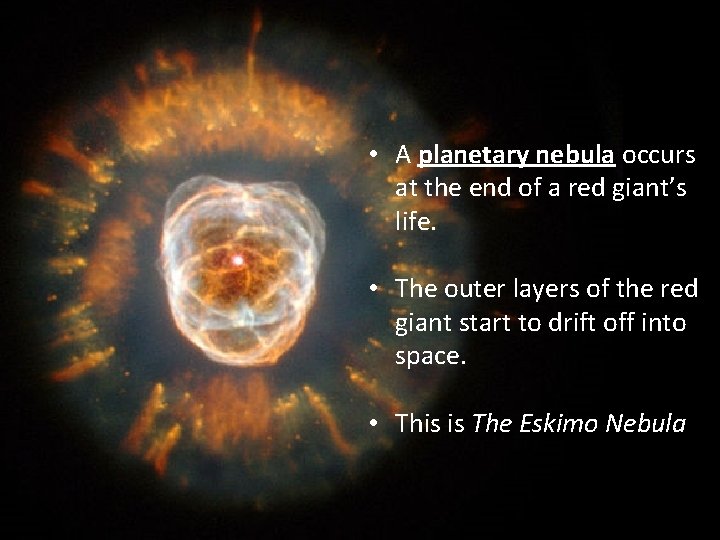
• A planetary nebula occurs at the end of a red giant’s life. • The outer layers of the red giant start to drift off into space. • This is The Eskimo Nebula
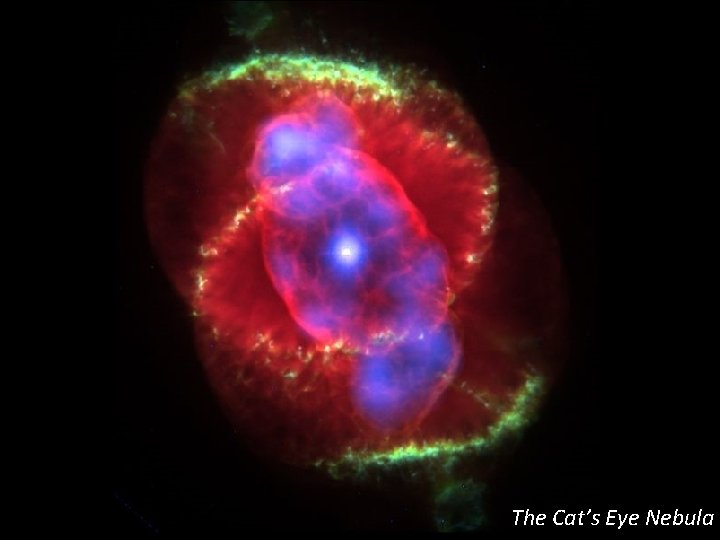
The Cat’s Eye Nebula
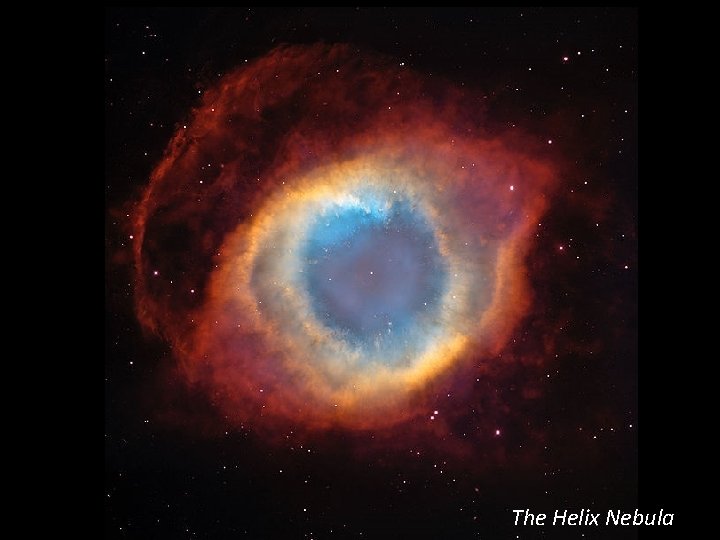
The Helix Nebula
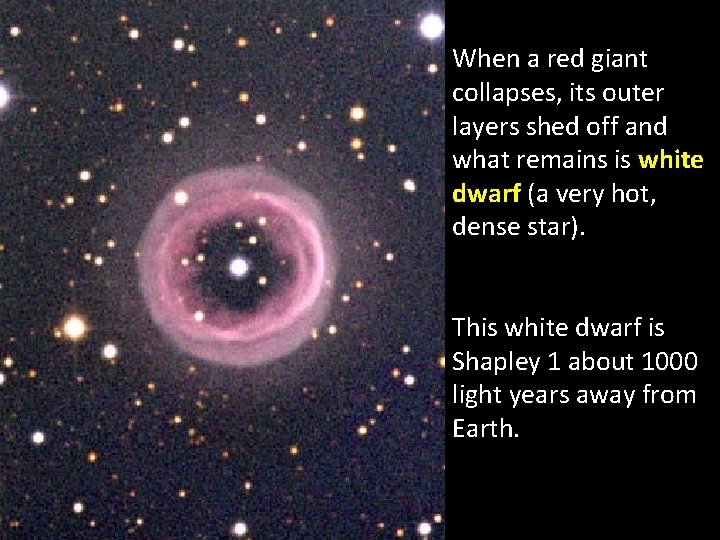
When a red giant collapses, its outer layers shed off and what remains is white dwarf (a very hot, dense star). This white dwarf is Shapley 1 about 1000 light years away from Earth.
• A black dwarf is a hypothetical star, created when a white dwarf cools so it no longer emits heat or light. • Since the time required for a white dwarf to become a black dwarf is longer than the age of the universe (13. 7 billion years), no black dwarfs exist yet.
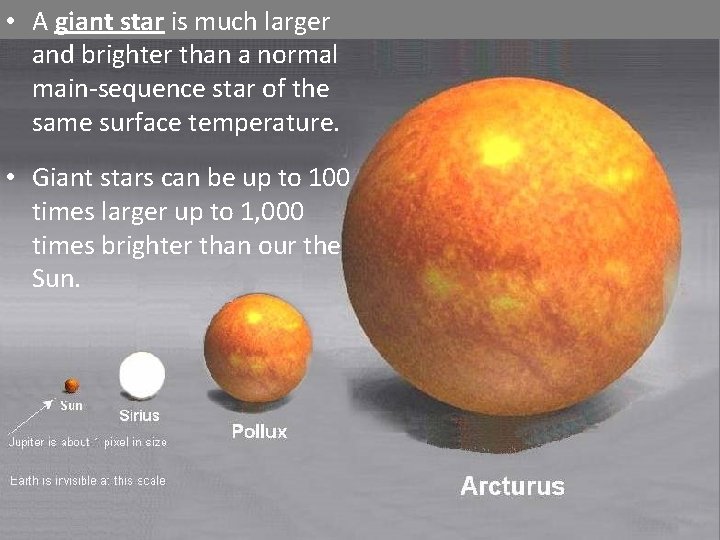
• A giant star is much larger and brighter than a normal main-sequence star of the same surface temperature. • Giant stars can be up to 100 times larger up to 1, 000 times brighter than our the Sun.
• After the hydrogen in a giant star's core has been used up, they become red supergiants - the largest stars in the universe in terms of volume. • These stars have very cool surface temperatures (3500– 4500 K).
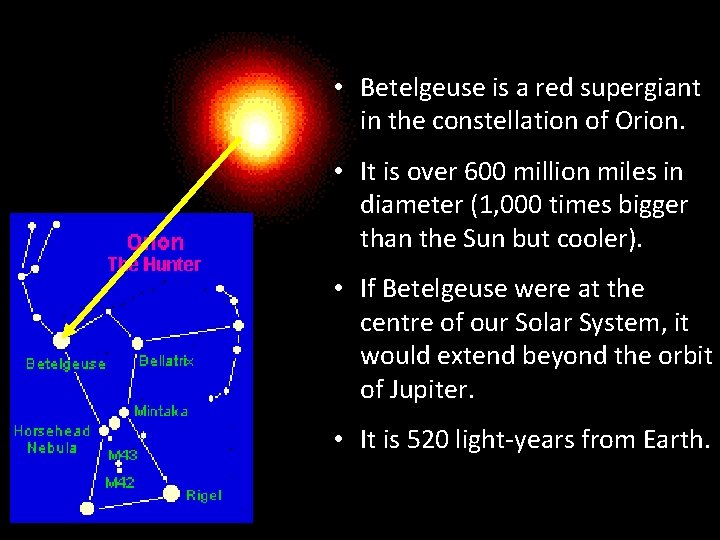
• Betelgeuse is a red supergiant in the constellation of Orion. • It is over 600 million miles in diameter (1, 000 times bigger than the Sun but cooler). • If Betelgeuse were at the centre of our Solar System, it would extend beyond the orbit of Jupiter. • It is 520 light-years from Earth.
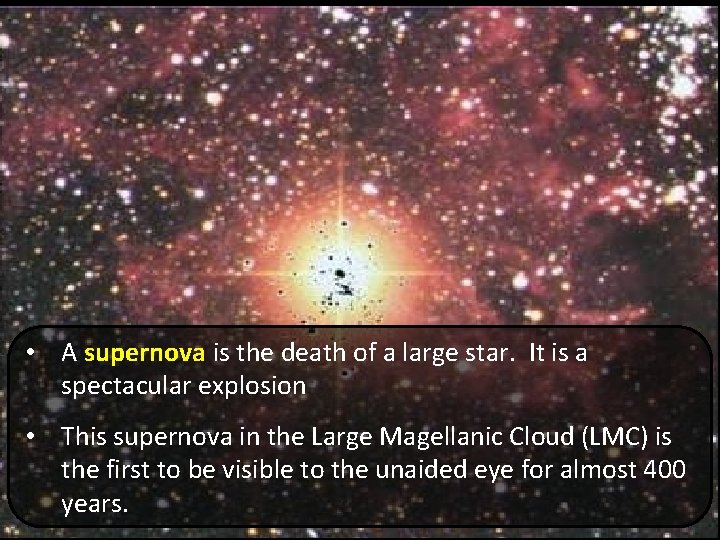
• A supernova is the death of a large star. It is a spectacular explosion • This supernova in the Large Magellanic Cloud (LMC) is the first to be visible to the unaided eye for almost 400 years.
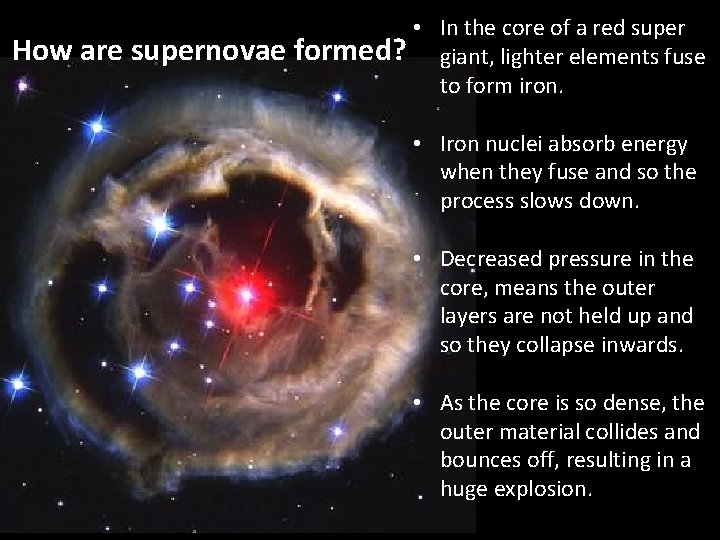
• In the core of a red super How are supernovae formed? giant, lighter elements fuse to form iron. • Iron nuclei absorb energy when they fuse and so the process slows down. • Decreased pressure in the core, means the outer layers are not held up and so they collapse inwards. • As the core is so dense, the outer material collides and bounces off, resulting in a huge explosion.
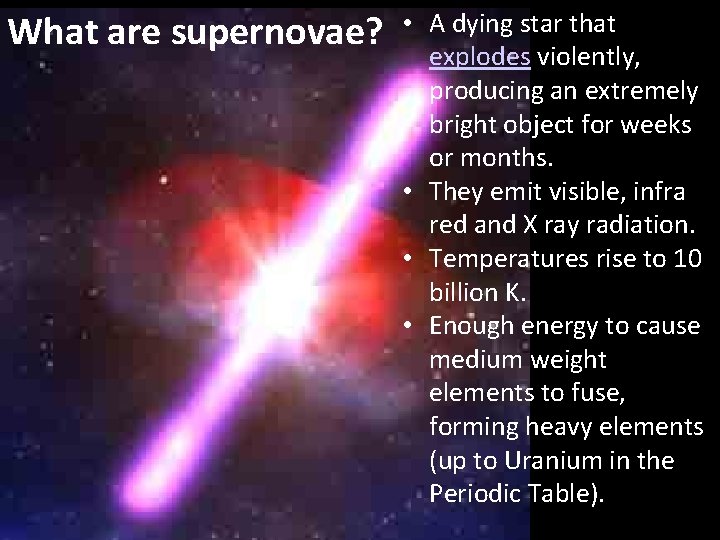
What are supernovae? • A dying star that explodes violently, producing an extremely bright object for weeks or months. • They emit visible, infra red and X ray radiation. • Temperatures rise to 10 billion K. • Enough energy to cause medium weight elements to fuse, forming heavy elements (up to Uranium in the Periodic Table).
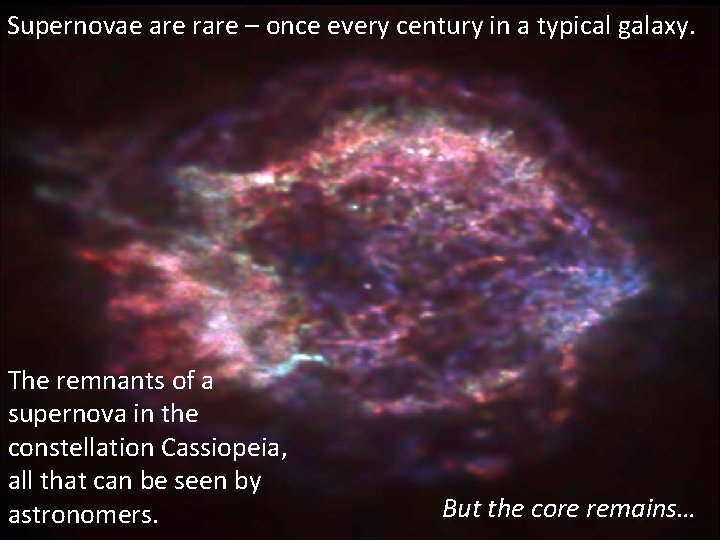
Supernovae are rare – once every century in a typical galaxy. The remnants of a supernova in the constellation Cassiopeia, all that can be seen by astronomers. But the core remains…
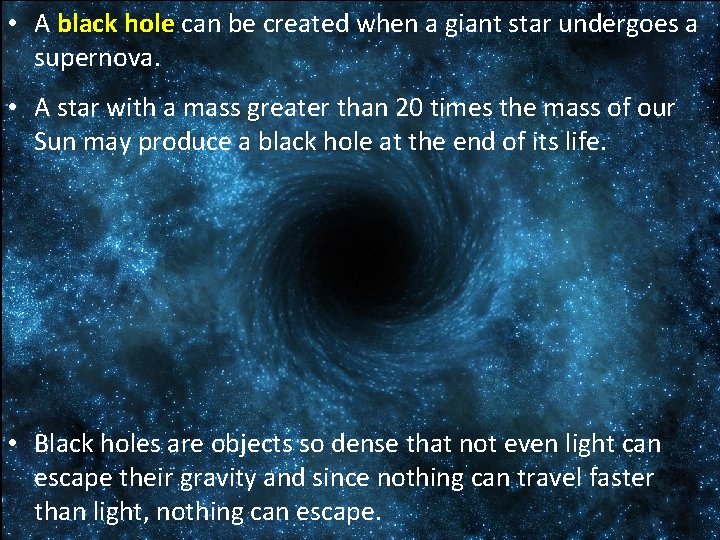
• A black hole can be created when a giant star undergoes a supernova. • A star with a mass greater than 20 times the mass of our Sun may produce a black hole at the end of its life. • Black holes are objects so dense that not even light can escape their gravity and since nothing can travel faster than light, nothing can escape.
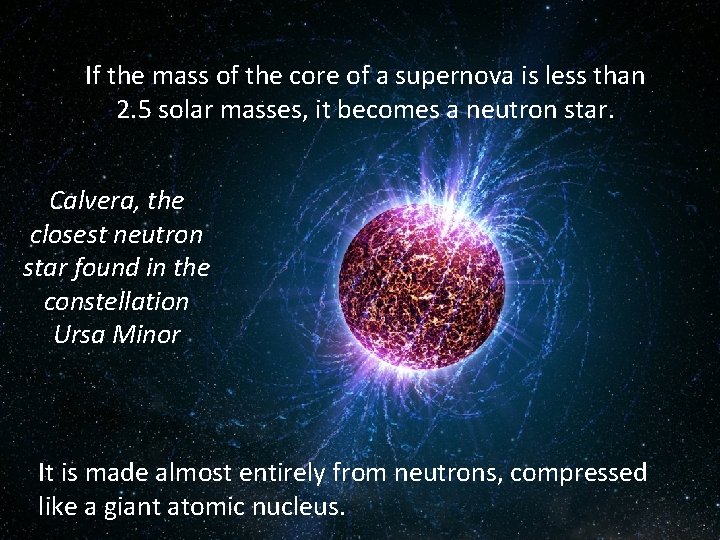
If the mass of the core of a supernova is less than 2. 5 solar masses, it becomes a neutron star. Calvera, the closest neutron star found in the constellation Ursa Minor It is made almost entirely from neutrons, compressed like a giant atomic nucleus.