Keywords Social network analysis graph metrics visualization weka
- Slides: 33
Keywords Social network analysis, graph metrics, visualization, weka tool, cluster analysis, classification, association rules, machine learning
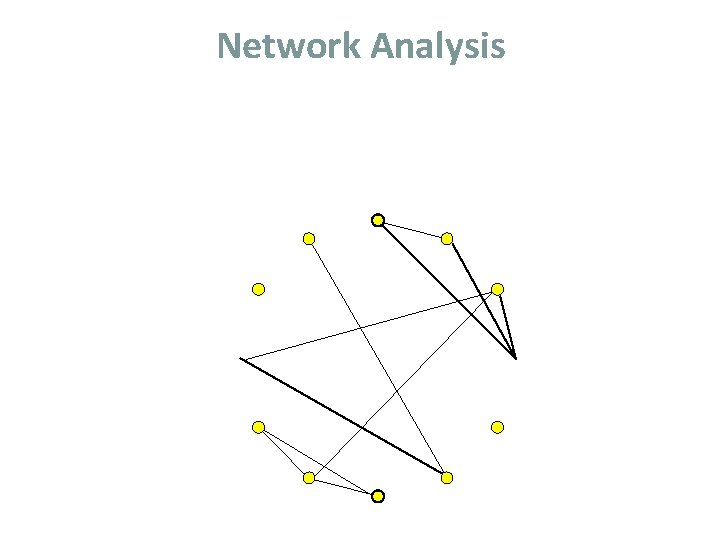
What is Network Analysis? �Social network analysis (SNA) is the process of investigating social structures through the use of network and graph theories. [1] It characterizes networked structures in terms of nodes (individual actors, people, or things within the network) and the ties or edges(relationships or interactions) that connect them source[https: //en. wikipedia. org/wiki/Social_network_analysis]
Network Analysis
Some concepts • A node or vertex is an individual unit in the graph (or network). • A graph (or network) is a set of nodes that are/could be connected to each other. • An “edge” is a connection (or tie) between two nodes.
Some concepts • Size – Number of nodes • Density – Number of ties that are presented in the graph, the amount of ties that could be presented in the graph – Out-degree – Sum of connections from an actor to other ones • In-degree – Sum of connections to an actor
Some Measures • Degree – Sum of connections from/to a node • Closeness centrality – Distance of one node from all the other ones in the network • Betweenness centrality – Number that represents how frequently a node is between the geodesic paths of other nodes
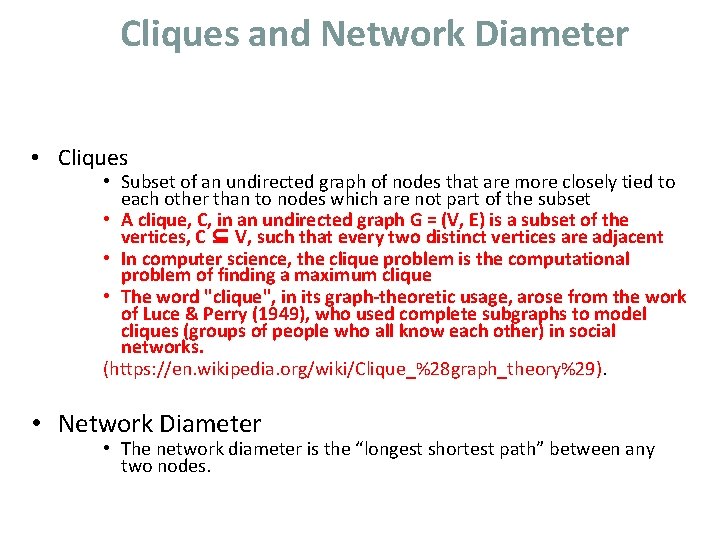
Cliques and Network Diameter • Cliques • Subset of an undirected graph of nodes that are more closely tied to each other than to nodes which are not part of the subset • A clique, C, in an undirected graph G = (V, E) is a subset of the vertices, C ⊆ V, such that every two distinct vertices are adjacent • In computer science, the clique problem is the computational problem of finding a maximum clique • The word "clique", in its graph-theoretic usage, arose from the work of Luce & Perry (1949), who used complete subgraphs to model cliques (groups of people who all know each other) in social networks. (https: //en. wikipedia. org/wiki/Clique_%28 graph_theory%29). • Network Diameter • The network diameter is the “longest shortest path” between any two nodes.
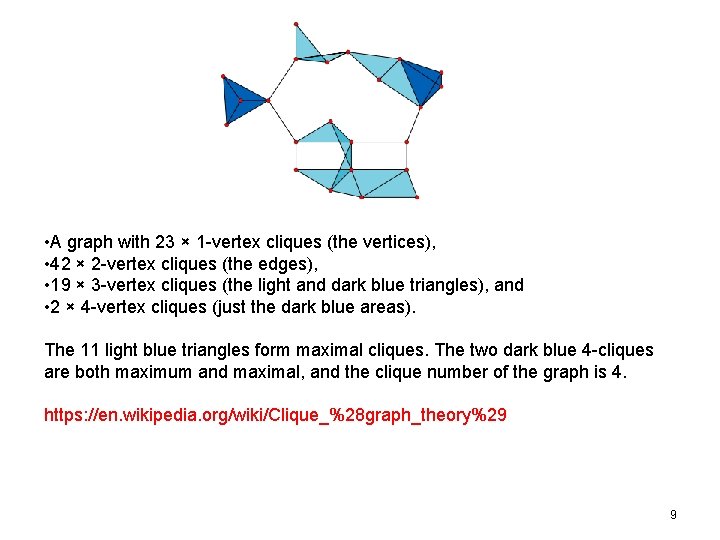
• A graph with 23 × 1 -vertex cliques (the vertices), • 42 × 2 -vertex cliques (the edges), • 19 × 3 -vertex cliques (the light and dark blue triangles), and • 2 × 4 -vertex cliques (just the dark blue areas). The 11 light blue triangles form maximal cliques. The two dark blue 4 -cliques are both maximum and maximal, and the clique number of the graph is 4. https: //en. wikipedia. org/wiki/Clique_%28 graph_theory%29 9
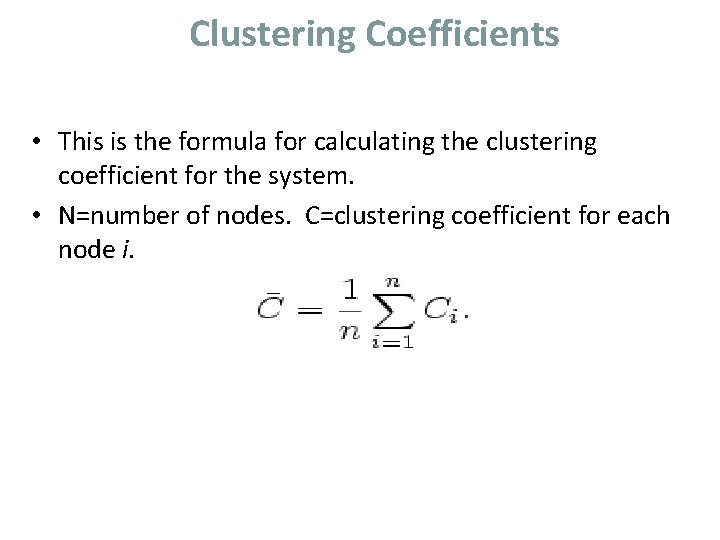
Clustering Coefficients • This is the formula for calculating the clustering coefficient for the system. • N=number of nodes. C=clustering coefficient for each node i.
Data Mining using WEKA
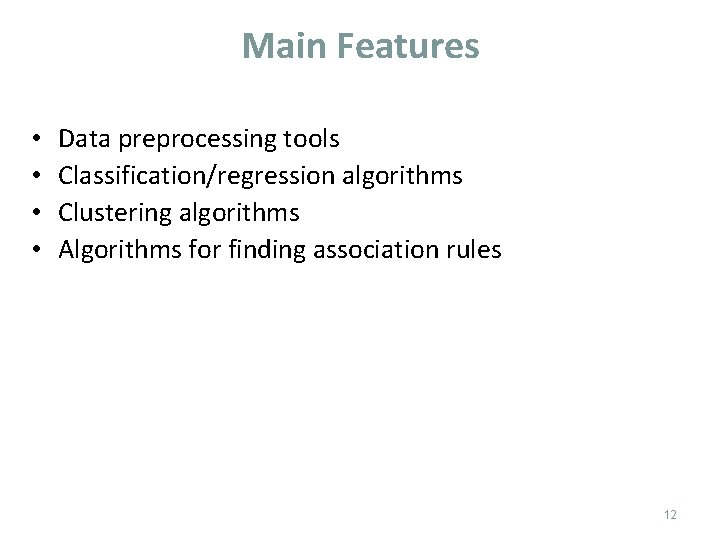
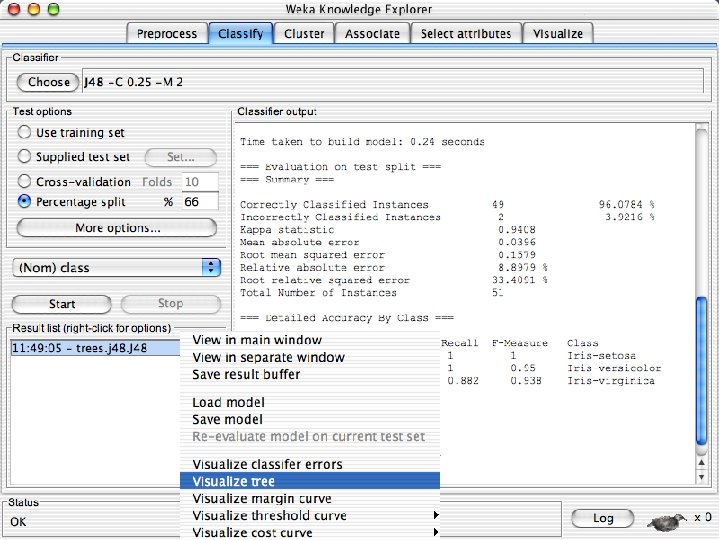
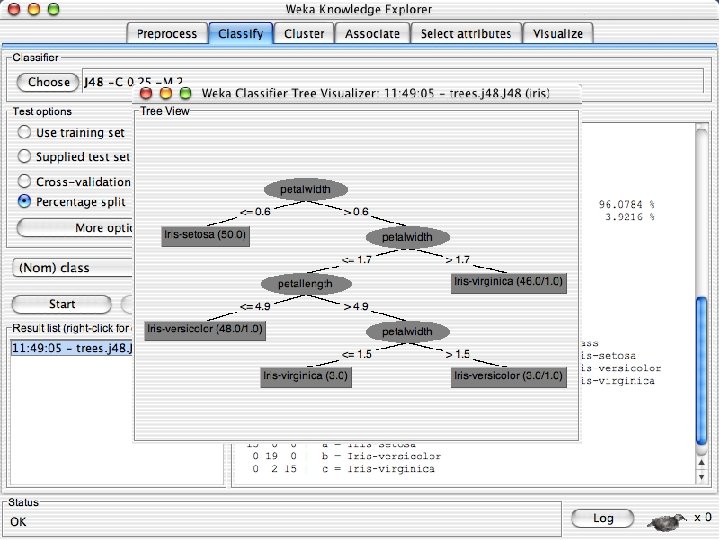
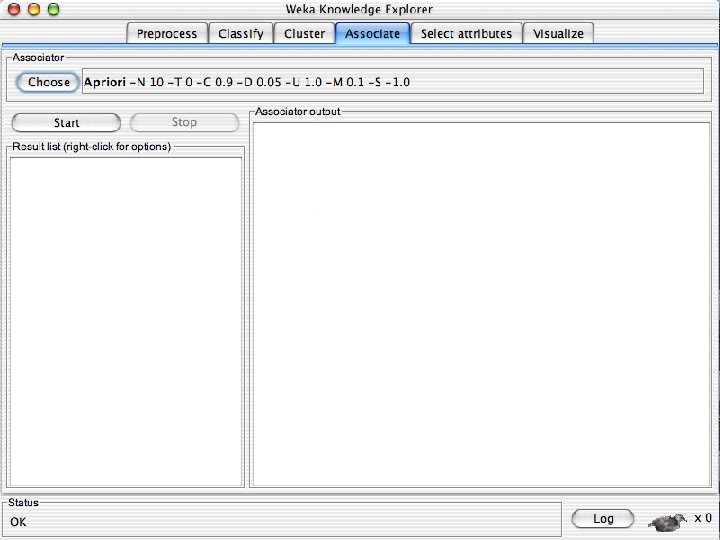
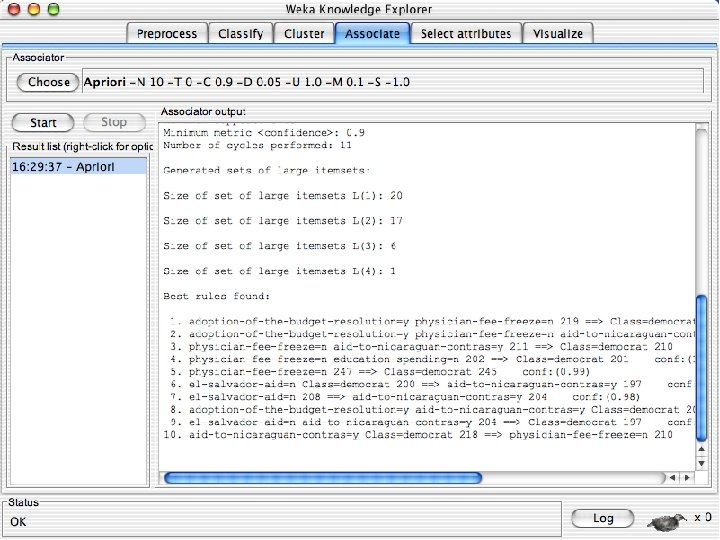
Main Features • • Data preprocessing tools Classification/regression algorithms Clustering algorithms Algorithms for finding association rules 11/23/2020 12
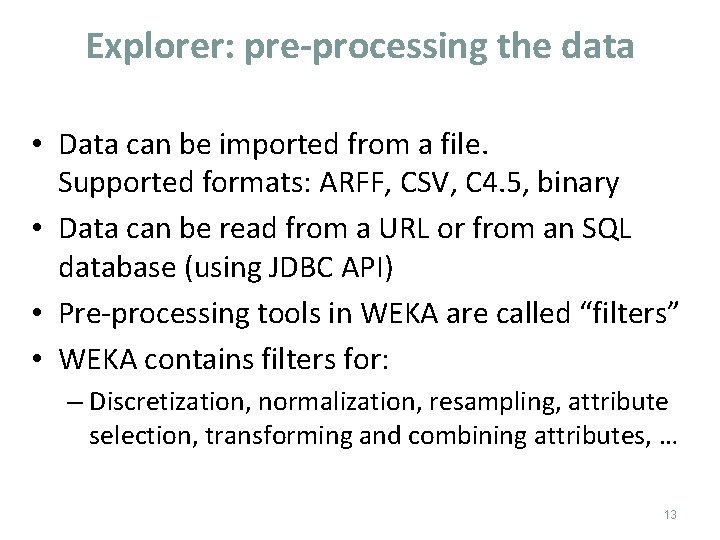
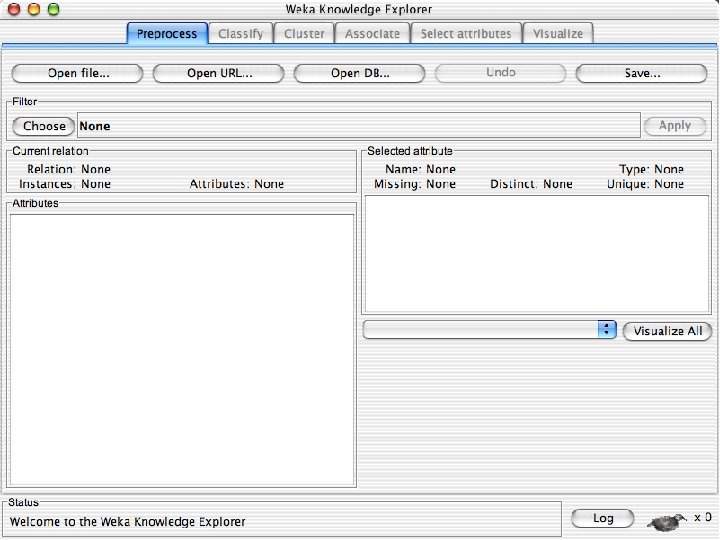
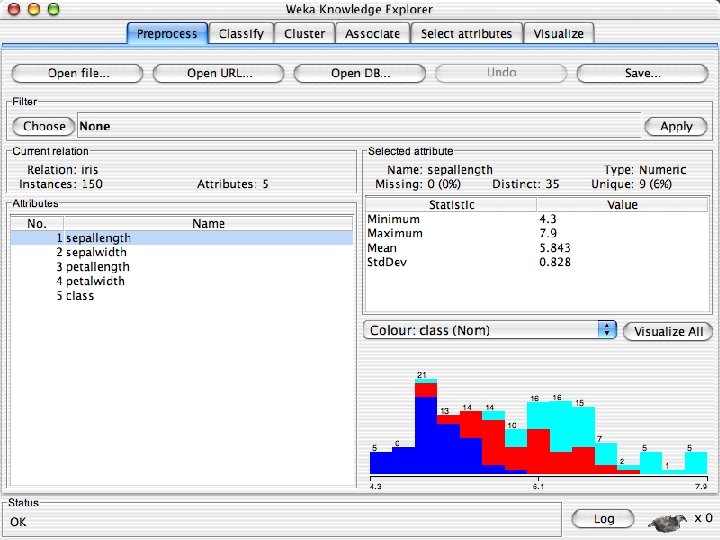
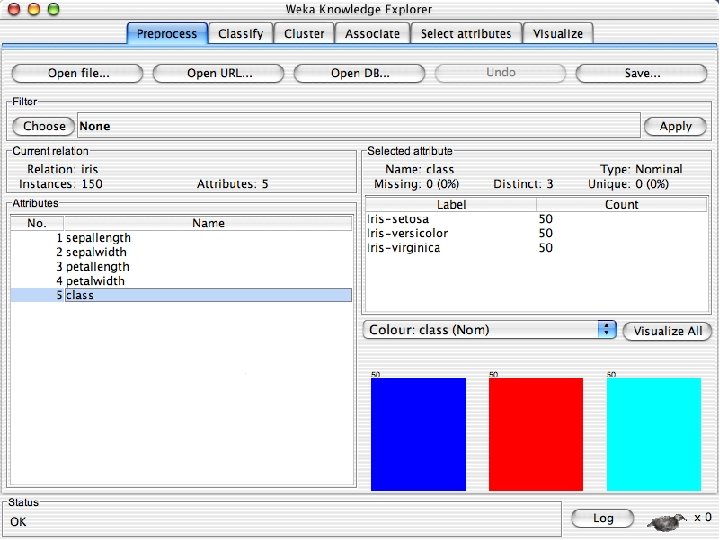
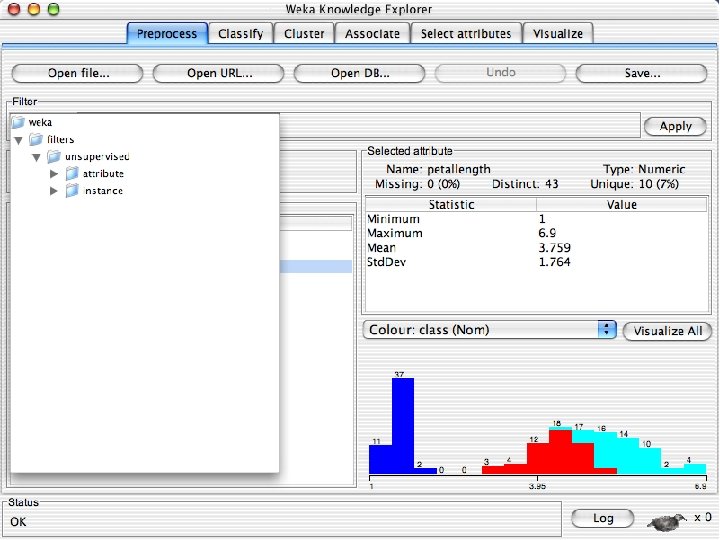
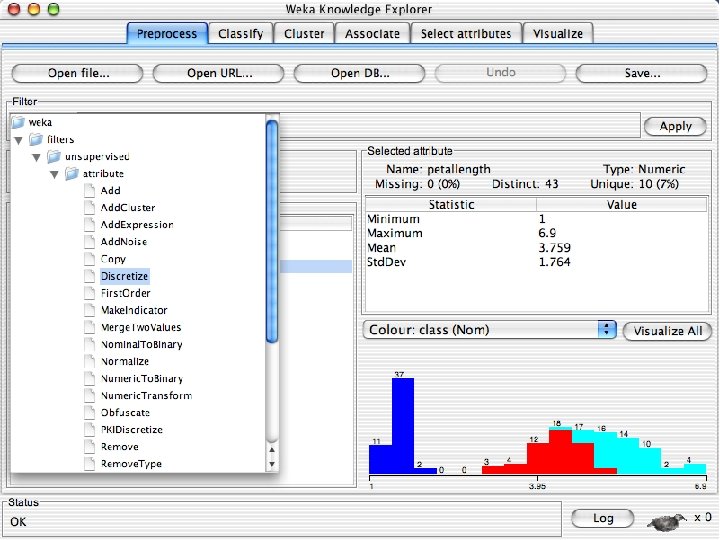
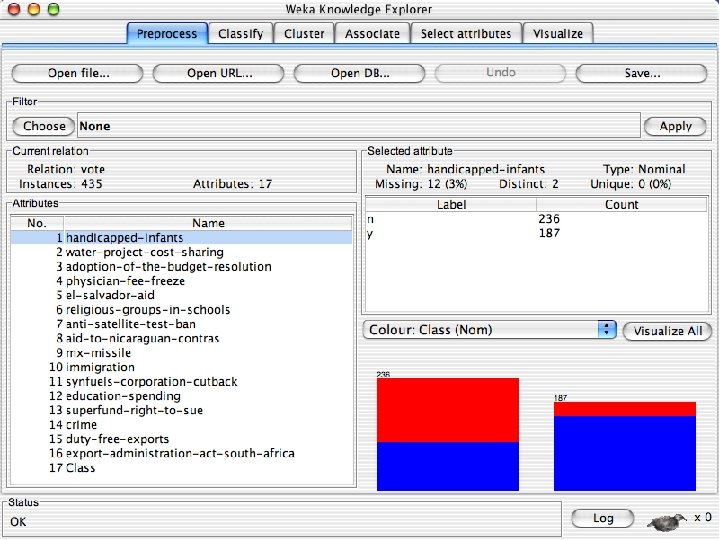
Explorer: pre-processing the data • Data can be imported from a file. Supported formats: ARFF, CSV, C 4. 5, binary • Data can be read from a URL or from an SQL database (using JDBC API) • Pre-processing tools in WEKA are called “filters” • WEKA contains filters for: – Discretization, normalization, resampling, attribute selection, transforming and combining attributes, … 11/23/2020 13
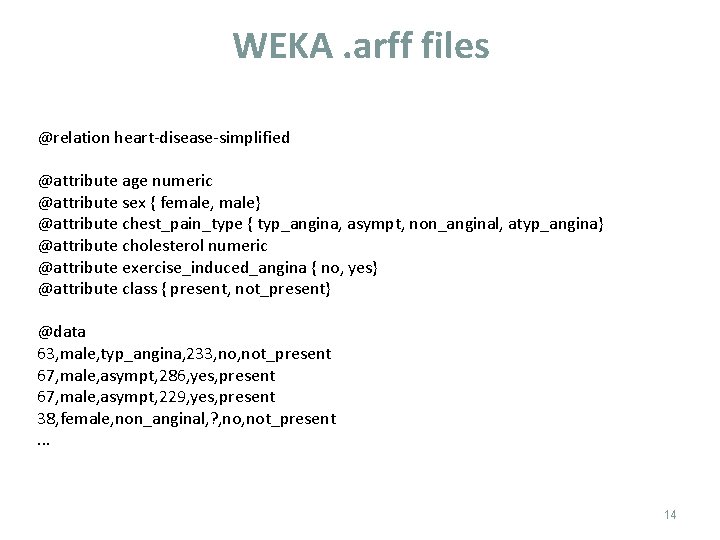
WEKA. arff files @relation heart-disease-simplified @attribute age numeric @attribute sex { female, male} @attribute chest_pain_type { typ_angina, asympt, non_anginal, atyp_angina} @attribute cholesterol numeric @attribute exercise_induced_angina { no, yes} @attribute class { present, not_present} @data 63, male, typ_angina, 233, not_present 67, male, asympt, 286, yes, present 67, male, asympt, 229, yes, present 38, female, non_anginal, ? , not_present. . . 11/23/2020 14
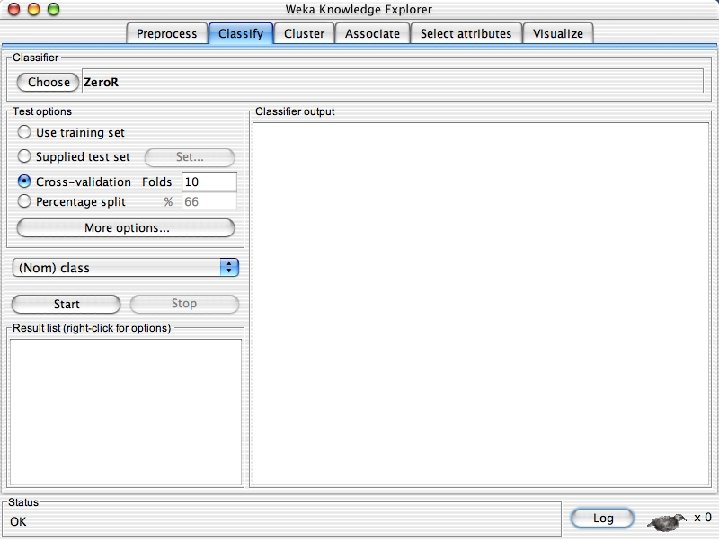
11/23/2020 University of Waikato 15
11/23/2020 University of Waikato 16
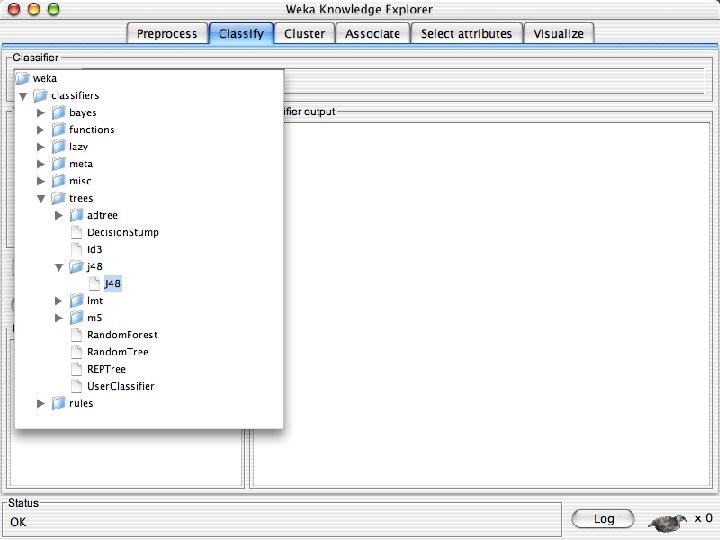
11/23/2020 University of Waikato 17
11/23/2020 University of Waikato 18
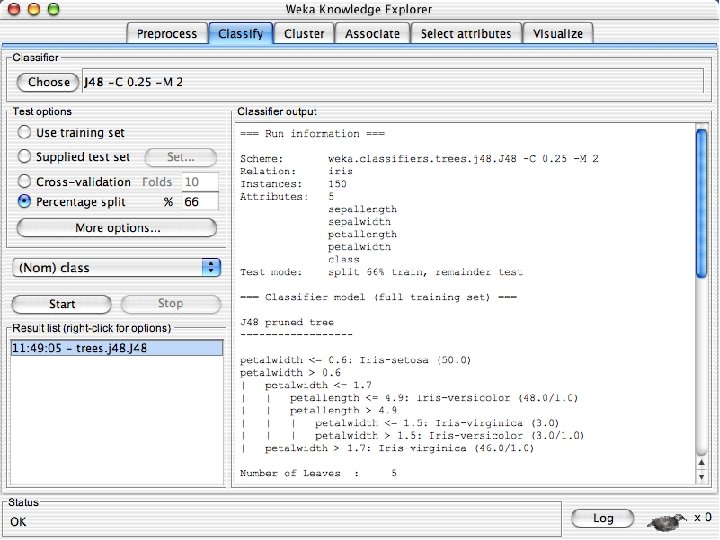
11/23/2020 University of Waikato 19
11/23/2020 University of Waikato 20
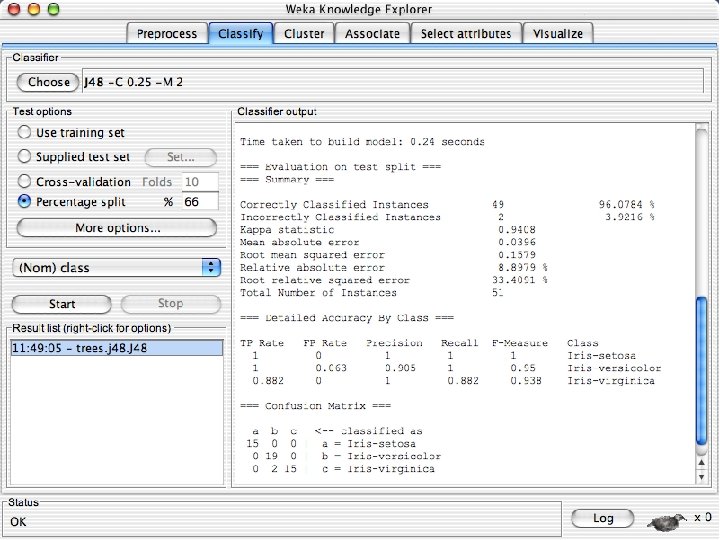
11/23/2020 University of Waikato 21
11/23/2020 University of Waikato 22
11/23/2020 University of Waikato 23
11/23/2020 University of Waikato 24
11/23/2020 University of Waikato 25
11/23/2020 University of Waikato 26
11/23/2020 University of Waikato 27
11/23/2020 University of Waikato 28