Key elements of an ECP 1 Statement of
- Slides: 20
Key elements of an ECP: 1. Statement of Purpose 2. Responsibilities 3. Risk Identification and Risk Assessment 4. Risk Control Measures 5. Education and Training 6. Written Work Procedures 7. Hygiene Facilities and Cleaning Procedures 8. Health Monitoring 9. Documentation
1. Statement of purpose
Sample Statement of Purpose • Our facility is committed to providing a safe and healthy workplace for all of our staff. A combination of measures will be used to minimize worker exposure to pandemic influenza, including the most effective control technologies available. Our work procedures will protect not only our workers, but also, all visitors and other workers that enter our facilities.
2. Employer Responsibility • To ensure a program is provided which meets the provisions of the WCA & Regulation • To ensure the health and safety of the worker • Provide the necessary resources
Supervisor Responsibility • Ensure employers program is carried out • Make sure staff is working safely (e. g. : adequate supplies of & fit testing of PPE) • Make sure their staff is educated so they can work more safely
Worker Responsibility • Participate in education related to safe work practices • Follow safe work procedures • Support co-workers in working safely • Report to their supervisor everything from new hazards to equipment shortfalls etc. (they know better than anyone what their needs are)
JOSH Committee Responsibility • Monitor the effectiveness of the program • Monitor the workplace for changes that may effect the program • Make recommendations to the employer
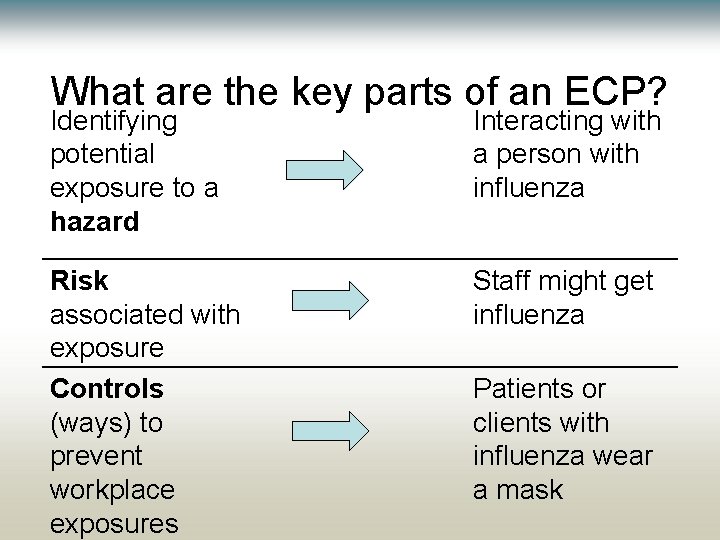
What are the key parts of an ECP? Identifying potential exposure to a hazard Interacting with a person with influenza Risk associated with exposure Controls (ways) to prevent workplace exposures Staff might get influenza Patients or clients with influenza wear a mask
3. Risk Identification & Risk Assessment • As applies to H 1 N 1
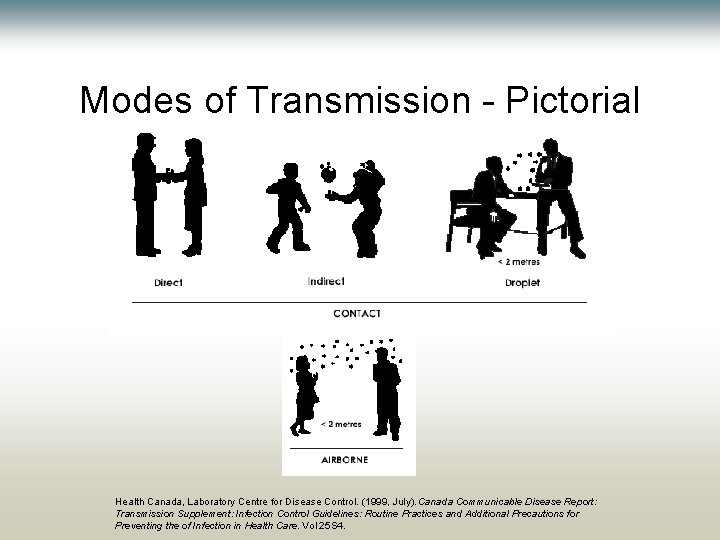
Modes of Transmission - Pictorial Health Canada, Laboratory Centre for Disease Control. (1999, July). Canada Communicable Disease Report: Transmission Supplement: Infection Control Guidelines: Routine Practices and Additional Precautions for Preventing the of Infection in Health Care. Vol 25 S 4.
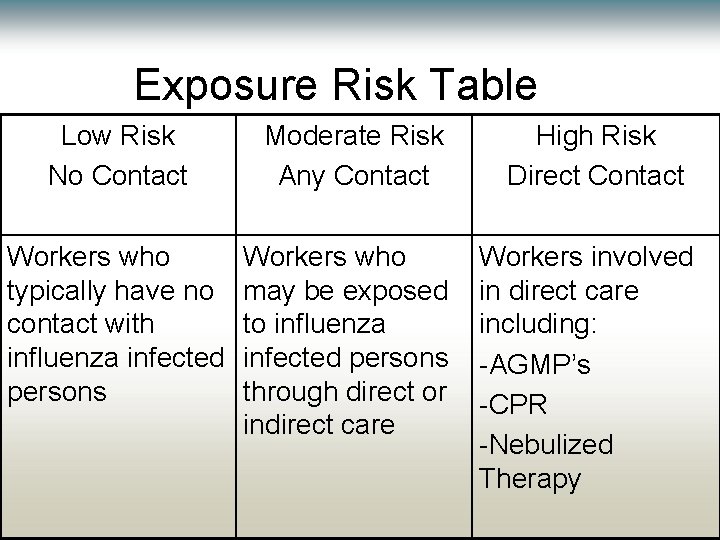
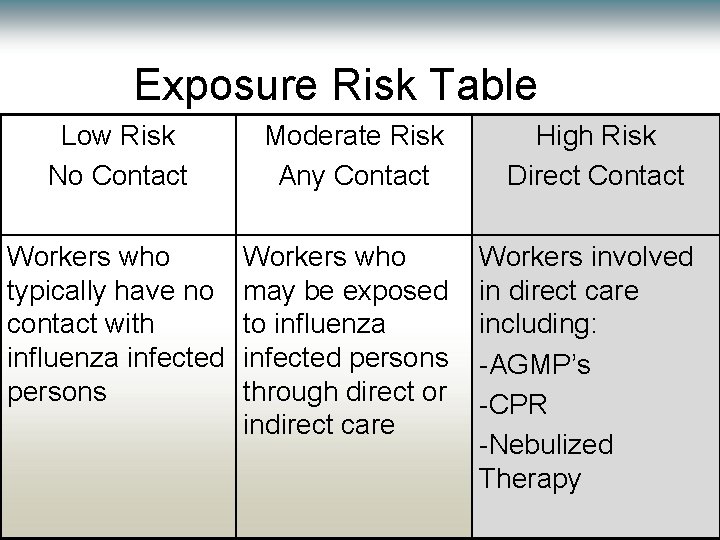
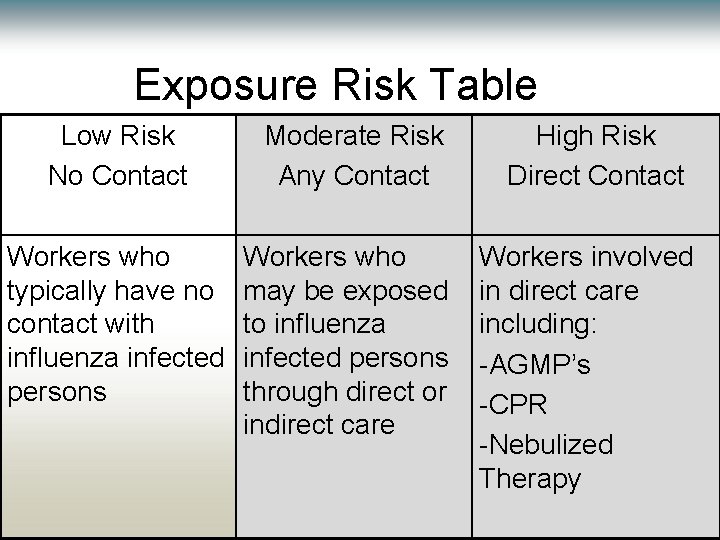
Exposure Risk Table Low Risk No Contact Moderate Risk Any Contact Workers who typically have no contact with influenza infected persons Workers who may be exposed to influenza infected persons through direct or indirect care High Risk Direct Contact Workers involved in direct care including: -AGMP’s -CPR -Nebulized Therapy
Exposure Risk Table Low Risk No Contact Moderate Risk Any Contact Workers who typically have no contact with influenza infected persons Workers who may be exposed to influenza infected persons through direct or indirect care High Risk Direct Contact Workers involved in direct care including: -AGMP’s -CPR -Nebulized Therapy
Exposure Risk Table Low Risk No Contact Moderate Risk Any Contact Workers who typically have no contact with influenza infected persons Workers who may be exposed to influenza infected persons through direct or indirect care High Risk Direct Contact Workers involved in direct care including: -AGMP’s -CPR -Nebulized Therapy
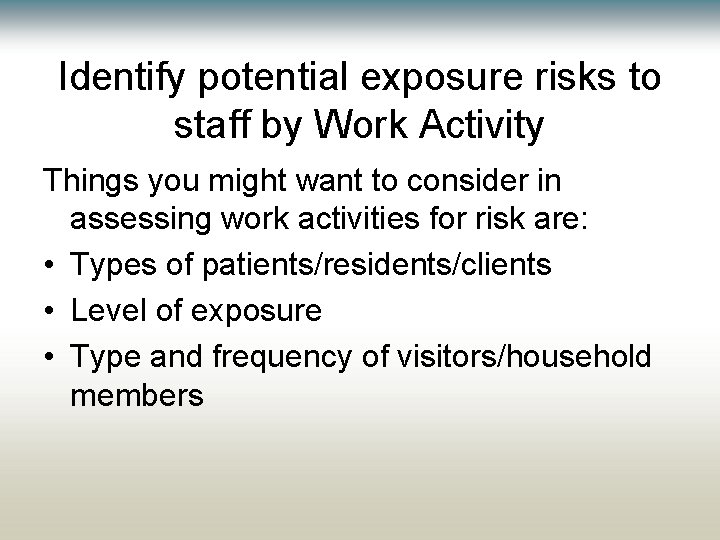
Identify potential exposure risks to staff by Work Activity Things you might want to consider in assessing work activities for risk are: • Types of patients/residents/clients • Level of exposure • Type and frequency of visitors/household members
4. Risk Control Measures
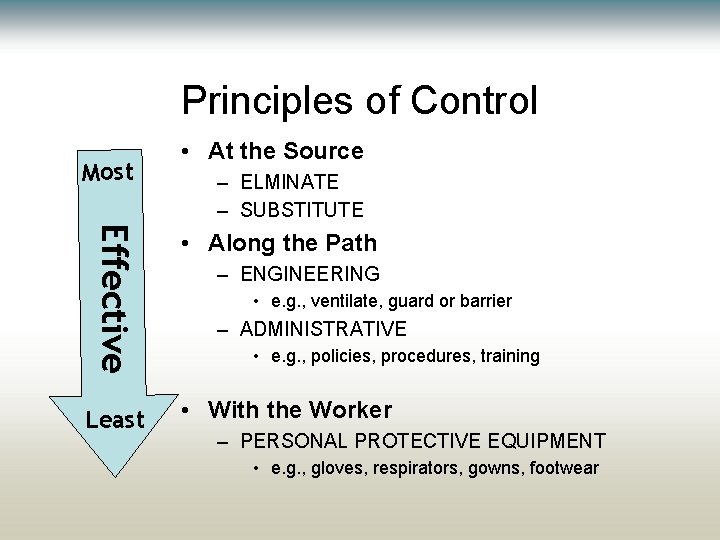
Principles of Control Most Effective Least • At the Source – ELMINATE – SUBSTITUTE • Along the Path – ENGINEERING • e. g. , ventilate, guard or barrier – ADMINISTRATIVE • e. g. , policies, procedures, training • With the Worker – PERSONAL PROTECTIVE EQUIPMENT • e. g. , gloves, respirators, gowns, footwear
A. Engineering Controls Include modifications to the work environment or the equipment, or the use of special equipment to control hazards “What types of engineering controls could minimize exposure to influenza? ”
A. Engineering Controls Examples: • Installing alcohol hand-gel stations near entrance and doors in facility • Installing portable ventilation systems
B. Administrative Controls Involves creating workplace procedures and/or policies to minimize occupational exposure to identified hazards “What types of administrative controls could minimize exposure to influenza? ”
Administrative Controls - examples • Screening for new admissions/visitors • Patient isolation • Setting up adequate and well-supplied hand-washing facilities/alcohol gel stations • Information posted on cough/sneeze etiquette