
Emergency Contraception A Well Kept Secret Tony Ogburn
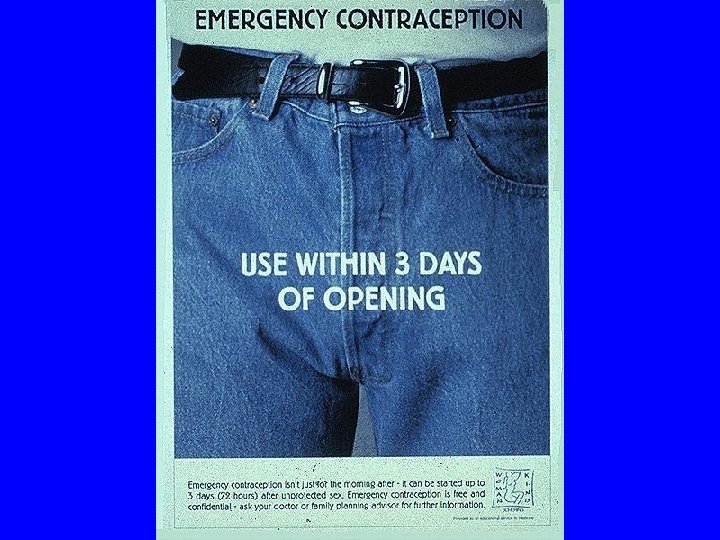

Emergency Contraception A Well Kept Secret Tony Ogburn, MD University of New Mexico Health Sciences Center
Objectives • Understand the need for EC • Review the current methods of EC available in the U. S. • Understand the barriers to use that exist for EC. • Be familiar with approaches to improve EC utilization.
The few things I really want you to know! • What form of EC is most effective • Talk to every reproductive age woman at risk for pregnancy about EC • Provide EC in advance • Support EC to be available over the counter.
• A 27 yo G 3 P 3, married patient calls your office saying she and her husband noted the condom was broken after sex the night before. What should she do? ?
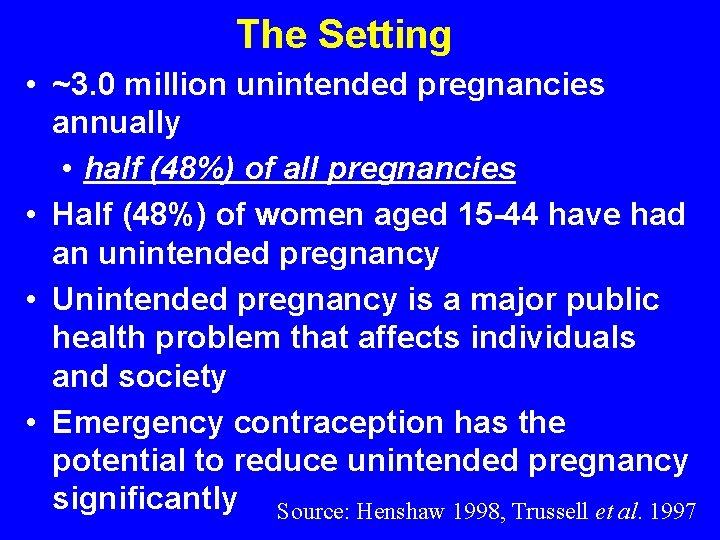
The Setting • ~3. 0 million unintended pregnancies annually • half (48%) of all pregnancies • Half (48%) of women aged 15 -44 have had an unintended pregnancy • Unintended pregnancy is a major public health problem that affects individuals and society • Emergency contraception has the potential to reduce unintended pregnancy significantly Source: Henshaw 1998, Trussell et al. 1997
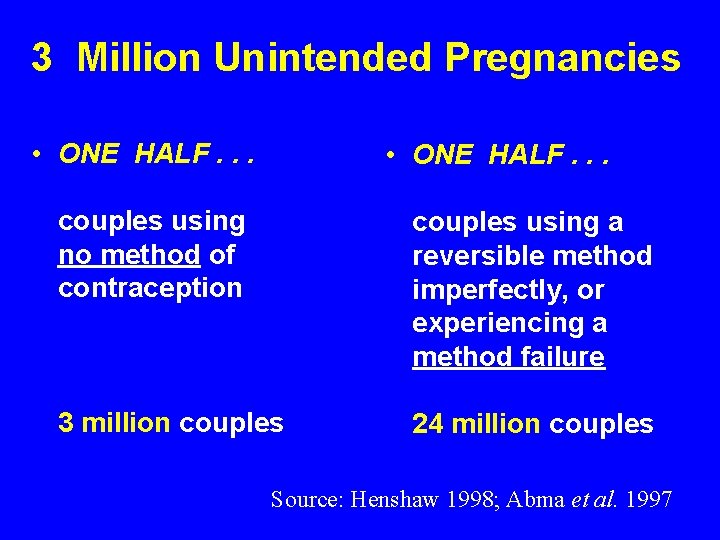
3 Million Unintended Pregnancies • ONE HALF. . . couples using no method of contraception couples using a reversible method imperfectly, or experiencing a method failure 3 million couples 24 million couples Source: Henshaw 1998; Abma et al. 1997
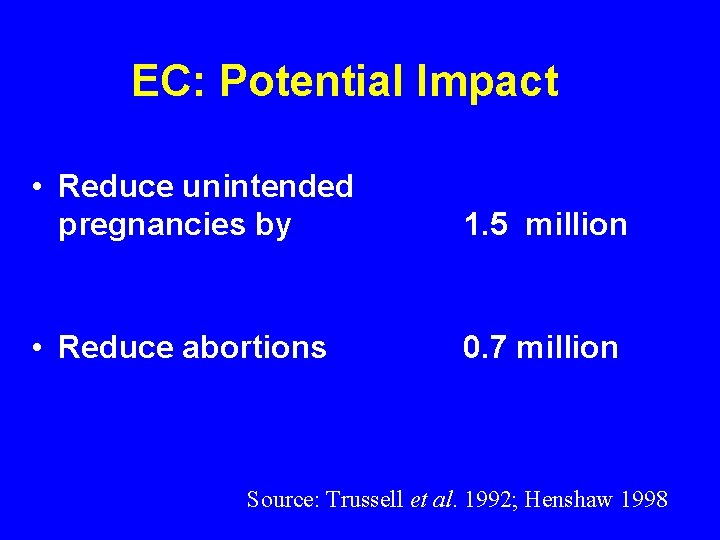
EC: Potential Impact • Reduce unintended pregnancies by 1. 5 million • Reduce abortions 0. 7 million Source: Trussell et al. 1992; Henshaw 1998
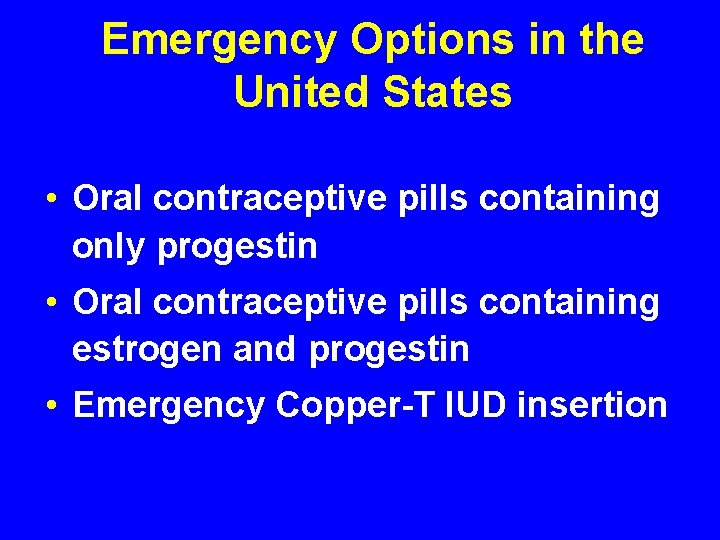
Emergency Options in the United States • Oral contraceptive pills containing only progestin • Oral contraceptive pills containing estrogen and progestin • Emergency Copper-T IUD insertion
Emergency Contraceptive Pills: Combined • Regular birth control pills- Yuzpe method • Contain estrogen and progestin- at least 1 mg of LNG and 200 mcg of ethinyl estradiol • 2 doses of 2, 4, or 5 pills, depending on brand • First dose within 72(120) hours • Second dose 12 hours later(or maybe not!) • Side effects: nausea (50%) and vomiting (20%) Trussell et al. Women’s Health Prim Care 1998; 1: 55
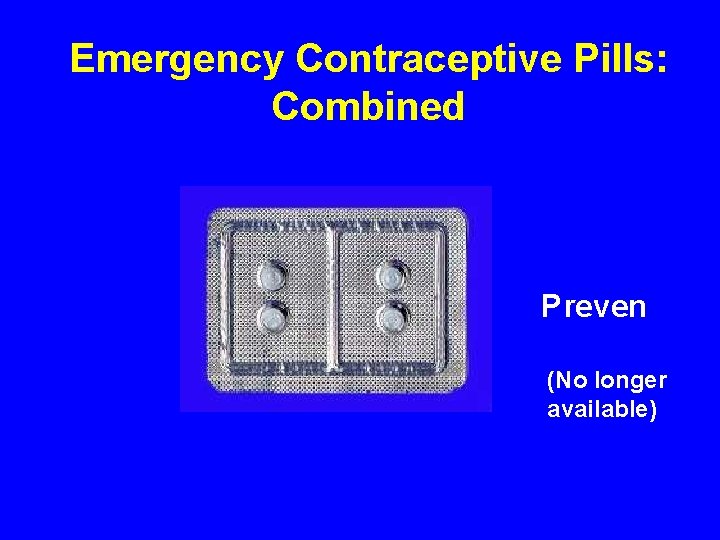
Emergency Contraceptive Pills: Combined Preven (No longer available)

Emergency Contraceptive Pills: Progestin-only • Birth control pills containing only progestin • 2 doses of 1 Plan B tablet or 20 Ovrette tablets • First dose within 72(120) hours after intercourse • Second dose 12 hours later(or maybe not!) • Less nausea/vomiting than combined ECPs Task Force. Lancet 1998; 352: 428
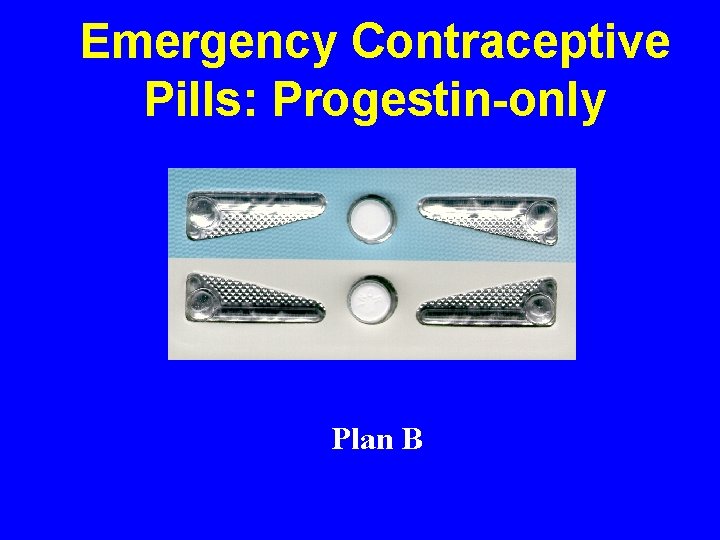
Emergency Contraceptive Pills: Progestin-only Plan B

Emergency Copper IUD Insertion • Copper-T IUD (Para. Gard) • Insertion within 5 days after unprotected intercourse • 10 more years of highly effective contraception • Much more effective than ECPs • Not recommended for women at risk of sexually transmitted infections (STIs)

Copper-T IUD Ortho

Combined ECP Effectiveness: Single Use 100 women have unprotected sex in the 2 nd or 3 rd week of their cycle 8 will become pregnant without emergency contraception 2 will become pregnant using combined ECPs (75% reduction) Source: Trussell, Rodríguez and Ellertson 1998
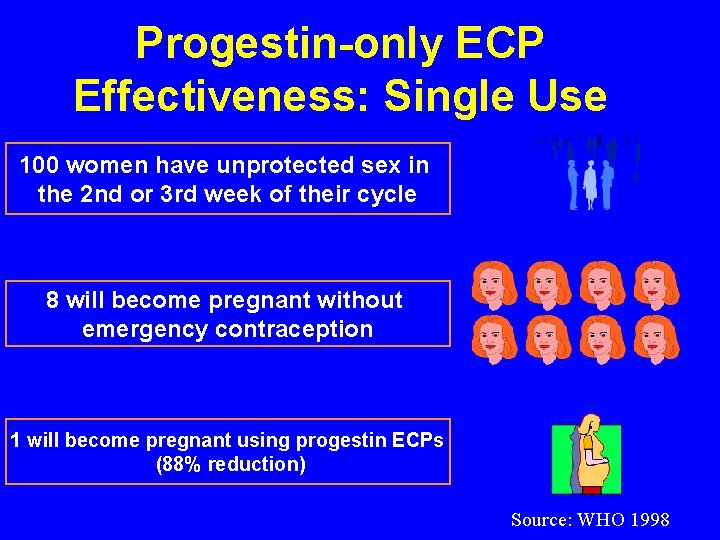
Progestin-only ECP Effectiveness: Single Use 100 women have unprotected sex in the 2 nd or 3 rd week of their cycle 8 will become pregnant without emergency contraception 1 will become pregnant using progestin ECPs (88% reduction) Source: WHO 1998
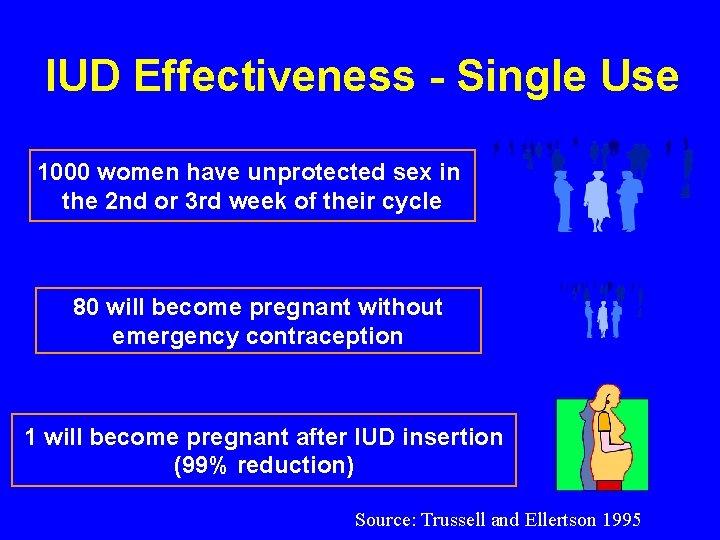
IUD Effectiveness - Single Use 1000 women have unprotected sex in the 2 nd or 3 rd week of their cycle 80 will become pregnant without emergency contraception 1 will become pregnant after IUD insertion (99% reduction) Source: Trussell and Ellertson 1995
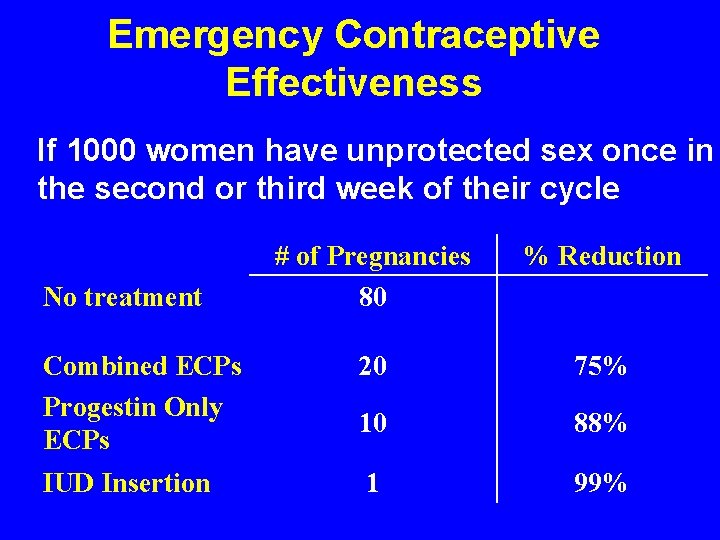
Emergency Contraceptive Effectiveness If 1000 women have unprotected sex once in the second or third week of their cycle # of Pregnancies 80 % Reduction Combined ECPs Progestin Only ECPs 20 75% 10 88% IUD Insertion 1 99% No treatment
Concerns about EC • It’s an abortion pill • It will keep woman from using more effective means of contraception and have “risky sex” • It’s not safe and can cause serious side effects
Definition of Pregnancy • NIH/FDA – Pregnancy encompasses the period of time from confirmation of implantation until expulsion or extraction of the fetus. • ACOG – Pregnancy is the state of a female after conception and until termination of the gestation. Conception is the implantation of the blastocyst. It is not synonymous with fertilization; it is synonymous with implantation. Source: US Government 1983; Hughes 1972
Mechanisms of Action • Inhibit ovulation • Trap sperm in thickened cervical mucus • Inhibit tubal transport of egg or sperm • Interfere with fertilization, early cell division, or transport of embryo • Prevent implantation by disrupting the uterine lining
Does Providing ECPs Increase Risk-Taking? • Three randomized trials comparing advance provision vs. education only • Use was appropriate • Patients did not abandon or decrease the use of their regular contraceptives • Decrease in unintended pregnancies
Safety • No evidence based contraindications to progestin only ECP or IUDs • Four case reports of cerebrovascular accidents with combined ECP
Other issues • • • How long after is too long? One dose or two? Nausea/vomiting Spotting Starting contraception Menses
How Long After the Morning After? • Initial recommendations were to administer first dose within 72 hours • Several trials have found no decrease in efficacy if given within 120 hours von Hertzen et al, Lancet, 2002, Ellertson et al, Obstet Gynecol, 2003
One dose or two? • Recommendations call for two doses 12 hours apart • Studies indicate that giving the same total as one dose is as effective von Hertzen et al, Lancet, 2002, Ellertson et al, Obstet Gynecol, 2003
Reducing the Risk of Nausea • Meclizine significantly reduces the risk of nausea and vomiting associated with the Yuzpe regimen of emergency contraception. • Significantly increases the risk of drowsiness. Raymond et al. Obstet Gynecol 2000; 95: 271
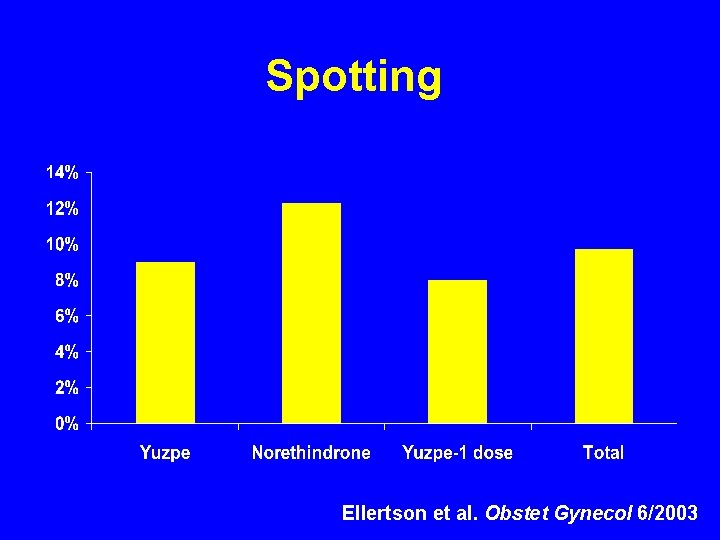
Spotting Ellertson et al. Obstet Gynecol 6/2003
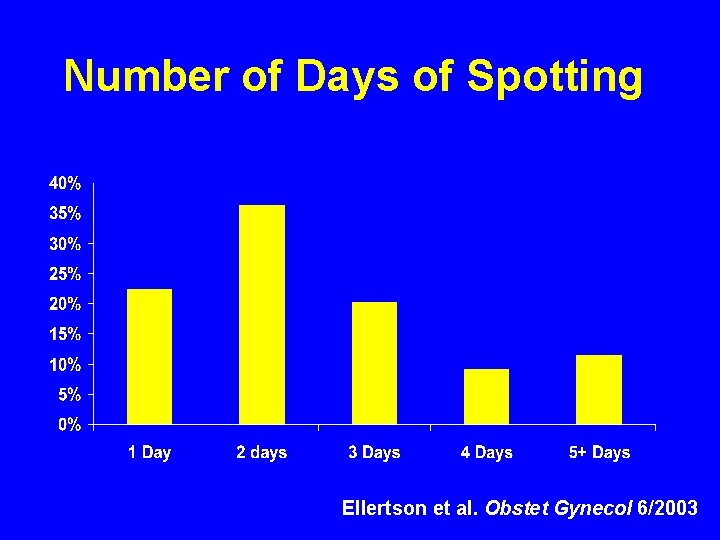
Number of Days of Spotting Ellertson et al. Obstet Gynecol 6/2003
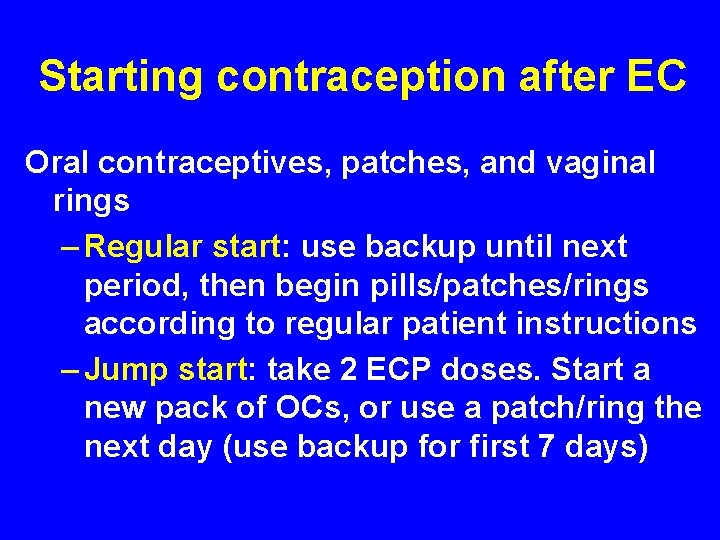
Starting contraception after EC Oral contraceptives, patches, and vaginal rings – Regular start: use backup until next period, then begin pills/patches/rings according to regular patient instructions – Jump start: take 2 ECP doses. Start a new pack of OCs, or use a patch/ring the next day (use backup for first 7 days)
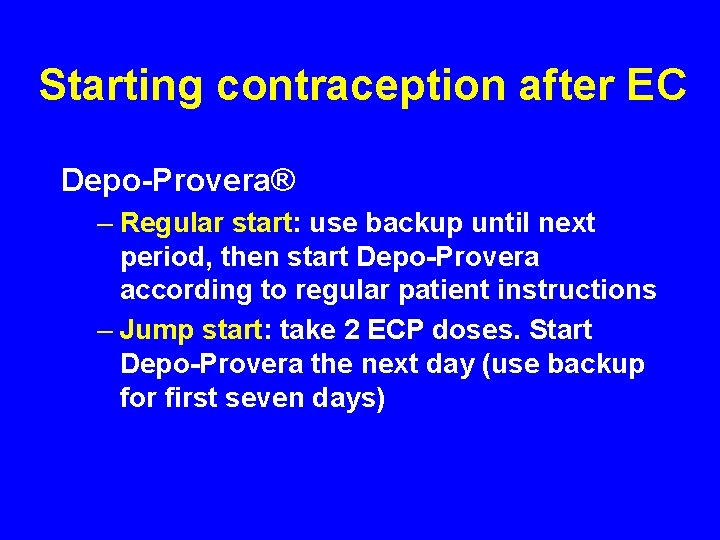
Starting contraception after EC Depo-Provera® – Regular start: use backup until next period, then start Depo-Provera according to regular patient instructions – Jump start: take 2 ECP doses. Start Depo-Provera the next day (use backup for first seven days)
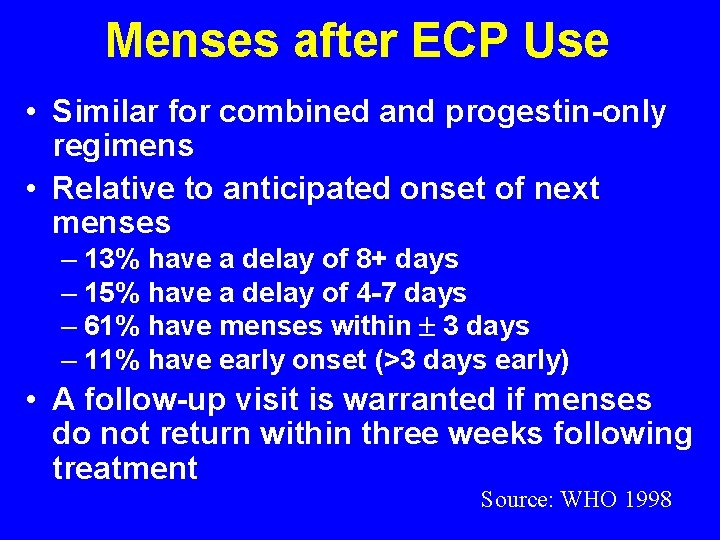
Menses after ECP Use • Similar for combined and progestin-only regimens • Relative to anticipated onset of next menses – 13% have a delay of 8+ days – 15% have a delay of 4 -7 days – 61% have menses within 3 days – 11% have early onset (>3 days early) • A follow-up visit is warranted if menses do not return within three weeks following treatment Source: WHO 1998
- Slides: 33