
JJennifer Johnson Infrared Spectral Surveys APOGEE12 R22 000
- Slides: 25
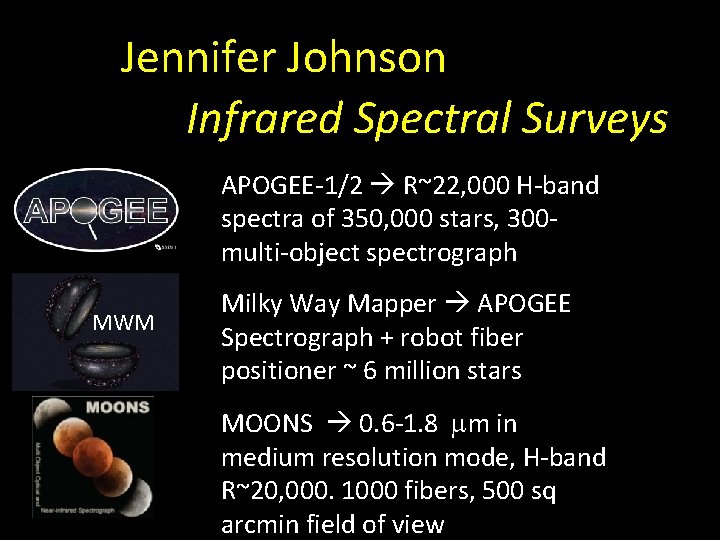
JJennifer Johnson Infrared Spectral Surveys APOGEE-1/2 R~22, 000 H-band spectra of 350, 000 stars, 300 multi-object spectrograph MWM Milky Way Mapper APOGEE Spectrograph + robot fiber positioner ~ 6 million stars MOONS 0. 6 -1. 8 mm in medium resolution mode, H-band R~20, 000. 1000 fibers, 500 sq arcmin field of view
Goals of Stellar Spectra Surveys Galactic Archaeology • Star formation history (ages of stars) • Gradients in ages, chemistry, etc. (distances) • Chemical and dynamical evolution of the Galaxy • Merging history and present-day satellites Intervening ISM Stellar Physics • Star formation • Initial mass function • Stellar Structure: – Size of convective cores – Internal rotation profile • Calibration of fundamental properties – ages, masses, radii
Stellar Parameters • Temperatures – Ages and masses for stars, including red giant stars • Distances – Critical for mapping the Galaxy • Extinction corrections – Measure of color-excess – Application of extinction law
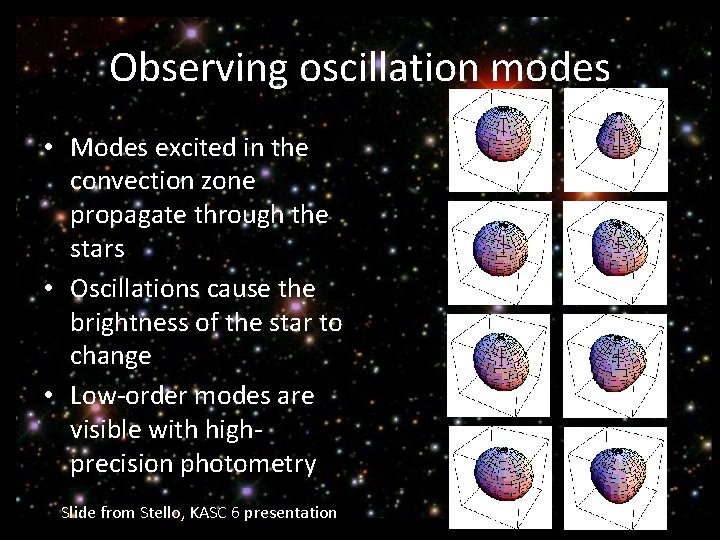
Observing oscillation modes • Modes excited in the convection zone propagate through the stars • Oscillations cause the brightness of the star to change • Low-order modes are visible with highprecision photometry Slide from Stello, KASC 6 presentation
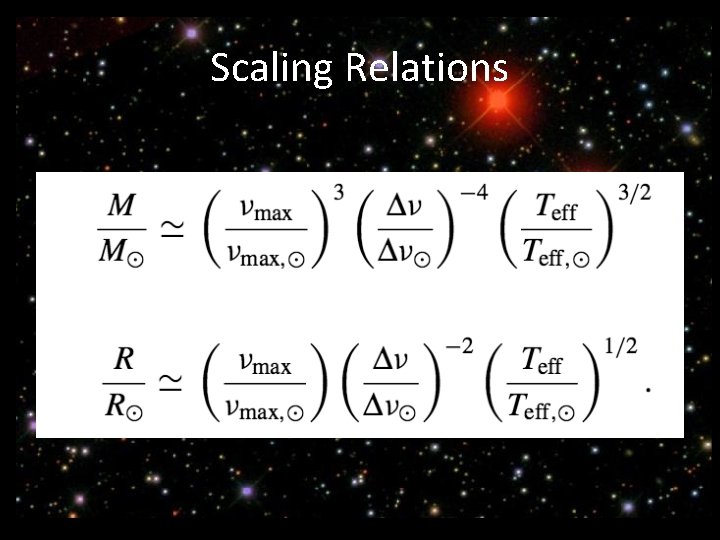
Scaling Relations
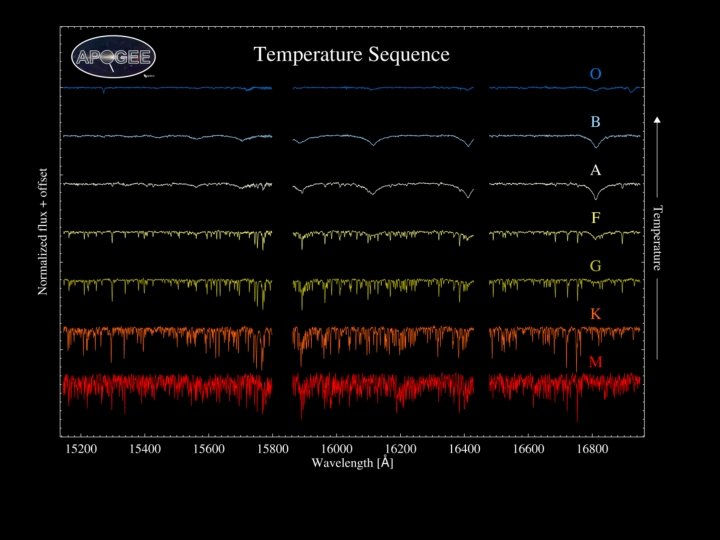
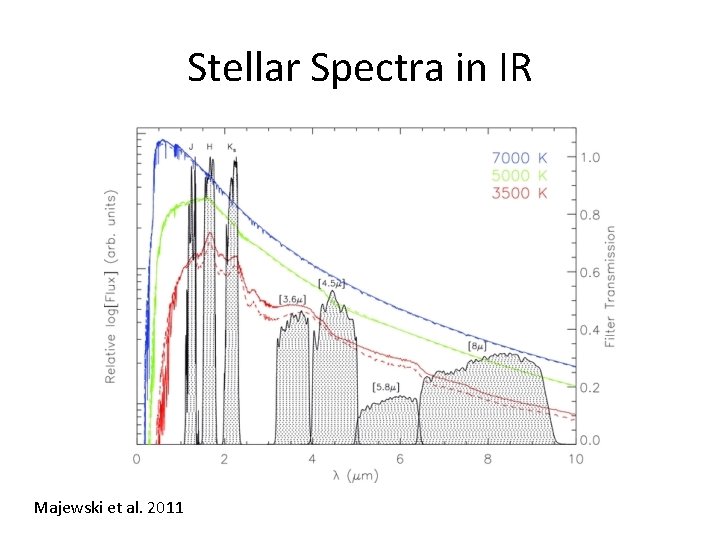
Stellar Spectra in IR Majewski et al. 2011
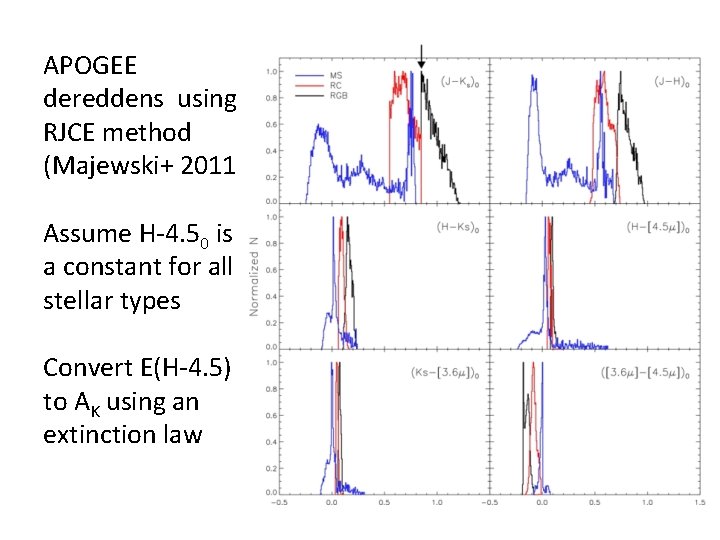
APOGEE dereddens using RJCE method (Majewski+ 2011 Assume H-4. 50 is a constant for all stellar types Convert E(H-4. 5) to AK using an extinction law
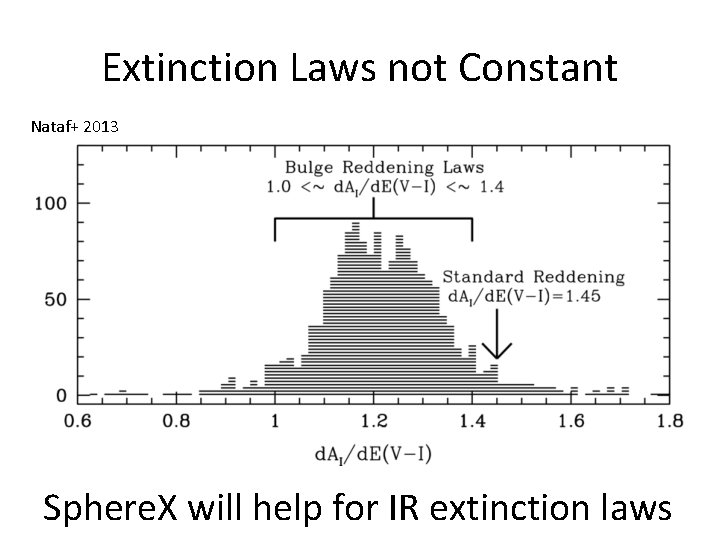
Extinction Laws not Constant Nataf+ 2013 Sphere. X will help for IR extinction laws
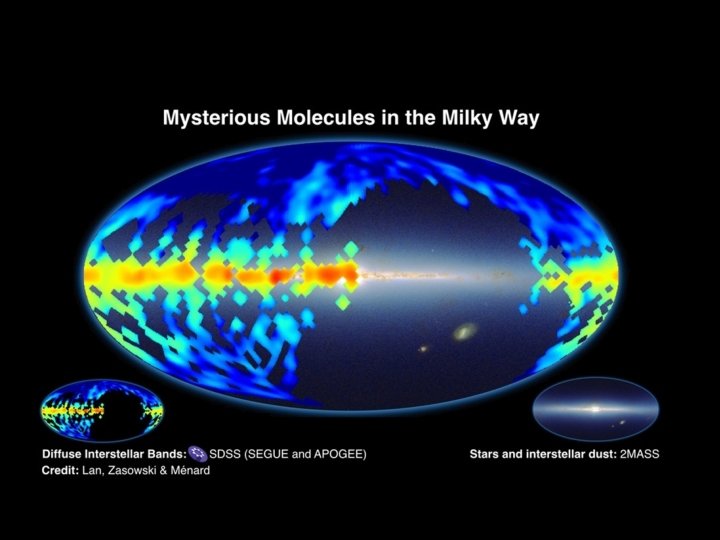
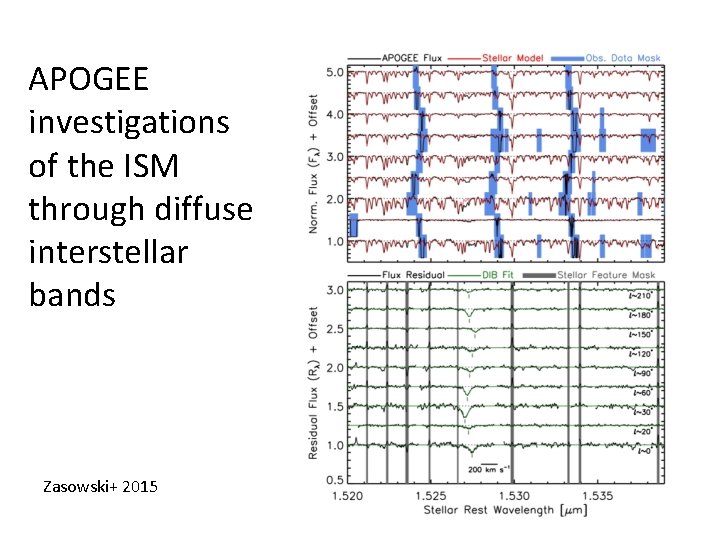
APOGEE investigations of the ISM through diffuse interstellar bands Zasowski+ 2015
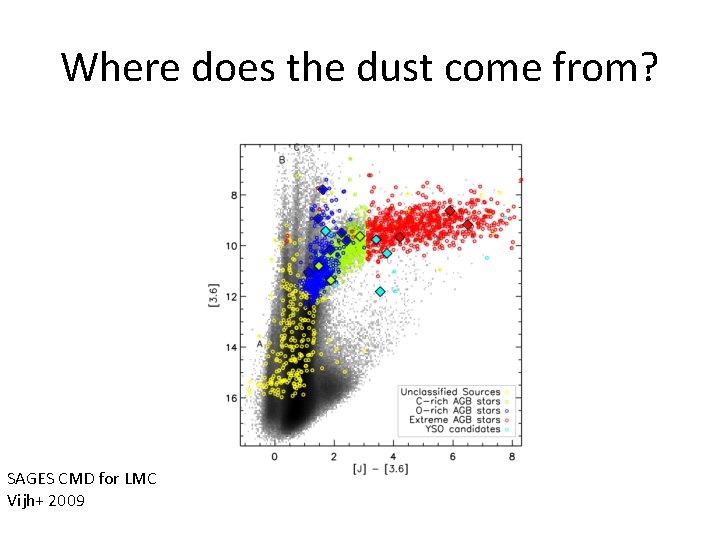
Where does the dust come from? SAGES CMD for LMC Vijh+ 2009
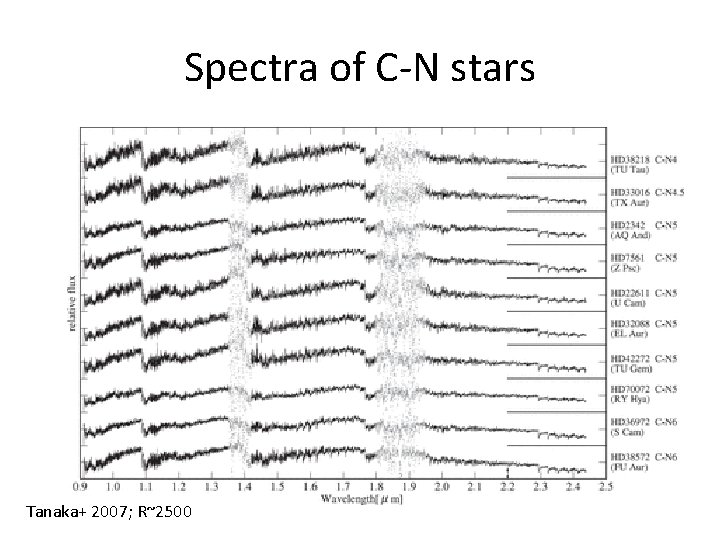
Spectra of C-N stars Tanaka+ 2007; R~2500
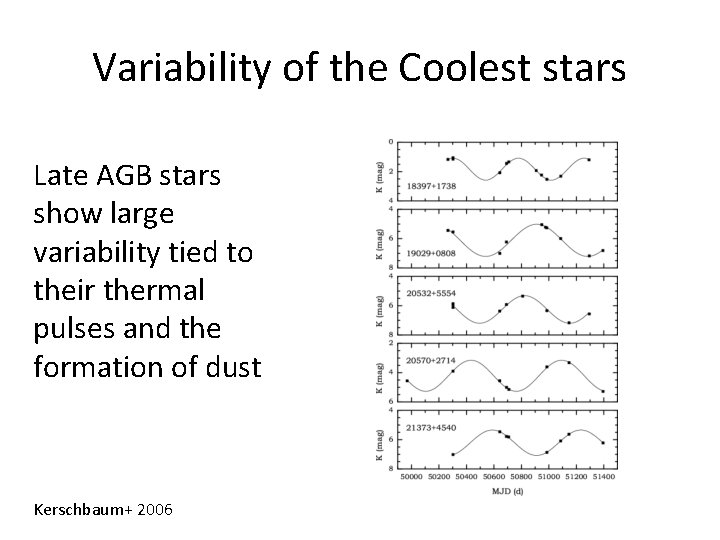
Variability of the Coolest stars Late AGB stars show large variability tied to their thermal pulses and the formation of dust Kerschbaum+ 2006
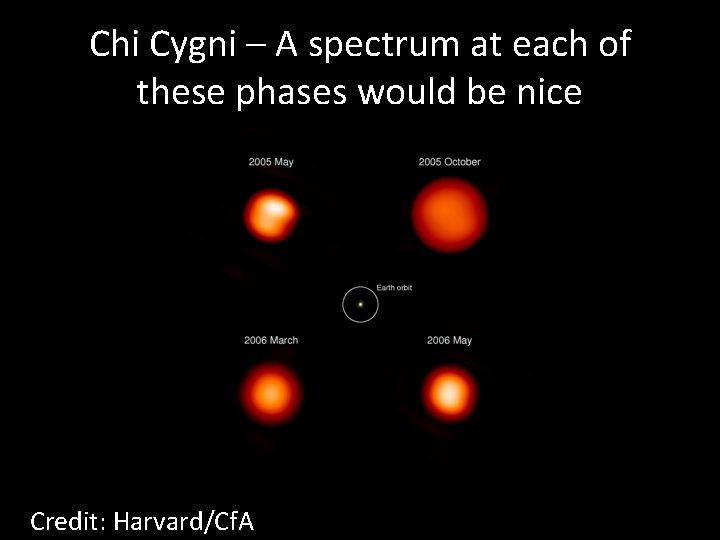
Chi Cygni – A spectrum at each of these phases would be nice Credit: Harvard/Cf. A
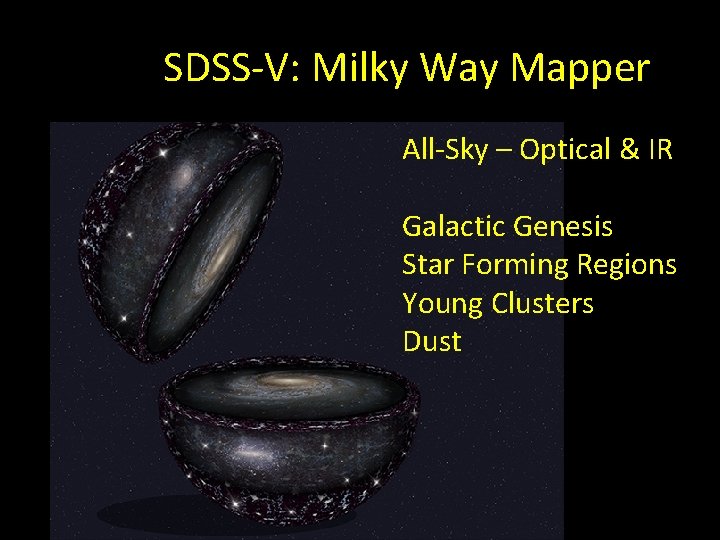
SDSDSDSS-V: Milky Way Mapper All-Sky – Optical & IR Galactic Genesis Star Forming Regions Young Clusters Dust
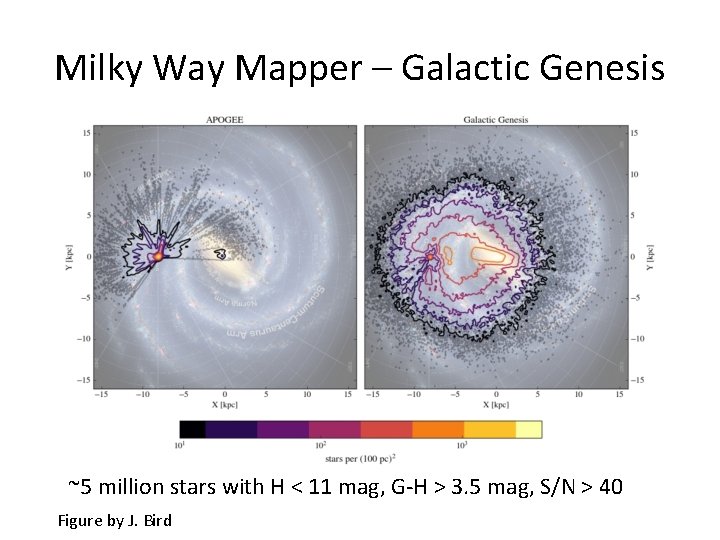
Milky Way Mapper – Galactic Genesis ~5 million stars with H < 11 mag, G-H > 3. 5 mag, S/N > 40 Figure by J. Bird
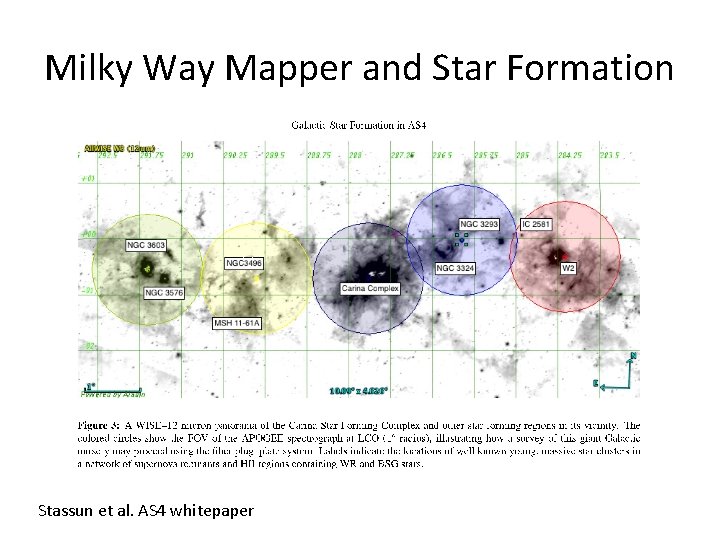
Milky Way Mapper and Star Formation Stassun et al. AS 4 whitepaper
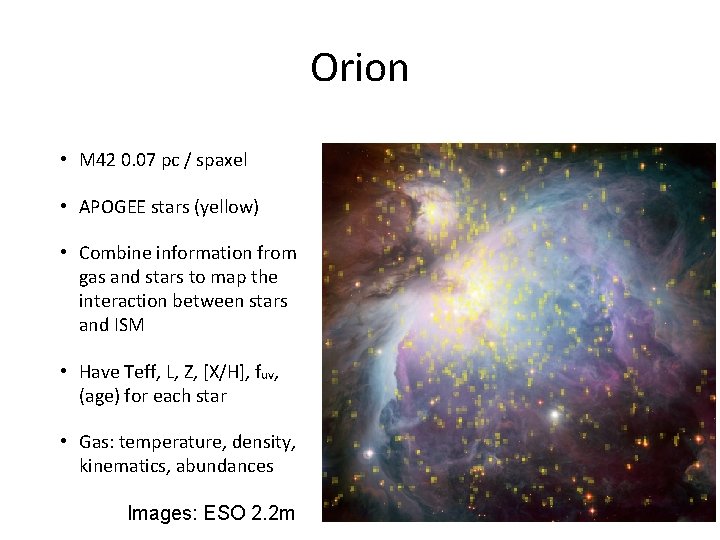
Orion • M 42 0. 07 pc / spaxel • APOGEE stars (yellow) • Combine information from gas and stars to map the interaction between stars and ISM • Have Teff, L, Z, [X/H], fuv, (age) for each star • Gas: temperature, density, kinematics, abundances Images: ESO 2. 2 m
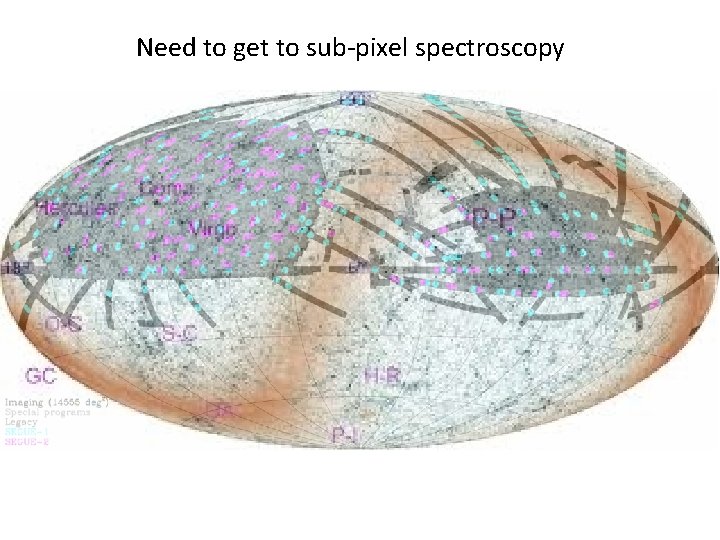
Need to get to sub-pixel spectroscopy
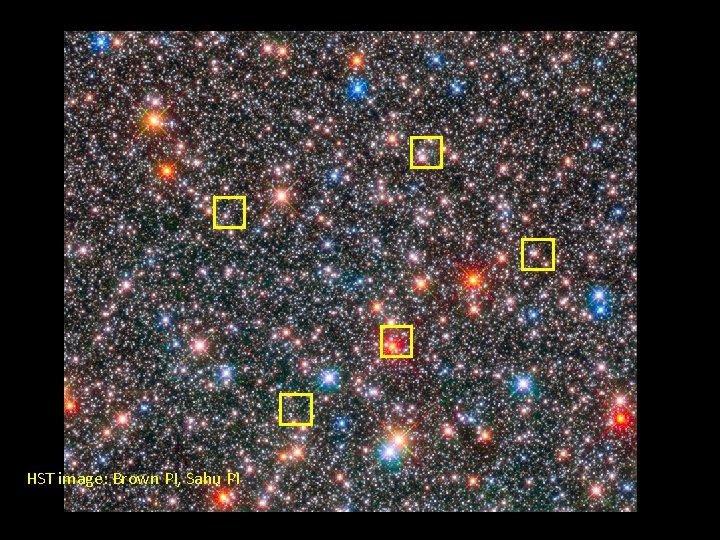
HST image: Brown PI, Sahu PI
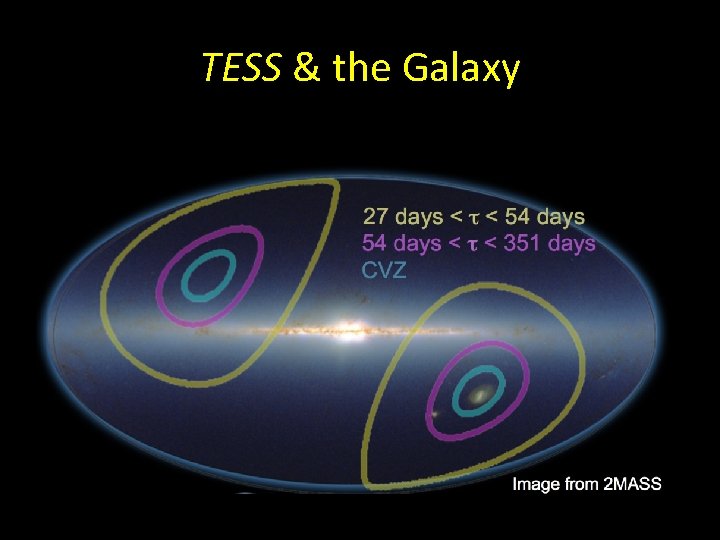
TESS & the Galaxy
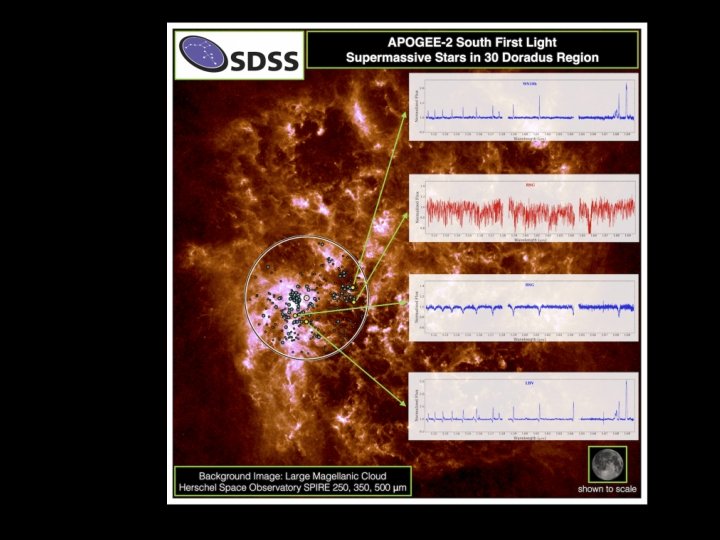
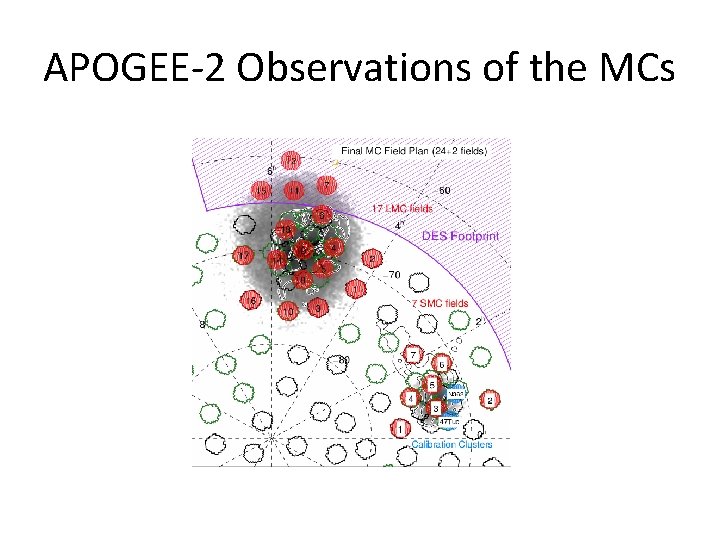
APOGEE-2 Observations of the MCs
Summary MWM Excellent synergy between Sphere. X & IR Stellar Spectral Surveys • Extinction & Extinction Laws • DIBs & other ISM measurements • Variability & Dust formation in AGB stars • Stars and Gas in Star-forming Regions • Need sub-pixel spectra to maximize potential