IT MATTTRs Colorado Implementing Technology and Medication Assisted

- Slides: 41
IT MATTTRs Colorado™ Implementing Technology and Medication Assisted Treatment and Team Training in Rural Colorado Primary Care Practice Training Copyright 2018 Regents of the University of Colorado. All Rights Reserved. For permission to use content for purposes other than IT MATTTRs Practice Team Training, please contact ITMATTTRs 2@ucdenver. edu
Why we’re here • Colorado is in the midst of an epidemic of opioid addiction – impacting quality of life and causing death. • We have effective, evidence-based tools for treatment. • We can and need to translate the science into practice.
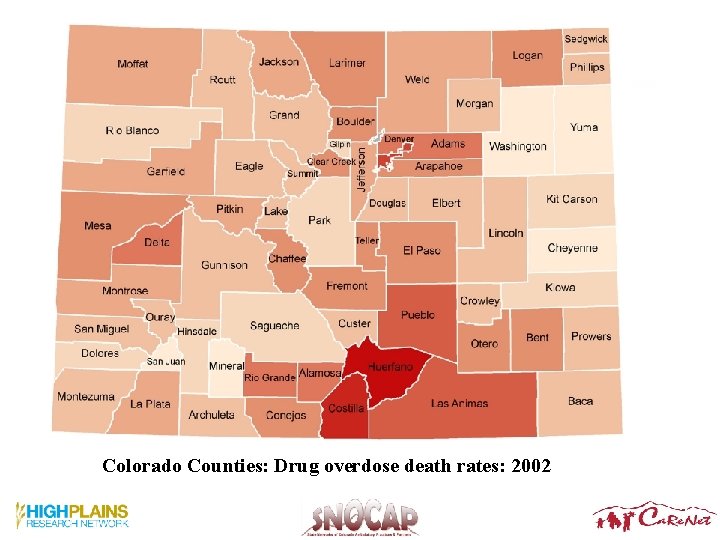
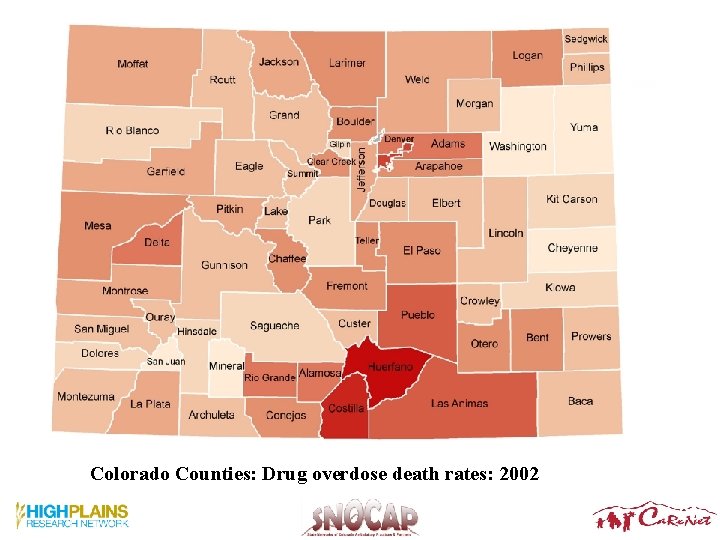
Colorado Counties: Drug overdose death rates: 2002 3
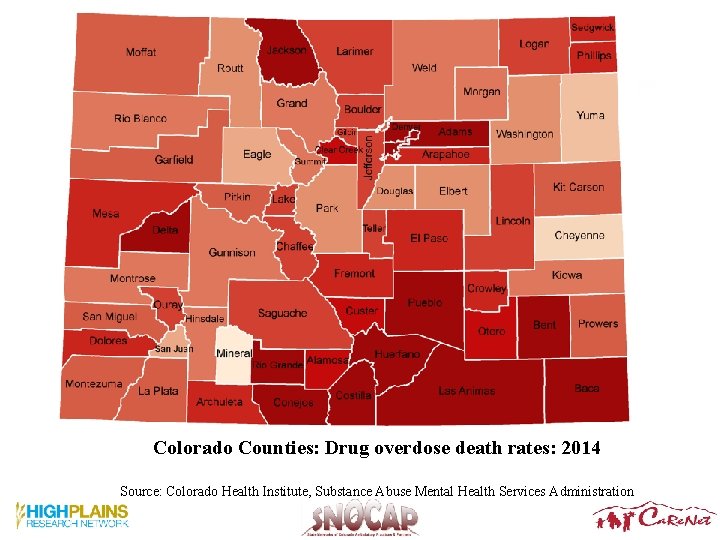
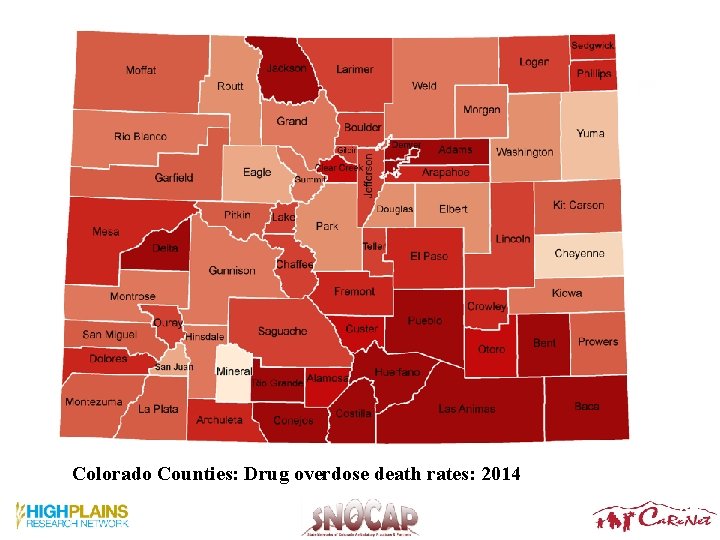
Colorado Counties: Drug overdose death rates: 2014 Source: Colorado Health Institute, Substance Abuse Mental Health Services Administration 4
IT MATTTRs Partners • • • High Plains Research Network Colorado Research Network (Ca. Re. Net) State Network of Colorado Ambulatory Practices and Partners) University of Colorado Dept of Family Medicine State Office of Behavioral Health
What will you get from IT MATTTRs Colorado™? • Training and education for practice team What you can do to identify your patients that need help and referral options to medication assisted treatment (MAT) • What your patients will experience when receiving MAT (whether here or elsewhere) • Steps involved with MAT to help your practice determine MAT plans or to take next steps to implement MAT •
What will you get from IT MATTTRs Colorado™? • • • Practice and staff resources, templates, materials Practice support Opisafe (physician account covered for a year) COPIC points (1 for 1 session; 2 for all 4 sessions) CME (up to 4 credits)
REMINDER: What will you get from IT MATTTRs Colorado? Practice Tools and Materials q q q q Staff and Prescriber Training Patient consent form and contract for buprenorphine treatment Payment schedule with diagnostic and billing codes Opioid registry and tracking system (Opisafe) Diversion Control plan templates Urine drug testing protocol and system templates MAT resource/protocol book for practice Electronic Health Record documentation templates
Objectives (over 4 sessions): • • Determine which patients presenting with opioid use disorder are appropriate for medication assisted treatment. Describe how buprenorphine can be used in the treatment of opioid addicted patients. Manage patients who are receiving medication assisted treatment. Describe the common behavioral health co-morbidities associated with opioid addiction. Describe the common medical co-morbidities associated with opioid addiction. List the considerations for special populations when choosing medication assisted treatment for opioid use disorder. Describe your clinic role in treating patients with opioid use disorder.
Whole Practice Training Modules 4 modules (1 hour each) 1. Opioids, Receptors, Colorado, and You 2. The Patient: 3. The Practice: What does a practice need to support a patient 4. Special Populations 5. SBIRT: Screening, Brief Intervention, and Referral to Treatment What is your role in helping a patient? getting MAT or provide MAT?
Opioids, Receptors, Colorado, and You
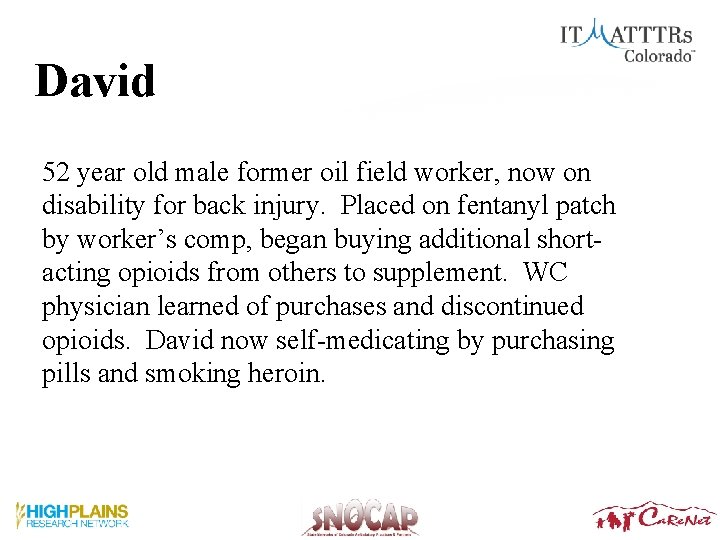
David 52 year old male former oil field worker, now on disability for back injury. Placed on fentanyl patch by worker’s comp, began buying additional shortacting opioids from others to supplement. WC physician learned of purchases and discontinued opioids. David now self-medicating by purchasing pills and smoking heroin.
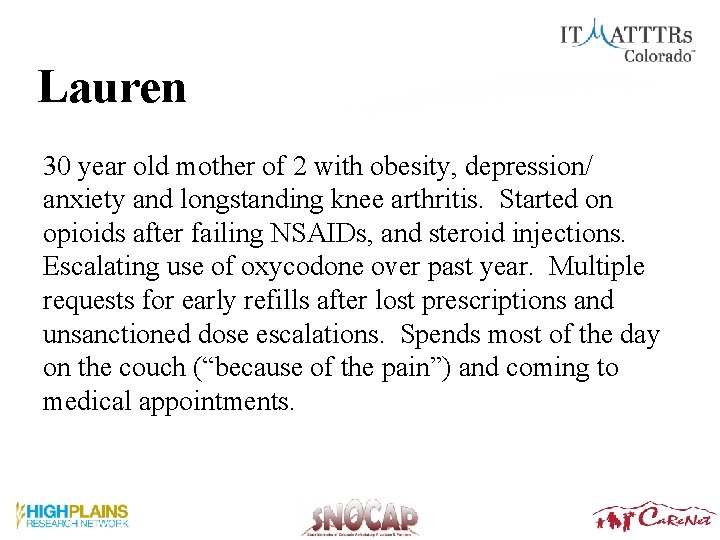
Lauren 30 year old mother of 2 with obesity, depression/ anxiety and longstanding knee arthritis. Started on opioids after failing NSAIDs, and steroid injections. Escalating use of oxycodone over past year. Multiple requests for early refills after lost prescriptions and unsanctioned dose escalations. Spends most of the day on the couch (“because of the pain”) and coming to medical appointments.
Questions Are David or Lauren benefiting from opioids? • What are the risks of continuing opioids? • Are there any “red flag” behaviors? Do they constitute a use disorder? • What are options? •
Module I: Opioids, Receptors, Colorado, and You • Opioid Pharmacology: What are opioids? Mu receptors? • Neurobiology of Opioid Use Disorders: Tolerance, Dependence, Cycle of Addiction • Epidemiology: Opioid and heroin misuse • Legislation: Drug Addiction Treatment Act (DATA 2000) • Medication Assisted Treatment (MAT): What is buprenorphine? How does it work? How effective is it? Is it safe?
Opioid Pharmacology
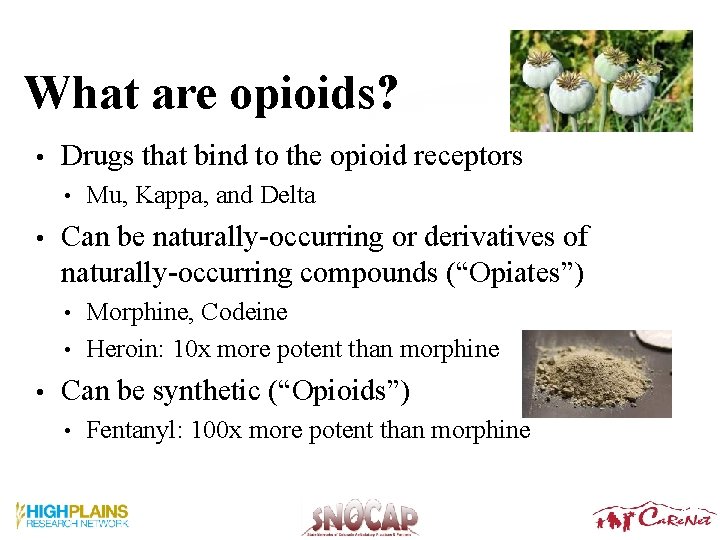
What are opioids? • Drugs that bind to the opioid receptors • • Mu, Kappa, and Delta Can be naturally-occurring or derivatives of naturally-occurring compounds (“Opiates”) Morphine, Codeine • Heroin: 10 x more potent than morphine • • Can be synthetic (“Opioids”) • Fentanyl: 100 x more potent than morphine 17
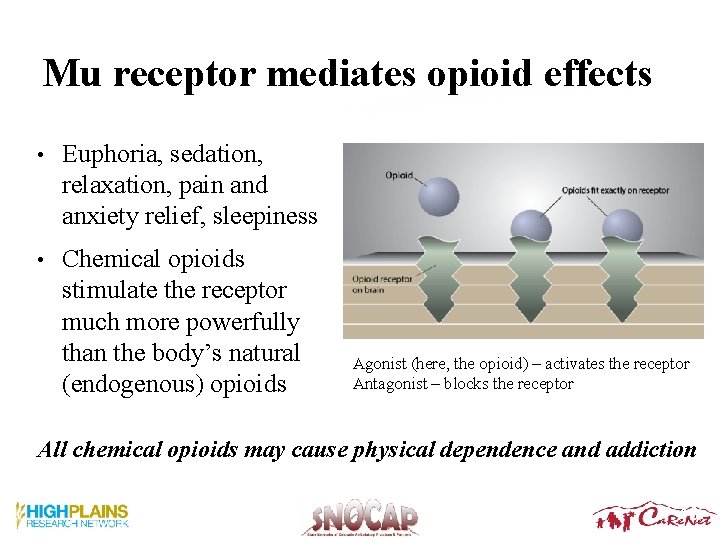
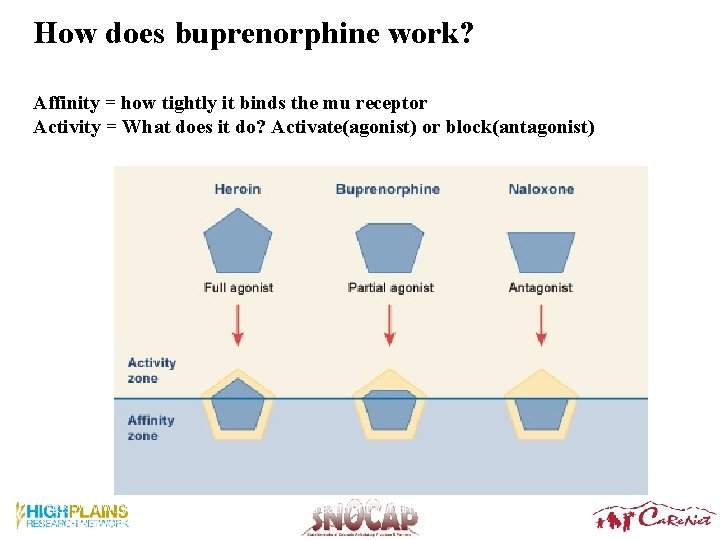
Mu receptor mediates opioid effects • Euphoria, sedation, relaxation, pain and anxiety relief, sleepiness • Chemical opioids stimulate the receptor much more powerfully than the body’s natural (endogenous) opioids Agonist (here, the opioid) – activates the receptor Antagonist – blocks the receptor All chemical opioids may cause physical dependence and addiction 18
Neurobiology of Opioid Use Disorders
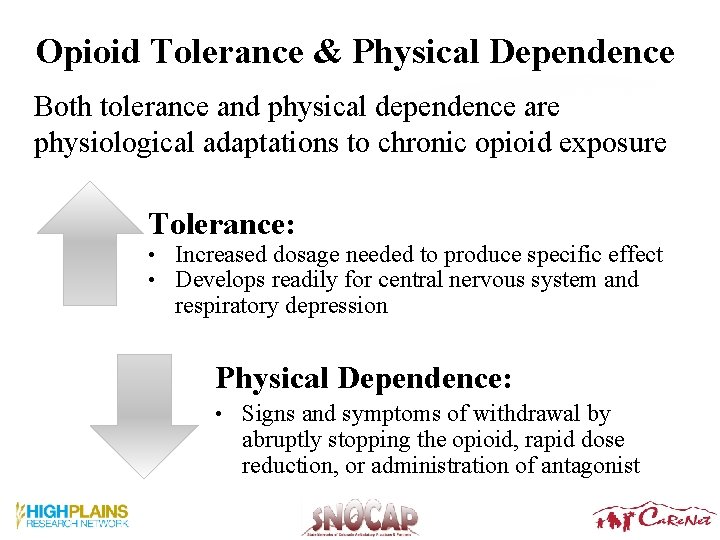
Opioid Tolerance & Physical Dependence Both tolerance and physical dependence are physiological adaptations to chronic opioid exposure Tolerance: • • Increased dosage needed to produce specific effect Develops readily for central nervous system and respiratory depression Physical Dependence: • Signs and symptoms of withdrawal by abruptly stopping the opioid, rapid dose reduction, or administration of antagonist
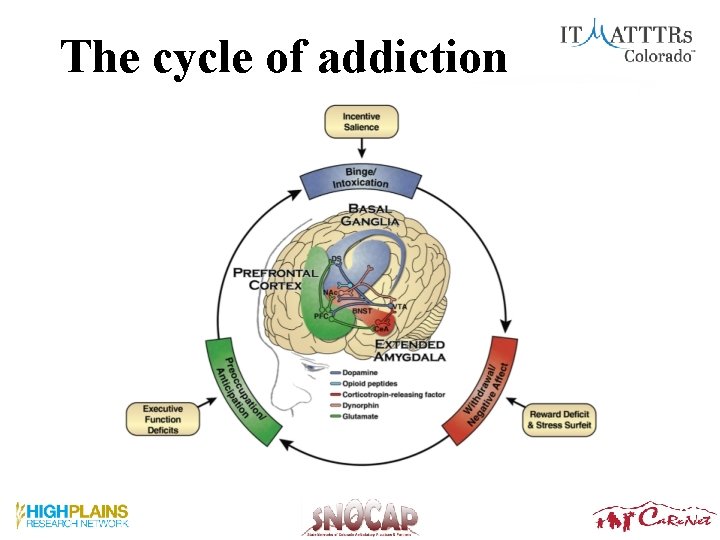
The cycle of addiction 21
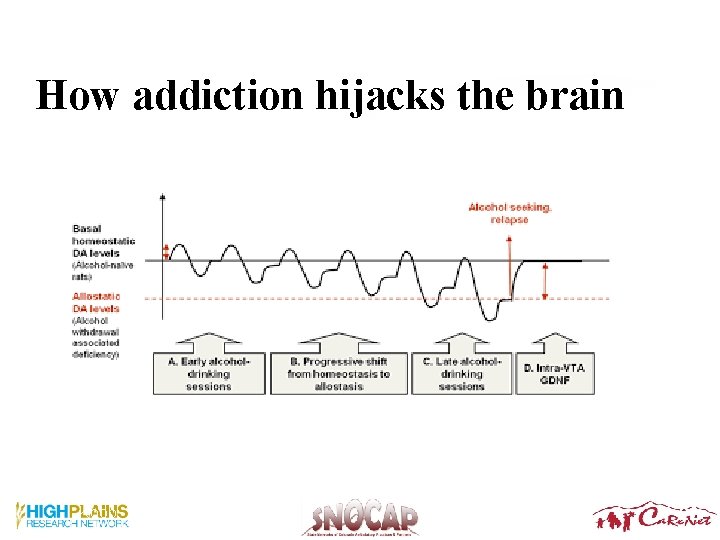
How addiction hijacks the brain Koob, 2003 22
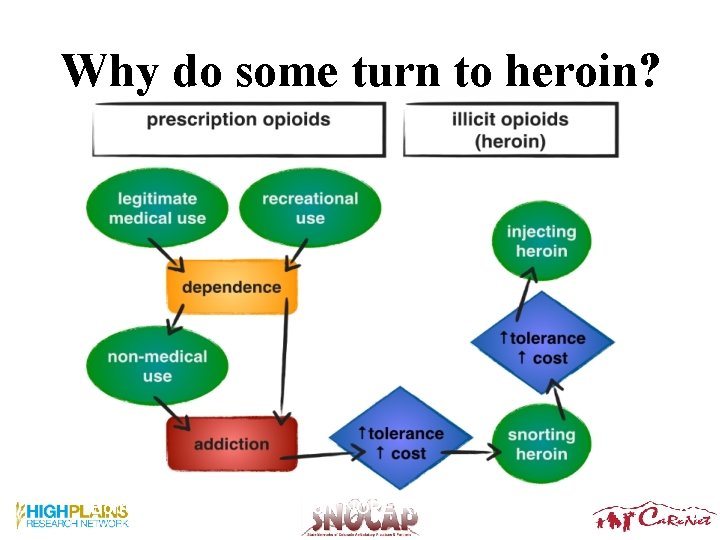
Why do some turn to heroin? Borrowed with permission from NOPE-RI 23
Epidemiology of Heroin Use and Prescription Opioid Misuse
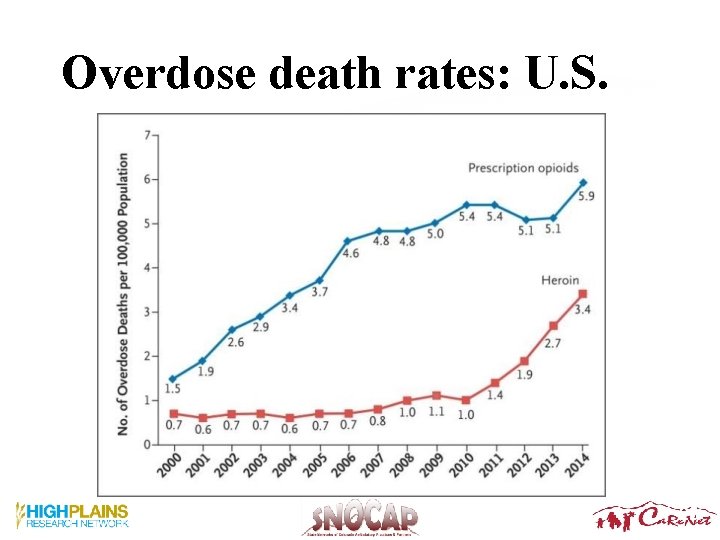
Overdose death rates: U. S. 25
Colorado Counties: Drug overdose death rates: 2002 26
Colorado Counties: Drug overdose death rates: 2014 27
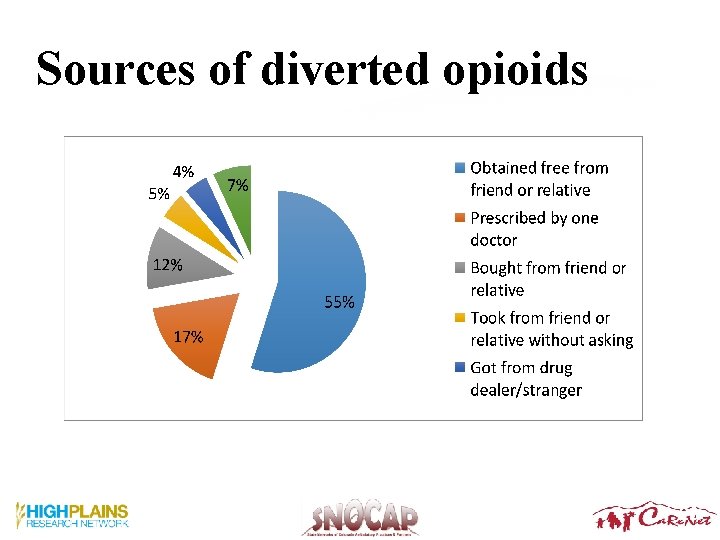
Sources of diverted opioids 28
Who Can Provide Treatment? Historically, only certified Addiction Treatment Centers could treat opioid addiction. (Only a few of these in Colorado. ) § Drug Addiction Treatment Act of 2000 allows a waivered physician to prescribe an opioid for the treatment of the opioid use disorder, with certain restrictions § Update 2016: allows Nurse Practitioners and Physician Assistants to prescribe §
Use Addiction Treatment – in primary care, it’s buprenorphine As a primary care practice team member: • Help identify patients with an opioid use disorder (addiction). • Refer patients to treatment and behavioral health care. • KNOW what your patients will and are going through in treatment.
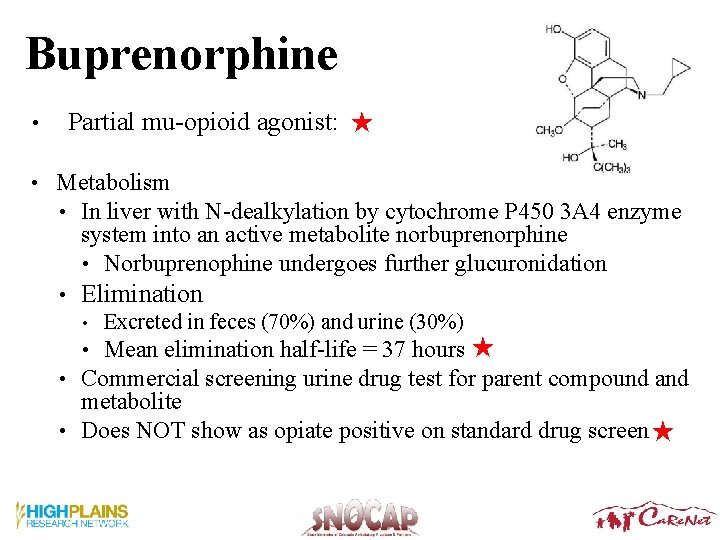
Buprenorphine Partial mu-opioid agonist: • • Metabolism • In liver with N-dealkylation by cytochrome P 450 3 A 4 enzyme system into an active metabolite norbuprenorphine • Norbuprenophine undergoes further glucuronidation • Elimination • Excreted in feces (70%) and urine (30%) Mean elimination half-life = 37 hours • Commercial screening urine drug test for parent compound and metabolite • Does NOT show as opiate positive on standard drug screen •
How does buprenorphine work? Affinity = how tightly it binds the mu receptor Activity = What does it do? Activate(agonist) or block(antagonist) From: Practical Pain Management https: //www. practicalpainmanagement. com/treatments/pharmacological/opioids/office-basedtreatment-opioid-dependence 32
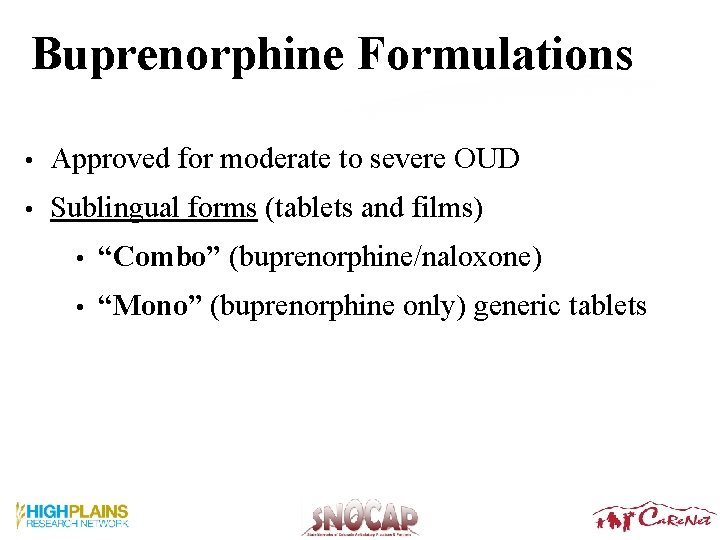
Buprenorphine Formulations • Approved for moderate to severe OUD • Sublingual forms (tablets and films) • “Combo” (buprenorphine/naloxone) • “Mono” (buprenorphine only) generic tablets
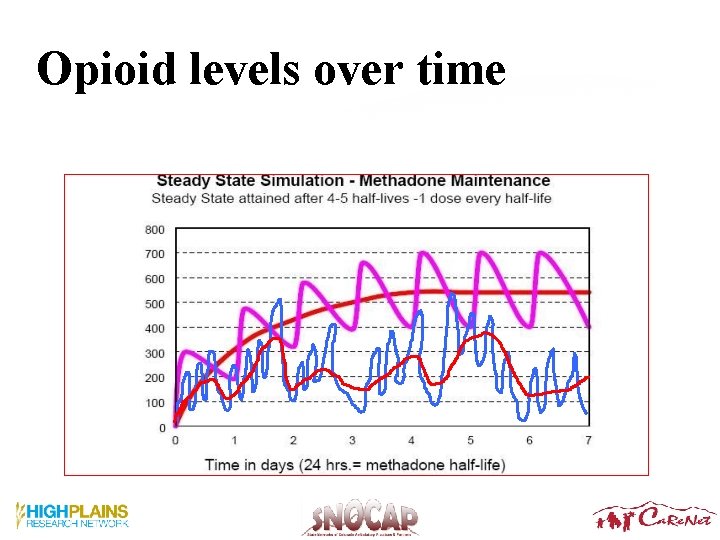
Opioid levels over time
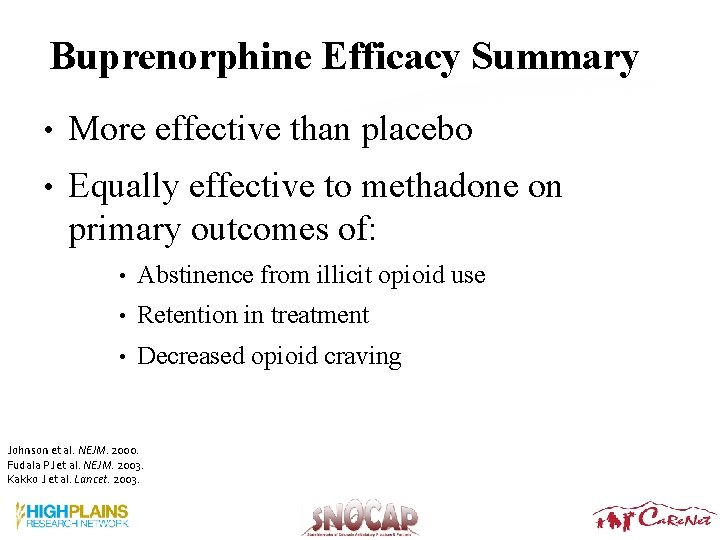
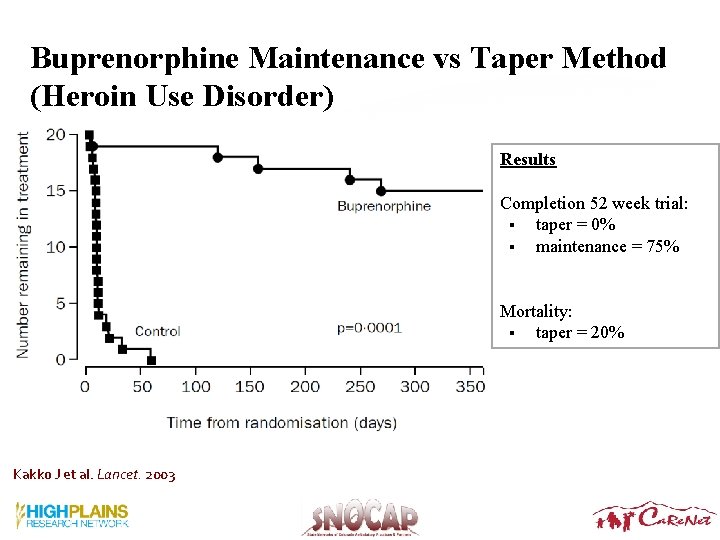
Buprenorphine Efficacy Summary • More effective than placebo • Equally effective to methadone on primary outcomes of: • Abstinence from illicit opioid use • Retention in treatment • Decreased opioid craving Johnson et al. NEJM. 2000. Fudala PJ et al. NEJM. 2003. Kakko J et al. Lancet. 2003.
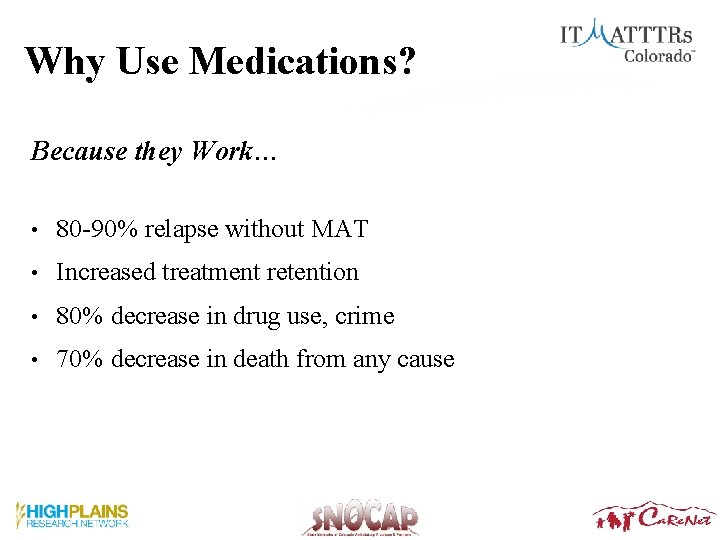
Why Use Medications? Because they Work… • 80 -90% relapse without MAT • Increased treatment retention • 80% decrease in drug use, crime • 70% decrease in death from any cause NIH Consensus Statement et al. JAMA. 1998.
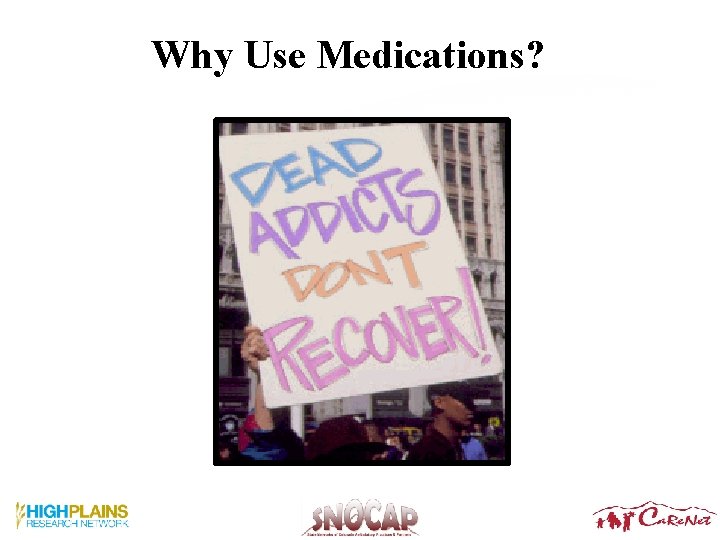
Why Use Medications? NIH Consensus Statement et al. JAMA. 1998.
Buprenorphine Maintenance vs Taper Method (Heroin Use Disorder) Results Completion 52 week trial: § taper = 0% § maintenance = 75% Mortality: § taper = 20% Kakko J et al. Lancet. 2003.
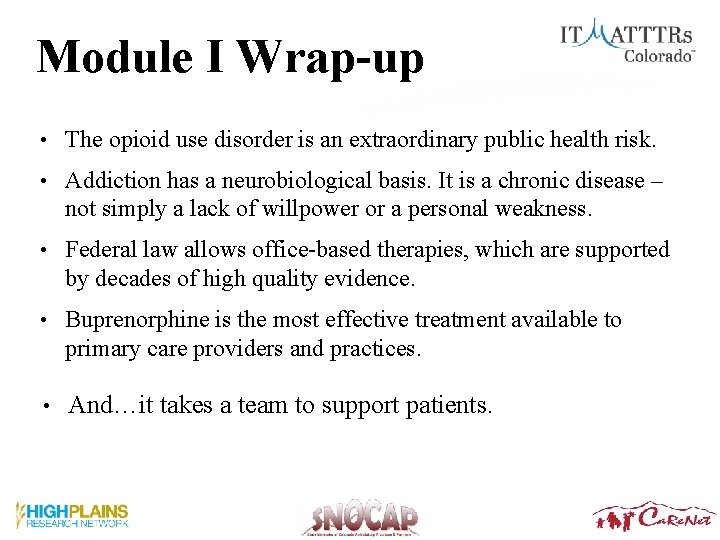
Module I Wrap-up • The opioid use disorder is an extraordinary public health risk. • Addiction has a neurobiological basis. It is a chronic disease – not simply a lack of willpower or a personal weakness. • Federal law allows office-based therapies, which are supported by decades of high quality evidence. • Buprenorphine is the most effective treatment available to primary care providers and practices. • And…it takes a team to support patients.
Module II – Sneak Preview The Patient: • What is your role in helping David or Lauren? What comes next? • There is a standard process for identifying and diagnosing patients (just like diabetes). • What does your patient experience on buprenorphine? Like you understand some medications and insulin, teams can/should understand how buprenorphine works. • How does the practice want to define success? Like diabetes, treatment is a lifetime.
Implementing Technology and Medication Assisted Treatment and Team Copyright 2018 Regents of the University of Colorado. All Rights Reserved. Training For permission to use content for purposes other than IT MATTTRs Practice Team Training, please contact ITMATTTRs 2@ucdenver. edu in Rural Colorado Primary Care Practice Training