IPS15 3 Europe Pushing the Thermal Limit of

- Slides: 19
IPS-15 -3 Europe Pushing the Thermal Limit of HMX Perforating Systems in Through-Tubing Gas Wells Dominic Wong Regional TCP Manager – ESSA May 20, 2015
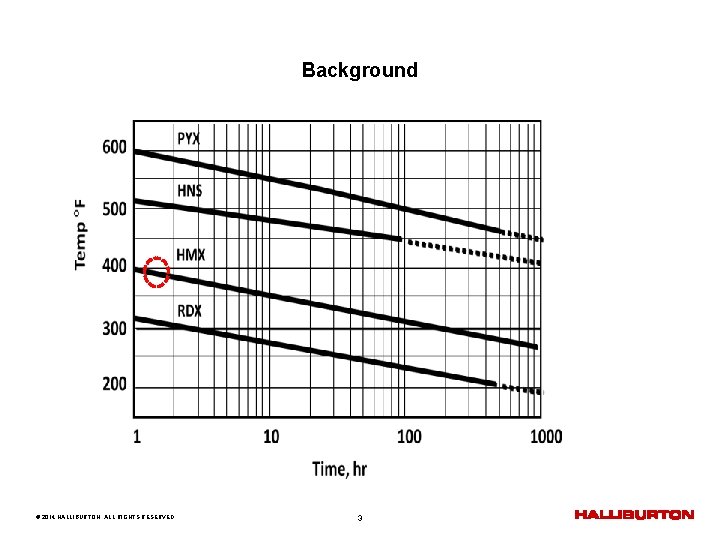
Introduction ▌Through-tubing perforating systems based on HMX explosive are commonly deployed for gas well perforating ▌Important to consider jobs above 360 F at depths around 15, 000 ft ▌Large body of operational data shows a typical transit time to be 1. 0 hr, with another 0. 5 hr for tie-in time and shooting. ▌Total time of 1. 5 hr is nearing the HMX thermal limit. © 2014 HALLIBURTON. ALL RIGHTS RESERVED. 2
Background © 2014 HALLIBURTON. ALL RIGHTS RESERVED. 3
Goal of this test program ▌ Determine thermal delay inside the perforating gun. ▌ Conduct tests to take advantage of the delay so that thermal limit of the HMX charges can be “pushed” as much as possible before requiring a switch to HNS. ▌ Determine the performance of the HMX charges as a function of temperature. ▌ This phase concentrated on charge performance in aluminum targets. Follow-on phases are underway for HMX detonators and detonating cord, as well as HMX charge performance in stressed rock. © 2014 HALLIBURTON. ALL RIGHTS RESERVED. 4
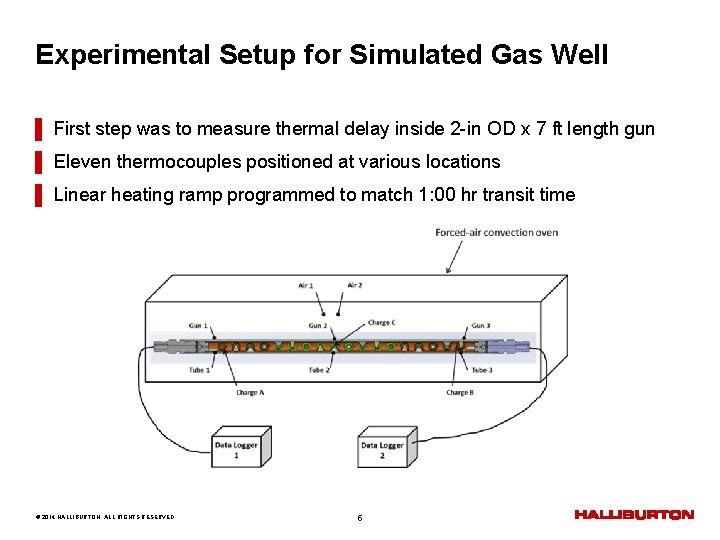
Experimental Setup for Simulated Gas Well ▌ First step was to measure thermal delay inside 2 -in OD x 7 ft length gun ▌ Eleven thermocouples positioned at various locations ▌ Linear heating ramp programmed to match 1: 00 hr transit time © 2014 HALLIBURTON. ALL RIGHTS RESERVED. 5
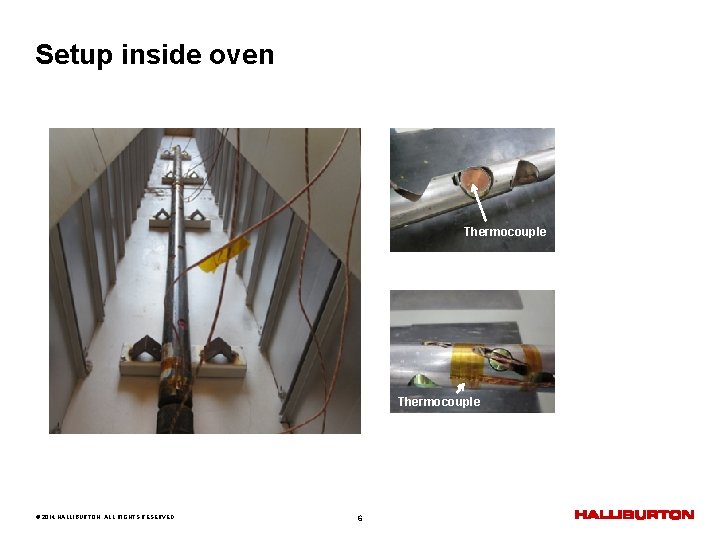
Setup inside oven Thermocouple © 2014 HALLIBURTON. ALL RIGHTS RESERVED. 6
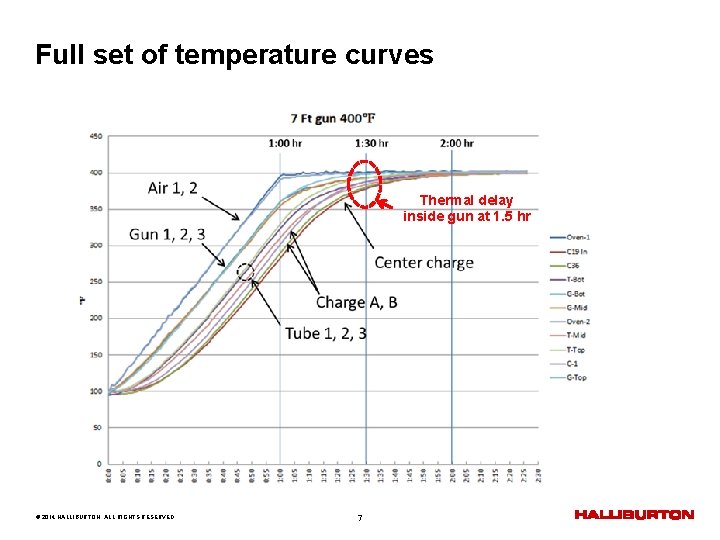
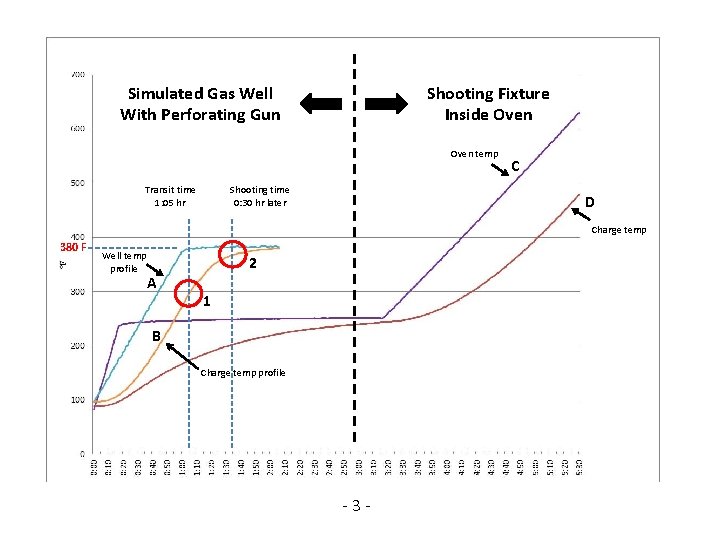
Full set of temperature curves Thermal delay inside gun at 1. 5 hr © 2014 HALLIBURTON. ALL RIGHTS RESERVED. 7
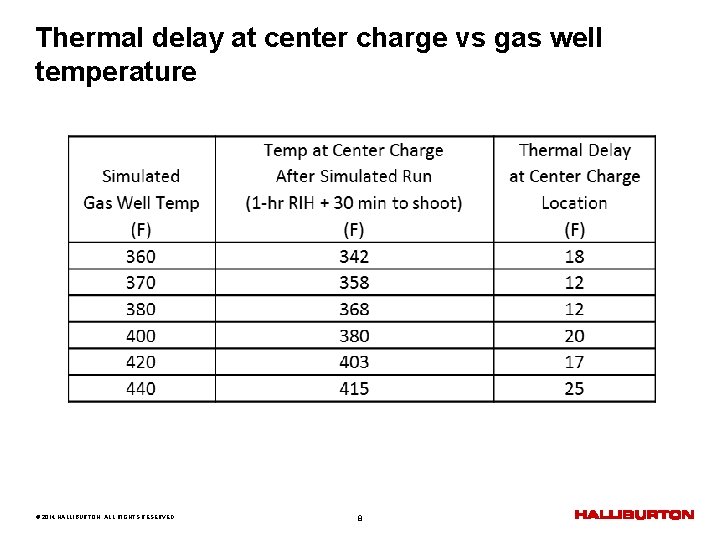
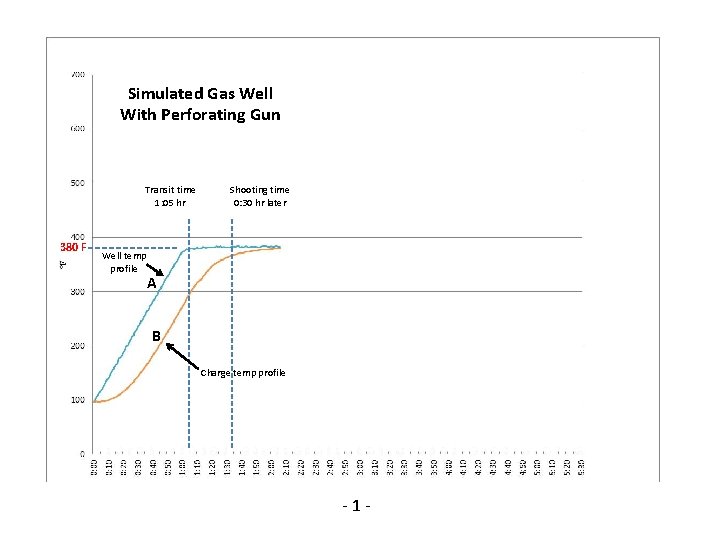
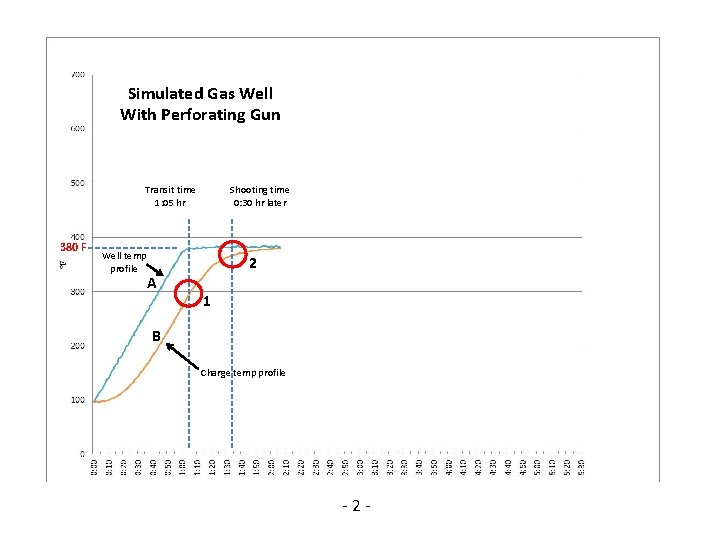
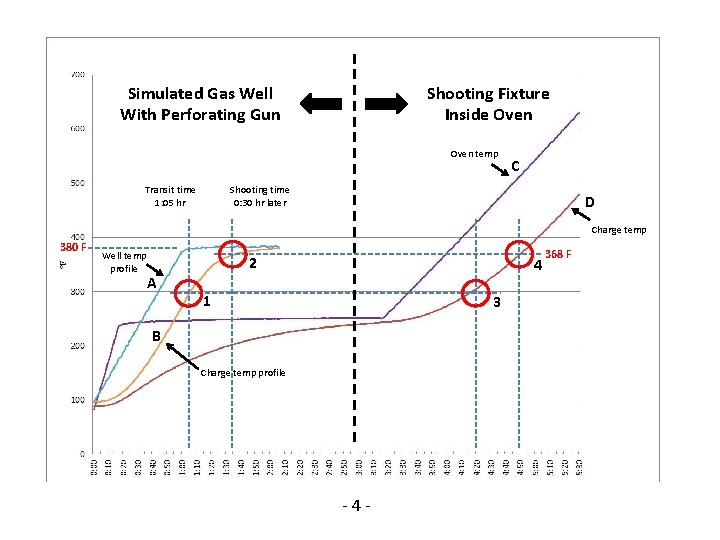
Thermal delay at center charge vs gas well temperature © 2014 HALLIBURTON. ALL RIGHTS RESERVED. 8
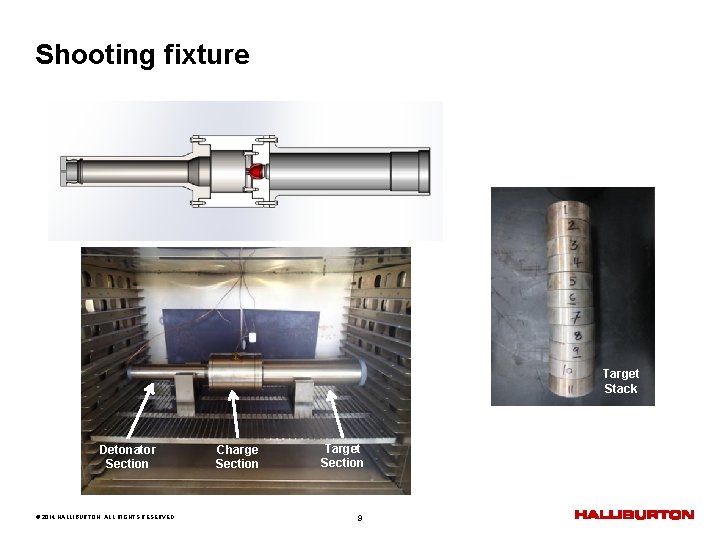
Shooting fixture Target Stack Detonator Section © 2014 HALLIBURTON. ALL RIGHTS RESERVED. Charge Section Target Section 9
Two-step heating method used to thermally equate shooting fixture with actual gun system ▌ Necessary due to thermal difference between mass of shooting fixture and mass of gun ▌ Fixture was necessarily large for safety reasons when pushing the limit of HMX (which is also beyond the delta phase transition temperature) © 2014 HALLIBURTON. ALL RIGHTS RESERVED. 10
Simulated Gas Well With Perforating Gun Transit time 1: 05 hr 380 F Well temp profile Shooting time 0: 30 hr later A B Charge temp profile -1 -
Simulated Gas Well With Perforating Gun Shooting time 0: 30 hr later Transit time 1: 05 hr 380 F Well temp profile 2 A 1 B Charge temp profile -2 -
Simulated Gas Well With Perforating Gun Shooting Fixture Inside Oven temp Shooting time 0: 30 hr later Transit time 1: 05 hr C D Charge temp 380 F Well temp profile 2 A 1 B Charge temp profile -3 -
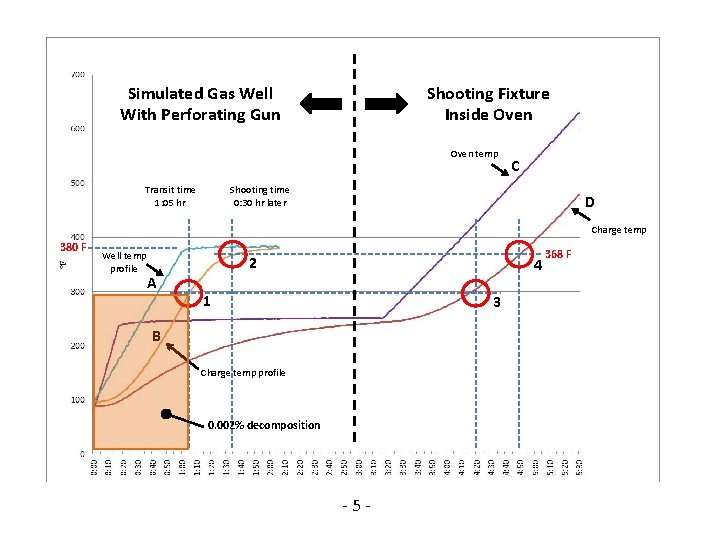
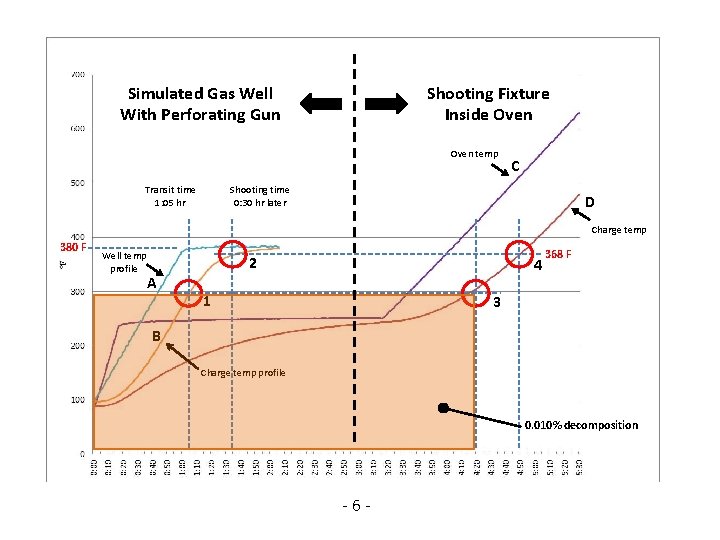
Simulated Gas Well With Perforating Gun Shooting Fixture Inside Oven temp C Shooting time 0: 30 hr later Transit time 1: 05 hr D Charge temp 380 F Well temp profile 2 A 4 1 3 B Charge temp profile -4 - 368 F
Simulated Gas Well With Perforating Gun Shooting Fixture Inside Oven temp C Shooting time 0: 30 hr later Transit time 1: 05 hr D Charge temp 380 F Well temp profile 2 A 4 1 3 B Charge temp profile 0. 002% decomposition -5 - 368 F
Simulated Gas Well With Perforating Gun Shooting Fixture Inside Oven temp C Shooting time 0: 30 hr later Transit time 1: 05 hr D Charge temp 380 F Well temp profile 2 A 4 1 368 F 3 B Charge temp profile 0. 010% decomposition -6 -
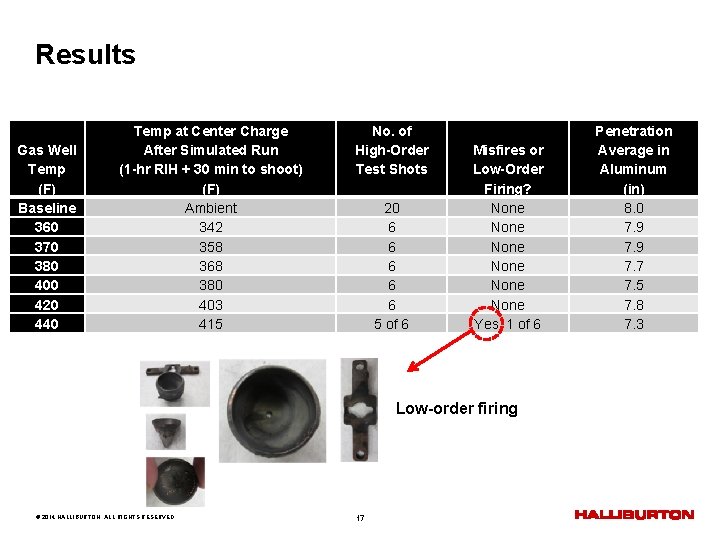
Results Gas Well Temp (F) Baseline 360 370 380 400 420 440 Temp at Center Charge After Simulated Run (1 -hr RIH + 30 min to shoot) (F) Ambient 342 358 368 380 403 415 No. of High-Order Test Shots 20 6 6 6 5 of 6 Misfires or Low-Order Firing? None None Yes, 1 of 6 Low-order firing © 2014 HALLIBURTON. ALL RIGHTS RESERVED. 17 Penetration Average in Aluminum (in) 8. 0 7. 9 7. 7 7. 5 7. 8 7. 3
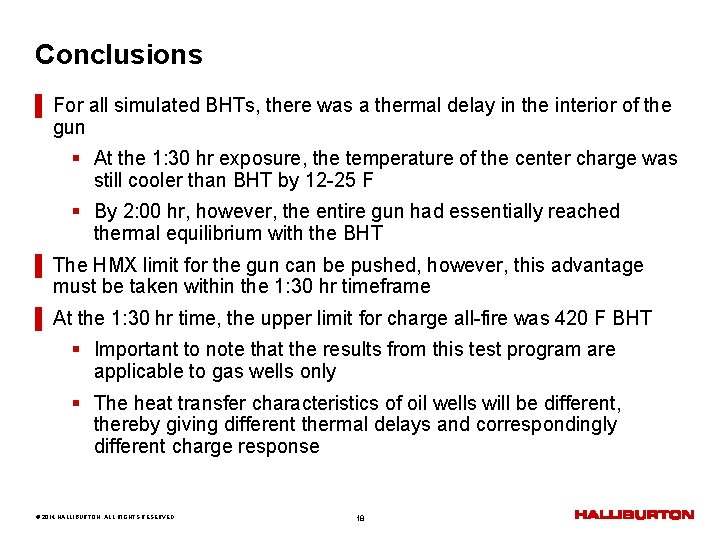
Conclusions ▌ For all simulated BHTs, there was a thermal delay in the interior of the gun § At the 1: 30 hr exposure, the temperature of the center charge was still cooler than BHT by 12 -25 F § By 2: 00 hr, however, the entire gun had essentially reached thermal equilibrium with the BHT ▌ The HMX limit for the gun can be pushed, however, this advantage must be taken within the 1: 30 hr timeframe ▌ At the 1: 30 hr time, the upper limit for charge all-fire was 420 F BHT § Important to note that the results from this test program are applicable to gas wells only § The heat transfer characteristics of oil wells will be different, thereby giving different thermal delays and correspondingly different charge response © 2014 HALLIBURTON. ALL RIGHTS RESERVED. 18
Thank You / Questions © 2014 HALLIBURTON. ALL RIGHTS RESERVED. 19