IP SECURITY Chapter 16 Security Mechanisms email SMIME
- Slides: 42
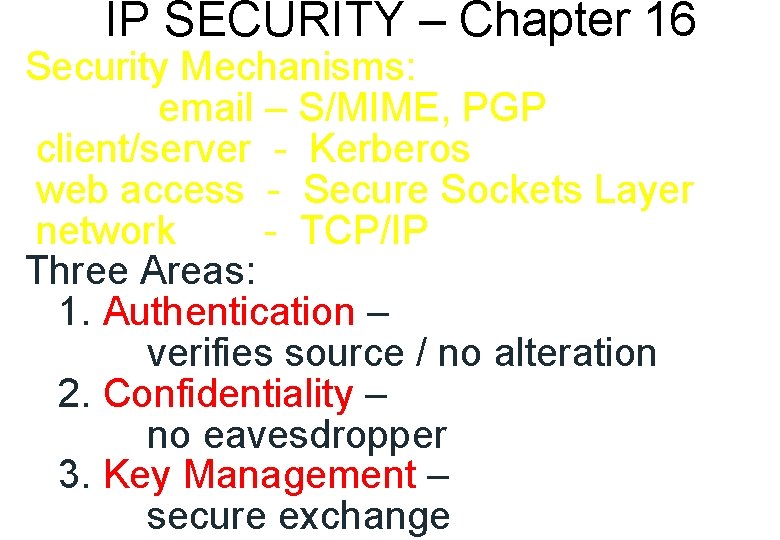
IP SECURITY – Chapter 16 Security Mechanisms: email – S/MIME, PGP client/server - Kerberos web access - Secure Sockets Layer network - TCP/IP Three Areas: 1. Authentication – verifies source / no alteration 2. Confidentiality – no eavesdropper 3. Key Management – secure exchange
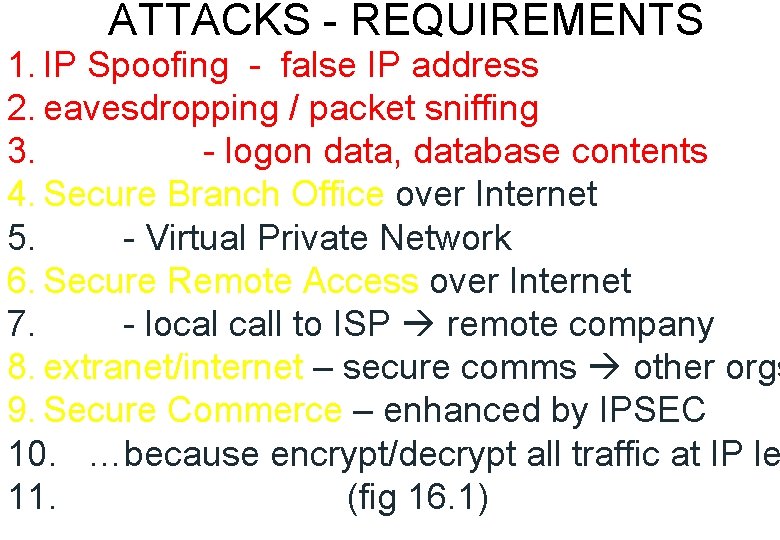
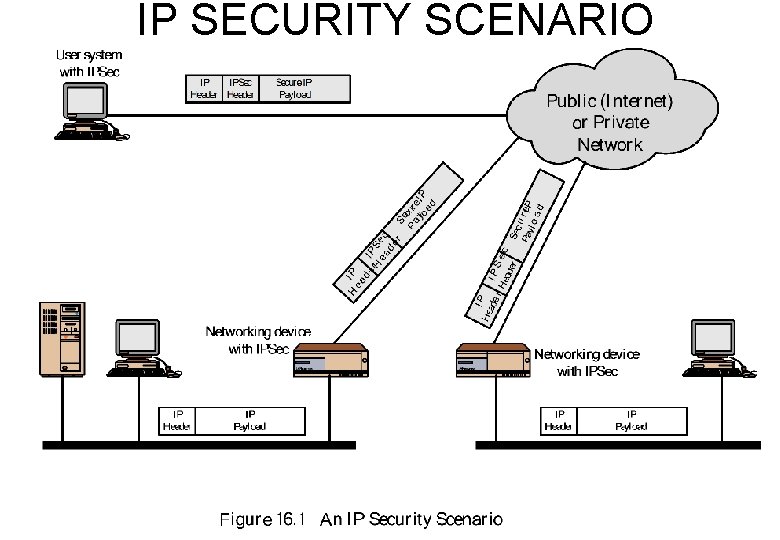
ATTACKS - REQUIREMENTS 1. IP Spoofing - false IP address 2. eavesdropping / packet sniffing 3. - logon data, database contents 4. Secure Branch Office over Internet 5. - Virtual Private Network 6. Secure Remote Access over Internet 7. - local call to ISP remote company 8. extranet/internet – secure comms other orgs 9. Secure Commerce – enhanced by IPSEC 10. …because encrypt/decrypt all traffic at IP le 11. (fig 16. 1)
IP SECURITY SCENARIO
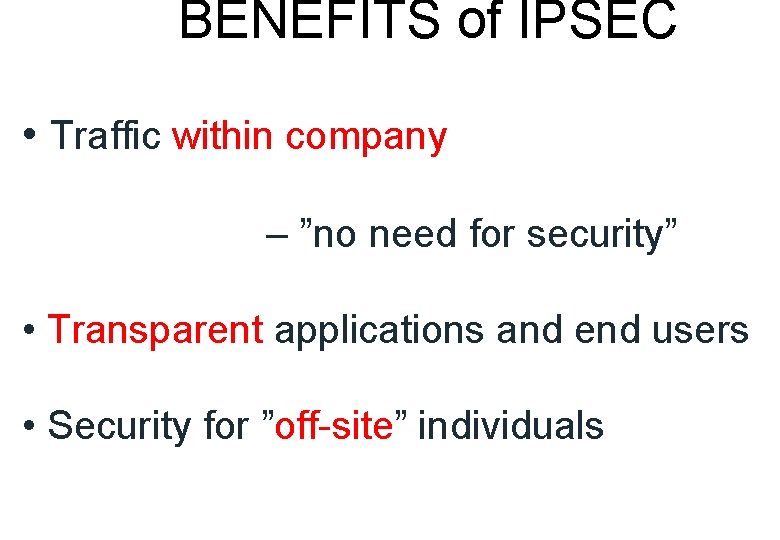
BENEFITS of IPSEC • Traffic within company – ”no need for security” • Transparent applications and end users • Security for ”off-site” individuals
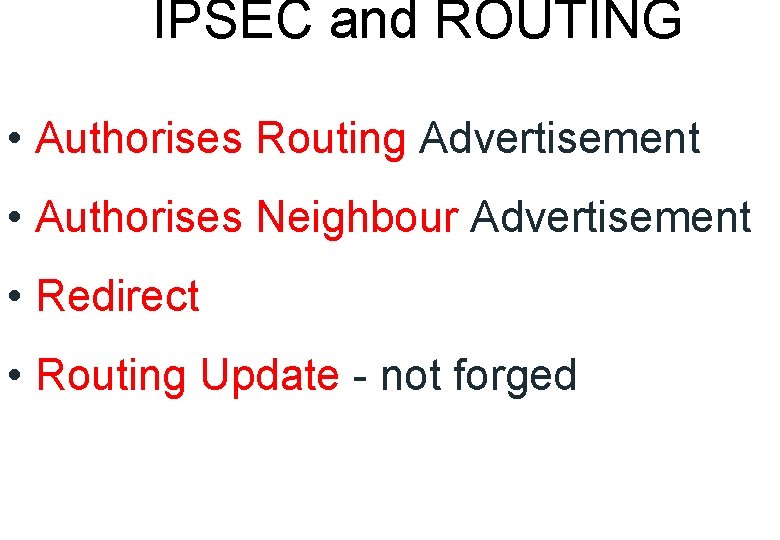
IPSEC and ROUTING • Authorises Routing Advertisement • Authorises Neighbour Advertisement • Redirect • Routing Update - not forged
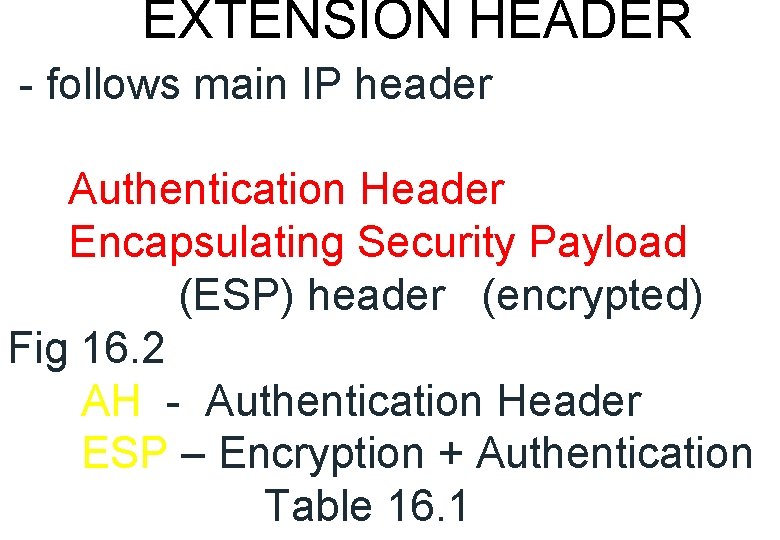
EXTENSION HEADER - follows main IP header Authentication Header Encapsulating Security Payload (ESP) header (encrypted) Fig 16. 2 AH - Authentication Header ESP – Encryption + Authentication Table 16. 1
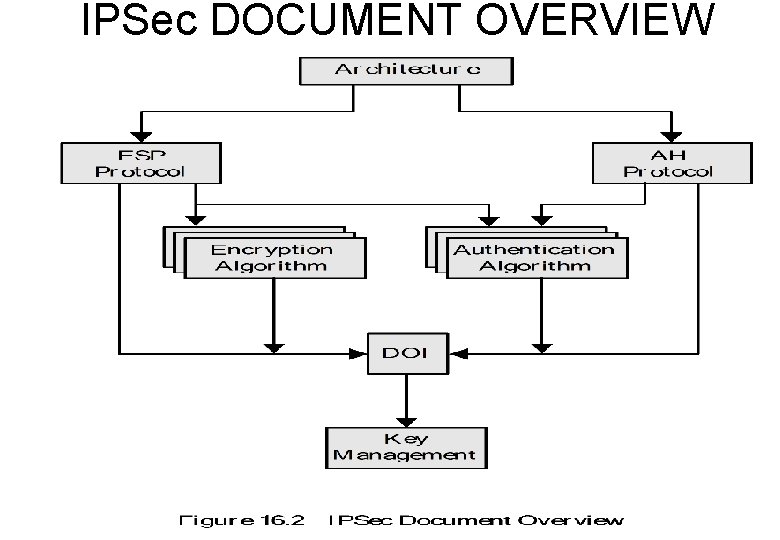
IPSec DOCUMENT OVERVIEW
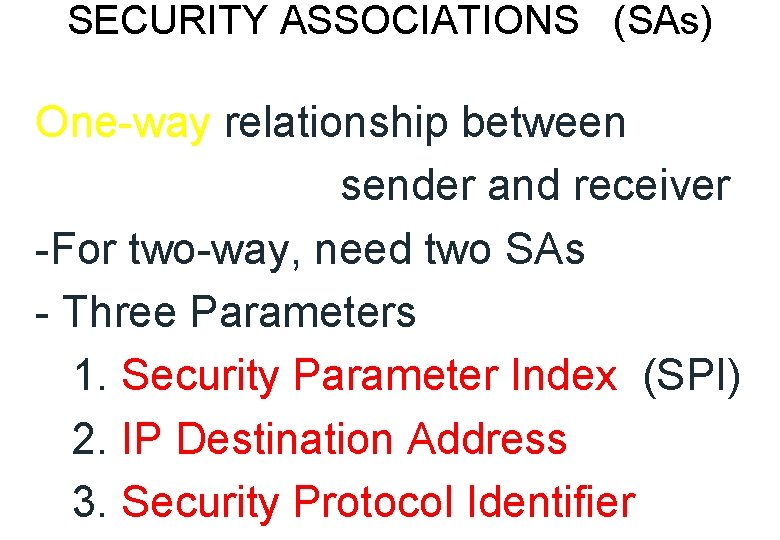
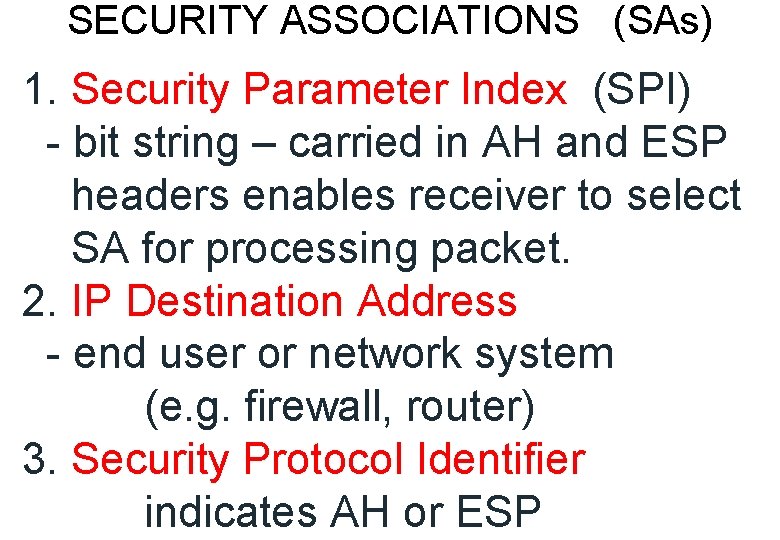
SECURITY ASSOCIATIONS (SAs) One-way relationship between sender and receiver -For two-way, need two SAs - Three Parameters 1. Security Parameter Index (SPI) 2. IP Destination Address 3. Security Protocol Identifier
SECURITY ASSOCIATIONS (SAs) 1. Security Parameter Index (SPI) - bit string – carried in AH and ESP headers enables receiver to select SA for processing packet. 2. IP Destination Address - end user or network system (e. g. firewall, router) 3. Security Protocol Identifier indicates AH or ESP
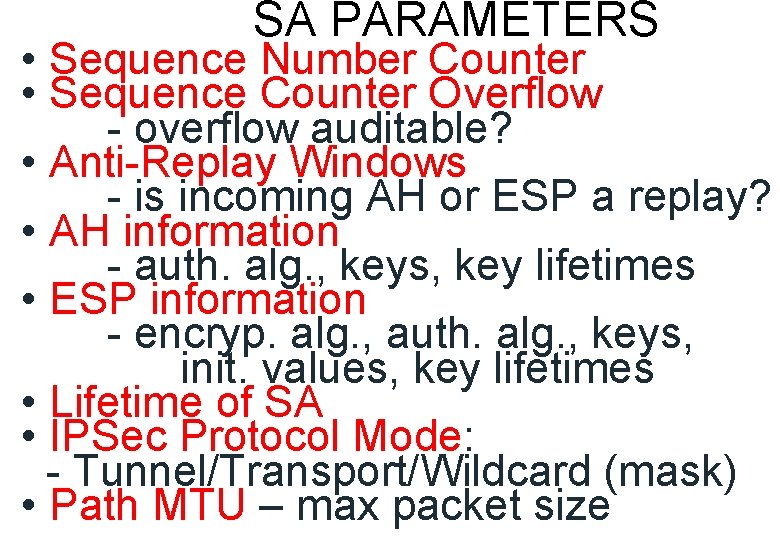
SA PARAMETERS • Sequence Number Counter • Sequence Counter Overflow - overflow auditable? • Anti-Replay Windows - is incoming AH or ESP a replay? • AH information - auth. alg. , keys, key lifetimes • ESP information - encryp. alg. , auth. alg. , keys, init. values, key lifetimes • Lifetime of SA • IPSec Protocol Mode: - Tunnel/Transport/Wildcard (mask) • Path MTU – max packet size
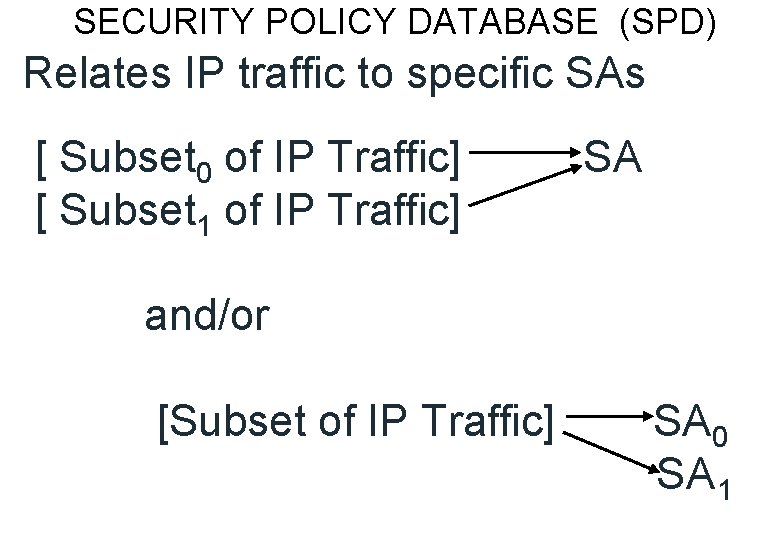
SECURITY POLICY DATABASE (SPD) Relates IP traffic to specific SAs [ Subset 0 of IP Traffic] [ Subset 1 of IP Traffic] SA and/or [Subset of IP Traffic] SA 0 SA 1
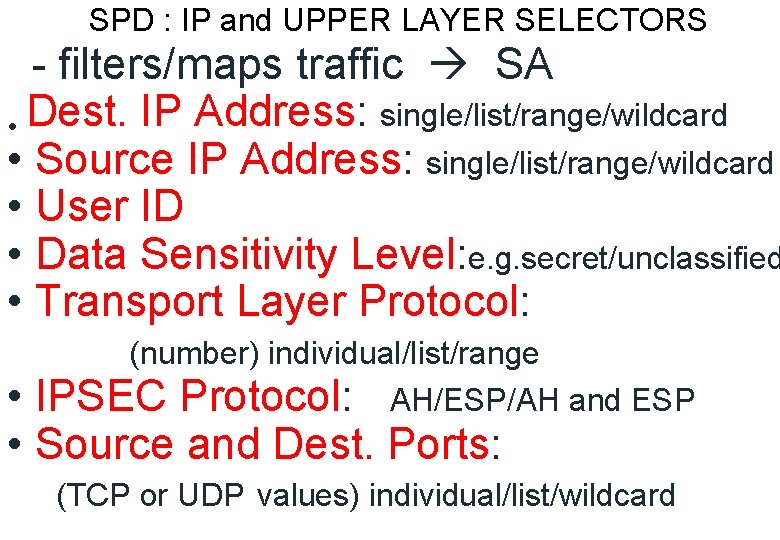
SPD : IP and UPPER LAYER SELECTORS - filters/maps traffic SA • Dest. IP Address: single/list/range/wildcard • Source IP Address: single/list/range/wildcard • User ID • Data Sensitivity Level: e. g. secret/unclassified • Transport Layer Protocol: (number) individual/list/range IPSEC Protocol: AH/ESP/AH and ESP • • Source and Dest. Ports: (TCP or UDP values) individual/list/wildcard
SPD : IP and UPPER LAYER SELECTORS - filters/maps traffic SA • IPv 6 Class: specific/wildcard • IPv 6 Flowlabel: specific/wildcard • IPv 4 Type of Service (TOS): specific/wildcard
TRANSPORT MODE Transport Upper-layer protection End-to-end communication (e. g. client server, two workstations) ESP encrypts IP payload (not header) (optionally authenticates) AH authenticates IP payload + selected portions of header
TUNNEL MODE Tunnel Protects entire IP packet entire packet + security fields treated as ”outer” payload with new IP header Original (inner) packet travels through tunnel. Routers cannot examine inner IP header e. g. tunneled through firewall Table 16. 2
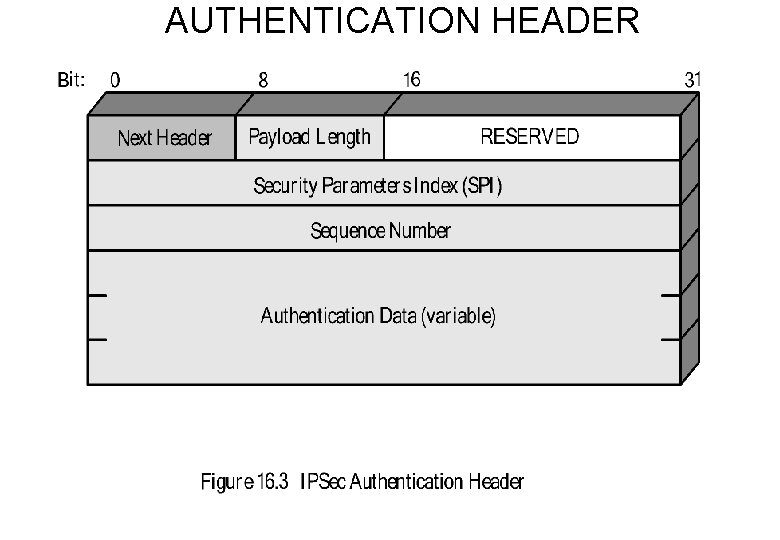
AUTHENTICATION HEADER - Detects modification - Prevents address spoofing, replay Uses MAC - Alice, Bob share secret key Fig 16. 3
AUTHENTICATION HEADER
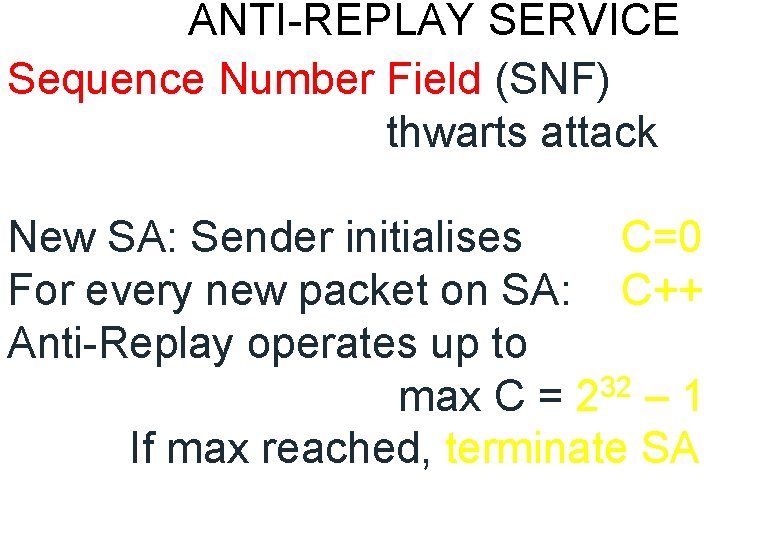
ANTI-REPLAY SERVICE Sequence Number Field (SNF) thwarts attack New SA: Sender initialises C=0 For every new packet on SA: C++ Anti-Replay operates up to max C = 232 – 1 If max reached, terminate SA
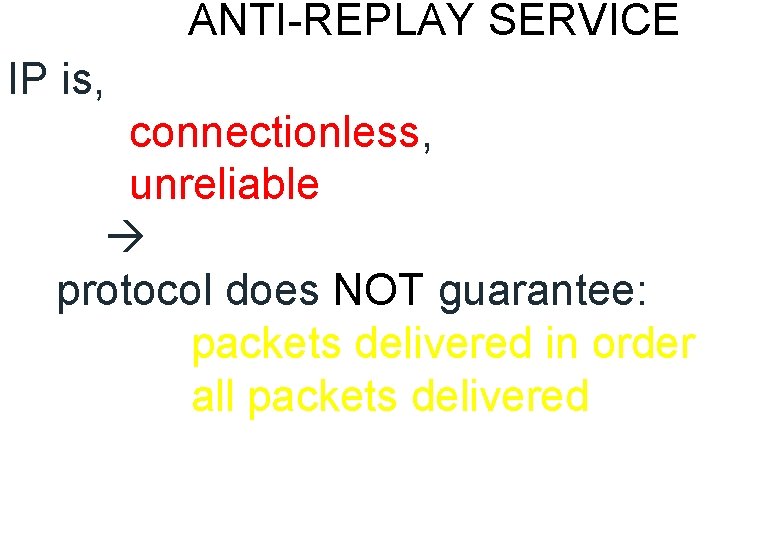
ANTI-REPLAY SERVICE IP is, connectionless, unreliable protocol does NOT guarantee: packets delivered in order all packets delivered
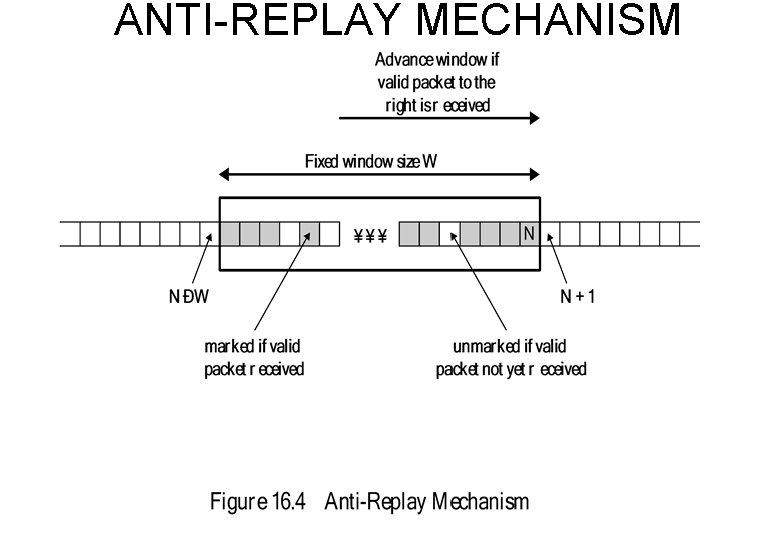
ANTI-REPLAY MECHANISM
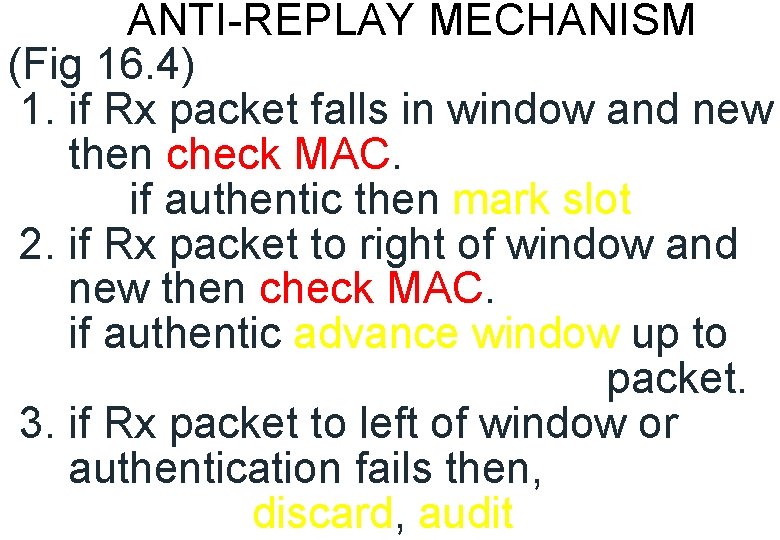
ANTI-REPLAY MECHANISM (Fig 16. 4) 1. if Rx packet falls in window and new then check MAC. if authentic then mark slot 2. if Rx packet to right of window and new then check MAC. if authentic advance window up to packet. 3. if Rx packet to left of window or authentication fails then, discard, audit
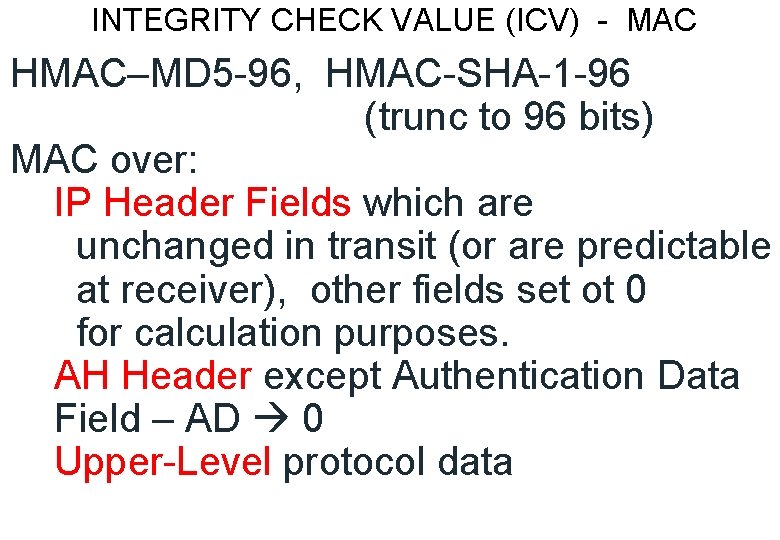
INTEGRITY CHECK VALUE (ICV) - MAC HMAC–MD 5 -96, HMAC-SHA-1 -96 (trunc to 96 bits) MAC over: IP Header Fields which are unchanged in transit (or are predictable at receiver), other fields set ot 0 for calculation purposes. AH Header except Authentication Data Field – AD 0 Upper-Level protocol data
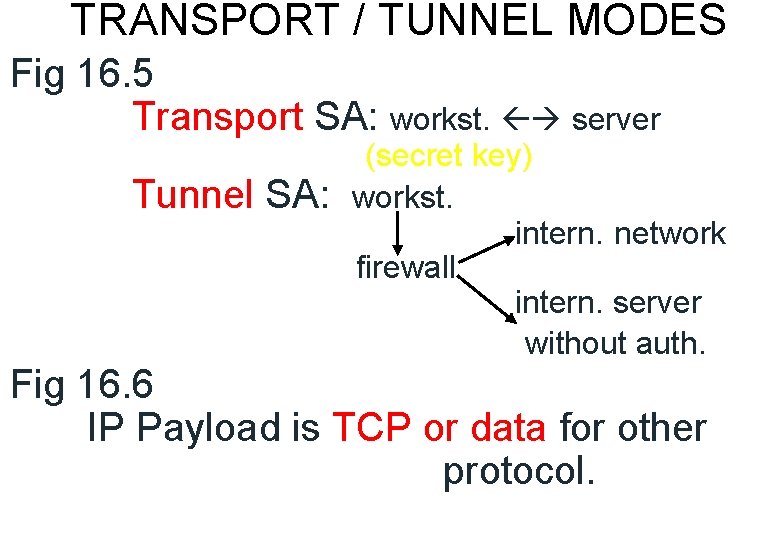
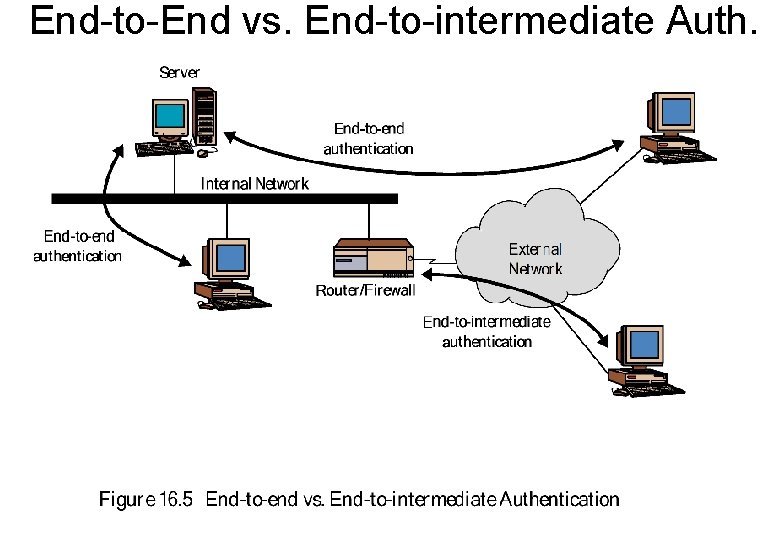
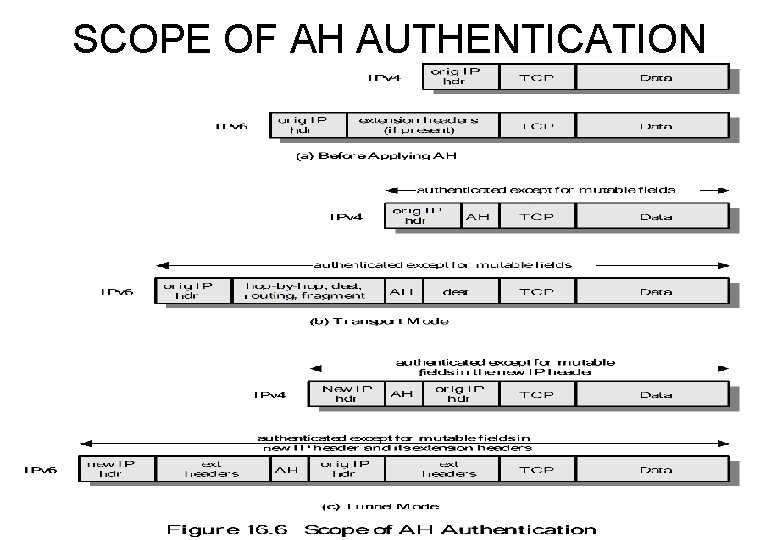
TRANSPORT / TUNNEL MODES Fig 16. 5 Transport SA: workst. server Tunnel SA: (secret key) workst. intern. network firewall intern. server without auth. Fig 16. 6 IP Payload is TCP or data for other protocol.
End-to-End vs. End-to-intermediate Auth.
SCOPE OF AH AUTHENTICATION
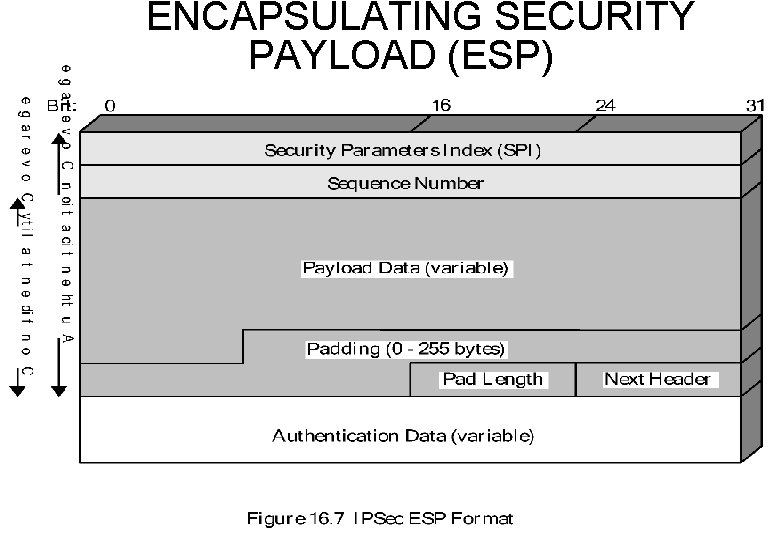
ENCAPSULATING SECURITY PAYLOAD (ESP) Message Confidentiality Limited Traffic flow Confidentiality Authentication (like AH) Fig 16. 7
ENCAPSULATING SECURITY PAYLOAD (ESP)
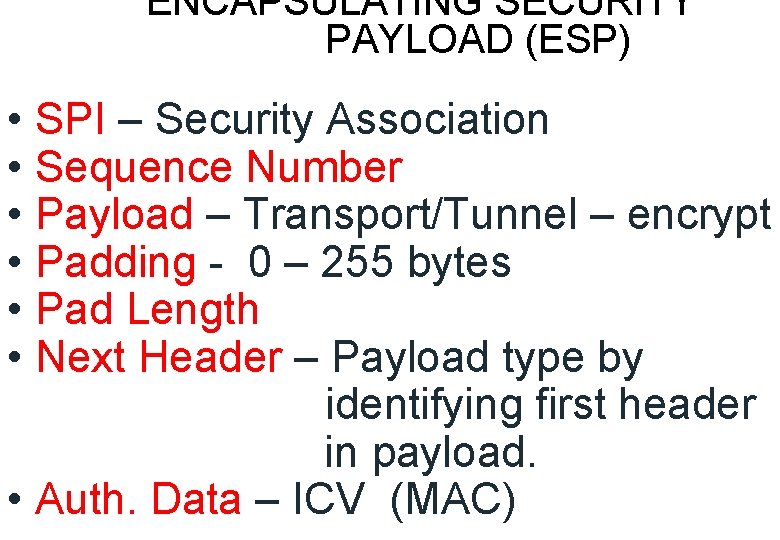
ENCAPSULATING SECURITY PAYLOAD (ESP) • SPI – Security Association • Sequence Number • Payload – Transport/Tunnel – encrypt • Padding - 0 – 255 bytes • Pad Length • Next Header – Payload type by identifying first header in payload. • Auth. Data – ICV (MAC)
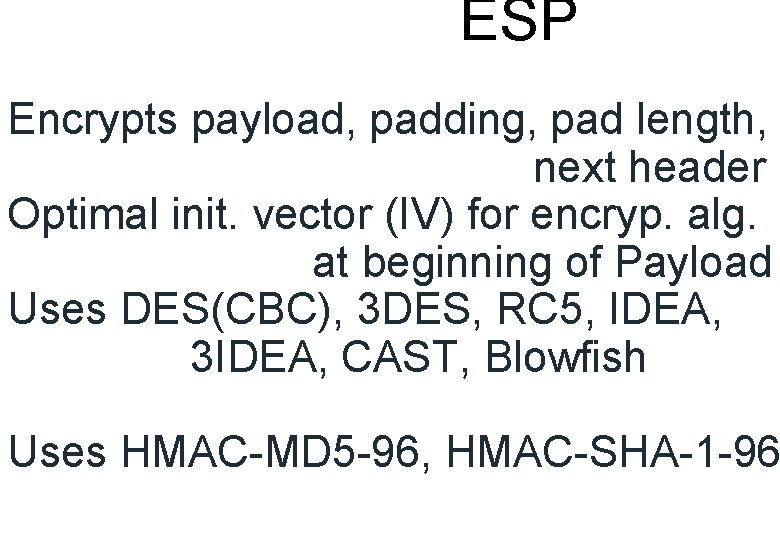
ESP Encrypts payload, padding, pad length, next header Optimal init. vector (IV) for encryp. alg. at beginning of Payload Uses DES(CBC), 3 DES, RC 5, IDEA, 3 IDEA, CAST, Blowfish Uses HMAC-MD 5 -96, HMAC-SHA-1 -96
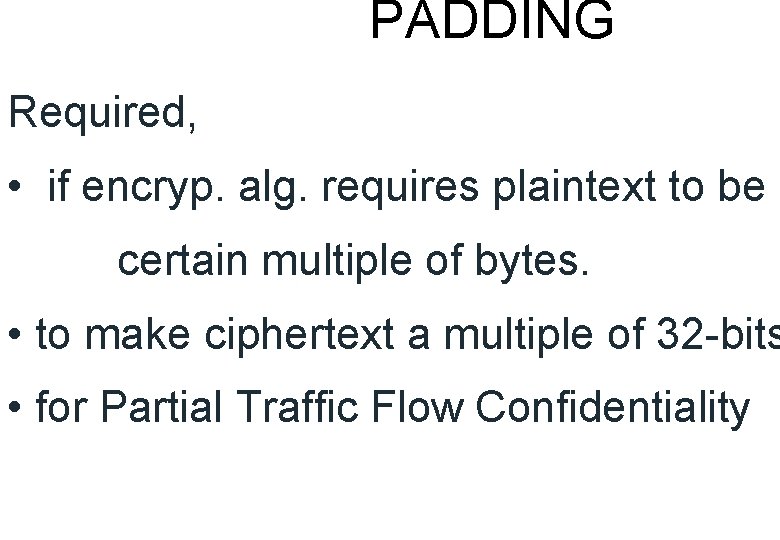
PADDING Required, • if encryp. alg. requires plaintext to be certain multiple of bytes. • to make ciphertext a multiple of 32 -bits • for Partial Traffic Flow Confidentiality
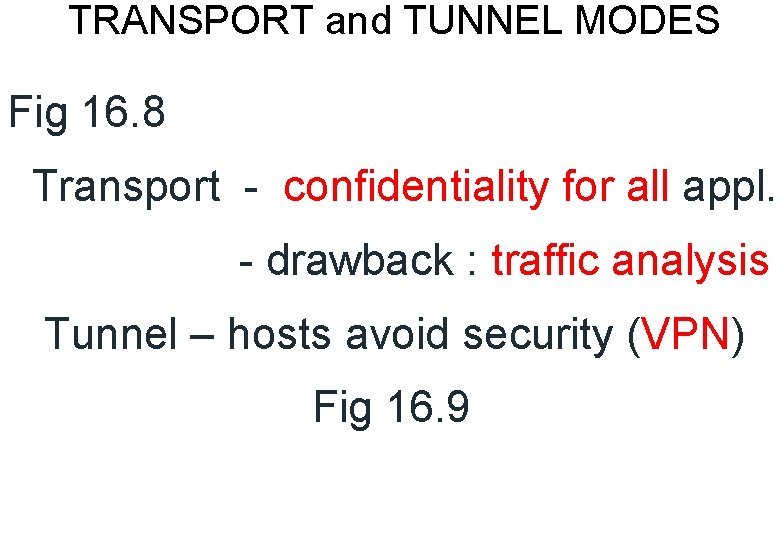
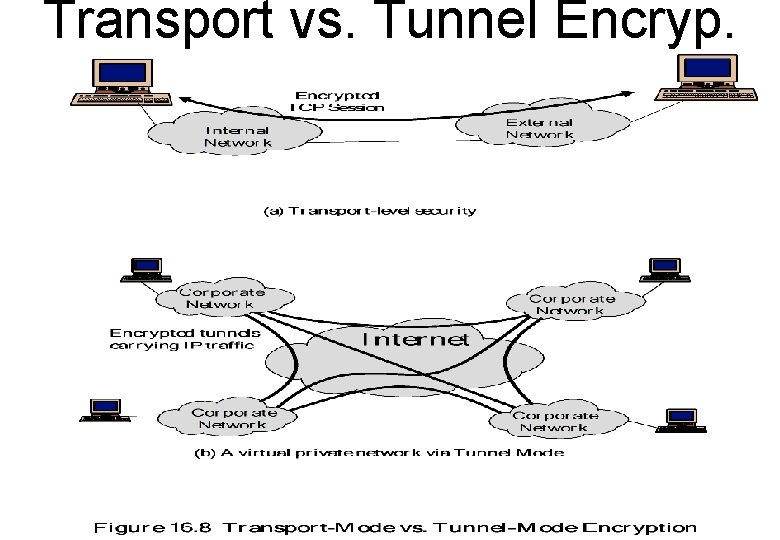
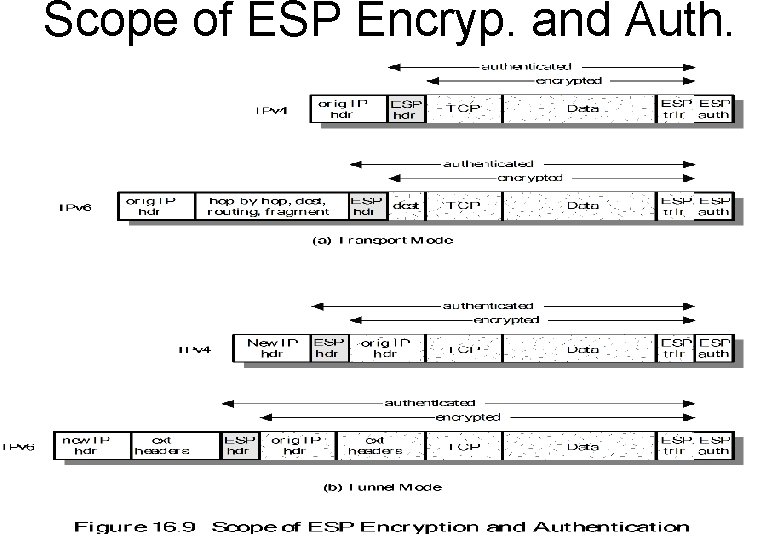
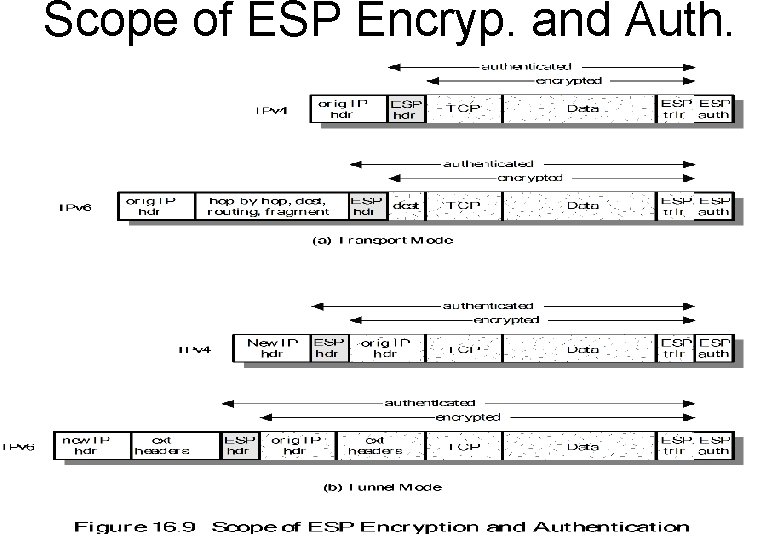
TRANSPORT and TUNNEL MODES Fig 16. 8 Transport - confidentiality for all appl. - drawback : traffic analysis Tunnel – hosts avoid security (VPN) Fig 16. 9
Transport vs. Tunnel Encryp.
Scope of ESP Encryp. and Auth.
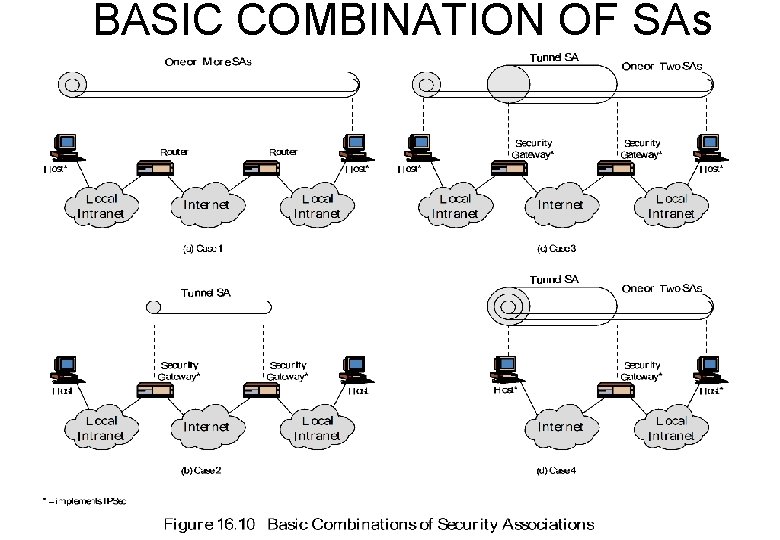
COMBINING SAs Each SA implements AH or ESP, but, Some traffic flow may require both. multiple SAs Security Association Bundle Sequence of SAs may terminate at different endpoints
TWO BUNDLE TYPES Transport Adjacency: more than one security protocol to same IP packet, no tunneling, one endpoint. Iterated Tunneling: multiple (nested) security layers using tunnelling, possible different end points.
TWO BUNDLE TYPES Two approaches can be Combined e. g. Transport SA between hosts travels partway through a Tunnel SA between security gateways.
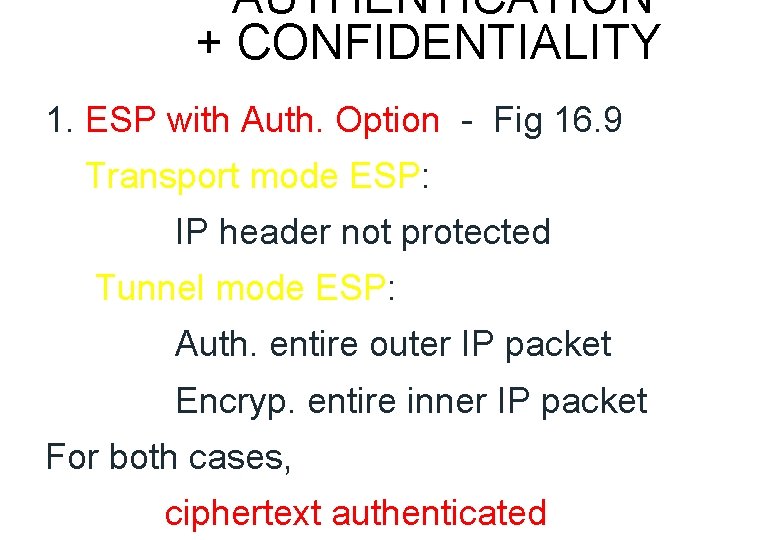
AUTHENTICATION + CONFIDENTIALITY 1. ESP with Auth. Option - Fig 16. 9 Transport mode ESP: IP header not protected Tunnel mode ESP: Auth. entire outer IP packet Encryp. entire inner IP packet For both cases, ciphertext authenticated
Scope of ESP Encryp. and Auth.
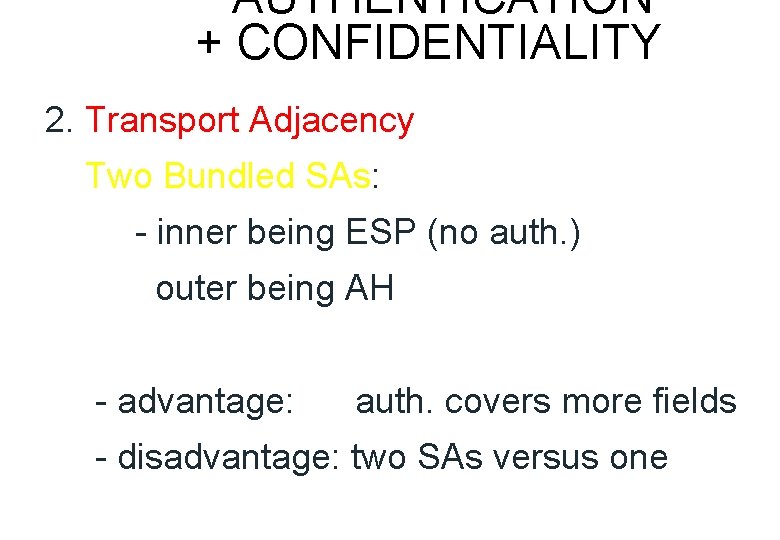
AUTHENTICATION + CONFIDENTIALITY 2. Transport Adjacency Two Bundled SAs: - inner being ESP (no auth. ) outer being AH - advantage: auth. covers more fields - disadvantage: two SAs versus one
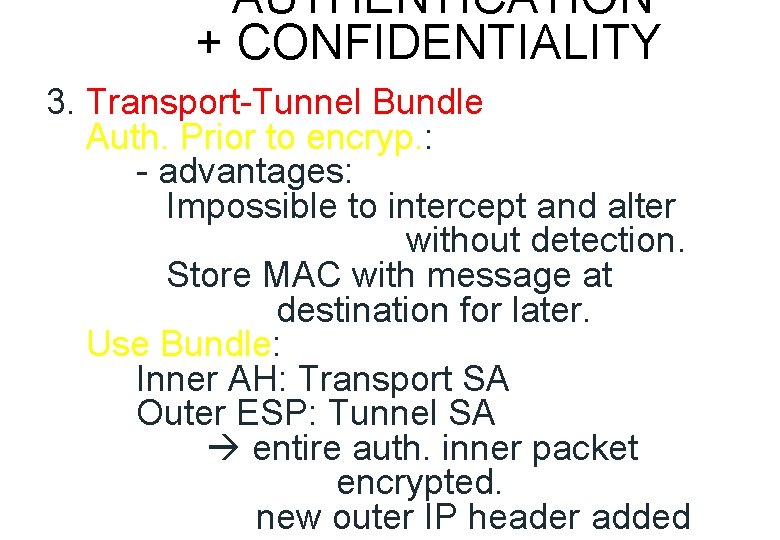
AUTHENTICATION + CONFIDENTIALITY 3. Transport-Tunnel Bundle Auth. Prior to encryp. : - advantages: Impossible to intercept and alter without detection. Store MAC with message at destination for later. Use Bundle: Inner AH: Transport SA Outer ESP: Tunnel SA entire auth. inner packet encrypted. new outer IP header added
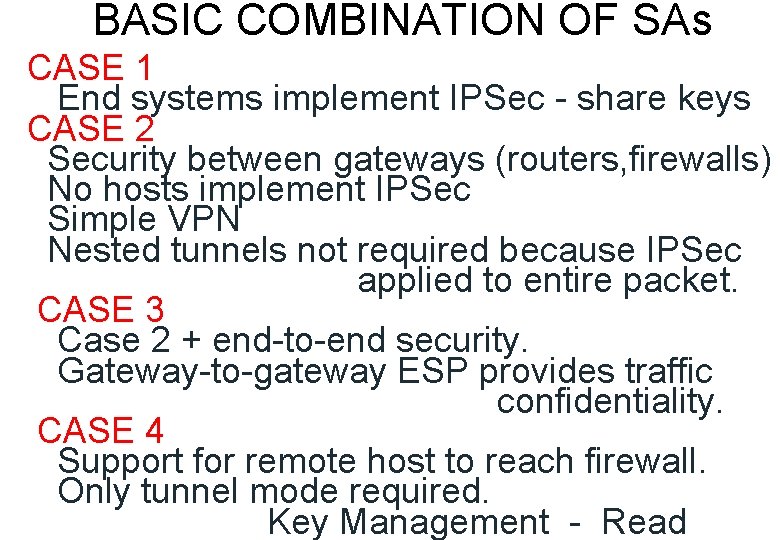
BASIC COMBINATION OF SAs CASE 1 End systems implement IPSec - share keys CASE 2 Security between gateways (routers, firewalls) No hosts implement IPSec Simple VPN Nested tunnels not required because IPSec applied to entire packet. CASE 3 Case 2 + end-to-end security. Gateway-to-gateway ESP provides traffic confidentiality. CASE 4 Support for remote host to reach firewall. Only tunnel mode required. Key Management - Read
BASIC COMBINATION OF SAs