INVENTORY AND COST OF GOODS SOLD Chapter Six
- Slides: 33
INVENTORY AND COST OF GOODS SOLD Chapter Six
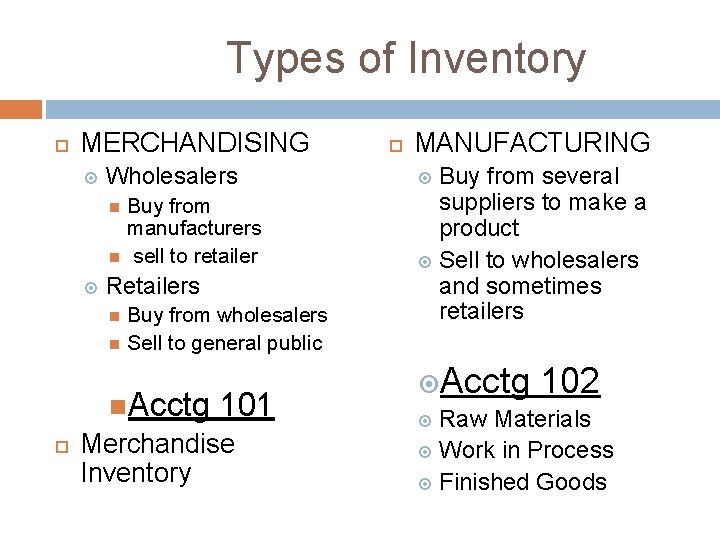
Types of Inventory MERCHANDISING Wholesalers Buy from manufacturers sell to retailer Retailers Buy from wholesalers Sell to general public Acctg 101 Merchandise Inventory MANUFACTURING Buy from several suppliers to make a product Sell to wholesalers and sometimes retailers Acctg 102 Raw Materials Work in Process Finished Goods
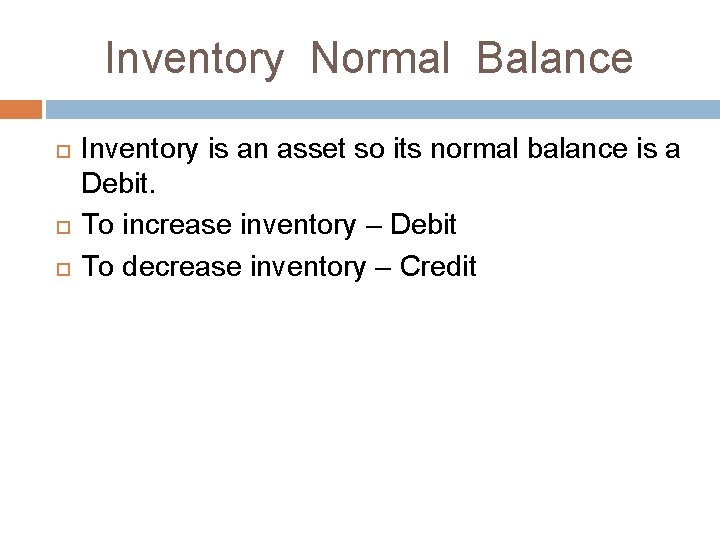
Inventory Normal Balance Inventory is an asset so its normal balance is a Debit. To increase inventory – Debit To decrease inventory – Credit
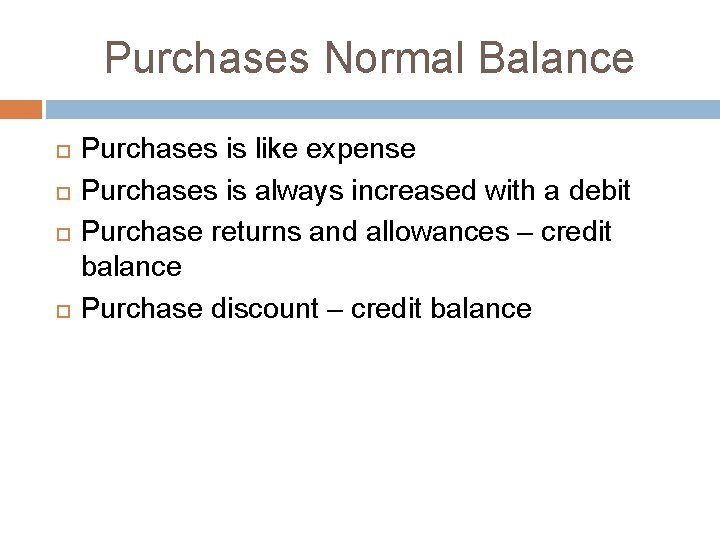
Purchases Normal Balance Purchases is like expense Purchases is always increased with a debit Purchase returns and allowances – credit balance Purchase discount – credit balance
Cost of Goods Sold (COGS) Cost of Goods Sold is an expense so it has a debit balance
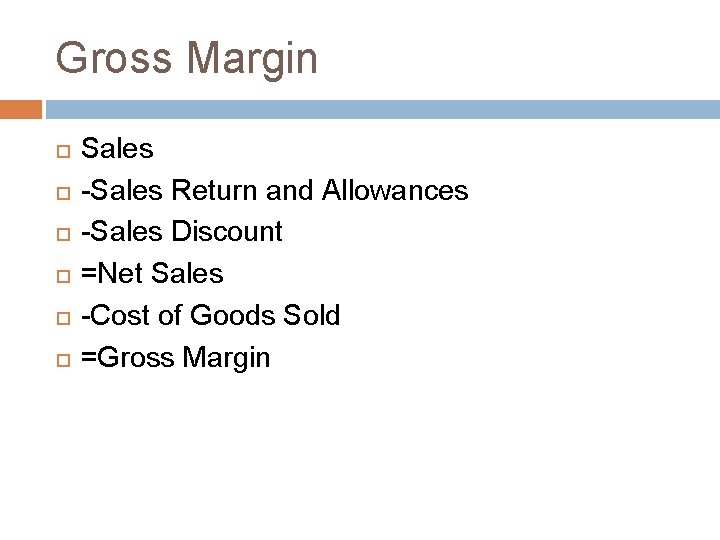
Gross Margin Sales -Sales Return and Allowances -Sales Discount =Net Sales -Cost of Goods Sold =Gross Margin
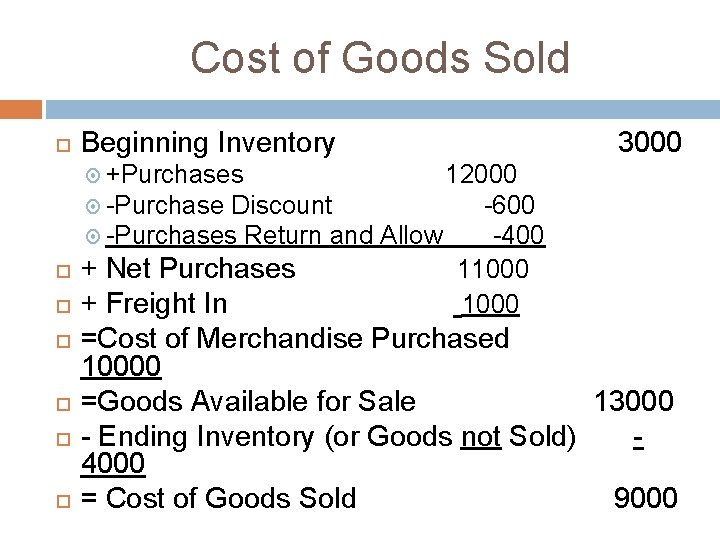
Cost of Goods Sold Beginning Inventory 3000 +Purchases 12000 -Purchase Discount -600 -Purchases Return and Allow -400 + Net Purchases 11000 + Freight In 1000 =Cost of Merchandise Purchased 10000 =Goods Available for Sale 13000 - Ending Inventory (or Goods not Sold) 4000 = Cost of Goods Sold 9000
Brief Exercise 6 -3 page 281 Exercise 6 -1 page 283 MUST KNOW THIS FORMULA MEMORIZE IT
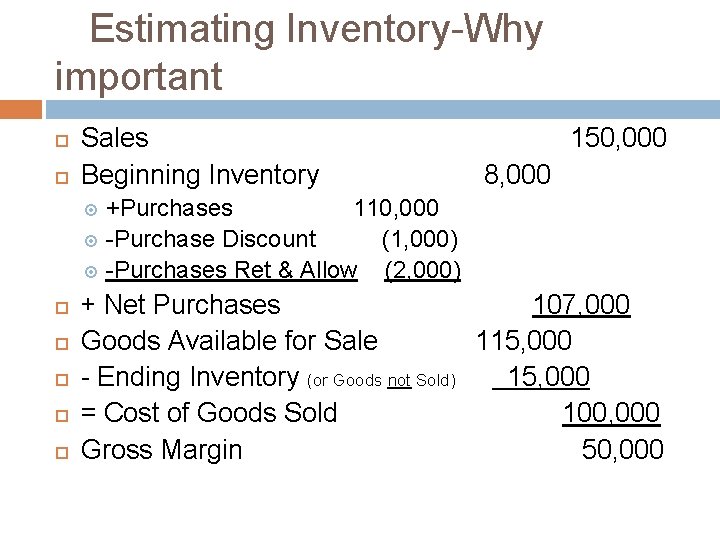
Estimating Inventory-Why important Sales Beginning Inventory 150, 000 8, 000 +Purchases 110, 000 -Purchase Discount (1, 000) -Purchases Ret & Allow (2, 000) + Net Purchases 107, 000 Goods Available for Sale 115, 000 - Ending Inventory (or Goods not Sold) 15, 000 = Cost of Goods Sold 100, 000 Gross Margin 50, 000
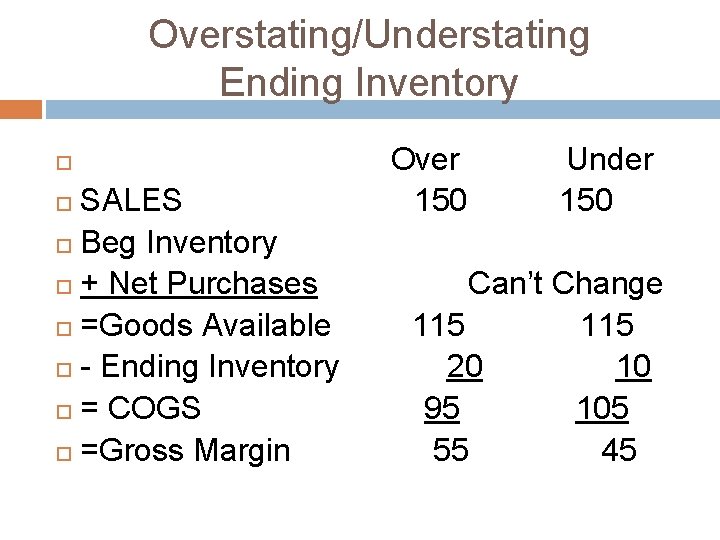
Overstating/Understating Ending Inventory SALES Beg Inventory + Net Purchases =Goods Available - Ending Inventory = COGS =Gross Margin Over 150 Under 150 Can’t Change 115 20 10 95 105 55 45
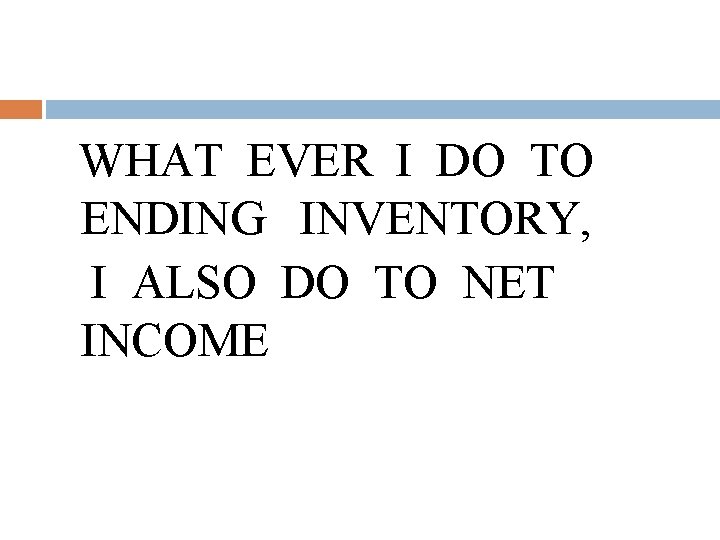
WHAT EVER I DO TO ENDING INVENTORY, I ALSO DO TO NET INCOME
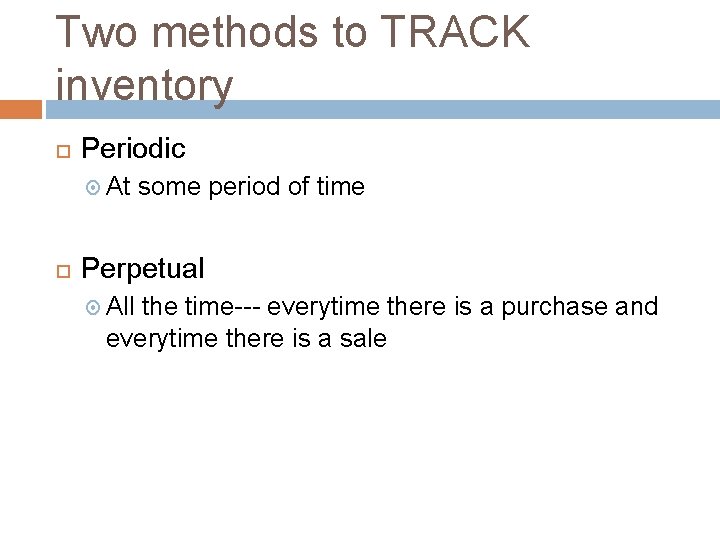
Two methods to TRACK inventory Periodic At some period of time Perpetual All the time--- everytime there is a purchase and everytime there is a sale
IF YOU KNOW PERIODIC YOU WILL KNOW PERPETUAL SO LETS DO PERIODIC FIRST
4 METHODS TO DETERMINE COST OF ENDING INVENTORY Specific Indentification First in First Out Last In First Out Average Cost
Specific Indentification Not estimated Actual items Or specific identification Page 252 example
First In First Out GUMBALL MACHINE Physical Flow matches Cost Flow First one purchased is first one sold Page 252 Used if few inventory items BE 6 -4 page 281 Increasing costs --- higher cost in Ending Inventory Lower cost in COGS so higher net income
Last In First Out COOKIE JAR Last one purchased first one sold Page 253 Used if want to put replacement cost in Cost of Goods sold Increasing costs --- higher cost in COGS Lower cost in Ending Inventory so lower net income BE 6 -5 pg 281 IFRS – Not used US – tax savings
LIFO RESERVE Additional amount of inventory a company would report if it used FIFO instead of LIFO Cost of Goods Sold Inventory
MUST BE CONSISTENT Can’t change inventory methods without IRS approval. Can use different type of methods for different types of inventory
Average Cost Weighted Average 500@$10, 600@$11, 800@$12 $50+$66+$96= 212/19 = $11. 16 Used if a lot of little inventory items BE 6 -6 page 281 Costs are evenly distributed in COGS and Ending Inventory
Periodic versus Perpetual Have been using Periodic Perpetual uses the periodic method every time there is a sale and every time there is a sale. Perpetual needs exact dates it was purchased and sold.
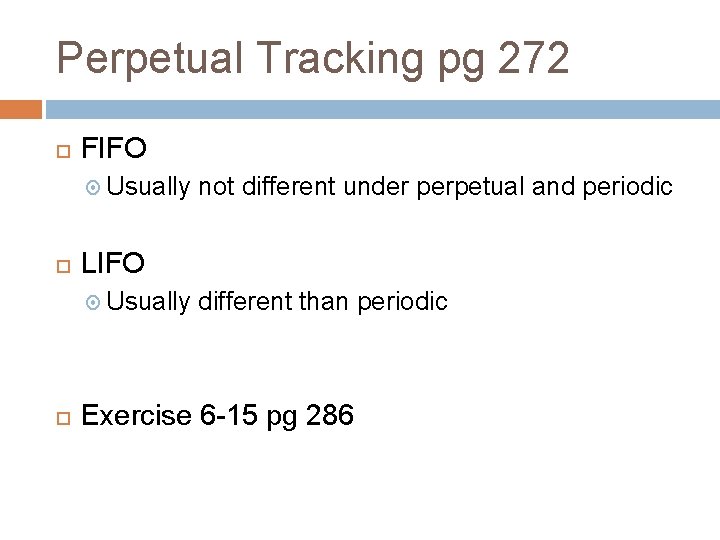
Perpetual Tracking pg 272 FIFO Usually LIFO Usually not different under perpetual and periodic different than periodic Exercise 6 -15 pg 286
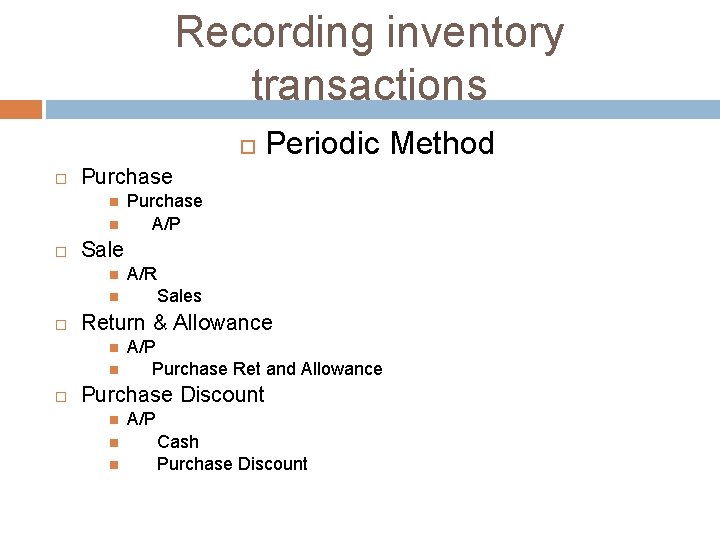
Recording inventory transactions Purchase A/R Sales Return & Allowance Purchase A/P Sale Periodic Method A/P Purchase Ret and Allowance Purchase Discount A/P Cash Purchase Discount
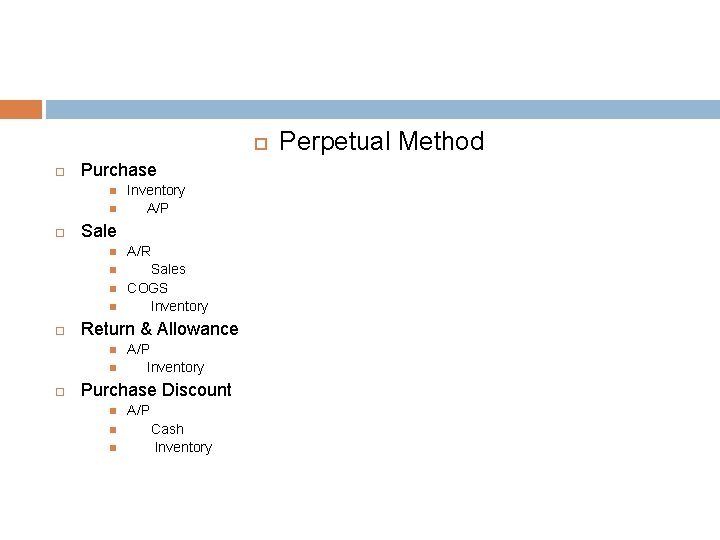
Purchase Sale A/R Sales COGS Inventory Return & Allowance Inventory A/P Inventory Purchase Discount A/P Cash Inventory Perpetual Method
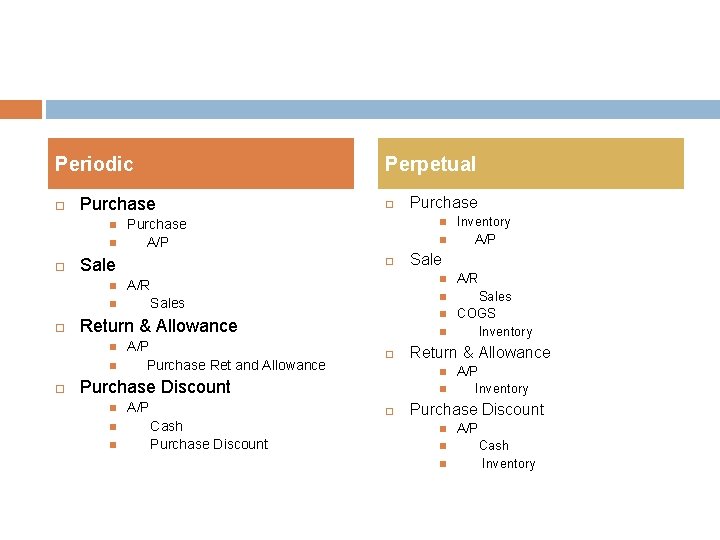
Periodic Purchase A/P Cash Purchase Discount A/R Sales COGS Inventory Return & Allowance Purchase Discount Inventory A/P Sale A/R Sales A/P Purchase Ret and Allowance Purchase Return & Allowance Purchase A/P Sale Perpetual A/P Inventory Purchase Discount A/P Cash Inventory
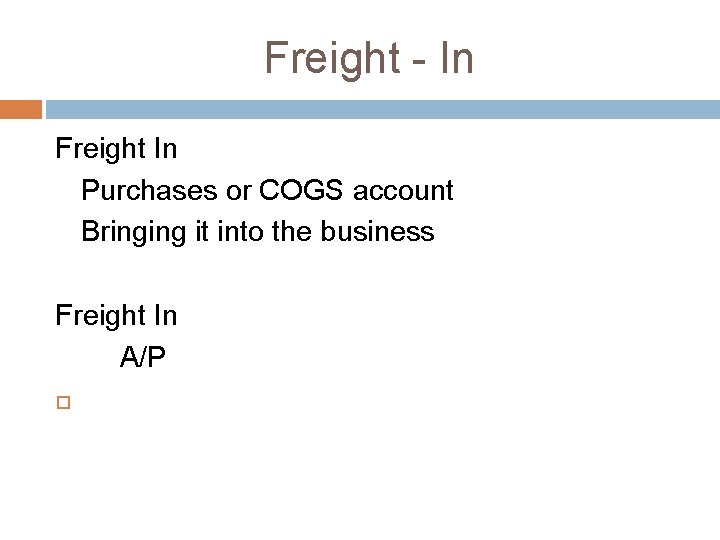
Freight - In Freight In Purchases or COGS account Bringing it into the business Freight In A/P
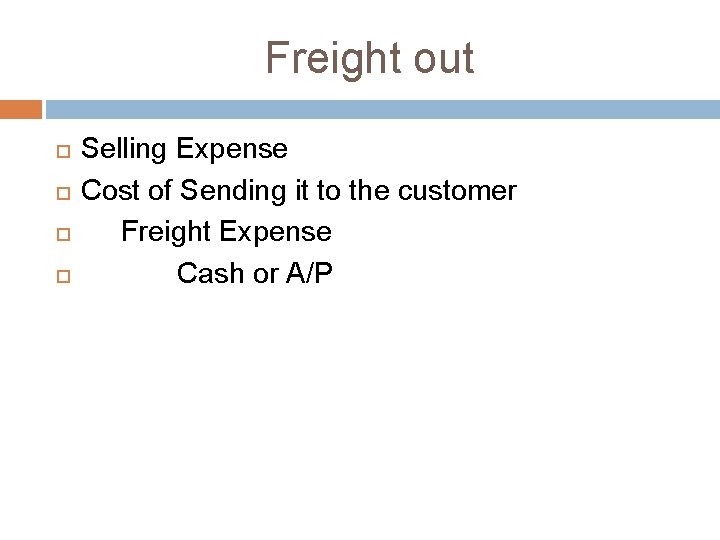
Freight out Selling Expense Cost of Sending it to the customer Freight Expense Cash or A/P
Exercises 6 -6 pg 284 6 -7 Perpetual Periodic
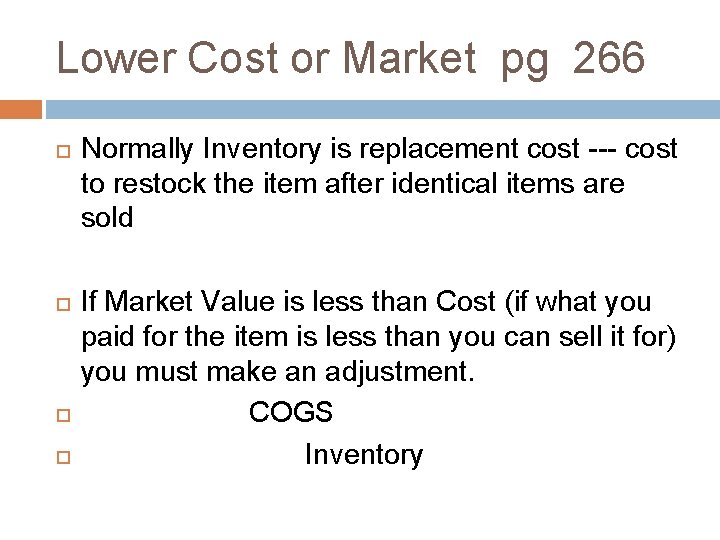
Lower Cost or Market pg 266 Normally Inventory is replacement cost --- cost to restock the item after identical items are sold If Market Value is less than Cost (if what you paid for the item is less than you can sell it for) you must make an adjustment. COGS Inventory
Exercises Page 285 6 -11 6 -12
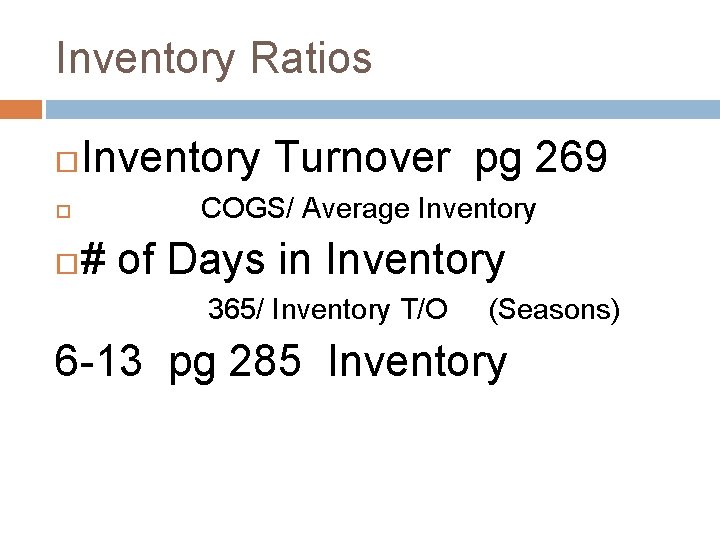
Inventory Ratios Inventory Turnover pg 269 COGS/ Average Inventory # of Days in Inventory 365/ Inventory T/O (Seasons) 6 -13 pg 285 Inventory
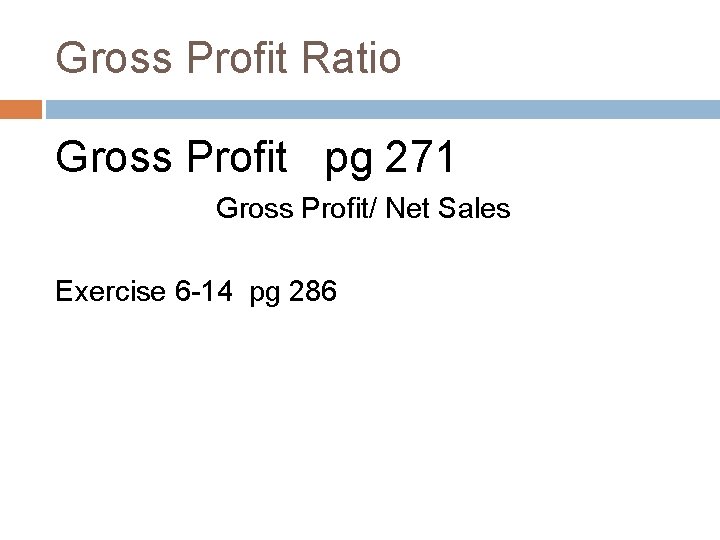
Gross Profit Ratio Gross Profit pg 271 Gross Profit/ Net Sales Exercise 6 -14 pg 286
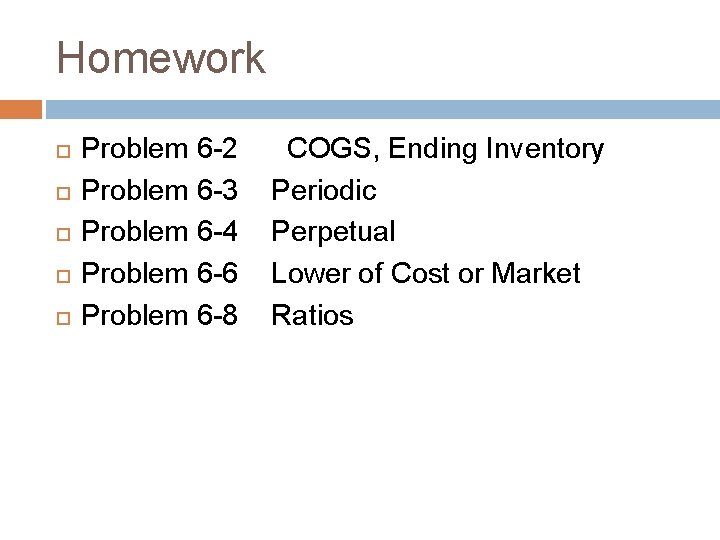
Homework Problem 6 -2 Problem 6 -3 Problem 6 -4 Problem 6 -6 Problem 6 -8 COGS, Ending Inventory Periodic Perpetual Lower of Cost or Market Ratios