Introduction to Selling What is Selling The AMA
- Slides: 16
Introduction to Selling
What is Selling? The AMA defines Selling as “the personal or impersonal process of assisting and/or persuading a prospective customer to buy a commodity or a service or to act favourably upon an idea that has commercial significance to the seller. ”
Selling is persuasion One has to sell when one does not have the direct power to compel a person to do something
Leadership requires persuasion All great leaders are great sales persons
Selling is more than a profession It is a way of life. We are all in the field of selling
Selling is a necessity. Because of competition. Society has determined that sales people must be offering something of value; otherwise it would have eliminated salespeople. In fact the nature of selling has changed over the years.
Why choose a selling career? �Wide variety of selling jobs available? �Freedom of being on your own �The challenge of selling �The opportunity of advancement �Rewards from a sales career
The nature of selling has changed Salesmen duties are forever changing. If they do not change they could find themselves non-essential
“You may finish school, but you can never finish your education” Education does not guarantee a successful career. Adaptability, flexibility, coping with change, embracing technology are some of the parameters for a successful selling career.
Things that you might have to do in selling �Convince �Persuade �Inform �Argue �Cajole �Guide �Lead �Negotiate �Solve �Provide
Role of a Sales person in Society �Intelligence Agent �Possessor of technical knowledge �Dispenser of innovation �Catalytic agent in consumption process �Service Function
Myths about selling �Sales people are born, not made �Good sales people are good talkers �The good sales people can sell anything �A good sale person can sell to anyone �Selling is living is ‘one big party’ �The good sales person never takes ‘No’ for an answer �The locker room syndrome �Selling is a bag of tricks �People don’t want to buy �The ‘get rich quick’ illusion
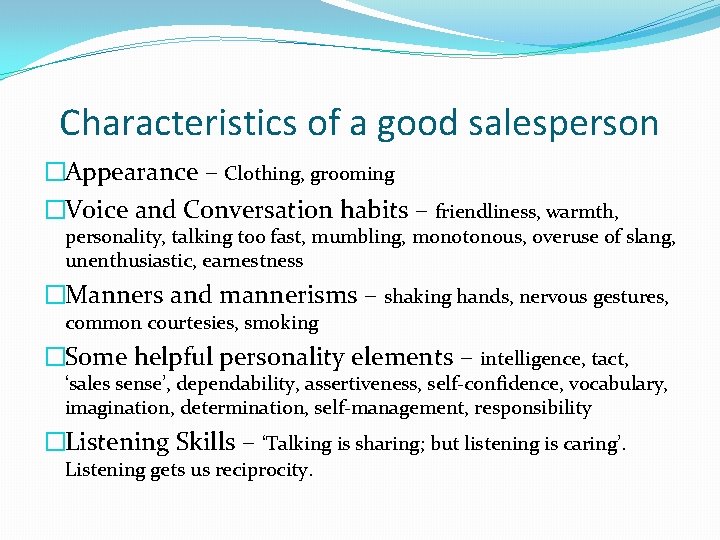
Characteristics of a good salesperson �Appearance – Clothing, grooming �Voice and Conversation habits – friendliness, warmth, personality, talking too fast, mumbling, monotonous, overuse of slang, unenthusiastic, earnestness �Manners and mannerisms – shaking hands, nervous gestures, common courtesies, smoking �Some helpful personality elements – intelligence, tact, ‘sales sense’, dependability, assertiveness, self-confidence, vocabulary, imagination, determination, self-management, responsibility �Listening Skills – ‘Talking is sharing; but listening is caring’. Listening gets us reciprocity.
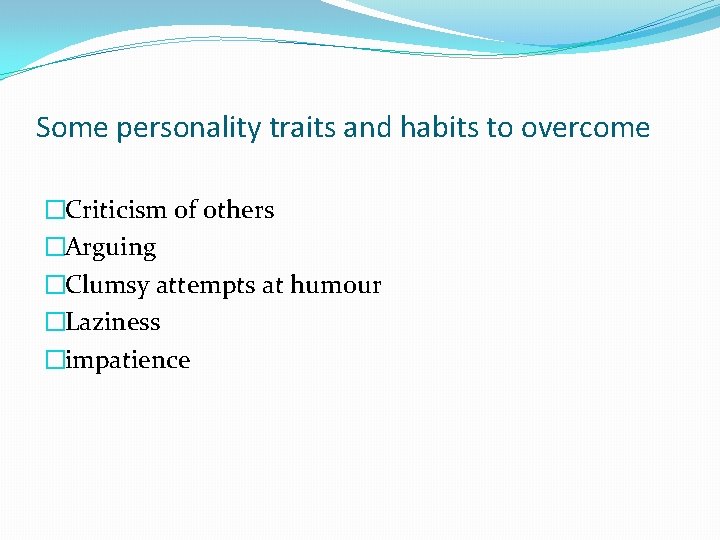
Some personality traits and habits to overcome �Criticism of others �Arguing �Clumsy attempts at humour �Laziness �impatience
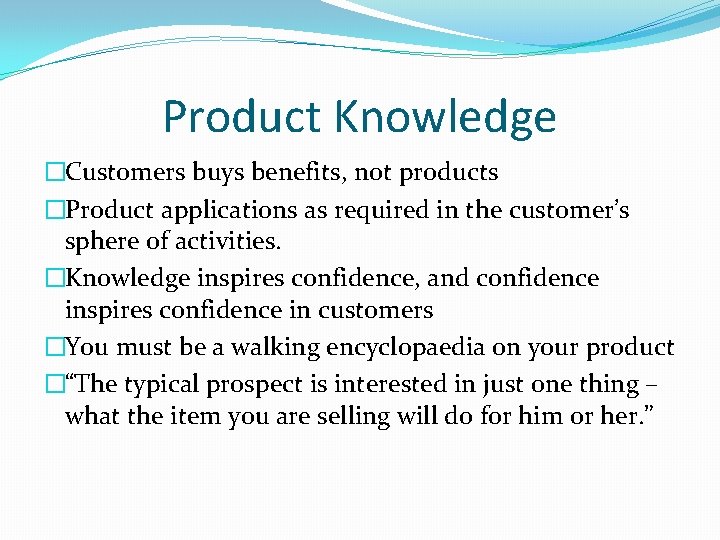
Product Knowledge �Customers buys benefits, not products �Product applications as required in the customer’s sphere of activities. �Knowledge inspires confidence, and confidence inspires confidence in customers �You must be a walking encyclopaedia on your product �“The typical prospect is interested in just one thing – what the item you are selling will do for him or her. ”
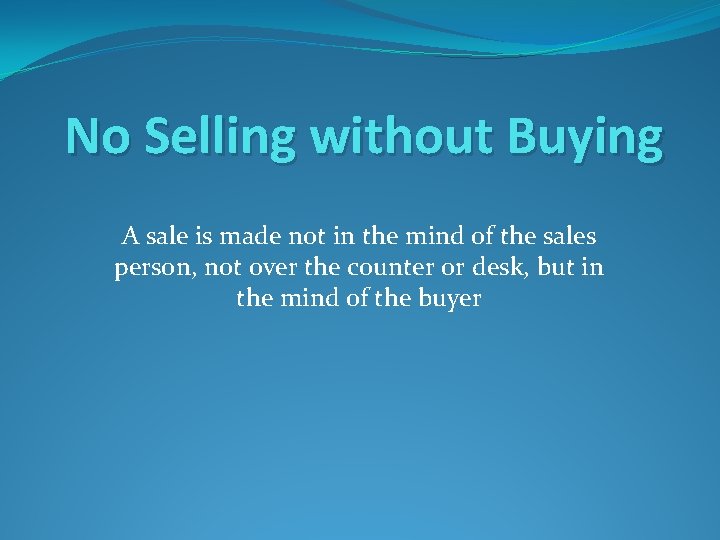
No Selling without Buying A sale is made not in the mind of the sales person, not over the counter or desk, but in the mind of the buyer