Introduction to Parasites Introduction A parasite is an


- Slides: 21
Introduction to Parasites
Introduction • A parasite is an organism that lives on or inside another organism to the detriment of the host organism • The study of parasites is called Parasitology. PARASITISM § A form of symbiosis in which one organism (called parasite) benefits at the expense of another organism usually of different species(called host).
Facultative parasite: parasites able to live both free living and parasite living e. g. Strongyloides species. Obligate parasite: parasite living permanently in a host and cannot live without a host e. g. Trichomonos species. Coprozic (spurious) parasites: foreign, pass through alimentally canal without affect. Temporary Bed bug visiting man for a blood meal. Permanent : lice Hyperparasitism Aberrant Toxocara canis (a dog parasite) in man. Ectoparasite Endoparasite Facultative: Strongyloides stercoralis. Clinical Parasitology: deals with animal parasites of man and their medical importance.
• Opportunistic • Zoonotic • Parasites are different from predators and parasitoids (which also derive benefits from certain interspecific interactions while harming the other participant) in that the host of a parasite is not necessarily killed. Instead, parasites derive benefits from their hosts, most often nutritional resources and shelter, over a longer period of time. It is in fact advantageous to parasites if they do not harm their hosts too badly, because that prolongs the period during which parasites can obtain benefits from hosts. However, in some cases, the impact of parasites on a host is great enough to cause disease, and in extreme cases, the death of the host may also occur (
Parasitology Divisions of Parasitology: 1. Protozoa 2. Helminthes a. Roundworms (nematodes) b. Flatworms – Cestodes (tapeworm) Trematode (fluke) • Parasitism: organism depend upon another for living, one is living at the expense of the other and harmful, called Parasite, the other organism is called Host.
• Host: organism harboring the parasite species may be affected or not. • Classification of Hosts: 1 -Definitive host: harbors the adults or final stages or sexual stages (♂♀) in the development of parasite ex: man. • man is DH for Schistosoma haematobium, while female Anopheles mosquito is DH for Plasmodium species (malaria parasites). 2 -Intermediate host: • • in which you have the larva stages or Inter mediate stages in the development. Ex: Taenia adult------ man Larva –--- cattle man is IH of malaria parasites. Two intermediate hosts termed 1 st and 2 nd IH may be needed for completion of a parasite's life cycle, e
3 -Reservoir host (carrier): the carrier host is well adapted to the parasite and tolerates the infection but serve as source of the infection to other organisms. ( maintains the life cycle of the parasite in nature and is therefore, a reservoir source of infection for man. e. g. sheep are RH for Fasciola hepatica. ) 4 -PARATENIC host • transport host in whom the parasite does not undergo any development but remains alive and infective to another host. bridge gap between the intermediate and definitive hosts. For example, dogs and pigs may carry hookworm eggs from one place to another, but the eggs do not hatch or pass through any development in thesanimals .
• Vector is an arthropod that transmits parasites from one host to another, e. g. female • sand fly transmits Leishmania parasites
Host parasite relation • Parasites utilize nutrition from host resulting in damage • Loss of nutrition e. g. Iron def in hookworm infestation, Vit B 12 def in Diphyllobothrium latum • Morbidity-due to tissue injury e. g. E histolytica dysentery, severe itch due to Enterobius vermicularis • Mortality- fulminant diarrhea due to Cryptosporidium parvum inf & hyperinfection due to Strongyloides stercoralis in HIV • Immunological mechanisms(I-IV) • Induction of neoplastic changes
Attributes of host that resist infection • Non specific defence( physical barrier, phagocytes, complement: cell wall attack, attracts phagocytes, stimulate inflammation) • Specific defence (INNATE AND ACQUIRED) • Natural and artificial
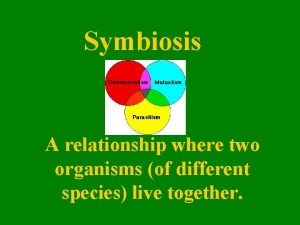
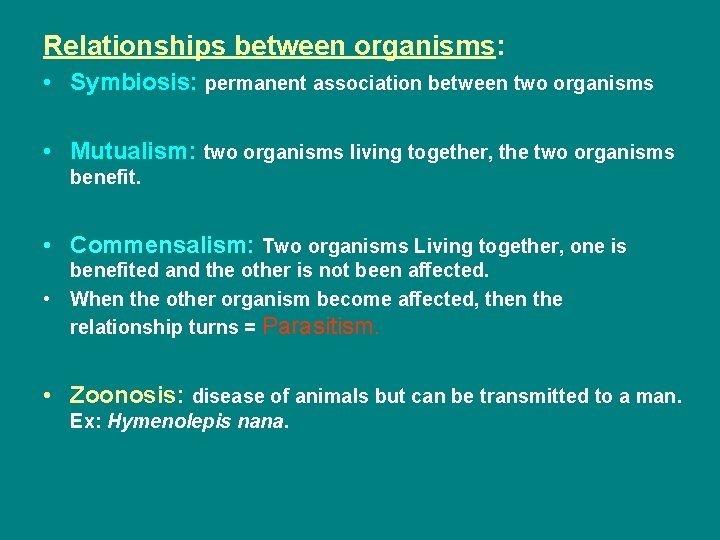
Relationships between organisms: • Symbiosis: permanent association between two organisms • Mutualism: two organisms living together, the two organisms benefit. • Commensalism: Two organisms Living together, one is benefited and the other is not been affected. • When the other organism become affected, then the relationship turns = Parasitism. • Zoonosis: disease of animals but can be transmitted to a man. Ex: Hymenolepis nana.
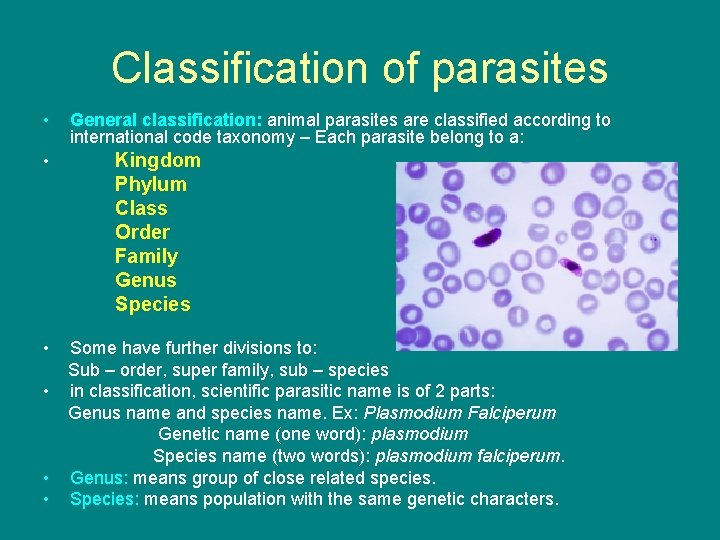
Classification of parasites • • • General classification: animal parasites are classified according to international code taxonomy – Each parasite belong to a: Kingdom Phylum Class Order Family Genus Species Some have further divisions to: Sub – order, super family, sub – species in classification, scientific parasitic name is of 2 parts: Genus name and species name. Ex: Plasmodium Falciperum Genetic name (one word): plasmodium Species name (two words): plasmodium falciperum. Genus: means group of close related species. Species: means population with the same genetic characters.
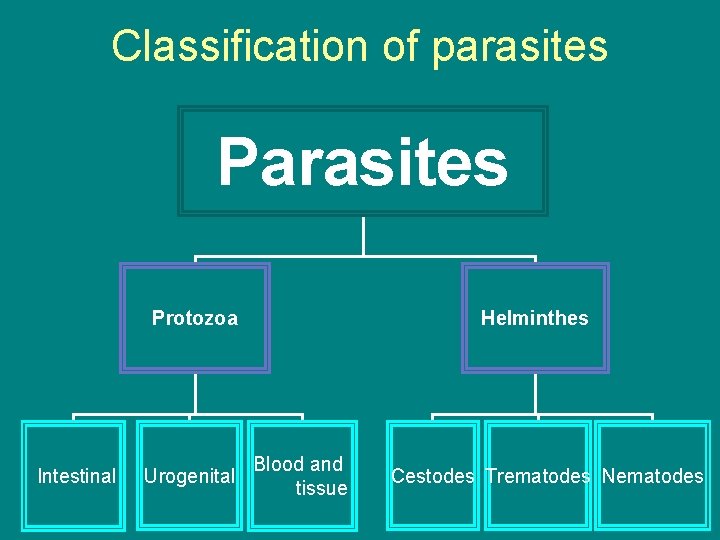
Classification of parasites Protozoa Intestinal Urogenital Helminthes Blood and tissue Cestodes Trematodes Nematodes
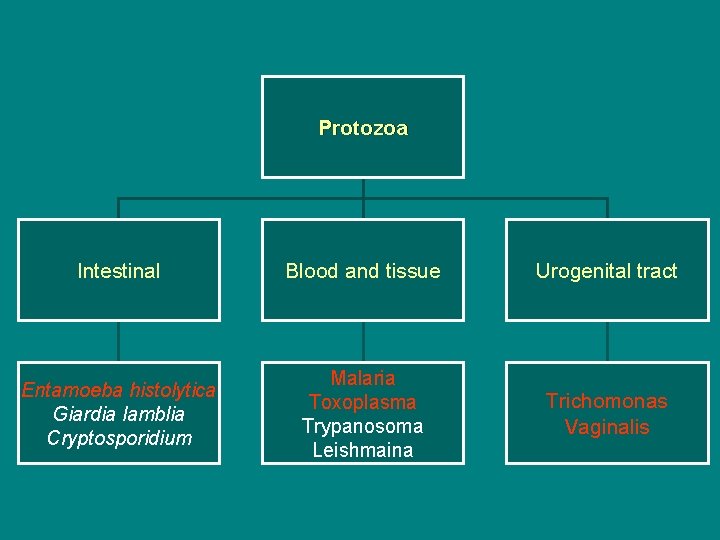
Protozoa Intestinal Blood and tissue Urogenital tract Entamoeba histolytica Giardia lamblia Cryptosporidium Malaria Toxoplasma Trypanosoma Leishmaina Trichomonas Vaginalis
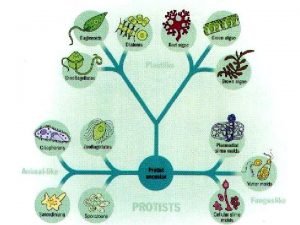
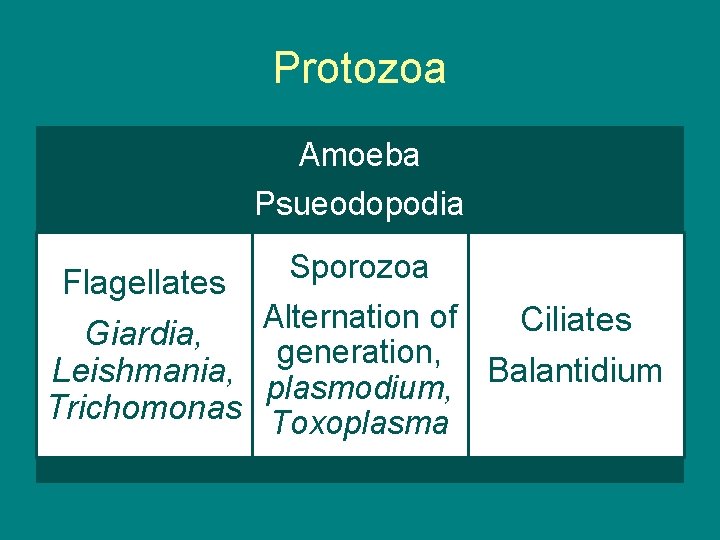
Protozoa Amoeba Psueodopodia Sporozoa Flagellates Alternation of Ciliates Giardia, generation, Leishmania, plasmodium, Balantidium Trichomonas Toxoplasma
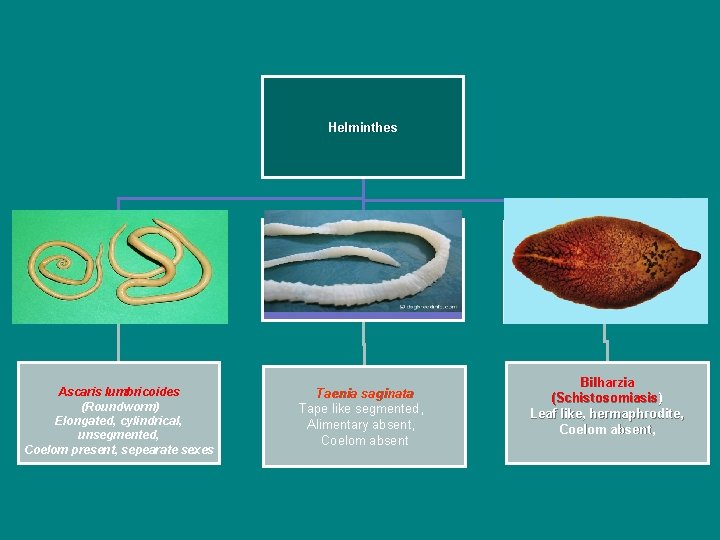
Helminthes Nematodes (round worms) Cystods (flat worms) Ascaris lumbricoides (Roundworm) Elongated, cylindrical, unsegmented, Coelom present, sepearate sexes Taenia saginata Tape like segmented, Alimentary absent, Coelom absent Trematodes (fluks) Bilharzia (Schistosomiasis ) Leaf like, hermaphrodite, Coelom absent,
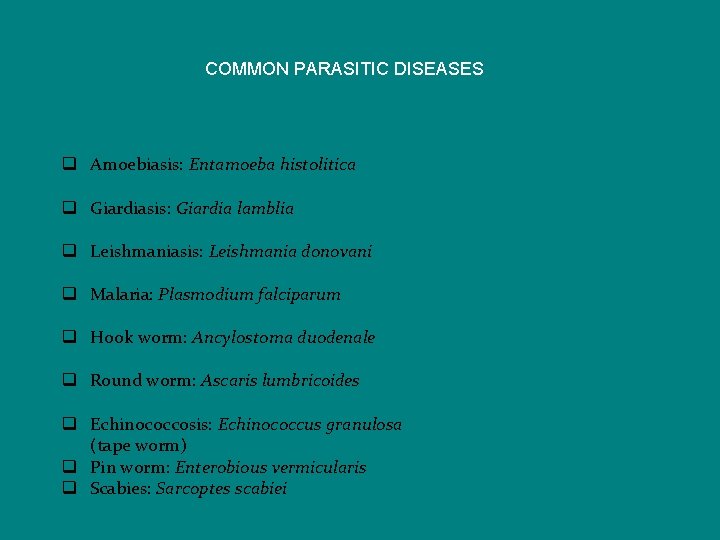
COMMON PARASITIC DISEASES q Amoebiasis: Entamoeba histolitica q Giardiasis: Giardia lamblia q Leishmaniasis: Leishmania donovani q Malaria: Plasmodium falciparum q Hook worm: Ancylostoma duodenale q Round worm: Ascaris lumbricoides q Echinococcosis: Echinococcus granulosa (tape worm) q Pin worm: Enterobious vermicularis q Scabies: Sarcoptes scabiei
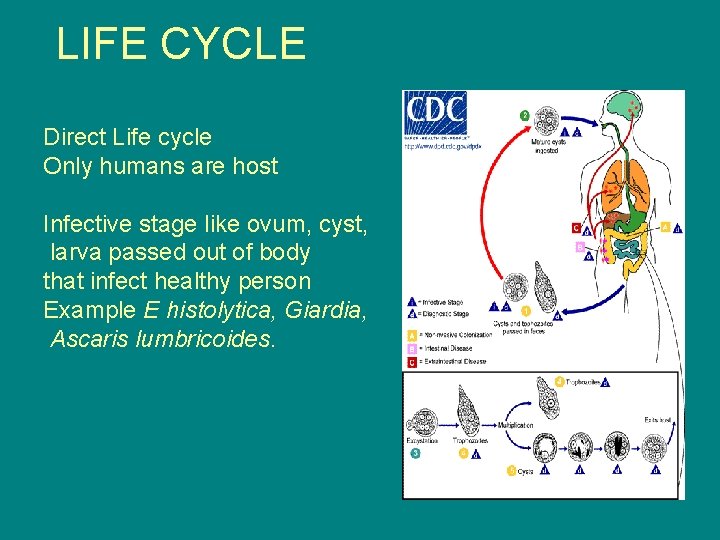
LIFE CYCLE Direct Life cycle Only humans are host Infective stage like ovum, cyst, larva passed out of body that infect healthy person Example E histolytica, Giardia, Ascaris lumbricoides.
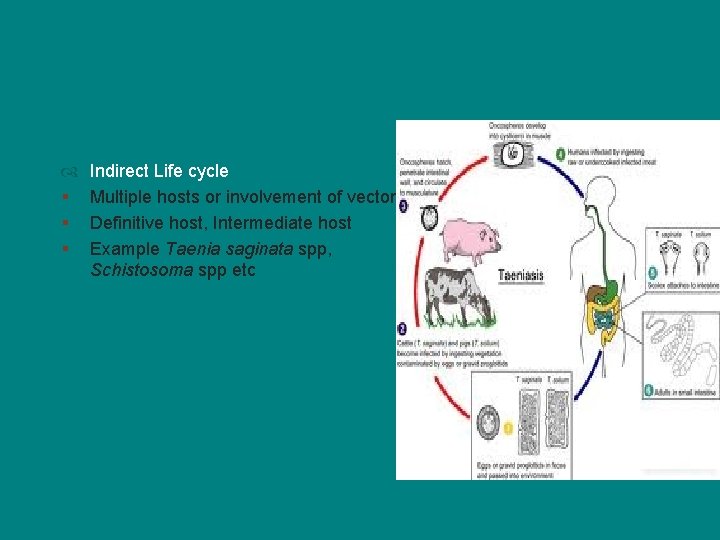
§ § § Indirect Life cycle Multiple hosts or involvement of vector Definitive host, Intermediate host Example Taenia saginata spp, Schistosoma spp etc
ROLE OF VECTOR Vector, a Latin word meaning "carrier“ Imp in transmission of parasite No direct damage by vector The Anopheles mosquito transmit Malaria, Sandfly is vectors for Leishmaniasis Domestic cats-vector of Toxoplasma gondii, Echinococcus granulosis
Diagnosis of parasitic diseases depends on several laboratory methods, imaging techniques and endoscopy in addition to clinical picture and geographic location. Parasitic diseases may be presented by a wide variety of clinical manifestations according to the tissue invaded. Direct microscopy is based on detection of the parasite by examination of different specimens (stool, urine, blood, CSF and tissue biopsies). Immunodiagnostic techniques include antigen and antibodydetection assays. Molecular-based diagnostic approaches offer great sensitivity and specificity. Recently, nanotechnology can be applied as diagnostic procedures utilizing nanodevices. Control and prevention of parasitic diseases depend on the interactions among many factors such as the environment, the human behavior, and socio-cultural factors that determine transmission and persistence of parasites.