Introduction The Sec SDLC implementation phase is accomplished

- Slides: 27
Introduction § The Sec. SDLC implementation phase is accomplished through changing the configuration and operation of an organization’s information systems § Implementation includes changes to procedures, people, hardware, software, and data § Organization translates the blueprint for information security into a concrete project plan Principles of Information Security, 3 rd Edition 2
Information Security Project Management § Once organization’s vision and objectives for information security are understood, the process for creating project plan can be defined § Major steps in executing project plan are: § Planning the project § Supervising tasks and action steps § Wrapping up § Each organization must determine its own project management methodology for IT and information security projects Principles of Information Security, 3 rd Edition 3
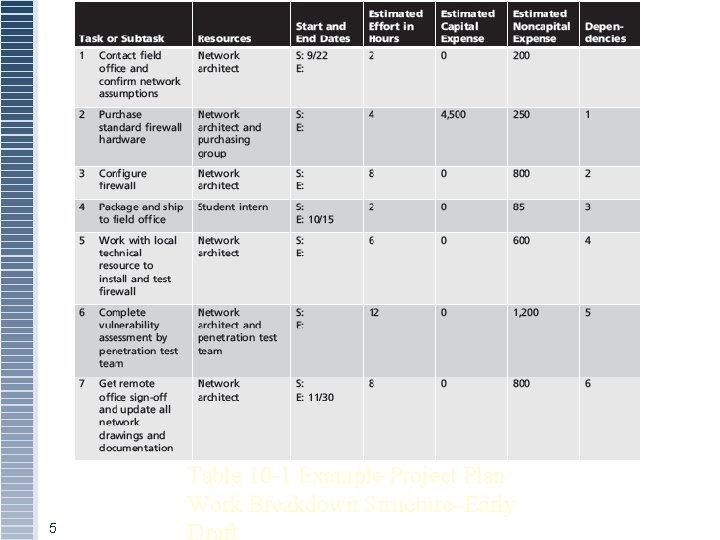
Developing the Project Plan § Creation of project plan can be done using work breakdown structure (WBS) § Major project tasks in WBS are § § § work to be accomplished; individuals assigned; start and end dates; amount of effort required; estimated capital and noncapital expenses; and identification of dependencies between/among tasks Principles of Information Security, 3 rd Edition 4
Table 10 -1 Example Project Plan Work Breakdown Structure–Early 5
Financial Considerations § No matter what information security needs exist, the amount of effort that can be expended depends on funds available § Cost benefit analysis must be verified prior to development of project plan § Both public and private organizations have budgetary constraints, though of a different nature § To justify an amount budgeted for a security project at either public or for-profit organizations, it may be useful to benchmark Principles of Information Security, 3 rd Edition 6
Priority Considerations § In general, the most important information security controls should be scheduled first § Implementation of controls is guided by prioritization of threats and value of threatened information assets Principles of Information Security, 3 rd Edition 7
Time and Scheduling Considerations § Time impacts dozens of points in the development of a project plan, including: § Time to order, receive, install, and configure security control § Time to train the users § Time to realize return on investment of control Principles of Information Security, 3 rd Edition 8
Staffing Considerations § Lack of enough qualified, trained, and available personnel constrains project plan § Experienced staff is often needed to implement available technologies and develop and implement policies and training programs Principles of Information Security, 3 rd Edition 9
Procurement Considerations § IT and information security planners must consider acquisition of goods and services § There may be many constraints on the selection process for equipment and services in most organizations, specifically in the selection of service vendors or products from manufacturers/suppliers § These constraints may eliminate a technology from realm of possibilities Principles of Information Security, 3 rd Edition 10
Organizational Feasibility Considerations § Policies require time to develop; new technologies require time to be installed, configured, and tested § Employees need training on new policies and technology, and how new information security program affects their working lives § Changes should be transparent to system users unless the new technology is intended to change procedures (e. g. , requiring additional authentication or verification) Principles of Information Security, 3 rd Edition 11
Training and Indoctrination Considerations § Size of organization and normal conduct of business may preclude a single large training program on new security procedures/technologies § Thus, organization should conduct phased-in or pilot approach to implementation Principles of Information Security, 3 rd Edition 12
Scope Considerations § Project scope: concerns boundaries of time and effort-hours needed to deliver planned features and quality level of project deliverables § In the case of information security, project plans should not attempt to implement the entire security system at one time Principles of Information Security, 3 rd Edition 13
The Need for Project Management § Project management requires a unique set of skills and thorough understanding of a broad body of specialized knowledge § Most information security projects require a trained project manager (a CISO) or skilled IT manager versed in project management techniques Principles of Information Security, 3 rd Edition 14
Supervised Implementation § Some organizations may designate a champion from the general management community of interest to supervise implementation of information security project plan § An alternative is to designate a senior IT manager or CIO to lead implementation § Optimal solution is to designate a suitable person from information security community of interest § It is up to each organization to find the most suitable Principles of Informationleadership Security, 3 rd Edition for a successful project 15
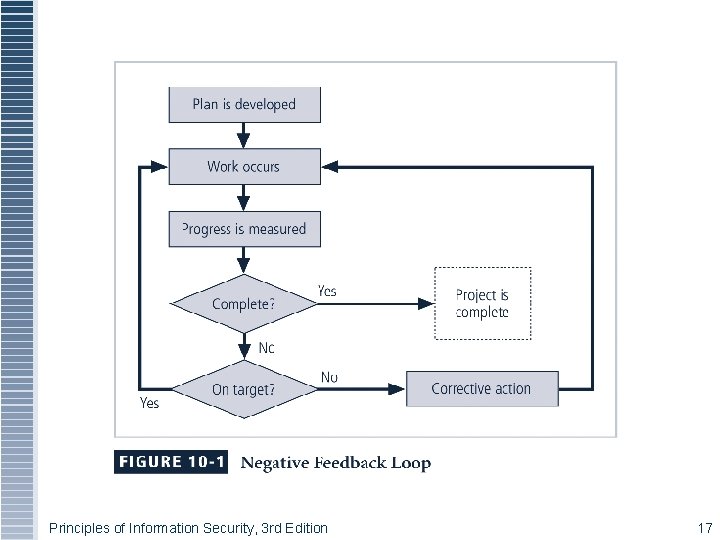
Executing the Plan § Negative feedback ensures project progress is measured periodically § Measured results compared against expected results § When significant deviation occurs, corrective action taken § Often, project manager can adjust one of three parameters for task being corrected: effort and money allocated; scheduling impact; quality or quantity deliverable Principles of Informationof Security, 3 rd Edition 16
Figure 10 -1 Principles of Information Security, 3 rd Edition 17
Project Wrap-up § Project wrap-up is usually handled as procedural task and assigned to mid-level IT or information security manager § Collect documentation, finalize status reports, and deliver final report and presentation at wrap -up meeting § Goal of wrap-up is to resolve any pending issues, critique overall project effort, and draw conclusions about how to improve the process for the future Principles of Information Security, 3 rd Edition 18
Technical Topics of Implementation § Some parts of implementation process are technical in nature, dealing with application of technology § Conversion strategies § Prioritization § Outsourcing § Others are not, dealing instead with human interface to technical systems Principles of Information Security, 3 rd Edition 19
Conversion Strategies § As components of new security system are planned, provisions must be made for changeover from previous method of performing task to new method § Four basic approaches: § Direct changeover § Phased implementation § Pilot implementation § Parallel operations Principles of Information Security, 3 rd Edition 20
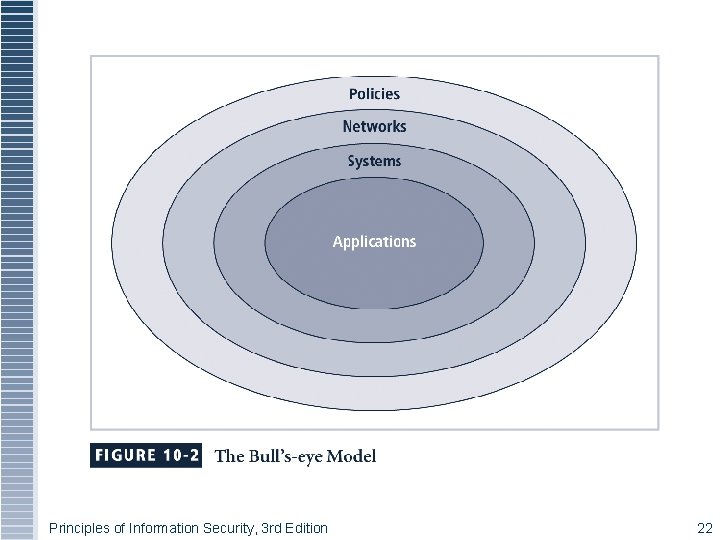
The Bull’s-Eye Model § Proven method for prioritizing program of complex change § Issues addressed from general to specific § Relies on process of evaluating project plans in progression through four layers: policies, networks, systems, applications Principles of Information Security, 3 rd Edition 21
Figure 10 -2 Principles of Information Security, 3 rd Edition 22
To Outsource or Not § Just as some organizations outsource IT operations, organizations can outsource part or all of information security programs § Due to complex nature of outsourcing, it’s advisable to hire best outsourcing specialists and retain best attorneys possible to negotiate and verify legal and technical intricacies Principles of Information Security, 3 rd Edition 23
Nontechnical Aspects of Implementation § Other parts of implementation process are not technical in nature, dealing with the human interface to technical systems § This includes creating a culture of change management as well as considerations for organizations facing change Principles of Information Security, 3 rd Edition 24
The Culture of Change Management § Prospect of change can cause employees to build up resistance to change § The stress of change can increase the probability of mistakes or create vulnerabilities § Resistance to change can be lowered by building resilience for change Principles of Information Security, 3 rd Edition 25
Reducing Resistance to Change from the Start § The more ingrained the previous methods and behaviors, the more difficult the change § Best to improve interaction between affected members of organization and project planners in early project phases § Three-step process for project managers: communicate, educate, and involve Principles of Information Security, 3 rd Edition 26
Developing a Culture that Supports Change § Ideal organization fosters resilience to change § Resilience: organization has come to expect change as a necessary part of organizational culture, and embracing change is more productive than fighting it § To develop such a culture, organization must successfully accomplish many projects that require change Principles of Information Security, 3 rd Edition 27