Intro to the Internet and WWW CMPT 165
- Slides: 6
Intro to the Internet and WWW CMPT 165, Spring 2020 Omar Altrad https: //coursys. sfu. ca/2020 sp-cmpt-165 -d 1/pages
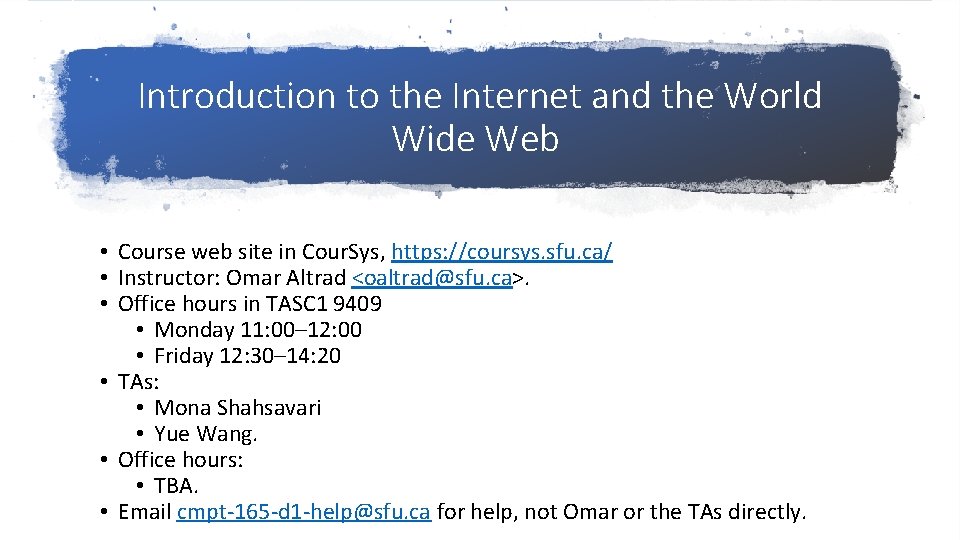
Introduction to the Internet and the World Wide Web • Course web site in Cour. Sys, https: //coursys. sfu. ca/ • Instructor: Omar Altrad <oaltrad@sfu. ca>. • Office hours in TASC 1 9409 • Monday 11: 00– 12: 00 • Friday 12: 30– 14: 20 • TAs: • Mona Shahsavari • Yue Wang. • Office hours: • TBA. • Email cmpt-165 -d 1 -help@sfu. ca for help, not Omar or the TAs directly.
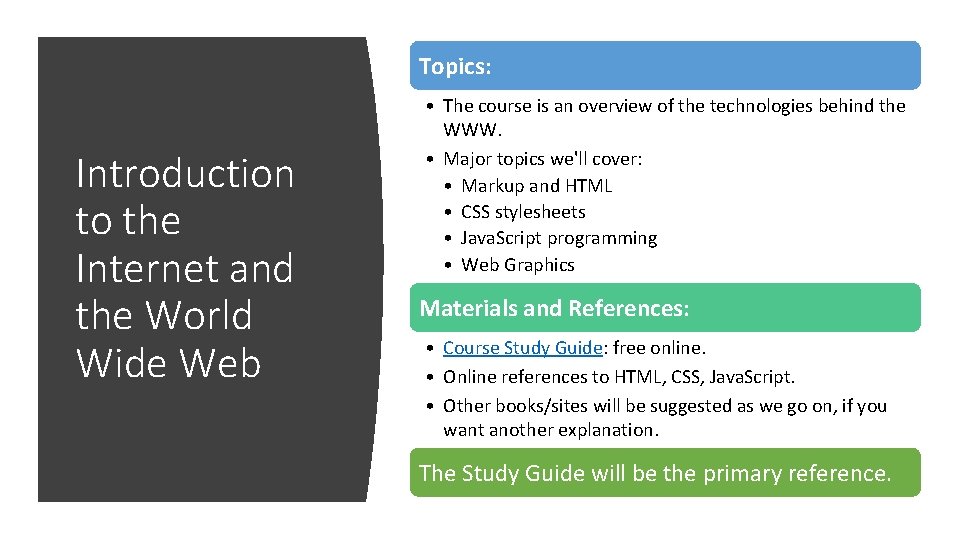
Topics: Introduction to the Internet and the World Wide Web • The course is an overview of the technologies behind the WWW. • Major topics we'll cover: • Markup and HTML • CSS stylesheets • Java. Script programming • Web Graphics Materials and References: • Course Study Guide: free online. • Online references to HTML, CSS, Java. Script. • Other books/sites will be suggested as we go on, if you want another explanation. The Study Guide will be the primary reference.
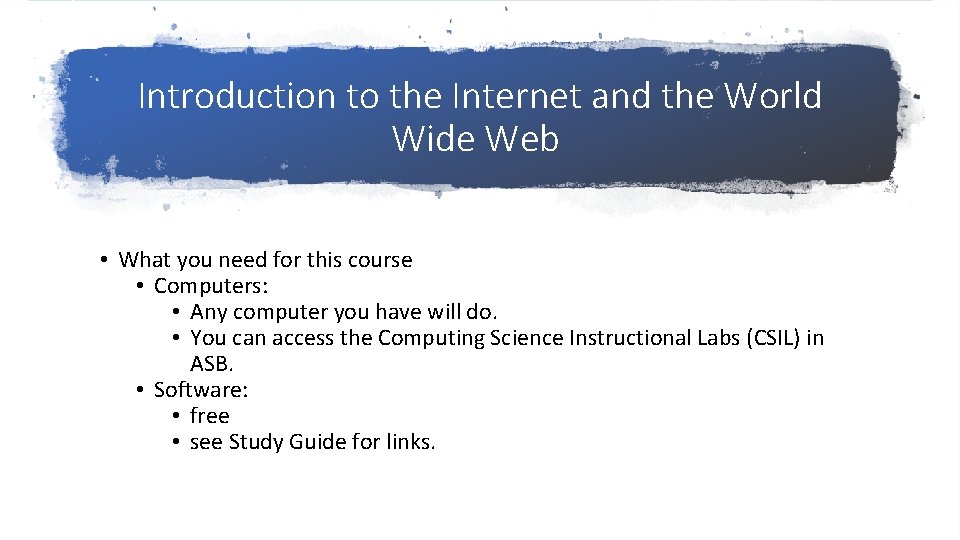
Introduction to the Internet and the World Wide Web • What you need for this course • Computers: • Any computer you have will do. • You can access the Computing Science Instructional Labs (CSIL) in ASB. • Software: • free • see Study Guide for links.
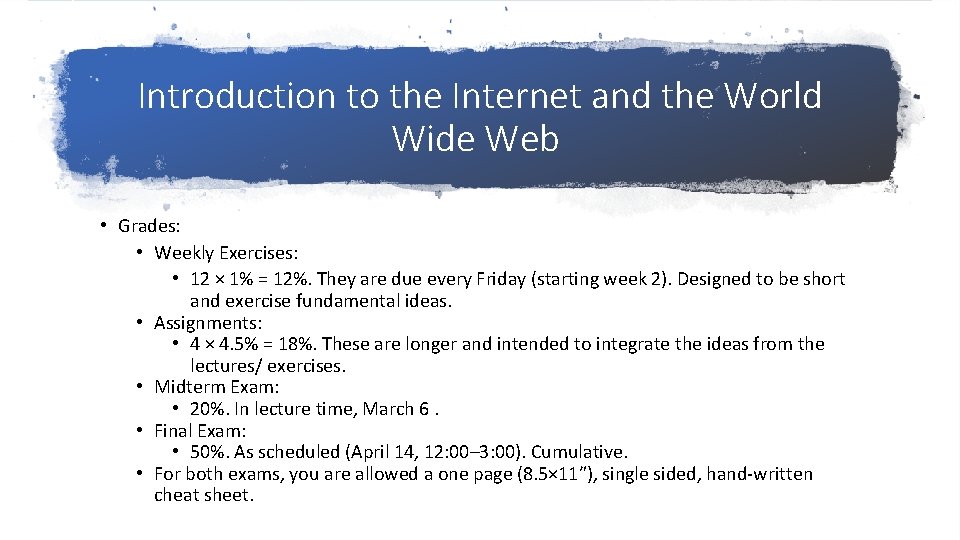
Introduction to the Internet and the World Wide Web • Grades: • Weekly Exercises: • 12 × 1% = 12%. They are due every Friday (starting week 2). Designed to be short and exercise fundamental ideas. • Assignments: • 4 × 4. 5% = 18%. These are longer and intended to integrate the ideas from the lectures/ exercises. • Midterm Exam: • 20%. In lecture time, March 6. • Final Exam: • 50%. As scheduled (April 14, 12: 00– 3: 00). Cumulative. • For both exams, you are allowed a one page (8. 5× 11″), single sided, hand-written cheat sheet.
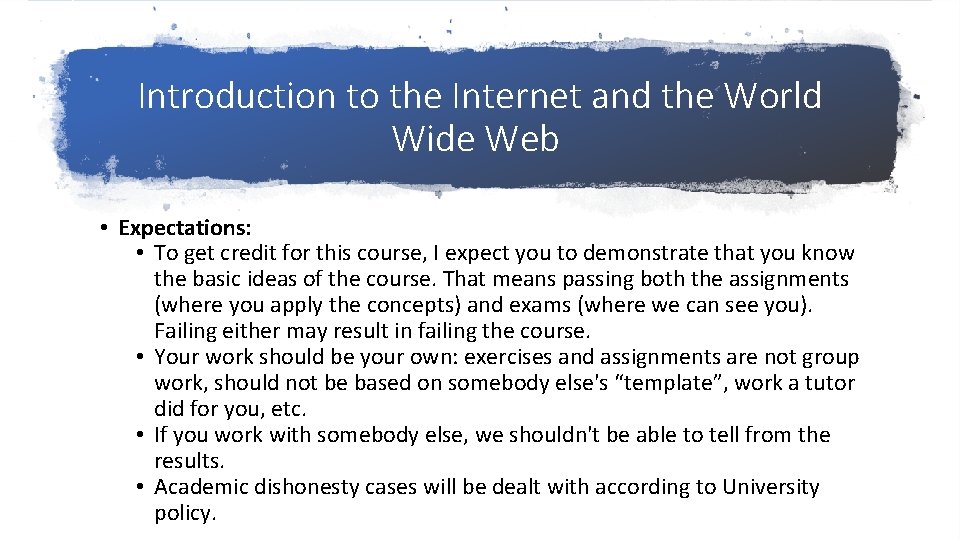
Introduction to the Internet and the World Wide Web • Expectations: • To get credit for this course, I expect you to demonstrate that you know the basic ideas of the course. That means passing both the assignments (where you apply the concepts) and exams (where we can see you). Failing either may result in failing the course. • Your work should be your own: exercises and assignments are not group work, should not be based on somebody else's “template”, work a tutor did for you, etc. • If you work with somebody else, we shouldn't be able to tell from the results. • Academic dishonesty cases will be dealt with according to University policy.