INTEGRATED MANAGEMENT OF NEONATAL AND CHILDHOOD ILLNESS IMNCI


- Slides: 12
INTEGRATED MANAGEMENT OF NEONATAL AND CHILDHOOD ILLNESS (IMNCI) Dr Ubaid N P, JR Community Medicine, Pariyaram Medical College
▪ Diseases causing childhood morbidity & mortalities are diarrhea, ARI, malaria, measles, malnutrition ▪ Most sick children present with overlapping signs & symptoms ▪ A single diagnosis may not be possible or appropriate ▪ Treatment may also become complicated by the need to combine for several conditions
▪ IMCI is a strategy for an integrated approach to the management of childhood illness ▪ It looks beyond the treatment of a single disease ▪ Strategy combines improved management of childhood illness with aspects of nutrition, immunization other important elements
▪ Designed for management for sick children aged 1 week to 5 years ▪ Uses an evidence based assessment & management using a syndromic approach
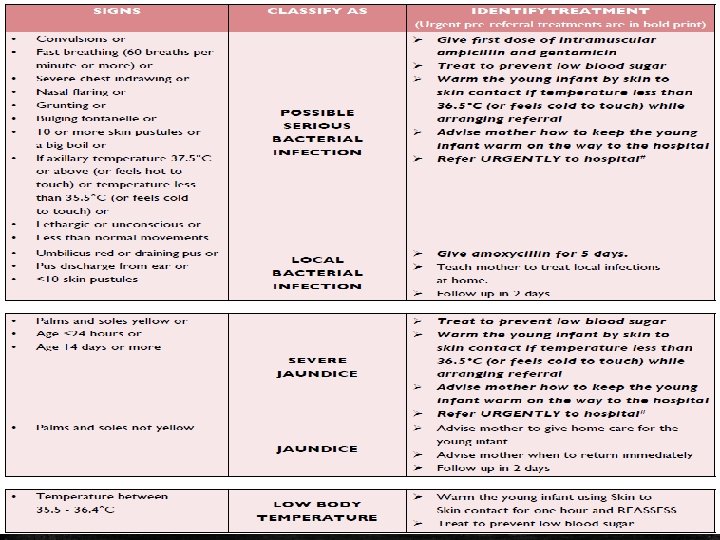
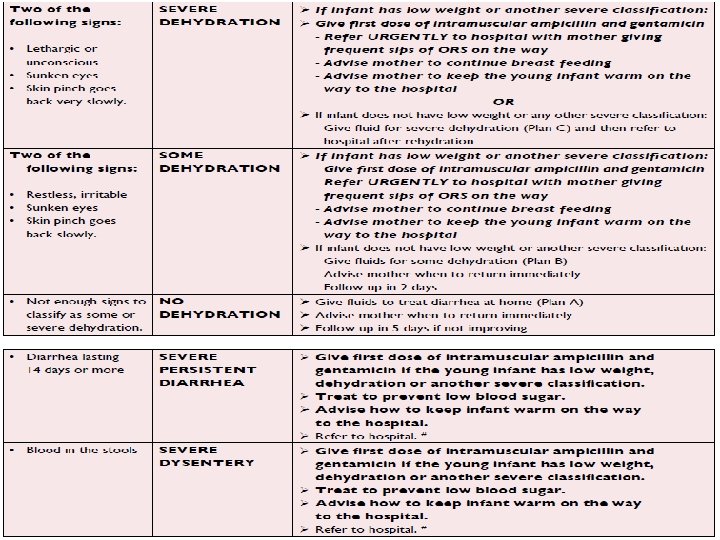
▪ Case management involves: a) Asses b) Classify: - Urgent pre referral treatment & referral (Pink) - Specific medical treatment & advice (Yellow) - Simple advice on home management (Green) c) Identify specific treatment d) Treatment e) Counsel f) Follow up care
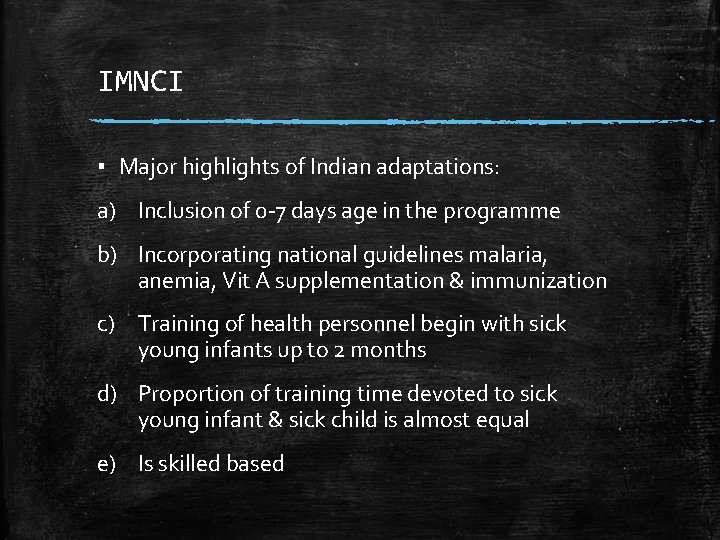
IMNCI ▪ Major highlights of Indian adaptations: a) Inclusion of 0 -7 days age in the programme b) Incorporating national guidelines malaria, anemia, Vit A supplementation & immunization c) Training of health personnel begin with sick young infants up to 2 months d) Proportion of training time devoted to sick young infant & sick child is almost equal e) Is skilled based
THANK YOU