Institute of Petroleum Chemistry The chemical composition of

- Slides: 11
Institute of Petroleum Chemistry The chemical composition of soils in the territory of an oil refining facility Natalya Volkova, PG student Tomsk 2020
Contents general problem types of contamination the methods the results 2
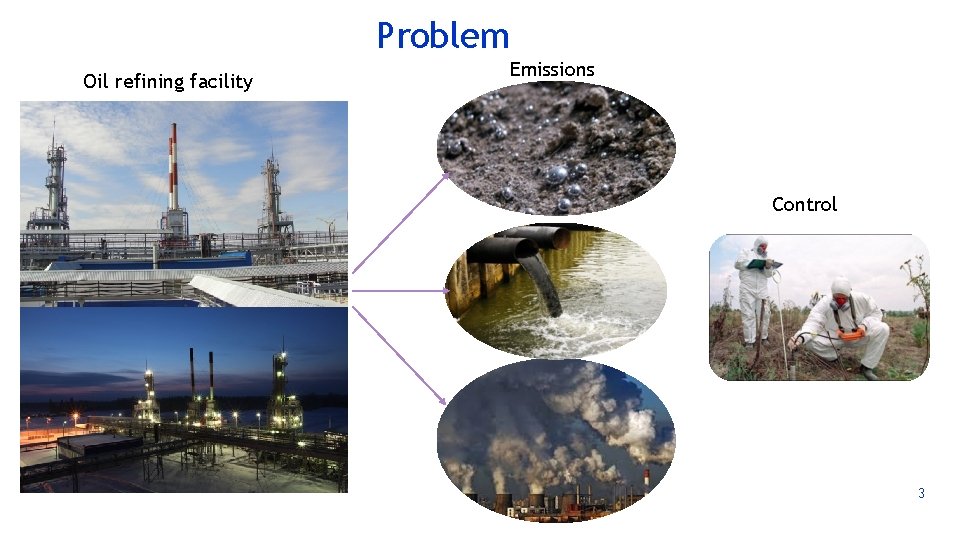
Problem Oil refining facility Emissions Control 3
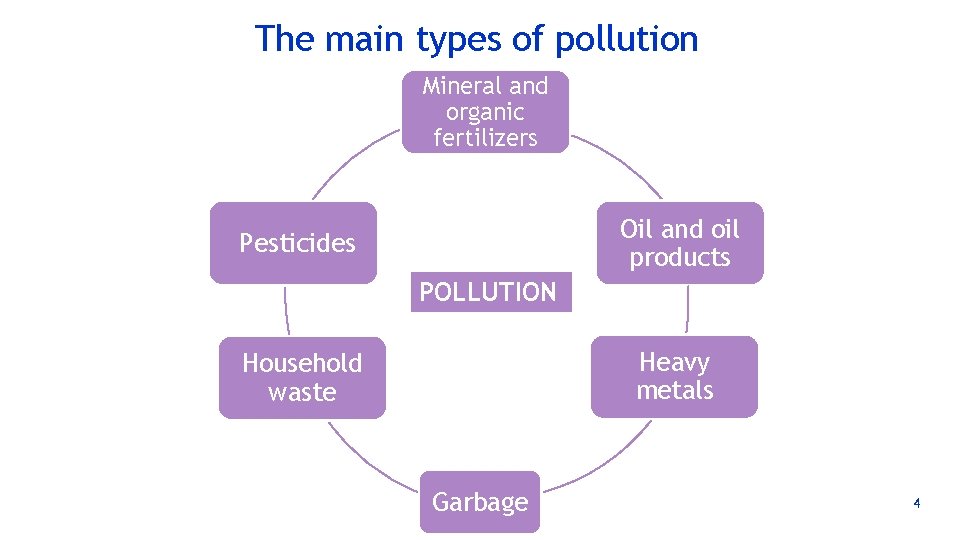
The main types of pollution Mineral and organic fertilizers Oil and oil products Pesticides POLLUTION Heavy metals Household waste Garbage 4
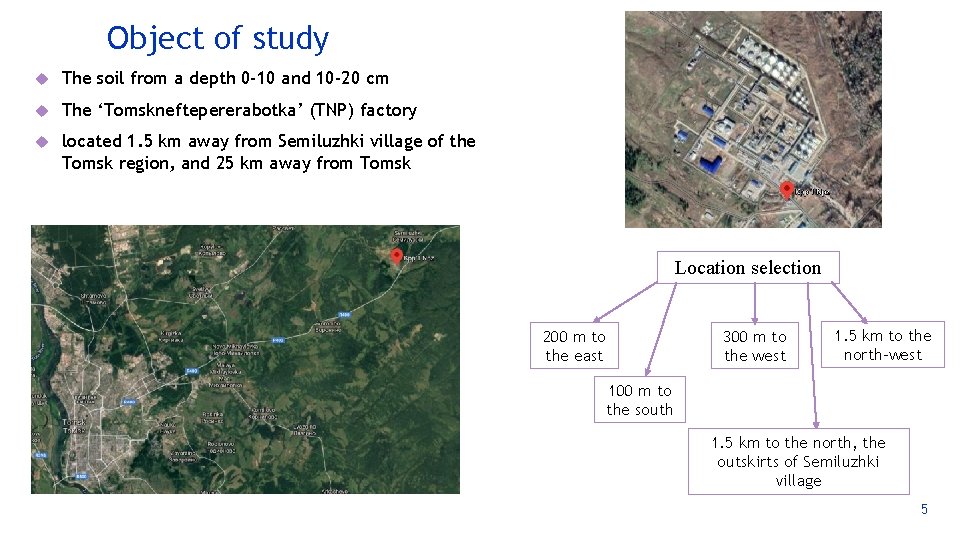
Object of study The soil from a depth 0 -10 and 10 -20 cm The ‘Tomskneftepererabotka’ (TNP) factory located 1. 5 km away from Semiluzhki village of the Tomsk region, and 25 km away from Tomsk Location selection 200 m to the east 300 m to the west 1. 5 km to the north-west 100 m to the south 1. 5 km to the north, the outskirts of Semiluzhki village 5
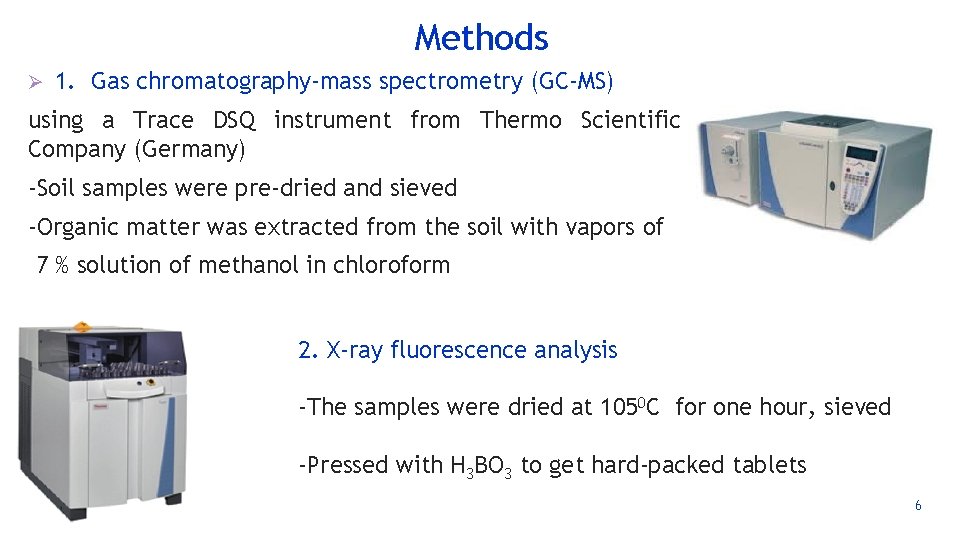
Methods Ø 1. Gas chromatography-mass spectrometry (GC-MS) using a Trace DSQ instrument from Thermo Scientific Company (Germany) -Soil samples were pre-dried and sieved -Organic matter was extracted from the soil with vapors of 7 % solution of methanol in chloroform 2. X-ray fluorescence analysis -The samples were dried at 1050 С for one hour, sieved -Pressed with Н 3 ВО 3 to get hard-packed tablets 6
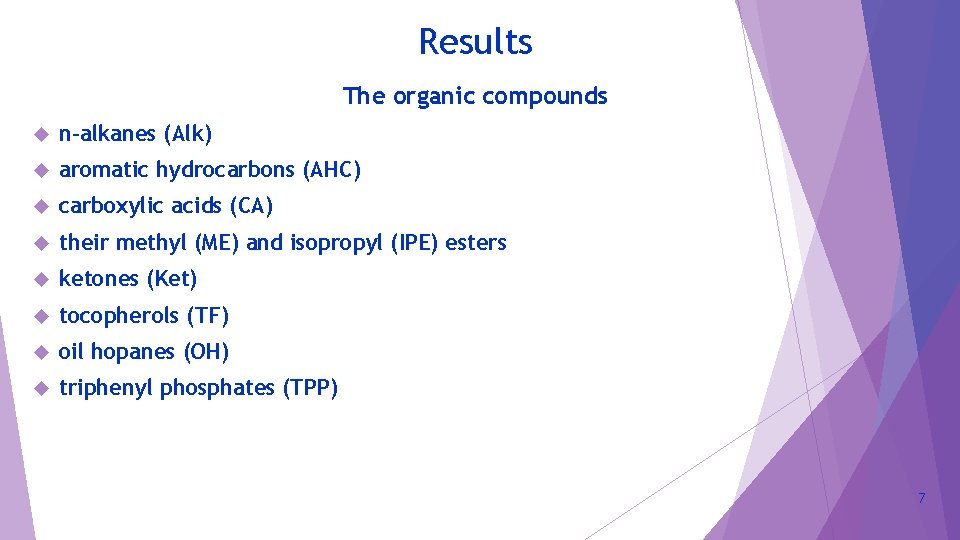
Results The organic compounds n-alkanes (Alk) aromatic hydrocarbons (AHC) carboxylic acids (CA) their methyl (ME) and isopropyl (IPE) esters ketones (Ket) tocopherols (TF) oil hopanes (OH) triphenyl phosphates (TPP) 7
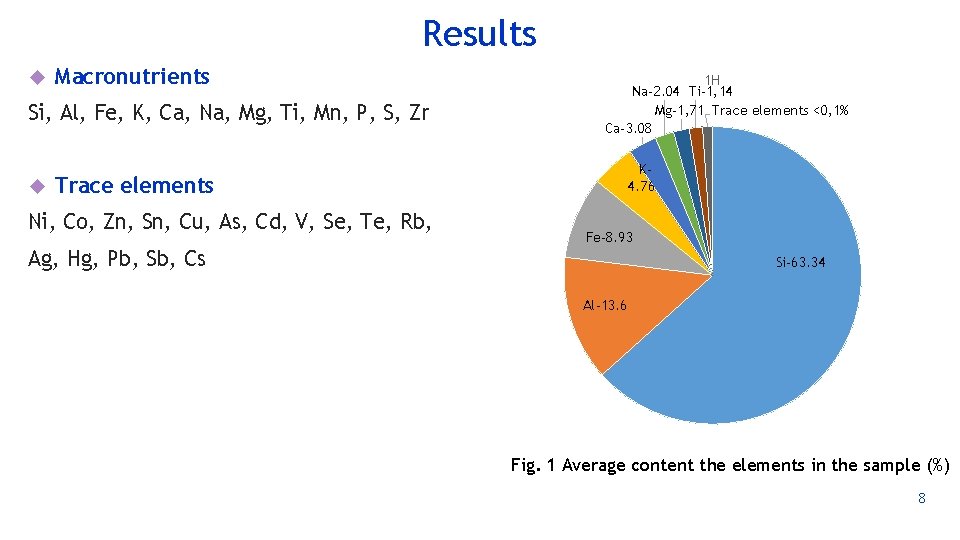
Results Macronutrients Si, Al, Fe, K, Ca, Na, Mg, Ti, Mn, P, S, Zr 1 Н Na-2. 04 Ti-1, 14 Mg-1, 71 Trace elements <0, 1% Ca-3. 08 K 4. 76 Trace elements Ni, Co, Zn, Sn, Cu, As, Cd, V, Se, Te, Rb, Ag, Hg, Pb, Sb, Cs Fe-8. 93 Si-63. 34 Al-13. 6 Fig. 1 Average content the elements in the sample (%) 8
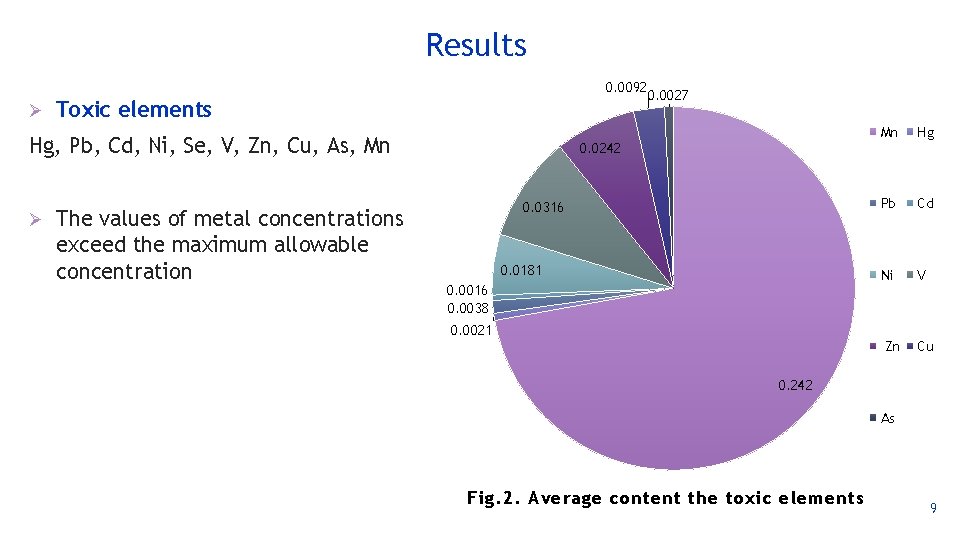
Results Ø 0. 0092 0. 0027 Toxic elements Hg, Pb, Cd, Ni, Se, V, Zn, Cu, As, Mn Ø The values of metal concentrations exceed the maximum allowable concentration Mn Hg Pb Cd Ni V 0. 0242 0. 0316 0. 0181 0. 0016 0. 0038 0. 0021 Zn Cu 0. 242 As Fig. 2. Average content the toxic elements (%) 9
CONCLUSIONS The study revealed pollution with both heavy metals and organic substances. Such high indices are attributed to a large amount of emissions and leakage from the factory. The accumulation of heavy metals causes a detrimental effect, causing mutations and changes in living organisms and plants. Rectification of the consequences of pollution is the next step of our work. 10
Thank you for your attention