Influencing www opm co ukfutureleadership Influencing Styles PUSH

- Slides: 11
Influencing www. opm. co. uk/futureleadership/
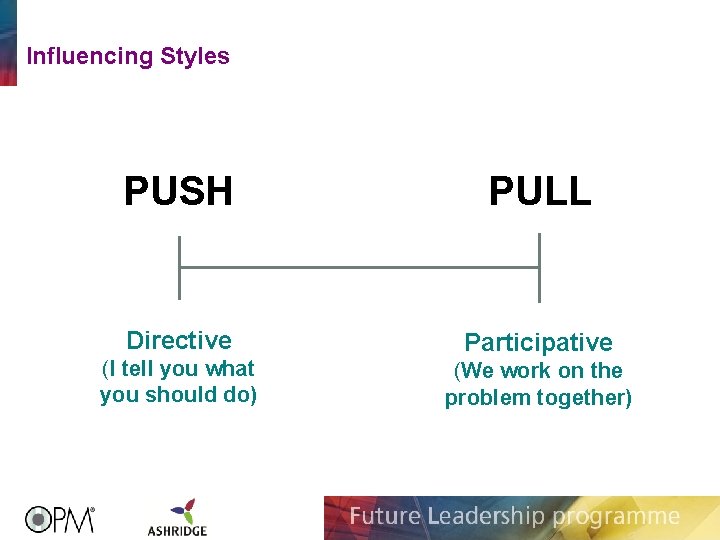
Influencing Styles PUSH PULL Directive Participative (I tell you what you should do) (We work on the problem together)
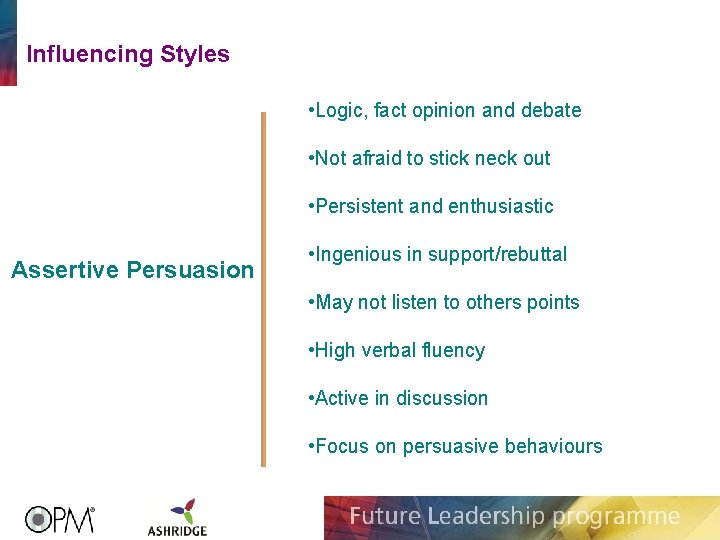
Influencing Styles • Logic, fact opinion and debate • Not afraid to stick neck out • Persistent and enthusiastic Assertive Persuasion • Ingenious in support/rebuttal • May not listen to others points • High verbal fluency • Active in discussion • Focus on persuasive behaviours
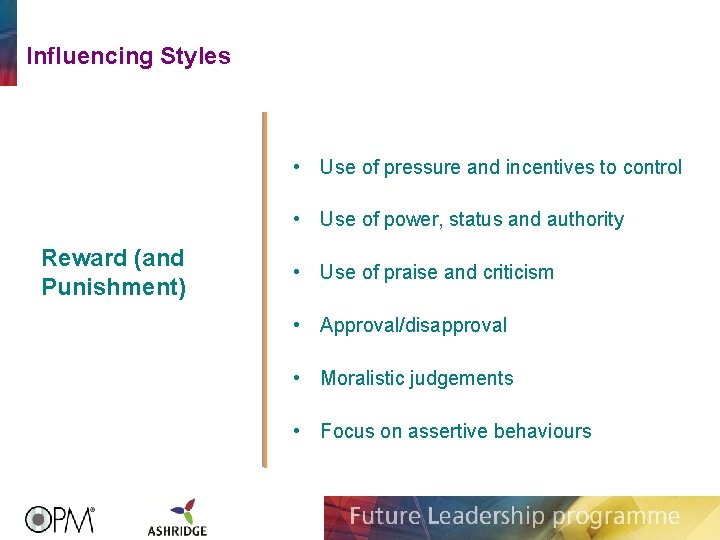
Influencing Styles • Use of pressure and incentives to control • Use of power, status and authority Reward (and Punishment) • Use of praise and criticism • Approval/disapproval • Moralistic judgements • Focus on assertive behaviours
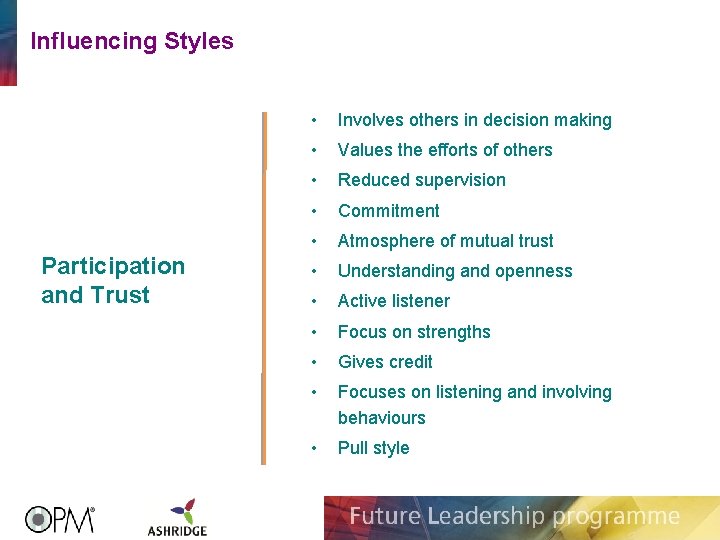
Influencing Styles Participation and Trust • Involves others in decision making • Values the efforts of others • Reduced supervision • Commitment • Atmosphere of mutual trust • Understanding and openness • Active listener • Focus on strengths • Gives credit • Focuses on listening and involving behaviours • Pull style
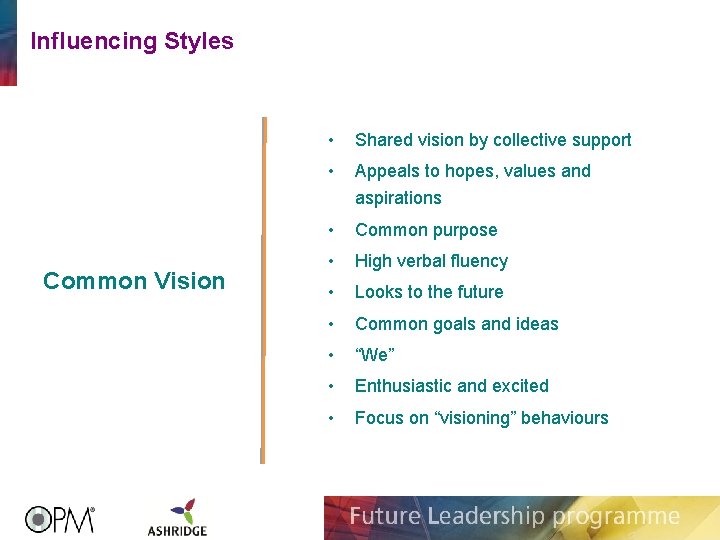
Influencing Styles Common Vision • Shared vision by collective support • Appeals to hopes, values and aspirations • Common purpose • High verbal fluency • Looks to the future • Common goals and ideas • “We” • Enthusiastic and excited • Focus on “visioning” behaviours
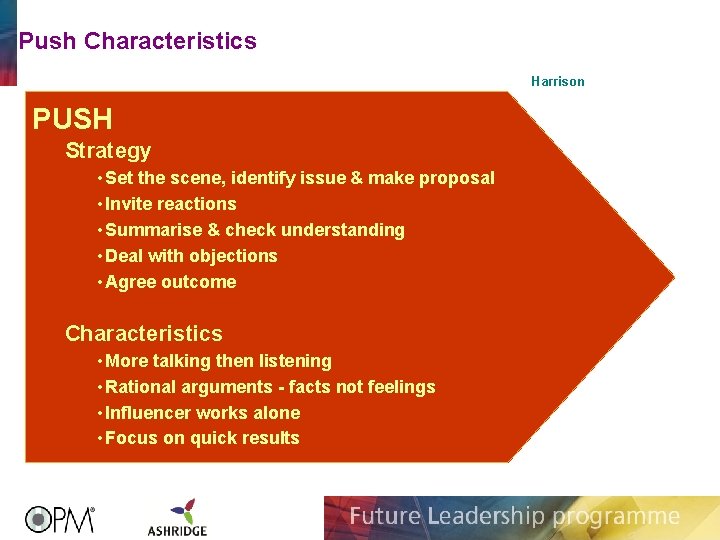
Push Characteristics Harrison PUSH Strategy • Set the scene, identify issue & make proposal • Invite reactions • Summarise & check understanding • Deal with objections • Agree outcome Characteristics • More talking then listening • Rational arguments - facts not feelings • Influencer works alone • Focus on quick results
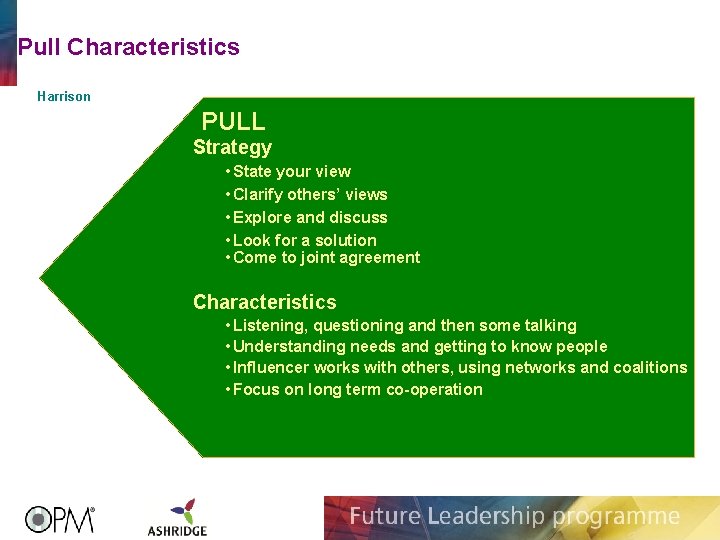
Pull Characteristics Harrison PULL Strategy • State your view • Clarify others’ views • Explore and discuss • Look for a solution • Come to joint agreement Characteristics • Listening, questioning and then some talking • Understanding needs and getting to know people • Influencer works with others, using networks and coalitions • Focus on long term co-operation
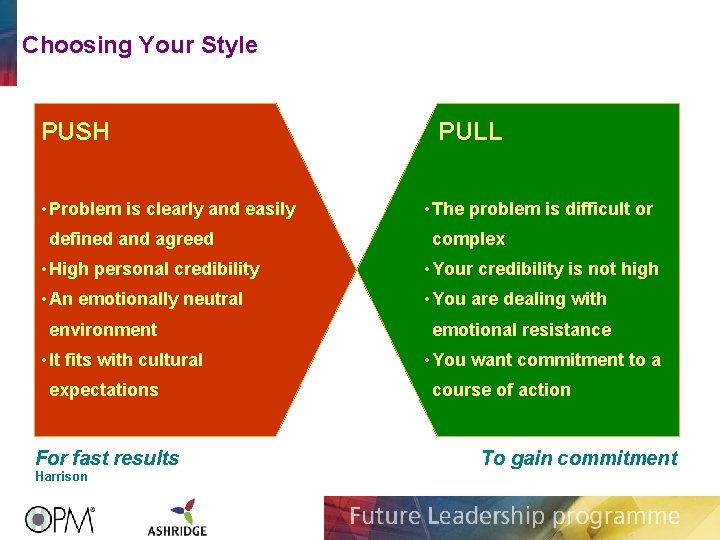
Choosing Your Style PUSH • Problem is clearly and easily defined and agreed PULL • The problem is difficult or complex • High personal credibility • Your credibility is not high • An emotionally neutral • You are dealing with environment • It fits with cultural expectations For fast results Harrison emotional resistance • You want commitment to a course of action To gain commitment
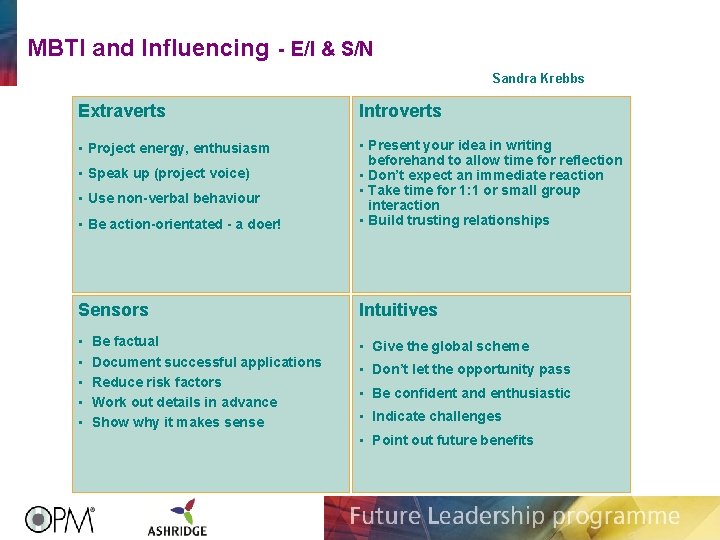
MBTI and Influencing - E/I & S/N Sandra Krebbs Extraverts Introverts • Project energy, enthusiasm • Be action-orientated - a doer! • Present your idea in writing beforehand to allow time for reflection • Don’t expect an immediate reaction • Take time for 1: 1 or small group interaction • Build trusting relationships Sensors Intuitives • • • Give the global scheme • Speak up (project voice) • Use non-verbal behaviour Be factual Document successful applications Reduce risk factors Work out details in advance Show why it makes sense • Don’t let the opportunity pass • Be confident and enthusiastic • Indicate challenges • Point out future benefits
MBTI and Influencing - T/F & J/P Sandra Krebbs Thinkers Feelers • Be logical • State principles involved • Stress competent handling of issue • Be well-organized • List the costs and benefits • Mention other proponents • Be personable and friendly • Indicate how it is helpful • Tell why it’s valuable • Show it supports personal goals Judgers Perceivers • Plan ahead • Set deadlines and live by them • Be ready to make decisions when necessary • Avoid inappropriate jokes or diversions • • Be flexible Listen for new information Don’t demand immediate answers Leave matters open-ended for as long as possible